Kirjojen hintavertailu. Mukana 12 034 428 kirjaa ja 12 kauppaa.

Kirjahaku

Etsi kirjoja tekijän nimen, kirjan nimen tai ISBN:n perusteella.

1000 tulosta hakusanalla Deborah C. Pollack

Vienna in the Age of Uncertainty

Vienna in the Age of Uncertainty

Deborah R. Coen

University of Chicago Press
2011
nidottu
"Vienna in the Age of Uncertainty" traces the vital and varied roles of science through the story of three generations of the eminent Exner family, whose members included Nobel Prize - winning biologist Karl Frisch, the teachers of Freud and of physicist Erwin Schrodinger, artists of the Vienna Secession, and a leader of Vienna's women's movement. Training her critical eye on the Exners through the rise and fall of Austrian liberalism and into the rise of the Third Reich, Deborah R. Coen demonstrates the interdependence of the family's scientific and domestic lives, exploring the ways in which public notions of rationality, objectivity, and autonomy were formed in the private sphere. "Vienna in the Age of Uncertainty" presents the story of the Exners as a microcosm of the larger achievements and tragedies of Austrian political and scientific life in the late nineteenth and early twentieth centuries.
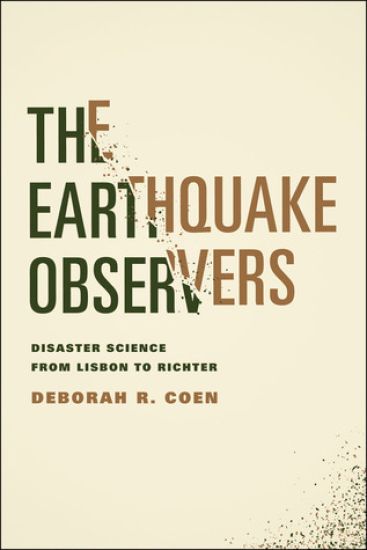
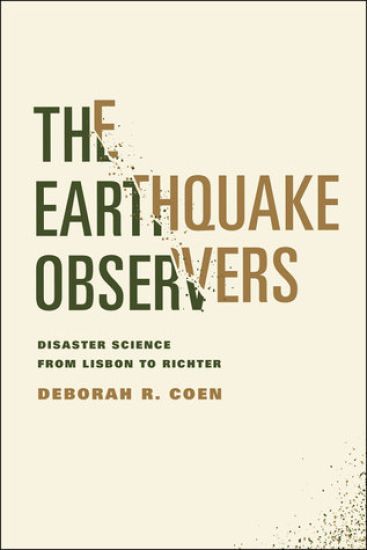
The Earthquake Observers

The Earthquake Observers

Deborah R. Coen

University of Chicago Press
2012
sidottu
Earthquakes have taught us much about our planet's hidden structure and the forces that have shaped it. This knowledge rests not only on the recordings of seismographs, but also on the observations of eyewitnesses to destruction. During the nineteenth century, a scientific description of an earthquake was built of stories - stories from as many people in as many situations as possible. Sometimes their stories told of fear and devastation, sometimes of wonder and excitement. In "The Earthquake Observers", Deborah R. Coen acquaints readers not only with the century's most eloquent seismic commentators, including Alexander von Humboldt, Charles Darwin, Mark Twain, Charles Dickens, Karl Kraus, Ernst Mach, John Muir, and William James, but also with countless other citizen-observers, many of whom were women. Coen explains how observing networks transformed an instant of panic and confusion into a field for scientific research, turning earthquakes into natural experiments at the nexus of the physical and human sciences. Seismology abandoned this project of citizen science with the introduction of the Richter Scale in the 1930s, only to revive it in the twenty-first century in the face of new hazards and uncertainties. "The Earthquake Observers" tells the history of this interrupted dialogue between scientists and citizens about living with environmental risk.
The Earthquake Observers

The Earthquake Observers

Deborah R. Coen

University of Chicago Press
2014
nidottu
Earthquakes have taught us much about our planet's hidden structure and the forces that have shaped it. This knowledge rests not only on the recordings of seismographs but also on the observations of eyewitnesses to destruction. During the nineteenth century, a scientific description of an earthquake was built of stories - stories from as many people in as many situations as possible. Sometimes their stories told of fear and devastation, sometimes of wonder and excitement. In The Earthquake Observers, Deborah R. Coen acquaints readers not only with the century's most eloquent seismic commentators, including Alexander von. Humboldt, Charles Darwitt, Mark Twain, Charles Dickens, Karl Kraus, Ernst Mach, John Muir, and William James, but also with countless other citizen-observers, many of whom were women. Coen explains how observing networks transformed an instant of panic and confusion into a field for scientific research, turning earthquakes into natural experiments at the nexus of the physical and human sciences. Seismology abandoned this project of citizen science with the introduction of the Richter Scale in the 1950s, only to revive it in the twenty-first century in the face of new hazards and uncertainties. The Earthquake Observers tells the history of this interrupted dialogue between scientists and citizens about living with environmental risk.
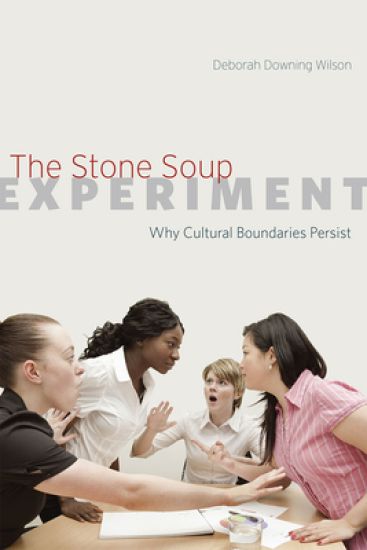
The Stone Soup Experiment

The Stone Soup Experiment

Deborah Downing Wilson

University of Chicago Press
2015
sidottu
The Stone Soup Experiment is a remarkable story of cultural difference, of in-groups, out-groups, and how quickly and strongly the lines between them are drawn. It is also a story about simulation and reality, and how quickly the lines between them can be dismantled. In a compulsively readable account, Deborah Downing Wilson details a ten-week project in which forty university students were split into two different simulated cultures: the carefree Stoners, and the market-driven Traders. Through their eyes we are granted intimate access to the very foundations of human society: how group identities are formed and what happens when opposing ones come into contact. The experience of the Stoners and Traders is a profound testament to human sociality. Even in the form of simulation, even as a game, the participants found themselves quickly-and with real conviction-bound to the ideologies and practices of their in-group. The Stoners enjoyed their days lounging, chatting, and making crafts, while the Traders-through a complex market of playing cards-competed for the highest bankrolls. When they came into contact, misunderstanding, competition, and even manipulation prevailed, to the point that each group became so convinced of its own superiority that even after the simulation's end the students could not reconcile. Throughout her riveting narrative, Downing Wilson interweaves fascinating discussions on the importance of play, emotions, and intergroup interaction in the formation and maintenance of group identities, as well as on the dynamic social processes at work when different cultural groups interact. A fascinating account of social experimentation, the book paints a vivid portrait of our deepest social tendencies and the powers they have over how we make friends and enemies alike.
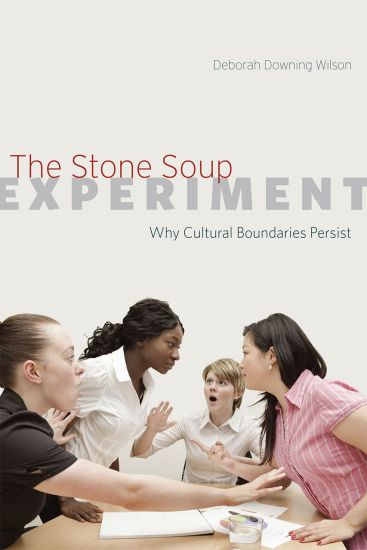
The Stone Soup Experiment

The Stone Soup Experiment

Deborah Downing Wilson

University of Chicago Press
2015
nidottu
The Stone Soup Experiment is a remarkable story of cultural difference, of in-groups, out-groups, and how quickly and strongly the lines between them are drawn. It is also a story about simulation and reality, and how quickly the lines between them can be dismantled. In a compulsively readable account, Deborah Downing Wilson details a ten-week project in which forty university students were split into two different simulated cultures: the carefree Stoners, and the market-driven Traders. Through their eyes we are granted intimate access to the very foundations of human society: how group identities are formed and what happens when opposing ones come into contact. The experience of the Stoners and Traders is a profound testament to human sociality. Even in the form of simulation, even as a game, the participants found themselves quickly-and with real conviction-bound to the ideologies and practices of their in-group. The Stoners enjoyed their days lounging, chatting, and making crafts, while the Traders-through a complex market of playing cards-competed for the highest bankrolls. When they came into contact, misunderstanding, competition, and even manipulation prevailed, to the point that each group became so convinced of its own superiority that even after the simulation's end the students could not reconcile. Throughout her riveting narrative, Downing Wilson interweaves fascinating discussions on the importance of play, emotions, and intergroup interaction in the formation and maintenance of group identities, as well as on the dynamic social processes at work when different cultural groups interact. A fascinating account of social experimentation, the book paints a vivid portrait of our deepest social tendencies and the powers they have over how we make friends and enemies alike.
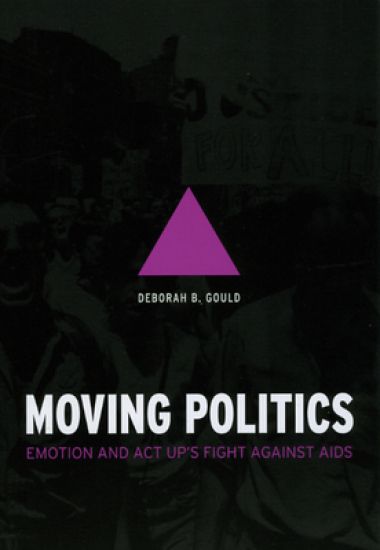
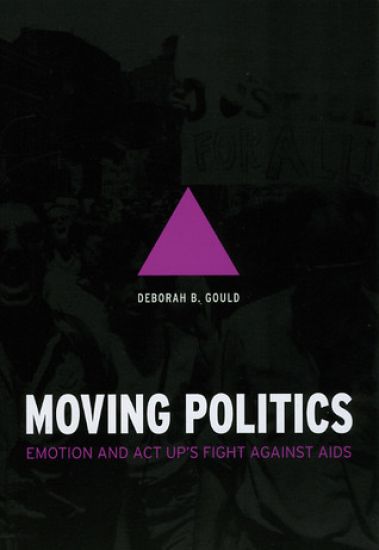
Moving Politics

Moving Politics

Deborah B Gould

University of Chicago Press
2009
sidottu
In the late 1980s, after a decade spent engaged in more routine interest-group politics, thousands of lesbians and gay men responded to the AIDS crisis by defiantly and dramatically taking to the streets. But by the early 1990s, the organization they founded, ACT UP, was no more - even as the AIDS epidemic raged on. Weaving together interviews with activists, extensive research, and reflections on the author's time as a member of the organization, "Moving Politics" is the first book to chronicle the rise and fall of ACT UP, highlighting a key factor in its trajectory: emotion. Surprisingly overlooked by many scholars of social movements, emotion, Gould argues, plays a fundamental role in political activism. From anger to hope, pride to shame, and solidarity to despair, feelings played a significant part in ACT UP's provocative style of protest, which included raucous demonstrations, die-ins, and other kinds of street theater. Detailing the movement's public triumphs and private setbacks, "Moving Politics" is the definitive account of ACT UP's origin, development, and decline as well as a searching look at the role of emotion in contentious politics.
Moving Politics – Emotion and ACT UP`s Fight against AIDS

Moving Politics – Emotion and ACT UP`s Fight against AIDS

Deborah B Gould

University of Chicago Press
2009
nidottu
In the late 1980s, after a decade spent engaged in more routine interest-group politics, thousands of lesbians and gay men responded to the AIDS crisis by defiantly and dramatically taking to the streets. But by the early 1990s, the organization they founded, ACT UP, was no more - even as the AIDS epidemic raged on. Weaving together interviews with activists, extensive research, and reflections on the author's time as a member of the organization, "Moving Politics" is the first book to chronicle the rise and fall of ACT UP, highlighting a key factor in its trajectory: emotion. Surprisingly overlooked by many scholars of social movements, emotion, Gould argues, plays a fundamental role in political activism. From anger to hope, pride to shame, and solidarity to despair, feelings played a significant part in ACT UP's provocative style of protest, which included raucous demonstrations, die-ins, and other kinds of street theater. Detailing the movement's public triumphs and private setbacks, "Moving Politics" is the definitive account of ACT UP's origin, development, and decline as well as a searching look at the role of emotion in contentious politics.
Tough Enough

Tough Enough

Deborah Nelson

University of Chicago Press
2017
nidottu
This book focuses on six brilliant women who are often seen as particularly tough-minded: Simone Weil, Hannah Arendt, Mary McCarthy, Susan Sontag, Diane Arbus, and Joan Didion. Aligned with no single tradition, they escape straightforward categories. Yet their work evinces an affinity of style and philosophical viewpoint that derives from a shared attitude toward suffering. What Mary McCarthy called a "cold eye" was not merely a personal aversion to displays of emotion: it was an unsentimental mode of attention that dictated both ethical positions and aesthetic approaches.Tough Enough traces the careers of these women and their challenges to the pre-eminence of empathy as the ethical posture from which to examine pain. Their writing and art reveal an adamant belief that the hurts of the world must be treated concretely, directly, and realistically, without recourse to either melodrama or callousness. As Deborah Nelson shows, this stance offers an important counter-tradition to the common postwar poles of emotional expressivity on the one hand and cool irony on the other. Ultimately, in its insistence on facing reality without consolation or compensation, this austere "school of the unsentimental" offers new ways to approach suffering in both its spectacular forms and all of its ordinariness.
Error and the Growth of Experimental Knowledge

Error and the Growth of Experimental Knowledge

Deborah G. Mayo

University of Chicago Press
1996
sidottu
We may learn from our mistakes, but this work argues that, where experimental knowledge is concerned, we haven't begun to learn enough. It provides a critique of the subjective Bayesian view of statistical inference, and proposes the author's own error-statistical approach as a more robust framework for the epistemology of experiment. Deborah Mayo seeks to address the needs of researchers who work with statistical analysis, and simultaneously engages the basic philosophical problems of objectivity and rationality. Mayo has argued for an account of learning from error that goes beyond detecting logical inconsistencies. In this book, she presents her complete programme for how we learn about the world by being "shrewd inquisitors of error, white gloves off." Her approach should be relevant to philosophers, historians and sociologists of science, as well as researchers in the physical, biological and social sciences whose work depends upon statistical analysis.
Error and the Growth of Experimental Knowledge

Error and the Growth of Experimental Knowledge

Deborah G. Mayo

University of Chicago Press
1996
nidottu
We may learn from our mistakes, but this work argues that, where experimental knowledge is concerned, we haven't begun to learn enough. It provides a critique of the subjective Bayesian view of statistical inference, and proposes the author's own error-statistical approach as a more robust framework for the epistemology of experiment. Deborah Mayo seeks to address the needs of researchers who work with statistical analysis, and simultaneously engages the basic philosophical problems of objectivity and rationality. Mayo has argued for an account of learning from error that goes beyond detecting logical inconsistencies. In this book, she presents her complete programme for how we learn about the world by being "shrewd inquisitors of error, white gloves off." Her approach should be relevant to philosophers, historians and sociologists of science, as well as researchers in the physical, biological and social sciences whose work depends upon statistical analysis.
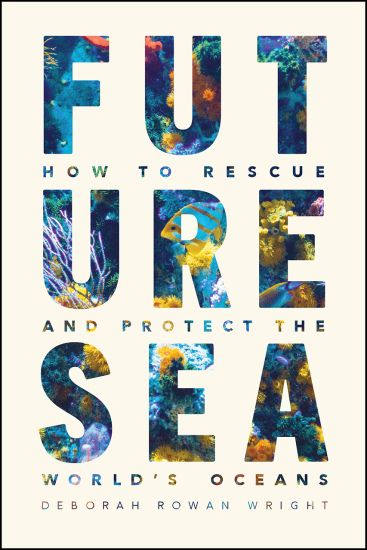
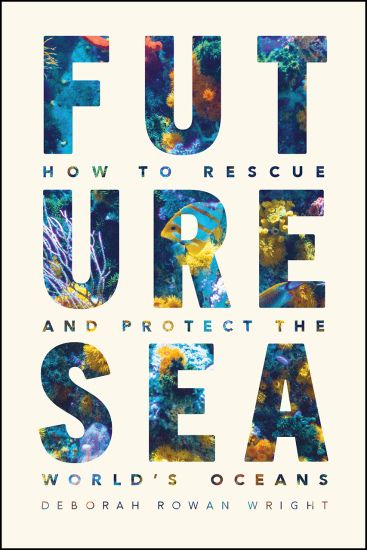
Future Sea

Future Sea

Deborah Rowan Wright

University of Chicago Press
2020
sidottu
The world's oceans face multiple threats: the effects of climate change, pollution, overfishing, plastic waste, and more. Confronted with the immensity of these challenges and of the oceans themselves, we might wonder what more can be done to stop their decline and better protect the sea and marine life. Such widespread environmental threats call for a simple but significant shift in reasoning to bring about long-overdue, elemental change in the way we use ocean resources. In Future Sea, ocean advocate and marine-policy researcher Deborah Rowan Wright provides the tools for that shift. Questioning the underlying philosophy of established ocean conservation approaches, Rowan Wright lays out a radical alternative: a bold and far-reaching strategy of 100 percent ocean protection that would put an end to destructive industrial activities, better safeguard marine biodiversity, and enable ocean wildlife to return and thrive along coasts and in seas around the globe. Future Sea is essentially concerned with the solutions and not the problems. Rowan Wright shines a light on existing international laws intended to keep marine environments safe that could underpin this new strategy. She gathers inspiring stories of communities and countries using ocean resources wisely, as well as of successful conservation projects, to build up a cautiously optimistic picture of the future for our oceans--counteracting all too prevalent reports of doom and gloom. A passionate, sweeping, and personal account, Future Sea not only argues for systemic change in how we manage what we do in the sea, but also describes steps that anyone, from children to political leaders (or indeed, any reader of the book), can take toward safeguarding the oceans and their extraordinary wildlife.
Feminism: A Brief Introduction to the Ideas, Debates, and Politics of the Movement
Beneath the nonstop cacophony of voices across social media, online forums, and news outlets lie the stubborn facts at the heart of the everyday struggles of women today: more than a third of single moms live in poverty; the United States sees more maternal deaths than anywhere else in the developed world; one in five women will be raped in her lifetime; and women still make eighty cents for every dollar earned by a man. Between these brutal statistics and the ill-informed, often contentious public debate stand millions of women who feel alienated, disaffected, or just plain worn out. In the era of #MeToo, Trump, and online harassment, innovative progressive feminist voices are more essential than ever. With her latest book, Deborah Cameron considers feminism from all sides--as an idea, as a theoretical approach, and as a political movement. Written in the succinct, sharp style that has made Cameron's feminist linguistics blog so popular, this short book lays out past and present debates on seven key topics: domination, rights, work, femininity, sex, culture, and the future. Feminism emphasizes the diversity of feminist thought, including queer, women-of-color, and trans perspectives. Cameron's clear and incisive account untangles the often confusing strands of one of history's most important intellectual and political movements. Broad in scope but refreshingly concise, this book is perfect for anyone who needs a straightforward primer on the complex history of feminism, a nuanced explanation of key issues and debates, or strategic thinking about the questions facing activists today.
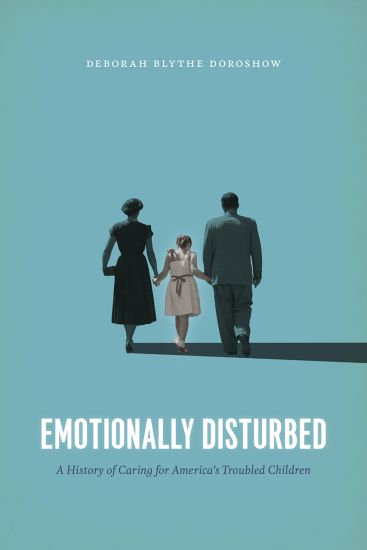
Emotionally Disturbed

Emotionally Disturbed

Deborah Blythe Doroshow

University of Chicago Press
2019
sidottu
Before the 1940s, children in the United States with severe emotional difficulties would have had few options for care. The first option was usually a child guidance clinic within the community, but they might also have been placed in a state mental hospital or asylum, an institution for the so-called feebleminded, or a training school for delinquent children. Starting in the 1930s, however, more specialized institutions began to open all over the country. Staff members at these residential treatment centers shared a commitment to helping children who couldn't be managed at home. They adopted an integrated approach to treatment, employing talk therapy, schooling, and other activities in the context of a therapeutic environment. Emotionally Disturbed is the first work to examine not only the history of residential treatment, but also the history of seriously mentally ill children in the United States. As residential treatment centers emerged as new spaces with a fresh therapeutic perspective, a new kind of person became visible--the emotionally disturbed child. Residential treatment centers and the people who worked there built physical and conceptual structures that identified a population of children who were alike in distinctive ways. Emotional disturbance became a diagnosis, a policy problem, and a statement about the troubled state of postwar society, as over the next couple of decades Americans went from pouring private and public funds into the care of troubled children to abandoning them almost completely. Charting the decline of residential treatment centers in favor of domestic care-based models in the 1980s and 1990s, this history is a must-read for those wishing to understand how our current child mental health system came to be.
Landlords and Lodgers

Landlords and Lodgers

Deborah Pellow

University of Chicago Press
2008
nidottu
"Landlords and Lodgers" analyzes the results of a long-term study of a Ghanaian zongo, or "stranger quarter" - a place of refuge for Hausa migrants from northern Nigeria who have relocated to the city of Accra. Deborah Pellow explores the relationships among community members both in terms of the built structures - rooms, doors, communal structures, and hallways - and of the social networks, institutions, and routine activities that define this unique urban neighborhood. This volume will be useful to students and scholars of the relationships between architecture, migration, and social change.
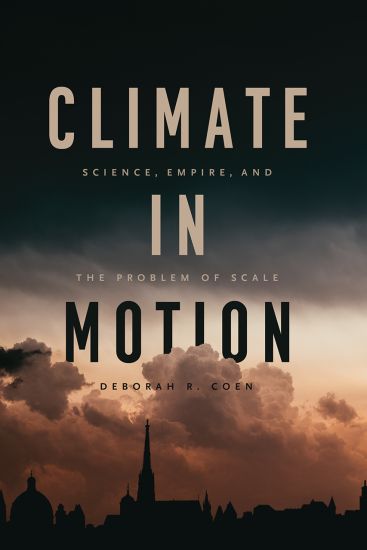
Climate in Motion

Climate in Motion

Deborah R. Coen

University of Chicago Press
2020
nidottu
Today, predicting the impact of human activities on the earth’s climate hinges on tracking interactions among phenomena of radically different dimensions, from the molecular to the planetary. Climate in Motion shows that this multiscalar, multicausal framework emerged well before computers and satellites. Extending the history of modern climate science back into the nineteenth century, Deborah R. Coen uncovers its roots in the politics of empire-building in central and eastern Europe. She argues that essential elements of the modern understanding of climate arose as a means of thinking across scales in a state—the multinational Habsburg Monarchy, a patchwork of medieval kingdoms and modern laws—where such thinking was a political imperative. Led by Julius Hann in Vienna, Habsburg scientists were the first to investigate precisely how local winds and storms might be related to the general circulation of the earth’s atmosphere as a whole. Linking Habsburg climatology to the political and artistic experiments of late imperial Austria, Coen grounds the seemingly esoteric science of the atmosphere in the everyday experiences of an earlier era of globalization. Climate in Motion presents the history of modern climate science as a history of “scaling”—that is, the embodied work of moving between different frameworks for measuring the world. In this way, it offers a critical historical perspective on the concepts of scale that structure thinking about the climate crisis today and the range of possibilities for responding to it.
Future Sea

Future Sea

Deborah Rowan Wright

THE UNIVERSITY OF CHICAGO PRESS
2022
nidottu
A counterintuitive and compelling argument that existing laws already protect the entirety of our oceans—and a call to understand and enforce those protections. The world’s oceans face multiple threats: the effects of climate change, pollution, overfishing, plastic waste, and more. Confronted with the immensity of these challenges and of the oceans themselves, we might wonder what more can be done to stop their decline and better protect the sea and marine life. Such widespread environmental threats call for a simple but significant shift in reasoning to bring about long-overdue, elemental change in the way we use ocean resources. In Future Sea, ocean advocate and marine-policy researcher Deborah Rowan Wright provides the tools for that shift. Questioning the underlying philosophy of established ocean conservation approaches, Rowan Wright lays out a radical alternative: a bold and far-reaching strategy of 100 percent ocean protection that would put an end to destructive industrial activities, better safeguard marine biodiversity, and enable ocean wildlife to return and thrive along coasts and in seas around the globe. Future Sea is essentially concerned with the solutions and not the problems. Rowan Wright shines a light on existing international laws intended to keep marine environments safe that could underpin this new strategy. She gathers inspiring stories of communities and countries using ocean resources wisely, as well as of successful conservation projects, to build up a cautiously optimistic picture of the future for our oceans—counteracting all-too-prevalent reports of doom and gloom. A passionate, sweeping, and personal account, Future Sea not only argues for systemic change in how we manage what we do in the sea but also describes steps that anyone, from children to political leaders (or indeed, any reader of the book), can take toward safeguarding the oceans and their extraordinary wildlife.
Sounding the Center

Sounding the Center

Deborah Wong

University of Chicago Press
2001
sidottu
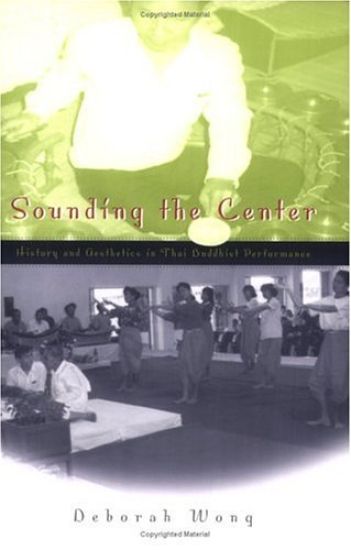
"Sounding the Centre" is an in-depth look at the power behind classical music and dance in Bangkok, the capital and sacred centre of Buddhist Thailand. Focusing on the ritual honouring teachers of music and dance, Deborah A. Wong reveals a complex network of connections among kings, teachers, knowledge and performance that underlies the classical court arts. Drawing on her extensive fieldwork, Wong lays out the ritual in detail: the way it is enacted, the foods and objects involved, and the people who perform it, emphasizing the way the performers themselves discuss and construct aspects of the ceremony. Only those who have been initiated by a master can manifest the divine in the human realm. The power held by the master musicians, Wong shows, is both ritual and social; they are not just ritual experts, they are also leaders at the government-run National Conservatory. This esoteric knowledge, Wong suggests, has helped Thai classical music endure in the face of changing patronage and the challenges posed by the urban environment that supports it. A compact disc accompanies the book.
Sounding the Center

Sounding the Center

Deborah Wong

University of Chicago Press
2001
nidottu
"Sounding the Centre" is an in-depth look at the power behind classical music and dance in Bangkok, the capital and sacred centre of Buddhist Thailand. Focusing on the ritual honouring teachers of music and dance, Deborah A. Wong reveals a complex network of connections among kings, teachers, knowledge and performance that underlies the classical court arts. Drawing on her extensive fieldwork, Wong lays out the ritual in detail: the way it is enacted, the foods and objects involved, and the people who perform it, emphasizing the way the performers themselves discuss and construct aspects of the ceremony. Only those who have been initiated by a master can manifest the divine in the human realm. The power held by the master musicians, Wong shows, is both ritual and social; they are not just ritual experts, they are also leaders at the government-run National Conservatory. This esoteric knowledge, Wong suggests, has helped Thai classical music endure in the face of changing patronage and the challenges posed by the urban environment that supports it. A compact disc accompanies the book.
A Different Wolf

A Different Wolf

Deborah-Anne Tunney

McGill-Queen's University Press
2020
nidottu
In her debut poetry collection, Deborah-Anne Tunney delves into the life and work of one of the twentieth century's most influential film directors, Alfred Hitchcock. Just as Hitchcock's work looks unflinchingly at some of the darkest elements of human nature, A Different Wolf turns a lens on the director himself, revealing the interplay between the social mores of his time and Hitchcock's distinctive psychological makeup. A Different Wolf views the iconic director's cinematic masterpieces through the optics of the poet's personal quest for meaning. Tunney reveals how guilt and innocence, universal and timeless subjects, work to define character and motivate plot. Other poems illustrate Hitchcock's presentation of women as a sign of his fixations, but also as a product of his era. His desire to expose the qualities of time - how film can slow it down or speed it up, qualities he considered filmmaking's most important tool - points to the deep resonance of his work. Providing a sharp-eyed analysis of Hitchcock's life and art, A Different Wolf offers a unique take on the filmmaker's enduring relevance.
Ballet Book

Ballet Book

Deborah Bowes; Karen Kain

Firefly Books Ltd
2018
nidottu
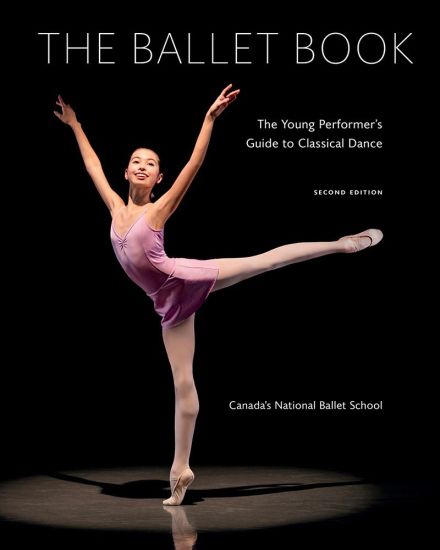
“This comprehensive guide... helps youngsters who love ballet to understand the hard work and commitment involved in classical dance training.” —School Library Journal (of the first edition). “A detailed, practical guide for serious ballet students... To balance collections heavy on colourful ballet books for browsers with stars in their eyes, here’s a guide for ballet students who are ready to get down to work.” —Booklist (on the first edition). Prepared in conjunction with Canada’s National Ballet School, The Ballet Book is the definitive instructional resource for children who are beginning to explore the possibilities and delights of ballet. The Ballet Book is an inspirational motivator, an exceptional teaching aid, and an ideal companion for students. Now it has all-new photographs in colour and a text more suited to contemporary young dancers. The book illustrates in meticulous detail — and through more than 100 photographs — every position, step and pose involved in barre work, pointe work, alignment, classical ballet poses, attitudes, allegros, batteries, pirouettes and arabesques. Age-appropriate and comprehensive, it is a motivational guide, with information on deciding to dance; finding a teacher; musical accompaniment; finding the ideal studio; what to wear and grooming; positions, steps and poses; and exercises and nutrition. Historical highlights and modern opportunities complete this comprehensive book. The Ballet Book is a strong guide for both boys and girls.