Kirjojen hintavertailu. Mukana 12 016 292 kirjaa ja 12 kauppaa.

Kirjahaku

Etsi kirjoja tekijän nimen, kirjan nimen tai ISBN:n perusteella.

1000 tulosta hakusanalla Deborah Cook

Things I Don't Want to Know

Things I Don't Want to Know

Deborah Levy

Penguin Books Ltd.
2018
pokkari
Unmissable. Like chancing upon an oasis, you want to drink it slowly... Subtle, unpredictable, surprising' Guardian.Things I Don't Want to Know is the first in Deborah Levy's essential three-part 'Living Autobiography' on writing and womanhood.Taking George Orwell's famous essay, 'Why I Write', as a jumping-off point, Deborah Levy offers her own indispensable reflections of the writing life. With wit, clarity and calm brilliance, she considers how the writer must stake claim to that contested territory as a young woman and shape it to her need. Things I Don't Want to Know is a work of dazzling insight and deep psychological succour, from one of our most vital contemporary writers.'Superb sharpness and originality of imagination. An inspiring work of writing' Marina Warner.
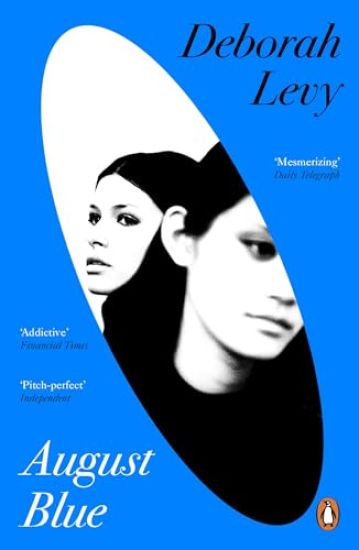
August Blue

August Blue

Deborah Levy

PENGUIN BOOKS LTD
2024
pokkari
A SUNDAY TIMES BESTSELLERBOOK OF THE YEAR 2023 ACCORDING TO FINANCIAL TIMES, GUARDIAN, INDEPENDENT, TIME MAGAZINE'Levy's lyrical, pitch-perfect prose is an exploration of our reasons for living, the forces that drive us and the inner music that controls the rhythms of our dance through life and love' IndependentThe mesmerising new novel from the twice Booker-shortlisted author of Hot Milk and Swimming HomeAt the height of her career, concert pianist Elsa M. Anderson - former child prodigy, now in her thirties - walks off the stage in Vienna, mid-performance.Now she is in Athens, watching as another young woman, a stranger but uncannily familiar - almost her double - purchases a pair of mechanical dancing horses at a flea market. Elsa wants the horses too, but there are no more for sale. She drifts to the ferry port, on the run from her talent and her history.So begins a journey across Europe, shadowed by the elusive woman who bought the dancing horses.A dazzling portrait of melancholy and metamorphosis, August Blue uncovers the ways in which we seek to lose an old story, find ourselves in others and create ourselves anew.'Deborah Levy writes like a dream and I mean that quite literally' Stuart Kelly, The Scotsman'A virtuosic novel of identity and breakdown . . . [it] flickers constantly between comedy and darkness. You know you'll read August Blue again' M John Harrison, GuardianSunday Times bestseller, May 2023
Every Tub Must Sit on Its Own Bottom

Every Tub Must Sit on Its Own Bottom

Deborah G. Plant

University of Illinois Press
1995
sidottu
"Plant's study is sorely needed at this point in the evolving critical assessment of Hurston. It is a paradigm for the study of individual African American women writers." -- Alice Deck, University of Illinois at Urbana-Champaign In a ground-breaking study of Zora Neale Hurston, Deborah Plant takes issue with current notions of Hurston as a feminist and earlier impressions of her as an intellectual lightweight who disregarded serious issues of race in American culture. Instead, Plant calls Hurston a "writer of resistance" who challenged the politics of domination both in her life and in her work. One of the great geniuses of the Harlem Renaissance, Hurston stands out as a strong voice for African-American women. Her anthropological inquiries as well as her evocative prose provide today's readers with a rich history of African American folk culture, a folk culture through which Hurston expressed her personal and political strategy of resistance and self-empowerment. Through readings of Hurston's fiction and autobiographical writings, Plant offers one of the first book-length discussions of Hurston's personal philosophy of individualism and self-preservation. From a discussion of Hurston's preacher father and influential mother, whose guiding philosophy is reflected in the title of this book, to the influence of Spinoza and Nietzsche, Plant puts into perspective the driving forces behind Hurston's powerful prose. This fresh look at one of the most important writers of the twentieth century is sure to shape future study of Hurston and her work.
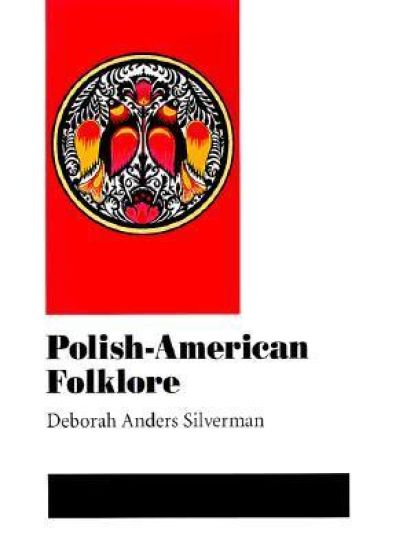
Polish-American Folklore

Polish-American Folklore

Deborah Silverman

University of Illinois Press
2000
sidottu
Integrating vivid photographs, firsthand observations, and interviews against a rich backdrop of ethnic practices and traditions, Deborah Anders Silverman explores how Polish Americans are creatively adapting the rural peasant folklore of the old country to life in multicultural, urban America. Silverman surveys rituals of courtship, marriage, coming of age, and funerals, also noting those customs that have been rediscovered after falling into disuse. She follows the trail of folk stories and delves into folk music and dance, particularly the polka, providing a detailed discussion of texts, contexts, and performance practices. She also describes birthing practices, home remedies, superstitions, folk blessings, and miracle cures. In addition, she offers a wealth of information on foodways and on the origins and celebration of holy days, from Christmas Eve vigils to the Dyngus Day festivals of the Easter season. Polish-American Folklore reveals a community that preserves distinctive traditions even though geographically dispersed in a new homeland. Polish Americans retain ties to their ethnicity though ethnic media, social clubs, churches, group events, and the Internet. This "Polonia without walls" is united by a resilient, dynamic, family-oriented culture that attracts not only Polish immigrants and their descendants but also newcomers from other ethnic and racial groups. By including first-person commentary from a wide range of Polish American individuals and families, from first-generation immigrants to non-Polish in-laws who embrace Polish foods, music, and traditions, Silverman brings to life a thriving ethnic subculture that values equally its Polish roots and its American harvest.
Coalfield Jews

Coalfield Jews

Deborah R. Weiner

University of Illinois Press
2006
sidottu
The stories of vibrant eastern European Jewish communities in the Appalachian coalfieldsCoalfield Jews explores the intersection of two simultaneous historic events: central Appalachia’s transformative coal boom (1880s-1920), and the mass migration of eastern European Jews to America. Traveling to southern West Virginia, eastern Kentucky, and southwestern Virginia to investigate the coal boom’s opportunities, some Jewish immigrants found success as retailers and established numerous small but flourishing Jewish communities. Deborah R. Weiner’s Coalfield Jews provides the first extended study of Jews in Appalachia, exploring where they settled, how they made their place within a surprisingly receptive dominant culture, how they competed with coal company stores, interacted with their non-Jewish neighbors, and maintained a strong Jewish identity deep in the heart of the Appalachian mountains. To tell this story, Weiner draws on a wide range of primary sources in social, cultural, religious, labor, economic, and regional history. She also includes moving personal statements, from oral histories as well as archival sources, to create a holistic portrayal of Jewish life that will challenge commonly held views of Appalachia as well as the American Jewish experience.
Lost in the USA

Lost in the USA

Deborah Gray White

University of Illinois Press
2017
sidottu
Remembered as an era of peace and prosperity, turn-of-the-millennium America was also a time of mass protest. But the political demands of the marchers seemed secondary to an urgent desire for renewal and restoration felt by people from all walks of life. Drawing on thousands of personal testimonies, Deborah Gray White explores how Americans sought better ways of living in, and dealing with, a rapidly changing world. From the Million Man, Million Woman, and Million Mom Marches to the Promise Keepers and LGBT protests, White reveals a people lost in their own country. Mass gatherings offered a chance to bond with like-minded others against a relentless tide of loneliness and isolation. By participating, individuals opened a door to self-discovery that energized their quests for order, autonomy, personal meaning, and fellowship in a society that seemed hostile to such deeper human needs. Moving forward in time, White also shows what marchers found out about themselves and those gathered around them. The result is an eye-opening reconsideration of a defining time in contemporary America.
Chicago Católico

Chicago Católico

Deborah E. Kanter

University of Illinois Press
2020
sidottu
Today, over one hundred Chicago-area Catholic churches offer Spanish language mass to congregants. How did the city's Mexican population, contained in just two parishes prior to 1960, come to reshape dozens of parishes and neighborhoods? Deborah E. Kanter tells the story of neighborhood change and rebirth in Chicago's Mexican American communities. She unveils a vibrant history of Mexican American and Mexican immigrant relations as remembered by laity and clergy, schoolchildren and their female religious teachers, parish athletes and coaches, European American neighbors, and from the immigrant women who organized as guadalupanas and their husbands who took part in the Holy Name Society. Kanter shows how the newly arrived mixed memories of home into learning the ways of Chicago to create new identities. In an ever-evolving city, Mexican immigrants and Mexican Americans’ fierce devotion to their churches transformed neighborhoods such as Pilsen.The first-ever study of Mexican-descent Catholicism in the city, Chicago Católico illuminates a previously unexplored facet of the urban past and provides present-day lessons for American communities undergoing ethnic integration and succession.
Appalachian Mountain Religion

Appalachian Mountain Religion

Deborah McCauley

University of Illinois Press
1995
nidottu
"A monumental achievement. . . . Certainly the best thing written on Appalachian Religion and one of the best works on the region itself. Deborah McCauley has made a winning argument that Appalachian religion is a true and authentic counter-stream to modern mainstream Protestant religion." -- Loyal Jones, founding director of the Appalachian Center at Berea CollegeAppalachian Mountain Religion is much more than a narrowly focused look at the religion of a region. Within this largest regional and widely diverse religious tradition can be found the strings that tie it to all of American religious history. The fierce drama between American Protestantism and Appalachian mountain religion has been played out for nearly two hundred years; the struggle between piety and reason, between the heart and the head, has echoes reaching back even further--from Continental Pietism and the Scots-Irish of western Scotland and Ulster to Colonial Baptist revival culture and plain-folk camp-meeting religion. Deborah Vansau McCauley places Appalachian mountain religion squarely at the center of American religious history, depicting the interaction and dramatic conflicts between it and the denominations that comprise the Protestant "mainstream." She clarifies the tradition histories and symbol systems of the area's principally oral religious culture, its worship practices and beliefs, further illuminating the clash between mountain religion and the "dominant religious culture" of the United States. This clash has helped to shape the course of American religious history. The explorations in Appalachian Mountain Religion range from Puritan theology to liberation theology, from Calvinism to the Holiness-Pentecostal movements. Within that wide realm and in the ongoing contention over religious values, the many strains of American religious history can be heard.
Coalfield Jews

Coalfield Jews

Deborah R. Weiner

University of Illinois Press
2006
nidottu
The stories of vibrant eastern European Jewish communities in the Appalachian coalfieldsCoalfield Jews explores the intersection of two simultaneous historic events: central Appalachia’s transformative coal boom (1880s-1920), and the mass migration of eastern European Jews to America. Traveling to southern West Virginia, eastern Kentucky, and southwestern Virginia to investigate the coal boom’s opportunities, some Jewish immigrants found success as retailers and established numerous small but flourishing Jewish communities. Deborah R. Weiner’s Coalfield Jews provides the first extended study of Jews in Appalachia, exploring where they settled, how they made their place within a surprisingly receptive dominant culture, how they competed with coal company stores, interacted with their non-Jewish neighbors, and maintained a strong Jewish identity deep in the heart of the Appalachian mountains. To tell this story, Weiner draws on a wide range of primary sources in social, cultural, religious, labor, economic, and regional history. She also includes moving personal statements, from oral histories as well as archival sources, to create a holistic portrayal of Jewish life that will challenge commonly held views of Appalachia as well as the American Jewish experience.
Lost in the USA

Lost in the USA

Deborah Gray White

University of Illinois Press
2017
nidottu
Remembered as an era of peace and prosperity, turn-of-the-millennium America was also a time of mass protest. But the political demands of the marchers seemed secondary to an urgent desire for renewal and restoration felt by people from all walks of life. Drawing on thousands of personal testimonies, Deborah Gray White explores how Americans sought better ways of living in, and dealing with, a rapidly changing world. From the Million Man, Million Woman, and Million Mom Marches to the Promise Keepers and LGBT protests, White reveals a people lost in their own country. Mass gatherings offered a chance to bond with like-minded others against a relentless tide of loneliness and isolation. By participating, individuals opened a door to self-discovery that energized their quests for order, autonomy, personal meaning, and fellowship in a society that seemed hostile to such deeper human needs. Moving forward in time, White also shows what marchers found out about themselves and those gathered around them. The result is an eye-opening reconsideration of a defining time in contemporary America.
Chicago Católico

Chicago Católico

Deborah E. Kanter

University of Illinois Press
2020
nidottu
Today, over one hundred Chicago-area Catholic churches offer Spanish language mass to congregants. How did the city's Mexican population, contained in just two parishes prior to 1960, come to reshape dozens of parishes and neighborhoods? Deborah E. Kanter tells the story of neighborhood change and rebirth in Chicago's Mexican American communities. She unveils a vibrant history of Mexican American and Mexican immigrant relations as remembered by laity and clergy, schoolchildren and their female religious teachers, parish athletes and coaches, European American neighbors, and from the immigrant women who organized as guadalupanas and their husbands who took part in the Holy Name Society. Kanter shows how the newly arrived mixed memories of home into learning the ways of Chicago to create new identities. In an ever-evolving city, Mexican immigrants and Mexican Americans’ fierce devotion to their churches transformed neighborhoods such as Pilsen.The first-ever study of Mexican-descent Catholicism in the city, Chicago Católico illuminates a previously unexplored facet of the urban past and provides present-day lessons for American communities undergoing ethnic integration and succession.
William James, Pragmatism, and American Culture

William James, Pragmatism, and American Culture

Deborah Whitehead

Indiana University Press
2016
sidottu
William James, Pragmatism, and American Culture focuses on the work of William James and the relationship between the development of pragmatism and its historical, cultural, and political roots in 19th-century America. Deborah Whitehead reads pragmatism through the intersecting themes of narrative, gender, nation, politics, and religion. As she considers how pragmatism helps to explain the United States to itself, Whitehead articulates a contemporary pragmatism and shows how it has become a powerful and influential discourse in American intellectual and popular culture.
William James, Pragmatism, and American Culture

William James, Pragmatism, and American Culture

Deborah Whitehead

Indiana University Press
2016
pokkari
William James, Pragmatism, and American Culture focuses on the work of William James and the relationship between the development of pragmatism and its historical, cultural, and political roots in 19th-century America. Deborah Whitehead reads pragmatism through the intersecting themes of narrative, gender, nation, politics, and religion. As she considers how pragmatism helps to explain the United States to itself, Whitehead articulates a contemporary pragmatism and shows how it has become a powerful and influential discourse in American intellectual and popular culture.
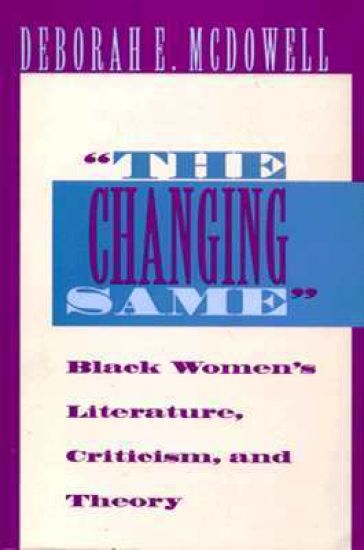
The Changing Same"

The Changing Same"

Deborah E. McDowell

Indiana University Press
1995
pokkari
"The Changing Same" examines defining moments in African American women's fiction and its reception: the "Women's Era" of the 1890s, the Harlem Renaissance, and the "New Black Renaissance" of the 1970s and 1980s. Deborah McDowell maps this history in readings of Emma Dunham Kelley, Frances E. W. Harper, Jessie Fauset, Nella Larsen, Alice Walker, Toni Morrison, and Sherley Anne Williams. She examines representations of slavery, sexuality, and homoeroticism; the reception of African American women's fiction in the 1980s; and African American feminist writing in the "Age of Theory."
Locating Bourdieu

Locating Bourdieu

Deborah Reed-Danahay

Indiana University Press
2004
pokkari
Pierre Bourdieu (1930–2002) had an enormous influence on social and cultural thought in the second half of the 20th century, leaving a mark on fields as diverse as sociology, anthropology, critical theory, education, literary criticism, art history, and media studies. From his childhood in a rural French village, to his fieldwork in Algeria, to his ascension to the Chair of Sociology at the Collège de France, Bourdieu's life followed a trajectory both complex and contradictory. In this original and eloquent study, Deborah Reed-Danahay offers fresh insights on Bourdieu's work by drawing on the perspectives of ethnography and autobiography. Using Bourdieu's own reflections upon his life and career and considering the totality of his research and writing, this book locates Bourdieu within his French milieu and within the current state of discussion of Europe and its colonial legacy. Locating Bourdieu revisits major themes and concepts such as structure and practice, taste and distinction, habitus, social field, symbolic capital, and symbolic violence, adding new perspectives and discovering implications of Bourdieu's work for understanding emotion, social space, and personal narrative. The result is a work of impressive scholarship and intellectual creativity that will appeal to scholars, students, and non-specialists alike. New Anthropologies of Europe—Daphne Berdahl, Matti Bunzl, and Michael Herzfeld, editors
The Ethics of Autism

The Ethics of Autism

Deborah R. Barnbaum

Indiana University Press
2008
pokkari
Autism is one of the most compelling, controversial, and heartbreaking cognitive disorders. It presents unique philosophical challenges as well, raising intriguing questions in philosophy of mind, cognitive science, and philosophy of language that need to be explored if the autistic population is to be responsibly served. Starting from the "theory of mind" thesis that a fundamental deficit in autism is the inability to recognize that other persons have minds, Deborah R. Barnbaum considers its implications for the nature of consciousness, our understanding of the consciousness of others, meaning theories in philosophy of language, and the modality of mind. This discussion lays the groundwork for consideration of the value of an autistic life, as well as the moral theories available to persons with autism. The book also explores questions about genetic decision making, research into the nature of autism, and the controversial quest for a cure. This is a timely and wide-ranging book on a disorder that commends itself to serious ethical examination.
Ugly War, Pretty Package

Ugly War, Pretty Package

Deborah L. Jaramillo

Indiana University Press
2009
pokkari
Deborah L. Jaramillo investigates cable news' presentation of the Iraq War in relation to "high concept" filmmaking. High concept films can be reduced to single-sentence summaries and feature pre-sold elements; they were considered financially safe projects that would sustain consumer interest beyond their initial theatrical run. Using high concept as a framework for the analysis of the 2003 coverage of the Iraq War—paying close attention to how Fox News and CNN packaged and promoted the U.S. invasion of Iraq—Ugly War, Pretty Package offers a new paradigm for understanding how television news reporting shapes our perceptions of events.
Art of the Court of Bijapur

Art of the Court of Bijapur

Deborah Hutton

Indiana University Press
2006
sidottu
"[A]n impressive and original work of synthetic scholarship that one hopes will be emulated by others." —Phillip B. Wagoner, Wesleyan University "[A]n excellent and important work . . . [with] a wonderful sophistication of method." —Padma Kaimal, Colgate University The patrons and artists of Bijapur, an Islamic kingdom that flourished in the Deccan region of India in the 16th and 17th centuries, produced lush paintings and elaborately carved architecture, evidence of a highly cosmopolitan Indo-Islamic culture. Bijapur's most celebrated monument, the Ibrahim Rauza tomb complex, is carved with elegant calligraphy and lotus flowers and was once dubbed "the Taj Mahal of the South." This stunningly illustrated study traces the development of Bijapuri art and courtly identity through detailed examination of selected paintings and architecture, many of which have never before been published. They deserve our attention for their aesthetic qualities as well as for the ways they expand our understanding of the rich synthesis of cultures and religions in South Asian and Islamic art.
The Social Construction of Technological Systems
An anniversary edition of an influential book that introduced a groundbreaking approach to the study of science, technology, and society.This pioneering book, first published in 1987, launched the new field of social studies of technology. It introduced a method of inquiry-social construction of technology, or SCOT-that became a key part of the wider discipline of science and technology studies. The book helped the MIT Press shape its STS list and inspired the Inside Technology series. The thirteen essays in the book tell stories about such varied technologies as thirteenth-century galleys, eighteenth-century cooking stoves, and twentieth-century missile systems. Taken together, they affirm the fruitfulness of an approach to the study of technology that gives equal weight to technical, social, economic, and political questions, and they demonstrate the illuminating effects of the integration of empirics and theory. The approaches in this volume-collectively called SCOT (after the volume's title) have since broadened their scope, and twenty-five years after the publication of this book, it is difficult to think of a technology that has not been studied from a SCOT perspective and impossible to think of a technology that cannot be studied that way.