Kirjojen hintavertailu. Mukana 11 717 486 kirjaa ja 12 kauppaa.

Kirjahaku

Etsi kirjoja tekijän nimen, kirjan nimen tai ISBN:n perusteella.

1000 tulosta hakusanalla E. W. Simson

On a Collection of Birds Made by Messrs. J. E. Benedict and W. Nye of the United States Fish Commission Steamer "Albatross."
This work has been selected by scholars as being culturally important, and is part of the knowledge base of civilization as we know it. This work was reproduced from the original artifact, and remains as true to the original work as possible. Therefore, you will see the original copyright references, library stamps (as most of these works have been housed in our most important libraries around the world), and other notations in the work.This work is in the public domain in the United States of America, and possibly other nations. Within the United States, you may freely copy and distribute this work, as no entity (individual or corporate) has a copyright on the body of the work.As a reproduction of a historical artifact, this work may contain missing or blurred pages, poor pictures, errant marks, etc. Scholars believe, and we concur, that this work is important enough to be preserved, reproduced, and made generally available to the public. We appreciate your support of the preservation process, and thank you for being an important part of keeping this knowledge alive and relevant.
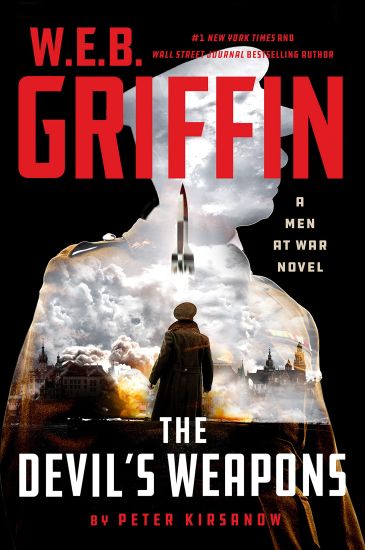
W. E. B. Griffin the Devil's Weapons

W. E. B. Griffin the Devil's Weapons

Peter Kirsanow

Thorndike Press Large Print
2022
sidottu
Dick Canidy and the agents of the OSS scour war torn Poland looking for a rocket scientist who holds the secrets to the Nazis most dangerous weapon in this new entry in W.E.B. Griffin's New York Times bestselling Men at War series. April 1940. By terms of the Soviet Nazi Nonaggression pact, the two dictatorships divided the helpless nation of Poland. Now, the Russians are rounding up enemies of the state in their occupation zone, but one essential target slips away. Dr. Sebastian Kapsky had spent years working with Walter Riedel and Werner von Braun in the early days of rocket science, but as a man with a conscience he refused to continue when he saw the perversion of their work by the Nazis. That makes him the most knowledgeable person about German superweapons outside of Germany. The Germans want him. The Soviets are desperate to grab him, but Wild Bill Donovan knows there's only one man who can find him in the middle of a war zone and get him out--Dick Canidy.
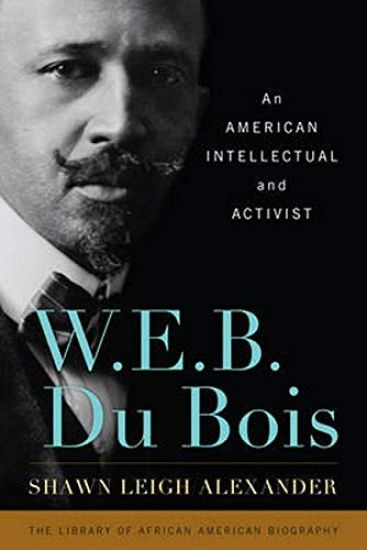
W. E. B. Du Bois

W. E. B. Du Bois

Shawn Leigh Alexander

Rowman Littlefield
2015
sidottu
W. E. B. Du Bois was one of the most prolific African American authors, scholars, and leaders of the twentieth century, but none of his previous biographies have so practically and comprehensively introduced the man and his impact on American history as noted historian Shawn Alexander's W. E. B. Du Bois: An American Intellectual and Activist. Alexander tells Du Bois’ story in a clear and concise manner, exploring his racial strategy, civil rights activity, journalistic career, and his role as an international spokesman. The book also captures Du Bois’s life as a historian, sociologist, artist, propagandist, and peace activist, while providing space for the voices of his chief critics: Booker T. Washington, Marcus Garvey, Walter White, the Young Turks of the NAACP—not to mention the federal government’s characterization of his ever-radicalizing beliefs, particularly after World War II. Alexander’s analysis traces the development of Du Bois' thought over time, beginning with his formative years in New England and ending with his death in Ghana. Paying significantly more attention to the many pivotal and previously unexamined intellectual moments in his life, this biography illustrates the experiences that helped bend and mold the indispensable thinker that W.E.B. Du Bois became: the kind whose crowning achievement is his continued relevance in contemporary culture, from classrooms to curbsides.
W. E. B. Du Bois

W. E. B. Du Bois

Shawn Leigh Alexander

Rowman Littlefield
2017
nidottu
W. E. B. Du Bois was one of the most prolific African-American authors, scholars, and leaders of the twentieth century. In this book, Alexander’s traces the development of Du Bois' thought over time. Paying significantly more attention to the many pivotal and previously unexamined intellectual moments in his life, this biography illustrates the experiences that helped bend and mold the indispensable thinker that W. E. B. Du Bois became: the kind whose crowning achievement is his continued relevance in contemporary culture, from classrooms to curbsides.
W. E. B. DuBois's Exhibit of American Negroes

W. E. B. DuBois's Exhibit of American Negroes

Eugene F. Provenzo

Rowman Littlefield
2013
sidottu
“The problem of the Twentieth Century is the problem of the color-line.” This quote is among the most prophetic in American history. It was written by W. E. B. DuBois for the Exhibition of American Negroes displayed at the 1900 Paris Exposition. They are words whose force echoed throughout the Twentieth Century. W.E.B. DuBois put together a groundbreaking exhibit about African Americans for the 1900 World’s Fair in Paris. For the first time, this book takes readers through the exhibit. With more than 200 black-and-white images throughout, this book explores the diverse lives of African Americans at the turn of the century, from challenges to accomplishments. DuBois confronted stereotypes in many ways in the exhibit, and he provided irrefutable evidence of how African Americans had been systematically discriminated against. Though it was only on display for a few brief months, the award-winning Exhibit of American Negroes represents the great lost archive of African American culture from the beginning of the twentieth century.
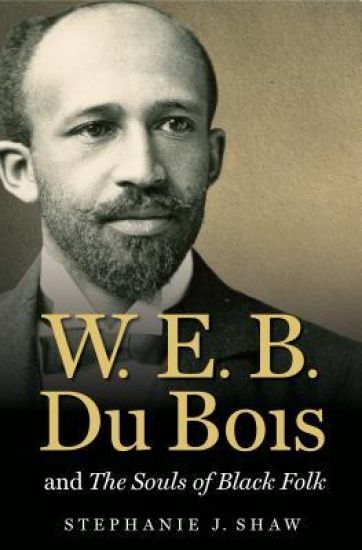
W. E. B. Du Bois and The Souls of Black Folk

W. E. B. Du Bois and The Souls of Black Folk

Shaw Stephanie J.

The University of North Carolina Press
2015
nidottu
In this book, Stephanie J. Shaw brings a new understanding to one of the great documents of American and black history. While most scholarly discussions of The Souls of Black Folk focus on the veils, the color line, double consciousness, or Booker T. Washington, Shaw reads Du Bois' book as a profoundly nuanced interpretation of the souls of black Americans at the turn of the twentieth century. Demonstrating the importance of the work as a sociohistorical study of black life in America through the turn of the twentieth century and offering new ways of thinking about many of the topics introduced in Souls, Shaw charts Du Bois' successful appropriation of Hegelian idealism in order to add America, the nineteenth century, and black people to the historical narrative in Hegel's philosophy of history. Shaw adopts Du Bois' point of view to delve into the social, cultural, political, and intellectual milieus that helped to create The Souls of Black Folk.
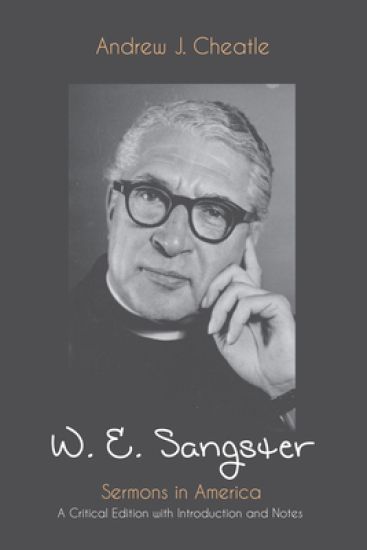
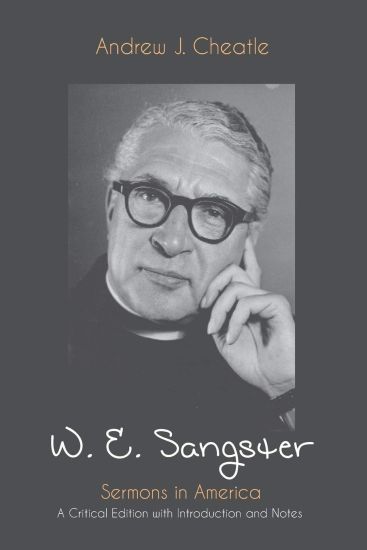
W. E. Sangster

W. E. Sangster

Andrew J Cheatle

Wipf Stock Publishers
2018
sidottu
Listened to by huge congregations in Britain, and perhaps the most recognizable British Methodist voice in the mid-twentieth century, W. E. Sangster was, in anyone's estimation, a giant of Methodism. ""A preacher without peer in the world,"" ""a prince of preachers,"" are just two of the labels attached to this preacher/theologian of the Methodist tradition. This volume captures the preaching of Sangster in his prime, on the occasion of the 1956 World Methodist Conference in Junaluska, North Carolina. Cheatle's research brings into the public domain ten sermons, nine previously unpublished in this form, delivered by Sangster at that great gathering of World Methodism. These sermons, being transcripts from recordings, picked up Sangster ""in the raw,"" at his most powerful, engaging with his listeners. This book is a resource, therefore, that aids students of homiletics and pastors in encountering a master at work, without the editorial polish of his extant sermons. The sermons on aspects of Christian holiness would be Sangster's first and last sequential series on the subject, placing before the reader some of his most mature thought on holiness and its application in daily life. ""In an age when we have lost confidence in the captivating power of the proclaimed word, Dr. Cheatle's excellent critical edition of Sangster's sermons not only offers helpful insights into the thoughts of one of the greatest preachers of the twentieth century on a variety of central themes, but also a clarion call to the church to once again attend to the compelling power of the gospel and its proclamation. Dr. Cheatle has done a great service to academy and church alike."" --Tom Greggs, Marischal Chair of Divinity, University of Aberdeen ""W. E. Sangster: Sermons in America places the reader in the pew to listen to the voice of one of the preeminent preachers of the twentieth century. This volume of transcriptions of ten previously unpublished sermons on holy living preached by Sangster at the 1956 World Methodist Conference at Lake Junaluska, North Carolina, reveals Sangster as a preacher with much to teach twenty-first century preachers. . . . Contemporary preachers, take and read "" --Alyce M. McKenzie, Director, The Perkins Center for Preaching Excellence ""In an age when the preached word does not hold the position it once did in the church's exegetical and homiletic ministry, Dr. Cheatle's careful transcription and analysis of these sermons of Sangster, recorded in the USA, provide an invaluable tool to explore one of the great Christian preachers in a period when the sermon was already losing its domination of Christian apologetic. A useful contribution to the study of preaching and especially in the Holiness tradition."" --David Hart, Methodist Minister Andrew J. Cheatle is Senior Lecturer in Theology and Pastoral Theology at Liverpool Hope University. He also serves as a University Pastor. His previous writings on Sangster include W. E. Sangster: Herald of Holiness (2010) and W. E. Sangster: Heir of John Wesley? (2013). Before becoming an academic he held pastorates in Copenhagen, Denmark, and Manchester, England.
W. E. B. Du Bois and the Sociology of the Black Church and Religion, 1897–1914
W. E. B. Du Bois is the founding figure of the sociological study of the Black Church. His discussion of the six functions of Philadelphia’s Black Church in The Philadelphia Negro (1899) represented an early example of a “functional analysis” of a religious group. In The Negro Church (1903), he integrated the findings from religious census data, denominational statistics, small area surveys, ethnographic fieldwork, and historical studies to paint a picture of the vibrant role the Black Church played in the African American community. Du Bois discusses the Black Church in three of the essays included in The Souls of Black Folk (1903), other sociological essays and several Atlanta University Conference annual reports. Additionally, Du Bois’ perspective on the Black Church and the role of religion in the African American community can be gleaned from various poetic works, prayers, and editorials. W.E.B. Du Bois and the Sociological Study of the Black Church and Religion, 1897–1914 showcases a representative sample of classic studies on the Black Church and religion by a pioneer of American sociology.
W. E. B. Du Bois and the Sociology of the Black Church and Religion, 1897–1914
W. E. B. Du Bois is the founding figure of the sociological study of the Black Church. His discussion of the six functions of Philadelphia’s Black Church in The Philadelphia Negro (1899) represented an early example of a “functional analysis” of a religious group. In The Negro Church (1903), he integrated the findings from religious census data, denominational statistics, small area surveys, ethnographic fieldwork, and historical studies to paint a picture of the vibrant role the Black Church played in the African American community. Du Bois discusses the Black Church in three of the essays included in The Souls of Black Folk (1903), other sociological essays and several Atlanta University Conference annual reports. Additionally, Du Bois’ perspective on the Black Church and the role of religion in the African American community can be gleaned from various poetic works, prayers, and editorials. W.E.B. Du Bois and the Sociological Study of the Black Church and Religion, 1897–1914 showcases a representative sample of classic studies on the Black Church and religion by a pioneer of American sociology.
Big 24 Conference Playbook - G.E.A.R. FOOTBALL - N.E.W.S.: God, Education, Advocacy, Respect

Big 24 Conference Playbook - G.E.A.R. FOOTBALL - N.E.W.S.: God, Education, Advocacy, Respect

Ralph Bernard McCauley

Createspace Independent Publishing Platform
2015
nidottu
The Big 24 Conference Playbook N.E.W.S.(North, East, West, South) is a Spiritual Mentoring Football Playbook. The book is a sports ministry on and off the field that help you in your Devotional and Development in your life. It is to raise awareness that G.E.A.R 7 X 7- GOD, EDUCATION, ADVOCACY, RESPECT and to forgive your brothers more than 7 x 7, Jesus Christ says 70 x 7 which means to you literally forgot what that person have done to you. Truly forgiveness. The playbook helps you in 24 Big Conference Title RULES that you need in order to fight against the Opponent called Satan and his Team. Satan & his Teammates goals is to use dirty plays from his playbook so that you may fall and not win the Championship Title called Heaven. But with God as your referee, Jesus Christ as Head Coach, and Holy Spirit is Endurance & Water Coach. You cannot lose with the Star Help on your side. So get tough and be a part of the Big 24 Conference Playbook N.E.W.S. and win your National Championship Title called HEAVEN.
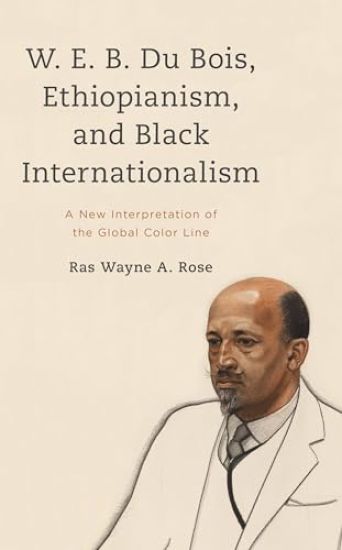
W. E. B. Du Bois, Ethiopianism, and Black Internationalism
Scholarship on Black internationalism has experienced a revival. Whilst this scholarship has increasingly turned towards examining Du Bois’s thoughts on the “color line” in a global rather than national context, none do so by centering his Ethiopian-centered perspective. This book provides an examination of Du Bois’s efforts to link African Americans, Afro-Caribbean, and the Pan African project to Ethiopia as a response to the emerging question of Black historical identity.For Du Bois, Ethiopia, Ethiopian history, and its monarchial leadership were essential to resolving the global problem of the “color line”. He believed that Africans in the Diaspora, especially in the United States, and Africans across Ethiopia should build reciprocal relations with Ethiopia for the benefit of the Black Race and their mutual development. Du Bois also made multiple attempts to engage and establish relations with Ethiopia and worked through official and unofficial channels to develop those relations.By revisiting and reevaluating Du Bois’s engagement strategies with Ethiopia, the book suggests ways in which his evolving Pan-Africanism might be understood differently to how it has been deployed in scholarship on Black internationalism. The book provides new perspectives on Du Bois’s famous invocation of the global “color line” by uncovering his conceptual and practical reasons for specifically connecting Ethiopia to African Americans and the issues of global social and economic justice.
W. E. B. Du Bois, essays collection

W. E. B. Du Bois, essays collection

W. E. B. Du Bois

Createspace Independent Publishing Platform
2017
nidottu
William Edward Burghardt "W. E. B." Du Bois (1868 -1963) was an American sociologist, historian, civil rights activist, Pan-Africanist, author, and editor. Born in Great Barrington, Massachusetts, Du Bois grew up in a relatively tolerant and integrated community. After completing graduate work at the University of Berlin and Harvard, where he was the first African American to earn a doctorate, he became a professor of history, sociology and economics at Atlanta University. Du Bois was one of the co-founders of the National Association for the Advancement of Colored People (NAACP) in 1909.In this book: The Souls of Black Folk, Darkwater, Voices From Within, The Veil, The Negro
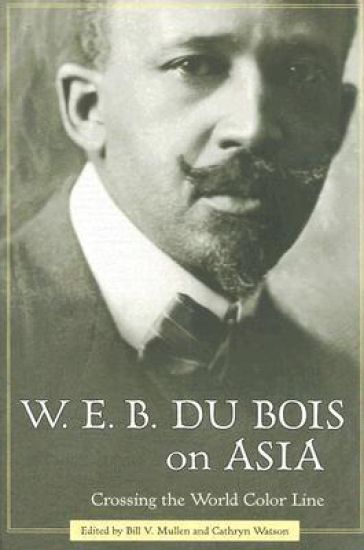
W. E. B. Du Bois on Asia

W. E. B. Du Bois on Asia

University Press of Mississippi
2005
nidottu
After Japan's defeat of Russia in the 1904 territorial war, W. E. B. Du Bois declared, ""The Color Line in civilization has been crossed in modern times as it was in the great past. The awakening of the yellow races is certain. That the awakening of the brown and black races will follow in time, no unprejudiced student of history can doubt."" Du Bois's lifelong certitude that Asia would play a central role in determining the fates of races, nations, and world systems of power has not until now been made fully available. W. E. B. Du Bois on Asia captures in unprecedented detail Du Bois's first-person experiences of and responses to Indian nationalism, the war between China and Japan, the life of Mahatma Gandhi, colonialism in Malaysia and Burma, and the promise of China's Communist Revolution. It also provides critical understanding of Du Bois's obsession with the eternal relationship between Asia and Africa dating from antiquity to the postcolonial era. The Du Bois of this collection emerges as a forerunner of postcolonialist thought, a lifelong internationalist, and the most important African American reader of Asia's place in the making of the modern world. Bill V. Mullen is professor of English at the University of Texas at San Antonio. He is the author of Afro-Orientalism and Popular Fronts: Chicago and African American Cultural Politics, 1935-1946. Cathryn Watson is a graduate research assistant at the University of Texas at San Antonio.
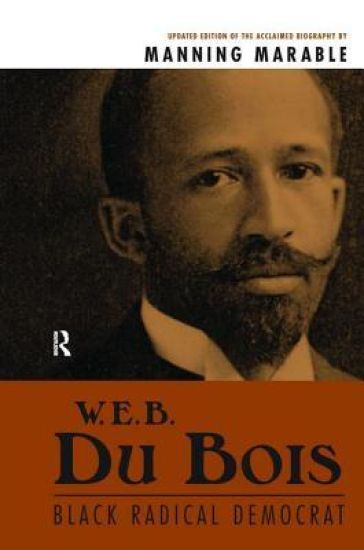
W. E. B. Du Bois

W. E. B. Du Bois

Manning Marable

Paradigm
2005
sidottu
'Marable's biography of Du Bois is the best so far available.' Dr. Herbert Aptheker, Editor, The Correspondence of W.E.B. Du Bois 'Marable's excellent study focuses on the social thought of a major black American thinker who exhibited a 'basic coherence and unity' throughout a multifaceted career stressing cultural pluralism, opposition to social inequality, and black pride.' Library Journal Distinguished historian and social activist Manning Marable's book, W. E. B. Du Bois: Black Radical Democrat, brings out the interconnections, unity, and consistency of W. E. B. Du Bois's life and writings. Marable covers Du Bois's disputes with Booker T. Washington, his founding of the NAACP, his work as a social scientist, his life as a popular figure, and his involvement in politics, placing them into the context of Du Bois's views on black pride, equality, and cultural diversity. Marable stresses that, as a radical democrat, Du Bois viewed the problems of racism as intimately connected with capitalism. The publication of this updated edition follows more than one hundred celebrations recently marking the 100th anniversary of Du Bois's The Souls of Black Folk. Marable broadens earlier biographies with a new introduction highlighting Du Bois's less-known advocacy of women's suffrage, socialism, and peace and he traces his legacy to today in an era of changing racial and social conditions.
W. E. B. Du Bois

W. E. B. Du Bois

Manning Marable

Paradigm
2004
nidottu
'Marable's biography of Du Bois is the best so far available.' Dr. Herbert Aptheker, Editor, The Correspondence of W.E.B. Du Bois 'Marable's excellent study focuses on the social thought of a major black American thinker who exhibited a 'basic coherence and unity' throughout a multifaceted career stressing cultural pluralism, opposition to social inequality, and black pride.' Library Journal Distinguished historian and social activist Manning Marable's book, W. E. B. Du Bois: Black Radical Democrat, brings out the interconnections, unity, and consistency of W. E. B. Du Bois's life and writings. Marable covers Du Bois's disputes with Booker T. Washington, his founding of the NAACP, his work as a social scientist, his life as a popular figure, and his involvement in politics, placing them into the context of Du Bois's views on black pride, equality, and cultural diversity. Marable stresses that, as a radical democrat, Du Bois viewed the problems of racism as intimately connected with capitalism. The publication of this updated edition follows more than one hundred celebrations recently marking the 100th anniversary of Du Bois's The Souls of Black Folk. Marable broadens earlier biographies with a new introduction highlighting Du Bois's less-known advocacy of women's suffrage, socialism, and peace and he traces his legacy to today in an era of changing racial and social conditions.
W. E. Sangster

W. E. Sangster

Andrew J Cheatle

Wipf Stock Publishers
2018
pokkari
Listened to by huge congregations in Britain, and perhaps the most recognizable British Methodist voice in the mid-twentieth century, W. E. Sangster was, in anyone's estimation, a giant of Methodism. ""A preacher without peer in the world,"" ""a prince of preachers,"" are just two of the labels attached to this preacher/theologian of the Methodist tradition. This volume captures the preaching of Sangster in his prime, on the occasion of the 1956 World Methodist Conference in Junaluska, North Carolina. Cheatle's research brings into the public domain ten sermons, nine previously unpublished in this form, delivered by Sangster at that great gathering of World Methodism. These sermons, being transcripts from recordings, picked up Sangster ""in the raw,"" at his most powerful, engaging with his listeners. This book is a resource, therefore, that aids students of homiletics and pastors in encountering a master at work, without the editorial polish of his extant sermons. The sermons on aspects of Christian holiness would be Sangster's first and last sequential series on the subject, placing before the reader some of his most mature thought on holiness and its application in daily life. ""In an age when we have lost confidence in the captivating power of the proclaimed word, Dr. Cheatle's excellent critical edition of Sangster's sermons not only offers helpful insights into the thoughts of one of the greatest preachers of the twentieth century on a variety of central themes, but also a clarion call to the church to once again attend to the compelling power of the gospel and its proclamation. Dr. Cheatle has done a great service to academy and church alike."" --Tom Greggs, Marischal Chair of Divinity, University of Aberdeen ""W. E. Sangster: Sermons in America places the reader in the pew to listen to the voice of one of the preeminent preachers of the twentieth century. This volume of transcriptions of ten previously unpublished sermons on holy living preached by Sangster at the 1956 World Methodist Conference at Lake Junaluska, North Carolina, reveals Sangster as a preacher with much to teach twenty-first century preachers. . . . Contemporary preachers, take and read "" --Alyce M. McKenzie, Director, The Perkins Center for Preaching Excellence ""In an age when the preached word does not hold the position it once did in the church's exegetical and homiletic ministry, Dr. Cheatle's careful transcription and analysis of these sermons of Sangster, recorded in the USA, provide an invaluable tool to explore one of the great Christian preachers in a period when the sermon was already losing its domination of Christian apologetic. A useful contribution to the study of preaching and especially in the Holiness tradition."" --David Hart, Methodist Minister Andrew J. Cheatle is Senior Lecturer in Theology and Pastoral Theology at Liverpool Hope University. He also serves as a University Pastor. His previous writings on Sangster include W. E. Sangster: Herald of Holiness (2010) and W. E. Sangster: Heir of John Wesley? (2013). Before becoming an academic he held pastorates in Copenhagen, Denmark, and Manchester, England.