Kirjojen hintavertailu. Mukana 11 342 296 kirjaa ja 12 kauppaa.

Kirjahaku

Etsi kirjoja tekijän nimen, kirjan nimen tai ISBN:n perusteella.

1000 tulosta hakusanalla Edgard Auguin

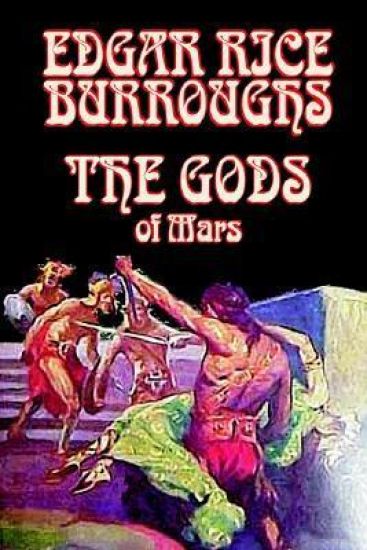
The Gods of Mars by Edgar Rice Burroughs, Science Fiction, Adventure
At the end of A PRINCESS OF MARS, the first volume in Burroughs's Mars series, John Carter managed to get the factory that produces oxygen for Barsoom working again -- and collapsed. When he came to, he found himself back on earth, and separated from his beloved Dejah Thoris, the Princess of Helium. It's a decade later when Carter returns to Barsoom, and he finds himself in that part of the planet that the natives consider to be "heaven" -- which is no heaven at all. Carter has to reunite with his friend the fierce green warrior Tars Tarkas, fight with plant men and the great white apes of Barsoom, violate some significant religious taboos, survive the affections of an evil goddess, foment a slave revolt, fight in an arena, and still save Dejah Thoris in the middle of a giant air battle between the red, green, black and white people of Barsoom. . . . High adventure, Martian style.
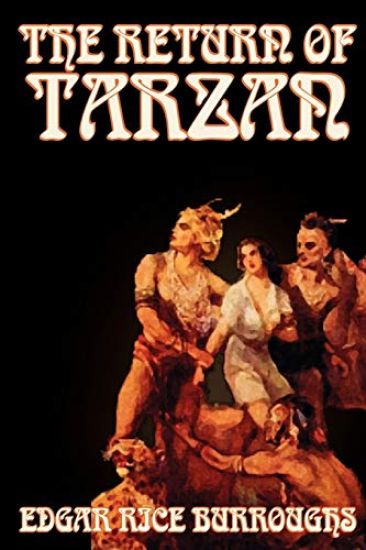
The Return of Tarzan by Edgar Rice Burroughs, Fiction, Literary, Action & Adventure
At the start of this volume, Tarzan knows his inheritance as an English lord, but is determined to hide that since he truly believes that his cousin, William Cecil Clayton, would make a better lord and husband for his beloved Jane. He gets involved with a married Russian countess (there's a plan -- oh, sure) who has issues with her criminal brother (Nicholas Rokoff -- a real villain, naturally, who becomes a regular in the series) and her older husband. As a consequence of his interaction with brother, Tarzan is lured into a room where he is attacked by a dozen Paris muggers. The scene that details this mugging is one of the great chapters in the literature of muggings. Tarzan fondly recalls his childhood and his foster ape mother with a friend, D'Arnot: "To you my friend, she would have appeared a hideous and ugly creature, but to me she was beautiful -- so gloriously does love transfigure its object."
Because I Was Flesh: The Autobiography of Edward Dahlberg

Because I Was Flesh: The Autobiography of Edward Dahlberg

Edward Dahlberg

NEW DIRECTIONS PUBLISHING CORPORATION
1967
nidottu
Because I Was Flesh is an authentic record from the inferno of modern city life, and a testament of American experience. Lizzie Dahlberg, separated from a worthless husband, works as a lady barber to keep herself and her son in shabby respectability amid the vice and brutality of Kansas City in the early 1900's. Her constant objective: to acquire a new husband who can give her security and help educate the child. She is attractive to men, but fate never brings her a good one. One suitor makes her put the boy in an orphanage--years of torment that are brilliantly described--and then betrays her. Another does marry her--and disappears with her savings. Lizzie is in despair, but soon begins to laugh at life again and arches her bosom for the next prospect. As he grows through a sensitive, painful adolescence, Edward is both fascinated and appalled by his mother. He adores her but is ashamed of her. He tries to escape, bumming his way to Los Angeles and later going to college in Berkeley, but is always drawn back. Even her death, with which the book ends, cannot release him. Seldom has there been so ruthless, and yes so tender a dissection of the mother-son relationship. And from it Lizzie Dahlberg emerges as one of the unforgettable characters of modern literature.
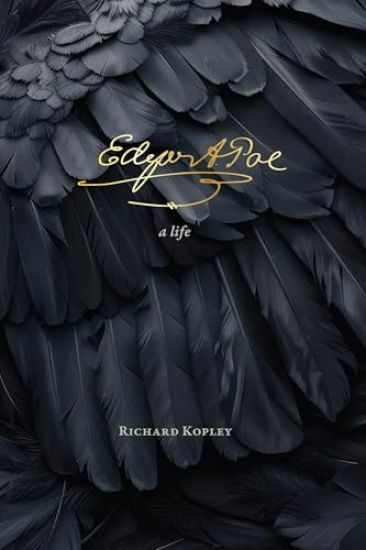
Edgar Allan Poe

Edgar Allan Poe

Richard Kopley

UNIVERSITY OF VIRGINIA PRESS
2025
sidottu
A ground-breaking exploration of one of America's most iconic and misunderstood authorsEdgar Allan Poe: A Life is the most comprehensive critical biography of Poe yet produced, exploring his fascinating life, his extraordinary work, and the vital relationship between the two. Best known for his tales of mystery and the macabre found in such works as The Raven, Annabel Lee, and The Tell-Tale Heart, this legendary American author continues to intrigue and enthral his devoted readers. Written by one of the world's leading Poe experts, this biography is a rich and rewarding study for the general reader as well as for the seasoned scholar. Richard Kopley combines a biographical narrative of Poe's enduring challenges—including his difficult foster father, his personal losses, his great struggles with depression and alcoholism, and the poverty that dogged his existence—with close readings of his work that focus not only on plot, character, and theme but also on language, allusion, and structure in a way that enhances our understanding of both. While incorporating past Poe scholarship, this volume also relates unknown stories of Poe culled from privately held letters unavailable to previous biographers, presenting a range of ground-breaking archival discoveries that illuminates the man and his oeuvre in ways never before possible.
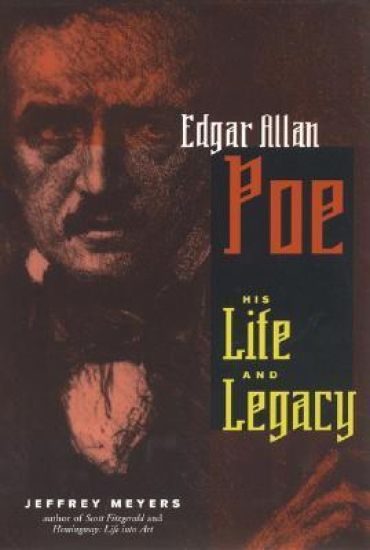
Edgar Allan Poe

Edgar Allan Poe

Jeffrey Meyers

Cooper Square Publishers Inc.,U.S.
2000
pokkari
This biography of Edgar Allan Poe (1809-1849), a giant of American literature who invented both the horror and detective genres, is a portrait of extremes: a disinherited heir, a brilliant but exploited author and editor, a man who veered radically from temperance to rampant debauchery, and an agnostic who sought a return to religion at the end of his life. Acclaimed biographer Jeffrey Meyers explores the writer's turbulent life and career, including his marriage and multiple, simultaneous romances, his literary feuds, and his death at an early age under bizarre and troubling circumstances.
Edward P. Dozier

Edward P. Dozier

Marilyn Norcini

University of Arizona Press
2007
sidottu
Edward P. Dozier was the first American Indian to establish a career as an academic anthropologist. In doing so, he faced a double paradox, cademic and cultural. The notion of objectivity that governed academic anthropology at the time dictated that researchers be impartial outsiders. Scientific knowledge was considered unbiased, impersonal, and public. In contrast, Dozier's Pueblo Indian culture regarded knowledge as privileged, personal, and gendered. Ceremonial knowledge was protected by secrecy and was never intended to be made public, either within or outside of the community. As an indigenous ethnologist and linguist, Dozier negotiated a careful balance between the conflicting values of a social scientist and a Pueblo Indian. Based on archival research, ethnographic fieldwork at Santa Clara Pueblo, and extensive interviews, this intellectual biography traces Dozier's education from a Bureau of Indian Affairs day school through the University of New Mexico on federal reimbursable loans and graduate school on the GI Bill. Dozier was the first graduate of the new post World War II doctoral program in anthropology at the University of California at Los Angeles in 1952. Beginning with his multicultural and linguistic heritage, the book interprets pivotal moments in his career, including the impact of Pueblo kinship on his indigenous research at Tewa Village (Hano); his rising academic standing and Indian advocacy at Northwestern University; his achievement of full academic status after he conducted non-indigenous fieldwork with the Kalinga in the Philippines; and his leadership in establishing American Indian Studies at the University of Arizona. Norcini interprets Dozier's career within the contexts of the history of American anthropology and Pueblo Indian culture. In the final analysis, Dozier is positioned as a transitional figure who helped transform the historical paradox of an American Indian anthropologist into the contemporary paradigm of indigenous scholarship in the academy.
Edward Abbey

Edward Abbey

James M. Cahalan

University of Arizona Press
2003
nidottu
The best biography ever about Ed. Cahalan's meticulous research and thoughtful interviews have made this book the authoritative source for Abbey scholars and fans alike.? ?Doug Peacock, author, environmentalist activist and explorer, and the inspiration for Hayduke in The Monkey Wrench Gang He was a hero to environmentalists and the patron saint of monkeywrenchers, a man in love with desert solitude. A supposed misogynist, ornery and contentious, he nevertheless counted women among his closest friends and admirers. He attracted a cult following, but he was often uncomfortable with it. He was a writer who wandered far from Home without really starting out there. James Cahalan has written a definitive biography of a contemporary literary icon whose life was a web of contradictions. Edward Abbey: A Life sets the record straight on "Cactus Ed," giving readers a fuller, more human Abbey than most have ever known. It separates fact from fiction, showing that much of the myth surrounding Abbey such as his birth in Home, Pennsylvania, and later residence in Oracle, Arizona was self-created and self-perpetuated. It also shows that Abbey cultivated a persona both in his books and as a public speaker that contradicted his true nature: publicly racy and sardonic, he was privately reserved and somber. Cahalan studied all of Abbey's works and private papers and interviewed many people who knew him including the models for characters in The Brave Cowboy and The Monkey Wrench Gang to create the most complete picture to date of the writer's life. He examines Abbey's childhood roots in the East and his love affair with the West, his personal relationships and tempestuous marriages, and his myriad jobs in continually shifting locations including sixteen national parks and forests. He also explores Abbey's writing process, his broad intellectual interests, and the philosophical roots of his politics. For Abbey fans who assume that his "honest novel," The Fool's Progress, was factual or that his public statements were entirely off the cuff, Cahalan's evenhanded treatment will be an eye-opener. More than a biography, Edward Abbey: A Life is a corrective that shows that he was neither simply a countercultural cowboy hero nor an unprincipled troublemaker, but instead a complex and multifaceted person whose legacy has only begun to be appreciated. The book contains 30 photographs, capturing scenes ranging from Abbey's childhood to his burial site.
Edward Taylor - American Writers 52

Edward Taylor - American Writers 52

Stanford Donald E.

UNIVERSITY OF MINNESOTA PRESS
1965
nidottu
Edward Taylor - American Writers 52 was first published in 1965. Minnesota Archive Editions uses digital technology to make long-unavailable books once again accessible, and are published unaltered from the original University of Minnesota Press editions.
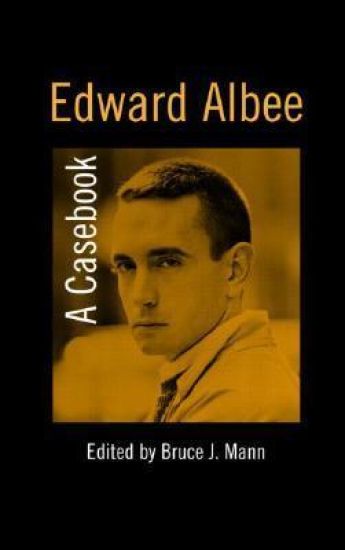
Edward Albee - American Writers 77

Edward Albee - American Writers 77

Cohn Ruby

UNIVERSITY OF MINNESOTA PRESS
1969
nidottu
Edward Albee - American Writers 77 was first published in 1969. Minnesota Archive Editions uses digital technology to make long-unavailable books once again accessible, and are published unaltered from the original University of Minnesota Press editions.
Edgar Allan Poe - American Writers 89

Edgar Allan Poe - American Writers 89

Asselineau Roger

UNIVERSITY OF MINNESOTA PRESS
1970
nidottu
Edgar Allan Poe - American Writers 89 was first published in 1970. Minnesota Archive Editions uses digital technology to make long-unavailable books once again accessible, and are published unaltered from the original University of Minnesota Press editions.
Eduard C. Lindeman and Social Work Philosophy

Eduard C. Lindeman and Social Work Philosophy

Gisela Konopka

University of Minnesota Press
1958
nidottu
Eduard C. Lindeman and Social Work Philosophy was first published in 1958. Minnesota Archive Editions uses digital technology to make long-unavailable books once again accessible, and are published unaltered from the original University of Minnesota Press editions.Eduard C. Lindeman, a leader in the field of social work for many years, was deeply concerned with the profession's development of a basic philosophy. As a teacher at the New York School of Social Work for more than 25 years and as a prolific writer and consultant in a broad range of activities, Lindeman challenged old ideas and stimulated new ones in relation to the concepts and principles of social work. In this study of the man and his thinking, Mrs. Konopka, a professor of social work herself, provides an illuminated discussion of the theories upon which the practice of social work is based.In the first section Mrs. Konopka presents a biographical sketch of Lindeman, showing the forces and experiences which helped to shape his views and to create the ideas and ideals he fostered. Then she traces the development of Lindeman's philosophy over the three decades of his most fruitful period, the years from 1920 to 1953, when he died.In the third part, as a background for an understanding of Lindeman's contributions, she describes the status of social work values and goals before and during his career. In conclusion, she discusses a theory of social work based upon an integration of values, methods, and knowledge.This book will be especially useful to those teaching courses in the history and philosophy of social work and related professions, as well as to those actively engaged in social work.
Edgar Gardner Murphy

Edgar Gardner Murphy

Hugh Bailey

The University of Alabama Press
2003
nidottu
'Bailey's account is sharply focused on Murphy's public life and thought [and] the result is a well-researched, balanced, straightforward narrative that will serve as the standard authority.' -American Historical Review
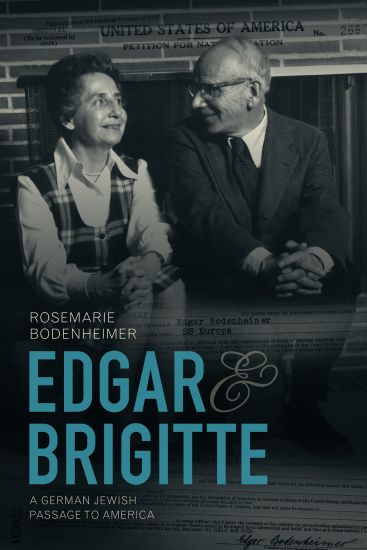
Edgar and Brigitte

Edgar and Brigitte

Rosemarie Bodenheimer

The University of Alabama Press
2016
sidottu
Edgar and Brigitte: A German Jewish Passage to America is the fruit of an extraordinary archive of personal journals, letters, speeches, and published writings left by Edgar and Brigitte Bodenheimer, who emigrated from Nazi Germany in 1933 and became American law professors. More German than Jewish, highly educated, and saturated to the core in the German cultural ideal of Bildung, Edgar and Brigitte embody many of the qualities of their generation of German Jews in the late nineteenth and early twentieth centuries. The couple’s encounters with the strange new dynamics of race, religion, and the workplace in their new American home offer a compelling account of the struggles that faced many immigrants with deep German roots. It is also an intimate portrait of a now-vanished German Jewish culture as it played out in the lives of Bodenheimer’s parents and her grandparents from the 1920s to the late 1960s, a story of emigration, assimilation, and the private struggles that accompany those forced shifts in orientation. The Bodenheimers’ letters and journals offer engaging perspectives into their personal lives that retrospective memories cannot match. Braiding intimate biography together with history and memoir, Edgar and Brigitte will appeal both to historians of the European Jewish diaspora and to readers interested in the struggles and resilience of people whose lives were upended by Hitler.
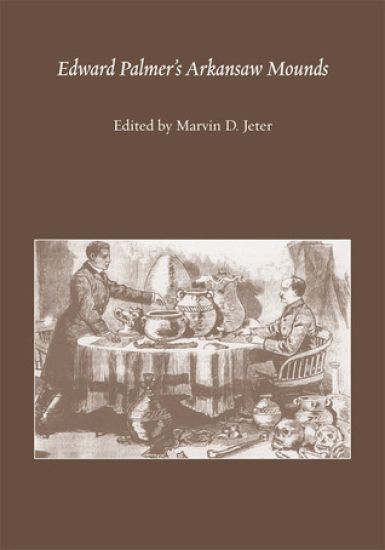
EDWARD PALMER'S ARKANSAW MOUNDS

EDWARD PALMER'S ARKANSAW MOUNDS

The University of Alabama Press
2010
nidottu
Normal0falsefalsefalseMicrosoftInternetExplorer4During the 1880s a massive scientific effort was launched by the Smithsonian Institution to discover who had built the prehistoric burial mounds found throughout the United States. Arkansaw Mounds tells the story of this exploration and of Edward Palmer, one of the nineteenth century's greatest natural historians and archaeologists, who was recruited to lead the research project. Arkansas was unusually rich in prehistoric remains, especially mounds, and became a major focus of the study. Palmer and his team of researchers discovered that the mounds had been built by the ancestors of the historic North American Indians, shattering the then-popular theory that a lost non-Indian race had built them.
Edgar Allan Poe As Literary Critic

Edgar Allan Poe As Literary Critic

Edd Winfield Parks

University of Georgia Press
2010
pokkari
Edgar Allan Poe was one of the first major critics to develop and refine his critical theories through magazine articles and book reviews. Edgar Allan Poe as Literary Critic focuses on his interest in establishing an aesthetic for magazine literature, and Parks has examined Poe’s criticism at length. Poe’s efforts in the field of literary criticism have often been condemned as a rationalization of his own personal limitations as a writer, but this study contends that his critical theories far surpass such a narrow interpretation. Rather, Poe was “essentially a magazinist,” and therefore emphasized brevity, unity, and totality of effect and placed the highest value on literary types best suited to periodical literature.
Edward Said and the Work of the Critic
For at least two decades the career of Edward Said has defined what it means to be a public intellectual today. Although attacked as a terrorist and derided as a fraud for his work on behalf of his fellow Palestinians, Said’s importance extends far beyond his political activism. In this volume a distinguished group of scholars assesses nearly every aspect of Said’s work-his contributions to postcolonial theory, his work on racism and ethnicity, his aesthetics and his resistance to the aestheticization of politics, his concepts of figuration, his assessment of the role of the exile in a metropolitan culture, and his work on music and the visual arts. In two separate interviews, Said himself comments on a variety of topics, among them the response of the American Jewish community to his political efforts in the Middle East. Yet even as the Palestinian struggle finds a central place in his work, it is essential-as the contributors demonstrate-to see that this struggle rests on and gives power to his general "critique of colonizers" and is not simply the outgrowth of a local nationalism. Perhaps more than any other person in the United States, Said has changed how the U.S. media and American intellectuals must think about and represent Palestinians, Islam, and the Middle East. Most importantly, this change arises not as a result of political action but out of a potent humanism-a breadth of knowledge and insight that has nourished many fields of inquiry. Originally a special issue of boundary 2, the book includes new articles on minority culture and on orientalism in music, as well as an interview with Said by Jacqueline Rose. Supporting the claim that the last third of the twentieth century can be called the "Age of Said," this collection will enlighten and engage students in virtually any field of humanistic study. Contributors. Jonathan Arac, Paul A. BovÉ, Terry Cochran, Barbara Harlow, Kojin Karatani, Rashid I. Khalidi, Sabu Kohsu, Ralph Locke, Mustapha Marrouchi, Jim Merod, W. J. T. Mitchell, Aamir R. Mufti, Jacqueline Rose, Edward W. Said, Gayatri Chakravorty Spivak, Lindsay Waters