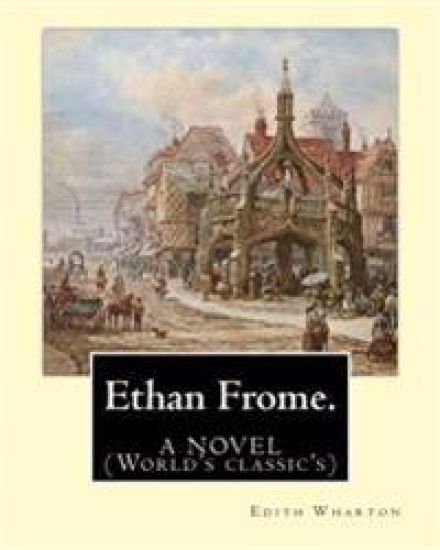
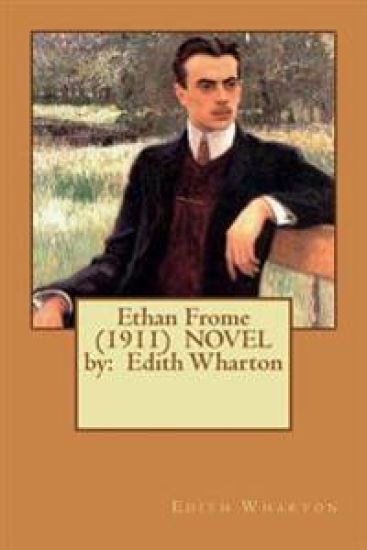
Ethan Frome is a novel published in 1911 by the Pulitzer Prize-winning American author Edith Wharton. It is set in the fictitious town of Starkfield, Massachusetts. The novel was adapted into a film, Ethan Frome, in 1993. Ethan Frome is set in the fictional New England town of Starkfield, where a visiting engineer tells the story of his encounter with Ethan Frome, a man with a history of thwarted dreams and desires. The accumulated longing of Frome ends in an ironic turn of events. His initial impressions are based on his observations of Frome going about his mundane tasks in Starkfield, and something about him catches the eye and curiosity of the visitor, but no one in the town seems interested in revealing many details about the man or his history - or perhaps they are not able to. The narrator ultimately finds himself in the position of staying overnight at Frome's house in order to escape a winter storm, and from there he observes Frome and his private circumstances, which he shares and which triggers other people in town to be more forthcoming with their own knowledge and impressions. 2] The novel is framed by the literary device of an extended flashback. The prologue, which is neither named as such nor numbered, opens with an unnamed male narrator spending a winter in Starkfield while in the area on business. He spots a limping, quiet man around the village, who is somehow compelling in his demeanor and carriage. This is Ethan Frome, who is a local fixture of the community, having been a lifelong resident. Frome is described as "the most striking figure in Starkfield", "the ruin of a man" with a "careless powerful look...in spite of a lameness checking each step like the jerk of a chain". Curious, the narrator sets out to learn about him. He learns that Frome's limp arose from having been injured in a "smash-up" twenty-four years before, but further details are not forthcoming, and the narrator fails to learn much more from Frome's fellow townspeople other than that Ethan's attempt at higher education decades before was thwarted by the sudden illness of his father following an injury, forcing his return to the farm to assist his parents, never to leave again. Because people seem not to wish to speak other than in vague and general terms about Frome's past, the narrator's curiosity grows, but he learns little more.... Edith Wharton ( born Edith Newbold Jones; January 24, 1862 - August 11, 1937) was a Pulitzer Prize-winning American novelist, short story writer, and designer. She was nominated for the Nobel Prize in Literature in 1927, 1928 and 1930. 1] Wharton combined her insider's view of America's privileged classes with a brilliant, natural wit to write humorous, incisive novels and short stories of social and psychological insight. She was well acquainted with many of her era's other literary and public figures, including Theodore Roosevelt.
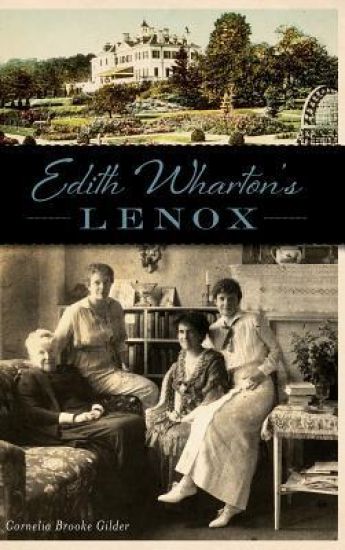
In 1900, Edith Wharton burst into the settled summer colony of Lenox. An aspiring novelist in her thirties, she was already a ferocious aesthete and intellect. She and her husband, Teddy, planned a defiantly classical villa, and she became a bestselling author with The House of Mirth in 1905. As a hostess, designer, gardener and writer, Wharton set high standards that delighted many, including Ambassador Joseph Choate and sculptor Daniel Chester French. But her perceptive and sometimes indiscreet pen also alienated potent figures like Emily Vanderbilt Sloane and Georgiana Welles Sargent. Author Cornelia Brooke Gilder gives an insider's glimpse of the community's reaction to this disruptive star during her tumultuous Lenox decade.
Eight madcap tales of unpredictable dragons - including one made of ice, another that takes refuge in the General Post Office, and a fire-breathing monster that flies out of an enchanted book and eats an entire soccer team
The Age of Innocence centers on one society couple's impending marriage and the introduction of a scandalous woman whose presence threatens their happiness. Though the novel questions the assumptions and mores of turn of the century New York society, it never devolves into an outright condemnation of the institution. In fact, Wharton considered this novel an "apology" for the earlier, more brutal and critical, "The House of Mirth". Not to be overlooked is the author's attention to detailing the charms and customs of this caste. The novel is lauded for its accurate portrayal of how the nineteenth-century East Coast American upper class lived and this combined with the social tragedy earned Wharton a Pulitzer - the first Pulitzer awarded to a woman.
Edith Wharton ( born Edith Newbold Jones; January 24, 1862 - August 11, 1937) was a Pulitzer Prize-winning American novelist, short story writer, and designer. She was nominated for the Nobel Prize in Literature in 1927, 1928 and 1930. Wharton combined her insider's view of America's privileged classes with a brilliant, natural wit to write humorous, incisive novels and short stories of social and psychological insight. She was well acquainted with many of her era's other literary and public figures, including Theodore Roosevelt. Edith Wharton was born Edith Newbold Jones to George Frederic Jones and Lucretia Stevens Rhinelander at their brownstone at 14 West Twenty-third Street in New York City. She had two much older brothers, Frederic Rhinelander, who was sixteen, and Henry Edward, who was eleven. She was baptized April 20, 1862, Easter Sunday, at Grace Church.To her friends and family she was known as "Pussy Jones".The saying "keeping up with the Joneses" is said to refer to her father's family.She was also related to the Rensselaer family, the most prestigious of the old patroon families. She had a lifelong lovely friendship with her Rhinelander niece, landscape architect Beatrix Farrand of Reef Point in Bar Harbor, Maine. Edith was born during the Civil War; she was three years old when the South surrendered. After the war, the family traveled extensively in Europe.From 1866 to 1872, the Jones family visited France, Italy, Germany, and Spain.During her travels, the young Edith became fluent in French, German, and Italian. At the age of ten, she suffered from typhoid fever while the family was at a spa in the Black Forest. After the family returned to the United States in 1872, they spent their winters in New York and their summers in Newport, Rhode Island.While in Europe, she was educated by tutors and governesses. She rejected the standards of fashion and etiquette that were expected of young girls at the time, intended to enable women to marry well and to be displayed at balls and parties. She thought these requirements were superficial and oppressive. Edith wanted more education than she received, so she read from her father's library and from the libraries of her father's friends. Her mother forbade her to read novels until she was married, and Edith complied with this command. Edith began writing poetry and fiction as a young girl. She attempted to write a novel at age eleven. Her first publication was a translation of the German poem, "Was die Steine Erz hlen" ("What the Stones Tell") by Heinrich Karl Brugsch, which earned her $50. She was 15 at the time. Her family did not wish her name to appear in print because the names of upper class women of the time only appeared in print to announce birth, marriage, and death. Consequently, the poem was published under the name of a friend's father, E. A. Washburn. He was a cousin of Ralph Waldo Emerson and supported women's education. He played a pivotal role in Edith's efforts to educate herself, and he encouraged her ambition to write professionally.In 1877, at the age of 15, she secretly wrote a 30,000 word novella "Fast and Loose". In 1878 her father arranged for a collection of two dozen original poems and five translations, Verses, to be privately published. In 1880 she had five poems published anonymously in the Atlantic Monthly, then a revered literary magazine. Despite these early successes, she was not encouraged by her family nor her social circle, and though she continued to write, she did not publish anything again until her poem, "The Last Giustiniani", was published in Scribner's Magazine in October 1889. Edith was engaged to Henry Stevens in 1882 after a two-year courtship. The month the two were to marry, the engagement abruptly ended. In 1885, at age 23, she married Edward (Teddy) Robbins Wharton, who was 12 years her senior...
Edith Wharton ( born Edith Newbold Jones; January 24, 1862 - August 11, 1937) was a Pulitzer Prize-winning American novelist, short story writer, and designer. She was nominated for the Nobel Prize in Literature in 1927, 1928 and 1930. Wharton combined her insider's view of America's privileged classes with a brilliant, natural wit to write humorous, incisive novels and short stories of social and psychological insight. She was well acquainted with many of her era's other literary and public figures, including Theodore Roosevelt. Edith Wharton was born Edith Newbold Jones to George Frederic Jones and Lucretia Stevens Rhinelander at their brownstone at 14 West Twenty-third Street in New York City. She had two much older brothers, Frederic Rhinelander, who was sixteen, and Henry Edward, who was eleven. She was baptized April 20, 1862, Easter Sunday, at Grace Church.To her friends and family she was known as "Pussy Jones."The saying "keeping up with the Joneses" is said to refer to her father's family.She was also related to the Rensselaer family, the most prestigious of the old patroon families. She had a lifelong lovely friendship with her Rhinelander niece, landscape architect Beatrix Farrand of Reef Point in Bar Harbor, Maine. Edith was born during the Civil War; she was three years old when the South surrendered. After the war, the family traveled extensively in Europe.From 1866 to 1872, the Jones family visited France, Italy, Germany, and Spain.During her travels, the young Edith became fluent in French, German, and Italian. At the age of ten, she suffered from typhoid fever while the family was at a spa in the Black Forest. After the family returned to the United States in 1872, they spent their winters in New York and their summers in Newport, Rhode Island.While in Europe, she was educated by tutors and governesses. She rejected the standards of fashion and etiquette that were expected of young girls at the time, intended to enable women to marry well and to be displayed at balls and parties. She thought these requirements were superficial and oppressive. Edith wanted more education than she received, so she read from her father's library and from the libraries of her father's friends. Her mother forbade her to read novels until she was married, and Edith complied with this command. Edith began writing poetry and fiction as a young girl. She attempted to write a novel at age eleven. Her first publication was a translation of the German poem, "Was die Steine Erz hlen" ("What the Stones Tell") by Heinrich Karl Brugsch, which earned her $50. She was 15 at the time. Her family did not wish her name to appear in print because the names of upper class women of the time only appeared in print to announce birth, marriage, and death. Consequently, the poem was published under the name of a friend's father, E. A. Washburn. He was a cousin of Ralph Waldo Emerson and supported women's education. He played a pivotal role in Edith's efforts to educate herself, and he encouraged her ambition to write professionally.In 1877, at the age of 15, she secretly wrote a 30,000 word novella "Fast and Loose." In 1878 her father arranged for a collection of two dozen original poems and five translations, Verses, to be privately published. In 1880 she had five poems published anonymously in the Atlantic Monthly, then a revered literary magazine. Despite these early successes, she was not encouraged by her family nor her social circle, and though she continued to write, she did not publish anything again until her poem, "The Last Giustiniani," was published in Scribner's Magazine in October 1889. Edith was engaged to Henry Stevens in 1882 after a two-year courtship. The month the two were to marry, the engagement abruptly ended. In 1885, at age 23, she married Edward (Teddy) Robbins Wharton, who was 12 years her senior....
The Age of Innocence is Edith Wharton's twelfth novel, initially serialized in four parts in the Pictorial Review magazine in 1920, and later released by D. Appleton and Company as a book in New York and in London. It won the 1921 Pulitzer Prize for Fiction, making Wharton the first woman to win the prize. 1] Though the committee agreed to award the prize to Sinclair Lewis, the judges rejected his Main Street on political grounds and "established Wharton as the American 'First Lady of Letters'", the irony being that the committee had awarded The Age of Innocence the prize on grounds that negated Wharton's own blatant and subtle ironies, which constitute and make the book so worthy of attention. 2] The story is set in upper-class New York City in the 1870s, during the Gilded Age. Wharton wrote the book in her 50s, after she had established herself as a strong author with publishers clamoring for her work. PLOT*Newland Archer, gentleman lawyer and heir to one of New York City's best families, is happily anticipating a highly desirable marriage to the sheltered and beautiful May Welland. Yet he finds reason to doubt his choice of bride after the appearance of Countess Ellen Olenska, May's exotic and beautiful 30-year-old cousin. Ellen has returned to New York from Europe after scandalously separating herself (per rumor) from a bad marriage to a Polish count. At first, Ellen's arrival and its potential taint on the reputation of his bride-to-be's family disturb Newland, but he becomes intrigued by the worldly Ellen, who flouts New York society's fastidious rules. As Newland's admiration for the countess grows, so does his doubt about marrying May, a perfect product of Old New York society; his match with May no longer seems the ideal fate he had imagined. Ellen's decision to divorce Count Olenski causes a social crisis for the other members of her family, who are terrified of scandal and disgrace. Living apart can be tolerated, but divorce is unacceptable. To save the Welland family's reputation, a law partner of Newland asks him to dissuade Countess Olenska from divorcing the count. He succeeds, but in the process comes to care for her; afraid of falling in love with Ellen, Newland begs May to accelerate their wedding date, but she refuses. Newland tells Ellen he loves her; Ellen corresponds, but is horrified that their love will aggrieve May. She agrees to remain in America, separated but still married to Count Olenski, only if they do not sexually consummate their love. Newland receives May's telegram agreeing to wed sooner. Newland and May marry. He tries unsuccessfully to forget Ellen. His society marriage is loveless, and the social life he once found absorbing has become empty and joyless. Though Ellen lives in Washington and has remained distant, he is unable to cease loving her. Their paths cross while he and May are in Newport, Rhode Island. Newland discovers that Count Olenski wishes Ellen to return to him, but she has refused, although her family wants her to reconcile with her husband and return to Europe. Frustrated by her independence, the family has cut off her money, as the count had already done....... Edith Wharton ( born Edith Newbold Jones; January 24, 1862 - August 11, 1937) was a Pulitzer Prize-winning American novelist, short story writer, and designer. She was nominated for the Nobel Prize in Literature in 1927, 1928 and 1930. Wharton combined her insider's view of America's privileged classes with a brilliant, natural wit to write humorous, incisive novels and short stories of social and psychological insight. She was well acquainted with many of her era's other literary and public figures, including Theodore Roosevelt.
Ethan Frome is a novel published in 1911 by the Pulitzer Prize-winning American author Edith Wharton. It is set in the fictitious town of Starkfield, Massachusetts. The novel was adapted into a film, Ethan Frome, in 1993.Ethan Frome is set in the fictional New England town of Starkfield, where a visiting engineer tells the story of his encounter with Ethan Frome, a man with a history of thwarted dreams and desires. The accumulated longing of Frome ends in an ironic turn of events. His initial impressions are based on his observations of Frome going about his mundane tasks in Starkfield, and something about him catches the eye and curiosity of the visitor, but no one in the town seems interested in revealing many details about the man or his history - or perhaps they are not able to. The narrator ultimately finds himself in the position of staying overnight at Frome's house in order to escape a winter storm, and from there he observes Frome and his private circumstances, which he shares and which triggers other people in town to be more forthcoming with their own knowledge and impressions. 2] The novel is framed by the literary device of an extended flashback. The prologue, which is neither named as such nor numbered, opens with an unnamed male narrator spending a winter in Starkfield while in the area on business. He spots a limping, quiet man around the village, who is somehow compelling in his demeanor and carriage. This is Ethan Frome, who is a local fixture of the community, having been a lifelong resident. Frome is described as "the most striking figure in Starkfield", "the ruin of a man" with a "careless powerful look...in spite of a lameness checking each step like the jerk of a chain". Curious, the narrator sets out to learn about him. He learns that Frome's limp arose from having been injured in a "smash-up" twenty-four years before, but further details are not forthcoming, and the narrator fails to learn much more from Frome's fellow townspeople other than that Ethan's attempt at higher education decades before was thwarted by the sudden illness of his father following an injury, forcing his return to the farm to assist his parents, never to leave again. Because people seem not to wish to speak other than in vague and general terms about Frome's past, the narrator's curiosity grows, but he learns little more. Chance circumstances arise that allow the narrator to hire Frome as his driver for a week. A severe snowstorm during one of their journeys forces Frome to allow the narrator to shelter at his home one night. Just as the two are entering Frome's house, the prologue ends. We then embark on the "first" chapter (Chapter I), which takes place twenty-four years prior. The narration switches from the first-person narrator of the prologue to a limited third-person narrator.................. Edith Wharton ( born Edith Newbold Jones; January 24, 1862 - August 11, 1937) was a Pulitzer Prize-winning American novelist, short story writer, and designer. She was nominated for the Nobel Prize in Literature in 1927, 1928 and 1930.Wharton combined her insider's view of America's privileged classes with a brilliant, natural wit to write humorous, incisive novels and short stories of social and psychological insight. She was well acquainted with many of her era's other literary and public figures, including Theodore Roosevelt. Edith Wharton was born Edith Newbold Jones to George Frederic Jones and Lucretia Stevens Rhinelander at their brownstone at 14 West Twenty-third Street in New York City. She had two much older brothers, Frederic Rhinelander, who was sixteen, and Henry Edward, who was eleven. She was baptized April 20, 1862, Easter Sunday, at Grace Church. To her friends and family she was known as "Pussy Jones". The saying "keeping up with the Joneses" is said to refer to her father's family..................
The Custom of the Country is a 1913 novel by Edith Wharton. It tells the story of Undine Spragg, a Midwestern girl who attempts to ascend in New York City society.The Spraggs, a family of midwesterners from the fictional city of Apex who have made money through somewhat shady financial dealings, arrive in New York City at the prompting of their beautiful, ambitious, but socially-naive daughter, Undine. She marries Ralph Marvell, a member of an old New York family that no longer enjoys significant wealth. Before her wedding, Undine encounters an acquaintance from Apex named Elmer Moffatt, a character with "a genuine disdain for religious piety and social cant", as the scholar Elaine Showalter observes. Undine begs him not to do anything that will endanger her wedding to Ralph. Elmer agrees. Although Ralph dotes on Undine, his finances do not permit the extravagant lifestyle Undine desires, and she feels that her in-laws scorn her. When she becomes pregnant, she is disconsolate; and she neglects her son, Paul, after he is born. Alone in Europe, Undine begins an affair with the nouveau riche Peter Van Degen, who is married to Ralph's cousin, Clare. She then divorces Ralph in the hope of marrying Peter, but this does not work out: Peter seems to want nothing more to do with Undine, and Clare will not grant him a divorce anyway. As a divorcee, Undine loses her high position in society, and spends a few years living in North Dakota, New York, and Paris, scheming to scramble up the social ladder again. In Paris, a French count, Raymond de Chelles, falls in love with Undine. They desire to get married, but, as a Catholic, Raymond cannot marry a divorc e. To procure enough money to bribe the Pope to annul Undine's previous marriage, Undine blackmails Ralph. Having been awarded custody of their son, but allowing him to live with Ralph (it was inconvenient for her to raise him in Europe), she demands that the boy be sent to her. It is clear that she will let him remain with Ralph only if he sends her a large sum of money. Ralph does not have sufficient funds of his own, so he borrows money from friends and family and invests it in one of Elmer Moffatt's business deals. The deal does not go through in time to meet Undine's deadline, and Moffat also informs Ralph that he had once eloped with Undine and then was divorced from her-the secret she feared that New York society would discover. Shocked, and also distraught at the thought of losing his son, Ralph commits suicide. Undine is able to marry Raymond as a widow, though this would not be possible if Raymond knew of her first marriage to Moffat. Undine is soon dissatisfied with Raymond, too. The de Chelles are hidebound aristocrats, their wealth tied up in land and art and antiques that they will not consider selling, and Undine cannot adjust to the staid customs of upper-class French society. She also resents having to spend most of her time in the country because her husband cannot pay for expensive stays, entertainment, and shopping trips in Paris. Ultimately, she divorces Raymond in order to remarry Elmer Moffatt, who by now has made a fortune. Now, married to the crass midwestern businessman who was best suited to her in the first place, Undine finally has everything she ever desired. Still, it is clear that she wants even more: in the last paragraph of the novel, she imagines what it would be like to be an ambassador's wife - a position closed to her owing to her divorces.... Edith Wharton ( born Edith Newbold Jones; January 24, 1862 - August 11, 1937) was a Pulitzer Prize-winning American novelist, short story writer, and designer. She was nominated for the Nobel Prize in Literature in 1927, 1928 and 1930.Wharton combined her insider's view of America's privileged classes with a brilliant, natural wit to write humorous, incisive novels and short stories of social and psychological insight.
The muse's tragedy -- A journey -- The pelican -- Souls belated -- A coward -- The twilight of the god -- A cup of cold water -- The portrait Edith Wharton ( born Edith Newbold Jones; January 24, 1862 - August 11, 1937) was a Pulitzer Prize-winning American novelist, short story writer, and designer. She was nominated for the Nobel Prize in Literature in 1927, 1928 and 1930.Wharton combined her insider's view of America's privileged classes with a brilliant, natural wit to write humorous, incisive novels and short stories of social and psychological insight. She was well acquainted with many of her era's other literary and public figures, including Theodore Roosevelt. Edith Wharton was born Edith Newbold Jones to George Frederic Jones and Lucretia Stevens Rhinelander at their brownstone at 14 West Twenty-third Street in New York City. She had two much older brothers, Frederic Rhinelander, who was sixteen, and Henry Edward, who was eleven. She was baptized April 20, 1862, Easter Sunday, at Grace Church. To her friends and family she was known as "Pussy Jones". The saying "keeping up with the Joneses" is said to refer to her father's family. She was also related to the Rensselaer family, the most prestigious of the old patroon families. She had a lifelong lovely friendship with her Rhinelander niece, landscape architect Beatrix Farrand of Reef Point in Bar Harbor, Maine. Edith was born during the Civil War; she was three years old when the South surrendered. After the war, the family traveled extensively in Europe.From 1866 to 1872, the Jones family visited France, Italy, Germany, and Spain.During her travels, the young Edith became fluent in French, German, and Italian. At the age of ten, she suffered from typhoid fever while the family was at a spa in the Black Forest. After the family returned to the United States in 1872, they spent their winters in New York and their summers in Newport, Rhode Island.While in Europe, she was educated by tutors and governesses. She rejected the standards of fashion and etiquette that were expected of young girls at the time, intended to enable women to marry well and to be displayed at balls and parties. She thought these requirements were superficial and oppressive. Edith wanted more education than she received, so she read from her father's library and from the libraries of her father's friends. Her mother forbade her to read novels until she was married, and Edith complied with this command. Edith began writing poetry and fiction as a young girl. She attempted to write a novel at age eleven. Her first publication was a translation of the German poem, "Was die Steine Erz hlen" ("What the Stones Tell") by Heinrich Karl Brugsch, which earned her $50. She was 15 at the time. Her family did not wish her name to appear in print because the names of upper class women of the time only appeared in print to announce birth, marriage, and death. Consequently, the poem was published under the name of a friend's father, E. A. Washburn. He was a cousin of Ralph Waldo Emerson and supported women's education. He played a pivotal role in Edith's efforts to educate herself, and he encouraged her ambition to write professionally. In 1877, at the age of 15, she secretly wrote a 30,000 word novella "Fast and Loose". In 1878 her father arranged for a collection of two dozen original poems and five translations, Verses, to be privately published.In 1880 she had five poems published anonymously in the Atlantic Monthly, then a revered literary magazine.Despite these early successes, she was not encouraged by her family nor her social circle, and though she continued to write, she did not publish anything again until her poem, "The Last Giustiniani", was published in Scribner's Magazine in October 1889. Edith was engaged to Henry Stevens in 1882 after a two-year courtship. The month the two were to marry, the engagement abruptly ended. In 1885, at age 23, she married Edward (Teddy)...
An invisible princess, a magic ring, and more adventures than you could dream of. This is what Gerald, Kathleen and Jimmy find when they stumble upon a mysterious castle. At first it all appears to be a lark. But the children soon discover they need all their bravery and ingenuity to contend with the castle's supernatural forces.