Kirjojen hintavertailu. Mukana 11 244 527 kirjaa ja 12 kauppaa.

Kirjahaku

Etsi kirjoja tekijän nimen, kirjan nimen tai ISBN:n perusteella.

1000 tulosta hakusanalla Edith Hamilton

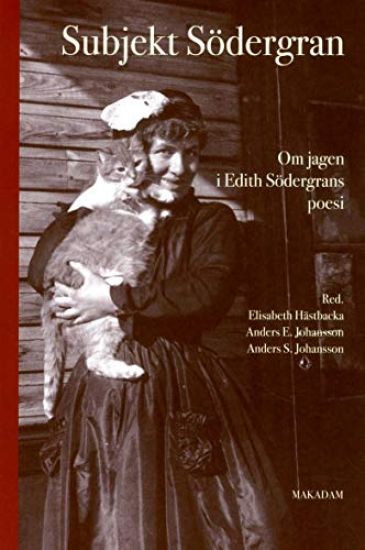
Subjekt Södergran : om jagen i Edith Södergrans poesi
"Jag är ingen kvinna. Jag är ett neutrum." Så börjar Edith Södergrans dikt "Vierge Moderne" ur debut­samlingen "Dikter" (1916). Hur ska dessa "jag" egentligen förstås? Forskningen har givit olika svar biografiska, litteraturhistoriska, feministiska och varje enskild läsare måste själv ställa frågorna på nytt: Ska man kliva in i jagets ställe? Läsa in författaren? Upptäcka nya möjligheter? I "Subjekt Södergran" närmar sig tio litteraturvetare Södergrans jag ännu en gång, hundra år efter debuten, i övertygelse om att ämnet är allt annat än uttömt. Deras sökande efter svar på diktjagets gåta leder dem till både feminism och liberalism, etik och politik, Silvana Imam och Louis Althusser, ­listor och selfies, katter och entreprenörer. Boken är resultatet av ett litteraturvetenskapligt samarbete mellan Umeå universitet och Mitt­univer­sitetet.
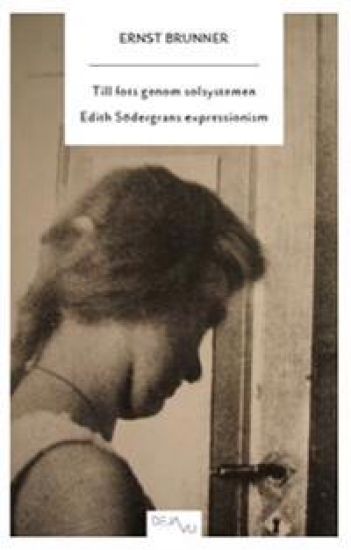
Till fots genom solsystemen : en studie i Edith Södergrans expressionism
Utfattig genom bolschevismen, lungsot, avlägsen gränsby, skriver Edith Södergran i ett brev till Vilhelm Ekelund från vintern 1920. Bosatt i finska Karelen genomlevde hon första världskriget, ryska revolutionen och Finlands frihetskrig. Det kaos som ledde Europa till sammanbrott, infann sig samtidigt som spänningen mellan diktarens dödsvisshet och livsviljans extatiska kraft bragtes till sin konstnärliga fullbordan. I och med detta når Edith Södergrans expressionism, som i Till fots genom solsystemen sätts i brännpunkten, sin triumfatoriska kulmen. Edith Södergran är den första stora banbrytaren i modern svensk diktning, hennes expressionism alla måttlösa hjärtans skönaste förhävelse.
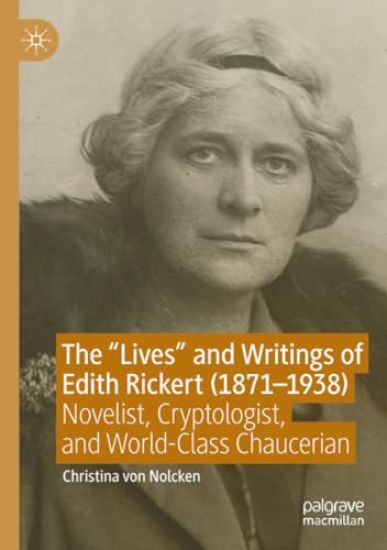
The "Lives" and Writings of Edith Rickert (1871-1938)

The "Lives" and Writings of Edith Rickert (1871-1938)

Christina von Nolcken

Springer International Publishing AG
2025
nidottu
This biography represents a nuanced account of Edith Rickert's life--and inner life. It follows Rickert's own writing and draws attention to her life as a writer. Rickert has been long remembered as a medievalist, but she also contributed to American scholarship, pedagogy, and codicology. Born into a family of very modest means in Canal Dover, Ohio, she numbered among the University of Chicago's earliest doctoral students (1895-1899) and was among the first eight women to reach the top of that University's professorial ladder. She prepared what remains the definitive edition of the medieval romance Emar . She documented aspects of the medieval, as well as Chaucer's life, with a historian's accuracy and a novelist's insight. In the Ladies Home Journal she wrote on women's issues that remain pressing today. With University of Chicago professor John Matthews Manly (1865-1940), she prepared numerous readers and textbooks, including several that helped putcontemporary British and American literature on the academic map. Again in collaboration with Manly, she was responsible for what has been described as "perhaps the most important of the MI-8 solutions" during World War I, as well as the eight-volume edition of Chaucer's Canterbury Tales (1940). Rickert also published short stories, novels, poems, and essays. As this biography shows, Rickert's achievement as a writer was equal to her work as a literary critic.
Kate Chopin, Edith Wharton and Charlotte Perkins Gilman
A wide range of short fiction by Kate Chopin, Edith Wharton and Charlotte Perkins Gilman is the focus for this study, examining both genre and theme. Chopin's short stories, Wharton's novellas, Chopin's frankly erotic writing and the homilies in which Gilman warns of the dangers of the sexually transmitted disease are compared. There are also essays on ethnicity in the work of Chopin, Wharton's New England stories, Gilman's innovative use of genre and 'The Yellow Wallpaper' on film. All three writers are still popular in US classrooms in particular. This paperback edition includes a new Preface to the material, providing a useful update on recent scholarship.
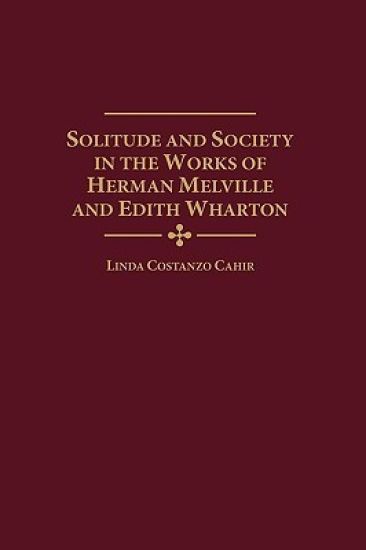
Solitude and Society in the Works of Herman Melville and Edith Wharton
The interplay between solitude and society was a particularly persistent theme in nineteenth-century American literature, though writers approached this theme in different ways. Poe explored the metaphysical significance of isolation and held solitude in high esteem; Hawthorne viewed the theme in moral terms and examined the obligation of each individual to the larger community; and Emerson maintained that the contradictory states of self-reliance and solidarity are fundamental to human happiness. Herman Melville emerged with an ontological response to this issue. Questioning the nature of being, he argued that humans are essentially isolated creatures. While he grants that we are free to choose how we conduct our lives, whether in solitude or in society, we cannot escape the essential condition of our alienation. Thus in Moby-Dick, he coins the term Isolato to signify the inherent separateness of all individuals. Writing some fifty years later, Edith Wharton reached the same conclusion. This book argues that Wharton's views on solitude and society were strongly parallel to those of Melville.Scholars have generally held that Wharton was primarily influenced by the great English, French, and Russian writers of the nineteenth century; and that with the exception of Walt Whitman, Ralph Waldo Emerson, and Henry James, she neglected the influence of American literature almost entirely. This study demonstrates that Wharton read a significant portion of Melville's writings, that she reflected on the nature and achievement of his works, and that her consideration of his importance emerged during very significant moments in her life, when she was forced to grapple with her own place as an individual in relation to a larger community. Though Melville and Wharton initially seem disparate, this book shows that they had much in common. By studying the two authors side by side, this volume reveals that they shared a similar way of seeing the world, particularly with respect to their considerations of solitude and society. Through their solitary characters, Melville and Wharton question the relationship of self and society and thus engage a universal problem of special interest to the nineteenth century.
Kate Chopin, Edith Wharton and Charlotte Perkins Gilman
A wide range of short fiction by Kate Chopin, Edith Wharton and Charlotte Perkins Gilman is the focus for this study, examining both genre and theme. Chopin's short stories, Wharton's novellas, Chopin's frankly erotic writing and the homilies in which Gilman warns of the dangers of the sexually transmitted disease are compared. There are also essays on ethnicity in the work of Chopin, Wharton's New England stories, Gilman's innovative use of genre and 'The Yellow Wallpaper' on film. All three writers are still popular in US classrooms in particular. This paperback edition includes a new Preface to the material, providing a useful update on recent scholarship.
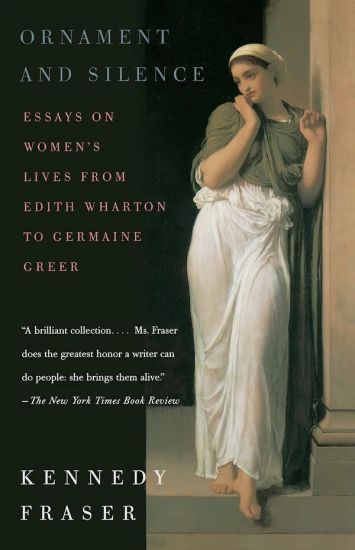
Ornament and Silence: Essays on Women's Lives from Edith Wharton to Germaine Greer
From one of The New Yorker's most revered writers comes "a brilliant collection" (The New York Times Book Review) about women in love affairs, friendships, marriages, and families--from Virginia Woolf and Flaubert's mistress to Russian novelist Nina Berberova and English naturalist Miriam Rothschild. In these fourteen essays, Fraser focuses on women in love affairs, friendships, marriages, and families; in relation to one another and to the talented men who so often rendered them invisible. In Ornament and Silence we see Virginia Woolf, haunted and eventually destroyed by the sexual secrets of her childhood. We meet Flaubert's theatrically importunate mistress, Louise Colet, the one woman who could briefly slip past the master's misogyny. Fraser offers vibrant portraits of the Russian novelist Nina Berberova and the English naturalist Miriam Rothschild. And here is Fraser herself, learning her craft at The New Yorker, tending her English garden and--on every page--delighting us with the manifold felicities of her prose.
Untold Power: The Fascinating Rise and Complex Legacy of First Lady Edith Wilson
A nuanced portrait of the first acting woman president, written with fresh and cinematic verve by a leading historian on women's suffrage and power While this nation has yet to elect its first woman president--and though history has downplayed her role--just over a century ago a woman became the nation's first acting president. In fact, she was born in 1872, and her name was Edith Bolling Galt Wilson. She climbed her way out of Appalachian poverty and into the highest echelons of American power and in 1919 effectively acted as the first woman president of the U.S. (before women could even vote nationwide) when her husband, Woodrow Wilson, was incapacitated. Beautiful, brilliant, charismatic, catty, and calculating, she was a complicated figure whose personal quest for influence reshaped the position of First Lady into one of political prominence forever. And still nobody truly understands who she was. For the first time, we have a biography that takes an unflinching look at the woman whose ascent mirrors that of many powerful American women before and since, one full of the compromises and complicities women have undertaken throughout time in order to find security for themselves and make their mark on history. She was a shape-shifter who was obsessed with crafting her own reputation, at once deeply invested in exercising her own power while also opposing women's suffrage. With narrative verve and fresh eyes, Untold Power is a richly overdue examination of one of American history's most influential, complicated women as well as the surprising and often absurd realities of American politics.
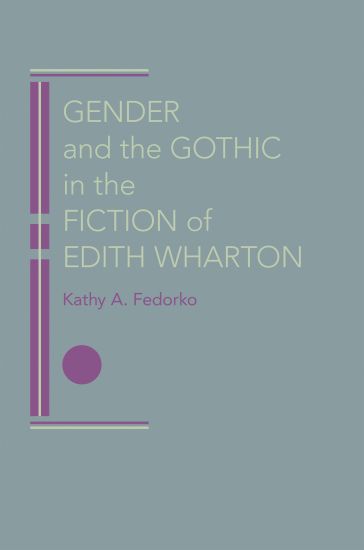
Gender and the Gothic in the Fiction of Edith Wharton

Gender and the Gothic in the Fiction of Edith Wharton

Kathy A. Fedorko

The University of Alabama Press
2017
nidottu
An investigation into Wharton's extensive use and adaptation of the Gothic in her fiction. Gender and the Gothic in the Fiction of Edith Wharton is an innovative study that provides fresh insights into Wharton's male characters while at the same time showing how Wharton's imagining of a fe/male self evolves throughout her career. Using feminist archetypal theory and theory of the female Gothic, Kathy A. Fedorko shows how Wharton, in sixteen short stories and six major novels written during four distinct periods of her life, adopts and adapts Gothic elements as a way to explore the nature of feminine and masculine ways of knowing and being and to dramatize the tension between them. Edith Wharton's contradictory views of women and men–her attitudes toward the feminine and the masculine–reflect a complicated interweaving of family and social environment, historical time, and individual psychology. Studies of Wharton have exhibited this same kind of contradiction, with some seeing her as disparaging men and the masculine and others depicting her as disparaging women and the feminine. The use of Gothic elements in her fiction provided Wharton, who was often considered the consummate realist, with a way to dramatize the conflict between feminine and masculine selves as she experienced them and to evolve and alternative to the dualism. Fedorko's work is unique in its careful consideration of Whartons's sixteen Gothic works which are seldom discussed. Further, the revelation of how these Gothic stories are reflected in her major realistic novels. In the novels with Gothic texts, Wharton draws multiple parallels between male and female protagonists, indicating the commonalities between women and men and the potential for a female self. Eventually, in her last completed novel and her last short story, Wharton imagines human beings who are comfortable with both gender selves.