Kirjojen hintavertailu. Mukana 12 016 292 kirjaa ja 12 kauppaa.

Kirjahaku

Etsi kirjoja tekijän nimen, kirjan nimen tai ISBN:n perusteella.

1000 tulosta hakusanalla Edmundo LLAMAS ALBA

An Address of the Honorable Edmund Pendleton, of Virginia, to the American Citizens, on the Present State of our Country
The 18th century was a wealth of knowledge, exploration and rapidly growing technology and expanding record-keeping made possible by advances in the printing press. In its determination to preserve the century of revolution, Gale initiated a revolution of its own: digitization of epic proportions to preserve these invaluable works in the largest archive of its kind. Now for the first time these high-quality digital copies of original 18th century manuscripts are available in print, making them highly accessible to libraries, undergraduate students, and independent scholars.Delve into what it was like to live during the eighteenth century by reading the first-hand accounts of everyday people, including city dwellers and farmers, businessmen and bankers, artisans and merchants, artists and their patrons, politicians and their constituents. Original texts make the American, French, and Industrial revolutions vividly contemporary.++++The below data was compiled from various identification fields in the bibliographic record of this title. This data is provided as an additional tool in helping to insure edition identification: ++++Library of CongressW011773Boston: Printed and sold by Benjamin Edes, Kilby Street, --1799. 20p.; 12
An Enquiry Into the Ideas of Space, Time, Immensity, and Eternity; ... in Answer to a Book Lately Publish'd by Mr. Jackson, Entitled, The Existence and Unity of God Proved ... By Edmund Law, ... To Which is Added, a Dissertation
The 18th century was a wealth of knowledge, exploration and rapidly growing technology and expanding record-keeping made possible by advances in the printing press. In its determination to preserve the century of revolution, Gale initiated a revolution of its own: digitization of epic proportions to preserve these invaluable works in the largest archive of its kind. Now for the first time these high-quality digital copies of original 18th century manuscripts are available in print, making them highly accessible to libraries, undergraduate students, and independent scholars.The Age of Enlightenment profoundly enriched religious and philosophical understanding and continues to influence present-day thinking. Works collected here include masterpieces by David Hume, Immanuel Kant, and Jean-Jacques Rousseau, as well as religious sermons and moral debates on the issues of the day, such as the slave trade. The Age of Reason saw conflict between Protestantism and Catholicism transformed into one between faith and logic -- a debate that continues in the twenty-first century.++++The below data was compiled from various identification fields in the bibliographic record of this title. This data is provided as an additional tool in helping to insure edition identification: ++++British LibraryT087827With a half-title and a final leaf of advertisements. A learned hand = Daniel Waterland (attribution from WU). The 'Dissertation' has separate pagination and register.Cambridge: printed by W. Fenner and R. Beresford, for W. Thurlbourn; and sold by Mess. Knapton, Innys and Manby, C. Rivington, S. Birt, London; S. Harding, Westminster, 1734. 4],196;98, 2]p.; 8
The Faerie Queene. By Edmund Spenser. With an Exact Collation of the two Original Editions, ... To Which are now Added, a new Life of the Author, and Also a Glossary. Adorn'd With Thirty-two Copper-plates of 3; Volume 1
The 18th century was a wealth of knowledge, exploration and rapidly growing technology and expanding record-keeping made possible by advances in the printing press. In its determination to preserve the century of revolution, Gale initiated a revolution of its own: digitization of epic proportions to preserve these invaluable works in the largest archive of its kind. Now for the first time these high-quality digital copies of original 18th century manuscripts are available in print, making them highly accessible to libraries, undergraduate students, and independent scholars.Western literary study flows out of eighteenth-century works by Alexander Pope, Daniel Defoe, Henry Fielding, Frances Burney, Denis Diderot, Johann Gottfried Herder, Johann Wolfgang von Goethe, and others. Experience the birth of the modern novel, or compare the development of language using dictionaries and grammar discourses. ++++The below data was compiled from various identification fields in the bibliographic record of this title. This data is provided as an additional tool in helping to insure edition identification: ++++British LibraryT035152Sig. Eee is present in duplicate in vol.I. The 'life' is by T. Birch. The 'Proposals for printing by subscription, The faerie queene' were issued on 1 July 1751.London: printed for J. Brindley, and S. Wright, 1751. 3v., plates; 4
Memoirs of Edmund Ludlow, Esq; Lieutenant-General of the Horse, Commander in Chief of the Forces in Ireland, To Which is now Added, the Case of King Charles I. With a Copious Index. In Three Volumes. The Third Edition. of 3; Volume 3
The 18th century was a wealth of knowledge, exploration and rapidly growing technology and expanding record-keeping made possible by advances in the printing press. In its determination to preserve the century of revolution, Gale initiated a revolution of its own: digitization of epic proportions to preserve these invaluable works in the largest archive of its kind. Now for the first time these high-quality digital copies of original 18th century manuscripts are available in print, making them highly accessible to libraries, undergraduate students, and independent scholars.Rich in titles on English life and social history, this collection spans the world as it was known to eighteenth-century historians and explorers. Titles include a wealth of travel accounts and diaries, histories of nations from throughout the world, and maps and charts of a world that was still being discovered. Students of the War of American Independence will find fascinating accounts from the British side of conflict. ++++The below data was compiled from various identification fields in the bibliographic record of this title. This data is provided as an additional tool in helping to insure edition identification: ++++British LibraryT125103'King Charles his case' is by John Cook.Edinburgh: printed by Sands, Murray, and Cochran. For W. Sands, A. Kincaid & A. Donaldson, J. Brown, and C. Wright, 1751. 3v.; 12
The Commentaries, or Reports of Edmund Plowden, Containing Divers Cases Upon Matters of law, Originally Written in French, To Which are Added, the Quæries of Mr. Plowden
The 18th century was a wealth of knowledge, exploration and rapidly growing technology and expanding record-keeping made possible by advances in the printing press. In its determination to preserve the century of revolution, Gale initiated a revolution of its own: digitization of epic proportions to preserve these invaluable works in the largest archive of its kind. Now for the first time these high-quality digital copies of original 18th century manuscripts are available in print, making them highly accessible to libraries, undergraduate students, and independent scholars.This collection reveals the history of English common law and Empire law in a vastly changing world of British expansion. Dominating the legal field is the Commentaries of the Law of England by Sir William Blackstone, which first appeared in 1765. Reference works such as almanacs and catalogues continue to educate us by revealing the day-to-day workings of society.++++The below data was compiled from various identification fields in the bibliographic record of this title. This data is provided as an additional tool in helping to insure edition identification: ++++British LibraryT144729Part 2 has a separate titlepage; the second part of the commentaries'; pagination and register are continuous. Immediately following pt.2 is the case of 'Basset and Morgan versus Manxel. at Serjeant's Inn', followed by the Qu ries' with separate titlepag London]: In the Savoy: printed by Catharine Lintot, and Samuel Richardson, Law Printers to the King's Most Excellent Majesty, for the translator and to be sold by the Booksellers in London and Westminster, 1761. vi, 2],401, 3],403-567, 1];15, 1]; 2],68; 48]p., plate: port.; 2
Comfort and Counsel to Protestant Dissenters. With Some Serious Queries to Such as Hate and Cast Them out; and a Friendly Admonition to Such as Desert Them. In two Sermons, ... By Edmund Calamy, D.D. The Second Edition
The 18th century was a wealth of knowledge, exploration and rapidly growing technology and expanding record-keeping made possible by advances in the printing press. In its determination to preserve the century of revolution, Gale initiated a revolution of its own: digitization of epic proportions to preserve these invaluable works in the largest archive of its kind. Now for the first time these high-quality digital copies of original 18th century manuscripts are available in print, making them highly accessible to libraries, undergraduate students, and independent scholars.The Age of Enlightenment profoundly enriched religious and philosophical understanding and continues to influence present-day thinking. Works collected here include masterpieces by David Hume, Immanuel Kant, and Jean-Jacques Rousseau, as well as religious sermons and moral debates on the issues of the day, such as the slave trade. The Age of Reason saw conflict between Protestantism and Catholicism transformed into one between faith and logic -- a debate that continues in the twenty-first century.++++The below data was compiled from various identification fields in the bibliographic record of this title. This data is provided as an additional tool in helping to insure edition identification: ++++British LibraryT137761With a half-title.London: printed for John Lawrence; J. Clarke; and N. Cliff and D. Jackson, 1712. 4], iv,43, 1]p.; 8
An Admonition Against Profane and Common Swearing. In a Letter From a Minister to his Parishioner. ... By ... Edmund, Lord Bishop of London. The Seventh Edition
The 18th century was a wealth of knowledge, exploration and rapidly growing technology and expanding record-keeping made possible by advances in the printing press. In its determination to preserve the century of revolution, Gale initiated a revolution of its own: digitization of epic proportions to preserve these invaluable works in the largest archive of its kind. Now for the first time these high-quality digital copies of original 18th century manuscripts are available in print, making them highly accessible to libraries, undergraduate students, and independent scholars.The Age of Enlightenment profoundly enriched religious and philosophical understanding and continues to influence present-day thinking. Works collected here include masterpieces by David Hume, Immanuel Kant, and Jean-Jacques Rousseau, as well as religious sermons and moral debates on the issues of the day, such as the slave trade. The Age of Reason saw conflict between Protestantism and Catholicism transformed into one between faith and logic -- a debate that continues in the twenty-first century.++++The below data was compiled from various identification fields in the bibliographic record of this title. This data is provided as an additional tool in helping to insure edition identification: ++++British LibraryT202216London: printed for E. Owen, 1745. 24p.; 12
Trust in God, the Best Remedy Against Fears of all Kinds. A Sermon Preached in the Parish-church of Lambeth, by ... Edmund Gibson,
The 18th century was a wealth of knowledge, exploration and rapidly growing technology and expanding record-keeping made possible by advances in the printing press. In its determination to preserve the century of revolution, Gale initiated a revolution of its own: digitization of epic proportions to preserve these invaluable works in the largest archive of its kind. Now for the first time these high-quality digital copies of original 18th century manuscripts are available in print, making them highly accessible to libraries, undergraduate students, and independent scholars.The Age of Enlightenment profoundly enriched religious and philosophical understanding and continues to influence present-day thinking. Works collected here include masterpieces by David Hume, Immanuel Kant, and Jean-Jacques Rousseau, as well as religious sermons and moral debates on the issues of the day, such as the slave trade. The Age of Reason saw conflict between Protestantism and Catholicism transformed into one between faith and logic -- a debate that continues in the twenty-first century.++++The below data was compiled from various identification fields in the bibliographic record of this title. This data is provided as an additional tool in helping to insure edition identification: ++++British LibraryT202219 London, 1730?]. 26p.; 12
An Earnest Dissuasive From Intemperance in Meats and Drinks. By ... Edmund Gibson, D.D. Late Lord Bishop of London. The Ninth Edition; Revised and Enlarged, With a More Particular View to the Point of Spirituous Liquors
The 18th century was a wealth of knowledge, exploration and rapidly growing technology and expanding record-keeping made possible by advances in the printing press. In its determination to preserve the century of revolution, Gale initiated a revolution of its own: digitization of epic proportions to preserve these invaluable works in the largest archive of its kind. Now for the first time these high-quality digital copies of original 18th century manuscripts are available in print, making them highly accessible to libraries, undergraduate students, and independent scholars.The Age of Enlightenment profoundly enriched religious and philosophical understanding and continues to influence present-day thinking. Works collected here include masterpieces by David Hume, Immanuel Kant, and Jean-Jacques Rousseau, as well as religious sermons and moral debates on the issues of the day, such as the slave trade. The Age of Reason saw conflict between Protestantism and Catholicism transformed into one between faith and logic -- a debate that continues in the twenty-first century.++++The below data was compiled from various identification fields in the bibliographic record of this title. This data is provided as an additional tool in helping to insure edition identification: ++++British LibraryT032382London: printed by E. Owen, and sold by W. Johnston, 1752. 48p.; 12
A Sermon Preached at the Visitation Held at Stafford, May 5. 1715. By Edmund Ryves,
The 18th century was a wealth of knowledge, exploration and rapidly growing technology and expanding record-keeping made possible by advances in the printing press. In its determination to preserve the century of revolution, Gale initiated a revolution of its own: digitization of epic proportions to preserve these invaluable works in the largest archive of its kind. Now for the first time these high-quality digital copies of original 18th century manuscripts are available in print, making them highly accessible to libraries, undergraduate students, and independent scholars.The Age of Enlightenment profoundly enriched religious and philosophical understanding and continues to influence present-day thinking. Works collected here include masterpieces by David Hume, Immanuel Kant, and Jean-Jacques Rousseau, as well as religious sermons and moral debates on the issues of the day, such as the slave trade. The Age of Reason saw conflict between Protestantism and Catholicism transformed into one between faith and logic -- a debate that continues in the twenty-first century.++++The below data was compiled from various identification fields in the bibliographic record of this title. This data is provided as an additional tool in helping to insure edition identification: ++++British LibraryT004307London: printed for John Morphew, 1715. 24p.; 8
The Grounds of a Particular Providence, a Sermon Preached Before the Lords Spiritual and Temporal, in the Abby Church Westminster, on Wednesday, January, XXX. MDCCLXXI. By Edmund Lord Bishop of Carlisle
The 18th century was a wealth of knowledge, exploration and rapidly growing technology and expanding record-keeping made possible by advances in the printing press. In its determination to preserve the century of revolution, Gale initiated a revolution of its own: digitization of epic proportions to preserve these invaluable works in the largest archive of its kind. Now for the first time these high-quality digital copies of original 18th century manuscripts are available in print, making them highly accessible to libraries, undergraduate students, and independent scholars.The Age of Enlightenment profoundly enriched religious and philosophical understanding and continues to influence present-day thinking. Works collected here include masterpieces by David Hume, Immanuel Kant, and Jean-Jacques Rousseau, as well as religious sermons and moral debates on the issues of the day, such as the slave trade. The Age of Reason saw conflict between Protestantism and Catholicism transformed into one between faith and logic -- a debate that continues in the twenty-first century.++++The below data was compiled from various identification fields in the bibliographic record of this title. This data is provided as an additional tool in helping to insure edition identification: ++++British LibraryT009531Half-title: 'The Bishop of Carlisle's. sermon preached before the Lords spiritual and temporal January 30, 1771'.London: printed for J. Robson, 1771]. 4],21, 1]p.; 4
A Plain and Familiar Method for Attaining the Knowledge and Practice of Common Arithmetic. By Edmund Wingate
The 18th century was a wealth of knowledge, exploration and rapidly growing technology and expanding record-keeping made possible by advances in the printing press. In its determination to preserve the century of revolution, Gale initiated a revolution of its own: digitization of epic proportions to preserve these invaluable works in the largest archive of its kind. Now for the first time these high-quality digital copies of original 18th century manuscripts are available in print, making them highly accessible to libraries, undergraduate students, and independent scholars.Medical theory and practice of the 1700s developed rapidly, as is evidenced by the extensive collection, which includes descriptions of diseases, their conditions, and treatments. Books on science and technology, agriculture, military technology, natural philosophy, even cookbooks, are all contained here.++++The below data was compiled from various identification fields in the bibliographic record of this title. This data is provided as an additional tool in helping to insure edition identification: ++++British LibraryT086940First published in 1630 as 'Arithmetique made easie'.London: printed for J. and P. Knapton; and J. Hodges, 1751. x,401, 13]p., plate; 8
The History of the County of Cambridge, From the Earliest Account to the Present Time. a Particular Account of the Antient and Modern Cambridge, With the City of Ely, and the Several Parishes Therein. By Edmund Carter
The 18th century was a wealth of knowledge, exploration and rapidly growing technology and expanding record-keeping made possible by advances in the printing press. In its determination to preserve the century of revolution, Gale initiated a revolution of its own: digitization of epic proportions to preserve these invaluable works in the largest archive of its kind. Now for the first time these high-quality digital copies of original 18th century manuscripts are available in print, making them highly accessible to libraries, undergraduate students, and independent scholars.Rich in titles on English life and social history, this collection spans the world as it was known to eighteenth-century historians and explorers. Titles include a wealth of travel accounts and diaries, histories of nations from throughout the world, and maps and charts of a world that was still being discovered. Students of the War of American Independence will find fascinating accounts from the British side of conflict. ++++The below data was compiled from various identification fields in the bibliographic record of this title. This data is provided as an additional tool in helping to insure edition identification: ++++British LibraryT135453With a half-title. Sig. I3-I4 (Pp. 61-64) are cancels. At foot of p. 356 "End of vol. 1." No more published?.Cambridge: printed for the author, and sold by T. James, printer and R. Matthews, 1753. vii, 1],356p.; 8
An Epitome of the Elements of Italian Book-keeping, Selected, and Compiled From the Best Modern Systems. By Edmund Fitzgerald, Writing Master and Accountant, in Whitehaven
The 18th century was a wealth of knowledge, exploration and rapidly growing technology and expanding record-keeping made possible by advances in the printing press. In its determination to preserve the century of revolution, Gale initiated a revolution of its own: digitization of epic proportions to preserve these invaluable works in the largest archive of its kind. Now for the first time these high-quality digital copies of original 18th century manuscripts are available in print, making them highly accessible to libraries, undergraduate students, and independent scholars.Delve into what it was like to live during the eighteenth century by reading the first-hand accounts of everyday people, including city dwellers and farmers, businessmen and bankers, artisans and merchants, artists and their patrons, politicians and their constituents. Original texts make the American, French, and Industrial revolutions vividly contemporary.++++The below data was compiled from various identification fields in the bibliographic record of this title. This data is provided as an additional tool in helping to insure edition identification: ++++Bodleian Library (Oxford)T184190With a list of subscribers.Whitehaven: printed by A. Foster, for the author, 1771. xiv,198p., plate; 8
Edmund Husserl. Untersuchungen zur Urteilstheorie

Edmund Husserl. Untersuchungen zur Urteilstheorie

Edmund Husserl

SPRINGER-VERLAG NEW YORK INC.
2009
sidottu
Die im vorliegenden Band herausgebenen Forschungsmanuskripten basieren auf den sogenannten U-Blättern, einer von Edith Stein im Auftrag Husserls 1917 zusammengestellten Manuskriptsammlung zur "Urteilstheorie". Für Husserl war die Urteilstheorie das Kernstück der phänomenologischen Theorie der Vernunft, da in ihr die Probleme der Logik, der Ausdrucks- und Bedeutungslehre sowie der Erkenntnistheorie in ihrer wechselseitigen Verbundenheit zum Austrag kommen. Die im ersten Teil des Bandes veröffentlichten Texte aus dem Zeitraum 1893 bis 1899 zeigen, wie Husserls urteilstheoretische Forschungen ihren Ausgang von der intensiven Auseinandersetzung mit der Urteilstheorie seines Lehrers Franz Brentano nehmen. Diese Texte bieten einen wichtigen Einblick in die Entwicklung und Vorgeschichte von Husserls Bedeutungs- und Erkenntnislehre in den Logischen Untersuchungen; behandelt werden insbesondere die Scheidung von subjektiv-psychologischer und objektiv-logischer Forschungsrichtung, die Erfüllungslehre, die Lehre von der kategorialen Anschauung, die Bedeutungskategorien sowie der Evidenz- und Wahrheitsbegriff. Besondere Beachtung verdienen in diesen frühen Manuskripten Husserls Bestimmungen der Begriffe "Satz" und "Sachverhalt", insofern es sich hierbei um Schlüsselbegriffe seiner späteren, im zweiten Teil des Bandes dokumentierten Urteilstheorie handelt. Dieser zweite Teil kann als Ergänzung zu den in anderen Bänden der Husserliana herausgegebenen Göttinger Vorlesungen Husserls zur Logik und Erkenntnistheorie angesehen werden. Er vervollständigt das Bild von der Weiterentwicklung und den grundlegenden Veränderungen in Husserls Bedeutungs- und Urteilslehre nach den Logischen Untersuchungen. In den hier veröffentlichten, aus den Jahren 1908 bis 1918 stammenden Texten versucht Husserl sich unter anderem über den Urteilsbegriff selbst Klarheit zu verschaffen. Hierbei gilt es einerseits das im Urteil Vermeinte genau zubestimmen und Satz als ideale Bedeutung vom Sachverhalt als Urteilsgegenständlichkeit sorgfältig zu unterscheiden und die mit diesen Termini verbundenen Äquivokationen zu beseitigen; andrerseits geht es darum das Urteilen als Denkakt zu seinen anschaulichen Vorstellungsunterlagen ins Verhältnis zu setzen. Beachtenswert sind desweiteren Husserls Bemühungen um eine Klärung des Unterschieds zwischen Wesensurteilen und empirischen Urteilen. Ein umfangreiches, für die Methode phänomenologischer Deskription bedeutsames Manuskript ist einer Untersuchung der immanent-deiktischen Urteile und ihrer Gültigkeit gewidmet.
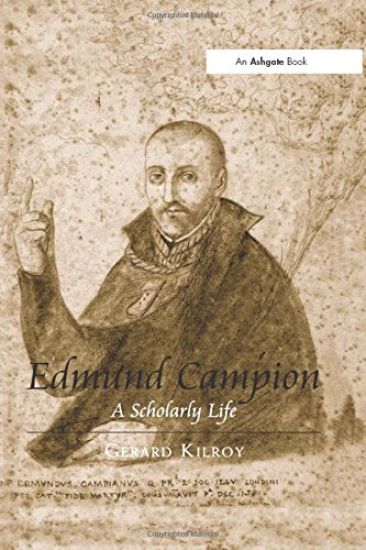
Edmund Campion

Edmund Campion

Gerard Kilroy

Ashgate Publishing Limited
2015
sidottu
Edmund Campion: A Scholarly Life is the response, at long last, to Evelyn Waugh’s call, in 1935, for a ’scholarly biography’ to replace Richard Simpson's Edmund Campion (1867). Whereas early accounts of his life focused on the execution of the Jesuit priest, this new biography presents a more balanced assessment, placing equal weight on Campion’s London upbringing among printers and preachers, and on his growing stature as an orator in an Oxford riven with religious divisions. Ireland, chosen by Campion as a haven from religious conflict, is shown, paradoxically, to have determined his life and his death. Gerard Kilroy here draws on newly discovered manuscript sources to reveal Campion as a charismatic and affectionate scholar who was finding fulfilment as priest and teacher in Prague when he was summoned to lead the first Jesuit mission to England. The book argues that the delays in his long journey suggest reluctant acceptance, even before he was told that Dr Nicholas Sander had brought ’holy war’ to Ireland, so that Campion landed in an England that was preparing for papal invasion. The book offers fresh insights into the dramatic search for Campion, the populist nature of the disputations in the Tower, and the legal issues raised by his torture. It was the monarchical republic itself that, in pursuit of the Anjou marriage, made him the beloved ’champion’ of the English Catholic community. Edmund Campion: A Scholarly Life presents the most detailed and comprehensive picture to date of an historical figure whose loyalty and courage, in the trial and on the scaffold, swiftly became legendary across Europe.
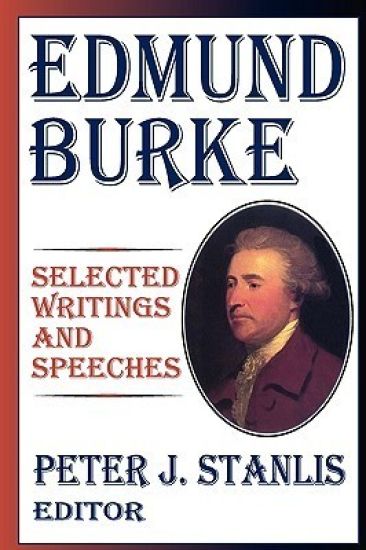
Edmund Burke

Edmund Burke

Peter Stanlis

AldineTransaction
2006
nidottu
In this unique book, Peter J. Stanlis, the leading Burke scholar in America, has collected all the most important works and speeches of Edmund Burke (1729-1797), British statesman, political philosopher, and founder of modern conservative thought and, with due care to preserve the beauty of Burke's prose, edited them down to their essentials."The main purpose of these selections," Stanlis explains, "is to present extensive and in the main unbroken samples of Burke's most representative thought in his most characteristic style, on a great variety of subjects."In this major effort you can find--to name only a few topics covered--Burke's defense of ordered liberty, his advocacy of secure property rights, his love of Christianity and Europe's moral tradition, and his impassioned jeremiad against the orgy of destruction that the French Revolution became. Stanlis's general introduction gives important insight into Burke's early life, education, professional training, literary and political career, prose style, political philosophy, and more. In addition, each selection is preceded by a headnote that clarifies the selections in their historical context and includes a brief analytical interpretation. A chronology highlights important dates in Burke's life and career.In its compactness and comprehensiveness, this volume is the quintessential Burke reader. It will be of interest to historians, political scientists, and students of literature and intellectual history.
Edmund and Rosemary Go to Hell: A Story We All Really Need Now More Than Ever
One Sunday afternoon, an ordinary couple named Edmund and Rosemary decide to go for a walk in their Brooklyn neighborhood. Within moments, they are plunged into a wonderful, nerve-racking, hilarious, unique adventure that begins with a cell phone and ends in a jungle halfway around the world. In Edmund and Rosemary Go to Hell, famed New Yorker cartoonist Bruce Eric Kaplan uses his trademark incisive wit to explore what it is that prevents us from seeing all that we have. By turns wickedly funny and oddly touching, this provocative and ultimately hopeful picture book for adults will appeal to anyone who has ever been stuck in traffic or, more to the point, stuck inside themselves.