Kirjojen hintavertailu. Mukana 11 342 296 kirjaa ja 12 kauppaa.

Kirjahaku

Etsi kirjoja tekijän nimen, kirjan nimen tai ISBN:n perusteella.

1000 tulosta hakusanalla FREEDOM DIVIDEND

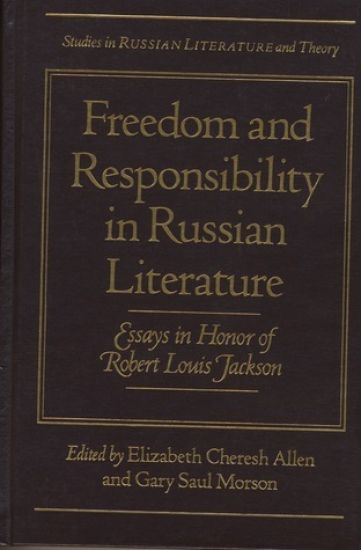
Freedom and Responsibility in Russian Literature
Robert Louis Jackson, (the B.E. Bensinger Professor of Slavic Languages and Literatures at Yale University), is one of the most prominent American Slavists in the field today. His innovative scholarship and teaching have informed the development of this discipline and affected every one of its practitioners. Elizabeth Cheresh Allen and Gary Saul Morson have compiled a collection of essays written in Jackson's honour by contemporary Slavists.
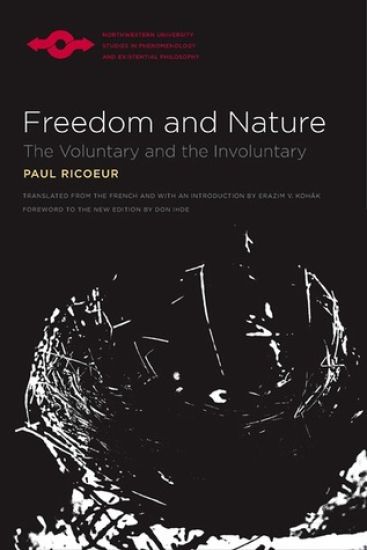
Freedom and Nature

Freedom and Nature

Paul Ricoeur

Northwestern University Press
2007
nidottu
This volume, the first part of Paul Ricoeur's ""Philosophy of the Will"", is an eidetics, carried out within carefully imposed phenomenological brackets. It seeks to deal with the essential structure of man's being in the world, and so it suspends the distorting dimensions of existence, the bondage of passion, and the vision of innocence, to which Ricoeur returns in his later writings. The result is a conception of man as an incarnate Cogito, which can make the polar unity of subject and object intelligible and provide a basic continuity for the various aspects of inquiry into man's being-in-the-world.
Freedom Hill

Freedom Hill

L.S. Asekoff

Northwestern University Press
2011
nidottu
L. S. Asekoff's Freedom Hill is a dramatic monologue divided into three sections. The first concerns the speaker's visit with his aging parents and the death of his father. The second, set at an art party, is a meditation on women, desire, and the nature of the self. In the third, we witness the effects on the speaker of a cerebral stroke, along with his gradual recovery. As readers of Asekoff's unique body of work have come to expect, this highly allusive poem encompasses a wide range of subject matter: Heidegger, C-SPAN, modern art, aging, capitalism, religion. Also familiar will be Asekoff's great variety of tone and verbal ingenuity. Although indebted to high modernism, Freedom Hill is an ambitious, thoroughly contemporary meditation on issues very much of the present.
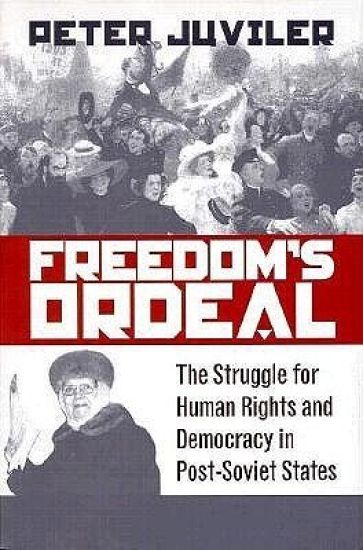
Freedom's Ordeal

Freedom's Ordeal

Peter Juviler

University of Pennsylvania Press
1997
sidottu
Fifteen countries have emerged from the collapse of the Soviet Union. Freedom's Ordeal recounts the struggles of these newly independent nations to achieve freedom and to establish support for fundamental human rights. Although history has shown that states emerging from collapsed empires rarely achieve full democracy in their first try, Peter Juviler analyzes these successor states as crucial and not always unpromising tests of democracy's viability in postcommunist countries. Taking into account the particularly difficult legacies of Soviet communism, Freedom's Ordeal is distinguished by its careful tracing of the historical background, with special attention to human rights before, during, and after communism. Juviler suggests that the culture and practices of despotism may wither wherever modernization conflicts with tyranny and with the curtailment or denial of democratic rights and freedoms.
Freedom from Poverty

Freedom from Poverty

Daniel P.L. Chong

University of Pennsylvania Press
2010
sidottu
Human rights advocacy in the West is changing. Before the turn of the century, access to goods such as food, housing, and health care-while essential to human survival-were deemed outside of the human rights sphere. Traditional human rights institutions focused on rights in the political arena that could be defended through legal systems. In Freedom from Poverty, Daniel P. L. Chong examines how today's nongovernmental organizations are modifying human rights practices and reshaping the political landscape by taking up the cause of subsistence rights. This book outlines how three types of NGOs-human rights, social justice, and humanitarian organizations-are breaking down barriers by incorporating access to economic and social goods into national laws and advancing subsistence rights through nonjuridical means. These NGOs are using rights not only as legal instruments but as moral and rhetorical implements to build social movements, shape political culture, and guide development work. Rights language is now invoked in churches, political campaigns, rock concerts, and organizational mission statements. Chong presents a social theory of human rights to provide a framework for understanding these changes and defending the legitimacy of these rights. Freedom from Poverty analyzes new trends in the evolution of human rights by combining constructivist and postpositivist legal approaches. This book provides valuable concepts to human rights practitioners, political scientists, antipoverty advocates, and leaders who are serious about ending widespread privation and disease.
Freedom's Forge

Freedom's Forge

Arthur Herman

Ballantine Books Inc.
2013
pokkari
"NEW YORK TIMES "BESTSELLER SELECTED BY "THE ECONOMIST" AS ONE OF THE BEST BOOKS OF THE YEAR Remarkable as it may seem today, there once was a time when the president of the United States could pick up the phone and ask the president of General Motors to resign his position and take the reins of a great national enterprise. And the CEO would oblige, no questions asked, because it was his patriotic duty. In "Freedom s Forge, "bestselling author Arthur Herman takes us back to that time, revealing how two extraordinary American businessmen automobile magnate William Knudsen and shipbuilder Henry J. Kaiser helped corral, cajole, and inspire business leaders across the country to mobilize the arsenal of democracy that propelled the Allies to victory in World War II. Knudsen? I want to see you in Washington. I want you to work on some production matters. With those words, President Franklin D. Roosevelt enlisted Big Bill Knudsen, a Danish immigrant who had risen through the ranks of the auto industry to become president of General Motors, to drop his plans for market domination and join the U.S. Army. Commissioned a lieutenant general, Knudsen assembled a crack team of industrial innovators, persuading them one by one to leave their lucrative private sector positions and join him in Washington, D.C. Dubbed the dollar-a-year men, these dedicated patriots quickly took charge of America s moribund war production effort. Henry J. Kaiser was a maverick California industrialist famed for his innovative business techniques and his can-do management style. He, too, joined the cause. His Liberty ships became World War II icons and the Kaiser name became so admired that FDR briefly considered making him his vice president in 1944. Together, Knudsen and Kaiser created a wartime production behemoth. Drafting top talent from companies like Chrysler, Republic Steel, Boeing, Lockheed, GE, and Frigidaire, they turned auto plants into aircraft factories and civilian assembly lines into fountains of munitions, giving Americans fighting in Europe and Asia the tools they needed to defeat the Axis. In four short years they transformed America s army from a hollow shell into a truly global force, laying the foundations for a new industrial America and for the country s rise as an economic as well as military superpower. Featuring behind-the-scenes portraits of FDR, George Marshall, Henry Stimson, Harry Hopkins, Jimmy Doolittle, and Curtis LeMay, as well as scores of largely forgotten heroes and heroines of the wartime industrial effort, "Freedom s Forge" is the American story writ large. It vividly re-creates American industry s finest hour, when the nation s business elites put aside their pursuit of profits and set about saving the world. Praise for "Freedom s Forge" A rambunctious book that is itself alive with the animal spirits of the marketplace. "The Wall Street Journal" A rarely told industrial saga, rich with particulars of the growing pains and eventual triumphs of American industry . . . Arthur Herman has set out to right an injustice: the loss, down history s memory hole, of the epic achievements of American business in helping the United States and its allies win World War II. "The New York Times Book Review" Magnificent . . . It s not often that a historian comes up with a fresh approach to an absolutely critical element of the Allied victory in World War II, but Pulitzer finalist Herman . . . has done just that. "Kirkus Reviews" (starred review) "From the Hardcover edition.""
Freedom For Women

Freedom For Women

Carol Giardina

University Press of Florida
2010
sidottu
In this richly detailed firsthand history of the contemporary Women's Liberation Movement (WLM), scholar-activist Carol Giardina argues against the prevalent belief that the movement grew out of frustrations over the male chauvinism experienced by WLM founders active in the Black Freedom Movement and the New Left. Instead, she contends, it was the ideas, resources, and skills that women gained in these movements that were the new and necessary catalysts for forging the WLM in the 1960s. Giardina uses a focused study of the WLM in Florida to tap into the common theory and history shared by a relatively small band of Women's Liberation founders across the country. Drawing on a wealth of interviews, autobiographical essays, organizational records, and published writings, ""Freedom for Women"" brings to light information that has been previously ignored in other secondary accounts about the leadership of African American women in the movement. It also explores activists' roots in other movements on the left. Comprehensive, serendipitous, and carefully formulated, Giardina's work is a vivid portrait of the people and events that shaped radical feminism.
Freedom for Women

Freedom for Women

Carol Giardina

University Press of Florida
2010
nidottu
In this richly detailed firsthand history of the contemporary Women's Liberation Movement (WLM), scholar-activist Carol Giardina argues against the prevalent belief that the movement grew out of frustrations over the male chauvinism experienced by WLM founders active in the Black Freedom Movement and the New Left. Instead, she contends, it was the ideas, resources, and skills that women gained in these movements that were the new and necessary catalysts for forging the WLM in the 1960s.Giardina uses a focused study of the WLM in Florida to tap into the common theory and history shared by a relatively small band of Women's Liberation founders across the country. Drawing on a wealth of interviews, autobiographical essays, organizational records, and published writings, Freedom for Women brings to light information that has been previously ignored in other secondary accounts about the leadership of African American women in the movement. It also explores activists' roots in other movements on the left. Comprehensive, serendipitous, and carefully formulated, Giardina's work is a vivid portrait of the people and events that shaped radical feminism.
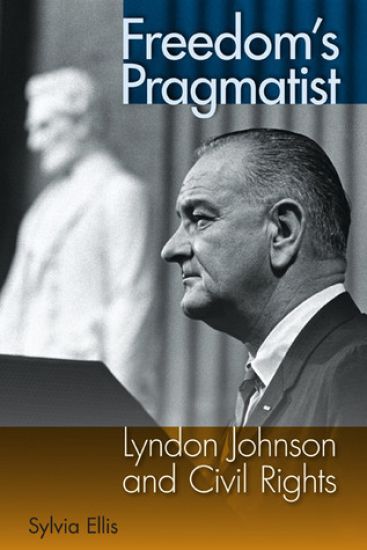
Freedom's Pragmatist

Freedom's Pragmatist

Sylvia Ellis

University Press of Florida
2013
sidottu
"Ellis paints a portrait of a politician who, like many other politicians, often publicly sailed with the prevailing political winds of the day but who, in private, constantly exhibited a fundamental commitment to fairness and justice. Freedom's Pragmatist is a provocative and indispensable volume for students, teachers, researchers, and the general public alike in rethinking Johnson's lifelong relationship with the struggle for African American freedom and equality."--John A. Kirk, editor of Martin Luther King Jr. and the Civil Rights Movement"This comprehensive and balanced study of Lyndon Johnson and civil rights is a major contribution to the field of recent U.S. history. Ellis argues convincingly that Johnson's moral vision and practical political skills were absolutely crucial to the passage of major legislation advancing the legal rights of African Americans. A splendid analysis."?Anthony Edmunds, Ball State University Lyndon B. Johnson made several major contributions to the black freedom struggle during his time in the White House. He provided much-needed moral leadership on racial equality; secured the passage of landmark civil rights acts that ended legal segregation and ensured voting rights for blacks; pushed for affirmative action; introduced antipoverty, education, and health programs that benefited all; and made important and symbolic appointments of African Americans to key political positions. This examination of Johnson's life from childhood through his lengthy career in politics argues that place, historical context, and personal ambition are the keys to understanding his stance on civil rights. Johnson's viewpoint, in turn, is essential to understanding the history of civil rights in the United States.
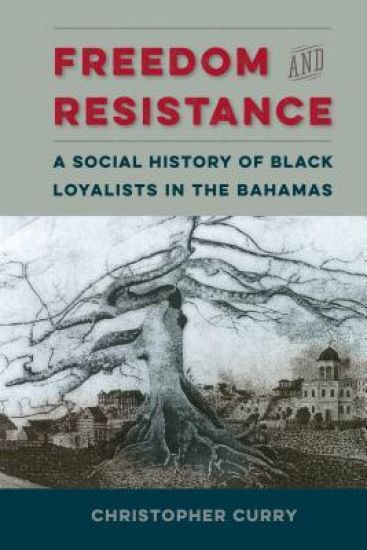
Freedom and Resistance

Freedom and Resistance

Christopher Curry

University Press of Florida
2017
sidottu
After the American Revolution, enslaved and free blacks who had been loyal to the British cause arrived in the Bahamas, drawn by British promises of liberty and land. Freedom and Resistance shows how black loyalists struggled to find freedom, clashing with white loyalists who tried either to bind them to illegal indentured contracts or to enslave them. Despite these challenges, black loyalists made significant contributions to Bahamian society. They advanced ideas of civil liberty through political activism and armed resistance, built churches and schools that became the foundations of self-reliant black communities, and participated in the emerging market economy. Comparing the experiences of these Bahamians to those of other black loyalist communities in Jamaica and Nova Scotia, Christopher Curry adds a new global dimension to the freedom struggle that spread from the American Revolution.
Freedom and Resistance

Freedom and Resistance

Christopher Curry

University Press of Florida
2018
nidottu
After the American Revolution, enslaved and free blacks who had been loyal to the British cause arrived in the Bahamas, drawn by British promises of liberty and land. Freedom and Resistance shows how Black Loyalists struggled to find freedom, clashing with white loyalists who tried either to bind them to illegal indentured contracts or to enslave them.Despite these challenges, Black Loyalists made significant contributions to Bahamian society. They advanced ideas of civil liberty through political activism and armed resistance, built churches and schools that became the foundations of self-reliant black communities, and participated in the emerging market economy.Christopher Curry highlights the complex ways in which Black Loyalists transplanted and re-inscribed traditions from colonial America into new host societies and in doing so dynamically refashioned their identities and institutions. By comparing the experiences of these Bahamians to those of other Black Loyalist communities in Jamaica and Nova Scotia, he adds a new global dimension to the freedom struggle that spread from the American Revolution.A volume in the series Contested Boundaries, edited by Gene Allen Smith.
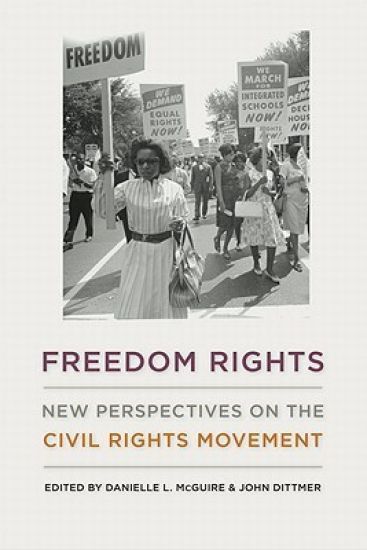
Freedom Rights

Freedom Rights

The University Press of Kentucky
2011
sidottu
In his seminal article "Freedom Then, Freedom Now," renowned civil rights historian Steven F. Lawson described his vision for the future study of the civil rights movement. Lawson called for a deeper examination of the social, economic, and political factors that influenced the movement's development and growth. He urged his fellow scholars to connect the "local with the national, the political with the social," and to investigate the ideological origins of the civil rights movement, its internal dynamics, the role of women, and the significance of gender and sexuality.In Freedom Rights: New Perspectives on the Civil Rights Movement, editors Danielle L. McGuire and John Dittmer follow Lawson's example, bringing together the best new scholarship on the modern civil rights movement. The work expands our understanding of the movement by engaging issues of local and national politics, gender and race relations, family, community, and sexuality. The volume addresses cultural, legal, and social developments and also investigates the roots of the movement. Each essay highlights important moments in the history of the struggle, from the impact of the Young Women's Christian Association on integration to the use of the arts as a form of activism. Freedom Rights not only answers Lawson's call for a more dynamic, interactive history of the civil rights movement, but it also helps redefine the field.
Freedom and Necessity

Freedom and Necessity

Gerald Bonner

The Catholic University of America Press
2007
nidottu
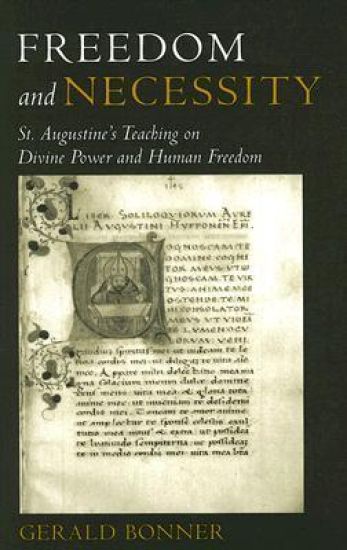
Aurelius Augustinus (354-430), bishop of Hippo Regius (the modern Annaba in Algeria), is considered one of the outstanding thinkers in Western Christian civilization, Catholic and Protestant alike. Particularly influential has been his pessimistic doctrine of divine predestination, which holds that only a small proportion of humanity has been selected by God for salvation, while the overwhelming majority, including all unbaptized persons, are damned. Yet, paradoxically, Augustine's exposition of the Eucharistic unity of the elect in the Body of Christ, his Christology, and his emphasis on love as the principal mark of the Godhead have provided a pattern for Christian devotion and spirituality down through the ages. This book seeks to explain this paradox in Augustine's theology by tracing how these different emphases arose in his thought, and speculating as to why he endorsed, in the end, his theology of predestination. The book is intended not only for students of theology and church history, but even more for readers attracted to Christian doctrine. Written in straightforward language, it supplies adequate references to original sources for those wishing to further pursue the subject. The author, a historian turned theologian, has studied Augustine for more than sixty years and seeks neither to extenuate nor to condemn him, but to depict his thought. His book will prove fruitful for all who engage it.
Freedom Made Manifest

Freedom Made Manifest

Peter Joseph Fritz

The Catholic University of America Press
2019
sidottu
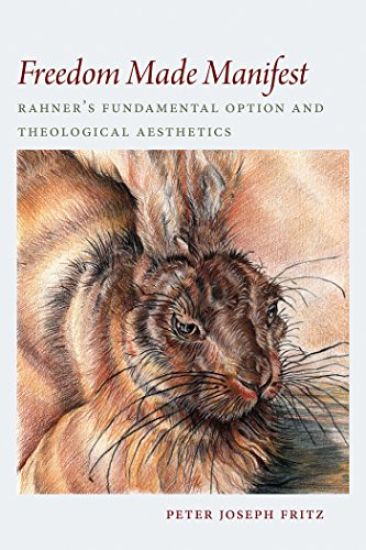
Karl Rahner's seemingly inscrutable theology of freedom can be summarized simply: human freedom makes manifest (or fails to make manifest) God's eternal decision to create, to save creation, and thereby to share Godself. Freedom is something real, a substantive freedom for: for saying ""yes"" to God's merciful self-giving. This freedom most often comes to light not in extraordinary triumphs of spirit, but amid small acts whereby common sinners and downtrodden people travel a pilgrim journey, gradually finding ways to form and to express a life that reflects –however dimly? God's refulgent light. Freedom Made Manifest explicates Rahner's theology of freedom by elucidating its configuration and sources. Much of its inquiry centers on the fundamental option: each human person's eternal decision made, paradoxically, in time, as a definitive answer to God's personally-tailored call to salvation. This idea stems from three principal sources: Catholic conversations with transcendental-idealist philosophy, penitential theology and practice, and Ignatian spirituality. Rahner's unique redeployment of these sources inflects the fundamental option with theologies of concupiscence, mercy and forgiveness (especially as ecclesially mediated), and devotion to Jesus Christ. Awareness of these inflections can show how Rahner's theology of freedom may assist in theological reflection on freedom's susceptibility to injury and trauma. To these clarifications the author adds a major emendation, arguing that Rahner's theology of freedom is most adequately interpreted as a theological aesthetic of freedom, attentive to freedom's depth dimension in the heart of each person, through which and out of which God's free decision to self-reveal is expressed or concealed. Following upon Karl Rahner's Theological Aesthetics (CUA Press, 2014), which introduced Rahner's ""Catholic sublime,"" and anticipating a volume on ""world,"" this volume contributes to theological-aesthetic thinking not at the stratospheric level of being's transcendentals, but within the sensed (aesthetic) friction of everyday existence.
Freedom and the Human Person

Freedom and the Human Person

The Catholic University of America Press
2019
nidottu
In the Western tradition, freedom and the human person have been at the center of philosophical, theological, moral, and political debates since the origins of this tradition. Although contemporary discourse betrays the multiplicity of these roots, the necessary historical perspective for evaluating them is almost always lacking, even in scholarly studies. The terms ""freedom"" and ""person"" carry such overwhelming force in the modern world that the critical distance required for grasping what is at stake in using them is extremely hard to gain. The present collection seeks to contribute toward finding that distance by making the tradition of thought more a living reality and not an object of arid analyses. Unlike most collections the present one transcends disciplinary boundaries, as it acknowledges the interconnectedness of philosophical, theological, and political arguments on these themes. The contributors are prominent authorities in particular historical periods or in figures in Western thought, and they treat approaches to freedom and the human person in ancient Greek, biblical, medieval and modern sources, although the major emphasis is on the thought of leading philosophers (Plato, Boethius, Aquinas, Ockham, Machiavelli, Locke, Kant, Hegel, Nietzsche, Husserl, et al.). Their essays bring forward profound contrasts in how freedom and personhood have been grounded and characterized, notably the contrasts between groundings in natural reason and in supernatural revelation, between premodern teleological thinking and modern thinking on self-sovereignty without teleology, and within modern thought between positions favoring individual autonomy and others securing freedom and its exercise in communal or traditional life. Several of the papers shed light on the relations of freedom and personhood to the human powers of speech, thought, and judgment. The contributors to the volume are Seth Benardete, Michael Gillespie, Leon Kass, Robert B. Pippin, Robert Rethy, John M. Rist, Brian J. Shanley, O. P., Susan Meld Shell, Robert Sokolowski, Eleonore Stump, Nathan Tarcov, and Michael P. Zuckert (with Jesse Covington and James Thompson).
Freedom Summer

Freedom Summer

Sally Belfrage

University of Virginia Press
1990
nidottu
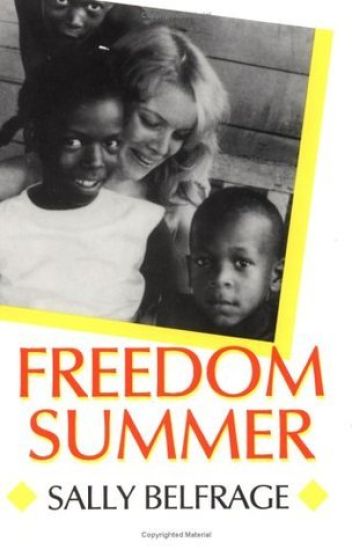
Freedom Summer is a richly detailed account of a young white woman who participated in the Student Nonviolent Coordinating Committee's summer project in Mississippi in 1964. The text covers one intense summer from the basic training session in June to the Democratic Convention in August.
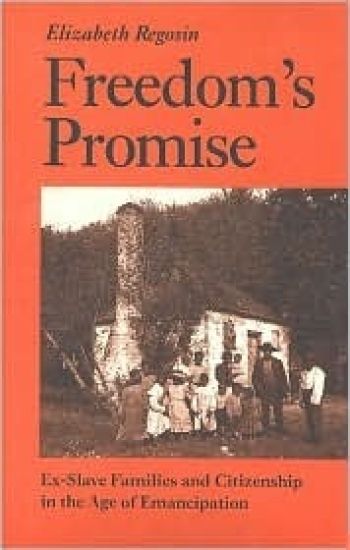
Freedom's Promise

Freedom's Promise

Elizabeth Regosin

University of Virginia Press
2002
sidottu
Emancipation and the citizenship that followed conferred upon former slaves the right to create family relationships that were sanctioned, recognized, and regulated by the laws that governed the families of all American citizens. Elizabeth Regosin explores what the acquisition of this legal familial status meant to former slaves, personally, socially, and politically. The Civil War pension system offers a fascinating source of documentation for this study of ex-slave families in transition from slavery to freedom. Because the provisions made to compensate eligible Union veterans and surviving family members created a vast bureaucracy - pension officials required and verified extensive proof of qualification - former slaves were obliged to reproduce and represent the inner workings of their familial relationships. Regosin reveals through both their personal histories and pension narratives how former slaves constructed identities as individuals and as family members while they negotiated the boundaries of ""family"" as defined by the pension system. The stories told by ex-slaves, their witnesses, and the government officials who played a role in the pension process all serve to provide us with a richer understanding of life for newly emancipated African Americans.
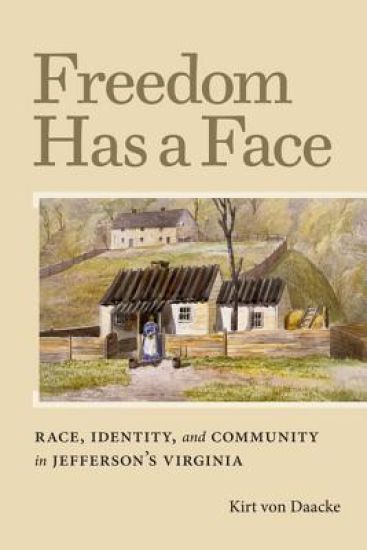
Freedom Has a Face

Freedom Has a Face

Von Daacke

University of Virginia Press
2012
sidottu
In his examination of a wide array of court papers from Albemarle County, a rural Virginia slaveholding community, Kirt von Daacke argues against the commonly held belief that southern whites saw free blacks only as a menace. Von Daacke reveals instead a more easygoing interracial social order in Albemarle County that existed for more than two generations after the Revolution--stretching to the mid-nineteenth century and beyond--despite fears engendered by Gabriel's Rebellion and the Haitian Revolution.Freedom Has a Face tells the stories of free blacks who worked hard to carve out comfortable spaces for existence. They were denied full freedom, but they were neither slaves without masters nor anomalies in a society that had room only for black slaves and free white citizens. A typical rural Piedmont county, Albemarle was not a racial utopia. Rather, it was a tight-knit community in which face-to-face interactions determined social status and reputation. A steep social hierarchy allowed substantial inequalities to persist, but it was nonetheless an intimately interracial society. Free African Americans who maintained personal connections with white neighbors and who participated openly in local society were perceived as far more than stereotypical dangerous blacks.Based on his work building a cross-referenced database containing individual records for nearly five thousand documents, von Daacke reveals a detailed picture of daily life in Albemarle County. With this reinsertion of individual free blacks into the neighborhood, community, and county, he exposes a different, more complicated image of the lives of free people of color.
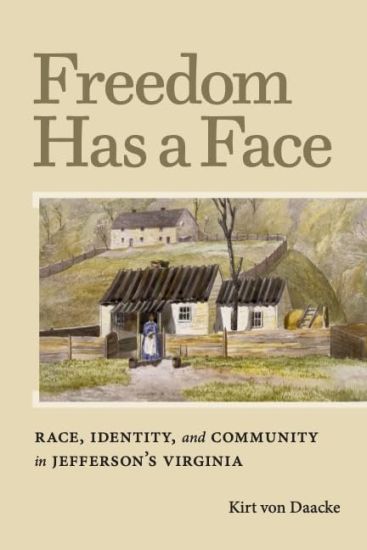
Freedom Has a Face

Freedom Has a Face

Kirt von Daacke

UNIVERSITY OF VIRGINIA PRESS
2025
pokkari
In his examination of a wide array of court papers from Albemarle County, a rural Virginia slaveholding community, Kirt von Daacke argues against the commonly held belief that southern whites saw free blacks only as a menace. Von Daacke reveals instead a more easygoing interracial social order in Albemarle County that existed for more than two generations after the Revolution - stretching to the mid-nineteenth century and beyond - despite fears engendered by Gabriel's Rebellion and the Haitian Revolution. Freedom Has a Face tells the stories of free blacks who worked hard to carve out comfortable spaces for existence. They were denied full freedom, but they were neither slaves without masters nor anomalies in a society that had room only for black slaves and free white citizens. A typical rural Piedmont county, Albemarle was not a racial utopia. Rather, it was a tight-knit community in which face-to-face interactions determined social status and reputation. A steep social hierarchy allowed substantial inequalities to persist, but it was nonetheless an intimately interracial society. Free African Americans who maintained personal connections with white neighbors and who participated openly in local society were perceived as far more than stereotypical dangerous blacks. Based on his work building a cross-referenced database containing individual records for nearly five thousand documents, von Daacke reveals a detailed picture of daily life in Albemarle County. With this reinsertion of individual free blacks into the neighborhood, community, and county, he exposes a different, more complicated image of the lives of free people of color.
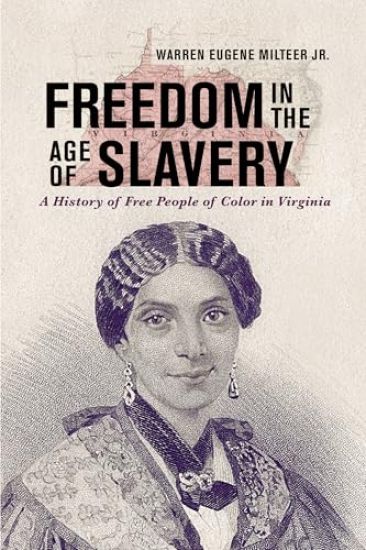
Freedom in the Age of Slavery

Freedom in the Age of Slavery

Warren Eugene Milteer Jr.

UNIVERSITY OF VIRGINIA PRESS
2026
sidottu
An authoritative study of the free people of color in the largest state of the Old South Virginia was the state with the most enslaved people prior to the Civil War. It was also at one time the state with the most resident free people of color—free from the legal disabilities specifically associated with enslavement but still denied many basic civil rights. Written by an award-winning expert on free people of color in the American South, Freedom in the Age of Slavery is the first modern comprehensive history of free Virginians of color from the colonial period through Reconstruction. Milteer recounts in granular detail the discriminatory policies and resulting hardships that free Virginians of color faced, while also documenting the openings they created for themselves and the successes they enjoyed against overwhelming odds. Throughout, he highlights the commonwealth's significance as the laboratory for legal discrimination throughout the nation, while never losing sight of the ways free people of color seized their opportunities wherever possible and built meaningful lives in the face of massive white resistance.