

Kirjahaku
Etsi kirjoja tekijän nimen, kirjan nimen tai ISBN:n perusteella.
1000 tulosta hakusanalla Flora

Flora's Faeries A Coloring Book
Gabriela Guzman
Createspace Independent Publishing Platform
2017
nidottu

In early Christianity, many people were inspired to write gospels, treatises, letters, and stories celebrating the new faith, but not all of these writings are found in the New Testament. One such story from an unknown author is the Coptic, gnostic Apocalypse of Paul, a tale of the apostle Paul's ascent to the heavens that was lost for millennia and rediscovered at Nag Hammadi in 1945. In Flora Tells a Story, Michael Kaler discusses the Apocalypse of Paul and how it was shaped by its literary environment. The book takes a behind the scenes look at early Christian literary production, analyzing the ways in which various literary traditions - such as apocalyptic writings, gnostic thought, and understandings of Paul - influenced the author of the Apocalypse of Paul and helped to shape the text. It also includes a new annotated English translation of the Apocalypse of Paul and a fictional account of how it might have come to be written. This work is the most in-depth study of the Apocalypse of Paul to date and the only full-length discussion of it in English. It provides a detailed but accessible account of the literary environment in which its author worked and integrates this little-known work into the broader stream of early Christian writings. This book will be of interest to specialists in Nag Hammadi and gnostic studies and early Christian literature, but will also appeal to the general reader interested in Christianity, mysticism, and gnosticism.
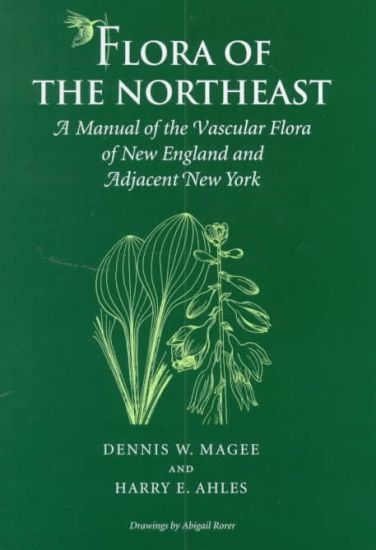
Designed as both a reference work and a year-round field manual, this volume contains more than 2,400 range maps and 995 line drawings, designed to clarify descriptions used in the keys. For botanists, naturalists, and students interested in an up-to-date treatment of the vascular flora of greater New England, it has proved to be an invaluable resource. The geographic scope of the work extends from the Canadian border south through Long Island and west to the Hudson River. The ""General Keys"" section contains fourteen keys that include such groups as aquatic plants, vines, and woody plants in winter condition. For both woody and herbaceous families, the keys cover flowering as well as fruiting conditions and rely heavily on the use of vegetative features to extend the utility of the book beyond the reproductive period. The ""Descriptive Flora"" section includes keys to all of the genera and species, descriptions of the families and genera, and accounts of the individual species. The latter incorporates information on wetland site index, rare status, wildlife food value, food and medicinal value for humans, and poisonous or hallucinogenic properties. This revised edition includes an updating of plant scientific names that changed since the first edition and an alphabetized list of plant families with page numbers on the inside front cover for easy reference. This edition also includes a new CD-ROM with a multiple-entry identification guide, hundreds of accompanying photographic images of genera, an illustrated glossary, and page reference numbers to genus descriptions in the manual. Presenting a wealth of scientifically accurate information in a precise and clear format, this volume serves as a reference work, as a textbook for classes in plant identification, and as a field manual.

When picked to be a frog in the class play, Flora does not like her role until she spies real frogs jumping and sparkling in the pond.
Flora of Siberia, Vol. 1
Science Publishers,U.S.
2000
sidottu
This book presents information on the taxonomy, chorology, and composition of species and subspecies of the plants under various divisions of the family of Lycopodiaceae and Hydrocharitaceae found in Siberia.
Flora of Siberia, Vol. 2
Science Publishers,U.S.
2001
sidottu
This book presents a taxonomic account of the family of grasses (Poaceae)–one of the largest of Siberian flora–which comprises 72 genera and 440 species and subspecies.

Flora of Siberia, Vol. 3
Science Publishers,U.S.
2001
sidottu
This book is a comprehensive review of the genera of Cyperaceae, a family of graminoid, monocotyledonous flowering plants, found in Siberia. It presents information on their character, occurrence, habitat, phenotypic variations and distribution of the species under these genera.
Flora of Siberia, Vol. 4
Science Publishers,U.S.
2001
sidottu
This book presents a compilation of information on the taxonomy, chorology, and composition of species and subspecies of the plants under various divisions of the family of Araceae and Orchidaceae found in Siberia.

Flora of Siberia, Vol. 5
Science Publishers,U.S.
2003
sidottu
This volume provides information about 306 species from 12 plant families of Siberia, such as Salicaceae, Corylaceae, Betulaceae, Fagaceae, Ulmaceae, Cannabaceae, Urticaceae, Santalaceae, Aristolochiaceae, Polygonaceae, Chenopodiaceae, and Amaranthaceae.
Flora of Siberia, Vol. 8
Science Publishers,U.S.
2004
sidottu
Rosaceae, one of the largest of angiosperms is represented in Siberian flora by 32 genera, comprising 214 species.
Flora of Siberia, Vol. 9
Science Publishers,U.S.
2006
sidottu
This book publishes for the first time data for Siberia on taxonomy, chorology, and ecological adaptations of the species of one of the largest families of dicotyledons, i.e. Leguminosae. These form 27 genera and 351 species and subspecies. Four new species have been described. Maps of plant distribution have been presented for most of the species and many have been illustrated. Flora Sibiri [Flora of Siberia] has been published in 14 volumes. This book is meant for botanists specializing in various branches including resources specialists, specialists in natural conservation, plant introducers, teachers and students of biological faculties, and regional specialists.

Flora of Siberia, Vol. 10
Science Publishers,U.S.
2006
sidottu
This volume contains data on morphology, ecology, and chorology of feral species and subspecies of 31 families of flowering plants. The families have been arranged essentially according to the Engler system. Conforming to the latest views (Takhtadzhyn, Sistema magnoliofitov [System of Magnoliophyta] 1987), some families have, however, been subdivided into some smaller families. Thus, family Biebersteiniaceae has been separated from family Geraniaceae; family Zygophyllaceae s.l. is represented in Siberia by 4 smaller (in volume) families: Zygophyllaceae s. str., Rutaceae, Nitrariaceae, and Peganaceae. This critical study has provided the specific characteristics of taxonomy and chorology of 299 species and subspecies belonging to 101 genera including 6 taxa that are new for science and their diagnosis in Latin.
Flora of Siberia, Vol. 11
Science Publishers,U.S.
2006
sidottu
This volume publishes for the first time specific data for Siberia on taxonomy and distribution of feral members of 18 families. The largest families Lamiaceae (Labiatae). Diagnostic features, conditions of habitation, and geographic distribution, with maps of distribution ranges in many cases, have been provided for each species and subspecies. This information forms an essential scientific basis for conservation and utilization of the resources of the plant kingdom. The book is designed for the use of botanists specializing in various branches including resource specialists and plant introducers, specialists in environmental conservation, agronomers, teachers and students.

Flora of Siberia, Vol. 12
Science Publishers,U.S.
2007
sidottu
This volume publishes for the first time specific data for Siberia on taxonomy, chorology, ecological affinity of the species of 13 families of dicotyledonous plants: Solanaceae, Scrophulariaceae, Orobanchaceae, Lentibulariaceae, Plantaginaceae, Rubiaceae, Caprifoliaceae, Adoxaceae, Valerianaceae, Dipsacaceae, Cucuribitaceae, Campanulaceae and Lobeliaceae. Dichotomous keys have been drawn for genera and species. The text has been illustrated with maps of the geographic distribution of most of the species and with their original sketches. The book is meant for botanists, ecologists, biologists, geographers, agricultural and forestry workers, and nature conservationists.
Flora of Siberia, Vol. 13
Science Publishers,U.S.
2007
sidottu
This book provides a vital scientific base for the utilization and conservation of the floral resources of Siberia. It covers the data on morphology, ecology and chorology of 92 genera and 558 species of Compositae growing in the Siberian wilderness.

Flora of Siberia, Vol. 14
Science Publishers,U.S.
2008
sidottu
This represents the concluding volume of the comprehensive compilation on the taxonomy and chorology of the vascular plants of Siberia (Volumes 1 to 13). The present volume covers the latest information on the nomenclature and distribution of the species that were reported after the publication of the corresponding volume or was missed. The revision has brought to light the family Cambombaceae, 16 new genera and 208 species and subspecies. Names of 6 genera and 39 species have been replaced by their priority names. Alphabetical indexes of the Latin names of families, genera, species and subspecies covered in the entire compendium of all the 14 volumes have been appended.

Flora of the USSR
Science Publishers,U.S.
2004
sidottu
The Alphabetical Indexes are cumulative indices to all 30 volumes of the Flora of the USSR and together constitute the thirty-first and final volume of this monumental work. This volume consists mainly of separate indices to the scientific (Latin) names of the families, and the genera and species in the Flora, but it also includes a list or index of the authors of the Latin names, alphabetized by the standard abbreviations used for them in the text, and summaries of other commonly used abbreviations. Two maps are appended, with keys to them added by the Translator and General Editor. The Latin-name indices have been reproduced page for page from the original Russian edition. The original Russian volume also included cumulative indexes to the Russian vernacular names, but these indexes have been omitted from the English translations of volume I-XXX.

Flora of the Santa Ana River and Environs
Oscar F. Clarke; Danielle Svehla; Greg Ballmer; Arlee Montalvo
Heyday Books
2007
pokkari
The Santa Ana River is the largest watercourse in the heavily populated coastal plain of southern California. Despite the encroachment of urban development, the river and its environs are home to nearly 1,400 plant species. In this seminal guide to the flora of the Santa Ana River, Oscar F. Clarke and his team have compiled descriptions of 900 plant species, accompanied by 3,200 images and illustrations. The book also serves as an introduction to basic botanical concepts and is arranged by evolutionary relationships, to aid readers in plant identification. Historical and cultural uses, plant diseases, and associations with insects, birds, and mammals of both native and introduced species are woven together with technical information to paint a rich picture of the flora of this region as well as to relate it to that of the rest of the world.

English Fairy Tales by Flora Annie Steel, Fiction, Classics, Fairy Tales & Folklore
Flora Annie Steel
Aegypan
2007
sidottu