Kirjojen hintavertailu. Mukana 11 244 527 kirjaa ja 12 kauppaa.

Kirjahaku

Etsi kirjoja tekijän nimen, kirjan nimen tai ISBN:n perusteella.

1000 tulosta hakusanalla Fritz Heithecker

Comoros Moon: Spy Shorts

Comoros Moon: Spy Shorts

Fritz Galt

Lulu.com
2011
nidottu
Whether at a cafe in Paris, a beach in Greece or a mountaintop in Comoros, America's playboy spy Alec Pierce is zeroing in on his target. Never mind that conquering exotic, yet intriguingly dangerous women is his M.O. He'll just have to dodge each one's bullets, unravel her mysteries and conquer her heart. Enjoy these thrilling stories and travel the planet incognito as Alec sacrifices himself for the sake of his country...and international relations. Termed "exotic" and "highly enjoyable," this collection of short stories takes you on thoughtful and dangerous journeys to some of the farthest corners of the earth, and presents you with some of Galt's "finest writing" to date.
Concealed: The Book of Joshua

Concealed: The Book of Joshua

Fritz Nordengren

Two Mile Ranch
2013
nidottu
In a quintessential small Midwestern town, Professor Joshua Stone is a popular, outgoing, and quirky professor at Grant's Hill College. He lives alone with his dog, rides a bicycle everywhere, and has memorized the high school mascot names of his students. He's a 3-on-3-basketball player and fan who's insular life centers around his teaching.Joshua confronts his demons while recovering from an unprovoked near-death attack. His search for an elusive witness challenges his instinctive moral and ethical compass.Woven through a gripping storyline is one man's quest to find strength and courage. Joshua is plucked from the cocoon of teaching English composition at a small liberal arts college and thrust in to survival mode, seeking a logical explanation for the irrational violence.
Max Weber’s Methodology

Max Weber’s Methodology

Fritz Ringer

Harvard University Press
2000
nidottu
At a time when historical and cultural analyses are being subjected to all manner of ideological and disciplinary prodding and poking, the work of Max Weber, the brilliant social theorist and one of the most creative intellectual forces in the twentieth century, is especially relevant. In this significant study, Fritz Ringer offers a new approach to the work of Weber, interpreting his methodological writings in the context of the lively German intellectual debates of his day. According to Ringer, Weber was able to bridge the intellectual divide between humanistic interpretation and causal explanation in historical and cultural studies in a way that speaks directly to our own time, when methodological differences continue to impede fruitful cooperation between humanists and social scientists. In the place of the humanists' subjectivism and the social scientists' naturalism, Weber developed the flexible and realistic concepts of objective probability and adequate causation.Grounding technical theories in specific examples, Ringer has written an essential text for all students of Weber and of social theory in the humanities and social sciences. Fully reconstructed, Max Weber's methodological position in fact anticipated the most fruitful directions in our own contemporary philosophies of the cultural and social sciences. Ringer's conceptualization of Weber's approach and achievement elucidates Weber's reconciliation of interpretive understanding and causal explanation and shows its relevance to intellectual life and culture in Weber's own time and in ours as well.
Magic in the Ancient World

Magic in the Ancient World

Fritz Graf

Harvard University Press
1999
nidottu
Ancient Greeks and Romans often turned to magic to achieve personal goals. Magical rites were seen as a route for direct access to the gods, for material gains as well as spiritual satisfaction. In this fascinating survey of magical beliefs and practices from the sixth century B.C.E. through late antiquity, Fritz Graf sheds new light on ancient religion.Evidence of widespread belief in the efficacy of magic is pervasive: the contemporaries of Plato and Aristotle placed voodoo dolls on graves in order to harm business rivals or attract lovers. The Twelve Tables of Roman Law forbids the magical transference of crops from one field to another. Graves, wells, and springs throughout the Mediterranean have yielded vast numbers of Greek and Latin curse tablets. And ancient literature abounds with scenes of magic, from necromancy to love spells. Graf explores the important types of magic in Greco-Roman antiquity, describing rites and explaining the theory behind them. And he characterizes the ancient magician: his training and initiation, social status, and presumed connections with the divine world. With trenchant analysis of underlying conceptions and vivid account of illustrative cases, Graf gives a full picture of the practice of magic and its implications. He concludes with an evaluation of the relation of magic to religion. Magic in the Ancient World offers an unusual look at ancient Greek and Roman thought and a new understanding of popular recourse to the supernatural.
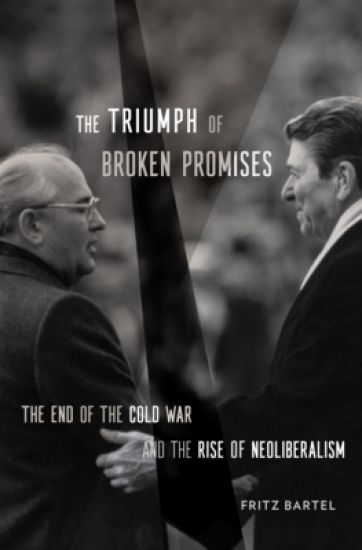
The Triumph of Broken Promises

The Triumph of Broken Promises

Fritz Bartel

HARVARD UNIVERSITY PRESS
2022
sidottu
A powerful case that the economic shocks of the 1970s hastened both the end of the Cold War and the rise of neoliberalism by forcing governments to impose austerity on their own people.Why did the Cold War come to a peaceful end? And why did neoliberal economics sweep across the world in the late twentieth century? In this pathbreaking study, Fritz Bartel argues that the answer to these questions is one and the same. The Cold War began as a competition between capitalist and communist governments to expand their social contracts as they raced to deliver their people a better life. But the economic shocks of the 1970s made promises of better living untenable on both sides of the Iron Curtain. Energy and financial markets placed immense pressure on governments to discipline their social contracts. Rather than make promises, political leaders were forced to break them.In a sweeping narrative, The Triumph of Broken Promises tells the story of how the pressure to break promises spurred the end of the Cold War. In the West, neoliberalism provided Western leaders like Ronald Reagan and Margaret Thatcher with the political and ideological tools to shut down industries, impose austerity, and favor the interests of capital over labor. But in Eastern Europe, revolutionaries like Lech Walesa in Poland resisted any attempt at imposing market discipline. Mikhail Gorbachev tried in vain to reform the Soviet system, but the necessary changes ultimately presented too great a challenge.Faced with imposing economic discipline antithetical to communist ideals, Soviet-style governments found their legitimacy irreparably damaged. But in the West, politicians could promote austerity as an antidote to the excesses of ideological opponents, setting the stage for the rise of the neoliberal global economy.
The Production and Distribution of Knowledge in the United States
The Production and Distribution of Knowledge in the United States marked the beginning of the study of our postindustrial information society. Austrian-born economist Fritz Machlup had focused his research on the patent system, but he came to realize that patents were simply one part of a much bigger "knowledge economy." He then expanded the scope of his work to evaluate everything from stationery and typewriters to advertising to presidential addresses--anything that involved the activity of telling anyone anything. The Production and Distribution of Knowledge in the United States then revealed the new and startling shape of the U.S. economy. Machlup's cool appraisal of the data showed that the knowledge industry accounted for nearly 29 percent of the U.S. gross national product, and that 43 percent of the civilian labor force consisted of knowledge transmitters or full-time knowledge receivers. Indeed, the proportion of the labor force involved in the knowledge economy increased from 11 to 32 percent between 1900 and 1959--a monumental shift. Beyond documenting this revolution, Machlup founded the wholly new field of information economics. The transformation to a knowledge economy has resonated throughout the rest of the century, especially with the rise of the Internet. As two recent observers noted, "Information goods--from movies and music to software code and stock quotes--have supplanted industrial goods as the key drivers of world markets." Continued study of this change and its effects is testament to Fritz Machlup's pioneering work.
Einstein's German World

Einstein's German World

Fritz Stern

Princeton University Press
2016
pokkari
The French political philosopher Raymond Aron once observed that the twentieth century "could have been Germany's century." In 1900, the country was Europe's preeminent power, its material strength and strident militaristic ethos apparently balanced by a vital culture and extraordinary scientific achievement. It was poised to achieve greatness. In Einstein's German World, the eminent historian Fritz Stern explores the ambiguous promise of Germany before Hitler, as well as its horrifying decline into moral nihilism under Nazi rule, and aspects of its remarkable recovery since World War II. He does so by gracefully blending history and biography in a sequence of finely drawn studies of Germany's great scientists and of German-Jewish relations before and during Hitler's regime. Stern's central chapter traces the complex friendship of Albert Einstein and the Nobel Prize-winning chemist Fritz Haber, contrasting their responses to German life and to their Jewish heritage. Haber, a convert to Christianity and a firm German patriot until the rise of the Nazis; Einstein, a committed internationalist and pacifist, and a proud though secular Jew. Other chapters, also based on new archival sources, consider the turbulent and interrelated careers of the physicist Max Planck, an austere and powerful figure who helped to make Berlin a happy, productive place for Einstein and other legendary scientists; of Paul Ehrlich, the founder of chemotherapy; of Walther Rathenau, the German-Jewish industrialist and statesman tragically assassinated in 1922; and of Chaim Weizmann, chemist, Zionist, and first president of Israel, whose close relations with his German colleagues is here for the first time recounted. Stern examines the still controversial way that historians have dealt with World War I and Germans have dealt with their nation's defeat, and he analyzes the conflicts over the interpretations of Germany's past that persist to this day. He also writes movingly about the psychic cost of Germany's reunification in 1990, the reconciliation between Germany and Poland, and the challenges and prospects facing Germany today. At once historical and personal, provocative and accessible, Einstein's German World illuminates the issues that made Germany's and Europe's past and present so important in a tumultuous century of creativity and violence.
Knowledge: Its Creation, Distribution and Economic Significance, Volume III
Volume III examines in clear and elegant prose the roles of knowledge and information in economics. Part One analyzes the effects of new or uncertain information on market performance; examines the formation and revision of expectations; and provides a classification of literature and an extensive bibliography. Part Two discusses private and social valuations of education and training, the controversy over nature vs. nurture," the issue of "credentialism," and the depreciation of human capital. Originally published in 1984. The Princeton Legacy Library uses the latest print-on-demand technology to again make available previously out-of-print books from the distinguished backlist of Princeton University Press. These editions preserve the original texts of these important books while presenting them in durable paperback and hardcover editions. The goal of the Princeton Legacy Library is to vastly increase access to the rich scholarly heritage found in the thousands of books published by Princeton University Press since its founding in 1905.
Knowledge: Its Creation, Distribution and Economic Significance, Volume II
Volume II of this ten-volume work, examines the parts of intellectual knowledge that have been considered worth teaching in institutions of higher learning. To judge what to teach, it was necessary to classify. Originally published in 1982. The Princeton Legacy Library uses the latest print-on-demand technology to again make available previously out-of-print books from the distinguished backlist of Princeton University Press. These editions preserve the original texts of these important books while presenting them in durable paperback and hardcover editions. The goal of the Princeton Legacy Library is to vastly increase access to the rich scholarly heritage found in the thousands of books published by Princeton University Press since its founding in 1905.
Knowledge: Its Creation, Distribution and Economic Significance, Volume I
With this first of eight volumes, the eminent economist Fritz Machlup launches his monumental inquiry into the production of knowledge as an economic activity. Volume I presents the conceptual framework for this inquiry and falls into three parts: Types of Knowledge, Qualities of Knowledge, and Knowledge as a Product. Originally published in 1981. The Princeton Legacy Library uses the latest print-on-demand technology to again make available previously out-of-print books from the distinguished backlist of Princeton University Press. These editions preserve the original texts of these important books while presenting them in durable paperback and hardcover editions. The goal of the Princeton Legacy Library is to vastly increase access to the rich scholarly heritage found in the thousands of books published by Princeton University Press since its founding in 1905.
Maintaining and Restoring Balance in International Trade

Maintaining and Restoring Balance in International Trade

Fritz Machlup; William Fellner; Robert Triffin

Princeton University Press
2015
pokkari
Fourteen leading economists analyze the problem of imbalance in international payments and suggest corrective measures. Three general appraisals by William Fellner, Fritz Machlup, and Robert Triffin are followed by shorter technical papers on special issues by Fellner, Gottfried Haberler, Sir Roy Harrod, Harry G. Johnson, Peter B. Kenen, Alexandre Lamfalussy, Friedrich A. Lutz, Machlup, Jurg Niehans, Walters S. Salant, Tibor Scitovsky, James Tobin, Triffin, and Robert L. West. Originally published in 1966. The Princeton Legacy Library uses the latest print-on-demand technology to again make available previously out-of-print books from the distinguished backlist of Princeton University Press. These editions preserve the original texts of these important books while presenting them in durable paperback and hardcover editions. The goal of the Princeton Legacy Library is to vastly increase access to the rich scholarly heritage found in the thousands of books published by Princeton University Press since its founding in 1905.
Knowledge: Its Creation, Distribution and Economic Significance, Volume III
Volume III examines in clear and elegant prose the roles of knowledge and information in economics. Part One analyzes the effects of new or uncertain information on market performance; examines the formation and revision of expectations; and provides a classification of literature and an extensive bibliography. Part Two discusses private and social valuations of education and training, the controversy over nature vs. nurture," the issue of "credentialism," and the depreciation of human capital. Originally published in 1984. The Princeton Legacy Library uses the latest print-on-demand technology to again make available previously out-of-print books from the distinguished backlist of Princeton University Press. These editions preserve the original texts of these important books while presenting them in durable paperback and hardcover editions. The goal of the Princeton Legacy Library is to vastly increase access to the rich scholarly heritage found in the thousands of books published by Princeton University Press since its founding in 1905.