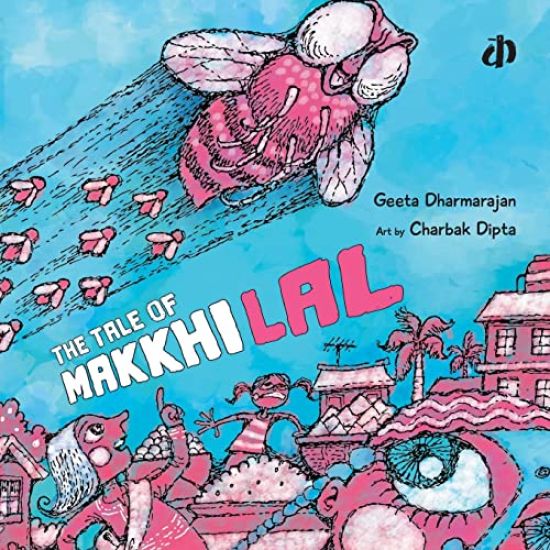
In the land of Makkhipuri, The fly was god for all. They prayed to it for good health, They called it Makkhilal. What happens when a fly becomes the god of a village? Terrible things, you'd imagine. But one person in the village sees through the fly's wicked ploy. Would she be able to save the village? Find out in this romp of a poem that will encourage young readers to think about hygiene, role models, the power of one and a lot more.
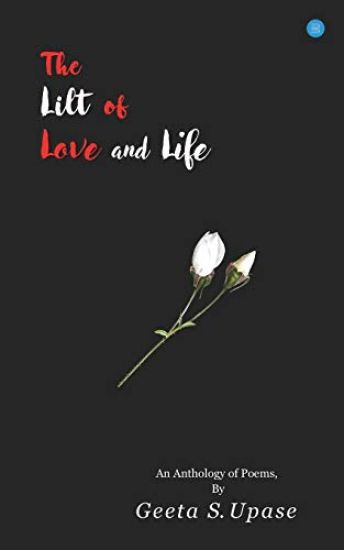
The Lilt of Love and Life' is an anthology written by Geeta S. Upase. This congregation of fifty poems is an amalgamation of traditional and modern poetic values, pertaining to nature, love and day-to-day trifles, beauty, parental affection, womanhood, loneliness and sanctity of life. R.I.Ijeri (Bilingual poet) Few of her lines illuminate the essence of life, The world enlightened with peace and prosperity, Where no religion divides, humanity, Where no animosity exists, Where no woman is subjected to gender discrimination, Where all have calm equipoise mind, to experience the eternity of life. (Geeta S. Upase) 'The Lilt of Love and Life' explores the beauty of nature, love and life. Each verse weaves stories of the universe that readers will thoroughly enjoy. - Shiny Hoque, Community Manager SHEROES
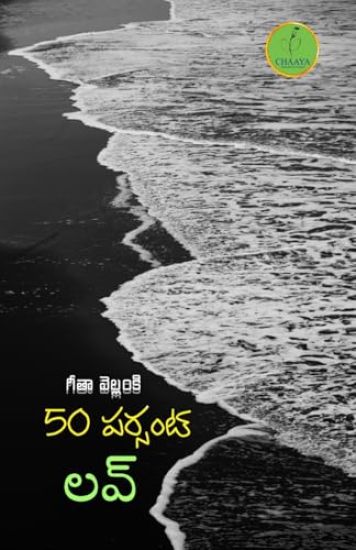
50 Percent Love is a poignant collection of poetry written by Geeta Vellanki. In this evocative anthology, Vellanki explores themes of love, longing, and the human experience with depth and sensitivity. Through her eloquent verses, she captures the complexities of emotions and relationships, inviting readers on a journey of introspection and empathy. From the euphoria of new love to the ache of heartbreak, "50 Percent Love" resonates with readers through its authenticity and raw emotion. Vellanki's poetic voice weaves a tapestry of feelings and experiences, inviting readers to explore the beauty and the pain of love in all its forms. Whether celebrating the joy of connection or grappling with the anguish of separation, each poem in this collection is a testament to the power of love to shape and transform our lives.
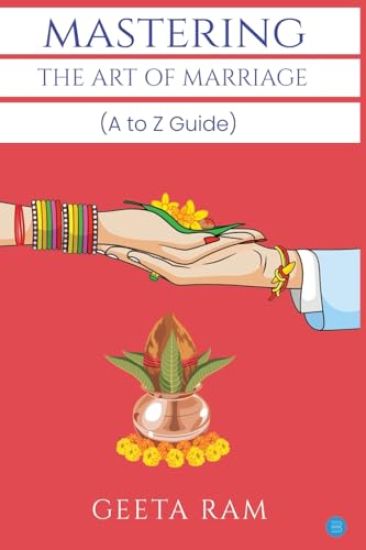
Marriage is a continuum comprising of three inter-linked stages: pre-marriage, wedding, and post-marriage. All the three stages throw many issues on daily basis which are so arcane that it is difficult to understand and deal with them. If due care is taken in the first two stages; success of third stage, known as married life, increases. This book embodies ideas, tips and suggestions in 14 chapters on spouse selection, dealing with in-laws, understanding concepts of husband, wife, individuality, woman, family, domestic violence and divorce. How to deal with issues and problems has been discussed exhaustively. American Architect Ludwig Mies Rohe said that "God is in details" meaning thereby that when attention is paid to the small things it can have the biggest rewards. Exhaustive work has made this book a laser torch to throw light on complex marital issues to make the married life full of joy, success and contribution to national development. Hence it is A to Z guide for mastering the art of marriage.
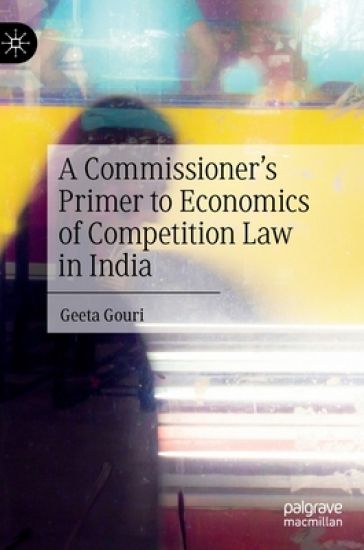
This book is a primer on economics of competition law by a Commissioner based on cases of the Competition Commission of India (CCI). It presents economic theories in lucid ways while providing an in depth economic analysis of the cases dealt by CCI and in the process, it blends the diversity of responses by including the orders upheld by majority and minority. In essence. It is a unique work that addresses the gap between competition law and economics.
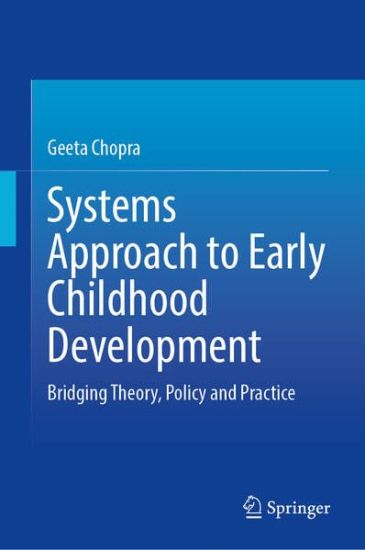
Systems Approach to Early Childhood Development: Bridging Theory, Policy and Practice offers a comprehensive and compelling, evidence-based roadmap for strengthening development in early childhood years. Drawing on neuroscience, developmental psychology, inclusion and laws for children, the book presents the interaction and influence of each other within a broader ecosystem. The book is a coming together of four decades of academic, research, policy and field experience of the author, and it bridges the gap between knowledge and action. It is spread across eight chapters covering early development, developmentally appropriate activities, parenting, disability, child protection, and more. The book addresses the most urgent questions in ECD today: How can all aspects that impact the developing child be encapsulated in a single volume? How do we ensure no child is left behind—especially those with disabilities or facing adversity? With a strong emphasis on how nurturing care and emotional safety shape brain development and social outcomes, the book illustrates why investing in early years is not only a moral imperative—but a national strategy. Grounded in India’s ECCE landscape drawing from NEP 2020, it aligns with global frameworks like UNCRPD and UNCRC, this book is an essential resource for educators, researchers, students, policymakers, practitioners, parents and anyone committed to building inclusive, resilient and integrated approach for all children.
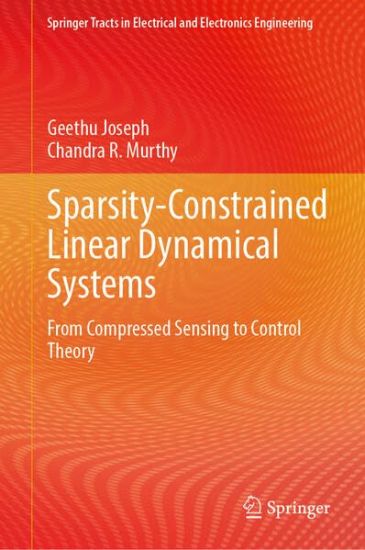
This volume provides a comprehensive overview of recent research advances in the upcoming field of sparse control and state estimation of linear dynamical systems. The contents offer a detailed introduction to the subject by combining classical control theory and compressed sensing. It covers conceptual foundations, including the formulation, theory, and algorithms, and outlines numerous remaining research challenges. Specifically, the book provides a detailed discussion on observability, controllability, and stabilizability under sparsity constraints. It also presents efficient, systematic, and rigorous approaches to estimating the sparse initial states and designing sparse control inputs. It also gives background materials from real analysis and probability theory and includes applications in network control, wireless communication, and image processing. It serves as a compendious source for graduate students and researchers in signal processing and control systems to acquire a thorough understanding of the underlying unified themes. The academic and industrial professionals working on the design and optimization of sparsity-constrained systems also benefit from the exposure to the array of recent works on linear dynamical systems and related mathematical machinery.
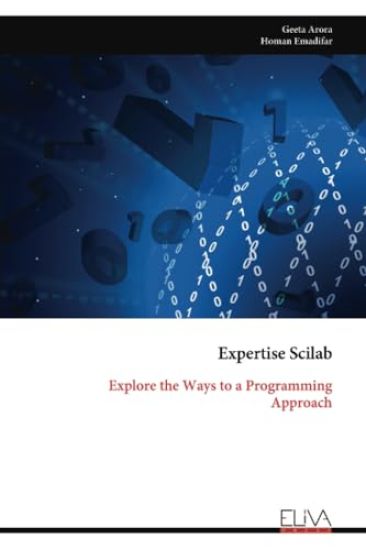
Embark on a comprehensive journey into the world of Scilab, a powerful open-source software for scientific computing and data visualization. This meticulously crafted guide will equip you with the essential knowledge and skills to harness Scilab's capabilities for a wide range of computational tasks. This book is primarily intended for graduate, and postgraduate students especially scholars working in any domain of computation techniques. In the author's opinion, the finest software package for solving engineering problems is MATLAB, which is capable of conducting advanced mathematical and engineering computations whose versatility has transformed the personal computer industry. This book is intended to teach the student/reader how to use MATLAB through the use of practical examples. MATLAB is a software package that needs to be purchased for use. This is one of the reasons why Scilab exists. Scilab is currently being developed for programmers who wish to totally migrate their work to an open-source platform but are willing to amend their MATLAB files if necessary. This document contains Scilab commands, functions, and statements that are executable. The author makes no claim to content or style originality but has taken care to present the material clearly and sequentially with detailed discussion.
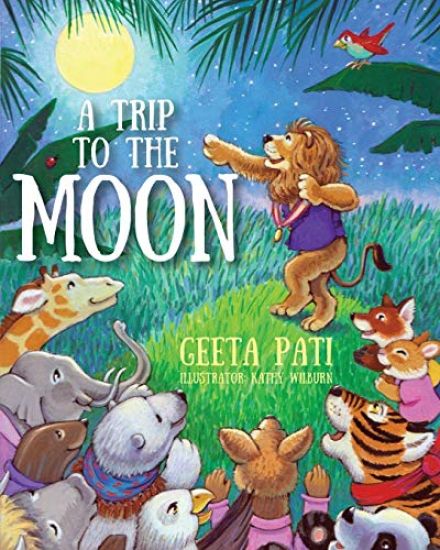
A Trip to the Moon is an interesting fictional story of three animals who visit the Moon. In the story, a rabbit, a crow and a fish, with a wise old owl travel to the Moon and learn all the scientific facts about the moon through their exciting fun-filled adventures. From my experience as a mother and teacher, I found most children avoid reading pure science books on their own because they appear monotonous to them. Children love stories. So, I have combined the science with an interesting story of the animals so that the children will enjoy reading the story and simultaneously learn science.
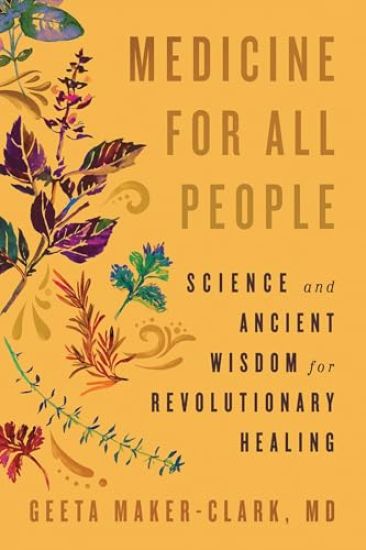
An integrative family physician, educator, mother, and activist provides a welcome guide to the medicines we really need to live healthy-- including foods, breathwork practices, movement, and deeply rooted wisdom. The word medicine has long been associated with pills, injections, sickness, and costly and scary interventions. It's a word full of emotions--mostly fear, dependence, and anxiety. But medicine can also be healing and enlivening. An integrative family physician, educator, mother, and activist, Dr. Maker-Clark reveals how dominating, money-driven systems have taken over our food supply, our health-care system, and co-opted our awareness of our natural deep intelligence and connectedness. Chronic inflammatory diseases thrive today because these larger systems have created the environment for them and have conditioned us to rely on these external power structures to make us well. Dr. Maker-Clark guides us to the medicines we really need, which are all around us. Most are free and vital parts of our ancestral cultures. The medicines in this book are all easily accessible and often immediately effective. Through these foods, breathwork practices, and movement, we create true wholeness, not by patching our pain with Band-Aids, convenient drugs, and drive-by doctor's visits. Awakening to these true medicines, going back to the sources, and integrating powerful healthful practices creates a path for individuals and communities to move toward radical social change. Dr. Maker-Clark prescribes these medicines to her patients, and now, in this book, offers them to readers to start their own health revolution--and to fuel a new movement toward true health, one that acknowledges that no one of us can be truly healthy unless we are all healthy. Medicine for All People is a manifesto whose goal is to help us heal from the individual and collective trauma of injustice and support a transition from a culture of stress and sickness to one of healing and belonging. The book asks us to reevaluate the ecosystems we live in, to look at ourselves with new eyes. Medicine for All People is a path to a blooming and vibrant future, through the accessible and deeply rooted wisdom of our collective past.
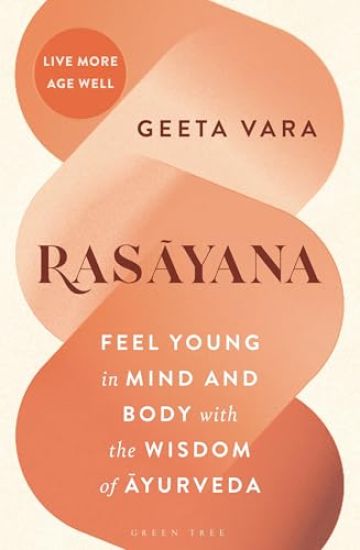
Harness the time-honoured practice and wisdom of Rasayana for optimal life-long health and well-being We are all a little bit burnt out from the multiple demands of modern life. Instead of rushing through life and dealing with old age after it arrives, what if we had the wisdom to maintain optimal health throughout our lives? Rasayana comprises the art of healthy ageing, and is a key principle of Ayurveda – an ancient holistic health system, often known as ‘the sister science of yoga’. Far more than a passing wellness trend, Rasayana focuses on our mind, body, emotions, environment and relationships to support us in staying healthier for longer. Ayurvedic practitioner Geeta Vara guides us through this dynamic approach to longevity, helping us to mature with grace in a simple and holistic way. Drawing on personal stories, client case studies and lessons from ancient sages and modern-day older generations, Vara teaches us how to incorporate simple principles into our life to rejuvenate our mind and body, including: - Key Rasayana herbs, like Ashwagandha, to reduce stress, support immune function and boost energy - Ayurvedic practices such as Abhyanga (daily oil massage) to nourish the skin - Dietary habits to support digestion and detoxification - Yoga and Pranayama (breathwork) to enhance flexibility, strength and mental clarity. With a growing demand for a shift in our wellness paradigm, Rasayana is the perfect companion to finding true inner and outer well-being, for life.