You really don't have to know what's next. This golden, cosmic high-five comes from the debut collection of cards and journals by Elizabeth Gilbert, bestselling author of Big Magic and Eat Pray Love. -Elizabeth Gilbert brings her genius to Em & Friends with a line of inspiring cards and journals! -Foil stamping, colored envelope, blank inside -Six (6) identical A2 size (4.25 x 5.5-inches) greeting cards
As women who walk in this world, these soulful words ring truer than ever. Circle up, share stories, and let your sisterhood know your heart. This powerful message of care is from our collection of cards and journals by Elizabeth Gilbert, bestselling author of City of Girls and Eat Pray Love. File under: Extraordinary & Unique Thinking of You Cards with Envelope!Foil stamping, colored envelope, blank insideA2 size (4.25" x 5.5")
It's a real gift to reassure your people, especially when they might need some help remembering the light is always making its way toward them. This message of care and empowerment is from our collection of cards and journals by Elizabeth Gilbert, bestselling author of City of Girls and Eat Pray Love. Card reads: The darkest night of the year is no threat to those who know that every star in the sky is a hot, burning sun. Inspirational cards = magical encouragement gifts for women—and everybody else too!Foil stamping, colored envelope, blank insideA2 size (4.25" x 5.5")
Let them know they deserve to love ALL their selfs. (P.S. We hope and imagine everyone who receives this card will feel more seen and more valued than ever.) This message of truth and kindness is from our collection of cards and journals by Elizabeth Gilbert, bestselling author of City of Girls and Eat Pray Love. Card reads: Love the one in you who is sad. Love the one in you who is scared. Love the one in you who is angry. Love the one in you who is lonely. Love the one in you who hates herself. Love all the ones who you are, and then you will know how to love THE WHOLE WORLD. Because self-love gifts & positive gifts for women—and humans of all kinds!—are good.Foil stamping, colored envelope, blank insideA2 size (4.25" x 5.5")
Let them know they deserve to love ALL their selfs. (P.S. We hope and imagine everyone who receives this card will feel more seen and more valued than ever.) This message of truth and kindness is from our collection of cards and journals by Elizabeth Gilbert, bestselling author of City of Girls and Eat Pray Love. Card reads: Love the one in you who is sad. Love the one in you who is scared. Love the one in you who is angry. Love the one in you who is lonely. Love the one in you who hates herself. Love all the ones who you are, and then you will know how to love THE WHOLE WORLD. Because self-love gifts & positive gifts for women—and humans of all kinds!—are good.Foil stamping, colored envelope, blank insideA2 size (4.25 x 5.5-inches)
Dive back into your childhood. Witness once again the wonders of the big huge world through the eyes of a young child. A time in place where magic exist with endless amounts of funny childish thoughts; of plentiful fruits and cookies everywhere, and where everything is possible when you believe.But of course, like every child, everyone must grow up. This is a story of that cycle.A story of loss, of learning and of memories that stay with us forever.
Coach Robey, coatless, vestless, hatless, his old flannel trousers held up as by a miracle with the aid of a leather strap scarcely deserving the name of belt, pushed his way through the first squad players. The Brimfield Head Coach was a wiry, medium-sized man of about thirty, with a deeply-tanned face from which sharp blue eyes looked out under whitish lashes that were a shade lighter than his eyebrows and two shades lighter than his sandy hair. As the afternoon was excessively hot, even for the twenty-first day of September and in proximity to Long Island Sound, Mr. George Robey's countenance was bathed in perspiration and the faded blue silk shirt was plastered to his body. "That was left half through guard-tackle, wasn't it? Then don't put the ball in your arm, St. Clair. You ought to know better than that. On plays through the line hold it against your stomach with both hands.
Rosie the Not-so-Little Princess has always loved Gilbert, her royal teddy bear. But she feels she's a bit too old for him now and decides to stop playing with him. But then Gilbert goes missing and has a very strange adventure indeed. Will Rosie ever get her teddy back? These young fiction colour readers take Tony Ross's beloved Little Princess to a whole new audience. The text appears in short blocks around full-colour illustrations, and is divided into short chapters, making it perfect for new readers.
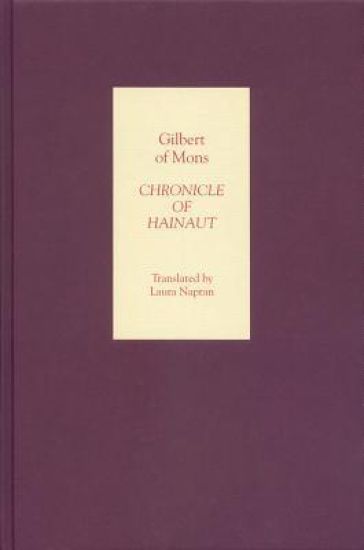
First full English translation of the 12C Chronicle of Hainaut, offering fascinating insights into European history of the time. The importance of the late twelfth-century Chronicle of Hainaut (Chronicon Hanoniense) as an historical record cannot be overestimated. Gilbert of Mons was an eye-witness to important events affecting Count Baldwin V of Hainaut, and provides much significant information about persons and affairs within France and the Empire, particularly Count Philip of Flanders, King Philip Augustus and Emperor Frederick Barbarossa; he had a keen interest in noble marriages, making his chronicle an unmatched source for genealogical and prosopographical material for this region. Moreover, his work is a mine of information on a great many subjects, such as the crusades, political events, noble women, the lives of saints, lord-tenant relationships, customary practices and the association of churches with lay advocates; it is particularly informative on military matters, giving detailed accounts of sieges, campaigns and tournaments. This volume presents a clear translation, accompanied by detailed annotations, clarifying the text, and identifying people, events and concepts, an introduction, and bibliography.
Gilbert Ryle’s 1949 The Concept of Mind is now famous above all as the origin of the phrase “the ghost in the machine” – a phrase Ryle used to attack the popular idea that our bodies and minds are separate. His own position was that mental acts are not at all distinct from bodily actions. Indeed, they are the same thing, merely described in different ways – and if one cuts through the confusing language of the old philosophical debates, he suggests, that becomes clear. While, in many ways, modern philosophers of mind have moved on from or discarded Ryle’s actual arguments, The Concept of Mind remains a classic example of two central critical thinking skills: interpretation and reasoning. Ryle was what is known as an “ordinary language” philosopher – a school who considered many philosophical problems to exist purely because of philosophical language. He therefore considered his task as a philosopher to be one of cutting through confusing language, and clarifying matters – exemplifying the critical thinking skill of interpretation at its best. Rather than adding to philosophical knowledge as such, moreover, he saw his role as one of mapping it – giving it what he called a “logical geography.” As such, The Concept of Mind is also all about reasoning: laying out, organizing, and systematizing clear arguments.
Gilbert Ryle’s 1949 The Concept of Mind is now famous above all as the origin of the phrase “the ghost in the machine” – a phrase Ryle used to attack the popular idea that our bodies and minds are separate. His own position was that mental acts are not at all distinct from bodily actions. Indeed, they are the same thing, merely described in different ways – and if one cuts through the confusing language of the old philosophical debates, he suggests, that becomes clear. While, in many ways, modern philosophers of mind have moved on from or discarded Ryle’s actual arguments, The Concept of Mind remains a classic example of two central critical thinking skills: interpretation and reasoning. Ryle was what is known as an “ordinary language” philosopher – a school who considered many philosophical problems to exist purely because of philosophical language. He therefore considered his task as a philosopher to be one of cutting through confusing language, and clarifying matters – exemplifying the critical thinking skill of interpretation at its best. Rather than adding to philosophical knowledge as such, moreover, he saw his role as one of mapping it – giving it what he called a “logical geography.” As such, The Concept of Mind is also all about reasoning: laying out, organizing, and systematizing clear arguments.
Wilfrid Stirling asks Paul Temple to investigate the murer of his daughter, for which her boyfriend Howard Gilbert has already been convicted and sentenced to hang. As Temple races against time there are more murders, but why has a shoe been taken from each victim?
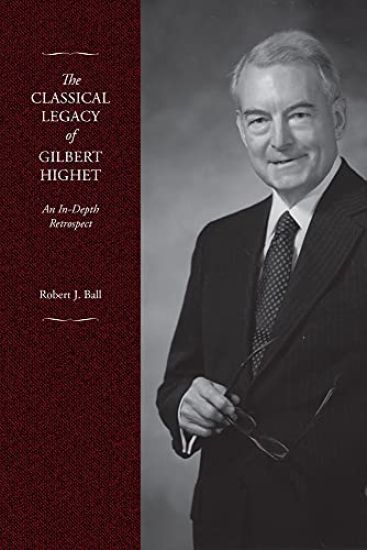
Gilbert Highet (1906-1978) was one of Columbia University's greatest teachers and in his day the most celebrated classical scholar in America. One may regard his life and career as both extraordinary and controversial. Now, over forty years after his death, a fresh retrospect seems appropriate, as a way of presenting new information about him and evaluating his enduring classical legacy for the twenty-first century reader. This fully documented biographical appreciation of Highet's life and work, capped by fully updated bibliographies of publications by him and about him, offers a long-overdue "official life" of this unique and towering figure.
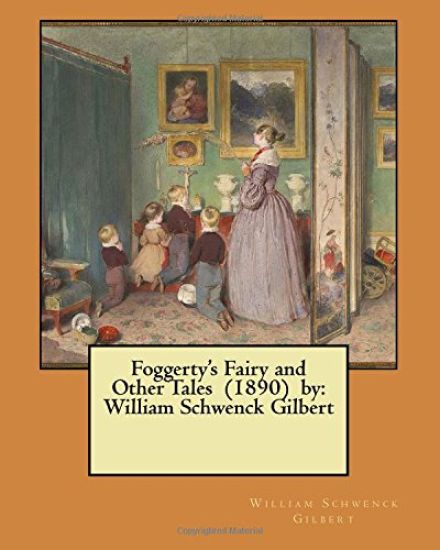
Sir William Schwenck Gilbert (18 November 1836 - 29 May 1911) was an English dramatist, librettist, poet and illustrator best known for the fourteen comic operas (known as the Savoy operas) produced in collaboration with the composer Sir Arthur Sullivan. The most famous of these include H.M.S. Pinafore, The Pirates of Penzance and one of the most frequently performed works in the history of musical theatre, The Mikado.The popularity of these works was supported for over a century by year-round performances of them, in Britain and abroad, by the repertory company that they founded, the D'Oyly Carte Opera Company. Eleven of the Savoy operas continue to be frequently performed in the English-speaking world and beyond by opera companies, repertory companies, schools and community theatre groups. Lines from these works have become part of the English language, such as "short, sharp shock", "What, never? Well, hardly ever ", and "Let the punishment fit the crime".Gilbert's creative output included over 75 plays and libretti, and numerous short stories, poems and lyrics, both comic and serious. After brief careers as a government clerk and a lawyer, Gilbert began to focus, in the 1860s, on writing light verse, including his Bab Ballads, short stories, theatre reviews and illustrations, often for Fun magazine
Dickens, Charles 1812 - 1870]. Darley, F elix]. O ctavius]. C arr. 1822 - 1888]; Gilbert, John 1817 - 1897] - Illustrators. Dombey and Son is a novel by Charles Dickens, published in monthly parts from 1 October 1846 to 1 April 1848 and in one volume in 1848. Its full title is Dealings with the Firm of Dombey and Son: Wholesale, Retail and for Exportation. Dickens started writing the book in Lausanne, Switzerland, before returning to England, via Paris, to complete it. Illustrations were provided by Hablot Knight Browne ('Phiz'). PLOT: The story concerns Paul Dombey, the wealthy owner of the shipping company of the book's title, whose dream is to have a son to continue his business. The book begins when his son is born, and Dombey's wife dies shortly after giving birth. Following the advice of Mrs Louisa Chick, his sister, Dombey employs a wet nurse named Mrs Richards (Toodle). Dombey already has a six-year-old daughter Florence but, bitter at her not having been the desired boy, he neglects her continually. One day, Mrs Richards, Florence, and her maid, Susan Nipper, secretly pay a visit to Mrs Richard's house in Staggs's Gardens so that Mrs Richards can see her children. During this trip, Florence becomes separated from them and is kidnapped for a short time by Good Mrs Brown, before being returned to the streets. She makes her way to Dombey and Son's offices in the City and there is found and brought home by Walter Gay, an employee of Mr Dombey, who first introduces her to his uncle, the navigation instrument maker Solomon Gills, at his shop the Wooden Midshipman. The child, named Paul after his father, is a weak and sickly child, who does not socialise normally with others; adults call him "old fashioned". He is intensely fond of his sister Florence, who is deliberately neglected by her father as irrelevant and a distraction. He is sent to the seaside at Brighton for his health, where he and Florence lodge with the ancient and acidic Mrs Pipchin. Finding his health beginning to improve there, Mr Dombey keeps him at Brighton and has him educated there at Dr and Mrs Blimber's school, where he and the other boys undergo both an intense and arduous education under the tutelage of Mr Feeder, B.A. and Cornelia Blimber. It is here that Paul is befriended by a fellow pupil, the amiable but weak-minded Mr Toots.Here, Paul's health declines even further in this 'great hothouse' and he finally dies, still only six years old. Dombey pushes his daughter away from him after the death of his son, while she futilely tries to earn his love. In the meantime, young Walter sent off to fill a junior position in the firm's counting house at Barbados through the manipulations of Mr Dombey's confidential manager, Mr James Carker, 'with his white teeth', who sees him as a potential rival, through his association with Florence. His boat is reported lost and he is presumed drowned. Walter's uncle leaves to go in search of Walter, leaving his great friend Captain Edward Cuttle in charge of the Midshipman. Meanwhile, Florence is now left alone with few friends to keep her company...................















![Dombey and son By: Charles Dickens, illustrated By: Darley, F[elix]. O[ctavius]. C[arr. 1822 - 1888]; Gilbert, John [1817 - 1897] -: Four](/covers/9781981390205.jpg)