The 18th century was a wealth of knowledge, exploration and rapidly growing technology and expanding record-keeping made possible by advances in the printing press. In its determination to preserve the century of revolution, Gale initiated a revolution of its own: digitization of epic proportions to preserve these invaluable works in the largest archive of its kind. Now for the first time these high-quality digital copies of original 18th century manuscripts are available in print, making them highly accessible to libraries, undergraduate students, and independent scholars.Rich in titles on English life and social history, this collection spans the world as it was known to eighteenth-century historians and explorers. Titles include a wealth of travel accounts and diaries, histories of nations from throughout the world, and maps and charts of a world that was still being discovered. Students of the War of American Independence will find fascinating accounts from the British side of conflict. ++++The below data was compiled from various identification fields in the bibliographic record of this title. This data is provided as an additional tool in helping to insure edition identification: ++++British LibraryT142925With a half-title and two final advertisement leaves.London: printed for T. Hookham, 1786. 4],220, 4]p.; 12
The 18th century was a wealth of knowledge, exploration and rapidly growing technology and expanding record-keeping made possible by advances in the printing press. In its determination to preserve the century of revolution, Gale initiated a revolution of its own: digitization of epic proportions to preserve these invaluable works in the largest archive of its kind. Now for the first time these high-quality digital copies of original 18th century manuscripts are available in print, making them highly accessible to libraries, undergraduate students, and independent scholars.Medical theory and practice of the 1700s developed rapidly, as is evidenced by the extensive collection, which includes descriptions of diseases, their conditions, and treatments. Books on science and technology, agriculture, military technology, natural philosophy, even cookbooks, are all contained here.++++The below data was compiled from various identification fields in the bibliographic record of this title. This data is provided as an additional tool in helping to insure edition identification: ++++British LibraryT145403London: printed for and sold by Tho. Payne; sold also by Mr. James Fletcher at Oxford, Mr. Thurlbourn at Cambridge, Mr. Hildyard at York, Mr. Newton at Manchester, and by Mess. Hamilton and Balfour at Edinburgh, 1752. xvi,430p.: ill.; 8
The 18th century was a wealth of knowledge, exploration and rapidly growing technology and expanding record-keeping made possible by advances in the printing press. In its determination to preserve the century of revolution, Gale initiated a revolution of its own: digitization of epic proportions to preserve these invaluable works in the largest archive of its kind. Now for the first time these high-quality digital copies of original 18th century manuscripts are available in print, making them highly accessible to libraries, undergraduate students, and independent scholars.Medical theory and practice of the 1700s developed rapidly, as is evidenced by the extensive collection, which includes descriptions of diseases, their conditions, and treatments. Books on science and technology, agriculture, military technology, natural philosophy, even cookbooks, are all contained here.++++The below data was compiled from various identification fields in the bibliographic record of this title. This data is provided as an additional tool in helping to insure edition identification: ++++British LibraryT097588Attributed to William Taplin. First published in 1789 as: 'The sculapian labyrinth explored'. Edition statement from head of title.London: printed for G. Kearsley, 1789. 2], ii,75, 1]p.; 4
The 18th century was a wealth of knowledge, exploration and rapidly growing technology and expanding record-keeping made possible by advances in the printing press. In its determination to preserve the century of revolution, Gale initiated a revolution of its own: digitization of epic proportions to preserve these invaluable works in the largest archive of its kind. Now for the first time these high-quality digital copies of original 18th century manuscripts are available in print, making them highly accessible to libraries, undergraduate students, and independent scholars.The Age of Enlightenment profoundly enriched religious and philosophical understanding and continues to influence present-day thinking. Works collected here include masterpieces by David Hume, Immanuel Kant, and Jean-Jacques Rousseau, as well as religious sermons and moral debates on the issues of the day, such as the slave trade. The Age of Reason saw conflict between Protestantism and Catholicism transformed into one between faith and logic -- a debate that continues in the twenty-first century.++++The below data was compiled from various identification fields in the bibliographic record of this title. This data is provided as an additional tool in helping to insure edition identification: ++++British LibraryT137326Dated on internal evidence. The French plague raged from November 1720 to the end of 1721.London: printed for the author, and sold by J. Roberts, A. Dodd, and the booksellers in London and Westminster, 1721?]. 4],80p.; 8
The 18th century was a wealth of knowledge, exploration and rapidly growing technology and expanding record-keeping made possible by advances in the printing press. In its determination to preserve the century of revolution, Gale initiated a revolution of its own: digitization of epic proportions to preserve these invaluable works in the largest archive of its kind. Now for the first time these high-quality digital copies of original 18th century manuscripts are available in print, making them highly accessible to libraries, undergraduate students, and independent scholars.Rich in titles on English life and social history, this collection spans the world as it was known to eighteenth-century historians and explorers. Titles include a wealth of travel accounts and diaries, histories of nations from throughout the world, and maps and charts of a world that was still being discovered. Students of the War of American Independence will find fascinating accounts from the British side of conflict. ++++The below data was compiled from various identification fields in the bibliographic record of this title. This data is provided as an additional tool in helping to insure edition identification: ++++British LibraryN001118A reprint of the 'Appendix' to James Dallaway's 'Inquiries into the origin and progress of the science of heraldry in England, ' 1793.London: printed for T. Cadell, 1793?] vi,112p.; 4
The 18th century was a wealth of knowledge, exploration and rapidly growing technology and expanding record-keeping made possible by advances in the printing press. In its determination to preserve the century of revolution, Gale initiated a revolution of its own: digitization of epic proportions to preserve these invaluable works in the largest archive of its kind. Now for the first time these high-quality digital copies of original 18th century manuscripts are available in print, making them highly accessible to libraries, undergraduate students, and independent scholars.This collection reveals the history of English common law and Empire law in a vastly changing world of British expansion. Dominating the legal field is the Commentaries of the Law of England by Sir William Blackstone, which first appeared in 1765. Reference works such as almanacs and catalogues continue to educate us by revealing the day-to-day workings of society.++++The below data was compiled from various identification fields in the bibliographic record of this title. This data is provided as an additional tool in helping to insure edition identification: ++++British LibraryT108778With a half-title.Taunton: printed by and for Thomas Norris; and sold by Carpenter and Co.; E. Newbery; Hurst and Co., London; Meyler, Bath; Sheppard, Bristol; Collins, Salisbury; Norris, and Poole, Taunton; and all other booksellers, 1800]. 8],43, 1]p.: ill.; 8
The 18th century was a wealth of knowledge, exploration and rapidly growing technology and expanding record-keeping made possible by advances in the printing press. In its determination to preserve the century of revolution, Gale initiated a revolution of its own: digitization of epic proportions to preserve these invaluable works in the largest archive of its kind. Now for the first time these high-quality digital copies of original 18th century manuscripts are available in print, making them highly accessible to libraries, undergraduate students, and independent scholars.The Age of Enlightenment profoundly enriched religious and philosophical understanding and continues to influence present-day thinking. Works collected here include masterpieces by David Hume, Immanuel Kant, and Jean-Jacques Rousseau, as well as religious sermons and moral debates on the issues of the day, such as the slave trade. The Age of Reason saw conflict between Protestantism and Catholicism transformed into one between faith and logic -- a debate that continues in the twenty-first century.++++The below data was compiled from various identification fields in the bibliographic record of this title. This data is provided as an additional tool in helping to insure edition identification: ++++British LibraryT113274London: printed by W. W. and sold by Andrew Bell and George Strahan; Daniel Brown; Luke Stokoe; and other booksellers in London: and by Henry Clements, Anthony Peisly, and Stephen Keblewhite, booksellers in Oxford, 1719. 2],162p.: ill.; 12
The 18th century was a wealth of knowledge, exploration and rapidly growing technology and expanding record-keeping made possible by advances in the printing press. In its determination to preserve the century of revolution, Gale initiated a revolution of its own: digitization of epic proportions to preserve these invaluable works in the largest archive of its kind. Now for the first time these high-quality digital copies of original 18th century manuscripts are available in print, making them highly accessible to libraries, undergraduate students, and independent scholars.Western literary study flows out of eighteenth-century works by Alexander Pope, Daniel Defoe, Henry Fielding, Frances Burney, Denis Diderot, Johann Gottfried Herder, Johann Wolfgang von Goethe, and others. Experience the birth of the modern novel, or compare the development of language using dictionaries and grammar discourses. ++++The below data was compiled from various identification fields in the bibliographic record of this title. This data is provided as an additional tool in helping to insure edition identification: ++++Library of CongressW013348Caption title: The ladies library. Bookseller's advertisement, p. 315-316].Chambersburg Pa.]: Printed by Dover & Harper, for Mathew Carey, Philadelphia, M, DCC, XCVII. 1797]. 312, 4]
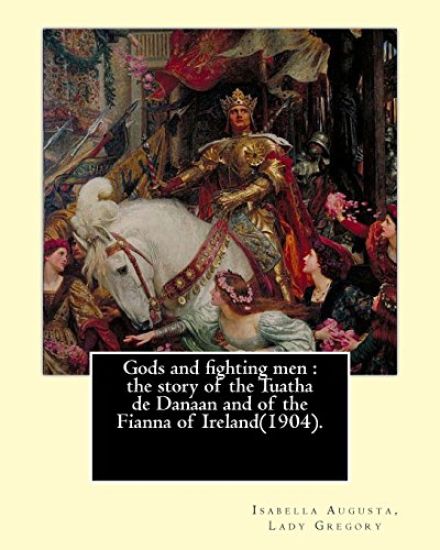
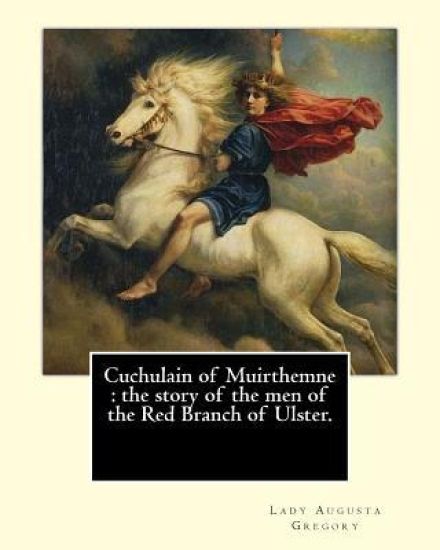
Isabella Augusta, Lady Gregory ( 15 March 1852 - 22 May 1932) was an Irish dramatist, folklorist and theatre manager. With William Butler Yeats and Edward Martyn, she co-founded the Irish Literary Theatre and the Abbey Theatre, and wrote numerous short works for both companies. Lady Gregory produced a number of books of retellings of stories taken from Irish mythology. Born into a class that identified closely with British rule, her conversion to cultural nationalism, as evidenced by her writings, was emblematic of many of the political struggles to occur in Ireland during her lifetime. Lady Gregory is mainly remembered for her work behind the Irish Literary Revival. Her home at Coole Park, County Galway, served as an important meeting place for leading Revival figures, and her early work as a member of the board of the Abbey was at least as important for the theatre's development as her creative writings. Lady Gregory's motto was taken from Aristotle: "To think like a wise man, but to express oneself like the common people."....... William Butler Yeats ( 13 June 1865 - 28 January 1939) was an Irish poet and one of the foremost figures of 20th-century literature. A pillar of both the Irish and British literary establishments, he helped to found the Abbey Theatre, and in his later years served as an Irish Senator for two terms. Yeats was a driving force behind the Irish Literary Revival along with Lady Gregory, Edward Martyn and others. He was born in Sandymount, Ireland and educated there and in London. He spent childhood holidays in County Sligo and studied poetry from an early age when he became fascinated by Irish legends and the occult. These topics feature in the first phase of his work, which lasted roughly until the turn of the 20th century. His earliest volume of verse was published in 1889, and its slow-paced and lyrical poems display Yeats's debts to Edmund Spenser, Percy Bysshe Shelley, and the poets of the Pre-Raphaelite Brotherhood. From 1900, his poetry grew more physical and realistic. He largely renounced the transcendental beliefs of his youth, though he remained preoccupied with physical and spiritual masks, as well as with cyclical theories of life. In 1923, he was awarded the Nobel Prize in Literature.
Isabella Augusta, Lady Gregory ( 15 March 1852 - 22 May 1932) was an Irish dramatist, folklorist and theatre manager. With William Butler Yeats and Edward Martyn, she co-founded the Irish Literary Theatre and the Abbey Theatre, and wrote numerous short works for both companies. Lady Gregory produced a number of books of retellings of stories taken from Irish mythology. Born into a class that identified closely with British rule, her conversion to cultural nationalism, as evidenced by her writings, was emblematic of many of the political struggles to occur in Ireland during her lifetime. Lady Gregory is mainly remembered for her work behind the Irish Literary Revival. Her home at Coole Park, County Galway, served as an important meeting place for leading Revival figures, and her early work as a member of the board of the Abbey was at least as important for the theatre's development as her creative writings. Lady Gregory's motto was taken from Aristotle: "To think like a wise man, but to express oneself like the common people." Early life and marriage: Gregory was born at Roxborough, County Galway, the youngest daughter of the Anglo-Irish gentry family Persse. Her mother, Frances Barry, was related to Viscount Guillamore, and her family home, Roxborough, was a 6,000-acre (24 km ) estate located between Gort and Loughrea, the main house of which was later burnt down during the Irish Civil War. 2] She was educated at home, and her future career was strongly influenced by the family nurse (i.e. nanny), Mary Sheridan, a Catholic and a native Irish speaker, who introduced the young Augusta to the history and legends of the local area. She married Sir William Henry Gregory, a widower with an estate at Coole Park, near Gort, on 4 March 1880 in St Matthias' Church, Dublin. Sir William, who was 35 years her elder, had just retired from his position as Governor of Ceylon (now Sri Lanka), having previously served several terms as Member of Parliament for County Galway. He was a well-educated man with many literary and artistic interests, and the house at Coole Park housed a large library and extensive art collection, both of which Lady Gregory was eager to explore. He also had a house in London, where the couple spent a considerable amount of time, holding weekly salons frequented by many leading literary and artistic figures of the day, including Robert Browning, Lord Tennyson, John Everett Millais and Henry James. Their only child, Robert Gregory, was born in 1881. He was killed during the First World War, while serving as a pilot, an event which inspired Yeats's poems "An Irish Airman Foresees His Death," "In Memory of Major Robert Gregory," and "Shepherd and Goatherd."..................... William Butler Yeats ( 13 June 1865 - 28 January 1939) was an Irish poet and one of the foremost figures of 20th-century literature. A pillar of both the Irish and British literary establishments, he helped to found the Abbey Theatre, and in his later years served as an Irish Senator for two terms. Yeats was a driving force behind the Irish Literary Revival along with Lady Gregory, Edward Martyn and others. He was born in Sandymount, Ireland and educated there and in London. He spent childhood holidays in County Sligo and studied poetry from an early age when he became fascinated by Irish legends and the occult. These topics feature in the first phase of his work, which lasted roughly until the turn of the 20th century. His earliest volume of verse was published in 1889, and its slow-paced and lyrical poems display Yeats's debts to Edmund Spenser, Percy Bysshe Shelley, and the poets of the Pre-Raphaelite Brotherhood. From 1900, his poetry grew more physical and realistic. He largely renounced the transcendental beliefs of his youth, though he remained preoccupied with physical and spiritual masks, as well as with cyclical theories of life. In 1923, he was awarded the Nobel Prize in Literature.
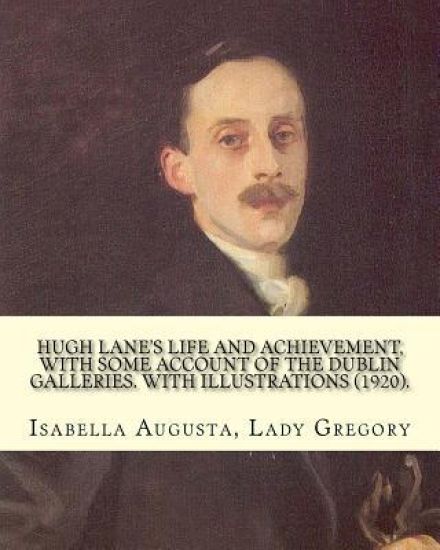
Sir Hugh Percy Lane (9 November 1875 - 7 May 1915) was an Irish art dealer, collector and gallery director. He is best known for establishing Dublin's Municipal Gallery of Modern Art (the first known public gallery of modern art in the world) and for his contribution to the visual arts in Ireland, including the Lane Bequest. Hugh Lane died on board the RMS Lusitania.Hugh Percy Lane was born in County Cork, Ireland on 9 November 1875. He was brought up in Cornwall, England, and began his career as an apprentice painting restorer and later became a successful art dealer in London. Through regular visits to Coole (near Gort), County Galway, the home of his aunt, Lady Gregory, Lane remained in contact with Ireland. He soon counted among his family, friends and social circle those who collectively formed the core of the Irish cultural renaissance in the early decades of the 20th century.Extolling the cause of Irish art abroad, Lane also became one of the foremost collectors and dealers of Impressionist paintings in Europe, and amongst those works purchased by him for the new gallery were La Musique aux Tuileries by Manet, Sur la Plage by Degas, Les Parapluies by Renoir and La Chemin e by Vuillard..... Isabella Augusta, Lady Gregory ( 15 March 1852 - 22 May 1932) was an Irish dramatist, folklorist and theatre manager. With William Butler Yeats and Edward Martyn, she co-founded the Irish Literary Theatre and the Abbey Theatre, and wrote numerous short works for both companies. Lady Gregory produced a number of books of retellings of stories taken from Irish mythology. Born into a class that identified closely with British rule, her conversion to cultural nationalism, as evidenced by her writings, was emblematic of many of the political struggles to occur in Ireland during her lifetime..... John Singer Sargent ( January 12, 1856 - April 14, 1925) was an American artist, considered the "leading portrait painter of his generation" for his evocations of Edwardian era luxury. During his career, he created roughly 900 oil paintings and more than 2,000 watercolors, as well as countless sketches and charcoal drawings. His oeuvre documents worldwide travel, from Venice to the Tyrol, Corfu, the Middle East, Montana, Maine, and Florida.
Nominations of Luis A. Aguilar, Daniel M. Gallagher, Jr., Anthony Frank D'Agostino, and Gregory S. Karawan: hearing before the Committee on Banking, Housing, and Urban Affairs, United States Senate, One Hundred Twelfth Congress, first session, on nominations of Luis A. Aguilar, of Georgia, to be a member, Securities and Exchange Commission; Daniel M. Gallagher, Jr.,
This book has been considered by academicians and scholars of great significance and value to literature. This forms a part of the knowledge base for future generations. So that the book is never forgotten we have represented this book in a print format as the same form as it was originally first published. Hence any marks or annotations seen are left intentionally to preserve its true nature.
Tamburlaine the Great - Part 1, a classical and rare book that has been considered essential throughout human history, so that this work is never forgotten, we at Alpha Editions have made efforts in its preservation by republishing this book in a modern format for present and future generations. This whole book has been reformatted, retyped and designed. These books are not made of scanned copies of their original work and hence the text is clear and readable.