
Kirjahaku
Etsi kirjoja tekijän nimen, kirjan nimen tai ISBN:n perusteella.
1000 tulosta hakusanalla HENRY CONSTABLE

"Education had ended in 1871, life was complete in 1890." With this paradoxical statement from "The Education of Henry Adams," Adams apparently dismissed from the record twenty of the most interesting and active years of his career. Those two decades embraced the first great productive season of his literary genius and the most significant years of his emotional life. Opening on the highest note of expectation and closing with his desperate flight to the South Seas in 1890, a divided and lonely figure, that season of fulfillment and inner growth is the subject of this book. The relationship between Adams' life and writings grew steadily richer as his literary artistry matured, and with that process as his main concern, Mr. Samuels has written a book equally rewarding as a biography and as a critical study. Perhaps the greatest achievement biographically is a definitive and absorbing account of the true relationship between Henry Adams and his wife and an introduction to the grand passion for Elizabeth Cameron which was to affect the rest of his life. The whole intense inner drama of his feelings is really opened up for the first time, as often as possible in his own words, to the tragedy of his wife's suicide, the embittered years of work concluding the great History, and, finally, the escape to the South Seas in an effort to overcome the intolerable intensity of his love for Mrs. Cameron. Through detailed analyses of Adams' writings, Mr. Samuels shows how all this drama had its counterpoint in his literary activities and eventually became transformed into works of literary art. Equally interesting is the way in which the ideas for his biographical and historical writing emerged from the wide sources of his reading, were tested in the remarkable give and take of his circle, and finally adapted to the themes of his writing. This is the most exhaustive biographical and critical study of Adams' middle years ever made, and probably answers, so far as it is humanly possible, every unanswered question about Adams' life and the writing of his books. From the wealth of family papers deposited with the Massachusetts Historical Society and numerous other sources, Mr. Samuels has unveiled an increasingly complex personality - a brilliant mind in the grip of many prejudices and contradictions, yet one so terrifyingly honest that it more than ever defies explanation in any ordinary terms. The mass of fresh materials used includes letters from correspondents around the world and admits us to the other side of the enormous dialogue which Adams carried on with the members of his circle. Certain finds have revealed some invaluable sidelights including a striking fragment of Adams' diary for 1888-1889; a sheaf of his sonnets to Elizabeth Cameron, and the unpublished remainder of his letters to his wife. Much untouched material has also come to light in newspapers, magazines, public archives, court records, memoirs, and biographies. This is the second of three volumes of Mr. Samuels' definitive study of Henry Adams. The other two are "The Young Henry Adams and Henry Adams: The Major Phase."
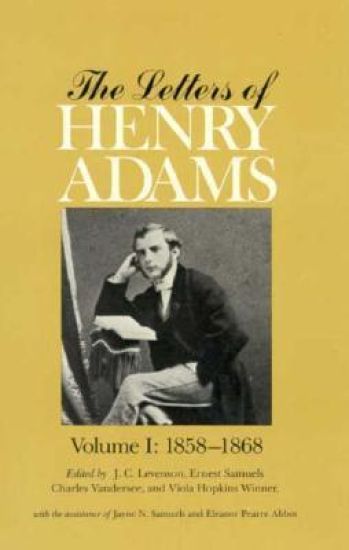
Henry Adams’s letters are one of the vital chronicles of the life of the mind in America. A perceptive analyst of people, events, and ideas, Adams recorded, with brilliance and wit, sixty years of enormous change at home and abroad.Volume I shows him growing from a high-spirited but self-conscious 20-year-old to a self-assured man of the world. In Washington in the chaotic months before Lincoln’s inauguration, then in London during the war years and beyond, he serves as secretary to his statesman father and is privy to the inner workings of politics and diplomacy. English social life proves as absorbing as affairs of state.Volume II takes him from his years as a crusading journalist in Grant’s Washington, through his marriage to Clover Hooper and his pioneer work as a history professor at Harvard and editor of the North American Review, to his settling in Washington as a professional historian. There he and his wife, described by Henry James as “one of the two most interesting women in America,” establish the first intellectual salon of the capital. This halcyon period comes to a catastrophic close with Clover’s suicide.Volume III traces his gradual recovery from the shock of his wife’s death as he seeks distraction in travel—to Japan, to Cuba, and in 1891–92 to the South Seas—a recovery complicated by his falling dangerously in love with Elizabeth Cameron, beautiful young wife of a leading senator. His South Seas letters to Mrs. Cameron are the most brilliant of all.Fewer than half of Adams’s letters have been published even in part, and earlier collections have been marred by expurgations, mistranscriptions, and editorial deletions. In the six volumes of this definitive edition, readers will have access to a major document of the American past.
Henry James and the Requirements of the Imagination
Philip M Weinstein
Harvard University Press
1971
sidottu

Henry Adams’s letters are among the best in the language. They are, in Alfred Kazin’s words, “magnificent, his most spontaneous and freest literary works.” With the completion of this edition, they may well be judged his most significant achievement. “The letters are not a gloss on a life’s work; in a real sense they are his life’s work,” the reviewer for American Literature stated.We encounter Adams in 1892 at a turning point in his career, at the beginning of the period in which his leading ideas would be crystallized and his major literary works take shape. He had survived the shock of his wife’s suicide and had completed his great History of the Jefferson era, and after his long journey in the South Seas his frustrated passion for Elizabeth Cameron had begun to calm. His wanderlust now took him to the Carolinas and the Rockies, to Mexico, Cuba, Egypt, the Near East, Greece, Italy, central Europe, Russia, and the North Cape. His interest came increasingly to center on the geopolitical present and the medieval past. Prompted by the Panic of 1893, he began an intensive study of the new finance capitalism and the imperial power it created; by the end of the decade he was beginning to foresee the shift of global dominance from Britain to the United States and Russia. Meanwhile a tour of the churches and abbeys of Normandy fired his imagination and led to the absorption in the art and culture of medieval France that would bear fruit in Mont-Saint-Michel and Chartres.At his home on Lafayette Square, across from the White House, he became an informal adviser to statesmen, John Hay and Theodore Roosevelt among them. Out of his friendly association with scientists and his own study of science came his conviction that the dynamo and radium were bringing a revolution in physics. His germinating ideas about science, technology, and economic power were conveyed in his letters over many years before they were formulated into The Education of Henry Adams, his “Study of Twentieth-Century Multiplicity.”The Adams who emerges from the letters is far more complex, contradictory, and human than the protagonist of the Education. He writes to women, Mrs. Cameron above all, about politics, economics, and science as well as social news and palace gossip, just as he writes to men about art as well as power. The multiplicity of his interests, his sharp perceptions, eye for telling detail, and passion for generalization, together with his irony and wit, make his letters the engrossing record of an extraordinary life-in-progress and an incomparable commentary upon his age.

Henry Adams’s letters are among the best in the language. They are, in Alfred Kazin’s words, “magnificent, his most spontaneous and freest literary works.” With the completion of this edition, they may well be judged his most significant achievement. “The letters are not a gloss on a life’s work; in a real sense they are his life’s work,” the reviewer for American Literature stated.We encounter Adams in 1892 at a turning point in his career, at the beginning of the period in which his leading ideas would be crystallized and his major literary works take shape. He had survived the shock of his wife’s suicide and had completed his great History of the Jefferson era, and after his long journey in the South Seas his frustrated passion for Elizabeth Cameron had begun to calm. His wanderlust now took him to the Carolinas and the Rockies, to Mexico, Cuba, Egypt, the Near East, Greece, Italy, central Europe, Russia, and the North Cape. His interest came increasingly to center on the geopolitical present and the medieval past. Prompted by the Panic of 1893, he began an intensive study of the new finance capitalism and the imperial power it created; by the end of the decade he was beginning to foresee the shift of global dominance from Britain to the United States and Russia. Meanwhile a tour of the churches and abbeys of Normandy fired his imagination and led to the absorption in the art and culture of medieval France that would bear fruit in Mont-Saint-Michel and Chartres.At his home on Lafayette Square, across from the White House, he became an informal adviser to statesmen, John Hay and Theodore Roosevelt among them. Out of his friendly association with scientists and his own study of science came his conviction that the dynamo and radium were bringing a revolution in physics. His germinating ideas about science, technology, and economic power were conveyed in his letters over many years before they were formulated into The Education of Henry Adams, his “Study of Twentieth-Century Multiplicity.”The Adams who emerges from the letters is far more complex, contradictory, and human than the protagonist of the Education. He writes to women, Mrs. Cameron above all, about politics, economics, and science as well as social news and palace gossip, just as he writes to men about art as well as power. The multiplicity of his interests, his sharp perceptions, eye for telling detail, and passion for generalization, together with his irony and wit, make his letters the engrossing record of an extraordinary life-in-progress and an incomparable commentary upon his age.

Henry Adams’s letters are among the best in the language. They are, in Alfred Kazin’s words, “magnificent, his most spontaneous and freest literary works.” With the completion of this edition, they may well be judged his most significant achievement. “The letters are not a gloss on a life’s work; in a real sense they are his life’s work,” the reviewer for American Literature stated.We encounter Adams in 1892 at a turning point in his career, at the beginning of the period in which his leading ideas would be crystallized and his major literary works take shape. He had survived the shock of his wife’s suicide and had completed his great History of the Jefferson era, and after his long journey in the South Seas his frustrated passion for Elizabeth Cameron had begun to calm. His wanderlust now took him to the Carolinas and the Rockies, to Mexico, Cuba, Egypt, the Near East, Greece, Italy, central Europe, Russia, and the North Cape. His interest came increasingly to center on the geopolitical present and the medieval past. Prompted by the Panic of 1893, he began an intensive study of the new finance capitalism and the imperial power it created; by the end of the decade he was beginning to foresee the shift of global dominance from Britain to the United States and Russia. Meanwhile a tour of the churches and abbeys of Normandy fired his imagination and led to the absorption in the art and culture of medieval France that would bear fruit in Mont-Saint-Michel and Chartres.At his home on Lafayette Square, across from the White House, he became an informal adviser to statesmen, John Hay and Theodore Roosevelt among them. Out of his friendly association with scientists and his own study of science came his conviction that the dynamo and radium were bringing a revolution in physics. His germinating ideas about science, technology, and economic power were conveyed in his letters over many years before they were formulated into The Education of Henry Adams, his “Study of Twentieth-Century Multiplicity.”The Adams who emerges from the letters is far more complex, contradictory, and human than the protagonist of the Education. He writes to women, Mrs. Cameron above all, about politics, economics, and science as well as social news and palace gossip, just as he writes to men about art as well as power. The multiplicity of his interests, his sharp perceptions, eye for telling detail, and passion for generalization, together with his irony and wit, make his letters the engrossing record of an extraordinary life-in-progress and an incomparable commentary upon his age.

Selected by the Modern Library as one of the 100 best nonfiction books of all time 'I cannot remember when I was not fascinated by Henry Adams, ' said Gore Vidal. 'He was remarkably prescient about the coming horrors.' His political ideals shaped by two presidential ancestors great-grandfather John Adams and grandfather John Quincy Adams Henry Adams was one of the most powerful and original minds to confront the American scene from the Civil War to the First World War. Printed privately in 1907 and published to wide acclaim shortly after the author&'s death in 1918, The Education of Henry Adams is a brilliant, idiosyncratic blend of autobiography and history that charts the great transformation in American life during the so-called Gilded Age. With an introduction by renowned historian Edmund Morris. From the eBook edition."
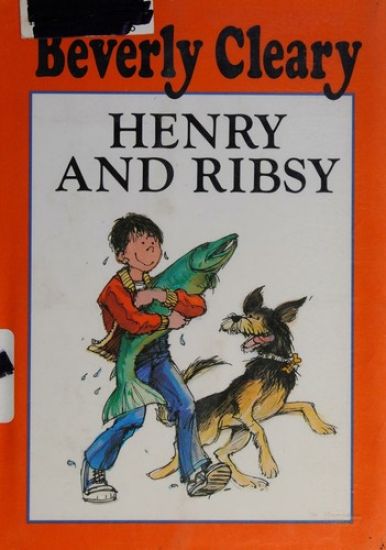
In this humorous and heartfelt novel from Newbery Medal-winning author Beverly Cleary, the bond between a boy and his dog proves strong, as Henry vows to stick up for Ribsy...even if he is a trouble-maker From the first moment Henry found Ribsy, the curious mutt was poking his nose into things he shouldn't be. Whether terrorizing the garbage man, chasing cats, or gobbling Ramona Quimby's ice-cream cone, Henry's four-legged pal has walked himself into one problem too many.So when Henry asks his dad if he can go along on the big fishing trip, Mr. Huggins agrees, but on one condition: Ribsy must stay out of mischief for two whole months. Henry is confident in his loyal dog...until Ribsy goes overboard with his appetite for chaos--literally Don't miss the beloved classic Henry Huggins books from Beverly Cleary. These are truly timeless classics that stand the test of time and still leave readers 7-13 smiling.
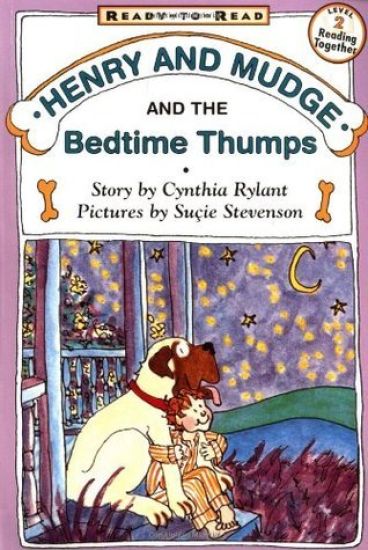
Henry and Mudge and the Bedtime Thumps: Ready-To-Read Level 2
Cynthia Rylant
Simon Spotlight
1996
nidottu
Henry and his dog Mudge visit Henry's grandparents--but what's that sound?--in this ninth Ready-to-Read book of their adventures. Henry and Mudge spend a scary night at Henry's grandmother's house in the country.

Henry Y Mudge El Primer Libro (Henry and Mudge the First Book): Ready-To-Read Level 2
Cynthia Rylant
Simon Spotlight
1996
nidottu
Henry y Mudge El Primer Libro de Sus Adventuras is Cynthia Rykant's story of a young boy and his canine companion. "Henry, feeling lonely on a street without any other children, finds companionship and love in a big dog named Mudge. The rest is simply heartwarming fun."
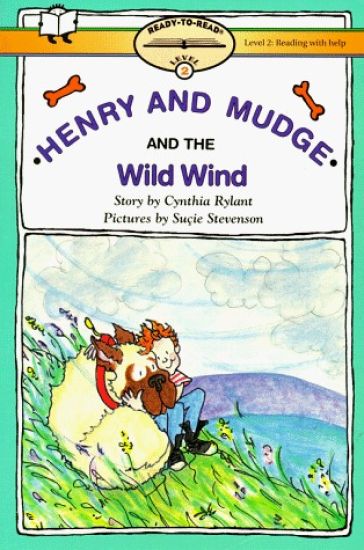
Henry and Mudge and the Wild Wind: Ready-To-Read Level 2
Cynthia Rylant
Simon Spotlight
1996
nidottu
Henry and his dog Mudge weather a storm in this twelfth Ready-to-Read book of their adventures. Henry and his 180-pound dog Mudge are best friends forever. And when a storm comes, they face wind, thunder, and lightning
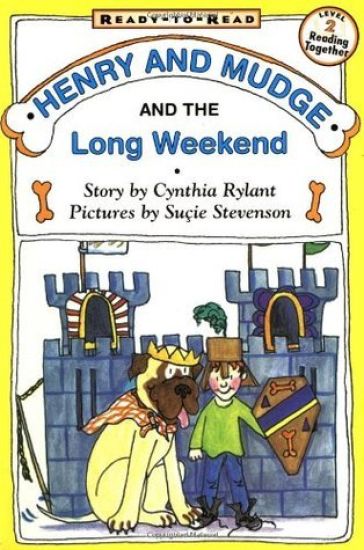
Henry and Mudge and the Long Weekend: Ready-To-Read Level 2
Cynthia Rylant
Simon Spotlight
1996
nidottu
Henry and his dog Mudge build an indoor castle in this eleventh Ready-to-Read book of their adventures. Henry and his 180-pound dog Mudge are best friends forever. And on a long weekend, they build a glorious indoor castle, complete with knights and kings
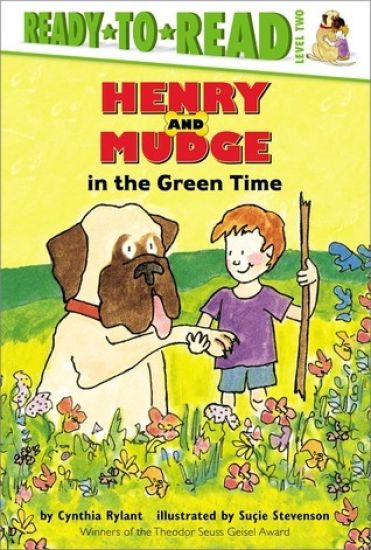
Henry and Mudge in the Green Time
Cynthia Rylant; Sucie (ILT) Stevenson; Cynthia Rylant
Atheneum Books for Young Readers
1998
sidottu
Henry and his 180-pound dog Mudge are best friends forever. And in this third book of their adventures, they share summertime fun!
Henry and his dog Mudge make the most of summer in this third Ready-to-Read book of their adventures. Henry and his 180-pound dog Mudge are best friends forever. And they're ready to share summertime fun
Henry and Mudge in Puddle Trouble: Ready-To-Read Level 2
Cynthia Rylant
Simon Spotlight
1996
sidottu
Henry and his 180-pound dog Mudge are best friends forever. And when spring arrives, they're ready for some puddle trouble
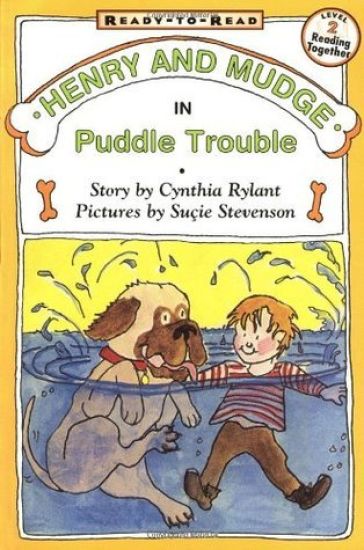
Henry and his dog Mudge venture out into the wet and happy world of spring in this second Ready-to-Read book of their adventures. Henry and his 180-pound dog Mudge are best friends forever. And when spring arrives, they're ready for some puddle trouble
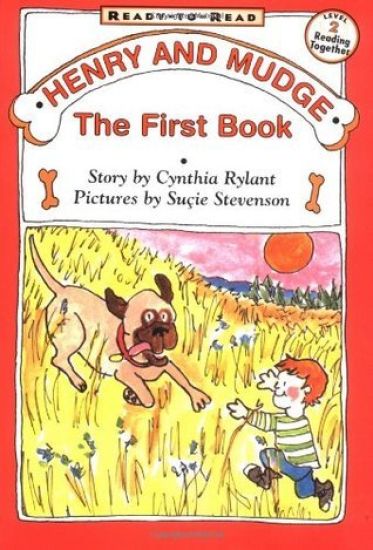
Separated from each other, canine protagonist Mudge and his youthful owner, Henry, search for each other until they are eventually reunited