
Kirjahaku
Etsi kirjoja tekijän nimen, kirjan nimen tai ISBN:n perusteella.
1000 tulosta hakusanalla Helene Cooper
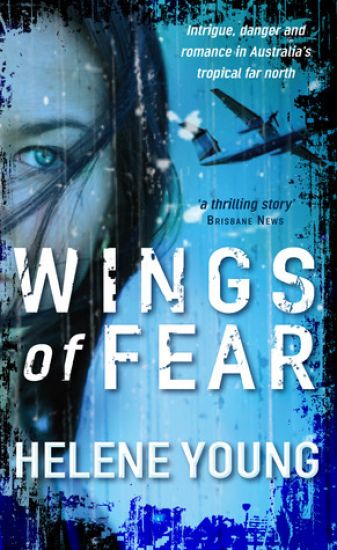
Captain Morgan Pentland flies for Border Watch, patrolling the vast Australian coastline. With steely determination, she's fought hard to reach this point in her career, but her private life is a shambles. Will she ever break the tragic patterns of her childhood? Customs agent Rafe Daniels is working with her undercover. Morgan knows Rafe doesn't like her. What she doesn't know is that he has her under surveillance as a suspected terrorist. Critical information about their operations is leaking and she's the main suspect. Carl Wiseman, an elite policeman and Morgan's ex, is still on the scene, but is he pursuing Morgan to regain her love or for something more sinister? Morgan and Rafe will be forced to work together if they are to discover what is really going on, and stop a terrorist attack on Australian soil. But first, they will have to acknowledge the attraction that is growing between them.
Exploring Dance Forms and Styles
Helene Scheff; Marty Sprague; Susan McGreevy-Nichols
Human Kinetics
2010
muu
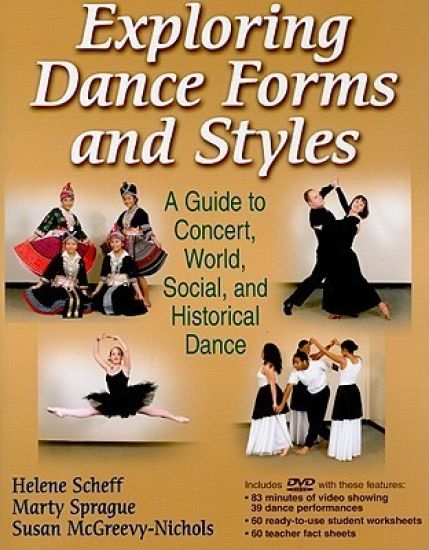
Exploring Dance Forms and Styles: A Guide to Concert, World, Social, and Historical Dance helps all teachers introduce students to a variety of dance forms and styles—without having to leave the classroom! This book–DVD package is an all-in-one resource that will help your students appreciate various dance forms and begin to recognize the characteristics that make each dance form or style distinct. And because of the way the information is packaged, you can be a dance novice yourself and still expertly guide your students in being both an effective audience member and an astute observer. Exploring Dance Forms and Styles: A Guide to Concert, World, Social, and Historical Dance presents a systematic approach for building four critical thinking skills in dance: • Viewing: What did you see? • Connecting: What do you know? • Responding: What do you think? What do you wonder? • Performing: What can you do? Part I of the book outlines these four critical thinking skills and why they are important for viewing dance performances. In part II, the four critical thinking skills are incorporated on student-tested worksheets located in the book and available as printable PDFs from the bound-in DVD. Each worksheet template facilitates an understanding of the elements of dance, builds movement vocabulary, and guides students' recognition of cultural, historical, and artistic diversity. As students build their skills, they are introduced to selected dances in each of the four broad categories of dance: concert, world, social, and historical. These categories are constantly evolving, and many dances can be cross-linked across these four categories. For those students new to dance, the four broad categories provide a starting point from which to see the evolution of the forms. In part III, the authors provide specific suggestions for comparing and contrasting either within a category or across dance categories and for identifying selected dance forms and styles that present universal themes. These tasks require application of higher-level thinking skills, and they develop aesthetic values. Part III also offers lesson plan and unit ideas, using the dance forms and styles introduced earlier in the book. With Exploring Dance Forms and Styles, you can select individual dances as you like, or develop complete dance units; you can use the materials to meet state standards and national dance standards; and you can introduce various forms of dance to students in geographic areas where they would otherwise not be able to view live dance performances. But best of all, you can deepen students' understanding, appreciation, and enjoyment of dance.
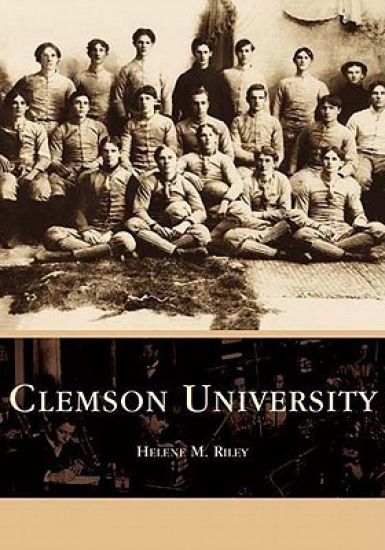
See how one man's belief in agriculture's promise led to the founding of what is now a powerhouse among Southern academic institutions, Clemson University.The roots of agriculture run deeply in South Carolina's history; even its earliest settlers valued the rich and fertile land. However, after the Civil War devastated Southern land and economy, many questioned if the agrarian way of life could survive. Thomas Green Clemson, son-in-law of South Carolina's foremost statesman John C. Calhoun, believed in the promise of agricultural improvement through science and offered his estate, Fort Hill, to found the agricultural and mechanical college today called Clemson University. For more than a century, the institution that bears his name has served as a beacon for perhaps thousands of students, standing proudly in the solemn Carolina foothills. Through the years, faculty, students, alumni, and fans have realized Thomas G. Clemson's vision for higher education and strengthened the school to a mighty level. From the more than 600 students who applied the first year to join an all-male Cadet Corps, Clemson has developed into a household academic institution. Recognized for its commitment to academic excellence, cultural opportunities, and aesthetic attractions, the university is perhaps best known as home of the famed athletic teams, the Clemson Tigers. This volume offers young and mature readers alike a chance to meet and reminisce about Clemson's legends - with longtime Tiger fans perhaps even finding old friends they made along the way.
Love’s memories, love recalling itself in letters lost and found over an interval of forty years: Cixous’s writer-narrator advances here far into a labyrinth of passions long ago delivered and yet still arriving through the mail, through letters and literature, in other words, the poetry of the post. As for the lovers’ returning scenes, they have their addresses in Paris (rue Olivier de Serres, Avenue de Choisy, street names that endlessly feed love’s unconscious language) and in New York, but also in a lost oasis of the Egyptian desert during the Napoleonic wars, in Athens and along the shores of a great lake centuries ago in the country of myth. The lovers are poets or soldiers, philosophers or students madly in love with poetry and poets. They are as well mermaids or panthers. Panthers? Yes, for it is the passion of the animal that drives all these lovers to bare themselves, and sometimes their claws, before the beloved. Misunderstandings are often, even inevitably the result. Seconded and witnessed by her passionate, truth-telling cats, Cixous’s narrator-writer returns unerringly to moments of errancy inflicted on address and language, those errors and faults when love, perhaps, is listening only to itself, without subject or object, lover or beloved, just love itself, l’amour même, l’amour m’aime, love loving me, in the letter box of memory.
Love’s memories, love recalling itself in letters lost and found over an interval of forty years: Cixous’s writer-narrator advances here far into a labyrinth of passions long ago delivered and yet still arriving through the mail, through letters and literature, in other words, the poetry of the post. As for the lovers’ returning scenes, they have their addresses in Paris (rue Olivier de Serres, Avenue de Choisy, street names that endlessly feed love’s unconscious language) and in New York, but also in a lost oasis of the Egyptian desert during the Napoleonic wars, in Athens and along the shores of a great lake centuries ago in the country of myth. The lovers are poets or soldiers, philosophers or students madly in love with poetry and poets. They are as well mermaids or panthers. Panthers? Yes, for it is the passion of the animal that drives all these lovers to bare themselves, and sometimes their claws, before the beloved. Misunderstandings are often, even inevitably the result. Seconded and witnessed by her passionate, truth-telling cats, Cixous’s narrator-writer returns unerringly to moments of errancy inflicted on address and language, those errors and faults when love, perhaps, is listening only to itself, without subject or object, lover or beloved, just love itself, l’amour même, l’amour m’aime, love loving me, in the letter box of memory.

Hyperdream is a major new novel by celebrated French author Hélène Cixous. It is a literary tour de force, returning anew to challenge necessity itself, the most implacable of human certainties: you die in the end – and that’s the end. For you, for me. But what if? What if death did not inevitably spell the end of life? Hyperdream invests this fragile, tentative suspension of disbelief with the sheer force of its poetic audacity, inventing a sort of magic telephone: a wireless lifeline against all the odds to the dearly departed. It is a book about time, age, love and the greatest loss. A book which turns on death: on the question or the moment of death, depending on it, expecting it, living off it, taking place at once before and after, but at the same time turning against it, contesting it, outwriting it hopefully, desperately, performatively, as an interruptible interruption. Hyperdream is a book of mourning, but also of morning, a tragedy-with-comedy and a universal family romance in which it transpires that the narrator is the veritable offspring of a “treasure of literature” in the form of a bed, purchased by her mother from a certain W. Benjamin in 1934, slept on for 40 years by her brother and dreamt of by her friend “J.D.”

Hyperdream is a major new novel by celebrated French author Hélène Cixous. It is a literary tour de force, returning anew to challenge necessity itself, the most implacable of human certainties: you die in the end – and that’s the end. For you, for me. But what if? What if death did not inevitably spell the end of life? Hyperdream invests this fragile, tentative suspension of disbelief with the sheer force of its poetic audacity, inventing a sort of magic telephone: a wireless lifeline against all the odds to the dearly departed. It is a book about time, age, love and the greatest loss. A book which turns on death: on the question or the moment of death, depending on it, expecting it, living off it, taking place at once before and after, but at the same time turning against it, contesting it, outwriting it hopefully, desperately, performatively, as an interruptible interruption. Hyperdream is a book of mourning, but also of morning, a tragedy-with-comedy and a universal family romance in which it transpires that the narrator is the veritable offspring of a “treasure of literature” in the form of a bed, purchased by her mother from a certain W. Benjamin in 1934, slept on for 40 years by her brother and dreamt of by her friend “J.D.”
Zero's Neighbour is Hélène Cixous's tribute to the minimalist genius of the artist in exile who courted nothingness in his writing like nobody else: Samuel Beckett. In this unabashedly personal odyssey through a sizeable range of his novels, plays and poems, Cixous celebrates Beckett’s linguistic flair and the poignant, powerful thrust of his stylistic terseness, and passionately declares her love for his unrivalled expression of the meaningless ‘precious little’ of life, its unfathomable banality ending in chaos and death. Poised between a critical essay and a textual performance across two languages adapting Beckett's own literary vein, this book will appeal to scholars, critics and creative writers as well as students of the ‘grey self-Sam’. Its allusive intertextual insights will also prove to be of critical relevance to readers of Dante and Proust, among other literary figures, as much as to those appreciative of Cixous’s own inimitable genius for dissecting the quintessence of the life and works of a ‘neighbourly’ artist.

Zero's Neighbour is Hélène Cixous's tribute to the minimalist genius of the artist in exile who courted nothingness in his writing like nobody else: Samuel Beckett. In this unabashedly personal odyssey through a sizeable range of his novels, plays and poems, Cixous celebrates Beckett’s linguistic flair and the poignant, powerful thrust of his stylistic terseness, and passionately declares her love for his unrivalled expression of the meaningless ‘precious little’ of life, its unfathomable banality ending in chaos and death. Poised between a critical essay and a textual performance across two languages adapting Beckett's own literary vein, this book will appeal to scholars, critics and creative writers as well as students of the ‘grey self-Sam’. Its allusive intertextual insights will also prove to be of critical relevance to readers of Dante and Proust, among other literary figures, as much as to those appreciative of Cixous’s own inimitable genius for dissecting the quintessence of the life and works of a ‘neighbourly’ artist.
In So Close, the internationally renowned writer Hélène Cixous recounts a return to her native Algeria after a more than thirty-year absence. Before she can decide to go, she must sift through large parts of her past in a land where she never felt at home and, from a young age, knew she must leave. Above all, she must confront the depths of her mother’s rejection of the country that had rejected her despite years of devotion to the poor women of Algiers. As she is struggling with this decision, she receives a message from Zohra Drif, with whom she has had no contact since their school days, which was just before Zohra joined the Algerian FLN and become a heroine in the uprising against French rule in her homeland. They meet in Paris for the first time in more than fifty years and soon afterward the narrator departs for Algiers. The latter part of the narrative brings a rush of sensations, impressions, memories, and new encounters as the narrator revisits sites from her past in Algiers and especially in Oran, the city of her birth, the city of the family’s happiness before her father’s death when she was a young girl. The quest to find his grave again in the overgrown Jewish cemetery of Algiers leads to a startlingly moving scene that closes the voyage and the book.
In So Close, the internationally renowned writer Hélène Cixous recounts a return to her native Algeria after a more than thirty-year absence. Before she can decide to go, she must sift through large parts of her past in a land where she never felt at home and, from a young age, knew she must leave. Above all, she must confront the depths of her mother’s rejection of the country that had rejected her despite years of devotion to the poor women of Algiers. As she is struggling with this decision, she receives a message from Zohra Drif, with whom she has had no contact since their school days, which was just before Zohra joined the Algerian FLN and become a heroine in the uprising against French rule in her homeland. They meet in Paris for the first time in more than fifty years and soon afterward the narrator departs for Algiers. The latter part of the narrative brings a rush of sensations, impressions, memories, and new encounters as the narrator revisits sites from her past in Algiers and especially in Oran, the city of her birth, the city of the family’s happiness before her father’s death when she was a young girl. The quest to find his grave again in the overgrown Jewish cemetery of Algiers leads to a startlingly moving scene that closes the voyage and the book.
Philippines is Hélène Cixous's reverie or 'true dreaming' which intertwines Freud's uneasy views on telepathy, autobiographical memories conflating Algeria and Paris, childhood and adult life, shared with her brother 'Pete', and literary evocations from Proust and George du Maurier's forgotten novel Peter Ibbetson. Amid telepathic conversations, real or imagined, and life events uncannily answering one another from a distance, Cixous's dense evocative journey ceaselessly 'returns to its starting point' and, like the twin almonds in one shell evoked by the title, reveals intimate, secret bonds between scenes and beings, real and fictional. Its interpretive sharpness delivered with stylistic elegance and candour will make this study typical of Cixous's art, which plies between literature and criticism, appealing not only to scholars and critics interested in psychoanalysis, autobiography and the act of reading, but also to a broader readership captivated by the hallucinatory coincidences between life, dream and fiction, when 'Reality is the dream. The dream is the true reality'.
Philippines is Hélène Cixous's reverie or 'true dreaming' which intertwines Freud's uneasy views on telepathy, autobiographical memories conflating Algeria and Paris, childhood and adult life, shared with her brother 'Pete', and literary evocations from Proust and George du Maurier's forgotten novel Peter Ibbetson. Amid telepathic conversations, real or imagined, and life events uncannily answering one another from a distance, Cixous's dense evocative journey ceaselessly 'returns to its starting point' and, like the twin almonds in one shell evoked by the title, reveals intimate, secret bonds between scenes and beings, real and fictional. Its interpretive sharpness delivered with stylistic elegance and candour will make this study typical of Cixous's art, which plies between literature and criticism, appealing not only to scholars and critics interested in psychoanalysis, autobiography and the act of reading, but also to a broader readership captivated by the hallucinatory coincidences between life, dream and fiction, when 'Reality is the dream. The dream is the true reality'.
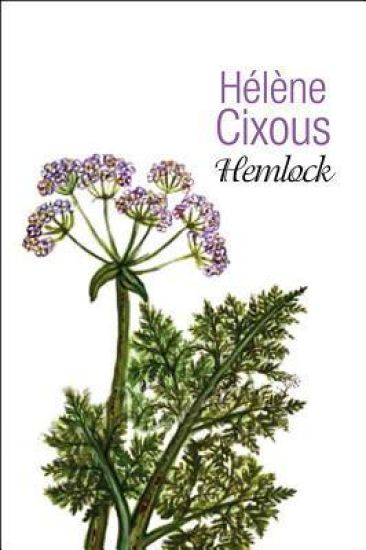
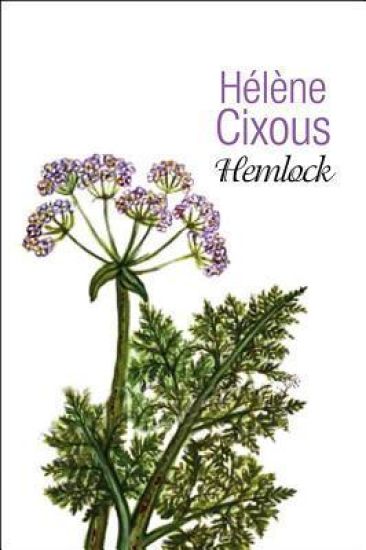
A compelling work of autobiographical fiction, Hélène Cixous's Hemlock weaves tragedy and comedy in its exploration of various human attachments: between an elderly but still truculent mother and her writer-daughter, between the mother and her sister, and between the writer and her vanished but nonetheless intensely present friend, Jacques Derrida, whose death is movingly evoked. "Here," she says in her preface, "the criss-crossing paths of my mother and my aunt will come to an end at last. When one old flower is left, what becomes of the other face?" Socrates is conjured up, along with the poisonous plants of Hamlet, the human comedies of Balzac and Proust, and other literary and philosophical ghosts who find themselves drawn into the fabric of Cixous's text: "I'm not sleeping," writes the protagonist. "A worm is drilling my brain. It's a phrase I heard in the hellish juice of the jusquiame. I pour it into my own ear. ‘I'm afraid Mama will die'." In this new work Hélène Cixous continues to explore and expand the boundaries of narrative, slipping from thought to thought and from image to image, so as to render every action, fear and thought palpable to the reader.
A compelling work of autobiographical fiction, Hélène Cixous's Hemlock weaves tragedy and comedy in its exploration of various human attachments: between an elderly but still truculent mother and her writer-daughter, between the mother and her sister, and between the writer and her vanished but nonetheless intensely present friend, Jacques Derrida, whose death is movingly evoked. "Here," she says in her preface, "the criss-crossing paths of my mother and my aunt will come to an end at last. When one old flower is left, what becomes of the other face?" Socrates is conjured up, along with the poisonous plants of Hamlet, the human comedies of Balzac and Proust, and other literary and philosophical ghosts who find themselves drawn into the fabric of Cixous's text: "I'm not sleeping," writes the protagonist. "A worm is drilling my brain. It's a phrase I heard in the hellish juice of the jusquiame. I pour it into my own ear. ‘I'm afraid Mama will die'." In this new work Hélène Cixous continues to explore and expand the boundaries of narrative, slipping from thought to thought and from image to image, so as to render every action, fear and thought palpable to the reader.
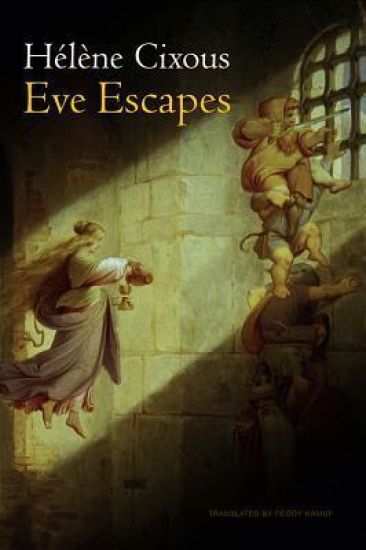
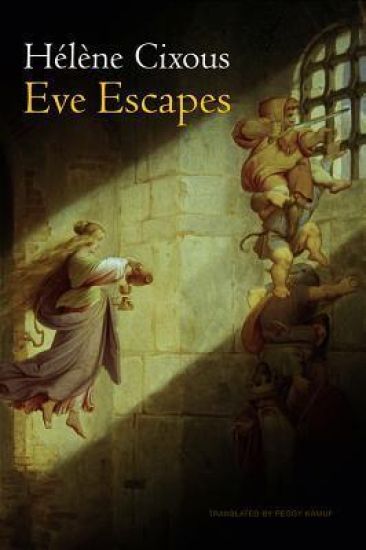
"I get up every day with one day more," says Eve, the writer's 97-year-old mother. She is escaping into the New Life and the writer must race to catch up. As things slip away and fall into oblivion, as her mother's world and thus her own relentlessly shrinks, the writer is stunned to see for the first time the vestiges of a prison scene in her beloved Tower of Montaigne, which she has been visiting for fifty years. It represents the story of Cimon and Pero, a daughter's act of charity that saved her father from certain death. How extraordinary that it should only now appear to this other daughter who dreams of nothing less for her parent and thus for herself. A different prison scene draws the writer to reflect on Freud's remark "that the dream of a prisoner can have nothing other than escape as content," a comment he illustrates with Moritz von Schwind's painting The Prisoner's Dream. But it is Freud's own dreams of escape from the prison of declining powers in his old age that the writer channels through her telepathic connection to the one she calls her "nuncle." She knows that the worst, worse even than the effects of the disease eating through his body, would have been the obliteration of his dreams upon waking, a sensation of theft that is "like a rug one pulls from beneath the head's feet, bam, bam! like a tapestry of life folded up in a flash." And yet life's tapestry has never seemed more richly colored, more elaborately woven, more abundantly endowed with the gifts of Eve, the mother, the midwife, the irrepressible story-teller, the great escape artist, and the indomitable heroine of this book.
"I get up every day with one day more," says Eve, the writer's 97-year-old mother. She is escaping into the New Life and the writer must race to catch up. As things slip away and fall into oblivion, as her mother's world and thus her own relentlessly shrinks, the writer is stunned to see for the first time the vestiges of a prison scene in her beloved Tower of Montaigne, which she has been visiting for fifty years. It represents the story of Cimon and Pero, a daughter's act of charity that saved her father from certain death. How extraordinary that it should only now appear to this other daughter who dreams of nothing less for her parent and thus for herself. A different prison scene draws the writer to reflect on Freud's remark "that the dream of a prisoner can have nothing other than escape as content," a comment he illustrates with Moritz von Schwind's painting The Prisoner's Dream. But it is Freud's own dreams of escape from the prison of declining powers in his old age that the writer channels through her telepathic connection to the one she calls her "nuncle." She knows that the worst, worse even than the effects of the disease eating through his body, would have been the obliteration of his dreams upon waking, a sensation of theft that is "like a rug one pulls from beneath the head's feet, bam, bam! like a tapestry of life folded up in a flash." And yet life's tapestry has never seemed more richly colored, more elaborately woven, more abundantly endowed with the gifts of Eve, the mother, the midwife, the irrepressible story-teller, the great escape artist, and the indomitable heroine of this book.
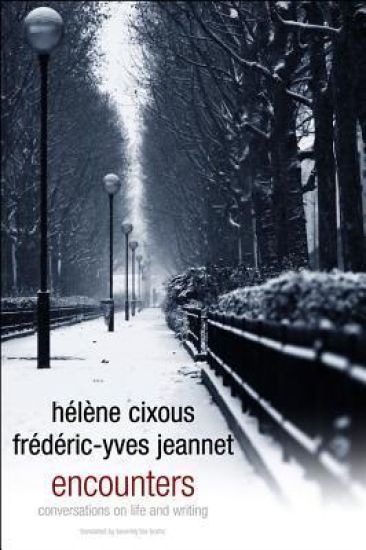
"Isn't it … particularly difficult to 'speak' of your work?" Frédéric-Yves Jeannet asks Hélène Cixous in this fascinating book of interviews. "[I]t's only in writing, on paper, … that I reach the most unknown, the strangest, the most advanced part of me for me. I feel closer to my own mystery in the aura of writing it," Cixous responds. These conversations, which took place over three years and cover the creative process behind Cixous’s fictional writing, illuminate the genesis and particular genius of one of France’s most original writers. Cixous muses on her "coming to writing," from her first publications to her recent acclaim for a series of fictional texts that spring, as, she insists all true writing does, from her life: the loss of her father when she was a child, and her relationship with her mother, now in her tenth decade, as well as with such friends as Jacques Derrida and Jacques Lacan. The conversations delve into Cixous’s career as an academic in Paris and abroad, her summer retreats to the Bordeaux region to write uninterrupted for two months, her work with Ariane Mnouchkine’s Théàtre du Soleil, her political engagements and her dreams. Readers and writers who have followed Cixous’s path-blazing career as a fiction writer who crosses boundaries of genre and gender while posing essential questions about the nature of narrative and life will find this a book that cannot be put down.