Kirjojen hintavertailu. Mukana 11 244 527 kirjaa ja 12 kauppaa.

Kirjahaku

Etsi kirjoja tekijän nimen, kirjan nimen tai ISBN:n perusteella.

1000 tulosta hakusanalla Hermann Bendix

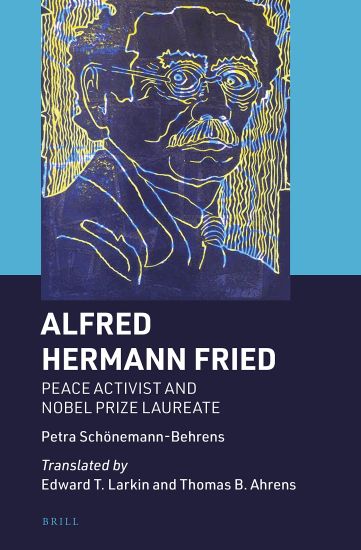
Alfred Hermann Fried: Peace Activist and Nobel Prize Laureate
Petra Schönemann-Behrens provides an informative review of the life and times of Alfred H. Fried (1864-1921), a significant if underappreciated German pacifist of the late nineteenth century and early twentieth century. In response to the militarism and international anarchy of the European states, Fried developed his unique notion of "revolutionary" or "scientific" pacifism, differentiating it from reform pacifism, in order to address the material causes of war. As theorist, practitioner, and journalist, Fried advanced radical ideas at the time: the formation of a pan-European union, the establishment of an effective international court of arbitration, the elimination of a secretive diplomatic class, and the expansion of international economic and cultural cooperation. This book is a translation of the German biography Alfred H. Fried: Friedensaktivist - Nobelpreisträger, published by Römerhof Verlag in 2011, and commemorates the 100th anniversary of Fried's death.
Rare books, manuscripts and letters, including the fine collection formed by William Hermann of White Plains, N.Y.
This book has been considered by academicians and scholars of great significance and value to literature. This forms a part of the knowledge base for future generations. So that the book is never forgotten we have represented this book in a print format as the same form as it was originally first published. Hence any marks or annotations seen are left intentionally to preserve its true nature.
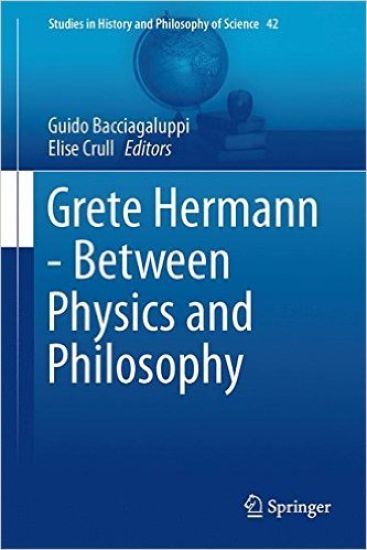
Grete Hermann - Between Physics and Philosophy
Grete Hermann (1901-1984) was a pupil of mathematical physicist Emmy Noether, follower and co-worker of neo-Kantian philosopher Leonard Nelson, and an important intellectual figure in post-war German social democracy. She is best known for her work on the philosophy of modern physics in the 1930s, some of which emerged from intense discussions with Heisenberg and Weizsäcker in Leipzig. Hermann’s aim was to counter the threat to the Kantian notion of causality coming from quantum mechanics. She also discussed in depth the question of ‘hidden variables’ (including the first critique of von Neumann’s alleged impossibility proof) and provided an extensive analysis of Bohr’s notion of complementarity. This volume includes translations of Hermann’s two most important essays on this topic: one hitherto unpublished and one translated here into English for the first time. It also brings together recent scholarly contributions by historians and philosophers of science, physicists, and philosophers and educators following in Hermann’s steps. Hermann's work places her in the first rank among philosophers who wrote about modern physics in the first half of the last century. Those interested in the many fields to which she contributed will find here a comprehensive discussion of her philosophy of physics that places it in the context of her wider work.
Grete Hermann - Between Physics and Philosophy
Grete Hermann (1901-1984) was a pupil of mathematical physicist Emmy Noether, follower and co-worker of neo-Kantian philosopher Leonard Nelson, and an important intellectual figure in post-war German social democracy. She is best known for her work on the philosophy of modern physics in the 1930s, some of which emerged from intense discussions with Heisenberg and Weizsäcker in Leipzig. Hermann’s aim was to counter the threat to the Kantian notion of causality coming from quantum mechanics. She also discussed in depth the question of ‘hidden variables’ (including the first critique of von Neumann’s alleged impossibility proof) and provided an extensive analysis of Bohr’s notion of complementarity. This volume includes translations of Hermann’s two most important essays on this topic: one hitherto unpublished and one translated here into English for the first time. It also brings together recent scholarly contributions by historians and philosophers of science, physicists, and philosophers and educators following in Hermann’s steps. Hermann's work places her in the first rank among philosophers who wrote about modern physics in the first half of the last century. Those interested in the many fields to which she contributed will find here a comprehensive discussion of her philosophy of physics that places it in the context of her wider work.
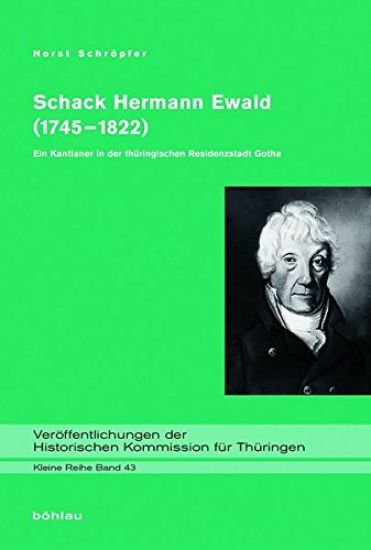
Schack Hermann Ewald (1745-1822)

Schack Hermann Ewald (1745-1822)

Horst Schröpfer

Bohlau Verlag
2014
sidottu
Der gothaische Hofbeamte Schack Hermann Ewald (1745-1822), Ubersetzer, Autor und Redakteur der 'Gothaische(n) gelehrte(n) Zeitungen', zudem Freimaurer und Illuminat, hat nicht nur als Erster Schriften Spinozas ins Deutsche ubersetzt und interpretiert, sondern war auch einer der fruhesten und konsequentesten Anhanger der Philosophie Immanuel Kants. Auf der Basis Kantischer Intentionen entwarf er nach der Franzosischen Revolution Grundzuge eines republikanischen Staatswesens und konzipierte fur ein national geeintes Deutschland in den 1790er Jahren einen liberal-demokratischen Verfassungsentwurf. Als Redakteur, Rezensent und Publizist trug er von 1782 bis 1804 dazu bei, Kants revolutionares Denkgebaude deutschlandweit wirkungsvoll zu verbreiten.
Rudolf Hermann - Erich Seeberg
Der vollstandig neu erschlossene Briefwechsel zwischen den Gelehrten Rudolf Hermann und Erich Seeberg stellt einen Glucksfall dar: Es handelt sich um eine Korrespondenz, die die Entwicklungen von Theologie, Kirche und Universitat wahrend der Weimarer Republik und des "Dritten Reiches" konturiert und erhellt. Im brieflichen Gesprach findet sich eine Fulle von Informationen, die unser zeit-, kirchen- und universitatsgeschichtliches Wissen bereichert. Bei aller Subjektivitat der Beobachtung handelt es sich um scharfsichtige Zeitanalysen. Sie entschlusseln die inneren Konflikte besonders fur die Zeit des Nationalsozialismus. Es entfaltet sich das geistige Panorama eines dramatischen Vierteljahrhunderts. Die sorgsame Kommentierung, zahlreiche Biogramme und eine ausfuhrliche Einleitung foerdern das Verstandnis der Quelle; ein Personenregister ermoeglicht gezielte Recherchen.
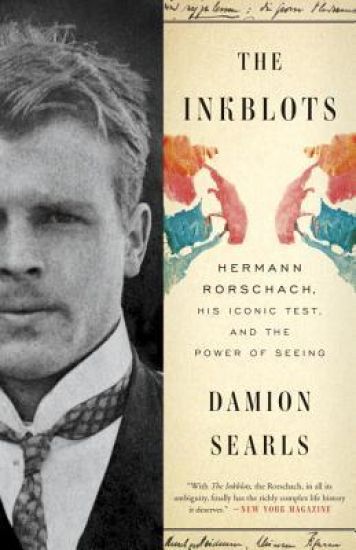
The Inkblots: Hermann Rorschach, His Iconic Test, and the Power of Seeing
An NPR Best Book of the YearA New York Post Best Book of the YearA Times Thought Book of the YearAn Irish Independent Best Book of the Year The captivating, untold story of Hermann Rorschach and his famous inkblot test In 1917, working alone in a remote Swiss asylum, psychiatrist Hermann Rorschach devised an experiment to probe the human mind: a set of ten carefully designed inkblots. For years he had grappled with the theories of Freud and Jung while also absorbing the aesthetic movements of the day, from Futurism to Dadaism. A visual artist himself, Rorschach had come to believe that who we are is less a matter of what we say, as Freud thought, than what we see. After Rorschach's early death, his test quickly made its way to America, where it took on a life of its own. Co-opted by the military after Pearl Harbor, it was a fixture at the Nuremberg trials and in the jungles of Vietnam. It became an advertising staple, a clich in Hollywood and journalism, and an inspiration to everyone from Andy Warhol to Jay Z. The test was also given to millions of defendants, job applicants, parents in custody battles, and people suffering from mental illness or simply trying to understand themselves better. And it is still used today. In this first-ever biography of Rorschach, Damion Searls draws on unpublished letters and diaries and a cache of previously unknown interviews with Rorschach's family, friends, and colleagues to tell the unlikely story of the test's creation, its controversial reinvention, and its remarkable endurance--and what it all reveals about the power of perception. Elegant and original, The Inkblots shines a light on the twentieth century's most visionary synthesis of art and science.
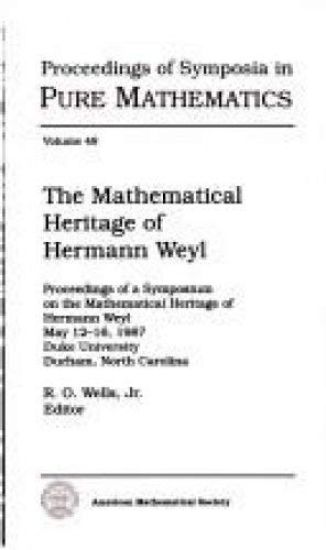
Mathematical Heritage of Hermann Weyl

Mathematical Heritage of Hermann Weyl

AMERICAN MATHEMATICAL SOCIETY
1992
pokkari
Hermann Weyl was one of the most influential mathematicians of the twentieth century. This title contains the proceedings of the AMS Symposium on the Mathematical Heritage of Hermann Weyl, held in May 1987 at Duke University. It is suitable for mathematicians, theoretical physicists, and other scientists.
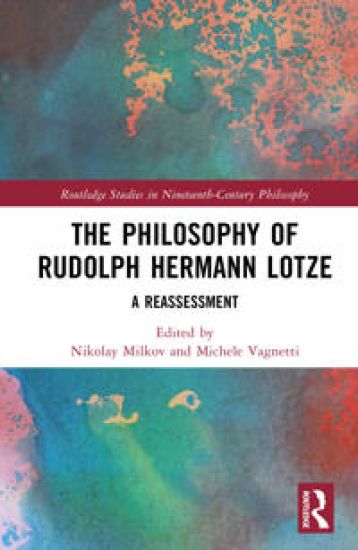
The Philosophy of Rudolph Hermann Lotze
Rudolph Hermann Lotze (1817-1881) was a leading figure of late 19th-century German philosophy. This volume provides a comprehensive reassessment of Lotze's thought and analyzes the many different aspects of his logic, metaphysics, epistemology, and philosophy of mind. Lotze reconsidered the philosophy of German Idealism and initiated an objectivist turn that was instrumental in the development of leading philosophical movements of the 20th century, including analytic philosophy, phenomenology, and pragmatism. This volume seeks to demonstrate the importance of Lotze's thought to the history of philosophy. Part 1 addresses Lotze's influence on and relatedness to the thought of Franz Brentano, Thomas Hill Green, Francis Herbert Bradley, James Ward, Emily Elizabeth Constance Jones, William James, Edmund Husserl, Wilhelm Windelband, Gottlob Frege and Ludwig Wittgenstein and to two philosophers who brought Lotze to his turn in philosophy, Jakob Friedrich Fries and Johann Friedrich Herbart. Part 2 focuses on the connection between metaphysics and epistemology in the early Lotze, on the problem of value in Lotze's "greater" Logik, on his explorations on the foundations of mathematics, on the relationship between thought and language, on human sentience, on the method of hypotheses in science, and on Lotze's logic of existence and existence-entailing concepts. The Philosophy of Rudolph Hermann Lotze will appeal to scholars and graduate students interested in the history of philosophy, particularly 19th-century German philosophy and the history of analytic philosophy and phenomenology.