A wide range of short fiction by Kate Chopin, Edith Wharton and Charlotte Perkins Gilman is the focus for this study, examining both genre and theme. Chopin's short stories, Wharton's novellas, Chopin's frankly erotic writing and the homilies in which Gilman warns of the dangers of the sexually transmitted disease are compared. There are also essays on ethnicity in the work of Chopin, Wharton's New England stories, Gilman's innovative use of genre and 'The Yellow Wallpaper' on film. All three writers are still popular in US classrooms in particular. This paperback edition includes a new Preface to the material, providing a useful update on recent scholarship.
This book is a sympathetic reconstruction of Henri Poincar's anti-realist philosophy of mathematics. Although Poincar is recognized as the greatest mathematician of the late 19th century, his contribution to the philosophy of mathematics is not highly regarded. Many regard his remarks as idiosyncratic, and based upon a misunderstanding of logic and logicism. This book argues that Poincar's critiques are not based on misunderstanding; rather, they are grounded in a coherent and attractive foundation of neo-Kantian constructivism.
This book has been a standard text for cultural studies and the sociology of art since its first appearance in 1981. It provides a clear and useful overview of theories and studies which contribute to the project of a sociology of art, ranging from sociology to art history, literary theory, feminism and media studies. The author also bridges the gap between European approaches and the American production of culture approach, and addresses the key questions of the role of the reader/viewer, the nature of authorship, and the possibility of cultural politics. The new edition contains an Afterword by the author.
'...in this study, Goodwyn sets the standard for Wharton criticism.' - Judith E. Funston, American Literature 'Janet Goodwyn sets out, by looking at Wharton's appropriation of different cultures, to nail the 'canard' that she was 'but a pale imitator of Henry James' - Hermione Lee, Times Literary Supplement `The Land of Letters was henceforth to be my country and I gloried in my new citizenship'. So Edith Wharton described her elation upon the publication of her first collection of short stories; her nationality was henceforth `writer' and as such she moved with ease between landscapes, between cultures and between genres in the telling of her tales. In this acclaimed study of Wharton's work, the discussion is shaped by her use of specific landscapes and her consistent concern with ideas of place: the American's place in the Western world, the woman's place in her own and in European society, and the author's place in the larger life of a culture. Her landscapes, both actual and metaphorical, give structure and point to the individual texts and to the whole body of her work.
Each level of Way Ahead is accompanied by two story books. There are three plays (Readers 1C, 2C, 3C) and three information books (Readers 4C, 5C, 6C). There are also three poetry anthologies which can be used with Levels 4, 5 and 6.
"Time for English" is a colourful and motivating six-level course for chldren who are learning English at primary school. The course combines modern, communicative techniques with a thorough, step-by-step approach to grammar. Providing balanced practice in all the language skills - reading, writing, listening and speaking - and including practice tests, the components are suitable for children who are learning English for the first time and has been written with an awareness of cultural variety.
"Time for English" is a colourful and motivating six-level course for chldren who are learning English at primary school. The course combines modern, communicative techniques with a thorough, step-by-step approach to grammar. Providing balanced practice in all the language skills - reading, writing, listening and speaking - and including practice tests, the components are suitable for children who are learning English for the first time and has been written with an awareness of cultural variety.
This resource features more than 400 projections and colour illustrations augmented by MRI images for added detail to enhance the anatomy and positioning presentations. In three volumes, it covers preliminary steps in radiography, radiation protection and terminology, as well as anatomy and positioning information in separate chapters for each bone group or organ system.
Aphra Behn's work has always been subject to critical fashion and her literary reputation was only really secured in the closing decade of this century, especially by new historicist and feminist critics. The essays collected here represent the best of a range of contemporary critical views, discussing both Behn's drama and her prose writings. Janet Todd provides a stimulating introduction mapping Behn' s literary reception, situating the works of the critics included in a broader literary context and pointing towards Behn as a newly politicized figure at the close of the twentieth century.
·In what ways is counselling relevant to contemporary social work?·How do counselling skills integrate with social work roles and responsibilities?This book examines these skills and their applicability, drawing from social work and counselling theories and methods using clear, practical examples. Skills are discussed with reference to social work knowledge and values illustrating how, when used competently, contextually and sensitively they can appropriately underpin good social work practice. Questions and activities for self development are linked to the practices discussed.This new edition of Counselling Skills in Social Work Practice has been thoroughly revised to reflect the National Occupational Standards for social work which identify the importance of communication skills and a developmental understanding of people in their social contexts. The chapters are linked to the six key roles for social work practice. This book builds on the strengths of the first edition, as well as addressing the challenges of practice in relevant legislative and policy contexts. The book includes: ·Evidence of how the competencies which underpin counselling practice are directly transferable to effective social work practice·Practical advice on communication skills·Examples of how to build effective working relationships; a whole chapter is now devoted to the specific skills required for working within inter-agency and multi-disciplinary teamsThis book is key reading on the subject of ethical and effective social work for those teaching, studying or practising in the field.
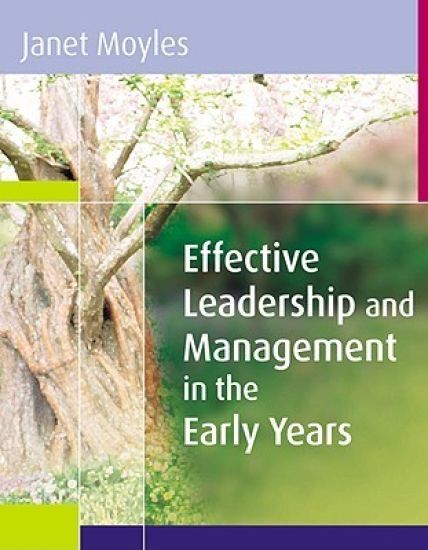
‘Effective Leadership and Management in the Early Years … is the best analysis of leadership and management that I have come across. It is a highly practical tool and a resource that will enable early years practitioners at different stages of professional development to explore, understand, rate and develop their leadership and management expertise.’Jillian Rodd, Educational and Developmental PsychologistThere has recently been an unprecedented focus on early years care and education, particularly on the impact of the various adults who work and play with children in the birth to five/six-years age range. Staff in early years settings have had to adapt to many changes and demands, locally and nationally, from local authorities and national government, and none more so than those who suddenly find themselves in a leadership and management role in increasingly complex small early years businesses and settings, often without formal training or qualifications.The book is unique in providing not only a thorough analysis of the leader and manager’s role and presenting it as a typology, but also in offering a clear and in-depth view of that role. It also presents ways in which the leader and manager can undertake self-evaluation or work alongside a peer to understand their own strengths and challenges more readily.The book conceptualises effective leadership and management as a tree, with the four key ‘branches’ of effective leadership and management defined as:Leaderships QualitiesManagement SkillsProfessional AttributesPersonal Characteristics and AttitudesEffective Leadership and Management in the Early Years is an essential tool for all those who lead and manage within early years settings, which they can use for evaluating their effectiveness.
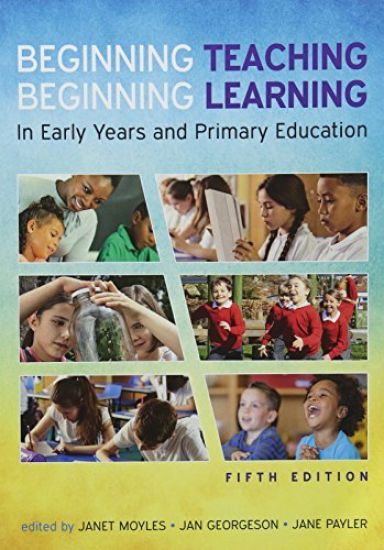
This bestselling textbook provides an introduction to the fundamentals of teaching and learning in early years and primary education. If you are training to work in schools or other educational settings, the book offers a wide range of practical and straightforward guidance, covering essential topics such as safeguarding; attachments and relationships; assessment; the indoor and outdoor environment; new technologies; behaviour management; and well-being.Thoroughly updated throughout and retaining its lively and engaging style, this new fifth edition extends your knowledge and understanding of working and playing effectively with young children. Enlivened by thought-provoking cameos and reflective questions, the book gives you the confidence to reflect upon, challenge and enhance your own pedagogies. Key features include:• Real life cameos drawn from schools and settings• Questions to promote thinking included in each chapter• Suggested further reading including a range of annotated references• Up-to-date research and issues that teachers may faceBeginning Teaching, Beginning Learning is essential reading for student and newly qualified early years and primary teachers and practitioners, as well as those who educate and train them."This outstanding book should a core text for beginning teachers working in the birth to 11 age range. It places Early Years and Primary education in the historical context and encourages new teachers to become reflective practitioners by adopting a questioning approach based on thoughtful comparative experiences. One aspect which makes this stand out from other similar texts is the focus it has on developing a deep understanding of the partnership between children’s learning and the beginner teacher. Contributors, many of whom have been teachers themselves, include experts not only in their specific fields of interest but also in teacher education more broadly so understand what is relevant for those on initial teacher education courses and those in the early stages of their teaching career." Jane Warwick, Primary PGCE Course Manager, University of Cambridge, UK"Beginning Teaching, Beginning Learning should be a core text on all birth to 11 years ITT courses. The book neatly combines grounded cameos of actual teaching experience with real life questions and dovetails these with a thoroughly referenced scholarly critique. Through its engaging style and approach the book speaks clearly and directly to the inquisitive, curious and professional novice teacher who wishes to be both thoroughly reflective and knowledgeable of the latest research. This book is hugely successful as it manages to be both very wide in its content whilst encouraging a questioning and in-depth critical thinking throughout".Guy Roberts-Holmes, MA Early Years Education Programme Director, UCL Institute of Education, UK
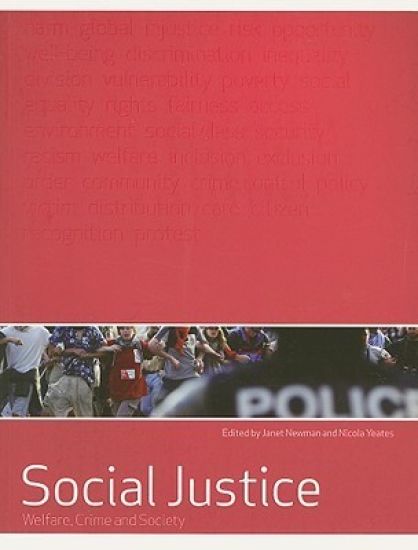
"Social justice is a highly contested term, with all political parties now claiming it for their own. Some clarity about the value base of social justice and what it means in practice is therefore essential to make sense of these claims. This book does that most effectively for a range of key forms of welfare provision. In a very readable way, and with substantial illustrative material, it takes the reader from engagement with key theories and concepts of social justice into the world of social welfare and crime control politics, policy and practice, showing what a socially just world might look like. The authors are to be congratulated on an impressive collection of writing."Gary Craig, Professor of Social Justice, University of Hull, UKThis book explores ways of defining and enacting social justice in the context of modern social welfare and crime control policies. It examines how the notion of social justice informs experiences and understandings of the social world, why it appeals to so many people as a mobilising ideal for social change and reform, and how it shapes the claims, demands and actions that people take in the pursuit of the 'good society'.The authors employ an interdisciplinary approach to explore the interrelationship between social policy and criminology. With international content and a sustained focus across the book on different kinds of evidence, it helps readers to gauge the role of evidence in social science and policy development.Designed as an interactive teaching text, the book includes a range of student-friendly learning features, such as case studies, activities and questions for discussion, making it ideal for both classroom-based and distance learners. Social Justice is a key text for students in criminology, social policy and social justice.
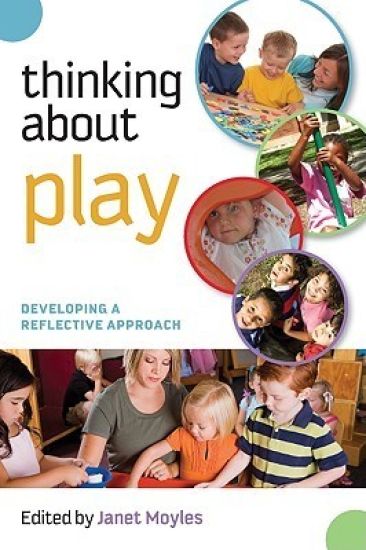
"Thinking about Play... cleverly brings together research-based chapters from experienced Early Years practitioners and academics who provide knowledge the field desperately needs to ensure young children can engage in play - laying their own meaningful foundations for their later education."Tricia David, Emeritus Professor of Education, Canterbury Christ Church University, UK"This book provides an excellect collection of chapters which encourages early years practitioners to really get to grips with their own perceptions about, understanding of and beliefs in relation to play in early education settings. In so doing, they will also be well-supported in getting to grips with decisions to change and develop their playful practices for the benefit and pleasure both of children and of themselves. Janet Moyles has brought together a good number of well-respected writers in the field in a highly accessible and informative book. Professor Pat Broadhead, Leeds Metropolitan University, UK This edited collection brings together play and reflective practice and supports practitioners in reflecting more deeply on the play provision they make for young children. This involves analysing and evaluating what makes quality play and learning experiences by considering how current research might impact on practice.Key features:Introduces the concept of 'playful pedagogies' and explains how it relates to practiceEach chapter starts with an abstract so that readers can dip into issues of particular interest and concernIncludes questions and follow-up ideas that can be used for CPD experiences and trainingThis important book supports early years students and practitioners in developing their own thinking, ideologies and pedagogies. Contributors: Deborah Albon, Pat Beckley, Avril Brock, Stephanie Collins, Jane George, Jane Gibbs, Justine Howard, Pam Jarvis, Karen McInnes, Kevin Kelman, Linda Lauchlan, Paulette Luff, Estelle Martin, Theodora Papatheodorou, Marie Sprawling, Lynsey Thomas, Pauline Trudell, Rebecca Webster, Bryonie Williams, Maulfry Worthington
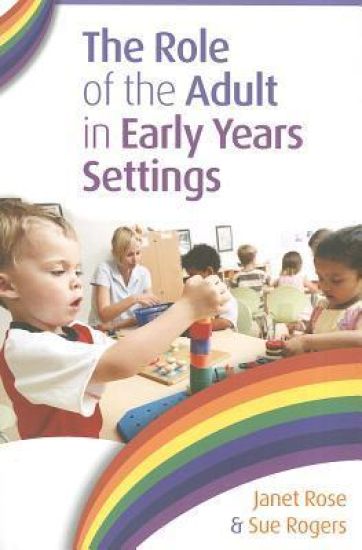
“This book offers a unique and critical approach to the theme of adults working in early years settings through a focus on seven key dimensions encompassed in the term 'the plural practitioner'. The discussion is strongly underpinned by a consideration of the two important principles of child centredness and social justice. The authors also draw on multiple perspectives, including the role of neuroscience and socio cultural perspectives, to consider who these early years professional are and the complexity of what they bring to their work.”Linda Miller, Professor Emeritus, Early Years, The Open University, UKThis essential book focuses on the adult role within early years education and care. The book introduces the concept of the 'plural practitioner', which acknowledges that the role of the adult in early years settings is complex and entails many different responsibilities. The book argues that the ‘plural practitioner’ can create quality early years provision by implementing child-centred and socially just practices. The idea of the ‘plural practitioner’ is embedded in theory and research, providing a robust rationale and framework to help early years practitioners understand of a range of theories and relate them to their work with young children. The book includes:Discussion of the seven different dimensions of the adult role - to help practitioners reflect on the multiple and complex ways in which they work with young children including: The Critical Reflector, The Carer, The Communicator, The Facilitator, The Observer, The Assessor and The Creator Key questions at the end of each chapter to stimulate further reflection and reading Case study examples of real practitioner experiences The Role of the Adult in Early Years Settings will appeal to all students and practitioners either planning to or currently working in early years settings and aiming to develop their practice.
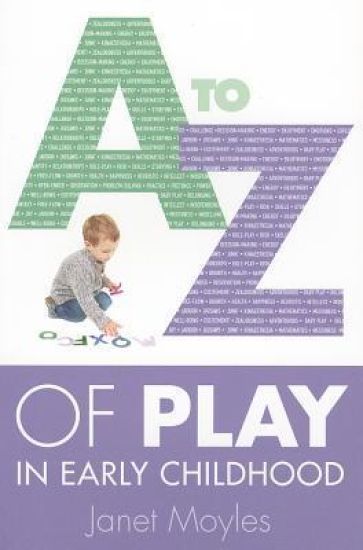
This indispensible guide uses a unique glossary format to explore some of the key themes in play in early childhood, many of which regularly arise for students, tutors, parents and practitioners. As well as covering key concepts, theories and influential figures in the field, the book considers important aspects of each construct and highlights the complexity of play in early childhood. Each section of the book:Outlines key aspects of a construct in relation to play Includes a wide range of referencesSummarizes research from an international perspective Offers insights from other well known figures with expertise in playThis book takes the stance that play is vital to children’s holistic development, self-efficacy and well-being and that play, and playful learning and teaching, is the essential ingredient in order for children to develop enthusiastic dispositions to learning. This positive view of play draws on the author’s extensive experience and observations of children playing in preschool settings, early years classrooms, out in the park and in different home situations. This essential reference book is vital reading for all those working and playing with young children and students on early childhood courses.“Janet writes in a brilliantly authoritative style as she draws in research and researchers who surround quite contentious and complex issues. This is a scholarly text and is to be trusted.”Dr Kathy Goouch, Reader in Education, Canterbury Christ Church University, UK“In this fascinating and engaging text, Janet Moyles does not attempt to define play...This text will be invaluable to early childhood students and practitioners and to all those interested in extending their thinking about play.”Professor Trisha Maynard, Director, Research Centre for Children, Families and Communities, Canterbury Christ Church University, UK“This book certainly works a useful dictionary to remind us of what (for example) ‘epistemic play’ means, but I would advise readers to approach it more playfully... The imaginative use of photographs to illustrate entries, combined with illustrative examples, helps to make distinctions between the different types/aspects of play, and unobtrusive referencing is available for those who have been inspired to pursue particular interests further.”Dr Jan Georgeson, Research Fellow in Early Education Development, Plymouth University, UK“Janet’s brilliant idea - coupled with her characteristic meticulous application - has provided early childhood education and care with a rich treasure trove: a book to use for reference, as a starting point for reflection, a spark for debate and, importantly, a reiteration of the central role of play in the lives of children.”Tricia David, Emeritus Professor, Canterbury Christ Church University, UK
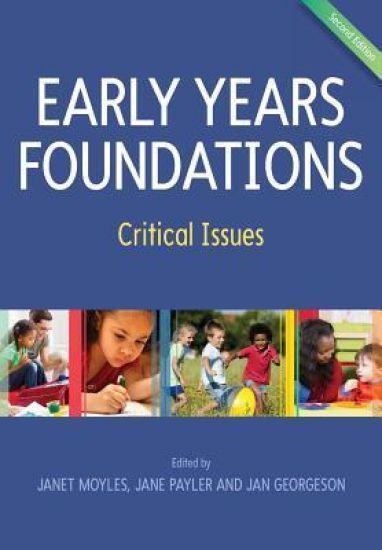
The new edition of this best selling book looks critically at the 2012 Early Years Foundation Stage curriculum and draws attention to issues that underlie the EYFS and the implications for children from birth to five.With its questions for reflection and discussion, further reading and useful websites, Early Years Foundations is essential and informative reading for students studying any early years or early childhood course, or working towards Early Years Teacher Status.Among the many challenges facing early years professionals, there are continual dilemmas arising between perceptions of good practice, the practicalities of provision and meeting OfSTED requirements. This exciting and innovative new edition supports practitioners in thinking through their responsibilities in tackling some of the many challenges they encounter, for example, that children are still perceived as 'deficit' in some way and in need of 'being school ready' rather than as developing individuals who have a right to a childhood and appropriate early education.Chapters explore the rationale behind early years practice based on theory and research, covering important topics including:Prime and specific areas of learning and developmentObservation and assessmentPedagogyWorking with parentsDifference and diversityContributors: Sue Bingham, Gill Boag-Munroe, Liz Brooker, Helen Clarke, Anne Cockburn, Rosie Flewitt, Jan Georgeson, Michael Jones, Lilian G. Katz, Caroline Leeson, Paulette Luff, Jayne Osgood, John Parry, Jane Payler, Karen Phethean, Linda Pound, Anne Rawlings, Jonathan Rix, Sue Rogers, Anita Soni, Suzy Tutchell, Judith Twani, Jane Waters, David Whitebread"Early Years Foundations: Critical issues is a timely and valuable edition for the early childhood bookshelf, offering high quality scholarship combined with deep understanding of early childhood practice."Jane Murray PhD, Senior Lecturer, University of Northampton, UK "This book stands out amongst the crowd for a number of reasons. In particular, the status of the three editing authors means that the content of the book is to be trusted to be both informed and thorough in its attention to detail, and this second edition has been carefully updated to incorporate recent reforms and initiatives. The editing authors' insistence on the creation of an early years text that centres on a critically reflective review of contemporary policy and research can only help to build the argument for a better future for young children's care and education."Dr Kathy Goouch, Reader in Education, Canterbury Christ Church University, UK "This book is not another bland 'how to do it' manual to accompany the EYFS, it goes much further in offering a truly challenging critique. This should be essential reading for experienced practitioners as well as Early Childhood Studies students."Denise Hevey, Professor of Early Years, University of Northampton, UK.