Kirjojen hintavertailu. Mukana 11 699 587 kirjaa ja 12 kauppaa.

Kirjahaku

Etsi kirjoja tekijän nimen, kirjan nimen tai ISBN:n perusteella.

1000 tulosta hakusanalla Jennifer Pyron; Mac Freeman

Coming Up Short

Coming Up Short

Jennifer M. Silva

Oxford University Press Inc
2015
nidottu
"Impeccably researched and skillfully articulated, Silva's work is a timely primer on the current state of blue-collar Millennials." --Publishers Weekly "[A] brief yet devastating book that blends academic analysis and oral history to put a new face on well-documented trends that are more usually described in the abstract." --Boston Globe "Silva has made a major contribution to understanding where young adults are coming from, what influences them, and what they consider to be common sense." --The American Conservative "Fascinating" --Feministing.com "[A]n enjoyable read and raises important issues that we generally overlook." --Washington Independent Review of Books "Coming Up Short is a brief, but powerful, update of the status, difficulties, behaviors and distresses that characterize the lives of young working class adults.... highly recommended for sociologists and social welfare students and academics alike. It informs in telling detail the difficult circumstances and self-perceptions of a significant portion of the American population. It is also a window into how the 'helping professions' have influenced the thinking of young adults and suggests that those professions need to help their clients see their troubles in broader terms than they apparently currently do." --Journal of Sociology & Social Welfare What does it mean to grow up today as working-class young adults? How does the economic and social instability left in the wake of neoliberalism shape their identities, their understandings of the American Dream, and their futures? Coming Up Short illuminates the transition to adulthood for working-class men and women. Moving away from easy labels such as the "Peter Pan generation," Jennifer Silva reveals the far bleaker picture of how the erosion of traditional markers of adulthood-marriage, a steady job, a house of one's own-has changed what it means to grow up as part of the post-industrial working class. Based on one hundred interviews with working-class people in two towns-Lowell, Massachusetts, and Richmond, Virginia-Silva sheds light on their experience of heightened economic insecurity, deepening inequality, and uncertainty about marriage and family. Silva argues that, for these men and women, coming of age means coming to terms with the absence of choice. As possibilities and hope contract, moving into adulthood has been re-defined as a process of personal struggle-an adult is no longer someone with a small home and a reliable car, but someone who has faced and overcome personal demons to reconstruct a transformed self. Indeed, rather than turn to politics to restore the traditional working class, this generation builds meaning and dignity through the struggle to exorcise the demons of familial abuse, mental health problems, addiction, or betrayal in past relationships. This dramatic and largely unnoticed shift reduces becoming an adult to solitary suffering, self-blame, and an endless seeking for signs of progress. This powerfully written book focuses on those who are most vulnerable-young, working-class people, including African-Americans, women, and single parents-and reveals what, in very real terms, the demise of the social safety net means to their fragile hold on the American Dream.
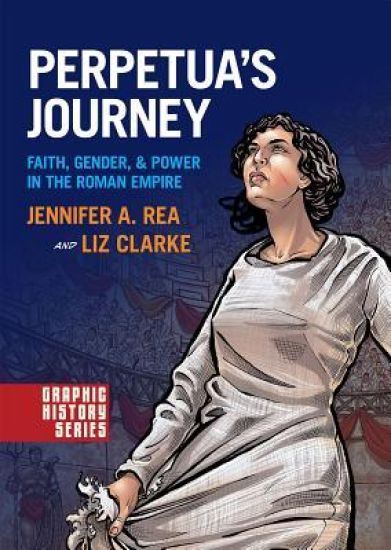
Perpetua's Journey: Faith, Gender, and Power in the Roman Empire
Examining issues of power, gender, and religion in the ancient world, Perpetua's Journey: Faith, Gender, and Power in the Roman Empire is a graphic history set in Roman Africa in 203 CE that tells the story of the Christian martyr Perpetua. The Passio Sanctarum Perpetuae et Felicitatis, also known as The Passion of Saints Perpetua and Felicity, is the first extant diary authored by a Christian woman. Vibia Perpetua was a young mother who lived in Roman Africa and, at the age of twenty-two, chose to publicly proclaim her Christian faith. She died as a result of her actions, though she did not die alone; she was part of a group of Christian martyrs, including several slaves, who were placed in prison and then executed in Carthage during the birthday celebrations of Emperor Septimius Severus's son in 203 CE. Perpetua's diary contains her account of the days leading up to her martyrdom. Perpetua's Journey occupies a space between the many works designed primarily for specialists and advanced scholars, who already know a great deal about Perpetua and the history of the Roman Empire, and lives of saints that are intended for general readers. Perpetua's Journey is unique because it combines both sequential art and historical and social commentary, and it places Perpetua's diary in the context of life in Roman North Africa in 203 CE.
Until There Is Justice

Until There Is Justice

Jennifer Scanlon

Oxford University Press Inc
2016
sidottu
Until There Is Justice tells the complex, moving story of the remarkable civil rights figure Anna Arnold Hedgeman, who played a key role in more than half a century of social justice initiatives. Hedgeman ought to be a household name like her colleagues, including A. Philip Randolph, Betty Friedan, and Martin Luther King Jr., but until now she has received only a fraction of the attention she deserves. Through a commitment to faith-based activism, civil rights, and feminism, Anna Arnold Hedgeman participated in and led some of the 20th century's most important developments, including advances in education, public health, politics, and workplace justice. She worked as a teacher, lobbyist, politician, social worker, and activist, often behind the scenes but always crafting as well as carrying out policy. She repeatedly found herself a woman among men, a black American among whites, and a secular Christian among clergy, but she found ways to maintain all of those conflicting identities and work with others to forge a common humanity. Hedgeman cared deeply for the dignity and welfare of all people, acting most passionately on behalf of the dispossessed. She helped black and Puerto Rican Americans achieve critical civil service employment in New York City during the Great Depression, directed national efforts for permanent fair labor legislation after World War II, coordinated the first organized attempt by black Americans to influence a presidential election, orchestrated white religious Americans' participation in the 1963 March on Washington, and introduced a broad and inclusive agenda as a founder of the National Organization for Women. Here finally is the story of this dignified woman and scrappy freedom fighter, devout Christian and demanding feminist, accomplished political operative and savvy grassroots organizer, proud American and insistent African American voice.
College Hookup Culture and Christian Ethics

College Hookup Culture and Christian Ethics

Jennifer Erin Beste

Oxford University Press Inc
2017
sidottu
In America, Christian adolescents and young adults have grown up with fiercely competing narratives about sex, relationships, and fulfillment. Within a Christian world of church services, formal religious education, and retreats, they have been warned about the dangers and sinfulness of premarital sex. All the while, popular culture has inundated them with a very different message: casual sex is fun, thrilling, expected, and no-big-deal. Popular culture's influence is perhaps nowhere more evident than on college campuses where hookups--casual sexual encounters devoid of commitment or emotional attachment--have become the norm for emerging adults. College Hookup Culture and Christian Ethics engages 126 college students as sober ethnographers whose task is to observe and analyze their own complex social reality. Part I reveals students' disillusionment with contemporary sexual and relational norms, challenging benevolent or even neutral views of hookup culture. Part II brings the students into conversation with Christianity's counter-cultural narrative of what it means to become fully human and experience genuine joy and fulfillment. The spokesperson for this vision is theologian Johann Metz, whose portrait of Jesus enduring his desert temptations and becoming fully human resonates profoundly with today's college students. Comparing Jesus' way of being in the world with their college culture's status quo, many undergraduates discover in "poverty of spirit" a hopeful, counter-cultural path to authenticity and happiness. Part III culminates in a call to action. Students explore obstacles to sexual justice on college campuses, identify key commitments necessary for change, and envision how undergraduates can work to create the college culture they truly desire and deserve.
Institutional Reform and Diaspora Entrepreneurs

Institutional Reform and Diaspora Entrepreneurs

Jennifer M. Brinkerhoff

Oxford University Press Inc
2016
sidottu
Externally-promoted institutional reform, even when nominally accepted by developing country governments, often fails to deliver lasting change. Diasporans-immigrants who still feel a connection to their country of origin-may offer an In-Between Advantage for institutional reform, which links problem understanding with potential solutions, and encompasses vision, impact, operational, and psycho-social advantages. Individuals with entrepreneurial characteristics can catalyzing institutional reform. Diasporans may have particular advantages for entrepreneurship, as they live both psychologically and materially between the place of origin they left and the new destination they have embraced. Their entrepreneurial characteristics may be accidental, cultivated through the migration and diaspora experience, or innate to individuals' personalities. This book articulates the diaspora institutional entrepreneur In-Between Advantage, proposes a model for understanding the characteristics and motivational influences of entrepreneurs generally and how they apply to diaspora entrepreneurs in particular, and presents a staged model of institutional entrepreneur actions. I test these frameworks through case narratives of social institutional reform in Egypt, economic institutional reform in Ethiopia, and political institutional reform in Chad. In addition to identifying policy implications, this book makes important theoretical contributions in three areas. First, it builds on existing and emerging critiques of international development assistance that articulate prescriptions related to alternative theories of change. Second, it fills an important gap in the literature by focusing squarely on the role of agency in institutional reform processes while still accounting for organizational systems and socio-political contexts. In doing so, it integrates a more expansive view of entrepreneurism into extant understandings of institutional entrepreneurism, and it sheds light on what happens in the frequently-invoked black box of agency. Third, it demonstrates the fallacy of many theoretical frameworks that seek to order institutional change processes into neatly definable linear stages.
The Gods of Indian Country

The Gods of Indian Country

Jennifer Graber

Oxford University Press Inc
2018
sidottu
During the nineteenth century, white Americans sought the cultural transformation and physical displacement of Native people. Though this process was certainly a clash of rival economic systems and racial ideologies, it was also a profound spiritual struggle. The fight over Indian Country sparked religious crises among both Natives and Americans. In The Gods of Indian Country, Jennifer Graber tells the story of the Kiowa Indians during Anglo-Americans' hundred-year effort to seize their homeland. Like Native people across the American West, Kiowas had known struggle and dislocation before. But the forces bearing down on themsoldiers, missionaries, and government officialswere unrelenting. With pressure mounting, Kiowas adapted their ritual practices in the hope that they could use sacred power to save their lands and community. Against the Kiowas stood Protestant and Catholic leaders, missionaries, and reformers who hoped to remake Indian Country. These activists saw themselves as the Indians' friends, teachers, and protectors. They also asserted the primacy of white Christian civilization and the need to transform the spiritual and material lives of Native people. When Kiowas and other Native people resisted their designs, these Christians supported policies that broke treaties and appropriated Indian lands. They argued that the gifts bestowed by Christianity and civilization outweighed the pains that accompanied the denial of freedoms, the destruction of communities, and the theft of resources. In order to secure Indian Country and control indigenous populations, Christian activists sanctified the economic and racial hierarchies of their day. The Gods of Indian Country tells a complex, fascinating and ultimately heartbreaking tale of the struggle for the American West.
American Intellectual History

American Intellectual History

Jennifer Ratner-Rosenhagen

Oxford University Press Inc
2021
nidottu
Long before the United States was a nation, it was a set of ideas, projected onto the New World by European explorers with centuries of belief and thought in tow. From this foundation of expectation and experience, America and American thought grew in turn, enriched by the bounties of the Enlightenment, the philosophies of liberty and individuality, the tenets of religion, and the doctrines of republicanism and democracy. Crucial to this development were the thinkers who nurtured it, from Thomas Jefferson to Ralph Waldo Emerson, W.E.B. Du Bois to Jane Addams, and Betty Friedan to Richard Rorty. This addition to Oxford's Very Short Introductions series traces how Americans have addressed the issues and events of their time and place, whether it is the Civil War, the Great Depression, or the culture wars of today. Spanning a variety of disciplines, from religion, philosophy, and political thought, to cultural criticism, social theory, and the arts, Jennifer Ratner-Rosenhagen shows how ideas have been major forces in American history, driving movements such as transcendentalism, Social Darwinism, conservatism, and postmodernism. In engaging and accessible prose, this introduction to American thought considers how notions about freedom and belonging, the market and morality - and even truth - have commanded generations of Americans and been the cause of fierce debate.
The Ideas That Made America: A Brief History

The Ideas That Made America: A Brief History

Jennifer Ratner-Rosenhagen

Oxford University Press Inc
2019
sidottu
Long before the United States was a nation, it was a set of ideas, projected onto the New World by European explorers with centuries of belief and thought in tow. From this foundation of expectation and experience, America and American thought grew in turn, enriched by the bounties of the Enlightenment, the philosophies of liberty and individuality, the tenets of religion, and the doctrines of republicanism and democracy. Crucial to this development were the thinkers who nurtured it, from Thomas Jefferson to Ralph Waldo Emerson, W.E.B. DuBois to Jane Addams, and Betty Friedan to Richard Rorty. The Ideas That Made America: A Brief History traces how Americans have addressed the issues and events of their time and place, whether the Civil War, the Great Depression, or the culture wars of today. Spanning a variety of disciplines, from religion, philosophy, and political thought, to cultural criticism, social theory, and the arts, Jennifer Ratner-Rosenhagen shows how ideas have been major forces in American history, driving movements such as transcendentalism, Social Darwinism, conservatism, and postmodernism. In engaging and accessible prose, this introduction to American thought considers how notions about freedom and belonging, the market and morality -- and even truth -- have commanded generations of Americans and been the cause of fierce debate.
Slow Media

Slow Media

Jennifer Rauch

Oxford University Press Inc
2018
sidottu
Today we recognize that we have a different relationship to media technology--and to information more broadly--than we had even five years ago. We are connected to the news media, to our jobs, and to each other, 24 hours a day. But many people have found their mediated lives to be too fast, too digital, too disposable, and too distracted. This group--which includes many technologists and young people--believes that current practices of digital media production and consumption are unsustainable, and works to promote alternate ways of living. Until recently, sustainable media practices have been mostly overlooked, or thought of as a counterculture. But, as Jennifer Rauch argues in this book, the concept of sustainable media has taken hold and continues to gain momentum. Slow media is not merely a lifestyle choice, she argues, but has potentially great implications for our communities and for the natural world. In eight chapters, Rauch offers a model of sustainable media that is slow, green, and mindful. She examines the principles of the Slow Food movement--humanism, localism, simplicity, self-reliance, and fairness--and applies them to the use and production of media. Challenging the perception that digital media is necessarily eco-friendly, she examines green media, which offers an alternative to a current commodities system that produces electronic waste and promotes consumption of nonrenewable resources. Lastly, she draws attention to mindfulness in media practice-- "mindful emailing" or "contemplative computing" for example--arguing that media has significant impacts on human health and psychological wellbeing. Slow Media will ultimately help readers understand the complex and surprising relationships between everyday media choices, human well-being, and the natural world. It has the potential to transform the way we produce and use media by nurturing a media ecosystem that is more satisfying for people, and more sustainable for the planet.
Part-Time for All

Part-Time for All

Jennifer Nedelsky; Tom Malleson

OXFORD UNIVERSITY PRESS INC
2023
sidottu
An innovative view of how everyone doing part-time work and part-time caregiving would promote flourishing families, free time, equality, and the true value of care. The way that Western countries approach work and care for others is fundamentally dysfunctional. The amount of time spent at work places unsustainable stress on families, particularly in the face of rising inequality, while those who perform care are underpaid and their labor undervalued. In Part-Time for All, Jennifer Nedelsky and Tom Malleson propose a plan to radically restructure both work and care. As such, they offer a solution to four pressing problems: the inequality of caregivers; family stress from competing demands of work and care; chronic time scarcity; and policymakers who are ignorant about the care that life requires--the care/policy divide. Nedelsky and Malleson argue that no capable adult should do paid work for more than 30 hours per week, so that they can contribute substantial amounts of time to unpaid care for family, friends, or other "communities of care." While the authors focus primarily on human-to-human care, they also include care for the earth as a vital part of this shift. All of the elements of Nedelsky and Malleson's proposal already exist piecemeal in various countries. What is needed is to integrate the key reforms and scale them up. The result is an actionable plan to motivate widespread take-up of part-time work and part-time care. Highlighting how these new norms can create synergies of institutional transformation while fostering a cultural shift in the value of care and work, this "care manifesto" identifies the deep changes that are needed and lays out a feasible path forward.
Forms of Dictatorship

Forms of Dictatorship

Jennifer Harford Vargas

Oxford University Press Inc
2017
sidottu
An intra-ethnic study of Latina/o fiction written in the United States from the early 1990s to the present, Forms of Dictatorship examines novels that depict the historical reality of dictatorship and exploit dictatorship as a literary trope. This literature constitutes a new sub-genre of Latina/o fiction, which the author calls the Latina/o dictatorship novel. The book illuminates Latina/os' central contributions to the literary history of the dictatorship novel by analyzing how Latina/o writers with national origin roots in the Caribbean, Mexico, and Central and South America imaginatively represent authoritarianism. The novels collectively generate what Harford Vargas terms a "Latina/o counter-dictatorial imaginary" that positions authoritarianism on a continuum of domination alongside imperialism, white supremacy, heteropatriarchy, neoliberalism, and border militarization. Focusing on novels by writers such as Junot Díaz, Héctor Tobar, Cristina García, Salvador Plascencia, and Francisco Goldman, the book reveals how Latina/o dictatorship novels foreground more ubiquitous modes of oppression to indict Latin American dictatorships, U.S. imperialism, and structural discrimination in the U.S., as well as repressive hierarchies of power in general. Harford Vargas simultaneously utilizes formalist analysis to investigate how Latina/o writers mobilize the genre of the novel and formal techniques such as footnotes, focalization, emplotment, and metafiction to depict dictatorial structures and relations. In building on narrative theories of character, plot, temporality, and perspective, Harford Vargas explores how the Latina/o dictatorship novel stages power dynamics. Forms of Dictatorship thus queries the relationship between different forms of power and the power of narrative form-that is, between various instantiations of repressive power structures and the ways in which different narrative structures can reproduce and resist repressive power.
Understanding Virtue

Understanding Virtue

Jennifer Cole Wright; Michael T. Warren; Nancy E. Snow

Oxford University Press Inc
2020
sidottu
The last thirty years have seen a resurgence of interest in virtue among philosophers, psychologists, and educators. Over time, this interdisciplinary conversation has included character cultivation and education, in addition to more abstract, theoretical discussions of virtue. As is often the case when various disciplinary endeavors become entwined, this renewed interest in virtue cultivation faces an important challenge--namely, meeting the varying requirements imposed by different disciplinary standards. For virtue in particular, this means developing an account that practitioners from multiple disciplines find sufficiently rigorous, substantive, and useful. This volume represents a response to this interdisciplinary challenge. This co-authored book not only provides a framework for quantifying virtues, but also explores how we can understand virtue in a philosophically-informed way that is compatible with the best thinking available in personality psychology. Its objective is twofold: first, drawing on whole trait theory in psychology and Aristotelian virtue ethics, it offers accounts of virtue and character that are both philosophically sound and psychologically realistic. Second, the volume presents strategies for how virtue and character can be translated into empirically measurable variables and, thus, measured systematically, relying on the insights from the latest research in personality, social, developmental, and cognitive psychology, and psychological science more broadly. This volume presents a major contribution to the emerging science of virtue measurement and character, demonstrating just how philosophical understanding and psychological research can enrich each other.
iPractice

iPractice

Jennifer Mishra; Barbara Fast

Oxford University Press Inc
2018
sidottu
This book provides new practical tools that bridge the gap between familiar, easy-to-use technology and musical practice to enhance musicianship and motivate students. Authors Jennifer Mishra and Barbara Fast provide ideas for use with students of all levels, from beginners to musicians performing advanced repertoire. This book is written for teachers (both studio teachers and ensemble directors), but can be read by performers to help give new guidance to their own practice sessions. Some strategies in this book would not have been possible without advances in technology; others expand tried-and-true practice strategies with the use of technology. Most of the technologies discussed are free or inexpensive and don't require extensive specialist equipment or learning. Rather than replacing quality practice strategies, technology brings new tools to the practicing tool box. The strategies lay the foundation for how technology can be used in the practice room and are intended to spark creativity. The book encourages teachers and students to vary the integration of practice strategies with technology in personal ways to fit their own studios or practice routines. This book is all about exploring our musical practice through technology. The ideas in this book will invigorate your musical practice and lead to even more creativity between you and your students
iPractice

iPractice

Jennifer Mishra; Barbara Fast

Oxford University Press Inc
2018
nidottu
This book provides new practical tools that bridge the gap between familiar, easy-to-use technology and musical practice to enhance musicianship and motivate students. Authors Jennifer Mishra and Barbara Fast provide ideas for use with students of all levels, from beginners to musicians performing advanced repertoire. This book is written for teachers (both studio teachers and ensemble directors), but can be read by performers to help give new guidance to their own practice sessions. Some strategies in this book would not have been possible without advances in technology; others expand tried-and-true practice strategies with the use of technology. Most of the technologies discussed are free or inexpensive and don't require extensive specialist equipment or learning. Rather than replacing quality practice strategies, technology brings new tools to the practicing tool box. The strategies lay the foundation for how technology can be used in the practice room and are intended to spark creativity. The book encourages teachers and students to vary the integration of practice strategies with technology in personal ways to fit their own studios or practice routines. This book is all about exploring our musical practice through technology. The ideas in this book will invigorate your musical practice and lead to even more creativity between you and your students
Running from Office

Running from Office

Jennifer L. Lawless; Richard L. Fox

Oxford University Press Inc
2017
nidottu
The past two decades of politics in Washington have seen increased partisanship, prolonged stalemates, and numerous scandals. For today's teenagers and young adults, years of ineffective and inefficient political leadership have completely eroded any sense that politicians or government have the ability to do good or effect positive change. Worse, the mean-spirited, dysfunctional political system that has come to characterize American politics has turned young people off to the idea of running for office. With more than 500,000 elected positions in the United States, what will happen when this generation is expected to take the reins of political power? Through an original, national survey of more than 4,000 high school and college students, as well as more than 100 in-depth interviews, Jennifer L. Lawless and Richard L. Fox find that young Americans feel completely alienated from contemporary politics and express little ambition or aspiration to run for office in the future. The overwhelming majority see nothing particularly noble about those currently in office, viewing most as dishonest, self-interested, and disinterested in helping their constituents. These young people want to improve their communities and enact change in the world; but they don't think politics is the way to achieve these goals. In fact, they look disdainfully upon the prospects of growing up to be a mayor, governor, senator, or even president of the United States. Running from Office explores young people's opinions about contemporary politics and their political ambition (or lack of it). The book paints a political profile of the next generation that should sound alarm bells about the long-term, deeply embedded damage contemporary politics has wrought on U.S. democracy and its youngest citizens. As disheartening as their conclusions sound, Lawless and Fox end with practical suggestions for how new technologies, national service programs, and well-strategized public service campaigns could generate political ambition in young people. Today's high school and college students care deeply about improving the future, and it's not too late to ensure that they view running for office as an effective way to do so.
Real Deceptions

Real Deceptions

Jennifer Friedlander

Oxford University Press Inc
2017
sidottu
Real Deceptions develops a new theory of realism through close consideration of myriad contemporary art, media, and cultural practices. Rather than focusing on transgressing deceptions which distort reality, the book argues that reality lies within the deceptions themselves. That is to say, realism's political potential emerges not by revealing deception but precisely by staging deceptions--particularly deceptions that imperil the very categories of true and false. In lieu of perceiving deception as an obstacle to truth, it shows how deception functions as the truth's necessary conduit. Categories invoked in realist works, such as trompe l'oeil, illusion, hypervirtuality, and simulation help to establish how realism can be seen as moving from the creation of mere epistemological uncertainty to radical ontologically-based indeterminacy. The book cultivates this schema by considering productive connections between insights from Jacques Lacan and Jacques Rancière. Real Deceptions not only applies these theoretical frameworks to art and media examples, but also engages in the reverse move of using the "cases" to further the theories. This dual approach points to the ways in which efforts to produce realist representations often give rise to the destabilizing Real.
Real Deceptions

Real Deceptions

Jennifer Friedlander

Oxford University Press Inc
2017
nidottu
Real Deceptions develops a new theory of realism through close consideration of myriad contemporary art, media, and cultural practices. Rather than focusing on transgressing deceptions which distort reality, the book argues that reality lies within the deceptions themselves. That is to say, realism's political potential emerges not by revealing deception but precisely by staging deceptions--particularly deceptions that imperil the very categories of true and false. In lieu of perceiving deception as an obstacle to truth, it shows how deception functions as the truth's necessary conduit. Categories invoked in realist works, such as trompe l'oeil, illusion, hypervirtuality, and simulation help to establish how realism can be seen as moving from the creation of mere epistemological uncertainty to radical ontologically-based indeterminacy. The book cultivates this schema by considering productive connections between insights from Jacques Lacan and Jacques Rancière. Real Deceptions not only applies these theoretical frameworks to art and media examples, but also engages in the reverse move of using the "cases" to further the theories. This dual approach points to the ways in which efforts to produce realist representations often give rise to the destabilizing Real.
Presidential Campaigning in the Internet Age

Presidential Campaigning in the Internet Age

Jennifer Stromer-Galley

Oxford University Press Inc
2019
sidottu
As the plugged-in presidential campaign has arguably reached maturity, Presidential Campaigning in the Internet Age challenges popular claims about the democratizing effect of Digital Communication Technologies (DCTs). Analyzing campaign strategies, structures, and tactics from the past six presidential election cycles, Stromer-Galley reveals how, for all their vaunted inclusivity and tantalizing promise of increased two-way communication between candidates and the individuals who support them, DCTs have done little to change the fundamental dynamics of campaigns. The expansion of new technologies has presented candidates with greater opportunities to micro-target potential voters, cheaper and easier ways to raise money, and faster and more innovative ways to respond to opponents. The need for communication control and management, however, has made campaigns slow and loathe to experiment with truly interactive internet communication technologies. Citizen involvement in the campaign historically has been and, as this book shows, continues to be a means to an end: winning the election for the candidate. For all the proliferation of apps to download, polls to click, videos to watch, and messages to forward, the decidedly undemocratic view of controlled interactivity is how most campaigns continue to operate. In the fully revised second edition, Presidential Campaigning in the Internet Age examines election cycles from 1996, when the World Wide Web was first used for presidential campaigning, through 2016 when campaigns had the full power of advertising on social media sites. As the book charts changes in internet communication technologies, it shows how, even as campaigns have moved from a mass mediated to a networked paradigm, the possibilities these shifts in interactivity seem to promise for citizen input and empowerment remain farther than a click away.
Presidential Campaigning in the Internet Age

Presidential Campaigning in the Internet Age

Jennifer Stromer-Galley

Oxford University Press Inc
2019
nidottu
As the plugged-in presidential campaign has arguably reached maturity, Presidential Campaigning in the Internet Age challenges popular claims about the democratizing effect of Digital Communication Technologies (DCTs). Analyzing campaign strategies, structures, and tactics from the past six presidential election cycles, Stromer-Galley reveals how, for all their vaunted inclusivity and tantalizing promise of increased two-way communication between candidates and the individuals who support them, DCTs have done little to change the fundamental dynamics of campaigns. The expansion of new technologies has presented candidates with greater opportunities to micro-target potential voters, cheaper and easier ways to raise money, and faster and more innovative ways to respond to opponents. The need for communication control and management, however, has made campaigns slow and loathe to experiment with truly interactive internet communication technologies. Citizen involvement in the campaign historically has been and, as this book shows, continues to be a means to an end: winning the election for the candidate. For all the proliferation of apps to download, polls to click, videos to watch, and messages to forward, the decidedly undemocratic view of controlled interactivity is how most campaigns continue to operate. In the fully revised second edition, Presidential Campaigning in the Internet Age examines election cycles from 1996, when the World Wide Web was first used for presidential campaigning, through 2016 when campaigns had the full power of advertising on social media sites. As the book charts changes in internet communication technologies, it shows how, even as campaigns have moved from a mass mediated to a networked paradigm, the possibilities these shifts in interactivity seem to promise for citizen input and empowerment remain farther than a click away.
For Peace and Money

For Peace and Money

Jennifer Siegel

Oxford University Press Inc
2017
nidottu
From the late imperial period until 1922, the British and French made private and government loans to Russia, making it the foremost international debtor country in pre-World War I Europe. To finance the modernization of industry, the construction of public works projects, the building of railroads, and the development of the military-industrial complex, Russia's ministers of finance, municipal leaders, and nascent manufacturing class turned, time and time again, to foreign capital. From the forging of the Franco-Russian alliance onwards, Russia's needs were met, first and foremost, by France and Great Britain, its allies, and diplomatic partners in the developing Triple Entente. Russia's continued access to those ready lenders ensured that the empire of the Tsars would not be tempted away from its alliance and entente partners. This web of financial and political interdependence affected both foreign policy and domestic society in all three countries. The Russian state was so heavily indebted to its western creditors, rendering those western economies almost prisoners to this debt, that the debtor nation in many ways had the upper hand; the Russian government at times was actually able to dictate policy to its French and British counterparts. Those nations' investing classes-which, in France in particular, spanned not only the upper classes but the middle, rentier class, as well-had such a vast proportion of their savings wrapped up in Russian bonds that any default would have been catastrophic for their own economies. That default came not long after the Bolshevik Revolution brought to power a government who felt no responsibility, whatsoever, for the debts accrued by the tsars for the purpose of oppressing Russia's workers and peasants. The ensuing effect on allied morale, the Anglo-French relationship, and, ultimately, on international relations in the twentieth century, was grim and far-reaching. Jennifer Siegel narrates a classic tale of money and power in the modern era-an age of economic interconnectivity and great power interdependency-involving such figures as Lord Revelstoke, chairman of Baring Brothers, the British and French Rothschild cousins, and Sergei Witte, Russia's authoritative finance minister during much of this age of expansion. For Peace and Money highlights the importance of foreign capital in policymaking on the origins and conduct of World War I.