Kirjojen hintavertailu. Mukana 11 699 587 kirjaa ja 12 kauppaa.

Kirjahaku

Etsi kirjoja tekijän nimen, kirjan nimen tai ISBN:n perusteella.

1000 tulosta hakusanalla John R. Howe

The Adaptive Character of Thought

The Adaptive Character of Thought

John R. Anderson

Psychology Press
1990
sidottu
This important volume examines the phenomena of cognition from an adaptive perspective. Rather than adhering to the typical practice in cognitive psychology of trying to predict behavior from a model of cognitive mechanisms, this book develops a number of models that successfully predict behavior from the structure of the environment to which cognition is adapted. The methodology -- called rational analysis -- involves specifying the information-processing goals of the system, the structure of the environment, and the computational constraints on the system, allowing predictions about behavior to be made by determining what behavior would be optimal under these assumptions. The Adaptive Character of Thought applies this methodology in great detail to four cognitive phenomena: memory, categorization, causal inference, and problem solving.
Rules of the Mind

Rules of the Mind

John R. Anderson

Psychology Press
1993
sidottu
Related to the earlier well-known ACT production system theory, this book's basic goal is to present evidence for the psychological reality of a production system model of mind. Distinguished from the original theory in three ways, this volume uses the rational analyses of Anderson (1990) to improve upon that theory and extend its scope. It also relates the theory to a great deal of new data on the performance and acquisition of cognitive skills. The new theory -- ACT-R -- involves a neurally plausible implementation of a production system architecture. Rational analysis is used to structure and parameterize the system to yield optimal information processing. The theory is applicable to a wide variety of research disciplines, including memory, problem solving, and skill acquisition. Using intelligent tutors, much of the data is concerned with the acquisition of cognitive skills. The book provides analyses of data sets describing the extended course of the acquisition of mathematical and computer programming skills.
Rules of the Mind

Rules of the Mind

John R. Anderson

Psychology Press
1993
nidottu
Related to the earlier well-known ACT production system theory, this book's basic goal is to present evidence for the psychological reality of a production system model of mind. Distinguished from the original theory in three ways, this volume uses the rational analyses of Anderson (1990) to improve upon that theory and extend its scope. It also relates the theory to a great deal of new data on the performance and acquisition of cognitive skills. The new theory -- ACT-R -- involves a neurally plausible implementation of a production system architecture. Rational analysis is used to structure and parameterize the system to yield optimal information processing. The theory is applicable to a wide variety of research disciplines, including memory, problem solving, and skill acquisition. Using intelligent tutors, much of the data is concerned with the acquisition of cognitive skills. The book provides analyses of data sets describing the extended course of the acquisition of mathematical and computer programming skills.
Effective Speech-language Pathology

Effective Speech-language Pathology

John R. Muma

Psychology Press
1997
sidottu
This book is the first to summarize the voluminous literature on the development of cognitive, codification, language, and expressive/affective (CCCE) skills from a clinical standpoint. Emphasizing the need to ground services in research and theory, the author constructs three basic clinical models--a conceptual model for understanding, a descriptive model for formal assessment, and a facilitative model for intervention. These models have major implications for the work of all those who deal with CCCE problems in a professional capacity.
Effective Speech-language Pathology

Effective Speech-language Pathology

John R. Muma

Psychology Press
1997
nidottu
This book is the first to summarize the voluminous literature on the development of cognitive, codification, language, and expressive/affective (CCCE) skills from a clinical standpoint. Emphasizing the need to ground services in research and theory, the author constructs three basic clinical models--a conceptual model for understanding, a descriptive model for formal assessment, and a facilitative model for intervention. These models have major implications for the work of all those who deal with CCCE problems in a professional capacity.
The Architecture of Cognition

The Architecture of Cognition

John R. Anderson

Psychology Press
1995
nidottu
Now available in paper, The Architecture of Cognition is a classic work that remains relevant to theory and research in cognitive science. The new version of Anderson's theory of cognitive architecture -- Adaptive Control of Thought (ACT*) -- is a theory of the basic principles of operation built into the cognitive system and is the main focus of the book.
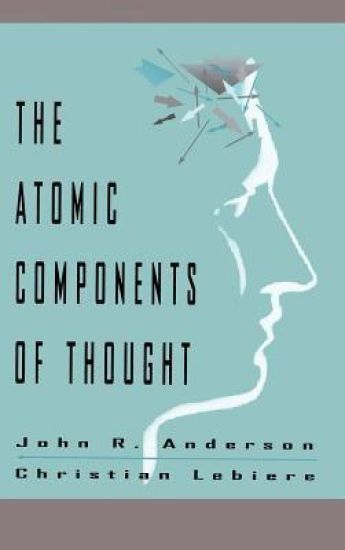
The Atomic Components of Thought

The Atomic Components of Thought

John R. Anderson; Christian J. Lebiere

Psychology Press
1998
sidottu
This book achieves a goal that was set 25 years ago when the HAM theory of human memory was published. This theory reflected one of a number of then-current efforts to create a theory of human cognition that met the twin goals of precision and complexity. Up until then the standard for precision had been the mathematical theories of the 1950s and 1960s. These theories took the form of precise models of specific experiments along with some informal, verbally-stated understanding of how they could be extended to new experiments. They seemed to fall far short of capturing the breadth and power of human cognition that was being demonstrated by the new experimental work in human cognition. The next 10 years saw two major efforts to address the problems of scope. In 1976, the ACT theory was first described and included a production rule system of procedural memory to complement HAM's declarative memory. This provided a computationally adequate system which was indeed capable of accounting for all sorts of cognition. In 1993, a new version of ACT--ACT-R--was published. This was an effort to summarize the theoretical progress made on skill acquisition in the intervening 10 years and to tune the subsymbolic level of ACT-R with the insights of the rational analysis of cognition. Although the appearance of generally-available, full-function code set off a series of events which was hardly planned, it resulted in this book. The catalyst for this was the emergence of a user community. Lebiere insisted that assembling a critical mass of users was essential to the ultimate success of the theory and that a physical gathering was the only way to achieve that goal. This resulted in the First Annual ACT-R Summer School and Workshop, held in 1994. In writing the book, the authors became seized by an aspiration that went beyond just describing the theory correctly. They decided to try to display what the theory could do by collecting together and describing some of its in-house applications. This book reflects decades of work in ACT-R accumulated by many researchers. The chapters are authored by the people that did that particular work. No doubt the reader will be impressed by the scope of the research and the quality of the individual work. Less apparent, but no less important, was the effort that everyone put into achieving the overall consistency and technical integrity of the book. This is the first work in cognitive science to precisely model such a wide range of phenomena with a single theory.
The Atomic Components of Thought

The Atomic Components of Thought

John R. Anderson; Christian J. Lebiere

Psychology Press
1998
nidottu
This book achieves a goal that was set 25 years ago when the HAM theory of human memory was published. This theory reflected one of a number of then-current efforts to create a theory of human cognition that met the twin goals of precision and complexity. Up until then the standard for precision had been the mathematical theories of the 1950s and 1960s. These theories took the form of precise models of specific experiments along with some informal, verbally-stated understanding of how they could be extended to new experiments. They seemed to fall far short of capturing the breadth and power of human cognition that was being demonstrated by the new experimental work in human cognition. The next 10 years saw two major efforts to address the problems of scope. In 1976, the ACT theory was first described and included a production rule system of procedural memory to complement HAM's declarative memory. This provided a computationally adequate system which was indeed capable of accounting for all sorts of cognition. In 1993, a new version of ACT--ACT-R--was published. This was an effort to summarize the theoretical progress made on skill acquisition in the intervening 10 years and to tune the subsymbolic level of ACT-R with the insights of the rational analysis of cognition. Although the appearance of generally-available, full-function code set off a series of events which was hardly planned, it resulted in this book. The catalyst for this was the emergence of a user community. Lebiere insisted that assembling a critical mass of users was essential to the ultimate success of the theory and that a physical gathering was the only way to achieve that goal. This resulted in the First Annual ACT-R Summer School and Workshop, held in 1994. In writing the book, the authors became seized by an aspiration that went beyond just describing the theory correctly. They decided to try to display what the theory could do by collecting together and describing some of its in-house applications. This book reflects decades of work in ACT-R accumulated by many researchers. The chapters are authored by the people that did that particular work. No doubt the reader will be impressed by the scope of the research and the quality of the individual work. Less apparent, but no less important, was the effort that everyone put into achieving the overall consistency and technical integrity of the book. This is the first work in cognitive science to precisely model such a wide range of phenomena with a single theory.
African American, Creole, and Other Vernacular Englishes in Education

African American, Creole, and Other Vernacular Englishes in Education

John R. Rickford; Julie Sweetland; Angela E. Rickford; Thomas Grano

Routledge Member of the Taylor and Francis Group
2012
sidottu
More than 50 years of scholarly attention to the intersection of language and education have resulted in a rich body of literature on the role of vernacular language varieties in the classroom. This field of work can be bewildering in its size and variety, drawing as it does on the diverse methods, theories, and research paradigms of fields such as sociolinguistics, applied linguistics, psychology, and education. Compiling most of the publications from the past half century that deal with this critical topic, this volume includes more than 1600 references (books, articles in journals or books, and web-accessible dissertations and other works) on education in relation to African American Vernacular English [AAVE], English-based pidgins and creoles, Latina/o English, Native American English, and other English vernaculars such as Appalachian English in the United States and Aboriginal English in Australia), with accompanying abstracts for approximately a third of them. This comprehensive bibliography provides a tool useful for those interested in the complex issue of how knowledge about language variation can be used to more effectively teach students who speak a nonstandard or stigmatized language variety.
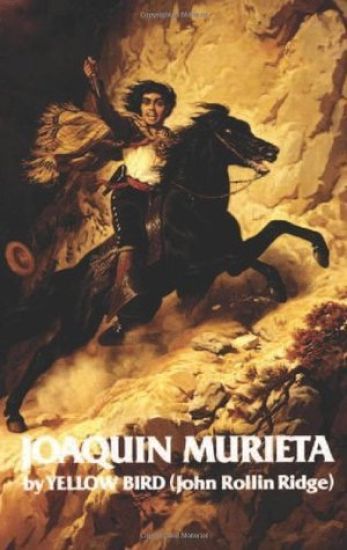
Life and Adventures of Joaquin Murieta, the Celebrated California Bandit
In 1854, a Cherokee Indian called Yellow Bird (better known as John Rollin Ridge) launched in this book the myth of Joaquin Murieta, based on the California criminal career of a 19th century Mexican bandit. Today this folk hero has been written into state histories, sensationalized in books, poems, and articles throughout America, Spain, France, Chile, and Mexico, and made into a motion picture. The Ridge account is here reproduced from the only known copy of the first edition, owned by Thomas W. Streeter, of Morristown, New Jersey. According to it, the passionate, wronged Murieta organized an outlaw company numbering over 2,000 men, who for two years terrorized gold-rush Californians by kidnapping, bank robberies, cattle thefts, and murders. So bloodthirsty as to be considered five men, Joaquin was aided by several hardy subordinates, including the sadistic cutthroat, -Three-Fingered Jack.- Finally, the state legislature authorized organization of the Mounted Rangers to capture the outlaws. The drama is fittingly climaxed by the ensuing chase, -good, gory- battle, and the shocking fate of the badmen.
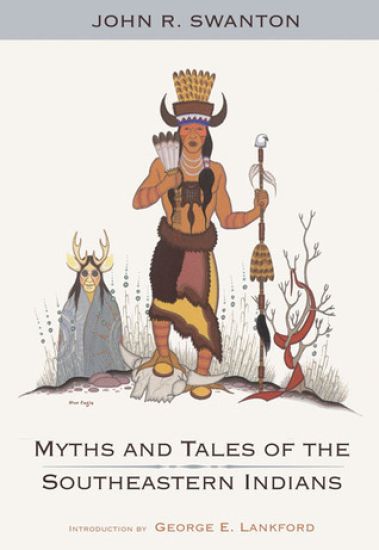
Myths and Tales of the Southeastern Indians

Myths and Tales of the Southeastern Indians

John R. Swanton

University of Oklahoma Press
1995
nidottu
First published in 1929, John R. Swanton's Myths and Tales of the Southeastern Indians is a classic of American Indian folklore. During the years 1908-1914 Swanton gathered the myths and legends of the descendants of Muckhogean-speaking peoples living in Texas, Louisiana, and Oklahoma, and in this volume he preserved more than three hundred tales of the Creek, Hitchiti, Alabama, Koasati, and Natchez Indians.Myths and Tales of the Southeastern Indians stands as the largest collection of Muskhogean oral traditions ever published. Included are stores on the origin of corn and tobacco, the deeds of ancient native heroes, visits to the world of the dead, and encounters between people and animals or supernatural beings in animal form. Animal tales abound, especially those on the southeastern trickster Rabbit.
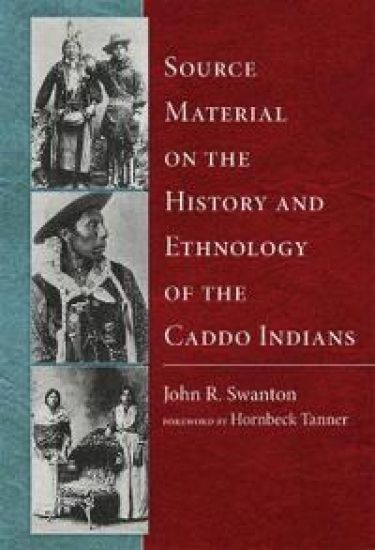
Source Material on the History and Ethnology of the Caddo Indians

Source Material on the History and Ethnology of the Caddo Indians

John R. Swanton

University of Oklahoma Press
1996
nidottu
First published in 1942, John R. Swanton's Source Material on the History and Ethnology of the Caddo Indians is a classic reference on the Caddos. Long regarded as the dean of southeastern Native American studies, Swanton worked for decades as an ethnographer, ethnohistorian, folklorist, and linguist. In this volume he presents the history and culture of the Caddos according to the principal French, Spanish, and English sources.In the seventeenth century, French and Spanish explorers encountered four regional alliances-Cahinnio, Cadohadacho, Hasinai, and Natchitoches-within the boundaries of the present-day states of Arkansas, Louisiana, Texas, and Oklahoma. Their descriptions of Caddo culture are the earliest sources available, and Swanton weaves the information from these primary documents into a narrative, translated into English, for the benefit of the modern reader. For the scholar, he includes in an appendix the extire test of three principal documents in their original Spanish.The first half of the book is devoted to an extensive history of the Caddos, from De Soto's encounters in 1521 to the Caddos' involvement in the Ghost Dance Religion of 1890. The second half discusses Caddo culture, including origin legends and religious beliefs, material culture, social relations, government, warfare, leisure, and trade. For this edition, Helen Hornbeck Tanner also provides a new foreword surveying the scholarship published on the Caddos since Swanton's time.
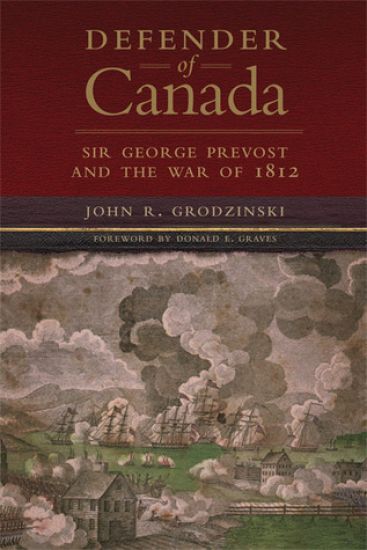
Defender of Canada

Defender of Canada

John R. Grodzinski; Donald E. Graves

University of Oklahoma Press
2013
sidottu
When war broke out between Great Britain and the United States in 1812, Sir George Prevost, captain general and governor in chief of British North America, was responsible for defending a group of North American colonies that stretched as far as the distance from Paris to Moscow. He also commanded one of the largest British overseas forces during the Napoleonic Wars. Defender of Canada, the first book-length examination of Prevost's career, offers a reinterpretation of the general's military leadership in the War of 1812. Historian John R. Grodzinski shows that Prevost deserves far greater credit for the successful defense of Canada than he has heretofore received. Earlier accounts portrayed Prevost as overly cautious and attributed the preservation of Canada to other officers, but Grodzinski challenges these assumptions and restores the general to his rightful place as British North America's key military figure during the War of 1812. Grodzinski shows that Prevost's strategic insight enabled him to enact a practicable defense despite scarce resources and to ably integrate naval power into his defensive plans. Prevost's range of responsibilities in British North America were daunting. They included overseeing joint endeavors with Indian allies, managing logistical matters, monitoring naval construction and personnel needs, supervising colonial governments, and commanding the defense of Canada. Tasked with protecting an extensive and complex territory, Prevost employed a mix of soldiers, sailors, locally raised forces, and indigenous people in taking advantage of the American military's weaknesses to defeat most of its plans. Following his recall to Britain in 1815 after the defeat at the Battle of Plattsburgh, Prevost would have been court-martialed had he not died unexpectedly. In carefully examining the charges leveled against Prevost, Grodzinski shows the general to have preserved the integrity of Canada, allowing diplomats to ensure its continued existence.
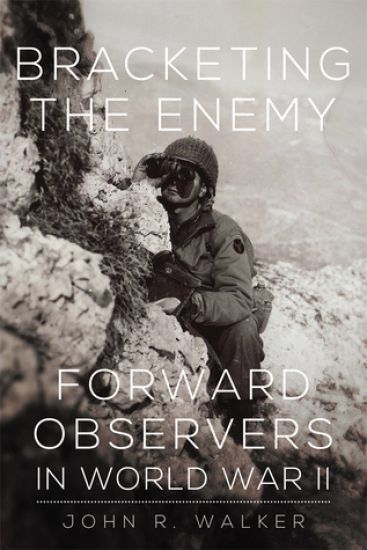
Bracketing the Enemy

Bracketing the Enemy

John R. Walker

University of Oklahoma Press
2015
nidottu
After the end of World War II, General George Patton declared that artillery had won the war. Yet howitzers did not achieve victory on their own. Crucial to the success of these big guns were forward observers, artillerymen on the front lines who directed the artillery fire. Until now, the vital role of forward observers in ground combat has received little scholarly attention. In Bracketing the Enemy, John R. Walker remedies this oversight by offering the first full-length history of forward observer teams during World War II. As early as the U.S. Civil War, artillery fire could reach as far as two miles, but without an ""FO"" (forward observer) to report where the first shot had landed in relation to the target, and to direct subsequent fire by outlining or ""bracketing"" the targeted range, many of the advantages of longer-range fire were wasted. During World War II, FOs accompanied infantrymen on the front lines. Now, for the first time, gun crews could bring deadly accurate fire on enemy positions immediately as advancing riflemen encountered these enemy strongpoints. According to Walker, this transition from direct to indirect fire was one of the most important innovations to have occurred in ground combat in centuries. Using the 37th Division in the Pacific Theater and the 87th in Europe as case studies, Walker presents a vivid picture of the dangers involved in FO duty and shows how vitally important forward observers were to the success of ground operations in a variety of scenarios. FO personnel not only performed a vital support function as artillerymen but often transcended their combat role by fighting as infantrymen, sometimes even leading soldiers into battle. And yet, although forward observers lived, fought, and bled with the infantry, they were ineligible to wear the Combat Infantryman's Badge awarded to the riflemen they supported. Forward observers are thus among the unsung heroes of World War II. Bracketing the Enemy signals a long-overdue recognition of their distinguished service.
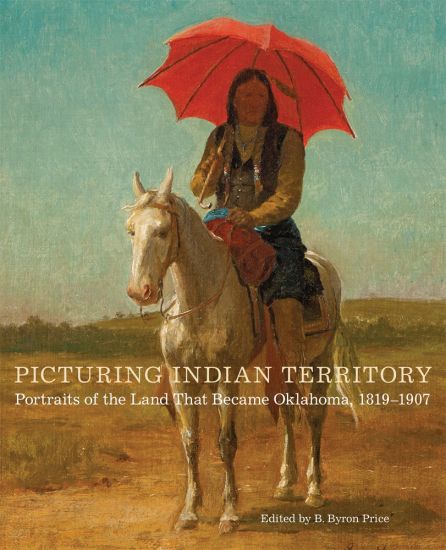
Picturing Indian Territory

Picturing Indian Territory

John R. Lovett

University of Oklahoma Press
2016
sidottu
Throughout the nineteenth century, the land known as ""Indian Territory"" was populated by diverse cultures, troubled by shifting political boundaries, and transformed by historical events that were colorful, dramatic, and often tragic. Beyond its borders, most Americans visualized the area through the pictures produced by non-Native travelers, artists, and reporters - all with differing degrees of accuracy, vision, and skill. The images in Picturing Indian Territory, and the eponymous exhibit it accompanies, conjure a wildly varied vision of Indian Territory's past. Spanning nearly nine decades, these artworks range from the scientific illustrations found in English naturalist Thomas Nuttall's journal to the paintings of Frederic Remington, Henry Farny, and Charles Schreyvogel. The volume's three essays situate these works within the historical narratives of westward expansion, the creation of an ""Indian Territory"" separate from the rest of the United States, and Oklahoma's eventual statehood in 1907. James Peck focuses on artists who produced images of Native Americans living in this vast region during the pre-Civil War era. In his essay, B. Byron Price picks up the story at the advent of the Civil War and examines newspaper and magazine reports as well as the accounts of government functionaries and artist-travelers drawn to the region by the rapidly changing fortunes of the area's traditional Indian cultures in the wake of non-Indian settlement. Mark Andrew White then looks at the art and illustration resulting from the unrelenting efforts of outsiders who settled Indian and Oklahoma Territories in the decades before statehood. Some of the artworks featured in this volume have never before been displayed; some were produced by more than one artist; others are anonymous. Many were completed by illustrators on-site, as the events they depicted unfolded, while other artists relied on written accounts and vivid imaginations. Whatever their origin, these depictions of the people, places, and events of ""Indian Country"" defined the region for contemporary American and European audiences. Today they provide a rich visual record of a key era of western and Oklahoma history - and of the ways that art has defined this important cultural crossroads.
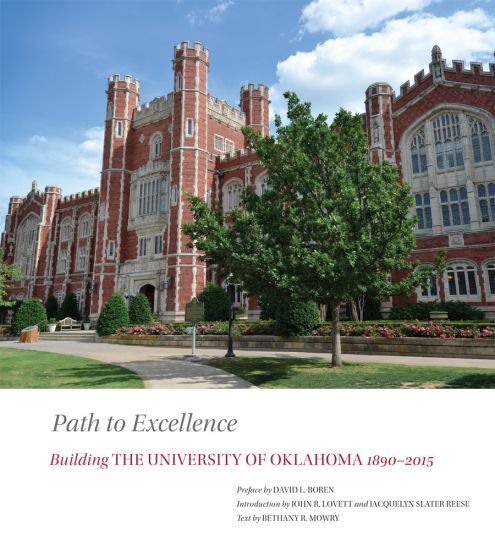
Path to Excellence

Path to Excellence

John R. Lovett; Jacquelyn Slater Reese; Bethany R. Mowry

University of Oklahoma Press
2015
sidottu
Founded by determined pioneers in 1890, the University of Oklahoma is one of the nation's most beautiful universities. The institution's visual attractions on its three thriving campuses are matched only by its outstanding reputation for academic excellence. Published in celebration of the University's quasquicentennial, Path to Excellence is a stunning photographic history of OU's 125 years of remarkable growth and revitalization. When the University's first president, David Ross Boyd, looked out at the vast ""stretch of prairie"" where the territorial school would be built, he envisioned great possibilities. The University's first steps on the path to excellence were not always easy, however. Challenges and trials marked its early years. Yet through the perseverance and dedication of students, alumni, faculty, and staff, the modern University took shape. Showcasing both historical and contemporary photographs, Path to Excellence takes the reader on a captivating journey. We see stately academic buildings known for their fine architectural details. We see lush green lawns, colorful garden spaces, and sculptures by renowned artists. And as these memorable landmarks take root and develop before our eyes, we see the University become the strong institution it is today, reaching for ever higher levels of scholarship, community service, and academic achievement.
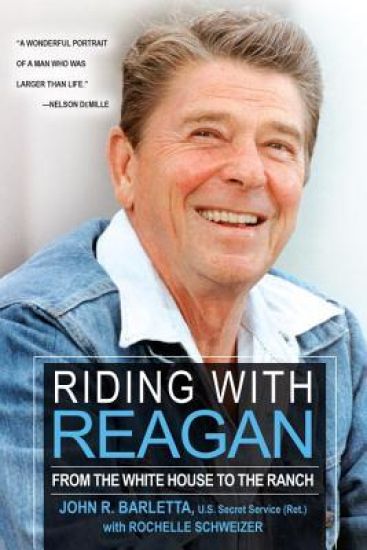
Riding With Reagan

Riding With Reagan

John R. Barletta

Citadel Press Inc.,U.S.
2017
nidottu
Personal moments with an American legend . . . John Barletta was a Vietnam veteran and Secret Service agent with a lifelong passion for horses and a deep respect for the nation's new president, Ronald Reagan. After he was chosen to lead the president's equestrian protection team in 1981, Barletta became the president's riding partner on the dusty trails of his California ranch, at Camp David, and even at Windsor Castle. During their nearly twenty-year relationship, Barletta would come to know Ronald Reagan as few others did--as a loving husband and father, as a man of courage and conviction, and as a friend and confidant. Filled with heartwarming stories, humorous anecdotes, and history-making events, this is a moving, intimate portrait of a great man whose heart, wisdom, and all-American spirit continue to inspire. "A unique perspective of President Reagan--both in and out of the saddle." --Judge William Clark, former National Security Advisor and Secretary of the Interior
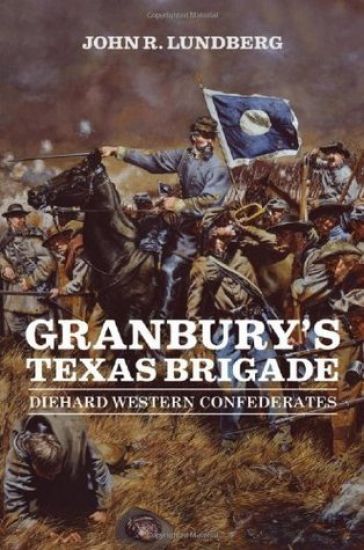
Granbury's Texas Brigade

Granbury's Texas Brigade

John R. Lundberg

Louisiana State University Press
2012
sidottu
John R. Lundberg's compelling new military history chronicles the evolution of Granbury's Texas Brigade, perhaps the most distinguished combat unit in the Confederate Army of Tennessee. Named for its commanding officer, Brigadier General Hiram B. Granbury, the brigade fought tenaciously in the western theater even after Confederate defeat seemed certain. Granbury's Texas Brigade explores the motivations behind the unit's decision to continue to fight, even as it faced demoralizing defeats and Confederate collapse. Using a vast array of letters, diaries, and regimental documents, Lundberg offers provocative insight into the minds of the unit's men and commanders. The caliber of that leadership, he concludes, led to the group's overall high morale.Lundberg asserts that although mass desertion rocked Granbury's Brigade early in the war, that desertion did not necessarily indicate a lack of commitment to the Confederacy but merely a desire to fight the enemy closer to home. Those who remained in the ranks became the core of Granbury's Brigade and fought until the final surrender. Morale declined only after Union bullets cut down much of the unit's officer corps at the Battle of Franklin in 1864.After the war, Lundberg shows, men from the unit did not abandon the ideals of the Confederacy -- they simply continued their devotion in different ways. Granbury's Texas Brigade presents military history at its best, revealing a microcosm of the Confederate war effort and aiding our understanding of the reasons men felt compelled to fight in America's greatest tragedy.
The Creation of an Ensemble

The Creation of an Ensemble

John R Wilk

SOUTHERN ILLINOIS UNIVERSITY PRESS
1991
nidottu
This managerial study traces the history and development of one of America s most successful regional theatres, the American Conservatory Theatre of San Francisco.In stating the philosophy and detailing the organizational structure of ACT, Wilk evokes the spirit that set this company apart and made it thrive. Photographs and personal interviews provide further insight into this unique ensemble company.Wilk credits much of ACT s success to the guidance of founding director William Ball. Through his observations as an employee of the ACT ensemble and through personal interviews with the principal players and managers, Wilk delves into the motives and missions of Ball and the company. A sense of the company style emerges as Wilk explores the intriguing personal dynamics of the organization s administration."
The Men Who Made the Constitution

The Men Who Made the Constitution

John R. Vile

Scarecrow Press
2013
sidottu
Few events in the history of the United States were of greater consequence than the Constitutional Convention of 1787. Although most histories have focused on the issues and compromises that dominated the debates, the exchanges were also shaped by the dynamic personalities of the fifty-five delegates who attended from twelve of the thirteen states. In The Men Who Made the Constitution, constitutional scholar John R. Vile explores the lives and contributions of all delegates to the 1787 Constitutional Convention, including those who left before the Convention ended and those who stayed until the last day but refused to sign. Each biography records the delegate’s birth, education, previous positions or public service roles, homes, family life, life after the Convention, death, and resting place. Drawing directly from Convention debates and a vast array of secondary sources, Vile covers the positions of each delegate at the Convention on both major and minor issues and describes his service on committees and afterward at state ratification conventions. The Men Who Made the Constitution includes a bibliography of key sources, engravings of delegates for whom portraits were created, a quiz on key facts, and a transcript of the Constitution of the United States. This work is the perfect reference for students and scholars, as well as professional and amateur historians, of colonial and early American history, constitutional law, and American jurisprudence.