Kirjahaku
Etsi kirjoja tekijän nimen, kirjan nimen tai ISBN:n perusteella.
1000 tulosta hakusanalla Jonathan Rowe
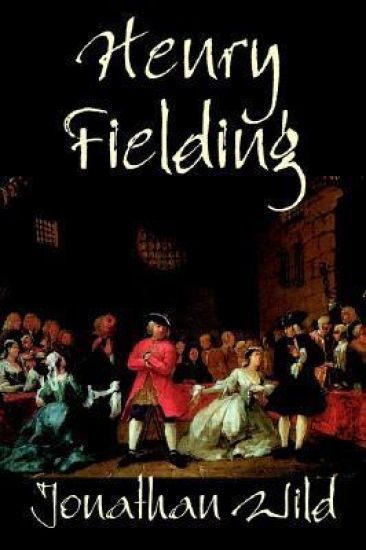
Jonathan Wild by Henry Fielding, Fiction, Classics, Literary
Henry Fielding
Borgo Press
2002
sidottu
HENRY FIELDING COMPARES JONATHAN WILD, HIGHWAY BANDIT WITH CAESAR -- AND FINDS CAESAR WANTING ." . . .when the mighty Caesar, with wonderful greatness of mind, had destroyed the liberties of his country, and with all the means of fraud and force had placed himself at the head of his equals, had corrupted and enslaved the greatest people whom the sun ever saw, we are reminded, as an evidence of his generosity, of his largesses to his followers and tools, by whose means he had accomplished his purpose, and by whose assistance he was to establish it. . . . Now, who doth not see that such sneaking qualities as these are rather to be bewailed as imperfections than admired as ornaments in these great men; rather obscuring their glory, and holding them back in their race to greatness, indeed unworthy the end for which they seem to have come into the world, viz. of perpetrating vast and mighty mischief?" -- from Henry Fielding's tongue-in-cheek classic, Jonathan Wild
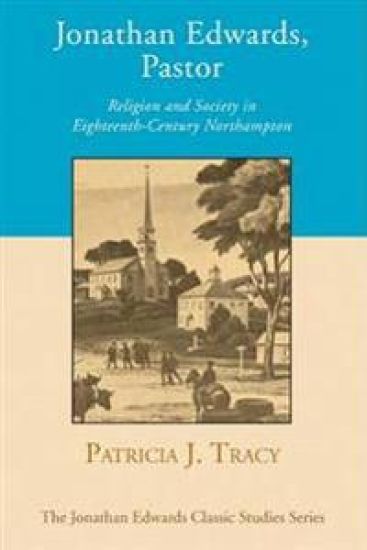

Jonathan Edwards's Moral Thought and Its British Context
Norman Fiering; Oliver D Crisp
Wipf Stock Publishers
2006
pokkari
The problems of moral philosophy were a central preoccupation of literate people in eighteenth-century America and Britain. It is not surprising, then, that Jonathan Edwards was drawn into a colloquy with some of the major ethicists of the age. Moral philosophy in this era was so all-encompassing in its claims that it encroached seriously on traditional religion. In response, Edwards presented a detailed analysis and criticism of secular moral philosophy in order to demonstrate its inadequacy, and he formulated a system that he believed was demonstrably superior to the existing secular systems. In this comprehensive study, Norman Fiering skillfully integrates Edwards's work on ethics into seventeenth- and eighteenth-century British and Continental philosophy and isolates Edwards's particular contributions to the ethical thought of his time. In addition, Fiering traces the chronological development of Edwards's thought, showing the relationship between his wide reading and his writing.
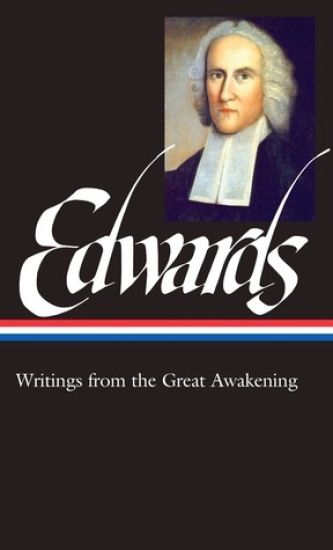
Jonathan Edwards: Writings from the Great Awakening (LOA #245)
Jonathan Edwards
The Library of America
2013
sidottu
Jonathan Edwards (1703–1758) is recognized today as a great theologian and philosopher. The historian Perry Miller has called him “one of America’s five or six major artists,” a writer possessed of “an intelligence which, as much as Emerson’s, Melville’s, or Mark Twain’s, is both an index of American society and a comment upon it.” But in his own day Edwards was best known as a leader of what is now known as the Great Awakening: a series of small-town revivals that mushroomed into a movement credited with giving birth to American evangelicalism and laying the groundwork for the American Revolution. In authoritative texts drawn from first editions and manuscript sources, this volume brings together all of Edwards’s essential writings from and about the revivals, including the famous sermon “Sinners in the Hands of an Angry God” and his vivid Faithful Narrative of the Surprising Work of God in the Conversion of Many Hundreds of Souls, the work that first publicized the awakenings. Characterized by precise logic and powerful imagery, his writing continues to inspire students and spiritual seekers alike.LIBRARY OF AMERICA is an independent nonprofit cultural organization founded in 1979 to preserve our nation’s literary heritage by publishing, and keeping permanently in print, America’s best and most significant writing. The Library of America series includes more than 300 volumes to date, authoritative editions that average 1,000 pages in length, feature cloth covers, sewn bindings, and ribbon markers, and are printed on premium acid-free paper that will last for centuries.
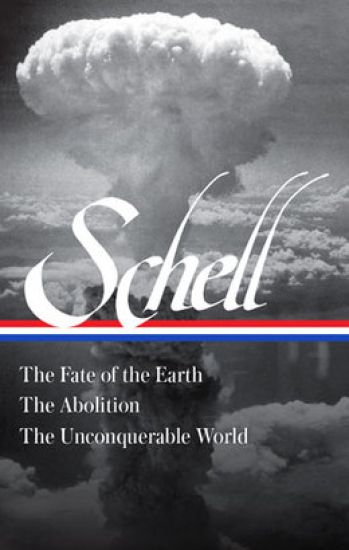
Jonathan Schell The Fate Of The Earth, The Abolition, The Unconquerable Worl
Jonathan Schell; Martin J. Sherwin
The Library of America
2020
sidottu
75 years after Hiroshima and Nagasaki, a collected edition of three classic accounts of our nuclear predicament and the way forward to a peaceful world, by the Rachel Carson of the antiwar movement. Brave, eloquent, and controversial, these classic works by Jonathan Schell illuminate the nuclear threats our civilization continues to face, and envision a way forward to peace. In The Fate of the Earth--an international bestseller that inspired the nuclear freeze movement--he distilled the best available scientific and technical information to imagine the apocalyptic aftereffects of nuclear war. Dramatizing the stakes involved in abstract discussions of military strategy, it galvanized public consciousness and changed the terms of the debate over nuclear arms. The Abolition extended this work to argue--against a complacent acceptance of "the stability of the nuclear world" and conventional theories of deterrence--that pathways to disarmament exist, and that the ultimate elimination of nuclear weapons is an achievable goal. The volume concludes with what is arguably Schell's masterwork, The Unconquerable World: Power, Nonviolence, and the Will of the People. A sweeping, surprisingly hopeful historical analysis of the changing nature of warfare, both nuclear and conventional, through the end of the twentieth century, it argues that war has become less and less useful as a means for achieving political ends, culminating in the mutually assured destruction of the Cold War. Describing the world-historical successes of people's revolutions--the Gandhian defeat of British imperialism in India and the peaceful dissolution of the Soviet Union, among others--Schell envisions new political and social foundations on which to sustain a lasting peace.
Jonathan Demme
University Press of Mississippi
2008
nidottu
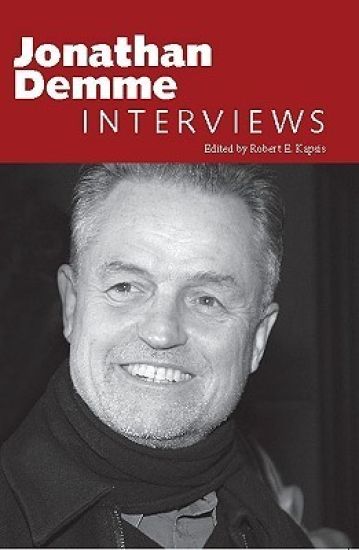
The films of Jonathan Demme (b. 1944) reflect his ebullient personality and are often infused with his love for Caribbean culture, pop music, fashion, and characters who reveal offbeat tastes and depths. He emerged from the 1970s American Renaissance that produced Robert Altman, Francis Ford Coppola, Steven Spielberg, Martin Scorsese, Brian De Palma, and others. His movies are funny, humane, and often unclassifiable by genre. With conversations from the 1970s to the present, Jonathan Demme: Interviews focuses on Demme's artistry, on his filmmaking philosophy, and especially on his progressive social and political concerns and how these have influenced the subject matter he has chosen to film. Although best known for his Oscar-winning dramas The Silence of the Lambs and Philadelphia, Demme has also achieved acclaim for comedies (Married to the Mob; Something Wild), documentaries (The Agronomist; My Cousin Bobby; Jimmy Carter: Man from Plains), and concert performance films (Stop Making Sense; Neil Young: Heart of Gold). In this volume, he discusses his troubles with studios, his need to balance documentaries with fiction films, his early work as a critic and publicist, and his apprenticeship with Roger Corman working on ""B"" movies.


Originally published posthumously in 1955, Harvey G. Townsend's Philosophy of Jonathan Edwards reprinted some of Edwards' most important early compositions on natural philosophy, "Of Being" and "The Mind," and collected nearly two hundred "Miscellanies" entries, some of them published here for the first time. In his introduction, Townsend points to Edwards' "radical idealism" that derived from Christian Platonism and John Locke rather than George Berkeley, as commonly thought. Townsend's work represents an important sourcebook for Edwards' writings, and his introduction presents a clear picture of mainstream Edwards scholarship at the middle of the twentieth century.
![Jonathan Edwards's [i.E. Edwards'] Vision of Reality](/covers/9781610974561.jpg)

Jonathan Green
Franklin G. Burroughs-Simeon B. Chapin Art Museum of Myrtle Beach
University of South Carolina Press
2013
nidottu
Jonathan Green is a native South Carolinian known for his vivid depiction of the lowcountry Gullah culture that shaped his childhood and his worldview. This volume, based on the 2008 exhibit Jonathan Green: The Artist & The Collector at the Franklin G. Burroughs-Simeon B. Chapin Art Museum of Myrtle Beach, celebrates Green's extraordinary paintings as well as his captivating private collection of African American paintings, sculptures, and fine art prints.

Jonathan Green at Work is an award-winning documentary film by renowned filmmaker and photographer Charles Allan Smith of a day in the life and work of the celebrated and charismatic American painter Jonathan Green. The film allows a rare glimpse into the unique life of this outstanding artist and integrates his work, environment, and Gullah heritage and culture, bringing together Green's acute sense of space, privacy, and dignity with his creative genius. Distributed for Earthbeat Productions.
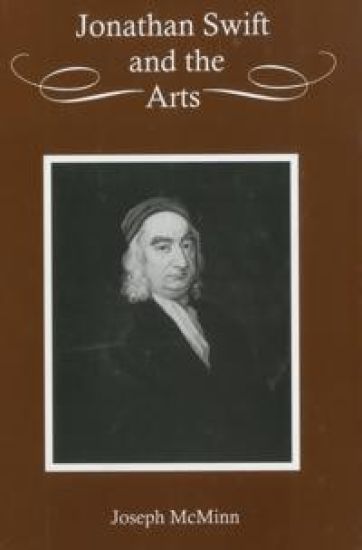
This is the first comprehensive account of Swift's engagement with the arts in Ireland and England. It both documents and reflects upon his attitudes toward music, gardening, theatre, architecture, and painting, and suggests that, despite his often sceptical attitude towards the non-literary arts, he saw them as a rich source of inspiration and entertainment for both his poetry and prose. This study also opens up a previously neglected part of Swift's biography, showing how his growing awareness of the 'sister-arts' was deeply influenced by his social and political circles in both Ireland and England, especially by the rise of the virtuoso, the connoisseur and the art collector, most notably in the person of his close friend, Alexander Pope. In the wider context of the European Enlightenment, this study tries to account for Swift's attitude toward the changing and expanding world of artistic and aesthetic appreciation.
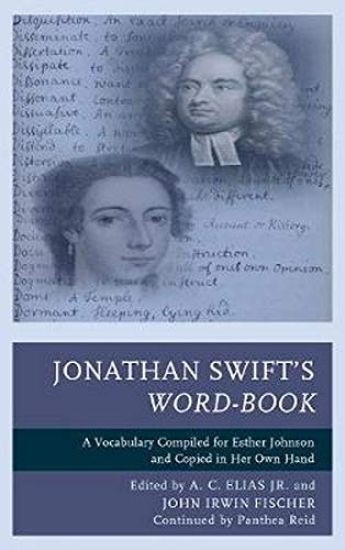
Jonathan Swift’s Word-Book
University of Delaware Press
2017
sidottu
Appearing for this first time in print, Word-Book is Swift’s dictionary of words and definitions for his protégé Esther Johnson. The volume includes photographs from and a transcript of the original book. Supplementing the transcript are the editors notations showing Swift’s corrections in Johnson’s text, essays comparing Swift’s dictionary to others available at that time and exploring the social and psychological milieu in which it was written, and detailed appendices.