Kirjojen hintavertailu. Mukana 12 016 292 kirjaa ja 12 kauppaa.

Kirjahaku

Etsi kirjoja tekijän nimen, kirjan nimen tai ISBN:n perusteella.

1000 tulosta hakusanalla Jorge Laborda

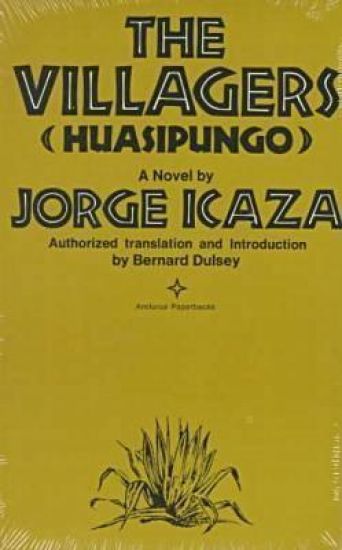
Huasipungo

Huasipungo

Jorge Icaza

Southern Illinois University Press
1964
nidottu
The Villagers is a story of the ruthless exploitation and extermination of an Indian village of Ecuador by its greedy landlord. First published in 1934, it is here available for the first time in an authorized English translation.A realistic tale in the best tradition of the novels of social protest of Zola, Dosto­evsky, José Eustasio Rivera, and the Mexican novels of the Revolution, The Villagers (Huasipungo) shocked and horrified its readers, and brought its author mingled censure and acclaim, when it was first published in 1934.Deeply moving in the dramatic intensity of its relentless evolution and stark human suffering, Icaza’ s novel has been translated into eleven foreign languages, including Russian and Chinese, and has gone through numerous editions in Spanish, including a revised and enlarged edition in 1953, on which this translation is based, but it has never before been authorized for translation into English. His first novel, but not his first published work, The Villagers is still considered by most critics as Icaza’ s best, and it is widely acclaimed as one of the most significant works in contemporary Latin American literature.Thirty years after its original publication in Ecuador, The Villagers still carries a powerful message for the contemporary world and an urgent warning. The conditions here portrayed prevail in these areas, even today. The Villagers is an indictment of the latifundista system and a caustic picture of the native worker who, with little expectation from life, finds himself a victim of an antiquated feudal system aided and abetted by a grasping clergy and an indifferent govern­ment.
Seven Nights

Seven Nights

Jorge Luis Borges; Eliot (TRN) Weinberger; Alastair (INT) Reid

New Directions Publishing Corporation
2009
pokkari
The incomparable Borges delivered these seven lectures in Buenos Aires in 1977; attendees were treated to Borges erudition on the following topics: Dante s The Divine Comedy, Nightmares, Thousand and One Dreams, Buddhism, Poetry, The Kabbalah, and Blindness.
Professor Borges

Professor Borges

Jorge Luis Borges

New Directions Publishing Corporation
2013
sidottu
Writing for Harper's Magazine, Edgardo Krebs describes Professor Borges: "A compilation of the twenty-five lectures Borges gave in 1966 at the University of Buenos Aires, where he taught English literature. Starting with the Vikings' kennings and Beowulf and ending with Stevenson and Oscar Wilde, the book traverses a landscape of 'precursors, 'cross-cultural borrowings, and genres of expression, all connected by Borges into a vast interpretive web. This is the most surprising and useful of Borges's works to have appeared posthumously."Borges takes us on a startling, idiosyncratic, fresh, and highly opinionated tour of English literature, weaving together countless cultural traditions of the last three thousand years. Borges's lectures -- delivered extempore by a man of extraordinary erudition -- bring the canon to remarkably vivid life. Now translated into English for the first time, these lectures are accompanied by extensive and informative notes by the Borges scholars Mart n Arias and Mart n Hadis.
Everything and Nothing

Everything and Nothing

Jorge Luis Borges; James E. (TRN) Irby; John M. (TRN) Fein

New Directions Publishing Corporation
2010
pokkari
Everything and Nothing collects the best of Borges highly influential work written in the 1930s and 40s that foresaw the internet ( Tlon, Uqbar, Orbis Tertius ), quantum mechanics ( The Garden of Forking Paths ), and cloning ( Pierre Menard, Author of the Quixote ). David Foster Wallace described Borges as scalp-crinkling . . . Borges work is designed primarily as metaphysical arguments...to transcend individual consciousness.
Borges at Eighty

Borges at Eighty

Jorge Luis Borges; Willis (TRN) Barnstone

New Directions Publishing Corporation
2013
pokkari
The words of a genius: Borges at Eighty transcends our expectations of ordinary conversation. In these interviews with Barnstone, Dick Cavett, and Alastair Reid, Borges touches on favorite writers (Whitman, Poe, Emerson) and familiar themes -- labyrinths, mystic experiences, and death -- and always with great, throw-away humor. For example, discussing nightmares, he concludes,"When I wake up, I wake to something worse. It's the astonishment of being myself."
Professor Borges

Professor Borges

Jorge Luis Borges

New Directions Publishing Corporation
2014
nidottu
Borges takes us on a startling, idiosyncratic, fresh, and highly opinionated tour of English literature, weaving together countless cultural traditions of the last three thousand years. Borges’s lectures — delivered extempore by a man of extraordinary erudition — bring the canon to remarkably vivid life.Now translated into English for the first time, these lectures are accompanied by extensive and informative notes by the Borges scholars Martín Arias and Martín Hadis. Writing for Harper’s magazine, Edgardo Krebs describes Professor Borges: “A compilation of the twenty-five lectures Borges gave in 1966 at the University of Buenos Aires, where he taught English literature. Starting with the Vikings’ kennings and Beowulf and ending with Stevenson and Oscar Wilde, the book traverses a landscape of ‘precursors,’ cross-cultural borrowings, and genres of expression, all connected by Borges into a vast interpretive web. This is the most surprising and useful of Borges’s works to have appeared posthumously.”
The Desert and Its Seed

The Desert and Its Seed

Jorge Barón Biza

New Directions Publishing Corporation
2018
nidottu
The Desert and Its Seed opens with a taxi ride to the hospital: Eligia’s face is disintegrating from acid thrown by her ex-husband while they signed divorce papers. Mario, her son, tries to wipe the acid from Eligia’s face, but his own fingers burn. What follows is a fruitless attempt to reconstruct Eligia’s face—first in Buenos Aires, thereafter in Milan. Mario, the narrator, becomes the shadow and witness of the reconstruction attempts to repair his mother’s outraged flesh. In this role, he must confront his own terrible existence and identity, both of which are bound to an Argentina he sees disintegrating around him. Based on a true, tragic family story, Jorge Barón Biza’s The Desert and Its Seed was rejected by publishers in Buenos Aires and was finally self-published in 1998, three years before the author committed suicide. Written in a captivating plain style with dark, bitter humor, The Desert and Its Seed has become a modern classic, published to enormous acclaim throughout the Spanish-speaking world and translated into many languages.
Labyrinths

Labyrinths

Jorge Luis Borges

NEW DIRECTIONS PUBLISHING CORPORATION
2026
sidottu
Since it was first published by New Directions in 1962, Labyrinths has transformed and enriched our collective imaginations, introduced new possibilities for literature, and astonished generation after generation of readers and writers. This groundbreaking collection of stories, essays, and parables still serves as a perfect introduction to Borges's imaginative universe: writing that is multi-layered, paradoxical, recursive, elusive, and allusive; characteristics which, in other writers, are often labeled Borgesian.For many readers in the past decades, including Pope Francis and Daniel Radcliffe, Umberto Eco and Ursula K. Le Guin, the stories contained in Labyrinths--"The Garden of Forking Paths," "The Lottery in Babylon," and "The Library of Babel"--introduced not only a monumental writer but a new way of thinking about literature and the modern world.
Mel Gibson's Passion and Philosophy

Mel Gibson's Passion and Philosophy

Jorge J. E. Gracia

Open Court Publishing Co ,U.S.
2004
pokkari
Few - including director Mel Gibson - were prepared for the firestorm of controversy that followed the release of the long-awaited Passion of the Christ. Reviled by many, but so popular with others that the film has become one of the top grossers of all time, The Passion has sparked intense debate everywhere from the mainstream media to churches and synagogues to the water-cooler at work. This timely collection of essays explores the film's questions in-depth and expands on its themes. Topics covered include why Christ was killed; whether moral responsibility is possible when God knows what's going to happen; the relationship between the film, anti-Semitism, and the Israeli-Palestinian conflict; the role of women in The Passion; the influence of visionary nun Catheryne Emmerich; the meaning of Judas; and much more.
Deliberative Democracy, Political Legitimacy, And Self-determination In Multi-cultural Societies
Most foundational works in political philosophy have made fundamentally false and far-reaching assumptions concerning the culturally homogeneous character of the polity.Deliberative Democracy, Political Legitimacy, andSelf-Determination in Multicultural Societies provides a much needed corrective to conventional accounts of the normative foundations of the state by reconceptualizing some of the fundamental issues in political theory from a perspective that recognizes the culturally pluralistic character of contemporary democracies. Among the issues considered are democratic deliberation in multicultural societies, the justification and function of political communities, the nature of self-determination, the justification of cultural rights, and the moral rationale for regional self-governance and secession. This work is suitable for graduate and upper-division undergraduate courses in political philosophy and political science, as well as the lay reader interested in understanding the major sources of conflict and instability in democratic societies.
Economic Strategies and Policies in Latin America
Economists have debated Latin America’s economic strategies at two moments since the second world war. The first debate, often characterized as between monetarists and structuralists, flourished from the late 1950s to the early 1970s. It focused on the strengths and weaknesses of a strategy of import-substituting industrialization (ISI). The second debate has unfolded since the early 1980s. It focuses on policies of economic stabilization to control inflation, and on exchange rates, trade regimes and, especially, a strategic orientation toward reliance upon markets in order to foster economic growth. This is collection of essays around the strategies and policies adopted in Latin America.
Parties, Elections, and Political Participation in Latin America
First Published in 1994. This is Volume five of seven of a collection of essays that gathers together scholarly debates from the 1950s to the 1990s on Mexico, Central and South America. This text looks at topics such as government parties in Latin America, the Mexican elections of 1958, political campaigning, the scope of the Chilean Party systems, the case of Peronism and electoral change amongst others.
Latin America's International Relations and Their Domestic Consequences
First Published in 1994. Volume 6 in the 7-volume series titled Essays on Mexico, Central and South America: Scholarly Debates from the 1950s to the 1990s. The central scholarly articles concern interstate peace along with a U.S. propensity to intervene, and international structural vulnerabilities and economic asymmetries along with the significance of elite skills and choices. This title recognises that scholars have paid more attention to international economics in Latin America and seeks to balance the range study.
Race and Ethnicity in Latin America

Race and Ethnicity in Latin America

Jorge I Dominguez

CRC Press Inc
1994
sidottu
First Published in 1994. In nearly all racially and ethnically heterogeneous societies, there is overt national conflict among parties and social movements organized on the basis of race and ethnicity. Such conflict has been much less evident in Latin America. Scholars have pondered the nature of race and ethnicity with regard to both Afro- American and Indo-American societies, though research on Brazil has been particularly prominent. Special attention has been given to the relationship between social class and race and ethnicity.
Architecture's Historical Turn

Architecture's Historical Turn

Jorge Otero-Pailos

University of Minnesota Press
2010
nidottu
Architecture’s Historical Turn traces the hidden history of architectural phenomenology, a movement that reflected a key turning point in the early phases of postmodernism and a legitimating source for those architects who first dared to confront history as an intellectual problem and not merely as a stylistic question. Jorge Otero-Pailos shows how architectural phenomenology radically transformed how architects engaged, theorized, and produced history. In the first critical intellectual account of the movement, Otero-Pailos discusses the contributions of leading members, including Jean Labatut, Charles Moore, Christian Norberg-Schulz, and Kenneth Frampton. For architects maturing after World War II, Otero-Pailos contends, architectural history was a problem rather than a given. Paradoxically, their awareness of modernism’s historicity led some of them to search for an ahistorical experiential constant that might underpin all architectural expression. They drew from phenomenology, exploring the work of Bachelard, Merleau-Ponty, Heidegger, and Ricoeur, which they translated for architectural audiences. Initially, the concept that experience could be a timeless architectural language provided a unifying intellectual basis for the stylistic pluralism that characterized postmodernism. It helped give theory-especially the theory of architectural history-a new importance over practice. However, as Otero-Pailos makes clear, architectural phenomenologists could not accept the idea of theory as an end in itself. In the mid-1980s they were caught in the contradictory and untenable position of having to formulate their own demotion of theory. Otero-Pailos reveals how, ultimately, the rise of architectural phenomenology played a crucial double role in the rise of postmodernism, creating the antimodern specter of a historical consciousness and offering the modern notion of essential experience as the means to defeat it.
The Stray Bullet

The Stray Bullet

Jorge García-Robles

University of Minnesota Press
2013
nidottu
William S. Burroughs arrived in Mexico City in 1949, having slipped out of New Orleans while awaiting trial on drug and weapons charges that would almost certainly have resulted in a lengthy prison sentence. Still uncertain about being a writer, he had left behind a series of failed business ventures-including a scheme to grow marijuana in Texas and sell it in New York-and an already long history of drug use and arrests. He would remain in Mexico for three years, a period that culminated in the defining incident of his life: Burroughs shot his common-law wife, Joan Vollmer, while playing William Tell with a loaded pistol. (He would be tried and convicted of murder in absentia after fleeing Mexico.) First published in 1995 in Mexico, where it received the Malcolm Lowry literary essay award, The Stray Bullet is an imaginative and riveting account of Burroughs’s formative experiences in Mexico, his fascination with Mexico City’s demimonde, his acquaintances and friendships there, and his contradictory attitudes toward the country and its culture. Mexico, Jorge GarcÍa-Robles makes clear, was the place in which Burroughs embarked on his “fatal vocation as a writer.” Through meticulous research and interviews with those who knew Burroughs and his circle in Mexico City, GarcÍa-Robles brilliantly portrays a time in Burroughs’s life that has been overshadowed by the tragedy of Joan Vollmer’s death. He re-creates the bohemian Roma neighborhood where Burroughs resided with Joan and their children, the streets of postwar Mexico City that Burroughs explored, and such infamous figures as Lola la Chata, queen of the city’s drug trade. This compelling book also offers a contribution by Burroughs himself-an evocative sketch of his shady Mexican attorney, BernabÉ Jurado.
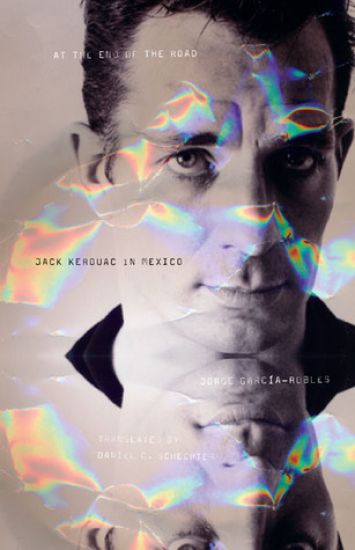
At the End of the Road

At the End of the Road

Jorge García-Robles

University of Minnesota Press
2014
nidottu
“We had finally found the magic land at the end of the road and we never dreamed the extent of the magic.” Mexico, an escape route, inspiration, and ecstatic terminus of the celebrated novel On the Road, was crucial to Jack Kerouac’s creative development. In this dramatic and highly compelling account, Jorge García-Robles, leading authority on the Beats in Mexico, re-creates both the actual events and the literary imaginings of Kerouac in what became the writer’s revelatory terrain. Providing Kerouac an immediate spiritual freshness that contrasted with the staid society of the United States, Mexico was perhaps the single most important country in his life. Sourcing material from the Beat author’s vast output and revealing correspondence, García-Robles vividly describes the milieu and people that influenced him while sojourning there and the circumstances between his myriad arrivals and departures. From the writer’s initial euphoria upon encountering Mexico and its fascinating tableau of humanity to his tortured relationship with a Mexican prostitute who inspired his novella Tristessa, this volume chronicles Kerouac’s often illusory view of the country while realistically detailing the incidents and individuals that found their way into his poetry and prose. In juxtaposing Kerouac’s idyllic image of Mexico with his actual experiences of being extorted, assaulted, and harassed, García-Robles offers the essential Mexican perspective. Finding there the spiritual nourishment he was starved for in the United States, Kerouac held fast to his idealized notion of the country, even as the stories he recounts were as much literary as real.