Kirjojen hintavertailu. Mukana 11 244 527 kirjaa ja 12 kauppaa.

Kirjahaku

Etsi kirjoja tekijän nimen, kirjan nimen tai ISBN:n perusteella.

1000 tulosta hakusanalla Jude Stringfellow

The Legacy, NET Eternity Now New Testament Series, Vol. 1: Matthew, Hebrews, James, Jude, Paperback, Comfort Print
The Promised One arrived. But the man they’d been looking for looked nothing like they—or anyone else—expected, and now they have to face the consequences. The Legacy includes four books of the New Testament: Matthew, Hebrews, James, and Jude, all written from the perspective of Jesus’ own community and family. He shook up their worlds, and he is still doing it today.Eternity Now reveals the history-shaping story of how Jesus Christ changed the world and what that means to you. This reader-friendly series presents the New Testament books across five paperback volumes to make it easy to carry anywhere and read anytime.Volume 1: The Legacy—Matthew, Hebrews, James, JudeVolume 2: No Going Back—Mark, 1–2 PeterVolume 3: Grand Tour—Books of Luke: Luke, ActsVolume 4: Death to Life—Books of Paul: Romans, 1–2 Corinthians, Galatians, Ephesians, Philippians, Colossians, 1–2 Thessalonians, 1–2 Timothy, Titus, PhilemonVolume 5: Now But Not Yet— Books of John: John, 1–3 John, Revelation
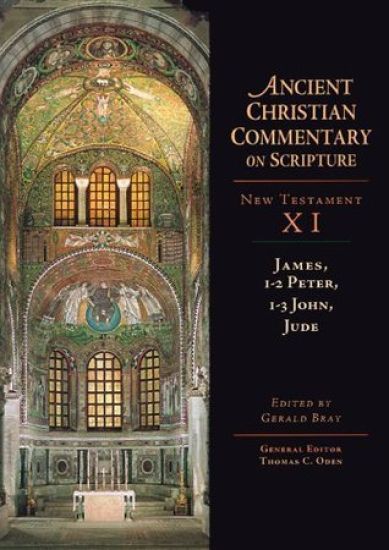
James, 1–2 Peter, 1–3 John, Jude

James, 1–2 Peter, 1–3 John, Jude

Gerald L. Bray; Thomas C. Oden

IVP Academic
2000
sidottu
Christianity Today Award of Merit winner Because the Catholic Epistles focus on orthodox faith and morals, the Fathers drew on them as a means of defense against the rising challenge of heretics. Many of the Fathers saw in these letters anticipatory attacks on Marcion and strong defenses against the Arians. They did so quite naturally because in their view truth was eternal and deviations from it had existed from the beginning. Above all, the Fathers found in the Catholic Epistles a manual for spiritual warfare, counsel for the faithful in the cosmic struggle between good and evil. In them was sound instruction in the ways of self-sacrifice, generosity, and humility, through which the cosmic forces could be defeated. Allusions to these letters go back as far as Justin Martyr, Irenaeus, and Tertullian, but the first commentary derives from Clement of Alexandria. Didymus the Blind was the next significant Greek-speaking commentator, though his commentary is fully extant only in Latin translation. Many of the comments from the early centuries have been passed on to us through Latin catenae, or chain commentaries, in which a later commentator collected comments from a variety of sources and chained them together in a fashion much like that of the Ancient Christian Commentary on Scripture in English. Among Latin commentators on these letters, pride of place must be given to Bede the Venerable. This volume opens up a treasure house of ancient wisdom that allows these faithful witnesses, some appearing here in English translation for the first time, to speak with eloquence and intellectual acumen to the church today.
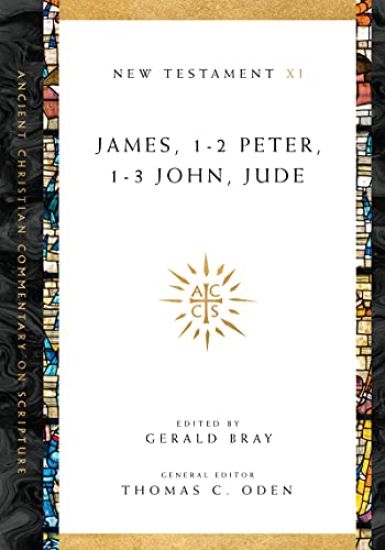
James, 1–2 Peter, 1–3 John, Jude

James, 1–2 Peter, 1–3 John, Jude

Gerald L. Bray; Thomas C. Oden

IVP Academic
2019
nidottu
Christianity Today Award of Merit winner Because the Catholic Epistles focus on orthodox faith and morals, the Fathers drew on them as a means of defense against the rising challenge of heretics. Many of the Fathers saw in these letters anticipatory attacks on Marcion and strong defenses against the Arians. They did so quite naturally because in their view truth was eternal and deviations from it had existed from the beginning. Above all, the Fathers found in the Catholic Epistles a manual for spiritual warfare, counsel for the faithful in the cosmic struggle between good and evil. In them was sound instruction in the ways of self-sacrifice, generosity, and humility, through which the cosmic forces could be defeated. Allusions to these letters go back as far as Justin Martyr, Irenaeus, and Tertullian, but the first commentary derives from Clement of Alexandria. Didymus the Blind was the next significant Greek-speaking commentator, though his commentary is fully extant only in Latin translation. Many of the comments from the early centuries have been passed on to us through Latin catenae, or chain commentaries, in which a later commentator collected comments from a variety of sources and chained them together in a fashion much like that of the Ancient Christian Commentary on Scripture in English. Among Latin commentators on these letters, pride of place must be given to Bede the Venerable. This volume opens up a treasure house of ancient wisdom that allows these faithful witnesses, some appearing here in English translation for the first time, to speak with eloquence and intellectual acumen to the church today.
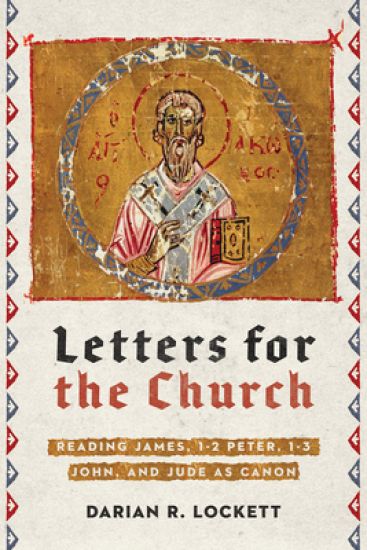
Letters for the Church – Reading James, 1–2 Peter, 1–3 John, and Jude as Canon
Biblical Foundations Book Awards Finalist The Catholic Epistles often get short shrift. Tucked into a few pages near the back of our Bibles, these books are sometimes referred to as the "non-Pauline epistles" or "concluding letters," maybe getting lumped together with Hebrews and Revelation. Yet these letters, Darian Lockett argues, are treasures hidden in plain sight, and it's time to give them the attention they deserve. In Letters for the Church, Lockett reveals how the Catholic Epistles provide a unique window into early Christian theology and practice. Based on evidence from the early church, he contends that the seven letters of James, 1–2 Peter, 1–3 John, and Jude were accepted into the canon as a collection and should be read together. Here Lockett introduces the context and content of the Catholic Epistles while emphasizing how all seven letters are connected. Each chapter outlines the author, audience, and genre of one of the epistles, traces its flow of thought, and explores shared themes with the other Catholic Epistles. The early church valued the Catholic Epistles for multiple reasons: they defend orthodox faith and morals against the challenges of heretics, make clear that Christianity combines belief with action, and round out the New Testament witness to Christian faith and life. By introducing the coherent vision of these seven epistles, Letters for the Church helps us rediscover these riches.