Kirjojen hintavertailu. Mukana 11 244 527 kirjaa ja 12 kauppaa.

Kirjahaku

Etsi kirjoja tekijän nimen, kirjan nimen tai ISBN:n perusteella.

1000 tulosta hakusanalla Keith Harding

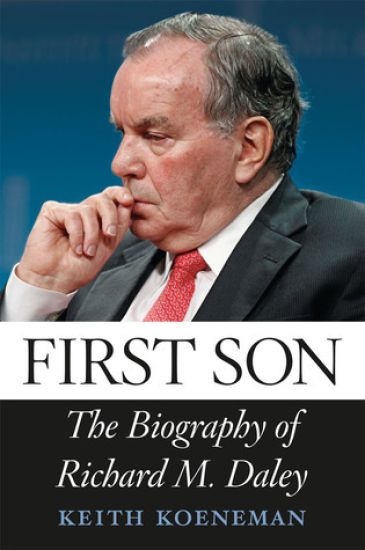
First Son

First Son

Keith Koeneman

University of Chicago Press
2013
sidottu
With those four words, an era ended. After twenty-two years, the longest-serving and most powerful mayor in the history of Chicago - and, arguably, America - stepped down, leaving behind a city that was utterly transformed, and a complicated legacy we are only beginning to evaluate. In "First Son", Keith Koeneman chronicles the sometimes Shakespearean, sometimes Machiavellian life of an American political legend. Making deft use of unprecedented access to key players in the Daley administration, as well as Chicago's business and cultural leaders, Koeneman draws on more than one hundred interviews to tell an up-close, insider story of political triumph and personal evolution. With Koeneman as our guide, we follow young Daley from his beginnings as an average Bridgeport kid thought to lack his father's talent and charisma to his unlikely transformation into an iron-fisted leader. Daley not only escaped the giant shadow of his father but also transformed Chicago from a gritty, postindustrial Midwestern capital into a beautiful, sophisticated global city. But in spite of his many accomplishments, Richard M. Daley's record is far from flawless. First Son sets the dramatic improvement of certain parts of the city against the persistent realities of crime, financial stress, failing public housing, and dysfunctional schools. And it reveals that in many ways Daley was unable to fully escape the machine politics of his father. A nuanced portrait of a complex man, "First Son" shows Daley to be sensitive yet tough, impatient yet persistent, a street-smart fighter and detail-driven policy expert who not only ran Chicago, but was Chicago.
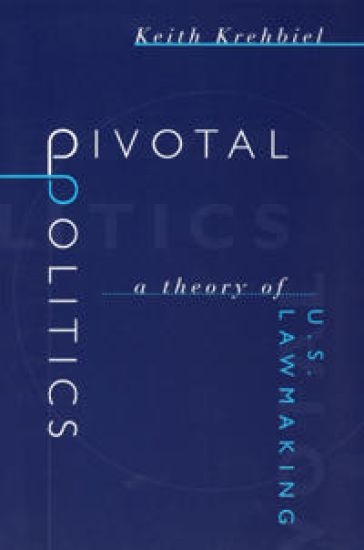
Pivotal Politics – A Theory of U.S. Lawmaking

Pivotal Politics – A Theory of U.S. Lawmaking

Keith Krehbiel

University of Chicago Press
1998
nidottu
Politicians and pundits alike have complained that the divided governments of the last decades have led to a legislative gridlock. The author argues against this, advancing the theory that divided government actually has little effect on legislative productivity. Gridlock is in fact the order of the day, occurring even when the same party controls the legislative and executive branches. Anchored to real politics, the author argues that the pivotal vote on a piece of legislation is not the one that gives a bill simple majority, but the vote that allows its supporters to override a possible presidential veto. This theory of pivots also explains why, when bills are passed, winning coalitions usually are bipartisan and supermajority sized. Offering an account of when gridlock is overcome and showing that political parties are less important in legislative-executive politics than previously thought, this text offers a perspective on American lawmaking.
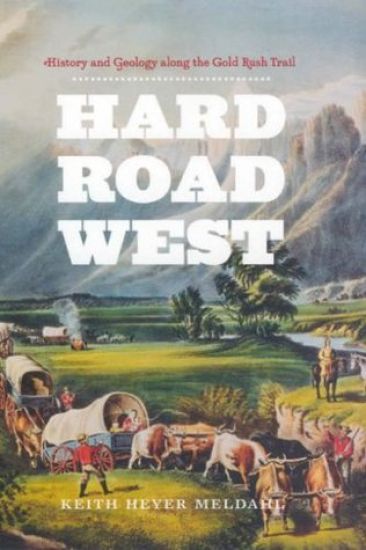
Hard Road West

Hard Road West

Keith Heyer Meldahl

University of Chicago Press
2007
sidottu
In 1849, news of the discovery of gold in California triggered an enormous wave of emigration toward the Pacific. Lured by the promise of riches, thousands of settlers left behind the forests, rain, and fertile soil of the eastern United States in favor of the rough-hewn lands of the American West. The dramatic terrain they struggled to cross is so familiar to us now that it is hard to imagine how frightening - even godforsaken - its sheer rock faces and barren deserts seemed to our forebears."Hard Road West" brings their perspective vividly to life, weaving together the epic overland journey of the covered wagon trains and the compelling story of the landscape they encountered. Taking readers along the 2,000-mile California Trail, Keith Heyer Meldahl uses the diaries and letters of the settlers themselves - as well as the countless hours he has spent following the trail - to reveal how the geology and geography of the West directly affected our nation's westward expansion. He guides us through a corrugated landscape of sawtooth mountains, following the meager streams that served as lifelines through an arid land, all the way to California itself, where colliding tectonic plates created breathtaking scenery and planted the gold that lured travelers west in the first place.
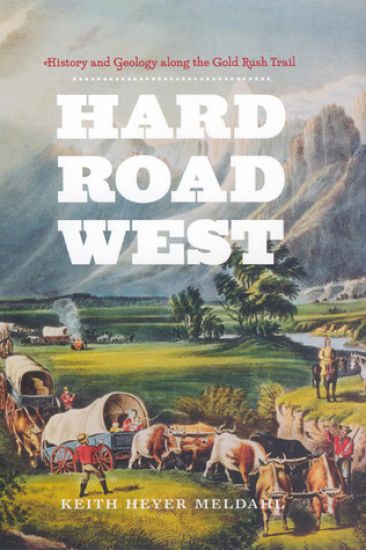
Hard Road West

Hard Road West

Keith Heyer Meldahl

University of Chicago Press
2008
nidottu
In 1849, news of the discovery of gold in California triggered an enormous wave of emigration toward the Pacific. Lured by the promise of riches, thousands of settlers left behind the forests, rain, and fertile soil of the eastern United States in favor of the rough-hewn lands of the American West. The dramatic terrain they struggled to cross is so familiar to us now that it is hard to imagine how frightening - even godforsaken - its sheer rock faces and barren deserts seemed to our forebears."Hard Road West" brings their perspective vividly to life, weaving together the epic overland journey of the covered wagon trains and the compelling story of the landscape they encountered. Taking readers along the 2,000-mile California Trail, Keith Heyer Meldahl uses the diaries and letters of the settlers themselves - as well as the countless hours he has spent following the trail - to reveal how the geology and geography of the West directly affected our nation's westward expansion. He guides us through a corrugated landscape of sawtooth mountains, following the meager streams that served as lifelines through an arid land, all the way to California itself, where colliding tectonic plates created breathtaking scenery and planted the gold that lured travelers west in the first place.
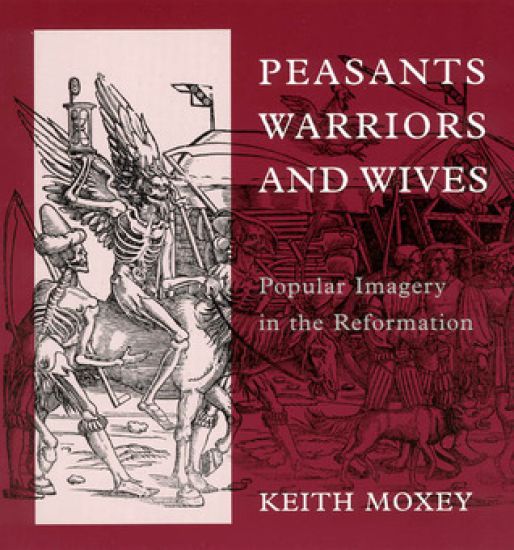
Peasants, Warriors, and Wives

Peasants, Warriors, and Wives

Keith Moxey

University of Chicago Press
2004
nidottu
In Peasants, Warriors, and Wives, Keith Moxey examines woodcut images from the German Reformation that have often been ignored as a crude and inferior form of artistic production. In this richly illustrated study, Moxey argues that while they may not satisfy received notions of "art," they nevertheless constitute an important dimension of the visual culture of the period. Far from being manifestations of universal public opinion, as a cursory acquaintance with their subject matter might suggest, such prints were the means by which the reformed attitudes of the middle and upper classes were disseminated to a broad popular audience.
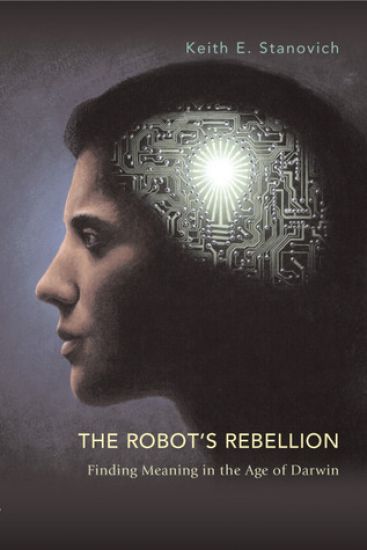
The Robot's Rebellion

The Robot's Rebellion

Keith E. Stanovich

University of Chicago Press
2004
sidottu
The idea that we might be robots is no longer the stuff of science fiction; decades of research in evolutionary biology and cognitive science have led many esteemed thinkers and scientists to the conclusion that, following the precepts of universal Darwinism, humans are merely the hosts for two replicators (genes and memes) that have no interest in us except as conduits for replication. Accepting and now forcefully responding to this disturbing idea that precludes the possibilities of morality or free will, among other things, Keith Stanovich here provides the tools for the "robot's rebellion," a program of cognitive reform necessary to advance human interests over the limited interest of the replicators. He shows how concepts of rational thinking from cognitive science interact with the logic of evolution to create opportunities for humans to structure their behavior to serve their own ends. These evaluative activities of the brain, he argues, fulfill the need that we have to ascribe significance to human life. Only by recognizing ourselves as robots, argues Stanovich, can we begin to construct a concept of self based on what is truly singular about humans: that they gain control of their lives in a way unique among life forms on Earth - through rational self-determination.
The Robot's Rebellion

The Robot's Rebellion

Keith E. Stanovich

University of Chicago Press
2005
nidottu
The idea that we might be robots is no longer the stuff of science fiction; decades of research in evolutionary biology and cognitive science have led many esteemed thinkers and scientists to the conclusion that, following the precepts of universal Darwinism, humans are merely the hosts for two replicators (genes and memes) that have no interest in us except as conduits for replication. Accepting and now forcefully responding to this disturbing idea that precludes the possibilities of morality or free will, among other things, Keith Stanovich here provides the tools for the "robot's rebellion," a program of cognitive reform necessary to advance human interests over the limited interest of the replicators. He shows how concepts of rational thinking from cognitive science interact with the logic of evolution to create opportunities for humans to structure their behavior to serve their own ends. These evaluative activities of the brain, he argues, fulfill the need that we have to ascribe significance to human life. Only by recognizing ourselves as robots, argues Stanovich, can we begin to construct a concept of self based on what is truly singular about humans: that they gain control of their lives in a way unique among life forms on Earth - through rational self-determination.
Pushing Cool

Pushing Cool

Keith Wailoo

University of Chicago Press
2021
sidottu
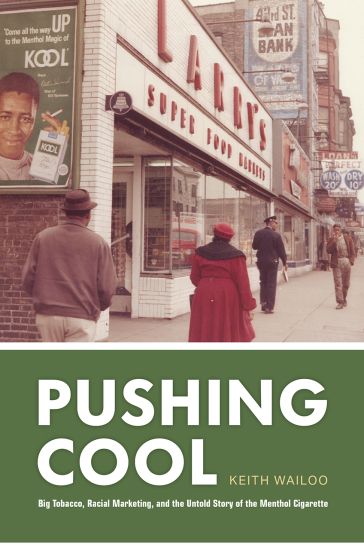
Police put Eric Garner in a fatal chokehold for selling cigarettes on a New York City street corner. George Floyd was killed by police outside a store in Minneapolis known as “the best place to buy menthols.” Black smokers overwhelmingly prefer menthol brands such as Kool, Salem, and Newport. All of this is no coincidence. The disproportionate Black deaths and cries of “I can’t breathe” that ring out in our era—because of police violence, COVID-19, or menthol smoking—are intimately connected to a post-1960s history of race and exploitation. In Pushing Cool, Keith Wailoo tells the intricate and poignant story of menthol cigarettes for the first time. He pulls back the curtain to reveal the hidden persuaders who shaped menthol buying habits and racial markets across America: the world of tobacco marketers, consultants, psychologists, and social scientists, as well as Black lawmakers and civic groups like the NAACP. Today most Black smokers buy menthols, and calls to prohibit their circulation hinge on a history of the industry’s targeted racial marketing. Ten years ago, when Congress banned flavored cigarettes as criminal enticements to encourage youth smoking, menthol cigarettes were also slated to be banned. Through a detailed study of internal tobacco industry documents, Wailoo exposes why they weren’t and how they remain so popular with Black smokers. Spanning a century, Pushing Cool reveals how the twin deceptions of health and Black affinity for menthol were crafted—and how the industry’s disturbingly powerful narrative has endured to this day.
Jean-Paul Marat

Jean-Paul Marat

Keith Michael Baker

THE UNIVERSITY OF CHICAGO PRESS
2025
sidottu
A landmark biography of one of the most notorious and controversial protagonists of the French Revolution—Jean-Paul Marat. Who better to pen an authoritative biography of Jean-Paul Marat (1743–93) than preeminent historian of France, Keith Michael Baker? Decades in the making, this monumental work takes readers on a journey through the intriguing, sometimes shocking life of this writer and thinker. Starting with his Swiss family and upbringing, Baker then sheds light on Marat’s early years in England, his career as an aspiring scientist in Paris, his gradual transformation from impassioned pamphleteer to revolutionary newspaperman, and, finally, his murder and martyrdom. Throughout, Baker offers readers the unique opportunity to reconsider the outbreak and development of the French Revolution through Marat’s eyes and in his own words. To help make sense of Marat’s trajectory, he shows how his violent and incendiary public calls to render unseen forces visible, to inject immediacy into an increasingly abstract modern world, would transform classical republicanism into the language of the Terror. Far beyond a standard rendering of Marat’s life and its milestones, this biography offers readers an opportunity to see the French Revolution as never before, through the perspective of one of its major figures. Baker’s book reveals how someone like Marat could go from translating Newton and engaging Franklin to calling for an ever-growing number of heads to roll—a transformation as chillingly relevant as ever.
Nietzsche's Earthbound Wisdom

Nietzsche's Earthbound Wisdom

Keith Ansell-Pearson

THE UNIVERSITY OF CHICAGO PRESS
2025
sidottu
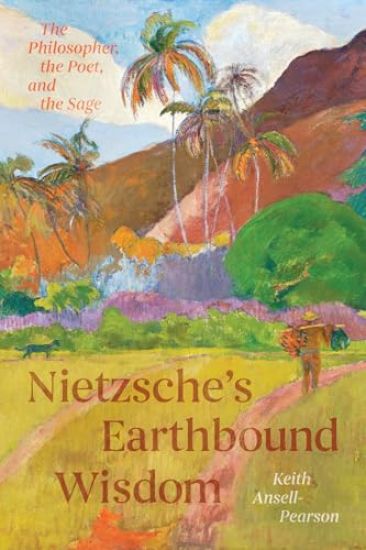
An incisive exploration of Nietzsche as a bold, visionary poet-philosopher. Today, Nietzsche is justly celebrated for his rich, philosophical naturalism, but Keith Ansell-Pearson warns that we must not overlook the visionary dimension of his thinking and his focus on the need to cultivate a new care of the self and care of life. In Nietzsche’s Earthbound Wisdom, Ansell-Pearson recovers Nietzsche’s love for a philosophy that guides us through our passions, one that opens us more fully to the possibilities of life and the joy of knowledge. Ansell-Pearson offers close readings of Nietzsche’s texts in conversation with philosophical and literary figures including Augustine, Baudelaire, Carlyle, Dostoevsky, Emerson, Flaubert, Stendhal, and more. Throughout, Ansell-Pearson examines Nietzsche’s sophisticated critique of literary naturalism and his alternative conception of the poet as a seer who has a deep longing for a new earth.
The The Priority of Mind

The The Priority of Mind

Keith Ward

JAMES CLARKE CO LTD
2023
nidottu
Is the mind just a by-product of the brain? Or is mind the fundamental reality, which creates matter? In The Priority of Mind, Keith Ward mounts a definitive defence of mind as prior to matter. In an accessible style, he unpacks the sources and abilities of the mind, situates it in the wider world, or cosmos, and proposes a relation between mind and virtue, and the nature of mind after death. Along the way, he explores the different philosophical approaches to the mind-matter question taken by thinkers over time, settling on idealism as the teaching of most classical philosophers, and as most consistent with modern science. Lay readers and scholars alike will relish Ward's clear, methodical exposition, and his counterarguments against the materialist narrative that dominates much of popular philosophical thinking today.
And Harmony Abound

And Harmony Abound

Keith William Kinder

McGill-Queen's University Press
2022
sidottu
Morley Calvert’s Suite from the Monteregian Hills is cherished by brass players worldwide and performed hundreds of times annually, making Calvert perhaps the most performed Canadian composer outside the country. Yet little is known about Calvert beyond that piece.And Harmony Abound is a thoughtful and in-depth study of a remarkably accomplished composer, conductor, and educator. Calvert made his living teaching music, but he was no ordinary high school music teacher. He was deeply committed to composing and completed some ninety works for brass ensembles, concert bands, choirs, and orchestras, while engaged in music making in the communities in which he lived. Keith Kinder traces Calvert’s life story from his birth in Brantford, Ontario, in 1928 through his youth and career in Montreal, his musical involvement with the Salvation Army, his success with the famous Central Collegiate band of Barrie, Ontario, his retirement years, and his unexpected passing in Hamilton, Ontario, in 1991. Uncovering Calvert’s oeuvre by analyzing representative arrangements, Kinder also documents the complete catalogue of Calvert’s works, bringing to light many unpublished compositions that would otherwise be lost to performers.And Harmony Abound is a compelling picture of Morley Calvert’s contribution to musical composition, education, and the cultural fabric, preserving a vital strand of the Canadian musical tapestry.
And Harmony Abound

And Harmony Abound

Keith William Kinder

McGill-Queen's University Press
2022
nidottu
Morley Calvert’s Suite from the Monteregian Hills is cherished by brass players worldwide and performed hundreds of times annually, making Calvert perhaps the most performed Canadian composer outside the country. Yet little is known about Calvert beyond that piece.And Harmony Abound is a thoughtful and in-depth study of a remarkably accomplished composer, conductor, and educator. Calvert made his living teaching music, but he was no ordinary high school music teacher. He was deeply committed to composing and completed some ninety works for brass ensembles, concert bands, choirs, and orchestras, while engaged in music making in the communities in which he lived. Keith Kinder traces Calvert’s life story from his birth in Brantford, Ontario, in 1928 through his youth and career in Montreal, his musical involvement with the Salvation Army, his success with the famous Central Collegiate band of Barrie, Ontario, his retirement years, and his unexpected passing in Hamilton, Ontario, in 1991. Uncovering Calvert’s oeuvre by analyzing representative arrangements, Kinder also documents the complete catalogue of Calvert’s works, bringing to light many unpublished compositions that would otherwise be lost to performers.And Harmony Abound is a compelling picture of Morley Calvert’s contribution to musical composition, education, and the cultural fabric, preserving a vital strand of the Canadian musical tapestry.
Enthusiasms and Loyalties

Enthusiasms and Loyalties

Keith Shepherd Grant

MCGILL-QUEEN'S UNIVERSITY PRESS
2022
sidottu
The Enlightenment Atlantic was awash in deep feelings. People expressed the ardour of patriots, the homesickness of migrants, the fear of slave revolts, the ecstasy of revivals, the anger of mobs, the grief of wartime, the disorientation of refugees, and the joys of victory. Yet passions and affections were not merely private responses to the events of the period – emotions were also central to the era’s most consequential public events, and even defined them. In Enthusiasms and Loyalties Keith Grant shows that British North Americans participated in a transatlantic swirl of debates over emotions as they attempted to cultivate and make sense of their own feelings in turbulent times. Examining the emotional communities that overlapped in Cornwallis Township, Nova Scotia, between 1770 and 1850, Grant explores the diversity of public feelings, from disaffected loyalists to passionate patriots and ecstatic revivalists. He shows how certain emotions – especially enthusiasm and loyalty – could be embraced or weaponized by political and religious factions, and how their use and meaning changed over time. Feelings could be the glue that made loyalties stick, or a solvent that weakened community bonds. Taking a history of emotions approach, Enthusiasms and Loyalties aims to recover and understand the wide range of political and religious emotions that were possible – feelable – in the Enlightenment Atlantic.
Enthusiasms and Loyalties

Enthusiasms and Loyalties

Keith Shepherd Grant

MCGILL-QUEEN'S UNIVERSITY PRESS
2022
nidottu
The Enlightenment Atlantic was awash in deep feelings. People expressed the ardour of patriots, the homesickness of migrants, the fear of slave revolts, the ecstasy of revivals, the anger of mobs, the grief of wartime, the disorientation of refugees, and the joys of victory. Yet passions and affections were not merely private responses to the events of the period – emotions were also central to the era’s most consequential public events, and even defined them. In Enthusiasms and Loyalties Keith Grant shows that British North Americans participated in a transatlantic swirl of debates over emotions as they attempted to cultivate and make sense of their own feelings in turbulent times. Examining the emotional communities that overlapped in Cornwallis Township, Nova Scotia, between 1770 and 1850, Grant explores the diversity of public feelings, from disaffected loyalists to passionate patriots and ecstatic revivalists. He shows how certain emotions – especially enthusiasm and loyalty – could be embraced or weaponized by political and religious factions, and how their use and meaning changed over time. Feelings could be the glue that made loyalties stick, or a solvent that weakened community bonds. Taking a history of emotions approach, Enthusiasms and Loyalties aims to recover and understand the wide range of political and religious emotions that were possible – feelable – in the Enlightenment Atlantic.
Mini Encyclopedia Keeping Koi: Comprehensive Coverage, from Building a Koi Pond to Choosing Color Varieties
Koi are shimmering, beautiful fish that can be grown in almost any backyard water feature. This Mini-Encyclopedia is packed with sensible advice and practical guidance for keeping beautiful, healthy koi. Part one examines the equipment and systems used to create and sustain the water quality that koi need to flourish. Part two looks in detail at how to build a koi pond, with plans and step-by-step sequences for both a lined, and a brick-built rendered pond Part three focuses on koi as fish and prized exhibits, from their anatomy and nutritional needs to health care, breeding and showing. Part four presents a full, richly illustrated guide to koi color varieties.
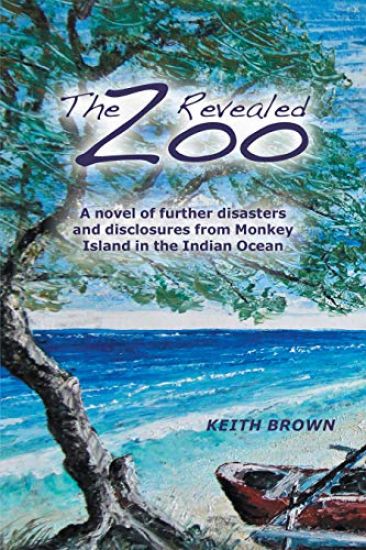
The Zoo

The Zoo

Keith Brown

Tellwell Talent
2019
pokkari
Just as he starts his new teaching job in Kenya, Brett James discovers that things are not as they appear on the surface. He bravely confronts the mysteries of the cross-cultural, multi-religious community called The Zoo. His faith is deepened as he deals with unexpected and stunning revelations. Follow our hero, Brett, as he battles through a fog of mystery, deception, and violence. He challenges the impenetrable wall, which was constructed by the elusive founder who controls access to the isolated Monkey Island. Will the residents reveal their sinister histories and complex relationships to this naive outsider? And will Brett be sympathetic as the surviving leaders strive for reconciliation and truth that parallel their spiritual longings?
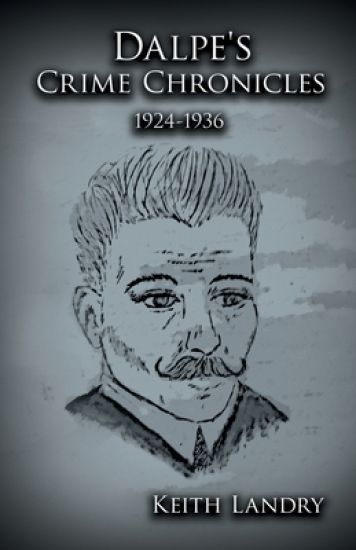
Dalpe's Crime Chronicles

Dalpe's Crime Chronicles

Keith Landry

Tellwell Talent
2020
pokkari
Detective J. P. Dalpe, later promoted to Sergeant Detective, is assigned in the early 1920s to a special detective squad of the Quebec Provincial Police to fight crime in Hull, Quebec. The crime was so rampant in the 1920s and 30s that the New York Times called Hull "Little Chicago." Dalpe's first major homicide investigation is the death of a man known in the St. Pierre de Wakefield area as the Hermit. The mutilated body is discovered in the dirt cellar of his small isolated cabin. Whilst this investigation is being pursued, Dalpe is sent south of Montreal to solve the murder of a man whose body is found at a town's nuisance grounds. He tracks down the murderer in Vermont and brings him back to Quebec to face justice. Dalpe is later called upon to investigate the suspicious poisoning of a young woman in the village of Maniwaki. He suspects the sister has a hand in the death. This investigation is followed by the shooting of a man by his nephew in the same region of Quebec. With the end of the Roaring Twenties and the arrival of the Great Depression in the 30s, Dalpe is called upon to solve one of the most heinous crimes to have ever occurred in Hull. An unemployed lumberjack is brutally beaten to death in the bush off Aylmer Road on the outskirts of Hull. Dalpe needs to coordinate the investigation with the Hull City Police Force and the Ottawa Police Force to track down suspects. He learns that organized crime is behind the murder. The last case of Dalpe's distinguished career involves many men who are engaged in treachery, robbery, and murder. A young bank clerk is murdered while he is carrying a large sum of money from the Hull bank where he is employed to an Ottawa clearinghouse. Dalpe, as the senior officer in Hull, is once again brought into a case that is followed by Canadians across the country. He must demonstrate much tact when his boss in Montreal, Chief Detective Jargaille pushes Dalpe to the background and assumes the lead detective role in the case.
Dalpe's Crime Chronicles

Dalpe's Crime Chronicles

Keith Landry

Tellwell Talent
2020
sidottu
Detective J. P. Dalpe, later promoted to Sergeant Detective, is assigned in the early 1920s to a special detective squad of the Quebec Provincial Police to fight crime in Hull, Quebec. The crime was so rampant in the 1920s and 30s that the New York Times called Hull "Little Chicago." Dalpe's first major homicide investigation is the death of a man known in the St. Pierre de Wakefield area as the Hermit. The mutilated body is discovered in the dirt cellar of his small isolated cabin. Whilst this investigation is being pursued, Dalpe is sent south of Montreal to solve the murder of a man whose body is found at a town's nuisance grounds. He tracks down the murderer in Vermont and brings him back to Quebec to face justice. Dalpe is later called upon to investigate the suspicious poisoning of a young woman in the village of Maniwaki. He suspects the sister has a hand in the death. This investigation is followed by the shooting of a man by his nephew in the same region of Quebec. With the end of the Roaring Twenties and the arrival of the Great Depression in the 30s, Dalpe is called upon to solve one of the most heinous crimes to have ever occurred in Hull. An unemployed lumberjack is brutally beaten to death in the bush off Aylmer Road on the outskirts of Hull. Dalpe needs to coordinate the investigation with the Hull City Police Force and the Ottawa Police Force to track down suspects. He learns that organized crime is behind the murder. The last case of Dalpe's distinguished career involves many men who are engaged in treachery, robbery, and murder. A young bank clerk is murdered while he is carrying a large sum of money from the Hull bank where he is employed to an Ottawa clearinghouse. Dalpe, as the senior officer in Hull, is once again brought into a case that is followed by Canadians across the country. He must demonstrate much tact when his boss in Montreal, Chief Detective Jargaille pushes Dalpe to the background and assumes the lead detective role in the case.