The full story of the life and times of Kieran Patrick Kelly, the London Underground Serial Killer, who wandered up and down the Northern Line of the London Underground between 1960 and 1983, pushing innocent people that he had never met under trains, and who finished up killing over thirty people. The book provides a full biography of Kelly, discussing the details of his crimes, his victims and his ability to evade justice; he managed to secure mistrials or acquittals in twenty-five trials before being eventually convicted and sentenced to die to prison, which he did in Durham, in 2001. It could be argued that Kelly is the most investigated serial killer in the history of the world. His murders were investigated as they occurred between 1953 and 1983; they were re-investigated in 1983 and again in 2015. The author of this book played major roles in the two latter enquiries, conducting the entire enquiry in 1983 and acting as a consultant to the 2015 enquiry. More is known about Kelly than any other serial killer in history.He was arrested before he had finished killing, then murdered his cellmate in the police station and was interviewed by the author ten minutes after this final murder, before spending the next two years discussing his crimes and his motivations with the author. The end result is a truly unique insight into the mind of a serial killer!
When longtime gay couple Jake and Kelly vowed to live out loud together forever, they didn't mean with decibel-defying shrieks and banging heads. However, raising Jake's autistic nephew, Chance, throws a maddening monkey wrench into their perfectly appointed life. Can the three come together under one little roof as a thoroughly modern family, even in the face of unbridled, unimaginable chaos? Second Chance: Book One in the Jake and Kelly Series is the hilarious, heartwarming novel about an altogether different sort of domestic partnership between two committed men and a confounding new addition to the house. After creating a world that is the paragon of peaceful living, Jake and Kelly must now grapple with a new order in the form of a terrifying, tiny child who spins, rocks, and wakes up throughout the night. Not only that, but Chance also demonstrates a head-scratching devotion to a televangelist named Sister Opal and meticulously lines up shoes and Mr. Potato Heads. After first abandoning her son with his father, Chance's mother, Crystal, has chosen to again wriggle loose of a maternal bond. This time, she elects instead to follow her bliss with Desert Wind, a hallucinogen-hopped-up shaman. Regardless, this Don Juan wannabe inspires an enthusiasm in Crystal that threatens to upend everything she knows. For one thing, the path to greater enlightenment will not accommodate her four-year-old son, who winds up in the care of her brother Jake and his partner, Kelly. How do you coerce a pint-sized child to sample something other than the likes of potato chips? How can you create a dialogue with someone whose favorite spoken phrase is "For Christ's sake, Anne," which he picked up from his grandpa's repeated exchange with his grandmother? How can you talk deportment with a kid who has yet to be toilet trained? Kelly, who is a teacher with a severe hearing impairment, embraces the challenge of Chance's autism with a professional fervor. Jake, however, craves a life that is next to normal, and profoundly regrets allowing his parents to move his nephew into this home. Meanwhile, his sister forges deeper into her New Age odyssey with Desert Wind, the burned-out Norwegian druggie with highly questionable shaman credentials. Just because he is one-eighth Apache does not mean his powers aren't half-baked. As Kelly introduces ingenious new ways to communicate with Chance, and Jake tries to get over himself, it looks like the young child might get a second chance at happiness after all. But will Crystal snap out of it and get a similar second chance at motherhood? Find out in this refreshing, irreverent look at love from all sides. Anyone who delights in quirky characters, inventive plots, and bold new literary voices will find a rollicking, meaningful read in Second Chance: Book One in the Jake and Kelly Series. Everyone deserves a second chance, and it is all the more enriching when accompanied by laughter. Readers will find plenty of heart and humor in this charming, lovable story of one wonderfully nutty family.
Anne was a psychic reader at a pub one night, when a stranger walked in with a deep knowing that he had someone to meet. Gary was drawn to Anne for a reading, they shook hands, their eyes locked and a deep connection was re-ignited. The incredible journey that followed had both Anne and Gary, experiencing d j vu memories of Whitechapel, London, in 1888. What transpired, Anne was the reincarnation of Mary Jane Kelly, and Gary had the ghost of PC James Harvey with him, who was on the trail of the notorious Jack the Ripper. James had witnessed the gruesome murder scene of Mary, the raw emotions left them all struggling with the torment and anguish of a bygone time. James loved Mary and was devastated by her horrendous death, he vowed to catch those responsible for her murder. The spirits of Mary and James finally reunited, rekindling a twin flame connection. Anne and Gary struggled with their feeling for each other, as all their emotions and heartache became entwined. The relationship that developed between Anne and Gary sent them both on a journey of great insight into the unknown, driven by the power of an eternal love.
Mark Padilla’s classical reception readings of Alfred Hitchcock features some of the director’s most loved and important films, and demonstrates how they are informed by the educational and cultural classicism of the director’s formative years. The six close readings begin with discussions of the production histories, so as to theorize and clarify how classicism could and did enter the projects. Exploration of the films through a classical lens creates the opportunity to explore new themes and ideological investments. The result is a further appreciation of both the engine of the director’s storytelling creativity and the expressionism of classicism, especially Greek myth and art, in British and American modernism. The analysis organizes the material into two triptychs, one focused on the three films sharing a wrong man pattern (wrongly accused man goes on the run to clear himself), the other treating the films starring the actress Grace Kelly. Chapter One, on The 39 Steps (1935), finds the origins of the wrong man plot in early 20th-century British classicism, and demonstrates that the movie utilizes motifs of Homer’s Odyssey. Chapter Two, on Saboteur (1942), theorizes the impact of the director’s memories of the formalism and myths associated with the Parthenon sculptures housed in the British Museum. Chapter Three, on North by Northwest, participates in the myths of the hero Oedipus, as associated with early Greek epic, Freud, Nietzsche, and Sophocles. Chapter Four, on Dial M for Murder (1954), returns to Homer’s Odyssey in the interpretive use of “the lay of Demodocus,” a story about the sexual triangle of Hephaestus, Aphrodite, and Ares. Chapter Five, on Rear Window (1954), finds its narrative archetype in The Homeric Hymn to Aphrodite; the erotic theme of Sirius, the Dog Star, also marks the film. Chapter Six, on To Catch a Thief (1955), offers the opportunity to break from mythic analogues, and to consider the film’s philosophical resonances (Plato and Epicurus) in the context of motifs coalesced around the god Dionysus/Bacchus.
Mark Padilla’s classical reception readings of Alfred Hitchcock features some of the director’s most loved and important films, and demonstrates how they are informed by the educational and cultural classicism of the director’s formative years. The six close readings begin with discussions of the production histories, so as to theorize and clarify how classicism could and did enter the projects. Exploration of the films through a classical lens creates the opportunity to explore new themes and ideological investments. The result is a further appreciation of both the engine of the director’s storytelling creativity and the expressionism of classicism, especially Greek myth and art, in British and American modernism. The analysis organizes the material into two triptychs, one focused on the three films sharing a wrong man pattern (wrongly accused man goes on the run to clear himself), the other treating the films starring the actress Grace Kelly. Chapter One, on The 39 Steps (1935), finds the origins of the wrong man plot in early 20th-century British classicism, and demonstrates that the movie utilizes motifs of Homer’s Odyssey. Chapter Two, on Saboteur (1942), theorizes the impact of the director’s memories of the formalism and myths associated with the Parthenon sculptures housed in the British Museum. Chapter Three, on North by Northwest, participates in the myths of the hero Oedipus, as associated with early Greek epic, Freud, Nietzsche, and Sophocles. Chapter Four, on Dial M for Murder (1954), returns to Homer’s Odyssey in the interpretive use of “the lay of Demodocus,” a story about the sexual triangle of Hephaestus, Aphrodite, and Ares. Chapter Five, on Rear Window (1954), finds its narrative archetype in The Homeric Hymn to Aphrodite; the erotic theme of Sirius, the Dog Star, also marks the film. Chapter Six, on To Catch a Thief (1955), offers the opportunity to break from mythic analogues, and to consider the film’s philosophical resonances (Plato and Epicurus) in the context of motifs coalesced around the god Dionysus/Bacchus.
When LIGHT Permeates Darkness is a 2-part poetry book that exudes, with poetic cadence, the pain and growth that comes when one steps forth into the darkness as a carrier of the light to transmutate even the depths of the deepest darkness and death, into the light of light.
Mike "King" Kelly was the hard-living, hard-drinking son of a Civil War veteran whose skills at baseball and infectious charm turned him into the game's first hero, and a symbol of what it meant to be a celebrity in America in the 1880s and 1890s. Slide, Kelly, Slide reacquaints baseball fans and scholars with this little-known pioneer of the game. Marty Appel, the author of several baseball books, conducted a thorough search of local archives to bring the story of King Kelly to light and place him in his proper historical context. An innovator on the field, who was not above taking advantage of the only umpire running the game, Kelly touched many aspects of American culture while a ballplayer. He was the first player to sign autographs, and wrote the game's first autobiography. A Hall of Famer and a two-time batting champion, Kelly's greatest contribution was the popularity that he brought to the game. Slide, Kelly, Slide will truly delight.
This publication presents the first volume (Las Vegas) of the early ethnographic field work of anthropologist Isabel T. Kelly. From 1932 to 1934, Kelly interviewed thirty Southern Paiute people— from southeastern California, southern Nevada, northern Arizona, and southern Utah— about “the old ways.” She filled 31 notebooks, made maps, took photographs, collected nearly 300 ethnobotanical specimens, purchased and shipped over 400 ethnographic artefacts to museums, and traveled more than 7,000 miles. Her notes comprise the most extensive primary ethnographic documentation of Southern Paiute/ Chemehuevi lifeways of the late nineteenth and early twentieth centuries.Although Kelly intended to publish these notes, she was unable to do so before her death. Fowler and Garey-Sage have now synthesised the first set of these handwritten field notes and sketches, providing organisation, commentary and illustrations to put them in context for the modern reader. Kelly’s data, most of whichcould not be gathered anew today, are offered here for the use of generations to come.
"Turn the Page for a Barking Good Time with Johnny, Kelly, and Sam " "Are your kids ready to embark on a heartwarming adventure with three playful pups who steal hearts and sandwiches?"Welcome to Maple Street, where three spirited dogs-Johnny, Kelly, and Sam-transform every day into a rollicking adventure From chasing tails to picnic mischief, these adorable pups bring joy and laughter to everyone they meet. With crooked smiles and wagging tails, they'll teach your children about friendship, teamwork, and finding happiness in every moment. Whether they're digging holes, fetching sticks, or causing hilarious chaos, Johnny, Kelly, and Sam will captivate young readers with their boundless energy and lovable antics.A joyful story perfect for children aged 4-8.Packed with laughter, teamwork, and lessons about kindness.Vibrant storytelling that keeps kids engaged and entertained.Encourages a love for animals and the magic of friendship.Ideal for bedtime or story time bonding moments.Fun-filled rhymes and playful language for early readers.A great choice for dog lovers and young readers alike.Promotes creativity and imagination through whimsical adventures.Heartwarming moments that make this a family favourite.A story that inspires smiles, giggles, and a love for reading.Dive into the delightful world of Johnny, Kelly, and Sam today Their pawsitive adventures will light up your child's imagination and bring endless joy to your family. Add this charming tale to your bookshelf now
A work of historical fiction inspired by the life of Colorado Territorial lawman, Rankin Scott Kelly. In the 1850s Kelly traveled west on the Santa Fe trail and settled in what was then Kansas Territory, later to become Colorado Territory, making his home in the small mining town of Colorado City. Having been appointed the county's first sheriff, this work gathers much from the actual wild west exploits recorded of this lawman's extraordinary life and times. A fascinating read and a fine example of America's continuing expansion toward its manifest destiny in the American West.
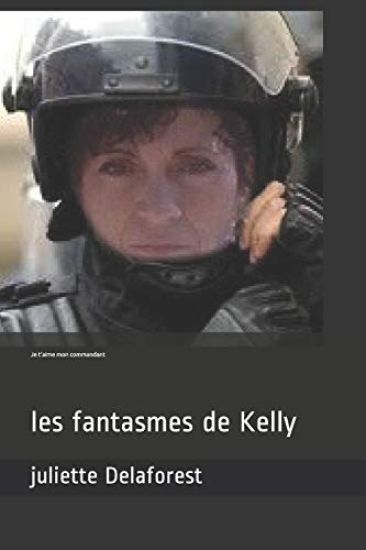
Sortant d'une institution mixte Kelly est sans tabous .Son but est d'int grer l' cole de gendarmerie, puis la brigade criminelle elle r ussit le concours avec brio . Son destin est en marche, deux grandes mains rassemble le contenu de son sac renvers . Son regard reste scotch sur celui de l'individu. Leurs yeux s'accrochent son coeur tr saille d' motion sa voix se brise, celle du gars ne peux articul un mot. Les pupilles dilat es sous son regard de fauve brulant de d sir la paralyse en lui donnant des spasmes au creux de ses reins. Une histoire passionnante faite de sexe et de bataille au sein de sa brigade de gendarmerie.
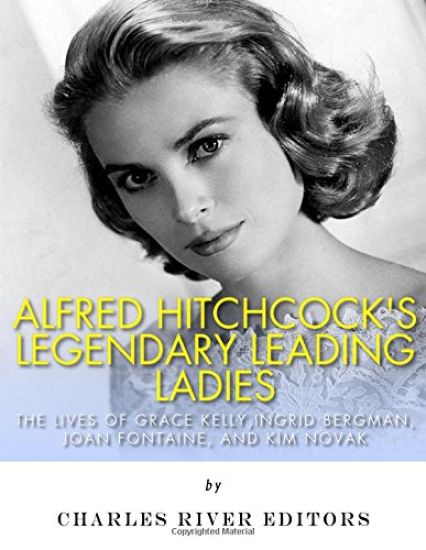
*Includes pictures *Includes quotes and summaries of the famous Hitchcock movies *Includes bibliographies for further reading *Includes a table of contents Considering that her film career lasted just six years, it would seem as though the reputation of Grace Kelly far outweighs her actual output. Indeed, from the time of her arrival in Hollywood in 1951 through her final film, High Society, in 1956, Kelly acted in just 11 films, leaving viewers to wonder whether Kelly was still in the beginning of her career or whether High Society was a proper culmination to an extraordinarily brief stay in the film industry? Ultimately, it is might be most accurate to state that Kelly was still in the prime of her career, but it's unclear what direction her career would have taken, as well as who inherited the void she left. Despite the short resume, Kelly is one of America's most famous actresses, and she left an indelible impact on Hollywood. Kelly brought a well-heeled, almost regal quality that deviated from the film noir roles and musical showgirls who had populated the screen during the 1930s and 1940s, and it is this new identity Kelly brought to the motion picture industry that remains her overriding trademark. Ingrid Bergman's fame cannot be doubted, but the international quality of her career has prevented most people from gaining a complete understanding of her filmography. Moreover, the immense success of her most famous films obscured her other achievements; one of Bergman's persistent lamentations late in her career was that even though she appeared in other films she deemed more significant, the only film of hers that people wanted to discuss was Casablanca. As a result, her early films in Sweden, the Italian Neorealist films she made with famous director and future husband Roberto Rossellini, and her French film with Jean Renoir have all been relegated to the margins. Bergman is thus recognized as a Hollywood star rather than an actress who should be identified with an array of different film industries, reducing the enormous scope of her career to a relatively small proportion of her filmography. In 1939, Olivia de Havilland had her most memorable role as Melanie Hamilton in Gone With the Wind (1939), perhaps the most famous movie in American history, but Hollywood legend has it that she only got the role because her own younger sister, Joan Fontaine, was asked to audition for the part and recommended Olivia instead so that she could audition for Scarlett O'Hara. Although Fontaine and de Havilland would make history by becoming the only sisters to both win an Academy Award for Best Actress, that anecdote was just one of the various stories about the siblings that has shed light on their notoriously contentious and complicated relationship. As Fontaine once put it, "I married first, won the Oscar before Olivia did, and if I die first, she'll undoubtedly be livid because I beat her to it " De Havilland herself once said, "Joan is very bright and sharp and can be cutting." An art student in her early 20s, Novak found herself in Los Angeles by chance and appeared as an extra in a 1954 film to earn money, only to be almost immediately discovered by Columbia and turned into a star when she appeared in Picnic (1955). Picnic began a 10 year run that witnessed Novak become one of the biggest names in Hollywood, starring in major hits like Pal Joey (1957), Middle of the Night (1959), The Notorious Landlady (1962), and Of Human Bondage (1964). However, Novak's most famous role was as one of Alfred Hitchcock's legendary "icy blondes" in Vertigo (1958), beguiling Jimmy Stewart's character to the point of madness in what is widely considered one of the greatest films ever made. In addition to being one of the country's most recognizable and alluring sex icons, the girl who originally wanted to be an artist had reached the upper echelon of Hollywood itself, all before she turned 30.