Kirjojen hintavertailu. Mukana 12 083 983 kirjaa ja 12 kauppaa.

Kirjahaku

Etsi kirjoja tekijän nimen, kirjan nimen tai ISBN:n perusteella.

1000 tulosta hakusanalla Kenneth A Kidd

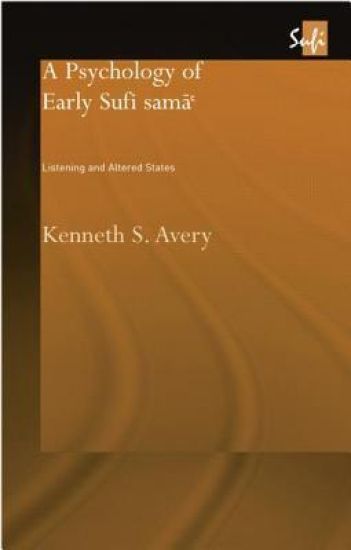
A Psychology of Early Sufi Samâ`

A Psychology of Early Sufi Samâ`

Kenneth S. Avery

Routledge
2015
nidottu
Avery explores the psychology of altered states among the early Sufis. It examines samâ` - listening to ritual recitation, music and certain other aural phenomena - and its effect in inducing unusual states of consciousness and behaviours. The focus is on the earliest personalities of the Islamic mystical tradition, as mediated by texts from the tenth to the twelfth centuries C.E. These unusual states are interpreted in the light of current research in Western psychology, and also in terms of their integration into historical Islamic culture.A Psychology of Early Sufi Samâ` provides new insights into the work of five Sufi authors, and a fresh approach to the relation between historical accounts of altered states and current psychological thinking.
Urbanization as a Social Process

Urbanization as a Social Process

Kenneth Little

Routledge
2013
nidottu
Urbanization is probably the most important process taking place in African countries. This book provides a lucid and informative study of the significance of urbanization for social change in sub-Saharan Africa, which has vital implications for all developing regions. Originally published in 1974.
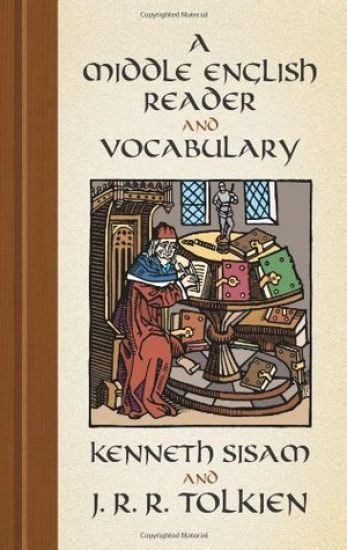
A Middle English Reader and a Middle English Vocabulary

A Middle English Reader and a Middle English Vocabulary

Kenneth Sisam; J. R. R. Tolkien

DOVER PUBLICATIONS
2005
nidottu
Scholarly and highly informative, this anthology represents a distinctive contribution to the understanding and enjoyment of Middle English literature. Kenneth Sisam's well-chosen extracts from writings of the 14th century illustrate a rising new spirit in vernacular works. Selections include excerpts from such tales as Sir Gawayne and the Grene Knight and the Gest Hystoriale of the destruction of Troy, the immortal Piers Plowman, John Wycliffe's translation of the Bible, political commentaries, and poetry. In addition to notes on each selection and an informative appendix, this volume features an extensive glossary by J. R. R. Tolkien. Best known as the author of The Lord of the Rings, Tolkien was an Oxford University professor of linguistics whose "vocabulary" offers an effective and practical complement to this outstanding anthology.
A Digital Signal Processing Primer: with Applications to Digital Audio and Computer Music
An informal and easy-to-understand introduction to digital signal processing, this treatment emphasizes digital audio and applications to computer music. Topics include: • Phasors and tuning forks • The wave equation • Sampling and quantizing • Feedforward and feedback filters • Comb and string filters • Periodic sounds • Transform methods • Filter design The text provides a working knowledge and understanding of frequency-domain methods and features questions and suggested experiments that help readers understand and apply digital signal processing theory and techniques. For undergraduate and graduate students of digital signal processing in engineering and computer science courses, composers of computer music and those who work with digital sound, internet developers who work with multimedia, and science-oriented readers seeking an introduction to the subject.
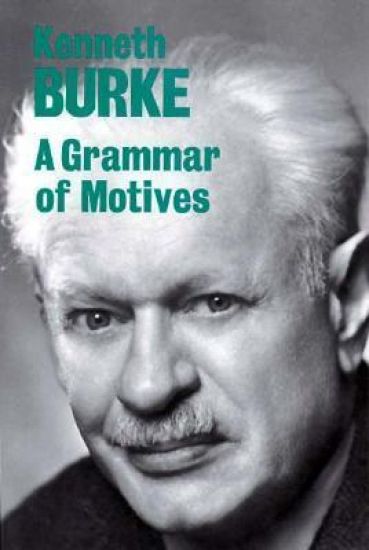
A Grammar of Motives

A Grammar of Motives

Kenneth Burke

University of California Press
1969
pokkari
Mr. Burke contributes an introductory and summarizing remark, "What is involved, when we say what people are doing and why they are doing it? An answer to that question is the subject of this book. The book is concerned with the basic forms of through which, in accordance with the nature of the world as all men necessarily experience it, are exemplified in the attributing of motives. These forms of though can be embodied profoundly or trivially, truthfully or falsely. They are equally present in systematically elaborated or metaphysical structures, in legal judgements, in poetry and fiction, in political and scientific works, in news and in bits of gossip offered at random."
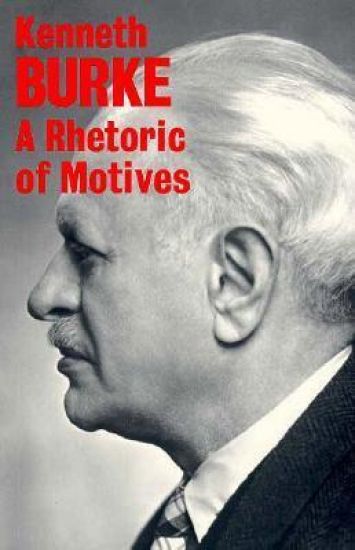
A Rhetoric of Motives

A Rhetoric of Motives

Kenneth Burke

University of California Press
1969
pokkari
As critic, Kenneth Burke's preoccupations were at the beginning purely aesthetic and literary; but after "Counter-Statement" (1931), he began to discriminate a 'rhetorical' or persuasive component in literature, and thereupon became a philosopher of language and human conduct. In "A Grammar of Motives" (1945) and "A Rhetoric of Motives" (1950), Burke's conception of 'symbolic action' comes into its own: all human activities - linguistic or extra-linguistic - are modes of symbolizing; man is defined as the symbol-using (and -misusing) animal. The critic's job becomes one of the interpreting human symbolizing wherever he finds it, with the aim of illuminating human motivation. Thus the reach of the literary critic now extends to the social and ethical. "A Grammar of Motives" is a 'methodical meditation' on such complex linguistic forms as plays, stories, poems, theologies, metaphysical systems, political philosophies, and constitutions. "A Rhetoric of Motives" expands the field to human ways of persuasion and identification. Persuasion, as Burke sees it, 'ranges from the bluntest quest of advantage, as in sales promotion or propaganda, through courtship, social etiquette, education, and the sermon, to a 'pure' form that delights in the process of appeal for itself alone, without ulterior purpose. And identification ranges from the politician who, addressing an audience of farmers, says, 'I was a farm boy myself,' through the mysteries of social status, to the mystic's devout identification with the sources of all being.'
A History of Shakespeare on Screen

A History of Shakespeare on Screen

Kenneth S. Rothwell

Cambridge University Press
2004
pokkari
A History of Shakespeare on Screen chronicles how film-makers have re-imagined Shakespeare’s plays from the earliest exhibitions in music halls and nickelodeons to today’s multi-million dollar productions shown in megaplexes. Topics include the silent era, Hollywood in the Golden Age, the films of Laurence Olivier and Orson Welles, the television scene to include the BBC plays, the avant-garde cinema of Jarman and Greenaway, and non-Anglophone contributions from Japan and elsewhere. This second edition updates the chronology to the year 2003 and includes a new chapter on such recent films as John Madden’s Shakespeare in Love, Kenneth Branagh’s Love’s Labours Lost, Michael Almereyda’s Hamlet, and Billy Morrissette’s Scotland, Pa. An up-to-date filmography, bibliography, and index of names makes it invaluable as a one-volume reference work for specialists, while the accessible style will ensure that it also appeals to a wider audience of Shakespeareans and cinephiles.
Tippett: A Child of our Time

Tippett: A Child of our Time

Gloag Kenneth

Cambridge University Press
1999
pokkari
Michael Tippett’s oratorio A Child of Our Time was written at the beginning of the second world war as an expression of ‘man’s inhumanity to man’. It has become one of his most widely known works and one which is seen to symbolise the composer’s extra-musical concerns, both political and psychological. This study places these concerns within a wider historical and cultural context while also focusing on specific aspects of Tippett’s musical language. Central to this enquiry is Tippett’s relationship to the work of T. S. Eliot, a relationship which is seen to condition both the text and its musical representation through Tippett’s allusions to specific poetic images within the text and references to historical genres, forms and gestures within the musical dimension. Also of importance is the initial critical reception of the work, a reception which determined responses that still surround the work.
A Movable Feast

A Movable Feast

Kenneth F. Kiple

Cambridge University Press
2007
sidottu
Pepper was once worth its weight in gold. Onions have been used to cure everything from sore throats to foot fungus. White bread was once considered too nutritious. From hunting water buffalo to farming salmon, A Movable Feast chronicles the globalization of food over the past ten thousand years. This engaging history follows the path that food has taken throughout history and the ways in which humans have altered its course. Beginning with the days of hunter-gatherers and extending to the present world of genetically modified chickens, Kenneth F. Kiple details the far-reaching adventure of food. He investigates food's global impact, from the Irish potato famine to the birth of McDonald's. Combining fascinating facts with historical evidence, this is a sweeping narrative of food's place in the world. Looking closely at geographic, cultural and scientific factors, this book reveals how what we eat has transformed over the years from fuel to art.
A History of Shakespeare on Screen

A History of Shakespeare on Screen

Kenneth S. Rothwell

Cambridge University Press
2004
sidottu
A History of Shakespeare on Screen chronicles how film-makers have re-imagined Shakespeare’s plays from the earliest exhibitions in music halls and nickelodeons to today’s multi-million dollar productions shown in megaplexes. Topics include the silent era, Hollywood in the Golden Age, the films of Laurence Olivier and Orson Welles, the television scene to include the BBC plays, the avant-garde cinema of Jarman and Greenaway, and non-Anglophone contributions from Japan and elsewhere. This second edition updates the chronology to the year 2003 and includes a new chapter on such recent films as John Madden’s Shakespeare in Love, Kenneth Branagh’s Love’s Labours Lost, Michael Almereyda’s Hamlet, and Billy Morrissette’s Scotland, Pa. An up-to-date filmography, bibliography, and index of names makes it invaluable as a one-volume reference work for specialists, while the accessible style will ensure that it also appeals to a wider audience of Shakespeareans and cinephiles.
A History of the Hasmonean State

A History of the Hasmonean State

Kenneth Atkinson

T. T.Clark Ltd
2016
sidottu
Kenneth Atkinson tells the exciting story of the nine decades of the Hasmonean rule of Judea (152 - 63 BCE) by going beyond the accounts of the Hasmoneans in Josephus in order to bring together new evidence to reconstruct how the Hasmonean family transformed their kingdom into a state that lasted until the arrival of the Romans. Atkinson reconstructs the relationships between the Hasmonean state and the rulers of the Seleucid and the Ptolemaic Empires, the Itureans, the Nabateans, the Parthians, the Armenians, the Cappadocians, and the Roman Republic. He draws on a variety of previously unused sources, including papyrological documentation, inscriptions, archaeological evidence, numismatics, Dead Sea Scrolls, pseudepigrapha, and textual sources from the Hellenistic to the Byzantine periods.Atkinson also explores how Josephus’s political and social situation in Flavian Rome affected his accounts of the Hasmoneans and why any study of the Hasmonean state must go beyond Josephus to gain a full appreciation of this unique historical period that shaped Second Temple Judaism, and created the conditions for the rise of the Herodian dynasty and the emergence of Christianity.
A History of the Hasmonean State

A History of the Hasmonean State

Kenneth Atkinson

T. T.Clark Ltd
2019
nidottu
Kenneth Atkinson tells the exciting story of the nine decades of the Hasmonean rule of Judea (152 - 63 BCE) by going beyond the accounts of the Hasmoneans in Josephus in order to bring together new evidence to reconstruct how the Hasmonean family transformed their kingdom into a state that lasted until the arrival of the Romans. Atkinson reconstructs the relationships between the Hasmonean state and the rulers of the Seleucid and the Ptolemaic Empires, the Itureans, the Nabateans, the Parthians, the Armenians, the Cappadocians, and the Roman Republic. He draws on a variety of previously unused sources, including papyrological documentation, inscriptions, archaeological evidence, numismatics, Dead Sea Scrolls, pseudepigrapha, and textual sources from the Hellenistic to the Byzantine periods.Atkinson also explores how Josephus’s political and social situation in Flavian Rome affected his accounts of the Hasmoneans and why any study of the Hasmonean state must go beyond Josephus to gain a full appreciation of this unique historical period that shaped Second Temple Judaism, and created the conditions for the rise of the Herodian dynasty and the emergence of Christianity.
A Brief Guide to Philo

A Brief Guide to Philo

Kenneth Schenck

Westminster/John Knox Press,U.S.
2005
nidottu
This is a compact introduction to the work of Philo (c. 20 BCE-50 CE), the important Jewish thinker and scriptural interpreter. Kenneth Schenck provides a guide for understanding Philo's complex works, a roadmap for topics and contents of Philo's writings, and a description of contemporary research so students can easily find their ways into Philo study.