Kirjojen hintavertailu. Mukana 11 699 587 kirjaa ja 12 kauppaa.

Kirjahaku

Etsi kirjoja tekijän nimen, kirjan nimen tai ISBN:n perusteella.

1000 tulosta hakusanalla Kenneth Allen Patrick

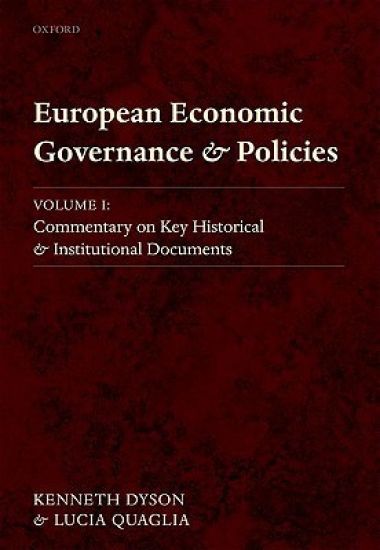
European Economic Governance and Policies

European Economic Governance and Policies

Kenneth Dyson; Lucia Quaglia

Oxford University Press
2010
sidottu
The creation of the single European currency and of the European Central Bank in the context of a wider economic and political union has been one of the most important projects of institution-building and policy development in post-1945 Europe. This book seeks both to place this project in its longer-term historical context and to complement the many secondary texts on this highly topical subject. It brings together for the first time, and offers analytical commentary on, the classic documents relevant to the process of constructing and developing European economic governance based on Economic and Monetary Union (EMU). The book includes the 'classic' documents concerned with EMU and economic governance from before 1914 to the launch of European monetary union on 1 January 1999. The book makes available a large collection of often neglected historical documents about the governance of the European economy, based around the creation of EMU. They are presented in a convenient and accessible form both for scholars and students and for market and policy practitioners concerned with the historical development of Europe's political economy. Those who are new to the subject should benefit from easy access to basic texts and related commentaries and references. Those who are more familiar with EMU will have a single key source of comprehensive and up-to-date references in terms of which past and current debates and policies have been framed. The primary sources that are made available here would otherwise be costly to access and use. In many cases documents have been rescued from obscurity. Their availability should help to inform and enrich public debate about the historical development of EMU and how the European economy is governed. In addition, the book offers extensive commentaries at the beginning of each section as well as on individual documents that seek to clarify changes in meanings and understandings over time and the background to these changes.
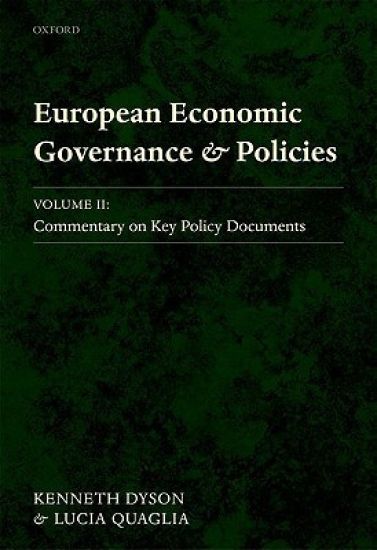
European Economic Governance and Policies

European Economic Governance and Policies

Kenneth Dyson; Lucia Quaglia

Oxford University Press
2010
sidottu
The creation of the single European currency and of the European Central Bank in the context of a wider economic and political union has been one of the most important projects of institution-building and policy development in post-1945 Europe. This book seeks both to place this project in its longer-term historical context and to complement the many secondary texts on this highly topical subject. It brings together for the first time, and offers analytical commentary on, the classic documents relevant to the process of constructing and developing European economic governance based on Economic and Monetary Union (EMU). The book includes the key documents concerned with developing and implementing policies from the period of inception and launch of European monetary union on 1 January 1999 to the end of its first decade and the onset of the global financial and economic crisis. The book makes available a large collection of documents about the policies and governance of the European economy, based around the creation of EMU. They are presented in a convenient and accessible form both for scholars and students and for market and policy practitioners concerned with the development of Europe's political economy. Those who are new to the subject should benefit from easy access to basic texts and related commentaries and references. Those who are more familiar with EMU will have a single key source of comprehensive and up-to-date references in terms of which past and current debates and policies have been framed. The primary sources that are made available here would otherwise be costly to access and use. In many cases documents have been rescued from obscurity. Their availability should help to inform and enrich public debate about the historical development of EMU and how the European economy is governed. In addition, the book offers extensive commentaries at the beginning of each section as well as on individual documents that seek to clarify changes in meanings and understandings over time and the background to these changes.
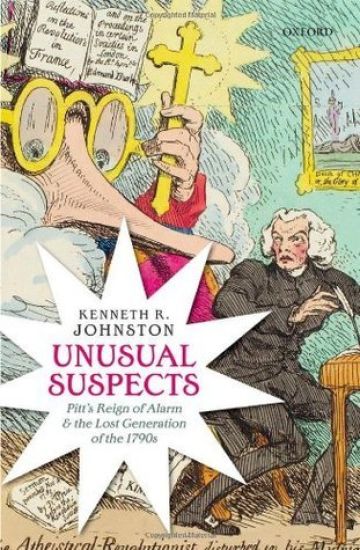
Unusual Suspects

Unusual Suspects

Kenneth R. Johnston

Oxford University Press
2013
sidottu
Robespierre's Reign of Terror spawned an evil little twin in William Pitt the Younger's Reign of Alarm, 1792-1798. Terror begat Alarm. Many lives and careers were ruined in Britain as a result of the alarmist regime Pitt set up to suppress domestic dissent while waging his disastrous wars against republican France. Liberal young writers and intellectuals whose enthusiasm for the American and French revolutions raised hopes for Parliamentary reform at home saw their prospects blasted. Over a hundred trials for treason or sedition (more than ever before or since in British history) were staged against 'the usual suspects' - that is, political activists. But other, informal, vigilante means were used against the 'unusual suspects' of this book: jobs lost, contracts abrogated, engagements broken off, fellowships terminated, inheritances denied, and so on and on. As in the McCarthy era in 1950s America, blacklisting and rumor-mongering did as much damage as legal repression. Dozens of 'almost famous' writers saw their promising careers nipped in the bud: people like Helen Maria Williams, James Montgomery, William Frend, Gilbert Wakefield, John Thelwall, Joseph Priestley, Dr. Thomas Beddoes, Francis Wrangham and many others. Unusual Suspects tells the stories of some representative figures from this largely 'lost' generation, restoring their voices to nationalistic historical accounts that have drowned them in triumphal celebrations of the rise of English Romanticism and England's ultimate victory over Napoleon. Their stories are compared with similar experiences of the first Romantic generation: Coleridge, Wordsworth, Southey, Lamb, Burns, and Blake. Wordsworth famously said of this decade, 'bliss was it in that dawn to be alive, but to be young was very heaven!' These young people did not find it so-and neither, when we look more closely, did Wordsworth.
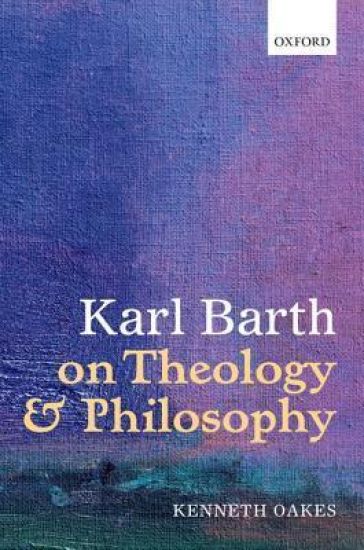
Karl Barth on Theology and Philosophy

Karl Barth on Theology and Philosophy

Kenneth Oakes

Oxford University Press
2012
sidottu
Karl Barth is often assumed to have been hostile to philosophy, wilfully ignorant of it, or too indebted to its conclusions for his own theological good. These truisms of twentieth-century theology are challenged in this original and comprehensive account of Barth's understanding of the relationship between theology and philosophy. Drawing upon a range of material from Barth's earliest writings (1909) up until interviews and roundtable discussions that took place shortly before his death (1968), Kenneth Oakes offers a developmental account of Barth's thoughts on philosophy and theology. Beginning with the nineteenth-century intellectual background to Barth's earliest theology, Oakes presents the young and 'liberal' Barth's understanding of the relationship between theology and philosophy and then tracks this understanding throughout the rest of Barth's career. While Barth never finally settled on a single, fixed account of theology and philosophy, there was still a great deal of continuity regarding this topic in Barth's oeuvre. Looking through the lens of theology and philosophy Barth's continual indebtedness to nineteenth-century modern theology is clearly seen, as well as his attempts and struggles to move beyond it. In addition to locating Barth's account of theology and philosophy historically, this study also gives attention to the specific doctrines and theological presuppositions that inform Barth's different portrayals of the relationship between theology and philosophy. Oakes asks how and why Barth used material from the doctrines under consideration-such as revelation, theological ethics, Christology- to talk about theology and philosophy. Barth is shown to have been concerned not only with the integrity and independence of theological discourse but also with the idea that theology should not lose its necessary and salutary interactions with philosophy. Finally, Oakes also considers the reception of Barth's thought in some of the luminary figures of twentieth-century philosophy, and identifies the three main impressions philosophers have had of Barth's life and work.
Fractals

Fractals

Kenneth Falconer

Oxford University Press
2013
nidottu
Many are familiar with the beauty and ubiquity of fractal forms within nature. Unlike the study of smooth forms such as spheres, fractal geometry describes more familiar shapes and patterns, such as the complex contours of coastlines, the outlines of clouds, and the branching of trees. In this Very Short Introduction, Kenneth Falconer looks at the roots of the 'fractal revolution' that occurred in mathematics in the 20th century, presents the 'new geometry' of fractals, explains the basic concepts, and explores the wide range of applications in science, and in aspects of economics. This is essential introductory reading for students of mathematics and science, and those interested in popular science and mathematics. ABOUT THE SERIES: The Very Short Introductions series from Oxford University Press contains hundreds of titles in almost every subject area. These pocket-sized books are the perfect way to get ahead in a new subject quickly. Our expert authors combine facts, analysis, perspective, new ideas, and enthusiasm to make interesting and challenging topics highly readable.
The Functions of Law

The Functions of Law

Kenneth M. Ehrenberg

Oxford University Press
2016
sidottu
What is the nature of law and what is the best way to discover it? This book argues that law is best understood in terms of the social functions it performs wherever it is found in human society. In order to support this claim, law is explained as a kind of institution and as a kind of artefact. To say that it is an institution is to say that it is designed for creating and conferring special statuses to people so as to alter their rights and responsibilities toward each other. To say that it is an artefact is to say that it is a tool of human creation that is designed to signal its usability to people who interact with it. This picture of law's nature is marshalled to critique theories of law that see it mainly as a product of reason or morality, understanding those theories via their conceptions of law's function. It is also used to argue against those legal positivists who see law's functions as relatively minor aspects of its nature. This method of conceptualizing law's nature helps us to explain how the law, understood as social facts, can make normative demands upon us. It also recommends a methodology for understanding law that combines elements of conceptual analysis with empirical research for uncovering the purposes to which diverse peoples put their legal activities.
Nuclear Dawn

Nuclear Dawn

Kenneth D. McRae

Oxford University Press
2014
sidottu
This book provides a rounded biography of Franz (later Sir Francis) Simon, his early life in Germany, his move to Oxford in 1933, and his experimental contributions to low temperature physics approximating absolute zero. After 1939 he switched his research to nuclear physics, and is credited with solving the problem of uranium isotope separation by gaseous diffusion for the British nuclear programme Tube Alloys. The volume is distinctive for its inclusion of source materials not available to previous researchers, such as Simon's diary and his correspondence with his wife, and for a fresh, well-informed insider voice on the five-power nuclear rivalry of the war years. The work also draws on a relatively mature nuclear literature to attempt a comparison and evaluation of the five nuclear rivals in wider political and military context, and to identify the factors, or groups of factors, that can explain the results.
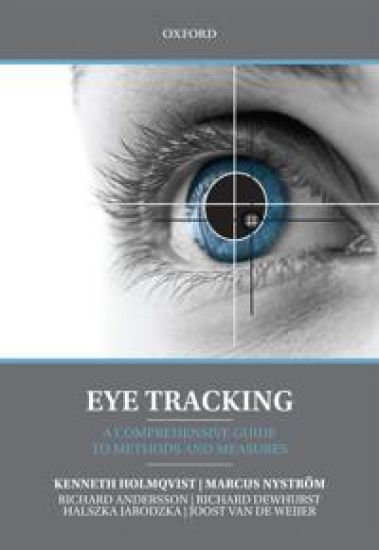
Eye Tracking

Eye Tracking

Kenneth Holmqvist; Marcus Nyström; Richard Andersson; Richard Dewhurst; Halszka Jarodzka; Joost van de Weijer

Oxford University Press
2011
sidottu
We make 3-5 eye movements per second, and these movements are crucial in helping us deal with the vast amounts of information we encounter in our everyday lives. In recent years, thanks to the development of eye tracking technology, there has been a growing interest in monitoring and measuring these movements, with a view to understanding how we attend to and process the visual information we encounter Eye tracking as a research tool is now more accessible than ever, and is growing in popularity amongst researchers from a whole host of different disciplines. Usability analysts, sports scientists, cognitive psychologists, reading researchers, psycholinguists, neurophysiologists, electrical engineers, and others, all have a vested interest in eye tracking for different reasons. The ability to record eye-movements has helped advance our science and led to technological innovations. However, the growth of eye tracking in recent years has also presented a variety of challenges - in particular the issue of how to design an eye-tracking experiment, and how to analyse the data. This book is a much needed comprehensive handbook of eye tracking methodology. It describes how to evaluate and acquire an eye-tracker, how to plan and design an eye tracking study, and how to record and analyse eye-movement data. Besides technical details and theory, the heart of this book revolves around practicality - how raw data samples are converted into fixations and saccades using event detection algorithms, how the different representations of eye movement data are calculated using AOIs, heat maps and scanpaths, and how all the measures of eye movements relate to these processes. Part I presents the technology and skills needed to perform high-quality research with eye-trackers. Part II covers the predominant methods applied to the data which eye-trackers record. These include the parsing of raw sample data into oculomotor events, and how to calculate other representations of eye movements such as heat maps and transition matrices. Part III gives a comprehensive outline of the measures which can be calculated using the events and representations described in Part II. This is a taxonomy of the measures available to eye-tracking researchers, sorted by type of movement of the eyes and type of analysis. For anyone in the sciences considering conducting research involving eye-tracking, this book will be an essential reference work.
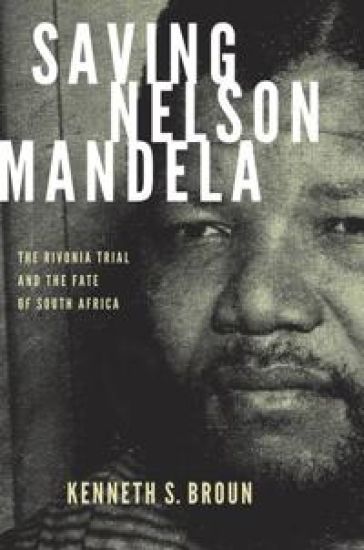
Saving Nelson Mandela

Saving Nelson Mandela

Kenneth S. Broun

Oxford University Press Inc
2012
sidottu
When South Africa's apartheid government charged Nelson Mandela with planning its overthrow in 1963, most observers feared that he would be sentenced to death. But the support he and his fellow activists in the African National Congress received during his trial not only saved his life, but also enabled him to save his country. In Saving Nelson Mandela, South African law expert Kenneth S. Broun recreates the trial--called the "Rivonia" Trial after the Johannesburg suburb where police seized Mandela. Based upon interviews with many of the case's primary figures and portions of the trial transcript, Broun situates readers inside the courtroom at the imposing Palace of Justice in Pretoria. Here, the trial unfolds through a dramatic narrative that captures the courage of the accused and their defense team, as well as the personal prejudices that colored the entire trial. The Rivonia trial had no jury and only a superficial aura of due process, combined with heavy security that symbolized the apartheid government's system of repression. Broun shows how outstanding advocacy, combined with widespread public support, in fact backfired on apartheid leaders, who sealed their own fate. Despite his 27-year incarceration, Mandela's ultimate release helped move his country from the racial tyranny of apartheid toward democracy. As documented in this inspirational book, the Rivonia trial was a critical milestone that helped chart the end of Apartheid and the future of a new South Africa.
Let Me Heal

Let Me Heal

Kenneth M. Ludmerer

Oxford University Press Inc
2014
sidottu
In Let Me Heal, prize-winning author Kenneth M.Ludmerer provides the first-ever account of the residency system for training doctors in the United States and, by tracing its evolution, explores how the residency system is of fundamental importance to the health of the nation. In the making of a doctor, the residency system represents the dominant formative influence. It is during the three to nine years spent in residency that doctors come of professional age, acquiring the knowledge and skills of their specialty or subspecialty, forming a professional identify, and developing habitts, behaviors, attitudes, and values that last a professional lifetime. Let Me Heal examines all dimensions of the residency system: historical evolution, educational principles, moral underpinnings, financing and administration, and cultural components. It focuses on the experience of being a resident, on how that experience has changed over time, and on how well the residency system is fulfilling its obligation to produce outstanding doctors. Most importantly, it analyzes the mutual relationship beetween residency education and patient care in America. The book shows that the quality of residency training ultimately depends on the quality of patient care that residents observe, but that there is much that residency training can do to produce doctors who practice in a better, more affordable fashion.
The Quest for Ecstatic Morality in Early China

The Quest for Ecstatic Morality in Early China

Kenneth W. Holloway

Oxford University Press Inc
2013
sidottu
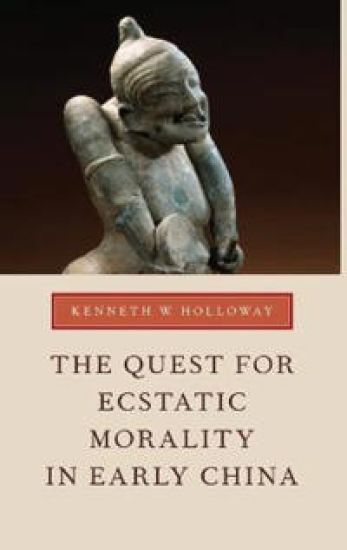
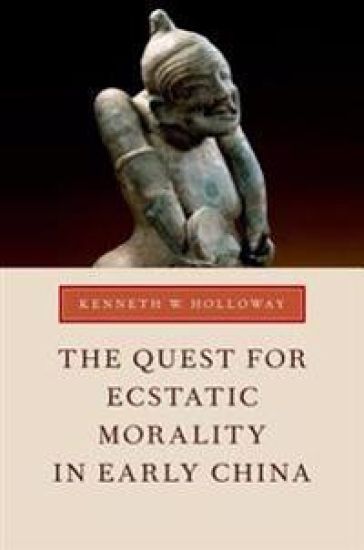
There is an intense love of freedom evident in the "Xing zi mingchu," a text last seen when it was buried in a Chinese tomb in 300 B.C.E. It tells us that both joy and sadness are the ecstatic zenith of what the text terms "qing." Combining emotions into qing allows them to serve as a stepping stone to the Dao, the transcendent source of morality for the world. There is a process one must follow to prepare qing: it must be beautified by learning from the classics written by ancient sages. What is absent from the process is any indication that the emotions themselves need to be suppressed or regulated, as is found in most other texts from this time. The Confucian principles of humanity and righteousness are not rejected, but they are seen as needing our qing and the Dao. Holloway argues that the Dao here is the same Dao of Laozi's Daode jing. As a missing link between what came to be called Confucianism and Daoism, the "Xing zi mingchu" is changing the way we look at the history of religion in early China.
Epidemiology

Epidemiology

Kenneth J. Rothman

Oxford University Press Inc
2012
nidottu
Across the last forty years, epidemiology has developed into a vibrant scientific discipline that brings together the social and biological sciences, incorporating everything from statistics to the philosophy of science in its aim to study and track the distribution and determinants of health events. A now-classic text, the second edition of this essential introduction to epidemiology presents the core concepts in a unified approach that aims to cut through the fog and elucidate the fundamental concepts. Rather than focusing on formulas or dogma, the book presents basic epidemiologic principles and concepts in a coherent and straightforward exposition. By emphasizing a unifying set of ideas, students will develop a strong foundation for understanding the principles of epidemiologic research.
Copycrafting: Editing for Journalism Today

Copycrafting: Editing for Journalism Today

Kenneth Rosenauer

Oxford University Press
2013
nidottu
From newspapers to Twitter(R), the media's ability to deliver news and interact with audiences is constantly changing. In Copycrafting, author Kenneth Rosenauer provides aspiring journalists and copyeditors with the essential tools for delivering content effectively and correctly, regardless of the media platform. More than just the basics of copyediting and AP style, this complete package provides a wealth of examples and exercises for practice. This allows students to actively learn the editing skills that they will need to flourish in the constantly evolving media landscape. Features* Excellent coverage of AP style with explanations and examples* Tips on writing headlines, editing problem leads, editing images and designing pages* Stories for students to edit * An Appendix that contains a directory for students to consult as they complete the exercises * A Solutions Manual with corrected versions of every exercise in the book, available to instructors on the Companion Website (www.oup.com/us/rosenauer)
Introduction to Game Theory: A Behavioral Approach

Introduction to Game Theory: A Behavioral Approach

Kenneth C. Williams

Oxford University Press
2012
nidottu
Ideal for social science courses in game theory and research methods, Introduction to Game Theory: A Behavioral Approach explains basic game theory concepts--up to and including Bayesian Nash equilibrium--using results from laboratory experiments that examine how real people behave in standard modeled games. Working from the premise that the crux of game theory lies in thinking logically about a problem and formulating research questions based on theory, author Kenneth C. Williams takes a nontechnical, behavioral approach that is accessible to students with minimal math skills. Incorporating a wide range of experiments with diverse designs, Introduction to Game Theory is also enhanced by numerous pedagogical features: * Extensive problem sets, in-class experiments, and sample exams * Numerical examples for all of the exercises * Key terms and concepts for behavioral game theory--which differ from those for standard game theory--and a glossary * Supplemental lecture material and Internet resources--online games, videos, lectures, problems sets, exams, and experiments that students can participate in
Introduction to Game Theory: A Behavioral Approach

Introduction to Game Theory: A Behavioral Approach

Kenneth Williams

Oxford University Press Inc
2013
nidottu
Game theory studies the strategic interaction of people within various institutions such as political, economic, or other social institutions that are governed by a set or rules or principals. Game theory provides solutions to these strategic interactions by developing models based on assumptions about human behavior and the institution where the interaction occurs. Game theory is an interdisciplinary method to examine decision making in the fields of economics, political science, psychology, sociology, mathematics, computer programming, and biology. This book is an introduction to game theory but differs from other excellent introduction game theory texts by taking a behavioral approach. This means that basic game theory concepts are explained by using results from laboratory experiments that examine how real people behave when they participate in the games that are modeled. This approach is referred to as behavioral game theory and it seeks to use psychological reasoning to explain deviations in the predictions of standard game theory models. Behavior game theory allows for the study of how human emotions affect decision making using the assumptions of game theory. Although the study of game theory is somewhat technical because it uses mathematics to construct the various models, the intuition behind game theory is actually normative and nontechnical. This book takes a very nontechnical approach to the study of game theory so that only minimum math skills are needed to follow the discussion in the book. The importance of game theory lies in the deductive process of reasoning and understanding how to construct models of social interaction, and not the mathematics that are involved.
Relational Being

Relational Being

Kenneth J. Gergen

Oxford University Press Inc
2011
nidottu
Relational Being first builds on the broad discontent with the individualist tradition in which the rational agent, or autonomous self, is considered the fundamental atom of social life. Speaking to scholars and social practitioners, the work sets out to develop and illustrate a far more radical and potentially exciting landscape of relational thought and practice. It carves out a space of understanding in which relational process stands prior to the very concept of the individual. More broadly, the book attempts to develop a thoroughgoing relational account of human activity. As Gergen proposes, all meaning grows from coordinated action, or coaction, and thus, all that we hold to be real, rational, and valuable depends on the well-being of our relationships. Gergen reconstitutes "the mind" as a manifestation of relationships and bears out these ideas in everyday life and professional practices, including psychotherapy, collaborative classrooms, and organizational development. He questions the idea of mental illness, and focuses on therapy as a means of fostering relational recovery. Gergen also explores the ways in which what we call "knowledge" issues from communities, rather than from individual minds. The volume concludes with an innovative exploration of moral action and spirituality.
Pride and Joy

Pride and Joy

Kenneth Barish

Oxford University Press Inc
2012
nidottu
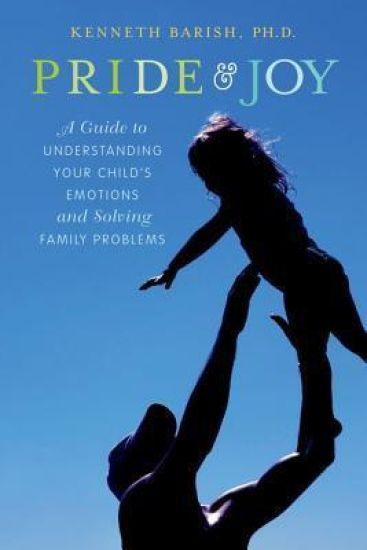
Pride and Joy provides guidance to parents on how they can preserve and strengthen feelings of joyfulness and pride in their relationships with their children, while also nurturing their children's optimism and resilience in the face of life's inevitable disappointments. Kenneth Barish, a child psychologist with over 30 years of clinical experience, begins with a discussion of the importance of the child's emotions - and our own - in optimal child development. In Part I, he presents a child therapist's understanding, supported by scientific research, of healthy and unhealthy emotional development in childhood - what goes right and what goes wrong in the lives healthy and troubled children and families. In Part II, the author discusses four principles of emotional health and character development: Positiveness, Repair, Getting Along with Others, and the development of A Moral Self. Part III addresses problems of daily family life - rules and limits, doing homework and going to sleep, winning and losing at games, our children's reluctance to talk to us, their tantrums and lack of motivation, and their addiction to television and video games. Barish presents recommendations for solving these common problems that so often erode the joyfulness of children and adults' pleasure in being a parent. Over the course of the book, Barish also tackles some of the major issues and controversies of contemporary parenting: Have we created a "culture of indulgence" that is harmful to our society and to our children? Are we over-protective and over-solicitous? Are our children "over-praised?" How can we balance our concern for our children's achievement with their responsibilities as citizens? How can we strengthen their sense of purpose and their commitment to ideals? How can we provide our children with effective guidance and discipline when children, as they inevitably will, misbehave? Barish also informs parents of recent advances in developmental, clinical, and neuroscience research - research that has important implications for children's emotional health. These include the importance of emotional communication in families, the profound importance of interactive play in children's social and emotional development, and what kind of praise is helpful to children. He also discusses the importance of "doing for others" and recent research on television and video game violence, and new knowledge of what really works when parents must discipline our children. This book is written for parents of young children - those struggling with chronic child behavior problems as well as those who simply wish to parent mindfully and compassionately, and who are interested in how the latest developmental research can inform good parenting practices.
International Criminal Jurisdiction

International Criminal Jurisdiction

Kenneth S. Gallant

Oxford University Press Inc
2022
sidottu
International Criminal Jurisdiction is a treatise for anyone conducting research into how domestic and international regimes create and enforce rules for personal and subject matter jurisdiction in transnational or international criminal cases. It is the only such treatise in English on this topic. Attorneys representing corporate executives in white collar criminal cases will be able to use this book to construct challenges to a foreign court's exercise of jurisdiction over those clients. Legal scholars wishing to critique foreign domestic courts for defying suppression treaties will find in this book information on how and why those courts are doing so. Law students will turn to this book for distinctions between international criminal tribunals and domestic courts in the exercise of personal jurisdiction over government officials. The book provides complete details on how domestic legislatures and the U.N. have created statutory and treaty-based rules expanding or even limiting courts' and tribunals' jurisdiction over certain crimes and certain categories of defendants. This research serves the book's function as a thorough guide to jurisdictional questions that arise when criminal acts or criminals cross borders. Questions include whether a defendant possesses standing to challenge an international tribunal's personal jurisdiction over him, what happens when a given domestic regime neglects to criminalize conduct prohibited by a new treaty, and why some domestic courts choose not to exercise extraterritorial jurisdiction.
The Quest for Ecstatic Morality in Early China

The Quest for Ecstatic Morality in Early China

Kenneth W. Holloway

Oxford University Press Inc
2013
nidottu
There is an intense love of freedom evident in the "Xing zi mingchu," a text last seen when it was buried in a Chinese tomb in 300 B.C.E. It tells us that both joy and sadness are the ecstatic zenith of what the text terms "qing." Combining emotions into qing allows them to serve as a stepping stone to the Dao, the transcendent source of morality for the world. There is a process one must follow to prepare qing: it must be beautified by learning from the classics written by ancient sages. What is absent from the process is any indication that the emotions themselves need to be suppressed or regulated, as is found in most other texts from this time. The Confucian principles of humanity and righteousness are not rejected, but they are seen as needing our qing and the Dao. Holloway argues that the Dao here is the same Dao of Laozi's Daode jing. As a missing link between what came to be called Confucianism and Daoism, the "Xing zi mingchu" is changing the way we look at the history of religion in early China.