Kirjojen hintavertailu. Mukana 11 717 486 kirjaa ja 12 kauppaa.

Kirjahaku

Etsi kirjoja tekijän nimen, kirjan nimen tai ISBN:n perusteella.

1000 tulosta hakusanalla Kerry Larson

Endorsements in Advertising

Endorsements in Advertising

Kerry Segrave

McFarland Co Inc
2005
pokkari
The use of endorsements and testimonials to sell anything imaginable is a modern development, though the technique is centuries old. Before World War I, endorsement ads were tied to patent medicine, and were left with a bad reputation when that industry was exposed as quackery. The reputation was well earned: claims of a product's curative powers sometimes ran opposite the endorser's obituary, and Lillian Russell once testified that a certain compound had made her "feel like a new man." Distrusted by the public, banished from mainstream publications, endorsements languished until around 1920, but returned with a vengeance with the growth of consumerism and modern media. Despite its questionable effectiveness, endorsement advertising is now ubiquitous, costing advertisers (and consequently consumers) hundreds of millions of dollars annually. This exploration of modern endorsement advertising--paid or unsolicited testimonials endorsing a product--follows its evolution from a marginalized, mistrusted technique to a multibillion-dollar industry. Chapters recount endorsement advertising's changing form and fortunes, from Lux Soap's co-opting of early Hollywood to today's lucrative industry dependent largely on athletes. The social history of endorsement advertising is examined in terms of changing ethical and governmental views, shifting business trends, and its relationship to the growth of modern media, while the money involved and the question of effectiveness are scrutinized. The illustrated text includes five appendices that focus on companies, celebrities, athletes and celebrity endorsements.
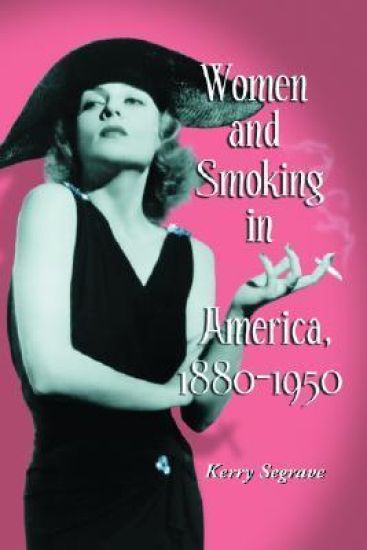
Women and Smoking in America, 1880-1950

Women and Smoking in America, 1880-1950

Kerry Segrave

McFarland Co Inc
2005
pokkari
During the last 20 years of the 19th century, cigarette smoking was transformed from a lower-class habit to a favored form of tobacco use for men and practically the only form available to women. The trend continued to grow through the 1950s, when smoking was a significant part of America's social fabric for both men and women. This social history traces the evolution of women's smoking in the United States from 1880 to 1950. From 1880 to 1908, women were not allowed to smoke in public places, with strong opposition based on moral concerns. Most smoking was done by upper class women in the home, at private parties, or at socials. By 1908, women smokers went public in greater numbers and challenged the prejudices against smoking that applied to them alone. By 1919, most restaurants allowed women to smoke, though most other public places did not permit it. More and more women smokers went public in the period between 1919 and 1927, with college students leading the way. By 1928, advertisers began to target female smokers, and over the next two decades women smokers gradually gained equality with male smokers.
Suntanning in 20th Century America

Suntanning in 20th Century America

Kerry Segrave

McFarland Co Inc
2005
pokkari
The suntan experienced a profound change in the last century. Considered a mark of the lower class for hundreds of years, tanning became a fad in the early 1920s and remains popular today. The tan, though, was much more than a matter of fashion,enjoying at first a boost from the medical establishment. Opinions ranging from hard science to quackery lauded the suntan as something of a panacea. Near the end of World War II, however, researchers increasingly warned against the hazards of overexposure to the sun, and a large new industry developed--sunscreen. Americans' current paradoxical obsession with the tan developed almost entirely from the conflicting rays of twentieth century thought. This history examines the twentieth century suntan as a social and scientific phenomenon. Beginning with the years 1900-1920, it debunks the myth that changing attitudes toward the tan sprang largely from the world of fashion. Initial pro-tanning medical hype, emerging negative opinions of sunbathing near the middle of the century, the development of sunscreens, the debate over sunscreen efficacy, and the sunless tan are all covered here. Numerous pictures demonstrate changing perceptions of the suntan, displaying advertisements for products that promoted, prevented or healed tans.
America on Foot

America on Foot

Kerry Segrave

McFarland Co Inc
2006
nidottu
"The work examines the contemplative, psychological and observational qualities of walking. During the 1970s fitness boom, walking was reinvented yet again, becoming an activity of numbers and equations as participants fought to maximize health benefits.The book concludes with a legal analysis of pedestrianism as it relates to sharing space with the automobile"--Provided by publisher.
Drive-in Theaters

Drive-in Theaters

Kerry Segrave

McFarland Co Inc
2006
pokkari
A primarily American institution (though it appeared in other countries such as Japan and Italy), the drive-in theater now sits on the verge of extinction. During its heyday, drive-ins could be found in communities both large and small. Some of the larger theaters held up to 3,000 cars and were often filled to capacity on weekends. The history of the drive-in from its beginnings in the 1930s through its heyday in the 1940s and 1950s to its gradual demise in modern-day America is thoroughly documented here: the patent battles, community concerns with morality (on-screen and off), technological advances (audio systems, screens, etc.), audiences, and the drive-in's place in the motion picture industry.
Ticket Scalping

Ticket Scalping

Kerry Segrave

McFarland Co Inc
2006
pokkari
"This volume details the ways in which scalping has changed over the years from a one-man business to an agency-controlled enterprise, from performances by Jenny Lind to Billy Joel. The book examines the general situation, public opinion and legal perception of scalping for four distinct periods: 1850-1899; 1900-1917; 1918-1949 and 1950-2005"--Provided by publisher.
Women Swindlers in America, 1860-1920

Women Swindlers in America, 1860-1920

Kerry Segrave

McFarland Co Inc
2007
pokkari
Although female lawbreakers in the late 19th and early 20th centuries were rarely considered dangerous criminals, there are many records of women participating in non-violent crimes including shoplifting, prostitution, and fraud. This work studies frauds and swindles perpetrated by women during that era, and offers character studies of several key female swindlers including Ann O'Delia Diss Debar, Mabel Parker, and Sarah Casselman, among others. Frauds covered include spiritually-based crimes (i.e. deceptive seances, "spirit writing") and love crimes (i.e. matrimonial racketeering), as well as "sob story" panhandling, counterfeiting, faking wealth, and pension fraud.
Actors Organize

Actors Organize

Kerry Segrave

McFarland Co Inc
2007
pokkari
This work offers a detailed history of American actors' attempts to unionize in the late nineteenth and early twentieth centuries. Actors' unions of this period faced a staggering amount of struggles, including a heavy industry reliance on the blacklist, severe media attacks on individual actors, and the frequent formation of illegitimate company unions. This work focuses specifically on the two main unions of the time, the White Rats Actors' Union of America and the Actors' Equity Association. The author chronicles the formation of the unions along with their achievements in the following decades and outlines the roles of union leaders Harry Mountford and Francis Wilson.
Women and Capital Punishment in America, 1840-1899
Perhaps the single medium in which women have been consistently treated as equal to men is the American judicial system. Although the system has met with enormous public condemnation, equality under the law has justified the legal execution of nearly six hundred American women since 1632. This book profiles the lives and cases of selected women sentenced to capital punishment in America between 1840 and 1899, most of whom were executed by hanging. The book is divided into chapters by decades, chronologically following a summary of the long and heated debate regarding women and capital punishment. Also evident is the influence of the 1870s women's rights movement on the issue. Each chapter concludes with a comprehensive list of all women executed in the United States during the respective decade, specifying age, ethnicity and criminal conviction.
Baldness

Baldness

Kerry Segrave

McFarland Co Inc
2008
pokkari
Each year, men spend an enormous amount of time and money searching for a cure to male pattern baldness. Numerous psychological assessments indicate that the reasons behind their futile efforts are sound: attitudes toward bald men are overwhelmingly negative. From the first torturous attempts at hair implants to the faddish, well-hyped drug treatments of today, the extremes to which men have gone in an effort to regrow hair or cover their bald scalps are examined in this work. The various causes for baldness advanced by credible members of the medical establishment over the years are detailed, as well as instances of outright quackery prompted by numerous individuals and companies. Wigs, weaving, transplants, flaps and scalp reduction are among the techniques explained.
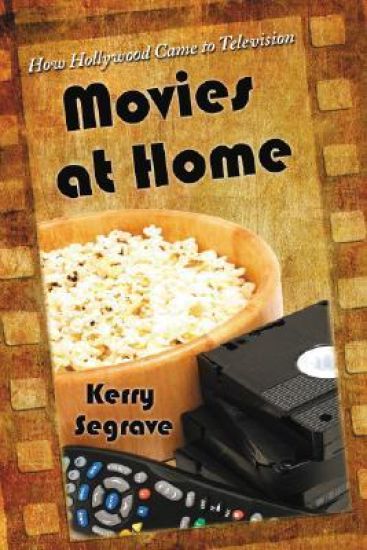
Movies at Home

Movies at Home

Kerry Segrave

McFarland Co Inc
2009
pokkari
The relationship of Hollywood and television, initially turbulent, has ultimately been profitable from the first sally in what was expected to be a war of attrition, up through the soliciting of movies by major networks, independent stations, basic cable networks, premium cable channels, pay-per-view systems and even the corner video store. When their initial efforts to acquire ownership interests in television outlets were thwarted, Hollywood's major movie studios determined to withhold from the tube not only their films but also their actors, no doubt in hopes of making the rival medium appear a weak substitute for cinema. With ticket sales shrinking and television set purchases booming, the studios, erasing their last contemptuously drawn line in the sand, grudgingly released their films to television--and made a fortune.
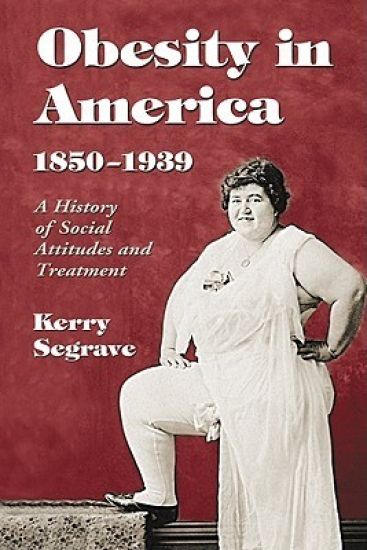
Obesity in America, 1850-1939

Obesity in America, 1850-1939

Kerry Segrave

McFarland Co Inc
2008
pokkari
This is a study of obesity in America from 1850 to 1939, concentrating on how the condition was viewed, studied, and treated. It examines the images and stereotypes that were associated with fatness, the various remedies that were proposed for the condition, and the often bizarre theories used to explain it, including the idea that ordinary tap water was fattening. From about 1850 to 1879, obesity existed almost exclusively among the upper class, and it received very little medical attention. From 1880 to 1919, doctors, scientists, and other health professionals began to present a coherent theory of obesity. By 1920, the condition was recognized as a big enough health issue that various groups, ranging from private employers to public health officials, began developing some of the nation's first organized weight reduction programs.
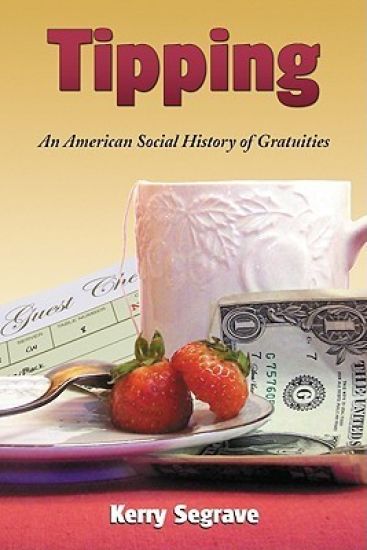
Tipping

Tipping

Kerry Segrave

McFarland Co Inc
2009
pokkari
Though the history of tipping can be traced to the Middle Ages, the practice did not become widespread until the late 19th century. Initially, Americans reviled the custom, branding it un-American and undemocratic. The opposition gradually faded and tipping became an American institution. From its beginnings in Europe to its development as a quintessentially American trait, this work provides a social history of tipping customs and how the United States became a nation of tippers.
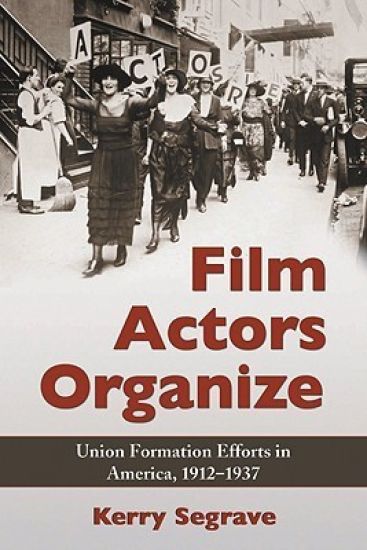
Film Actors Organize

Film Actors Organize

Kerry Segrave

McFarland Co Inc
2009
pokkari
The transition from stage to screen was not only a shift in popular entertainment, but a challenge for those working in the industry as well. This book looks at all the attempts to organize film actors into a union, starting in 1912 when the Actors' Equity Association seemed the best platform for such an effort, to the establishment of the Screen Actors Guild (SAG) in 1933 as the best vehicle to represent film actors; another four years passed before SAG was formally recognized by film producers and the first contract was signed.
Parricide in the United States, 1840-1899

Parricide in the United States, 1840-1899

Kerry Segrave

McFarland Co Inc
2009
pokkari
The case of Lizzy Borden stands out in the history of sensational criminal cases, but she was not the only person to be accused of killing her parents. Historically, about two percent of all murders are parricides. This book examines 103 selected cases of individuals charged with parricide--the murder of a father or mother--in the United States in the last half of the 19th century, categorized here by their links to abuse, alcohol, or money, sometimes involving multiple murderers or the deaths of both parents.
America Brushes Up

America Brushes Up

Kerry Segrave

McFarland Co Inc
2010
pokkari
This excursion into American cultural history looks at the toothpaste and toothbrush industries from 1900 to 2008. During these years, America moved from cleaning their teeth mostly with homemade powders to using an enormous array of brands, often applied with an electric toothbrush. From early 20th century products like Forhan's (which "cured" pyorrhea) to the whiteners of the 1920s (which unfortunately also removed tooth enamel), and from paste that eliminated "that clinging film" and to copywriters who "wondered where the yellow went," the history of toothpaste has long been a testament to the power of misleading advertising. Interrupting a steady flow of hyperbole was the one true wonder ingredient--fluoride, which enabled Crest to be for decades America's top-selling brand.
Lynchings of Women in the United States

Lynchings of Women in the United States

Kerry Segrave

McFarland Co Inc
2010
pokkari
Between 1850 and 1950, at least 115 women were lynched by mobs in the United States. The majority of these women were black. This book examines the phenomenon of the lynching of women, a much more rare occurence than the lynching of men. Over the same hundred year period covered in this text, more than 1,000 white men were lynched, while thousands of black men were murdered by mobs. Of particular importance in this examination is the role of race in lynching, particularly the increase in the number of lynchings of black women as the century progressed. Details are provided--when available--in an attempt to shine a light on this form of deadly mob violence.
Vision Aids in America

Vision Aids in America

Kerry Segrave

McFarland Co Inc
2011
pokkari
This text examines the eyewear industry in America from 1900 to 2008, a period which mirrors an increased demand for eyewear. Eyeglasses, sunglasses and contacts are discussed. Topics covered include the marketing and selling of eyewear with particular attention paid to advertising strategies and the internal structures of the industry and its regulations, which have sometimes helped and sometimes hurt consumers. This critical examination reveals how a relatively simple and functional item such as corrective eyewear could be transformed through marketing into a fashion accessory and a personal statement.
Begging in America, 1850-1940

Begging in America, 1850-1940

Kerry Segrave

McFarland Co Inc
2011
pokkari
The poverty that drives people to begging has been a pressing social issue in the United States since the beginning. This historical work explores begging1and beggars in the period 1850 to 1940, with emphasis on how the police, the courts, the media and private charity organizations dealt with them. Efforts to suppress mendicancy are explored, including legislation, police crackdowns, and public vouchers for meals and shelter. Of particular interest is the way in which media portrayals have guided public perception of mendicants. Despite the massive social upheavals the last two centuries have brought, all efforts to suppress begging have failed. Many of the complaints and arguments made against beggars and begging in 1850 and 1900 and 1940 were also made into the 21st century because, in the end, the public continued to give alms.
Parking Cars in America, 1910-1945

Parking Cars in America, 1910-1945

Kerry Segrave

McFarland Co Inc
2012
pokkari
With its decentralized urban areas, pollution, and mostly inadequate public transit systems, America pays a heavy price for its dependency on cars. This volume explores one of the more pressing aspects of the problem--storage--from 1910 to the end of World War II, contrasting the reality and perception of car parking as found in the pages of the popular newspapers and magazines. From early bans on street parking to street widening efforts to the introduction of parking lots, garages, and parking meters, the book chronicles attempts to accommodate the ever-increasing number of cars. By failing to effect any meaningful regulations along the way, this work shows, Americans slowly ceded authority and dominance to the automobile, to the detriment of present-day society.