Kirjojen hintavertailu. Mukana 12 016 292 kirjaa ja 12 kauppaa.

Kirjahaku

Etsi kirjoja tekijän nimen, kirjan nimen tai ISBN:n perusteella.

1000 tulosta hakusanalla Kimberly Stuart

School Violence, the Media, and Criminal Justice Responses

School Violence, the Media, and Criminal Justice Responses

Kimberly Ann McCabe; Gregory M. Martin

Peter Lang Publishing Inc
2004
nidottu
The problem remains: students in schools across the United States are not only bullying each other but are killing each other. This book provides a foundation for the study of school violence, beginning with an analysis of the shootings at Columbine and going on to discuss all forms of aggression in schools. The authors provide a history of school violence in America, theories to explain bullying, and teachers' perceptions of this violence - and suggest ways that teachers and other school personnel can predict, control, and prevent outbursts of violence. Also included are discussions on the effects of the media on school violence, as well as the criminal justice system's responses. This book is an excellent resource for courses in criminal justice, teacher education, and all youth workers and counselors in schools and the community.
Staging Subversions

Staging Subversions

Kimberly Cashman

Peter Lang Publishing Inc
2004
sidottu
Staging Subversions: The Performance-within-a-Play in French Classical Theater defines a new type of metadrama using Le Tartuffe as its paradigm and explores the complex, ambiguous, and enlightening relationships that metadrama maintains with the social and political orders. While metadramatic scenes are most often concerned with theater itself, the performance-within-a-play adopts an important function in the play's plot, and, consequently, in the social world of the play. The performance-within-a-play is particularly associated by the classical playwrights with the family structure, with the class system, with women's social roles, and with the politics of absolutism.
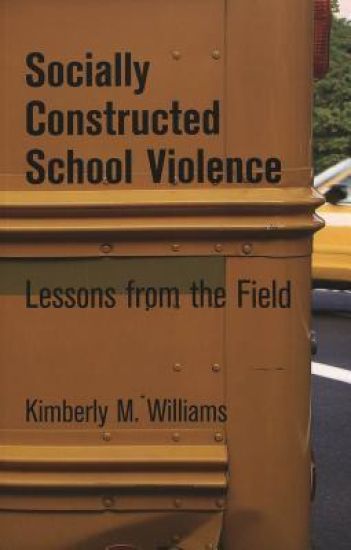
Socially Constructed School Violence

Socially Constructed School Violence

Kimberly M. Williams

Peter Lang Publishing Inc
2005
nidottu
"Socially Constructed School Violence: Lessons from the Field" argues that the way we understand what constitutes violence is socially constructed, and that people from different social locations, that is, gender, race, social class, geographic location, and so on, will have varied perspectives on what is violent. Based on ethnographic work at an urban alternative school for students expelled for bringing weapons to school and an affluent suburban school eighteen miles away, this book describes various ways violence can be constructed. Specifically, this book discusses personal and structural forms of violence that students, teachers, administrators, and other school staff encounter. Using powerful examples from the ethnographic analysis, this book describes some of the valuable lessons learned about how we can work to prevent school violence.
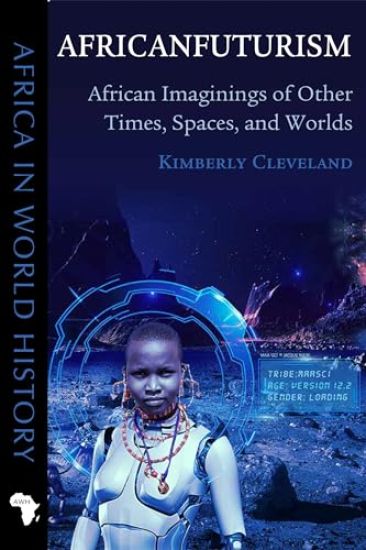
Africanfuturism

Africanfuturism

Kimberly Cleveland

OHIO UNIVERSITY PRESS
2024
pokkari
In the past few decades, Western studies of Afrofuturism have grown to encompass examples deriving from multiple sites across the diaspora, as well as from the African continent. However, an increasing number of Africans and Africanists have voiced their concerns about grouping African work under the larger umbrella of Afrofuturism without distinction and have emphasized the need to investigate the differences between African American and African production. This book offers an introduction to Africanfuturism-a body of African speculative works that is distinguishable from, albeit related to, US-based Afrofuturism. Kimberly Cleveland uses Africanfuturism as an intellectual lens to explore works that embody combinations of possibilities, challenges, and concerns related to what lies ahead for the continent and its peoples. This book highlights twenty-first-century film, video, painting, sculpture, photography, tapestry, novels, short stories, comic books, song lyrics, and architecture by African creatives of different nationalities, races, ethnicities, genders, and generations. Cleveland analyzes the ideas and opinions of African intellectuals and cultural producers, combining interviews with historical research. Each chapter features one of Africanfuturism’s most common themes: space and time exploration, creation of worlds, technology and the digital divide, Sankofa and remix, and mythmaking. This investigation of Africanfuturism is geared toward students, academics, and Afrofuturism enthusiasts, and its included discussion questions facilitate classroom use. The book illuminates Africa’s place in the worlds of science fiction and fantasy and how Africanfuturist work builds on the continent’s own traditions of speculative expression. Because these creative works disrupt the history of Western domination in Africa, Cleveland also connects Africanfuturism with the process of decolonization and addresses specific ways in which African creatives (re)center indigenous beliefs, strategies, and approaches in their production. Africanfuturism encourages both imaginative possibilities and potential real-world outcomes, highlighting the rich contributions of Africans to the vision of future worlds.
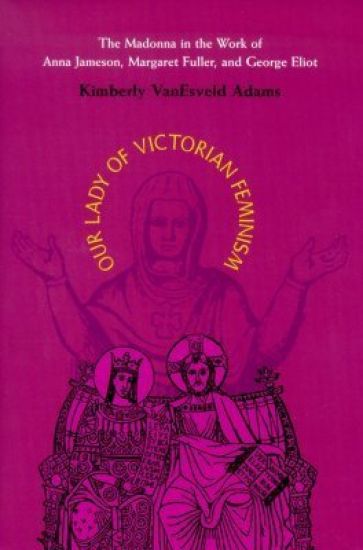
Our Lady of Victorian Feminism

Our Lady of Victorian Feminism

Kimberly Van Esveld Adams

Ohio University Press
2001
sidottu
Our Lady of Victorian Feminism is about three nineteenth-century women, Protestants by background and feminists by conviction, who are curiously and crucially linked by their extensive use of the Madonna in arguments designed to empower women. In the field of Victorian studies, few scholars have looked beyond the customary identification of the Christian Madonna with the Victorian feminine ideal—the domestic Madonna or the Angel in the House. Kimberly VanEsveld Adams shows, however, that these three Victorian writers made extensive use of the Madonna in feminist arguments. They were able to see this figure in new ways, freely appropriating the images of independent, powerful, and wise Virgin Mothers. In addition to contributions in the fields of literary criticism, art history, and religious studies, Our Lady of Victorian Feminism places a needed emphasis on the connections between the intellectuals and the activists of the nineteenth-century women’s movement. It also draws attention to an often neglected strain of feminist thought, essentialist feminism, which proclaimed sexual equality as well as difference, enabling the three writers to make one of their most radical arguments, that women and men are made in the image of the Virgin Mother and the Son, the two faces of the divine.
Our Lady of Victorian Feminism

Our Lady of Victorian Feminism

Kimberly Van Esveld Adams

Ohio University Press
2001
pokkari
Our Lady of Victorian Feminism is about three nineteenth-century women, Protestants by background and feminists by conviction, who are curiously and crucially linked by their extensive use of the Madonna in arguments designed to empower women. In the field of Victorian studies, few scholars have looked beyond the customary identification of the Christian Madonna with the Victorian feminine ideal—the domestic Madonna or the Angel in the House. Kimberly VanEsveld Adams shows, however, that these three Victorian writers made extensive use of the Madonna in feminist arguments. They were able to see this figure in new ways, freely appropriating the images of independent, powerful, and wise Virgin Mothers. In addition to contributions in the fields of literary criticism, art history, and religious studies, Our Lady of Victorian Feminism places a needed emphasis on the connections between the intellectuals and the activists of the nineteenth-century women's movement. It also draws attention to an often neglected strain of feminist thought, essentialist feminism, which proclaimed sexual equality as well as difference, enabling the three writers to make one of their most radical arguments, that women and men are made in the image of the Virgin Mother and the Son, the two faces of the divine.
Bounded Lives, Bounded Places

Bounded Lives, Bounded Places

Kimberly S. Hanger

Duke University Press
1997
pokkari
During Louisiana’s Spanish colonial period, economic, political, and military conditions combined with local cultural and legal traditions to favor the growth and development of a substantial group of free blacks. In Bounded Lives, Bounded Places, Kimberly S. Hanger explores the origin of antebellum New Orleans’ large, influential, and propertied free black-or libre-population, one that was unique in the South. Hanger examines the issues libres confronted as they individually and collectively contested their ambiguous status in a complexly stratified society.Drawing on rare archives in Louisiana and Spain, Hanger reconstructs the world of late-eighteenth-century New Orleans from the perspective of its free black residents, and documents the common experiences and enterprises that helped solidify libres’ sense of group identity. Over the course of three and a half decades of Spanish rule, free people of African descent in New Orleans made their greatest advances in terms of legal rights and privileges, demographic expansion, vocational responsibilities, and social standing. Although not all blacks in Spanish New Orleans yearned for expanded opportunity, Hanger shows that those who did were more likely to succeed under Spain’s dominion than under the governance of France, Great Britain, or the United States. The advent of U.S. rule brought restrictions to both manumission and free black activities in New Orleans. Nonetheless, the colonial libre population became the foundation for the city’s prosperous and much acclaimed Creoles of Color during the antebellum era.
Bounded Lives, Bounded Places

Bounded Lives, Bounded Places

Kimberly S. Hanger

Duke University Press
1997
sidottu
During Louisiana’s Spanish colonial period, economic, political, and military conditions combined with local cultural and legal traditions to favor the growth and development of a substantial group of free blacks. In Bounded Lives, Bounded Places, Kimberly S. Hanger explores the origin of antebellum New Orleans’ large, influential, and propertied free black-or libre-population, one that was unique in the South. Hanger examines the issues libres confronted as they individually and collectively contested their ambiguous status in a complexly stratified society.Drawing on rare archives in Louisiana and Spain, Hanger reconstructs the world of late-eighteenth-century New Orleans from the perspective of its free black residents, and documents the common experiences and enterprises that helped solidify libres’ sense of group identity. Over the course of three and a half decades of Spanish rule, free people of African descent in New Orleans made their greatest advances in terms of legal rights and privileges, demographic expansion, vocational responsibilities, and social standing. Although not all blacks in Spanish New Orleans yearned for expanded opportunity, Hanger shows that those who did were more likely to succeed under Spain’s dominion than under the governance of France, Great Britain, or the United States. The advent of U.S. rule brought restrictions to both manumission and free black activities in New Orleans. Nonetheless, the colonial libre population became the foundation for the city’s prosperous and much acclaimed Creoles of Color during the antebellum era.
Living for the Revolution

Living for the Revolution

Kimberly Springer

Duke University Press
2005
sidottu
The first in-depth analysis of the black feminist movement, Living for the Revolution fills in a crucial but overlooked chapter in African American, women’s, and social movement history. Through original oral history interviews with key activists and analysis of previously unexamined organizational records, Kimberly Springer traces the emergence, life, and decline of several black feminist organizations: the Third World Women’s Alliance, Black Women Organized for Action, the National Black Feminist Organization, the National Alliance of Black Feminists, and the Combahee River Collective. The first of these to form was founded in 1968; all five were defunct by 1980. Springer demonstrates that these organizations led the way in articulating an activist vision formed by the intersections of race, gender, class, and sexuality. The organizations that Springer examines were the first to explicitly use feminist theory to further the work of previous black women’s organizations. As she describes, they emerged in response to marginalization in the civil rights and women’s movements, stereotyping in popular culture, and misrepresentation in public policy. Springer compares the organizations’ ideologies, goals, activities, memberships, leadership styles, finances, and communication strategies. Reflecting on the conflicts, lack of resources, and burnout that led to the demise of these groups, she considers the future of black feminist organizing, particularly at the national level. Living for the Revolution is an essential reference: it provides the history of a movement that influenced black feminist theory and civil rights activism for decades to come.
Living for the Revolution

Living for the Revolution

Kimberly Springer

Duke University Press
2005
pokkari
The first in-depth analysis of the black feminist movement, Living for the Revolution fills in a crucial but overlooked chapter in African American, women’s, and social movement history. Through original oral history interviews with key activists and analysis of previously unexamined organizational records, Kimberly Springer traces the emergence, life, and decline of several black feminist organizations: the Third World Women’s Alliance, Black Women Organized for Action, the National Black Feminist Organization, the National Alliance of Black Feminists, and the Combahee River Collective. The first of these to form was founded in 1968; all five were defunct by 1980. Springer demonstrates that these organizations led the way in articulating an activist vision formed by the intersections of race, gender, class, and sexuality. The organizations that Springer examines were the first to explicitly use feminist theory to further the work of previous black women’s organizations. As she describes, they emerged in response to marginalization in the civil rights and women’s movements, stereotyping in popular culture, and misrepresentation in public policy. Springer compares the organizations’ ideologies, goals, activities, memberships, leadership styles, finances, and communication strategies. Reflecting on the conflicts, lack of resources, and burnout that led to the demise of these groups, she considers the future of black feminist organizing, particularly at the national level. Living for the Revolution is an essential reference: it provides the history of a movement that influenced black feminist theory and civil rights activism for decades to come.
The Repeating Body

The Repeating Body

Kimberly Juanita Brown

Duke University Press
2015
pokkari
Haunted by representations of black women that resist the reality of the body's vulnerability, Kimberly Juanita Brown traces slavery's afterlife in black women's literary and visual cultural productions. Brown draws on black feminist theory, visual culture studies, literary criticism, and critical race theory to explore contemporary visual and literary representations of black women's bodies that embrace and foreground the body's vulnerability and slavery's inherent violence. She shows how writers such as Gayl Jones, Toni Morrison, Audre Lorde, and Jamaica Kincaid, along with visual artists Carrie Mae Weems and María Magdalena Campos-Pons, highlight the scarred and broken bodies of black women by repeating, passing down, and making visible the residues of slavery's existence and cruelty. Their work not only provides a corrective to those who refuse to acknowledge that vulnerability, but empowers black women to create their own subjectivities. In The Repeating Body, Brown returns black women to the center of discourses of slavery, thereby providing the means with which to more fully understand slavery's history and its penetrating reach into modern American life.
Manufacturing a Socialist Modernity

Manufacturing a Socialist Modernity

Kimberly Elman Zarecor

University of Pittsburgh Press
2011
nidottu
Provides the first comprehensive history of architectural practice and the emergence of prefabricated housing in the Eastern Bloc. Through discussions of individual architects and projects, as well as building typologies, professional associations, and institutional organization, this opens a rare window into the cultural and economic life of Eastern Europe during the early postwar period.
Refresh

Refresh

Kimberly M Drew; Jocelyn Green

Kregel Publications,U.S.
2016
pokkari
More than one-fifth of US households with children have at least one child with special needs. Raising a child with special needs is spiritually, emotionally, mentally, and physically challenging. Parents of these children need encouragement to restore hope and a passion for God in their lives--but the realities of having to be parent, nurse, therapist, and caregiver make it difficult to find the time or initiative to seek encouragement.Packed with encouragement from parents who understand this complicated balancing act, Refresh is designed to provide just what these parents need. The devotional guides parents to spiritual truths that can be applied to the demands they face every day. It offers perspective and hope through the varying stages and phases families experience, from diagnosis to loss and grief.Each day's devotional includes a reading from Scripture, as well as stories and testimonies from parents who intimately know the struggle readers face. Their children represent a wide range of special needs, including autism, cerebral palsy, Down syndrome, genetic disorders, chronic illness, and more. Drew and Green show how the truths of God's Word are relevant, regardless of the diagnosis. Their devotional illuminates the unique lessons and perspectives to be gained as a result of raising a child with special needs.Insightful and powerful, Refresh will help weary parents grow spiritual roots and turn toward the Light that never fades.
CNM® and WHNP® Certification Review

CNM® and WHNP® Certification Review

Kimberly Garcia

SPRINGER PUBLISHING CO INC
2024
nidottu
Note to Readers: Publisher does not guarantee quality or access to any included digital components if book is purchased through a third-party seller.Includes 6 months' free ExamPrepConnect digital access with print purchase!CNM and WHNP Certification Review is designed to help you prepare for both the American Midwifery Certification Board (AMCB) CNM/CM exam and the National Certification Corporation (NCC) WHNP-BC® exam. This comprehensive resource begins with test-taking strategies and tips on how to manage test anxiety. Chapters are organized according to the exam blueprints and present the information in a clear, concise format. Charts and diagrams are featured to consolidate and illustrate key points and key pharmacology information is highlighted. Each chapter encompasses all the essential knowledge required to pass both exams and includes end-of-chapter questions to assess knowledge retention. The review concludes with two full-length practice tests, one for each certification. With 400 practice questions, detailed review content and answer rationales, and access to ExamPrepConnect, this resource gives you the tools to study your way and the confidence to pass the first time, guaranteed!Key FeaturesReflects the latest AMCB and NCC exam blueprintsProvides a comprehensive yet concise review of essential knowledge for the examCovers essential pharmacology content and key medicationsUses icons to clearly indicate which topics are covered on which examIncludes end-of-chapter Q&A and two full practice tests with detailed rationalesBoosts your confidence with a 100% pass guaranteeOffers on-the-go digital access with ExamPrepConnectExamPrepConnectIncluded with your study guide:Review all the high-quality content from the book.Take a full-length timed practice test.Build custom quizzes or study by exam topic.Sharpen your test-taking skills with interactive Q&A tools.Keep on track with your Personalized Study Plan.Take notes, highlight, and bookmark content.Use flashcards to review key terms.Study with your peers in the community discussion boards.Access everything on any device.See access details inside the book.For 70 years, it has been our greatest privilege to prepare busy nurses like you for professional certification and career success. Congratulations on qualifying to sit for the exam. Now let's get you ready to pass!CNM and CM areWHNP-BC® is a registered service mark of the National Certification Corporation. Neither AMCB nor NCC sponsor or endorse this resource, nor do they have a proprietary relationship with Springer Publishing.
The 3-Minute Musculoskeletal and Peripheral Nerve Exam

The 3-Minute Musculoskeletal and Peripheral Nerve Exam

Kimberly DiCuccio Heckert; Nethra S. Ankam; Alan Miller; Alyssa Speciale; Brian Davis

SPRINGER PUBLISHING CO INC
2022
nidottu
“This is a unique book, not because of its content, but because its format is designed to be quick and easily accessible to practitioners and trainees. The numerous and very well-constructed tables and figures are genuine stand-out features of this book." ---Doody's Review Service, 4 stars New edition of the premier quick reference to conducting thorough musculoskeletal and neuromuscular examinations, now in full color with video. Comprehensive and concise, the 3-Minute Musculoskeletal and Peripheral Nerve Exam, Second Edition, is a lifeline for beginning learners and a trusted point-of-care reference for seasoned practitioners. Consistently formatted, every exam includes detailed color photographs and step-by-step instructions to describe patient and examiner actions, findings that indicate a positive test and what a positive test signifies--now with sensitivity and specificity data for specific diagnoses. Organized for rapid retrieval of essential information, the book traverses basic and advanced techniques for joint, muscle, reflex, and nerve exams and includes 180 videos demonstrating the maneuvers. Sections on gait and posture, spinal cord injury, scales and assessments, and a muscle atlas with origins and insertions offer additional diagnostic support. Packed with practical tables and illustrations, including anatomic pathways of peripheral nerves and the structures they innervate, this indispensible guide belongs in the pocket of any provider performing musculoskeletal or peripheral nerve examinations in the office, hospital, or clinic. Key Features: Full color photographs and drawings clearly illustrate exam techniques and enhance understanding of surface anatomy 180 videos put you in the exam room to see how it is done Quick reference guide by diagnosis and tables for localization of common problems Purchase includes access to the ebook for mobile use on most devices
Essentials for Genetics and Genomics for Nurses

Essentials for Genetics and Genomics for Nurses

Kimberly Subasic

SPRINGER PUBLISHING CO INC
2022
nidottu
Takes the fear out of learning about genetics and genomics for the nursing professional.With its focus on the basics of genetics and genomics in nursing practice, this resource is the first to fill the content gap in this important area. Its streamlined format—featuring bulleted, step-by-step information and brief paragraphs—disseminates key content that is presented simply and understandably. The book examines how genetics impacts families and the care they need, and provides nurses with the genomic knowledge to advocate for personalized patient and family care, and to improve patient outcomes.Following a discussion of the science and foundations of genetics and genomics, this resource addresses their impact on patient care and application in nursing practice. It covers the relationship of genetics and genomics to health, prevention, screening, diagnostics, prognostics, and selection and monitoring of treatment. Case studies demonstrate how genomic concepts are applied in practice, and underscore their implications for patients with cancer, cardiovascular disease, psychiatric disorders, and autoimmune deficiencies. End of chapter questions are designed to assess knowledge. Also included are online resources that examine the latest genetic/genomic advancements and their impact on nursing.Key Features:Simplifies difficult concepts for ease of understanding.Explains the difference between genetic testing and genetic screening.Discusses ethical, legal, and social concerns specific to genetics and genomics.Describes the application of genetics and genomics in healthcare.Explains how knowledge of genetics and genomics can guide healthcare decisions.Helps nurse educators teach genomic content.Educates nurses in using genetic advances to improve patient outcomes.
Magpie's Blanket

Magpie's Blanket

Kimberly D. Schmidt; Henrietta Mann

University of New Mexico Press
2016
nidottu
In this thoughtful novel Kimberly D. Schmidt brings to life the history of Plains Indian women and the white invasion—an account not solely of violence and bloodshed but also of healing and forgiveness. Magpie’s Blanket begins with the story of a young Southern Cheyenne woman who survived the horrific Sand Creek Massacre in 1864 only to witness a second attack on her people at the Washita Massacre in 1868. Through the memories of three generations of Cheyenne people, the novel recounts the events of the massacres and the century-late reconciliation after the townspeople’s misguided attempt to re-create the “battle” of the Washita with descendants of US soldiers.
Reforming Schools

Reforming Schools

Kimberly Kinsler; Mae Gamble

BLOOMSBURY PUBLISHING PLC
2001
sidottu
Reforming Schools will transform the study of school reform, development and improvement. It not only provides an overview of research findings, professional and political issues, and policy developments and their history; it also relates such thinking to practice, through a rich and multi-faceted case study of school reform. Particular emphasis is given to urban schooling, with a candid look at what can be learned not only from successful school reforms but also from failure. Throughout the book, readers are guided by questions, points for reflection and hypothetical exercises that facilitate interaction with case study material. This book enables the reader to experience what it is like to be involved in the field as no other book on school reform does. This is the first true textbook in this area, written in an accessible style and supported by thought-provoking questions and useful exercises.
Frightening Fiction

Frightening Fiction

Kimberly Reynolds; Geraldine Brennan; Kevin McCarron

Continuum International Publishing Group Ltd.
2001
nidottu
Edited by Morag Styles and written by an international team of acknowledged experts, this series provides jargon-fee, critical discussion and a comprehensive guide to literary and popular texts for children. Each book introduces the reader to a major genre if children's literature, covering the key authors, major works and contexts in which those texts are published, read and studied. The development of the horror genre in children's literature has been a startling phenomenon - one that has provoked strong, but mixed, reactions. Frightening Fiction provides a lucid and lively guide to that genre, ranging from analyses of such popular series as Point Horror, Goosebumps, the X Files and the buffy stories, to the work of individual authors such as Robert Westall, David Almond, Philip Gross and Lesley Howarth. Kimberly Reynolds is Professor of Children's Literature at the University of Surrey Roehampton and Director of the National Centre for Research in Children's Literature where Kevin McCarron is Senior Lecturer in American Literature. Geraldine Brennan is Books Editor for the Times Educational Supplement.