Kirjojen hintavertailu. Mukana 11 699 587 kirjaa ja 12 kauppaa.

Kirjahaku

Etsi kirjoja tekijän nimen, kirjan nimen tai ISBN:n perusteella.

1000 tulosta hakusanalla Larry Singer

The Art and Business of Songwriting

The Art and Business of Songwriting

Larry D. Batiste

OXFORD UNIVERSITY PRESS INC
2024
nidottu
In this valuable resource guide for both beginners and professionals, veteran songwriter, producer, arranger, vocalist, music director, and educator Larry D. Batiste shares practical advice and tips from his decades of experience in ways that are bound to help all readers improve their songwriting skills. Through this book, readers will learn the craft of professional songwriting, including the ins-and-outs of song structure, lyric and melody writing, and the essential elements of a hit song. From the start, Batiste incorporates exercises to help songwriters strike upon ideas for song titles, concepts, and stories that will appeal to their audience. He also discusses critical business aspects of songwriting, such as copyrighting, publishing, royalties, networking, and digital media. In addition to the fundamentals, the reader will learn how to build their songwriting career, generate income, build an online community and fanbase, release music independently, expertly place their songs, and navigate the world of digital music. Throughout the book are interviews with iconic songwriters and producers such as Peter Asher, Lamont Dozier, and Narada Michael Walden, as well as independent recording artists, including Fantastic Negrito, a winner of multiple Grammy Awards, and Meklit Hadero. Understanding the artistic and business aspects of songwriting is essential for a successful career in the music industry. The Art and Business of Songwriting can be applied to every genre of popular music and is written to encourage, motivate, and unlock the idiosyncrasies of the business for music professionals as much as for beginners.

Earth-honoring Faith

Earth-honoring Faith

Larry L. Rasmussen

Oxford University Press Inc
2012
sidottu
Larry L. Rasmussen offers a dramatic new way of thinking about human society, ethics, and the health of our planet. Rejecting the modern ethical assumption that morality applies to human society alone, Earth-honoring Faith argues that we must derive a system of ethics and morality that accounts for the wellbeing of all creation on Earth, as well as the primal elements upon which it depends: earth, air, fire, water, and sunlight. Rasmussen shows that religious resources are essential in the difficult transition from an industrial-technological age to an ecological one. He advocates an alliance of spirituality and ecology, in which the requirements for planetary life are reconciled with the deep traditions of spirituality across religions -- mysticism, sacramentalism, asceticism, prophetic/liberative practices, and wisdom. These millennial, cross-cultural traditions are in need of their own conversion, however, if they are to be Earth-healing. Rasmussen poses critical questions: Are moral-spiritual traditions as we know them Earth-honoring or not? If not, how might they be? How might religious imagination expand the measure of the mind and heart in the service of planetary health? Who is leading the way? Rasmussen shows that by seeking to answer these questions, we can cease confining our moral views and daily habits to human society, instead placing them in the full community of earthly life. Joined to science and technology, religious ethics can find a new key for a new geological age: the Anthropocene. As Rasmussen demonstrates, fidelity to God can be lived more fully as fidelity to God and Earth.
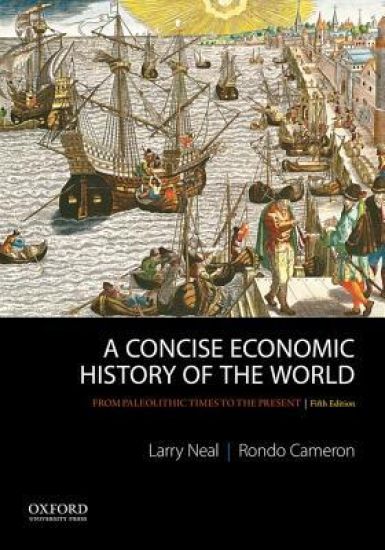
A Concise Economic History of the World

A Concise Economic History of the World

Larry Neal; Rondo Cameron

Oxford University Press Inc
2016
nidottu
A Concise Economic History of the World offers a broad sweep of economic history from prehistoric times to the present. Comprehensive and now even more global in scope, the fifth edition examines the ongoing effects of globalization on both past civilizations and our current global economy. With illustrations, maps, charts, and a fully updated annotated bibliography, this unique work remains an invaluable, lively, and accessible text for both undergraduate and graduate students of general economic history, the history of globalization, and world development.
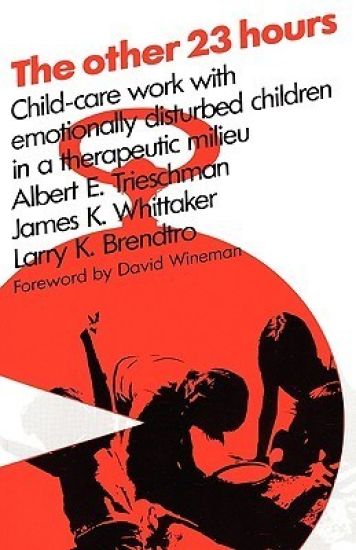
The Other 23 Hours

The Other 23 Hours

Larry Brendtro

AldineTransaction
1962
nidottu
Among other revolutionary developments of today's world is tie so-called "knowledge explosion." So much is being written so fast about so many things that it is becoming well nigh ir­retrievable. One consequently can never be sure that he knows what there is to know about many kinds of phenomena or types of problems existing in the modern world due to the chance that something exists in written form that simply cannot be found, so bulky is the load of literature.The common idea that only the sick child, and never the well, needs special emotional supports and helps from the adult is simply an error. For the well child is not immune from pile-ups of severe emotional intensity when overwhelmed by confusion and conflicts from within.Certainly, the normal kid can be ex­pected to handle such crises either from within or without better than his sick peer on the average, but that does not mean always; and the critical issue for the well child is: is he ready at the time they hit? If not, he needs, quite unmistakably, emotional first aid from the adult - parent, teacher, camp counselor (or what have you) - who is in charge of his life at that moment. The reader will find that what the authors describe in The Other 23 Hours as the everyday requirement diet, as far as child handling is concerned for their disturbed children, is transferable to the normal crises of normal child­hood.
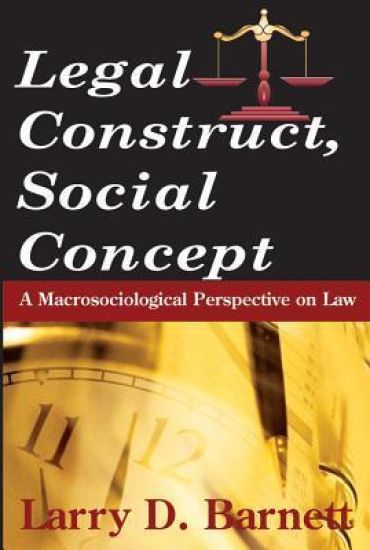
Legal Construct, Social Concept

Legal Construct, Social Concept

Larry Barnett

AldineTransaction
1993
sidottu
Based on sophisticated demographic analysis, Legal Construct, Social Concept argues that legal doctrine on social issues is shaped by the needs and values of society rather than by individuals and interest groups and that it evolves in response to social change but has little impact on that change. The book also explains why a substantial body of social science research has found that although law may be effective for some types of economic problems, its impact on social problems is generally small and of brief duration. At least in the United States, legal doctrine seems to operate primarily to provide symbols that enhance commitment to the social system and increase the cohesiveness of the system.Barnett's approach to legal thought derives from the practices and assumptions of the social sciences, particularly sociology, and not from those of critical legal studies. His main concern is with social issues issues that substantively differ from economic issues. In addressing legal thought on social problems with the conceptual framework and quantitative techniques of macrosociology, he considers a topic that is infrequently investigated and employs an approach that is infrequently used.To illustrate this thesis, Barnett presents data on social patterns relevant to three current issues: sex discrimination, age discrimination, and the availability of contraception and abortion. His analyses of these data are compared to constitutional philosophy, judicial rulings, and federal statutes. Barnett then turns from the evolution of legal doctrine in the past to its possible change in the future and considers whether active forms of euthanasia are likely to be legalized. He concludes with an exploration of additional issues for future research and theory.
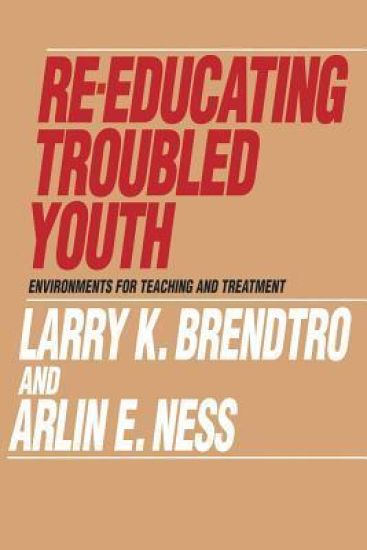
Re-educating Troubled Youth

Re-educating Troubled Youth

Larry Brendtro

AldineTransaction
1984
nidottu
This book is about helping troubled young people who are searching separately for security, identity, and purpose in their lives. Childhood and adolescence are pivotal stages in the quest to belong, to become somebody, and to be worth something. Children need stimulation, affection, and guidance in order to develop their potentials, but many are reared in environments that deprive them of these nutriments. Adolescents approach the threshold of independence with only the experiences gained from childhood; many lack the support of significant actions. Those who encounter difficulty in navigating through these turbulent years are to be identified by society as troubled or troublesome.These children and youth present challenges that do not yield to simple panaceas. Although no simple approach holds all the answers, bridging various concepts of education and treatment offers the best opportunity for creating positive changes. The authors refer to this process as 're-education' with full awareness that this term has been used in a variety of philosophical contexts including behavioral, ecological, and psychodynamic views.
Legal Construct, Social Concept

Legal Construct, Social Concept

Larry Barnett

AldineTransaction
2010
nidottu
Based on sophisticated demographic analysis, Legal Construct, Social Concept argues that legal doctrine on social issues is shaped by the needs and values of society rather than by individuals and interest groups and that it evolves in response to social change but has little impact on that change. The book also explains why a substantial body of social science research has found that although law may be effective for some types of economic problems, its impact on social problems is generally small and of brief duration. At least in the United States, legal doctrine seems to operate primarily to provide symbols that enhance commitment to the social system and increase the cohesiveness of the system.Barnett's approach to legal thought derives from the practices and assumptions of the social sciences, particularly sociology, and not from those of critical legal studies. His main concern is with social issues issues that substantively differ from economic issues. In addressing legal thought on social problems with the conceptual framework and quantitative techniques of macrosociology, he considers a topic that is infrequently investigated and employs an approach that is infrequently used.To illustrate this thesis, Barnett presents data on social patterns relevant to three current issues: sex discrimination, age discrimination, and the availability of contraception and abortion. His analyses of these data are compared to constitutional philosophy, judicial rulings, and federal statutes. Barnett then turns from the evolution of legal doctrine in the past to its possible change in the future and considers whether active forms of euthanasia are likely to be legalized. He concludes with an exploration of additional issues for future research and theory.
The Third City

The Third City

Larry Bennett

University of Chicago Press
2010
sidottu
Our traditional image of Chicago - as a gritty metropolis carved into ethnically defined enclaves where the game of machine politics overshadows its ends - is such a powerful shaper of the city's identity that many of its closest observers fail to notice that a new Chicago has emerged over the past two decades. Larry Bennett here tackles some of our more commonly held ideas about the Windy City - inherited from such icons as Theodore Dreiser, Carl Sandburg, Daniel Burnham, Robert Park, Sara Paretsky, and Mike Royko - with the goal of better understanding Chicago as it is now: the third city. Bennett calls contemporary Chicago the third city to distinguish it from its two predecessors: the first city, a sprawling industrial center whose historical arc ran from the Civil War to the Great Depression; and the second city, the rustbelt exemplar of the period from around 1950 to 1990. The third city features a dramatically revitalized urban core, a shifting population mix that includes new immigrant streams, and a growing number of middle-class professionals working in new economy sectors. It is also a city utterly transformed by the top-to-bottom reconstruction of public housing developments and the ambitious provision of public works like Millennium Park. It is, according to Bennett, a work in progress spearheaded by Richard M. Daley, a self-consciously innovative mayor whose strategy of neighborhood revitalization and urban renewal is a prototype of city governance for the twenty-first century. "The Third City" ultimately contends that to understand Chicago under Daley's charge is to understand what metropolitan life across North America may well look like in the coming decades.
The Fragmented Forest

The Fragmented Forest

Larry D. Harris

University of Chicago Press
1984
nidottu
In this poineering application of island biogeography theory, Harris presents an alternative to current practices of timber harvesting. "Harris pulls together many threads of biological thinking about islands and their effect on plant and animal survival and evolution. He weaves these threads into a model for managing forest lands in a manner that might serve both our short-term economic and social needs as well as what some people feel is our ancient charge to be steward of all parts of creation."--American Forests Winner of the 1986 Wildlife Society Publication Award
The Third City

The Third City

Larry Bennett

University of Chicago Press
2015
nidottu
Our traditional image of Chicago-as a gritty metropolis carved into ethnically defined enclaves where the game of machine politics overshadows its ends-is such a powerful shaper of the city's identity that many of its closest observers fail to notice that a new Chicago has emerged over the past two decades. Larry Bennett here tackles some of our more commonly held ideas about the Windy City-inherited from such icons as Theodore Dreiser, Carl Sandburg, Daniel Burnham, Robert Park, Sara Paretsky, and Mike Royko-with the goal of better understanding Chicago as it is now: the third city. Bennett calls contemporary Chicago the third city to distinguish it from its two predecessors: the first city, a sprawling industrial center whose historical arc ran from the Civil War to the Great Depression; and the second city, the Rustbelt exemplar of the period from around 1950 to 1990. The third city features a dramatically revitalized urban core, a shifting population mix that includes new immigrant streams, and a growing number of middle-class professionals working in new economy sectors. It is also a city utterly transformed by the top-to-bottom reconstruction of public housing developments and the ambitious provision of public works like Millennium Park. It is, according to Bennett, a work in progress spearheaded by Richard M. Daley, a self-consciously innovative mayor whose strategy of neighborhood revitalization and urban renewal is a prototype of city governance for the twenty-first century. The Third City ultimately contends that to understand Chicago under Daley's charge is to understand what metropolitan life across North America may well look like in the coming decades.
Science and Relativism

Science and Relativism

Larry Laudan

University of Chicago Press
1990
nidottu
In recent years, many members of the intellectual community have embraced a radical relativism regarding knowledge in general and scientific knowledge in particular, holding that Kuhn, Quine, and Feyerabend have knocked the traditional picture of scientific knowledge into a cocked hat. Is philosophy of science, or mistaken impressions of it, responsible for the rise of relativism? In this book, Laudan offers a trenchant, wide-ranging critique of cognitive relativism and a thorough introduction to major issues in the philosophy of knowledge.
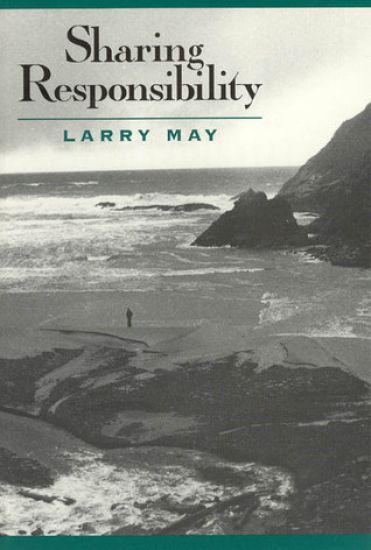
Sharing Responsibility

Sharing Responsibility

Larry May

University of Chicago Press
1996
nidottu
Are individuals responsible for the consequences of actions taken by their community? What about their community's inaction or its attitudes? In this work, the author departs from the traditional Western view that moral responsibility is limited to the consequences of overt individual action. Drawing on the insights of Arendt, Jaspers and Sartre, he argues that even when individuals are not direct participants, they share responsibility for various harms perpetrated by their communities.
The Socially Responsive Self

The Socially Responsive Self

Larry May

University of Chicago Press
1996
sidottu
In this work, Larry May argues that socially responsive individuals need not be self-sacrificing or overly conscientious. According to the author a person's integrity and moral responsibility are shaped and limited not just by conscience, but also by socialization and moral support from the communities to which he or she belongs. Applying his theory of responsibility to professional ethics, May contends that current methods of professional socialization should be changed so that professionals are not expected to ignore considerations of personal well-being, family, or community. For instance, lawyers should not place client loyalty above concerns for the common good; doctors should not place the physical well-being of patients above their mental and spiritual well-being; scientists and engineers should not feel obliged to blow the whistle on fraud and corruption unless their professional groups protect them from retaliation.
The Socially Responsive Self

The Socially Responsive Self

Larry May

University of Chicago Press
1996
nidottu
In this work, Larry May argues that socially responsive individuals need not be self-sacrificing or overly conscientious. According to the author a person's integrity and moral responsibility are shaped and limited not just by conscience, but also by socialization and moral support from the communities to which he or she belongs. Applying his theory of responsibility to professional ethics, May contends that current methods of professional socialization should be changed so that professionals are not expected to ignore considerations of personal well-being, family, or community. For instance, lawyers should not place client loyalty above concerns for the common good; doctors should not place the physical well-being of patients above their mental and spiritual well-being; scientists and engineers should not feel obliged to blow the whistle on fraud and corruption unless their professional groups protect them from retaliation.
The Shock of the Ancient

The Shock of the Ancient

Larry F. Norman

University of Chicago Press
2011
sidottu
The cultural battle known as the Quarrel of the Ancients and Moderns has most often been depicted as pitting antiquarian conservatives against the insurgent critics of established authority. One of the most public controversies of early modern Europe, the Quarrel served as a sly cover for more deeply opposed views about the value of literature and the arts. "The Shock of the Ancient" turns the canonical vision of those events on its head by demonstrating how the defenders of Greek literature - rather than clinging to an outmoded tradition - celebrated the radically different practices of the ancient world. At a time when the constraints of decorum and the politics of French absolutism quashed the expression of cultural differences, the ancient world presented a disturbing face of otherness. Larry F. Norman explores how the authoritative status of ancient Greek texts allowed them to justify literary depictions of the scandalous. "The Shock of the Ancient" surveys the diverse array of aesthetic models presented in these ancient works and considers how they both helped to undermine the rigid codes of neoclassicism and pave the way for the innovative philosophies of the Enlightenment. Broadly appealing to students of European literature, art history, and philosophy, this book is an important contribution to early modern literary and cultural debates.
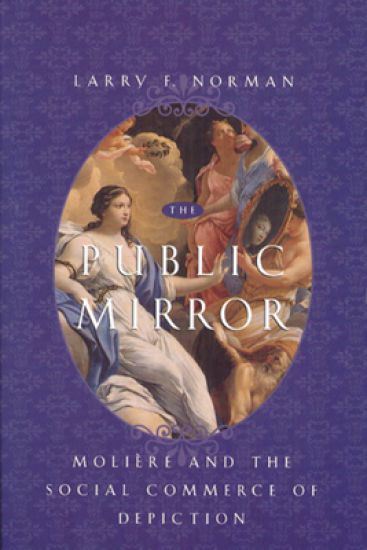
The Public Mirror

The Public Mirror

Larry F. Norman

University of Chicago Press
1999
sidottu
Though much beloved and widely produced, Moliere's satirical comedies pose a problem for those reading or staging his works today: how can a genre associated with biting caricature and castigation deliver engaging theatre? Instead of simply dismissing social satire as a foundation for Moliere's theatre, Larry F. Norman takes seriously Moliere's claim that his satires are first and foremost effective theatre. Pairing close readings of Moliere's comedies with accounts of French social history and aesthetics, Norman shows how Moliere perceived satire as a "public mirror" provoking dynamic exchange and conflict with audience members obsessed with their own images. Drawing on these tensions, Moliere portrays characters satirizing one another on stage, with their reactions providing dramatic conflict and propelling comic dialogue. By laying bare his society's system of imagining itself, Moliere's satires both enthralled and enraged his original audience and provide us with a crucial key to the classical culture of representation.
The Public Mirror

The Public Mirror

Larry F. Norman

University of Chicago Press
1999
nidottu
Though much beloved and widely produced, Moliere's satirical comedies pose a problem for those reading or staging his works today: how can a genre associated with biting caricature and castigation deliver engaging theatre? Instead of simply dismissing social satire as a foundation for Moliere's theatre, Larry F. Norman takes seriously Moliere's claim that his satires are first and foremost effective theatre. Pairing close readings of Moliere's comedies with accounts of French social history and aesthetics, Norman shows how Moliere perceived satire as a "public mirror" provoking dynamic exchange and conflict with audience members obsessed with their own images. Drawing on these tensions, Moliere portrays characters satirizing one another on stage, with their reactions providing dramatic conflict and propelling comic dialogue. By laying bare his society's system of imagining itself, Moliere's satires both enthralled and enraged his original audience and provide us with a crucial key to the classical culture of representation.
Making Spirit Matter

Making Spirit Matter

Larry Sommer McGrath

University of Chicago Press
2020
sidottu
The connection between mind and brain has been one of the most persistent problems in modern Western thought; even recent advances in neuroscience haven't been able to solve it satisfactorily. Historian Larry Sommer McGrath's Making Spirit Matter studies how a particularly productive and influential group of nineteenth- and early twentieth-century French thinkers attempted to answer this puzzle by showing the mutual dependence of spirit and matter. The scientific revolution taking place during this moment in history across disciplines, from biology to psychology and neurology, located our spiritual powers in the brain and offered a radical reformulation of the meaning of society, spirit, and the self. Tracing connections among thinkers such as Henri Bergson, Alfred Fouillee, Jean-Marie Guyau, and others, McGrath plots alternative intellectual movements that revived themes of agency, time, and experience by applying the very sciences that seemed to undermine metaphysics and theology. In so doing, Making Spirit Matter lays out the long legacy of this moment in the history of ideas and how it might renew our understanding of the relationship between mind and brain today.
Making Spirit Matter

Making Spirit Matter

Larry Sommer McGrath

University of Chicago Press
2020
pokkari
The connection between mind and brain has been one of the most persistent problems in modern Western thought; even recent advances in neuroscience haven't been able to solve it satisfactorily. Historian Larry Sommer McGrath's Making Spirit Matter studies how a particularly productive and influential group of nineteenth- and early twentieth-century French thinkers attempted to answer this puzzle by showing the mutual dependence of spirit and matter. The scientific revolution taking place during this moment in history across disciplines, from biology to psychology and neurology, located our spiritual powers in the brain and offered a radical reformulation of the meaning of society, spirit, and the self. Tracing connections among thinkers such as Henri Bergson, Alfred Fouillee, Jean-Marie Guyau, and others, McGrath plots alternative intellectual movements that revived themes of agency, time, and experience by applying the very sciences that seemed to undermine metaphysics and theology. In so doing, Making Spirit Matter lays out the long legacy of this moment in the history of ideas and how it might renew our understanding of the relationship between mind and brain today.
The Invention of Art

The Invention of Art

Larry Shiner

University of Chicago Press
2003
nidottu
With "The Invention of Art", Larry Shiner challenges our conventional understandings of art and asks us to reconsider its history entirely, arguing that the category of fine art is a modern invention - that the lines drawn between art and craft resulted from key social transformations in Europe during the long 18th century.