Kirjojen hintavertailu. Mukana 11 717 486 kirjaa ja 12 kauppaa.

Kirjahaku

Etsi kirjoja tekijän nimen, kirjan nimen tai ISBN:n perusteella.

1000 tulosta hakusanalla Linda Saukko-Rauta

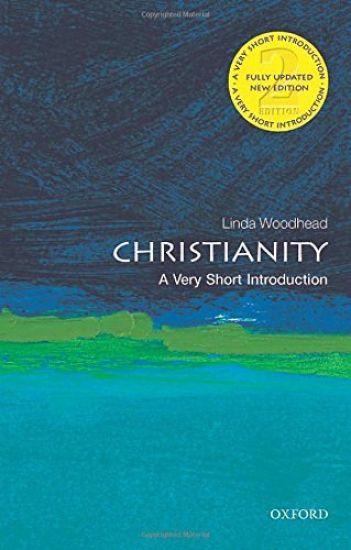
Christianity

Christianity

Linda Woodhead

Oxford University Press
2014
nidottu
At a time when Christianity is flourishing in the Southern hemisphere but declining in much of the West, this Very Short Introduction offers an important overview of the world's largest religion. Exploring the cultural and institutional dimensions of Christianity, and tracing its course over two millennia, Linda Woodhead provides a fresh, lively, and candid portrait of Christianity's past and present. Addressing topics including the competition for power between different forms of Christianity, the churches' use of power, and its struggles with modernity, this new edition includes up to date information on the growth and geographical spread of Eastern Christianity, reflecting the global nature of Christianity in our ever-shifting contemporary culture. ABOUT THE SERIES: The Very Short Introductions series from Oxford University Press contains hundreds of titles in almost every subject area. These pocket-sized books are the perfect way to get ahead in a new subject quickly. Our expert authors combine facts, analysis, perspective, new ideas, and enthusiasm to make interesting and challenging topics highly readable.
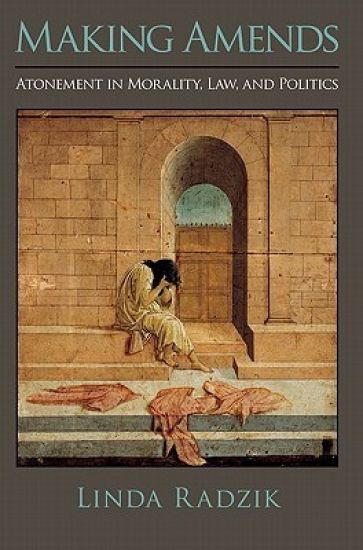
Making Amends

Making Amends

Linda Radzik

Oxford University Press Inc
2011
nidottu
Can wrongs be righted? Can we make up for our misdeeds, or does the impossibility of changing the past mean that we remain permanently guilty? While atonement is traditionally considered a theological topic, Making Amends uses the resources of secular moral philosophy to explore the possibility of correcting the wrongs we do to one another. Philosophers generally approach the problem of past wrongdoing from the point of view of either a judge or a victim. They assume that wrongdoing can only be resolved through punishment or forgiveness. But this book explores the responses that wrongdoers can and should make to their own misdeeds, responses such as apology, repentance, reparations, and self-punishment. Making Amends explores the possibility of atonement in a broad spectrum of contexts--from cases of relatively minor wrongs in personal relationships, to crimes, to the historical injustices of our political and religious communities. It argues that wrongdoers often have the ability to earn redemption within the moral community. Making Amends defends a theory of atonement that emphasizes the rebuilding of respect and trust among victims, communities and wrongdoers. The ideal of reconciliation enables us to explain the value of repentance without restricting our interest to the wrongdoer's character, to account for the power of reparations without placing a dollar value on dignity, to justify the suffering of guilt without falling into a simplistic endorsement of retribution, and to insist on the moral responsibility of wrongdoing groups without treating their members unfairly.
A More Perfect Union

A More Perfect Union

Linda Sargent Wood

Oxford University Press Inc
2012
nidottu
In 1962, when the Cold War threatened to ignite in the Cuban Missile Crisis, when more nuclear test bombs were detonated than in any other year in history, Rachel Carson released her own bombshell, Silent Spring, to challenge society's use of pesticides. To counter the use of chemicals--and bombs--the naturalist articulated a holistic vision. She wrote about a "web of life" that connected humans to the world around them and argued that actions taken in one place had consequences elsewhere. Thousands accepted her message, joined environmental groups, flocked to Earth Day celebrations, and lobbied for legislative regulation. Carson was not the only intellectual to offer holistic answers to society's problems. This book uncovers a sensibility in post-World War II American culture that both tested the logic of the Cold War and fed some of the twentieth century's most powerful social movements, from civil rights to environmentalism to the counterculture. The study examines important leaders and institutions that embraced and put into practice a holistic vision for a peaceful, healthful, and just world: nature writer Rachel Carson, structural engineer R. Buckminster Fuller, civil rights leader Martin Luther King Jr., Jesuit priest and paleontologist Pierre Teilhard de Chardin, humanistic psychologist Abraham Maslow, and the Esalen Institute and its founders, Michael Murphy and Dick Price. Each looked to whole systems instead of parts and focused on connections, interdependencies, and integration to create a better world. Though the '60s dreams of creating a more perfect world were tempered by economic inequalities, political corruption, and deep social divisions, this holistic sensibility continues to influence American culture today.
Belief without Borders

Belief without Borders

Linda A. Mercadante

Oxford University Press Inc
2014
sidottu
The last twenty years have seen a dramatic increase in "nones": people who do not claim any religious affiliation, and who now outnumber even the largest Protestant denominations in America. Not to be confused with secularists, many nones identify themselves as "spiritual but not religious" (SBNR). Public response to the emergence of SBNRs has been wildly mixed. Nones have been evaluated, statistically analyzed, classified and categorized, derided as shallow dilettantes, and hailed as spiritual pioneers, but very rarely asked to describe their own views and experiences. In Beliefs without Borders, theologian and one-time SBNR Linda Mercadante gives nones a chance to speak for themselves. This volume is the outcome of extensive observation and over 85 in-depth interviews with SBNRs across the United States. Mercadante presents SBNRs' stories and analysis of their spiritual journeys as well as their rationale for the rejection of organized religion, showing that people who identify in this way can be found not only outside of organized religon, but within it. She reveals the surprising latent theology within the nones movement, including the interviewees' creative concepts of divine transcendence, life after death, human nature, and community, and the conclusions she draws are startling: despite that SBNRs routinely discount the creeds and doctrines of organized religion, many have devised a structured set of beliefs, often purposefully in opposition to doctrines associated with Christianity. Beliefs without Borders is a captivating exploration of a growing belief system certain to transform the spiritual character of America.
Epistemic Authority

Epistemic Authority

Linda Trinkaus Zagzebski

Oxford University Press Inc
2012
sidottu
In this book Linda Trinkaus Zagzebski gives an extended argument that the self-reflective person is committed to belief on authority. Epistemic authority is compatible with autonomy, but epistemic self-reliance is incoherent. She argues that epistemic and emotional self-trust are rational and inescapable, that consistent self-trust commits us to trust in others, and that among those we are committed to trusting are some whom we ought to treat as epistemic authorities, modeled on the well-known principles of authority of Joseph Raz. Some of these authorities can be in the moral and religious domains. Why have people for thousands of years accepted epistemic authority in religious communities? A religious community's justification for authority is typically based on beliefs unique to that community. Unfortunately, that often means that from the community's perspective, its justifying claims are insulated from the outside; whereas from an outside perspective, epistemic authority in the community appears unjustified. But as Zagzebski's argument shows, an individual's acceptance of authority in her community can be justified by principles that outsiders accept, and the particular beliefs justified by that authority are not immune to external critiques. Why have people for thousands of years accepted epistemic authority in religious communities? A religious community's justification for authority is typically based on beliefs unique to that community. Unfortunately, that often means that from the community's perspective, its justifying claims are insulated from the outside; whereas from an outside perspective, epistemic authority in the community appears unjustified. But as Zagzebski's argument shows, an individual's acceptance of authority in her community can be justified by principles that outsiders accept, and the particular beliefs justified by that authority are not immune to external critiques.
Primate Paradigms

Primate Paradigms

Linda Marie Fedigan

University of Chicago Press
1992
nidottu
This critical review of behavior patterns in nonhuman primates is an excellent study of the importance of female roles in different social groups and their significance in the evolution of human social life. "A book that properly illuminates in rich detail not only developmental and socioecological aspects of primate behavior but also how and why certain questions are asked. In addition, the book frequently focuses on insufficiently answered questions, especially those concerned with the evolution of primate sex differences. Fedigan's book is unique ...because it places primate adaptations and our explanation of those patterns in a larger intellectual framework that is easily and appropriately connected to many lines of research in different fields (sociology, psychology, anthropology, neurobiology, endocrinology, and biology)--and not in inconsequential ways, either."--James McKenna, American Journal of Primatology "This is the feminist critique of theories of primate and human evolution."--John H. Cook, Nature
Four Last Songs

Four Last Songs

Linda Hutcheon; Michael Hutcheon

University of Chicago Press
2015
sidottu
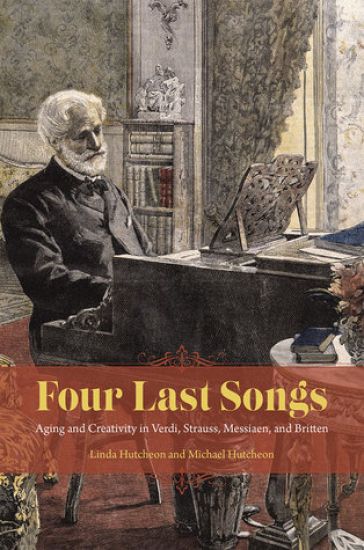
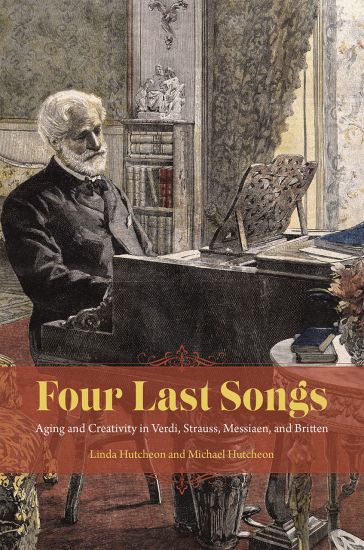
Aging and creativity can seem a particularly fraught relationship for artists, who often face age-related difficulties at a time when their audience's expectations of their talents are at a peak. In Four Last Songs, Linda and Michael Hutcheon explore this issue through close looks at those who created some of the world's most important and influential operas. Giuseppe Verdi (1813 - 1901), Richard Strauss (1864 - 1949), Olivier Messiaen (1908 - 92), and Benjamin Britten (1913 - 76) all wrote operas late in life, pieces that reveal radically individual responses to the challenges of growing older. Verdi's Falstaff, his only comedic success, combated the influence of Richard Wagner by introducing young Italian composers to a new model of national music. Strauss, on the other hand, struggling with personal and political problems in Nazi Germany, composed the self-reflexive Capriccio, a "life review" of opera and his own musical legacy. Though it exhausted him physically and emotionally, Messiaen finished at the age of seventy-five his first and only opera, Saint Francois d'Assise, which marked the religious and aesthetic pinnacle of his career. Britten, meanwhile, suffered from heart problems at the end of his career and raced against time, refusing to undergo surgery until he had completed his masterpiece, Death in Venice. For all four composers, age, far from sapping the power of creativity, provided impetus for some of their most impressive accomplishments. The diverse stories presented here provide unique insight into the attitudes and cultural discourse surrounding creativity, aging, and late style. With its deft treatment of these composers' final years and works, Four Last Songs provides a valuable look at the challenges - and opportunities - that present themselves as artists grow older.
A Democratic Theory of Judgment

A Democratic Theory of Judgment

Linda M. G. Zerilli

University of Chicago Press
2016
sidottu
In this sweeping look at political and philosophical history, Linda M. G. Zerilli unpacks the tightly woven core of Hannah Arendt's unfinished work on a tenacious modern problem: how to judge critically in the wake of the collapse of inherited criteria of judgment. Engaging a remarkable breadth of thinkers, including Ludwig Wittgenstein, Leo Strauss, Immanuel Kant, Frederick Douglas, John Rawls, J rgen Habermas, Martha Nussbaum, and many others, Zerilli clears a hopeful path between an untenable universalism and a cultural relativism that forever defers the possibility of judging at all. Zerilli deftly outlines the limitations of existing debates, both those that concern themselves with the impossibility of judging across cultures and those that try to find transcendental, rational values to anchor judgement. Looking at Kant through the lens of Arendt, Zerilli develops the notion of a public conception of truth, and from there she explores relativism, historicism, and universalism as they shape feminist approaches to judgment. Following Arendt even further, Zerilli arrives at a hopeful new pathway seeing the collapse of philosophical criteria for judgment not as a problem but a way to practice judgment anew as a world-building activity of democratic citizens. The result is an astonishing theoretical argument that travels through and goes beyond some of the most important political thought of the modern period.
A Democratic Theory of Judgment

A Democratic Theory of Judgment

Linda M. G. Zerilli

University of Chicago Press
2016
nidottu
In this sweeping look at political and philosophical history, Linda M. G. Zerilli unpacks the tightly woven core of Hannah Arendt's unfinished work on a tenacious modern problem: how to judge critically in the wake of the collapse of inherited criteria of judgment. Engaging a remarkable breadth of thinkers, including Ludwig Wittgenstein, Leo Strauss, Immanuel Kant, Frederick Douglas, John Rawls, J rgen Habermas, Martha Nussbaum, and many others, Zerilli clears a hopeful path between an untenable universalism and a cultural relativism that forever defers the possibility of judging at all. Zerilli deftly outlines the limitations of existing debates, both those that concern themselves with the impossibility of judging across cultures and those that try to find transcendental, rational values to anchor judgement. Looking at Kant through the lens of Arendt, Zerilli develops the notion of a public conception of truth, and from there she explores relativism, historicism, and universalism as they shape feminist approaches to judgment. Following Arendt even further, Zerilli arrives at a hopeful new pathway seeing the collapse of philosophical criteria for judgment not as a problem but a way to practice judgment anew as a world-building activity of democratic citizens. The result is an astonishing theoretical argument that travels through and goes beyond some of the most important political thought of the modern period.
Four Last Songs

Four Last Songs

Linda Hutcheon; Michael Hutcheon

University of Chicago Press
2016
nidottu
Aging and creativity can seem a particularly fraught relationship for artists, who often face age-related difficulties as their audience's expectations are at a peak. In Four Last Songs, Linda and Michael Hutcheon explore this issue via the late works of some of the world's greatest composers. Giuseppe Verdi (1813 1901), Richard Strauss (1864 1949), Olivier Messiaen (1908 92), and Benjamin Britten (1913 76) all wrote operas late in life, pieces that reveal unique responses to the challenges of growing older. Verdi's Falstaff, his only comedic success, combated Richard Wagner's influence by introducing young Italian composers to a new model of national music. Strauss, on the other hand, struggling with personal and political problems in Nazi Germany, composed the self-reflexive Capriccio, a "life review" of opera and his own legacy. Though it exhausted him physically and emotionally, Messiaen at the age of seventy-five finished his only opera, Saint Fran ois d'Assise, which marked the pinnacle of his career. Britten, meanwhile, suffering from heart problems, refused surgery until he had completed his masterpiece, Death in Venice. For all four composers, age, far from sapping their creative power, provided impetus for some of their best accomplishments. With its deft treatment of these composers' final years and works, Four Last Songs provides a valuable look at the challenges and opportunities that present themselves as artists grow older.
Special Delivery

Special Delivery

Linda S. Kauffman

University of Chicago Press
1992
sidottu
Though letter writing is almost a lost art, twentieth-century writers have mimed the epistolary mode as a means of reevaluating the theme of love. In Special Delivery, Linda S. Kauffman places the narrative treatment of love in historical context, showing how politics, economics, and commodity culture have shaped the meaning of desire. Kauffman first considers male writers whose works, testing the boundaries of genre and gender, imitate love letters: Viktor Shklovsky's Zoo, Vladimir Nabokov's Lolita, Roland Barthes's A Lover's Discourse, and Jacques Derrida's The Post Card. She then turns to three novels by women who are more preoccupied with politics than passion: Doris Lessing's The Golden Notebook, Alice Walker's The Color Purple, and Margaret Atwood's The Handmaid's Tale. By juxtaposing these "women's productions" with the men's "production of Woman," Special Delivery dismantles the polarities between male and female, theory and fiction, high and low culture, male critical theory, and feminist literary criticism. Kauffman demonstrates how all seven texts mercilessly expose the ideology of individualism and romantic love; each presents alternate paradigms of desire, wrested from Oedipus, grounded in history and politics, giving epistolarity a distinctively postmodern stamp.
Special Delivery

Special Delivery

Linda S. Kauffman

University of Chicago Press
1992
nidottu
Though letter writing is almost a lost art, twentieth-century writers have mimed the epistolary mode as a means of reevaluating the theme of love. In Special Delivery, Linda S. Kauffman places the narrative treatment of love in historical context, showing how politics, economics, and commodity culture have shaped the meaning of desire. Kauffman first considers male writers whose works, testing the boundaries of genre and gender, imitate love letters: Viktor Shklovsky's Zoo, Vladimir Nabokov's Lolita, Roland Barthes's A Lover's Discourse, and Jacques Derrida's The Post Card. She then turns to three novels by women who are more preoccupied with politics than passion: Doris Lessing's The Golden Notebook, Alice Walker's The Color Purple, and Margaret Atwood's The Handmaid's Tale. By juxtaposing these "women's productions" with the men's "production of Woman," Special Delivery dismantles the polarities between male and female, theory and fiction, high and low culture, male critical theory, and feminist literary criticism. Kauffman demonstrates how all seven texts mercilessly expose the ideology of individualism and romantic love; each presents alternate paradigms of desire, wrested from Oedipus, grounded in history and politics, giving epistolarity a distinctively postmodern stamp.
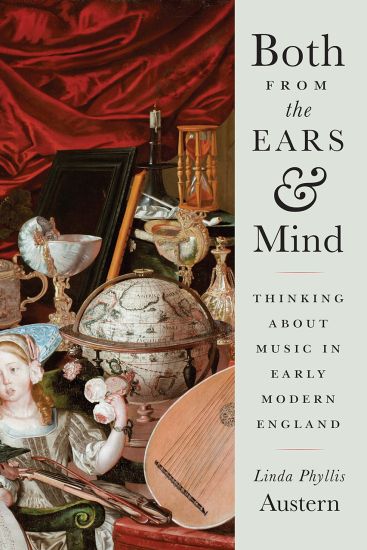
Both from the Ears and Mind

Both from the Ears and Mind

Linda Phyllis Austern

University of Chicago Press
2020
sidottu
Both from the Ears and Mind offers a bold new understanding of the intellectual and cultural position of music in Tudor and Stuart England. Linda Phyllis Austern brings to life the kinds of educated writings and debates that surrounded musical performance, and the remarkable ways in which English people understood music to inform other endeavors, from astrology and self-care to divinity and poetics. Music was considered both art and science, and discussions of music and musical terminology provided points of contact between otherwise discrete fields of human learning. This book demonstrates how knowledge of music permitted individuals to both reveal and conceal membership in specific social, intellectual, and ideological communities. Attending to materials that go beyond music’s conventional limits, these chapters probe the role of music in commonplace books, health-maintenance and marriage manuals, rhetorical and theological treatises, and mathematical dictionaries. Ultimately, Austern illustrates how music was an indispensable frame of reference that became central to the fabric of life during a time of tremendous intellectual, social, and technological change.
Picturing Ourselves

Picturing Ourselves

Linda Haverty Rugg

University of Chicago Press
1997
sidottu
Photography has transformed the way we picture ourselves. Although photographs seem to "prove" our existence at a given point in time, they also demonstrate the impossibility of framing our multiple and fragmented selves. As the author of this study aims to show, photography's double-take on self-image mirrors the concerns of autobiographers, who see the self as simultaneously divided (in observing/being) and unified by the autobiographical act. The book tracks photography's impact on the formation of self-image through the study of four literary autobiographers concerned with the transformative power of photography. Obsessed with self-image, Mark Twain and August Strindberg both attempted (unsuccessfully) to integrate photographs into their autobiographies. While Twain encouraged photographers, he was wary of fakery and kept a fierce watch on the distribution of his photographic image. Strindberg, believing that photographs had occult power, preferred to photograph himself. Because of their experiences under National Socialism, Walter Benjamin and Christa Wolf feared the dangerously objectifying power of photographs and omitted them from their autobiographical writings. Yet Benjamin used them in his photographic conception of history, which had its testing ground in his often-ignored "Berliner Kindheit um 1900". And Christa Wolf's narrator in "Patterns of Childhood" attempts to reclaim her childhood from the Nazis by reconstructing mental images of lost family photographs. Confronted with multiple and conflicting images of themselves, all four of these writers are torn between the knowledge that texts, photographs, and indeed selves are haunted by undecidability and the desire for the returned glance of a single self.
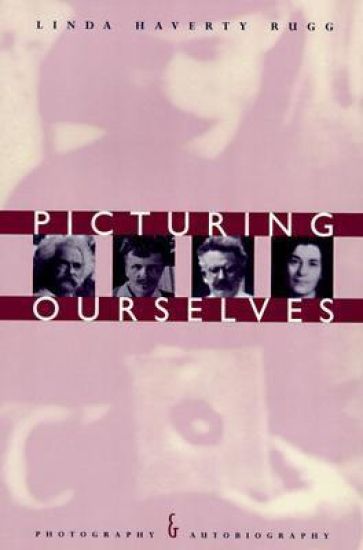
Picturing Ourselves

Picturing Ourselves

Linda Haverty Rugg

University of Chicago Press
1997
nidottu
Photography has transformed the way we picture ourselves. Although photographs seem to "prove" our existence at a given point in time, they also demonstrate the impossibility of framing our multiple and fragmented selves. As the author of this study aims to show, photography's double-take on self-image mirrors the concerns of autobiographers, who see the self as simultaneously divided (in observing/being) and unified by the autobiographical act. The book tracks photography's impact on the formation of self-image through the study of four literary autobiographers concerned with the transformative power of photography. Obsessed with self-image, Mark Twain and August Strindberg both attempted (unsuccessfully) to integrate photographs into their autobiographies. While Twain encouraged photographers, he was wary of fakery and kept a fierce watch on the distribution of his photographic image. Strindberg, believing that photographs had occult power, preferred to photograph himself. Because of their experiences under National Socialism, Walter Benjamin and Christa Wolf feared the dangerously objectifying power of photographs and omitted them from their autobiographical writings. Yet Benjamin used them in his photographic conception of history, which had its testing ground in his often-ignored "Berliner Kindheit um 1900". And Christa Wolf's narrator in "Patterns of Childhood" attempts to reclaim her childhood from the Nazis by reconstructing mental images of lost family photographs. Confronted with multiple and conflicting images of themselves, all four of these writers are torn between the knowledge that texts, photographs, and indeed selves are haunted by undecidability and the desire for the returned glance of a single self.
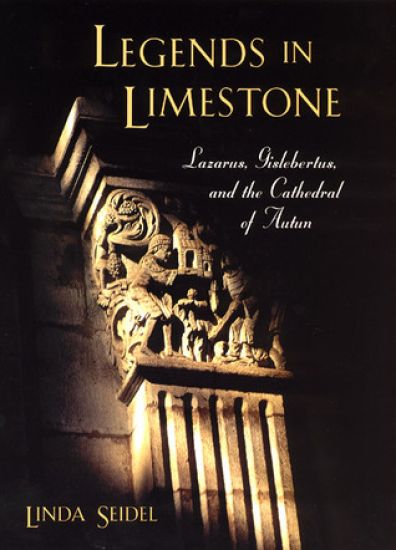
Legends in Limestone

Legends in Limestone

Linda Seidel

University of Chicago Press
1999
sidottu
Whereas 12th-century pilgrims flocked to the church of St-Lazare in Autun to visit the relics of its patron saint, present-day pilgrims journey there to admire its superb sculpture, said to have been created by Gislebertus. These two cults, of sculptor and of saint, form the basis for this study. The text reveals how "Gislebertus, sculptor" was discovered and susequently sanctified over the course of the last century. The author makes a case for the identification of the name with an ancestor of the local ducal family, invoked for his role in the acquisition of the precious relics. With the aid of evidence drawn from the richly carved decoration of the building, she demonstrates how medieval visitors would have read a different holy narrative in the church fabric, one that constructed before their eyes an account of their patron saint's life.
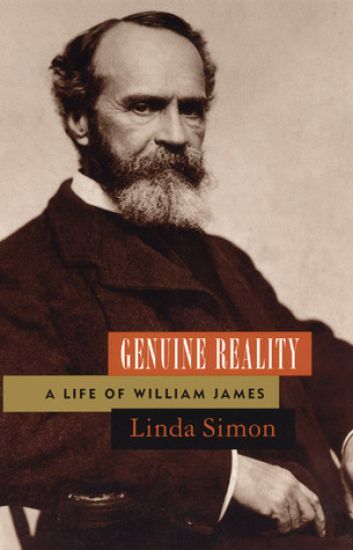
Genuine Reality

Genuine Reality

Linda Simon

University of Chicago Press
1999
nidottu
Intellectual rebel, romantic pragmatist, aristocratic pluralist, William James was both a towering figure of the 19th century and a harbinger of the 20th. This biography draws on a wide range of sources, including 1500 letters between James and his wife.
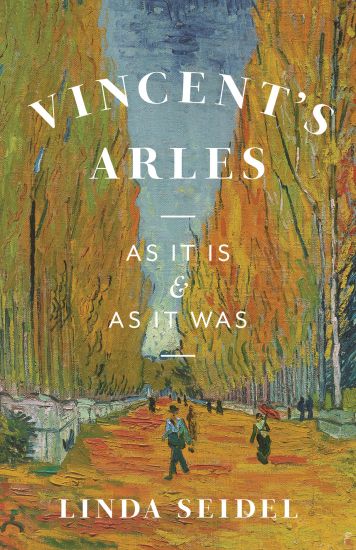
Vincent's Arles

Vincent's Arles

Linda Seidel

THE UNIVERSITY OF CHICAGO PRESS
2023
sidottu
A vivid tour of the town of Arles, guided by one of its most famous visitors: Vincent van Gogh. Once admired as “a little Rome” on the banks of the Rhône, the town of Arles in the south of France had been a place of significance long before the painter Vincent van Gogh arrived in February of 1888. Aware of Arles’s history as a haven for poets, van Gogh spent an intense fifteen months there, scouring the city’s streets and surroundings in search of subjects to paint when he wasn’t thinking about other places or lamenting his woeful circumstances. In Vincent’s Arles, Linda Seidel serves as a guide to the mysterious and culturally rich town of Arles, taking us to the places immortalized by van Gogh and cherished by innumerable visitors and pilgrims. Drawing on her extensive expertise on the region and the medieval world, Seidel presents Arles then and now as seen by a walker, visiting sites old and new. Roman, Romanesque, and contemporary structures come alive with the help of the letters the artist wrote while in Arles. The result is the perfect blend of history, art, and travel, a chance to visit a lost past and its lingering, often beautiful, traces in the present.
A Democratic Theory of Truth

A Democratic Theory of Truth

Linda M. G. Zerilli

THE UNIVERSITY OF CHICAGO PRESS
2025
sidottu
A critique of the concept of truth presupposed by the post-truth debate—and a bold new vision for a more pluralistic citizenry. We say that we live in a “post-truth” era because disinformation threatens our confidence in the existence of a shared public world. Affirming objective truth may, therefore, seem necessary to save democracy. According to political theorist Linda M. G. Zerilli, such affirmation can stifle political debate and silence dissent. In fact, Zerilli argues that the unqualified insistence on objective truth is as dangerous for democracy as denying it. Drawing on Arendt, Foucault, and Wittgenstein, A Democratic Theory of Truth challenges the concept of truth presupposed by the post-truth debate. It argues that we, the people, have an essential role in discovering and evaluating any truth relevant to the political realm. The result is a striking defense of plurality, dissent, and opinion in contemporary democratic societies.
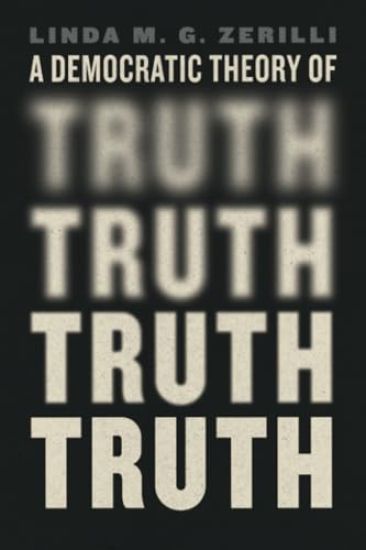
A Democratic Theory of Truth

A Democratic Theory of Truth

Linda M. G. Zerilli

THE UNIVERSITY OF CHICAGO PRESS
2025
nidottu
A critique of the concept of truth presupposed by the post-truth debate—and a bold new vision for a more pluralistic citizenry. We say that we live in a “post-truth” era because disinformation threatens our confidence in the existence of a shared public world. Affirming objective truth may, therefore, seem necessary to save democracy. According to political theorist Linda M. G. Zerilli, such affirmation can stifle political debate and silence dissent. In fact, Zerilli argues that the unqualified insistence on objective truth is as dangerous for democracy as denying it. Drawing on Arendt, Foucault, and Wittgenstein, A Democratic Theory of Truth challenges the concept of truth presupposed by the post-truth debate. It argues that we, the people, have an essential role in discovering and evaluating any truth relevant to the political realm. The result is a striking defense of plurality, dissent, and opinion in contemporary democratic societies.