Kirjojen hintavertailu. Mukana 12 095 182 kirjaa ja 12 kauppaa.

Kirjahaku

Etsi kirjoja tekijän nimen, kirjan nimen tai ISBN:n perusteella.

1000 tulosta hakusanalla Malcolm Croft

Plato

Plato

Malcolm Schofield

Oxford University Press
2006
nidottu
The Founders of Modern Political and Social Thought series presents critical examinations of the work of major political philosophers and social theorists, assessing both their initial contribution and their continuing relevance to politics and society. Each volume provides a clear, accessible, historically informed account of a thinker's work, focusing on a reassessment of the central ideas and arguments. The series encourages scholars and students to link their study of classic texts to current debates in political philosophy and social theory. In this authoritative general account of Plato's political thought, a leading scholar of ancient Greek philosophy explores its key themes: education, democracy and its shortcomings, the role of knowledge in government, utopia and the idea of community, money and its grip on the psyche, ideological uses of religion. Between them these define what Plato considered to be the fundamental challenges for politics. All remain live issues. On all of them Plato took radical and uncomfortable positions. The radicalism derives above all from his reflections on the fate of Socrates at the hands of the Athenian democracy in 399 BC. So the book begins with chapters situating Plato's alienation from contemporary politics in its historical context, and examines at length the images of Athens and the Spartan alternative which pervade his writings on politics. The Republic is a main focus of discussion throughout, but ideas and arguments in many other dialogues from Apology and Gorgias to the Statesman and the Laws are examined. Plato: Political Philosophy assumes a broad range of readers - with backgrounds in varied fields (politics, philosophy, classics, history) - who may have little prior knowledge of Plato. It articulates and analyses his main lines of thought, illustrating them with a liberal use of translated excerpts, and highlighting affinities with modern theorists from Machiavelli and Mill to Rawls and Habermas. Schofield's distinctive line of approach to Plato's problems constitutes a lucid and accessible guide for those needing an introduction, and at the same time will provide those who know Plato well with much food for thought.
Plato

Plato

Malcolm Schofield

Oxford University Press
2006
sidottu
Plato is the best known and most widely studied of all the ancient Greek philosophers. Malcolm Schofield, a leading scholar of ancient philosophy, offers a lucid and accessible guide to Plato's political thought, enormously influential and much discussed in the modern world as well as the ancient. Schofield discusses Plato's ideas on education, democracy and its shortcomings, the role of knowledge in government, utopia and the idea of community, money and its grip on the psyche, and ideological uses of religion.
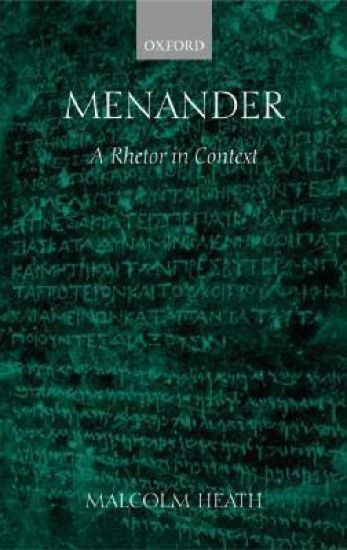
Menander

Menander

Malcolm Heath

Oxford University Press
2004
sidottu
This book undertakes a fundamental assessment of Menander of Laodicea ('Menander Rhetor'), and of the nature and functions of rhetoric in later antiquity (second to fifth centuries AD). It examines Menander's fragments, collected here for the first time, in detail, showing that he was primarily an expert on judicial and deliberative oratory; a source-critical analysis of the Demosthenes scholia shows that his influential commentary on Demosthenes can be partially reconstructed. It explores the educational practices of the rhetorical schools, and shows that the skills which they taught still had a direct application in the subsequent careers of the rhetoricians' pupils.
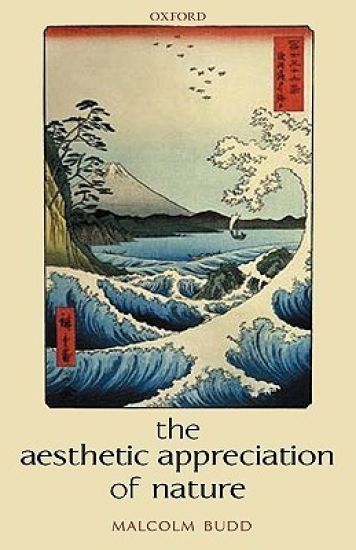
The Aesthetic Appreciation of Nature

The Aesthetic Appreciation of Nature

Malcolm Budd

Clarendon Press
2003
sidottu
Malcolm Budd presents four interlinked studies in the aesthetics of nature, approaching the subject from a variety of angles. As well as developing Budd's own original ideas, the book provides a comprehensive treatment of Kant's classic aesthetics of nature, and an encyclopaedic critical survey of recent literature on the subject.
The Princely Court

The Princely Court

Malcolm Vale

Oxford University Press
2004
nidottu
In this fascinating new book, Malcolm Vale sets out to recapture the splendour of the court culture of western Europe in the thirteenth and fourteenth centuries. Exploring the century or so between the death of St Louis and the rise of Burgundian power in the Low Countries, he illuminates a period in the history of princes and court life previously overshadowed by that of the courts of the dukes of Burgundy. Taking in subjects as diverse as art patronage and gambling, hunting and devotional religion, Malcolm Vale rediscovers a richness and abundance of artistic, literary, and musical life. He shows how, despite the pressures of political fragmentation, unrest, and a nascent awareness of national identity, a common culture emerged in English, French, and Dutch court societies at this time. The result is a ground-breaking re-evaluation of the nature and role of the court in European history and a celebration of a forgotten age.
Policies and Perceptions of Insurance Law in the Twenty First Century
In this book, Professor Malcolm Clarke provides a critical introduction to the English law of insurance contracts and presents the rules in both their legal and socio-economic contexts. He sets out the principles in a clear manner, moving on to develop the implications of certain rules in order to examine the importance of effective insurance and effective insurance law in modern society. Comparative reference is made to the corresponding rules in common law countries and also in major jurisdictions in western Europe, providing a thought-provoking wider view of the relevant law. The author illustrates the different perceptions of insurance and of insurance contract law that are to be found amongst lawyers, insurers, and policy-holders. In particular, Clarke argues that the perception of many people, and also not least of many judges, is that if any dispute arises with insurers, insurers have an unfair advantage under the law. Moreover, this is in fact usually the case, if insurers choose to use their advantage. Whilst presenting the rules of insurance contract law in the wider context of contract law at large, Clarke seeks to demystify them and to challenge the assumption that insurance law is or ought to be greatly different from other parts of the law. In particular, he argues that insurance contract law should be available and intelligible to serious enquirers, lawyers, and non-lawyers alike.
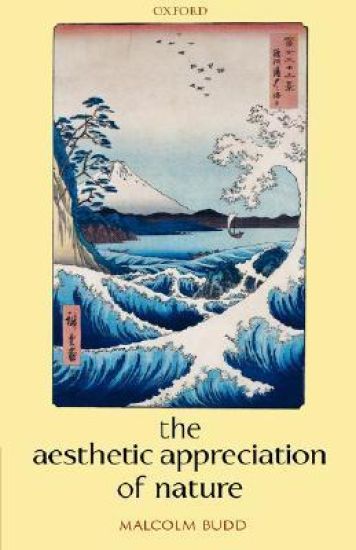
The Aesthetic Appreciation of Nature

The Aesthetic Appreciation of Nature

Malcolm Budd

Clarendon Press
2005
nidottu
The aesthetics of nature has over the last few decades become an intense focus of philosophical reflection, as it has been ever more widely recognised that it is not a mere appendage to the aesthetics of art. Just as nature offers aesthetic experiences beyond the reach of art, so the aesthetics of nature raises issues not contained within the philosophy of art. Malcolm Budd presents four interlinked essays addressing all the main problems about the aesthetics of nature. These include: how the aesthetic appreciation of nature should be understood; the character of an aesthetic response to nature; what kinds of aesthetic experience nature affords and what kinds of aesthetic judgement it is amenable to; the aesthetic significance of intrusions by humanity into nature; whether aesthetic judgements about nature can be objectively true; the doctrine of positive aesthetics with respect to nature; the aesthetic significance of knowledge of nature and in particular whether scientific knowledge is necessary for serious aesthetic appreciation of nature; and the correct model for the appropriate aesthetic appreciation of nature. The Aesthetic Appreciation of Nature also includes a comprehensive exposition and examination of the thoughts of the greatest philosopher to make a substantial contribution to the subject, Immanuel Kant, and an encyclopaedic critical survey of much of the most significant recent literature. Scholars and students of aesthetics will find valuable resources here, and much to think about.
Aesthetic Essays

Aesthetic Essays

Malcolm Budd

Oxford University Press
2008
sidottu
The book is a selection of Malcolm Budd's papers on aesthetics, some of which have been revised or added to. A number of the essays are aimed at the abstract heart of aesthetics, attempting to solve a cluster of the most important issues in aesthetics which are not specific to particular art forms. These include the nature and proper scope of the aesthetic, the intersubjective validity of aesthetic judgements, the correct understanding of aesthetic judgements expressed through metaphors, aesthetic realism versus anti-realism, the character of aesthetic pleasure and aesthetic value, the aim of art and the artistic expression of emotion. Other essays are focussed on central issues in the aesthetics of particular art forms: two engage with the most fundamental issue in the aesthetics of music, the question of the correct conception of the phenomenology of the experience of listening to music with understanding; and two consider the nature of pictorial representation, one examining certain well-known views, the other articulating an alternative conception of seeing a picture as a depiction of a certain state of affairs. The final essay in the volume is a comprehensive reconstruction and critical examination of Wittgenstein's aesthetics, both early and late.
Prostate Cancer

Prostate Cancer

Malcolm Mason; Leslie Moffat

Oxford University Press
2010
nidottu
Around 32,000 men in the UK are diagnosed with prostate cancer each year. It differs from most other cancers in the body, in that small areas of cancer within the prostate are very common and may not grow or cause any problems for many years. It is often it is diagnosed during a routine checkup so most men that are diagnosed often have no warning signs. About one in three men over the age of 50 have some cancer cells within their prostate and nearly all men over the age of 80 have a small area of prostate cancer. It may cause pain, difficulty in urinating, erectile dysfunction and other symptoms, but early prostate cancer usually causes no symptoms. Since the first edition of this book was published in 2003, there have been several groundbreaking studies completed that have changed the way that certain categories of the disease are treated. This new edition of the book includes sections on radiotherapy, which is now known to be an effective treatment for men with residual prostate cancer after surgery, and a heavily updated chapter on Advanced Disease.
Aesthetic Essays

Aesthetic Essays

Malcolm Budd

Oxford University Press
2012
nidottu
The book brings together a selection of Malcolm Budd's essays in aesthetics. A number of the essays are aimed at the abstract heart of aesthetics, attempting to solve a cluster of the most important issues in aesthetics which are not specific to particular art forms. These include the nature and proper scope of the aesthetic, the intersubjective validity of aesthetic judgements, the correct understanding of aesthetic judgements expressed through metaphors, aesthetic realism versus anti-realism, the character of aesthetic pleasure and aesthetic value, the aim of art and the artistic expression of emotion. Other essays are focussed on central issues in the aesthetics of particular art forms: two engage with the most fundamental issue in the aesthetics of music, the question of the correct conception of the phenomenology of the experience of listening to music with understanding; and two consider the nature of pictorial representation, one examining certain well-known views, the other articulating an alternative conception of seeing a picture as a depiction of a certain state of affairs. The final essay in the volume is a comprehensive reconstruction and critical examination of Wittgenstein's aesthetics, both early and late.
Dickensian Laughter

Dickensian Laughter

Malcolm Andrews

Oxford University Press
2013
sidottu
How does Dickens make his readers laugh? What is the distinctive character of Dickensian humour? These are the questions explored in this book on a topic that has been strangely neglected in critical studies over the last half century. Dickens's friend and biographer John Forster declared that: 'His leading quality was Humour.' At the end of Dickens's career he was acclaimed as 'the greatest English Humourist since Shakespeare's time.' In 1971 the critic Philip Collins surveyed recent decades of Dickens criticism and asked 'from how many discussions of Dickens in the learned journals would one ever guess that (as Dickens himself thought) humour was his leading quality, his highest faculty?' Forty years later, that rhetorical question has lost none of its force. Why? Perhaps Dickens's genius as a humourist is simply taken for granted, and critics prefer to turn to his other achievements; or perhaps humour is too hard to analyse without spoiling the fun? Whatever the reason, there has been very little by way of sustained critical investigation into what for most people has constituted Dickens's special claim to greatness. This book is framed as a series of essays examining and reflecting on Dickens's techniques for making us laugh. How is it that some written incident, or speech, or narrative 'aside' can fire off the page into the reader's conciousness and jolt him or her into a smile, a giggle, or a hearty laugh? That is the core question here. His first novel, Pickwick Papers, was acclaimed at the time as having 'opened a fresh vein of humour' in English literature: what was the social nature of the humour that established this trademark 'Dickensian' method of making people laugh? And how many kinds of laughter are there in Dickens? What made Dickens himself laugh? Victorian and contemporary theories of laughter can provide useful insights into these processes - incongruity theory or the 'relief' theory of laughter, laughter's contagiousness (laughter as a 'social glue'), the art of comic timing, the neuroscience of laughter. These and other ideas are brought into play in this short book, which considers not only Dickens's novels but also his letters and journalism. And to that end there are copious quotations. The aim of the book is to make readers laugh and also to prompt them to reflect on their laughter. It should have an interest not only for Dickensians but for anyone curious about the nature of laughter and how it is triggered.
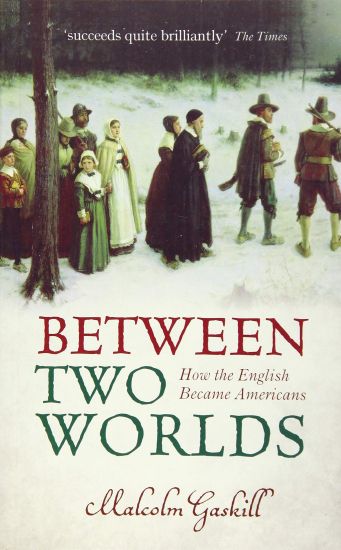
Between Two Worlds

Between Two Worlds

Malcolm Gaskill

Oxford University Press
2020
nidottu
Between Two Worlds is a story teeming with people on the move, making decisions, indulging or resisting their desires and dreams. In the seventeenth century a quarter of a million men, women, and children left England's shores for America. Some were explorers and merchants, others soldiers and missionaries; many were fugitives from poverty and persecution. All, in their own way, were adventurers, risking their lives and fortunes to make something of themselves overseas. They irrevocably changed the land and indigenous peoples they encountered - and their new world changed them. But that was only half the story. The plantations established from Maine to the Caribbean needed support at home, especially royal endorsement and money, which made adventurers of English monarchs and investors too. Attitudes to America were crucial, and evolved as the colonies grew in size, prosperity, and self-confidence. Meanwhile, for those who had crossed the ocean, America forced people to rethink the country in which they had been raised, and to which they remained attached after emigration. In tandem with new ideas about the New World, migrants pondered their English mother country's traditions and achievements, its problems and its uncertain future in an age of war and revolution. Using hundreds of letters, journals, reports, pamphlets and contemporary books, Between Two Worlds recreates this fascinating transatlantic history - one which has often been neglected or misunderstood on both sides of the Atlantic in the centuries since.
Cicero

Cicero

Malcolm Schofield

Oxford University Press
2021
sidottu
This book offers an innovative analytic account of Cicero's treatment of key political ideas: liberty and equality, government, law, cosmopolitanism and imperialism, republican virtues, and ethical decision-making in politics. Cicero (106-43 BC) is well known as a major player in the turbulent politics of the last three decades of the Roman Republic. But he was a political thinker, too, influential for many centuries in the Western intellectual and cultural tradition. His theoretical writings stand as the first surviving attempt to articulate a philosophical rationale for republicanism. They were not written in isolation either from the stances he took in his political actions and political oratory of the period, or from his discussions of immediate political issues or questions of character or behaviour in his voluminous correspondence with friends and acquaintances. In this book, Malcolm Schofield situates the intimate interrelationships between Cicero's writings in all these modes within the historical context of a fracturing Roman political order. It exhibits the continuing attractions of Cicero's scheme of republican values, as well as some of its limitations as a response to the crisis that was engulfing Rome.
Cicero

Cicero

Malcolm Schofield

Oxford University Press
2021
nidottu
This book offers an innovative analytic account of Cicero's treatment of key political ideas: liberty and equality, government, law, cosmopolitanism and imperialism, republican virtues, and ethical decision-making in politics. Cicero (106-43 BC) is well known as a major player in the turbulent politics of the last three decades of the Roman Republic. But he was a political thinker, too, influential for many centuries in the Western intellectual and cultural tradition. His theoretical writings stand as the first surviving attempt to articulate a philosophical rationale for republicanism. They were not written in isolation either from the stances he took in his political actions and political oratory of the period, or from his discussions of immediate political issues or questions of character or behaviour in his voluminous correspondence with friends and acquaintances. In this book, Malcolm Schofield situates the intimate interrelationships between Cicero's writings in all these modes within the historical context of a fracturing Roman political order. It exhibits the continuing attractions of Cicero's scheme of republican values, as well as some of its limitations as a response to the crisis that was engulfing Rome.
Royal Priesthood in the English Reformation

Royal Priesthood in the English Reformation

Malcolm B. Yarnell III

Oxford University Press
2013
sidottu
Royal Priesthood in the English Reformation assesses the understandings of the Christian doctrine of royal priesthood, long considered one of the three major Reformation teachings, as held by an array of royal, clerical, and popular theologians during the English Reformation. Historians and theologians often present the doctrine according to more recent debates rather than the contextual understandings manifested by the historical figures under consideration. Beginning with a radical reevaluation of John Wyclif and an incisive survey of late medieval accounts, the book challenges the predominant presentation of the doctrine of royal priesthood as primarily individualistic and anticlerical, in the process clarifying these other concepts. It also demonstrates that the late medieval period located more religious authority within the monarchy than is typically appreciated. After the revolutionary use of the doctrine by Martin Luther in early modern Germany, it was wielded variously between and within diverse English royal, clerical, and lay factions under Henry VIII and Edward VI, yet the Old and New Testament passages behind the doctrine were definitely construed in a monarchical direction. With Thomas Cranmer, the English evangelical presentation of the universal priesthood largely received its enduring official shape, but challenges came from within the English magisterium as well as from both radical and conservative religious thinkers. Under the sacred Tudor queens, who subtly and successfully maintained their own sacred authority, the various doctrinal positions hardened into a range of early modern forms with surprising permutations.
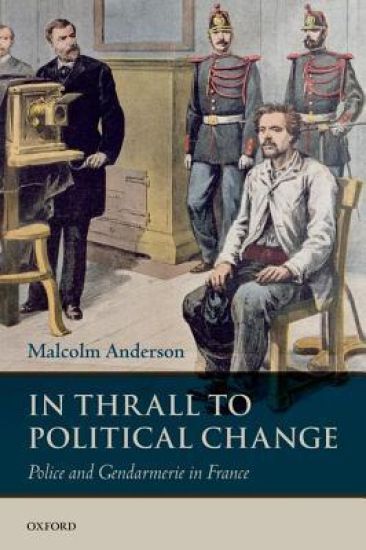
In Thrall to Political Change

In Thrall to Political Change

Malcolm Anderson

Oxford University Press
2011
sidottu
This is the first history of the French police and gendarmerie, for the period since the establishment of a democratic Republican regime in 1870 down to the present day. Based on archival material and on the vast amount of recent research by French scholars on the subject, it covers dramatic and often harrowing developments - anarchist and communist subversion, violent demonstrations and strikes, fascist threats, war and occupation, colonial conflicts and regime change - which have made policing in France troubled and controversial. As well as a chronological history, the book contains a thematic treatment of the police and the Republican regime (including the complex police-justice and police-military relations, the politics of police officials analysing the charge of racism, politico-police scandals, and inequalities of policing), of major controversies (over political policing, municipal or central control of the police, and modernisation), and of areas which pose problems for which there is no clear solution (use of force and police violence, police accountability, private security, and internationalization). In conclusion, the relations between the police and the public, and the place of the police in the political order are assessed. It is inter-disciplinary in approach using the academic literature in sociology, history, political science, criminal justice as well as the writings of police practitioners. The subject is placed in the context of international debates on policing, and the language used is free of jargon and the use, without explanation, of French terms. The bibliography and sources are a basic guide for further study of the subject.
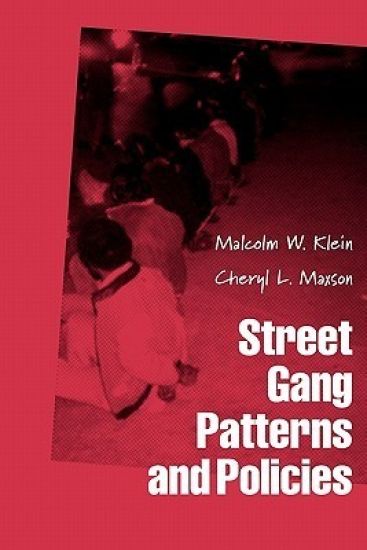
Street Gang Patterns and Policies

Street Gang Patterns and Policies

Malcolm W. Klein; Cheryl L. Maxson

Oxford University Press Inc
2010
nidottu
In the past two decades, many prevention and suppression programs have been initiated on a national and local level to combat street gangs--but what do we really know about them? Why do youths join them? Why do they proliferate? Street Gang Patterns and Policies is a crucial update and critical examination of our understanding of gangs and major gang-control programs across the nation. Often perceived solely as an urban issue, street gangs are also a suburban and rural dilemma. Klein and Maxson focus on gang proliferation, migration, and crime patterns, and highlight known risk factors that lead to youths form and join gangs within communities. Dispelling the long-standing assumptions that the public, the media, and law enforcement have about street gangs, they present a comprehensive overview of how gangs are organized and structured. The authors assess the major gang programs across the nation and argue that existing prevention, intervention, and suppression methods targeting individuals, groups, and communities, have been largely ineffective. Klein and Maxson close by offering valuable policy guidelines for practitioners on how to intervene and control gangs more successfully. Filling an important gap in the literature on street gangs and social control, this book is a must-read for criminologists, social workers, policy makers, and criminal justice practitioners. "This is an important book. Malcolm Klein and Cheryl Maxson here draw upon their own rich and pioneering research experience and that of others to provide the most comprehensive review of what is known and what needs to be known about gangs and their control in community contexts. I stand in awe of their accomplishment."-James F. Short, Jr., Past President of the American Sociological Association "The need to intervene successfully with street gangs is self-evident; unfortunately the way to do so is not. Klein and Maxson, based on a masterful review of the empirical literature on gangs and on gang intervention efforts, lay out a balanced and comprehensive strategy for confronting this problem head-on. Neither falsely optimistic nor unnecessarily gloomy, they provide a road map that, if followed, will yield substantial progress in our fight against gangs."-Terence P. Thornberry, Director, Research Program on Problem Behavior, University of Colorado
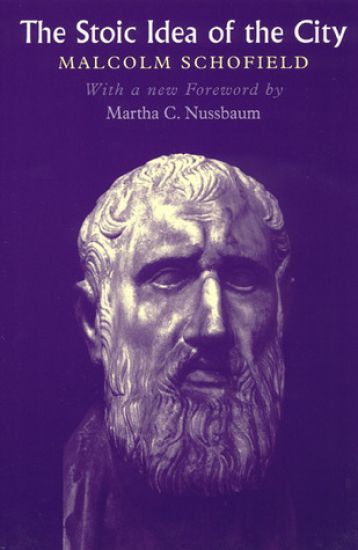
The Stoic Idea of the City

The Stoic Idea of the City

Malcolm Schofield

University of Chicago Press
1999
nidottu
The Stoic Idea of the City offers the first systematic analysis of the Stoic school, concentrating on Zeno's Republic. Renowned classical scholar Malcolm Schofield brings together scattered and underused textual evidence, examining the Stoic ideals that initiated the natural law tradition of Western political thought. A new foreword by Martha Nussbaum and a new epilogue written by the author further secure this text as the standard work on Presocratic Stoics. "The account emerges from a jigsaw-puzzle of items from a wide range of authorities, painstakingly pieced together and then annotated in a series of appendixes, the whole executed with fine scholarship, clarity, and good humor."--Times Literary Supplement
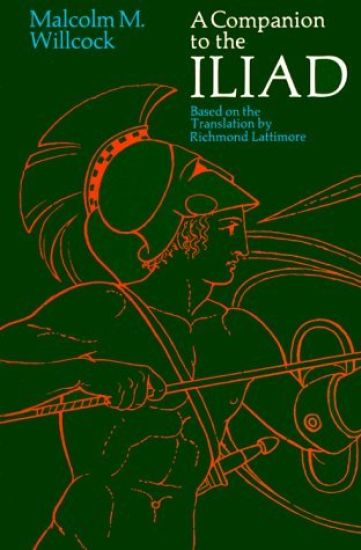
A Companion to The Iliad

A Companion to The Iliad

Malcolm M. Willcock

University of Chicago Press
1976
nidottu
Willcock provides a line-by-line commentary that explains allusions and Homeric conventions that a student or general reader could not be expected to bring to an initial encounter with the Iliad.
Trade and Commerce

Trade and Commerce

Malcolm Lavoie

MCGILL-QUEEN'S UNIVERSITY PRESS
2023
sidottu
In recent decades, the economic framework of Canada’s Constitution has been a subject largely neglected by judges, scholars, and commentators. Trade and Commerce fills this gap by bringing to light a lost understanding of how the Constitution structures economic relations.As Malcolm Lavoie reveals, the Constitution includes foundational commitments to property rights, local government autonomy, and the principle of subsidiarity. At the same time, it creates a platform for integrated national markets with secure channels for interprovincial trade. This economic vision remains a vital part of Canada’s constitutional order and is relevant to a purposive interpretation of the Constitution. But contemporary legal discourse has begun to lose touch with this vision, with regrettable consequences in a number of different policy areas.Exploring the implications of the economic Constitution in the context of contemporary issues – including disputes over interprovincial trade and jurisdictional tensions between federal, provincial, and Indigenous governments with respect to the environment and the economy – Trade and Commerce restores economic ideas to the forefront of constitutional thinking in Canada.