This concise but very thought-provoking work on the historical Jesus by Markus Bockmuehl posits that the historical man of Jesus cannot be separated from the Christ of faith. Taking a traditional argument and imprinting it with the finest scholarship, Bockmuehl refers to a wide range of canonical and non-canonical historical texts, ranging from Roman historians Tacitus and xxx to Jewish historian Josephus, and through Christian sources as well as the Gospels. His conclusion suggests that Jesus was indeed the Messiah, but not the Messiah expected by his contemporaries
What is the Church? Perhaps more importantly, what is it meant to be? How did its earliest members understand this body of which they had become a part?This is a textbook collection of fifteen essays by an international group of New Testament experts. They bring together a dynamic range of perspectives on how the early Christians viewed the Church: its origins, purpose and relation to Jewish Scriptures and to Jesus Christ; its place in the world and in God's plan; its community life and worship, in theory and in practice
Why did the Gentile church keep Old Testament commandments about sex and idolatry, but disregard many others, like those about food or ritual purity? If there were any binding norms, what made them so, and on what basis were they articulated?In this important study, Markus Bockmuehl approaches such questions by examining the halakhic (Jewish legal) rationale behind the ethics of Jesus, Paul and the early Christians. He offers fresh and often unexpected answers based on careful biblical and historical study. His arguments have far-reaching implications not only for the study of the New Testament, but more broadly for the relationship between Christianity and Judaism.
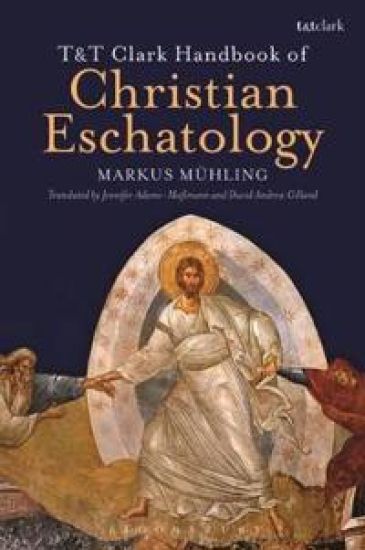
This textbook offers a systematic introduction to eschatology. The first part introduces the historical approaches to eschatology. The second part concerns the reasons for eschatological statements in light of important aspects of the doctrine of God and Christ. The third part is devoted to different concepts of the relationship between eternity and time, space and infinitude as well as the question of what is good, true and beautiful. Using a thematic structure, the multiple different approaches and concepts of modern eschatology are clearly presented, and illuminated by the perspective of the classical teachings on the Last Things; which are ultimately brought together in a synthesis. This is an important contribution to a crucial part of the study of systematic theology.
Why did the Gentile church keep Old Testament commandments about sex and idolatry, but disregard many others, like those about food or ritual purity? If there were any binding norms, what made them so, and on what basis were they articulated?In this important study, Markus Bockmuehl approaches such questions by examining the halakhic (Jewish legal) rationale behind the ethics of Jesus, Paul and the early Christians. He offers fresh and often unexpected answers based on careful biblical and historical study. His arguments have far-reaching implications not only for the study of the New Testament, but more broadly for the relationship between Christianity and Judaism.
Saving like a Sloth is a children's book about personal finance. Let Sunny the Sloth teach your child how to save, donate, & spend in a outdoorsy way. These are three really easy personal finance steps that any parent can implement into their child's daily routine.
The English surname Penn is well known if not particularly common. Like other family names, it fans out over a long time and a wide geography.The Penn Family of Virginia focuses solely on the lineage to spring from this locale. It gives strong evidence for the Immigrant's origins and arrival in the colony. Interweaving social history with the public record, this book sets about to awaken the lives of the American-born progeny. The narrative documents specific instances of participation by Old Dominion Penns at crucial moments in the nation's history. First generations, yet British subjects, chafing for independence, to the time cousins, now scattered, taking up arms against the other in the Civil War, The Penn Family mirrors the story of many another family with colonial roots.Apt illustrations, a long list of descendants and extensive source notes enhance this presentation's aim also to be a valuable reference for genealogists.
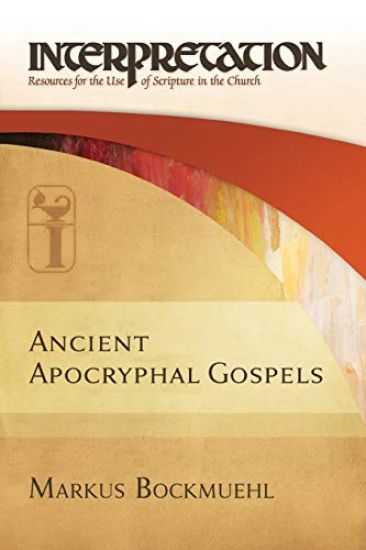
In this reader-friendly guide, Markus Bockmuehl offers a sympathetic account of the ancient apocryphal Gospel writings, showing their place within the reception history and formation of what was to become the canonical fourfold Gospel. Bockmuehl begins by helping readers understand the early history behind these noncanonical Gospels before going on to examine dozens of specific apocryphal texts. He explores the complex oral and intertextual relationships between the noncanonical and canonical Gospels, maintaining that it is legitimate and instructive to read the apocryphal writings as an engagement with the person of Jesus that both presupposes and supplements the canonical narrative outline. Appropriate for pastors and nonspecialists, this work offers a fuller understanding of these writings and their significance for biblical interpretation in the church.
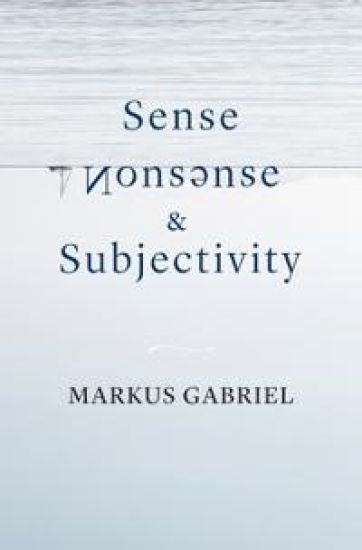
A leading German philosopher offers his most ambitious work yet on the nature of knowledge, arguing that being wrong about things defines the human condition.For millennia, philosophers have dedicated themselves to advancing understanding of the nature of truth and reality. In the process they have amassed a great deal of epistemological theory—knowledge about knowledge. But negative epistemological phenomena, such as ignorance, falsity, illusion, and delusion, are persistently overlooked. This is surprising given that we all know how fallible humans are.Sense, Nonsense, and Subjectivity replies with a theory of false thought, demonstrating that being wrong about things is part and parcel of subjectivity itself. For this reason, knowledge can never be secured without our making claims that can always, in principle, be wrong. Even in successful cases, where we get something right and thereby gain knowledge, the possibility of failure lingers with us. Markus Gabriel grounds this argument in a novel account of the relationship between sense, nonsense, and subjectivity—phenomena that hang together in the temporal unfolding of our cognitive lives.While most philosophers continue to theorize subjectivity in terms of conscious self-representation and the supposedly infallible grip we have on ourselves as thinkers, Sense, Nonsense, and Subjectivity addresses the age-old Platonic challenge to understand situations in which we do not get reality right. Adding a stimulating perspective on epistemic failures to the work of New Realism, Gabriel addresses long-standing ontological questions in an age where the line between the real and the fake is increasingly blurred.
Why is Europe's great monetary endeavor, the Euro, in trouble? A string of economic difficulties in Greece, Ireland, Spain, Italy, and other Eurozone nations has left observers wondering whether the currency union can survive. In this book, Markus Brunnermeier, Harold James, and Jean-Pierre Landau argue that the core problem with the Euro lies in the philosophical differences between the founding countries of the Eurozone, particularly Germany and France. But the authors also show how these seemingly incompatible differences can be reconciled to ensure Europe's survival. As the authors demonstrate, Germany, a federal state with strong regional governments, saw the Maastricht Treaty, the framework for the Euro, as a set of rules. France, on the other hand, with a more centralized system of government, saw the framework as flexible, to be overseen by governments. The authors discuss how the troubles faced by the Euro have led its member states to focus on national, as opposed to collective, responses, a reaction explained by the resurgence of the battle of economic ideas: rules vs. discretion, liability vs. solidarity, solvency vs. liquidity, austerity vs. stimulus. Weaving together economic analysis and historical reflection, The Euro and the Battle of Ideas provides a forensic investigation and a road map for Europe's future.
How philosophical differences between Eurozone nations led to the Euro crisis—and where to go from hereWhy is Europe’s great monetary endeavor, the Euro, in trouble? A string of economic difficulties in Eurozone nations has left observers wondering whether the currency union can survive. In this book, Markus Brunnermeier, Harold James, and Jean-Pierre Landau argue that the core problem with the Euro lies in the philosophical differences between the founding countries of the Eurozone, particularly Germany and France. But the authors also show how these seemingly incompatible differences can be reconciled to ensure Europe’s survival. Weaving together economic analysis and historical reflection, The Euro and the Battle of Ideas provides a forensic investigation and a road map for Europe’s future.
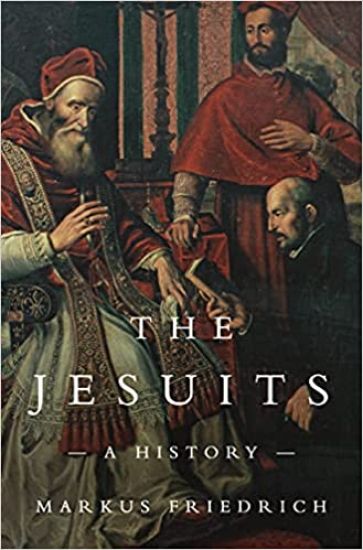
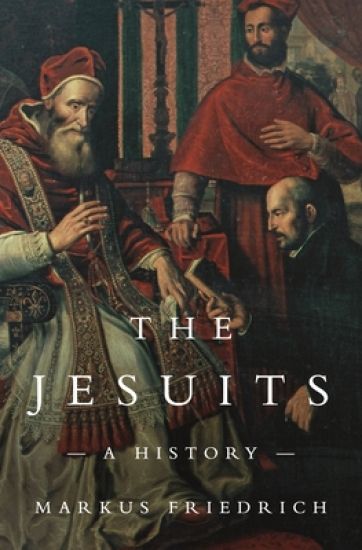
The most comprehensive and up-to-date exploration of one of the most important religious orders in the modern worldSince its founding by Ignatius of Loyola in 1540, the Society of Jesus—more commonly known as the Jesuits—has played a critical role in the events of modern history. From the Counter-Reformation to the ascent of Francis I as the first Jesuit pope, The Jesuits presents an intimate look at one of the most important religious orders not only in the Catholic Church, but also the world. Markus Friedrich describes an organization that has deftly walked a tightrope between sacred and secular involvement and experienced difficulties during changing times, all while shaping cultural developments from pastoral care and spirituality to art, education, and science.Examining the Jesuits in the context of social, cultural, and world history, Friedrich sheds light on how the order shaped the culture of the Counter-Reformation and participated in the establishment of European empires, including missionary activity throughout Asia and in many parts of Africa in the sixteenth and seventeenth centuries. He also explores the place of Jesuits in the New World and addresses the issue of Jesuit slaveholders. The Jesuits often tangled with the Roman Curia and the pope, resulting in their suppression in 1773, but the order returned in 1814 to rise again to a powerful position of influence. Friedrich demonstrates that the Jesuit fathers were not a monolithic group and he considers the distinctive spiritual legacy inherited by Pope Francis.With its global scope and meticulous attention to archival sources and previous scholarship, The Jesuits illustrates the heterogeneous, varied, and contradictory perspectives of this famed religious organization.
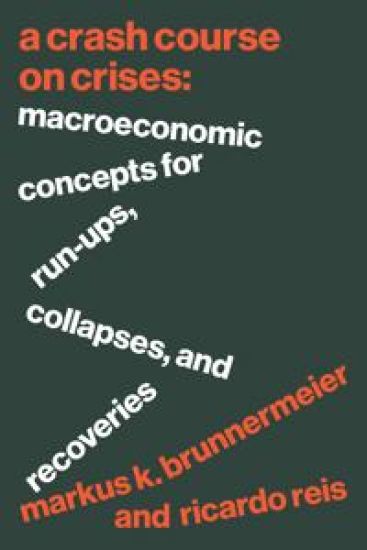
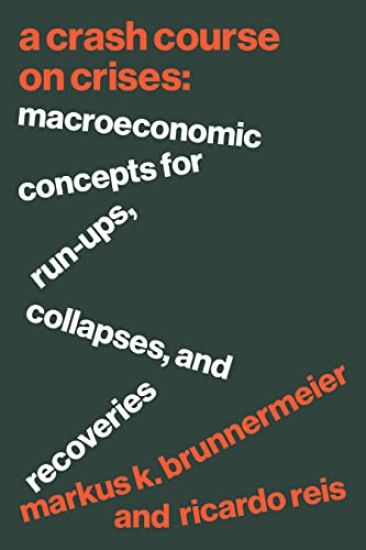
An incisive overview of the macroeconomics of financial crises—essential reading for students and policy experts alikeWith alarming frequency, modern economies go through macro-financial crashes that arise from the financial sector and spread to the broader economy, inflicting deep and prolonged recessions. A Crash Course on Crises brings together the latest cutting-edge economic research to identify the seeds of these crashes, reveal their triggers and consequences, and explain what policymakers can do about them.Each of the book’s ten self-contained chapters introduces readers to a key economic force and provides case studies that illustrate how that force was dominant. Markus Brunnermeier and Ricardo Reis show how the run-up phase of a crisis often occurs in ways that are preventable but that may go unnoticed and discuss how debt contracts, banks, and a search for safety can act as triggers and amplifiers that drive the economy to crash. Brunnermeier and Reis then explain how monetary, fiscal, and exchange-rate policies can respond to crises and prevent them from becoming persistent.With case studies ranging from Chile in the 1970s to the COVID-19 pandemic, A Crash Course on Crises synthesizes a vast literature into ten simple, accessible ideas and illuminates these concepts using novel diagrams and a clear analytical framework.
An incisive overview of the macroeconomics of financial crises—essential reading for students and policy experts alikeWith alarming frequency, modern economies go through macro-financial crashes that arise from the financial sector and spread to the broader economy, inflicting deep and prolonged recessions. A Crash Course on Crises brings together the latest cutting-edge economic research to identify the seeds of these crashes, reveal their triggers and consequences, and explain what policymakers can do about them.Each of the book’s ten self-contained chapters introduces readers to a key economic force and provides case studies that illustrate how that force was dominant. Markus Brunnermeier and Ricardo Reis show how the run-up phase of a crisis often occurs in ways that are preventable but that may go unnoticed and discuss how debt contracts, banks, and a search for safety can act as triggers and amplifiers that drive the economy to crash. Brunnermeier and Reis then explain how monetary, fiscal, and exchange-rate policies can respond to crises and prevent them from becoming persistent.With case studies ranging from Chile in the 1970s to the COVID-19 pandemic, A Crash Course on Crises synthesizes a vast literature into ten simple, accessible ideas and illuminates these concepts using novel diagrams and a clear analytical framework.
The most comprehensive and up-to-date exploration of one of the most important religious orders in the modern worldSince its founding by Ignatius of Loyola in 1540, the Society of Jesus—more commonly known as the Jesuits—has played a critical role in the events of modern history. From the Counter-Reformation to the ascent of Francis I as the first Jesuit pope, The Jesuits presents an intimate look at one of the most important religious orders not only in the Catholic Church, but also the world. Markus Friedrich describes an organization that has deftly walked a tightrope between sacred and secular involvement and experienced difficulties during changing times, all while shaping cultural developments from pastoral care and spirituality to art, education, and science.Examining the Jesuits in the context of social, cultural, and world history, Friedrich sheds light on how the order shaped the culture of the Counter-Reformation and participated in the establishment of European empires, including missionary activity throughout Asia and in many parts of Africa in the sixteenth and seventeenth centuries. He also explores the place of Jesuits in the New World and addresses the issue of Jesuit slaveholders. The Jesuits often tangled with the Roman Curia and the pope, resulting in their suppression in 1773, but the order returned in 1814 to rise again to a powerful position of influence. Friedrich demonstrates that the Jesuit fathers were not a monolithic group and he considers the distinctive spiritual legacy inherited by Pope Francis.With its global scope and meticulous attention to archival sources and previous scholarship, The Jesuits illustrates the heterogeneous, varied, and contradictory perspectives of this famed religious organization.
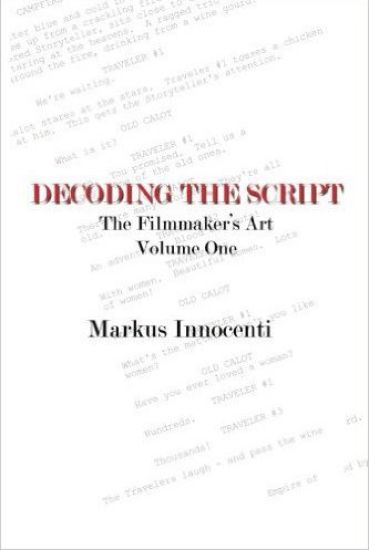
Many books have been written about how to write a screenplay, but there's very little information on how to read a screenplay. In this book, the first in The Filmmaker's Art series, screenwriter/director Markus Innocenti reveals how directors read, and how that reading allows them to build their vision for the film. There are clues that lie, almost unnoticed, in every screenplay. Having the ability to identify and 'decode' those clues separates directors from every other person who reads the script, and points the way to engaging and powerfully cinematic filmmaking. While Decoding The Script is an invaluable tool for directors, both emerging and established, it also allows producers, writers, actors and anyone with an interest in film to gain an insight into how directors approach their work.
The business climate has changed dramatically in the last 10 years. Demystified takes the mystery out of online marketing for business owners, entrepreneurs, dentists, doctors, lawyers and so much more. It levels the playing field and if applied will dramatically increase the ROI you're generating from acquiring business online. Your Customers, Clients and Patients Are Looking For You Online. Can they find you even if they don't know your name? There are over 4 BILLION Local Searches done every month (and growing 50% every year) and 82% of buyers search online first, vs. using the yellow pages or other print methods. If your business isn't showing up all over the first page of Google, Bing & Yahoo, you are leaving money on the table that could and should be yours, with your competition getting the lions share of your business. Here's How People Search: #1 ranked site gets 56% of the clicks #2 ranked site gets 13.5% of the clicks #3 ranked site gets 10% of the clicks 83% of people first search online before making a local product or services purchase. 98% of searchers choose a business they find on the first page. Learn how to become the #1 authority online in your market by following these 5 key Points of your Online Business Plan for Online Market Domination. -Get Listed: Get listed in the Big 3 (Google My Business, Bing Local, Yahoo Local). -Dominate: Your site appears in local, organic, and paid search results. -Move Up: Dominate the front page by making your site(s) and other internet properties search engine-friendly. -Lead The Pack: Use videos, press releases, articles, social content sites, online classifieds, online business directories, and online review sites to make the search engines fall in love with you sites. -Your Phone Rings Off The Hook: Your customers, clients and patients can find you- and you see the results in your increased profitability and ROI.