Kirjojen hintavertailu. Mukana 11 241 044 kirjaa ja 12 kauppaa.

Kirjahaku

Etsi kirjoja tekijän nimen, kirjan nimen tai ISBN:n perusteella.

1000 tulosta hakusanalla Mathilde Estvan

Transport, Economic Growth, and Deforestation in the Democratic Republic of Congo

Transport, Economic Growth, and Deforestation in the Democratic Republic of Congo

Alvaro Federico Barra; Mathilde Burnouf; Richard Damania; Jason Russ

World Bank Publications
2016
nidottu
The natural endowment of the Democrat Republic of Congo is unparalleled. However, lack of transport infrastructure is a significant constraint to growth. This report presents new data and techniques that can be used to identify areas where new or improve transport infrastructure can have the largest impact on local economies.

Shrinking Economic Distance

Shrinking Economic Distance

Matías Herrera Dappe; Mathilde Lebrand; Aiga Stokenberga

WORLD BANK PUBLICATIONS
2024
nidottu
Transport prices for international and domestic shipments are higher in low- and middle-income countries than in high-income countries, and shipping times are significantly longer and less reliable. This report identifies the frictions responsible for these outcomes and lays out the building blocks of a reform agenda for reducing them.
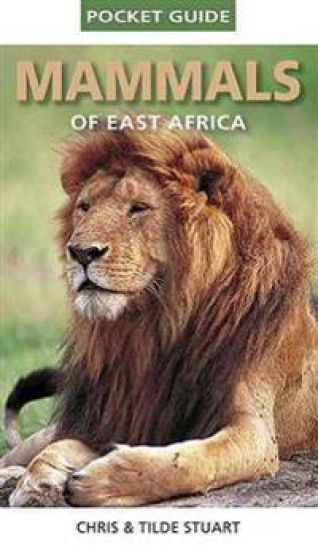
Pocket Guide to Mammals of East Africa

Pocket Guide to Mammals of East Africa

Chris Stuart; Mathilde Stuart

Struik (C.) Pty.Ltd,South Africa
2009
nidottu
East Africa comprises a varied range of habitats, which provide living space for more than 360 diverse species of mammal. These range in size from the elephant to the tiniest bats, shrews and mice. This compact guide covers all of the common and some of the less common mammal species of the region. For each species it offers: key identification features; behaviour, diet, breeding biology, occurrence and size; clear, full-colour photographs; track illustrations; silhouettes to indicate size relative to human figure; and, distribution map. There is a section on droppings/dung of many of the animals that concludes the book. Compact and easy-to-use, this is the ideal companion both for regulars and visitors to the region.
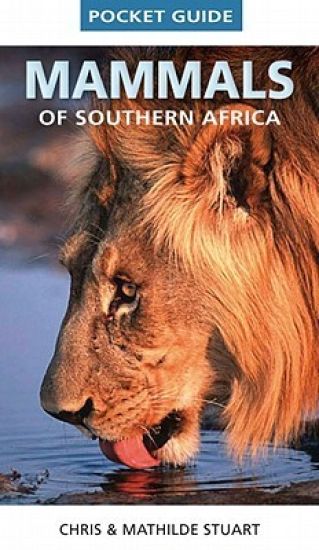
Pocket Guide Mammals of Southern Africa

Pocket Guide Mammals of Southern Africa

Chris Stuart; Mathilde Stuart

Struik Nature
2011
nidottu
This easy-to-use, compact book is the perfect pocket ID guide to mammals of the region. It covers - in surprising detail - some 120 mammals, from the smallest (bats, sengis and shrews) to the largest, such as elephant, lion and rhinoceros, as well as marine species, such as seals, dolphins and whales. Authoritative and colourfully illustrated, this guide offers concise information on key ID pointers, similar species, habitat, behaviour, diet, reproduction, longevity, calls, occurrence and measurements. Clear images of each animal, distribution maps, silhouettes indicating size relative to humans and illustrations of tracks and droppings make this a must-have book for tourists and nature-lovers alike.
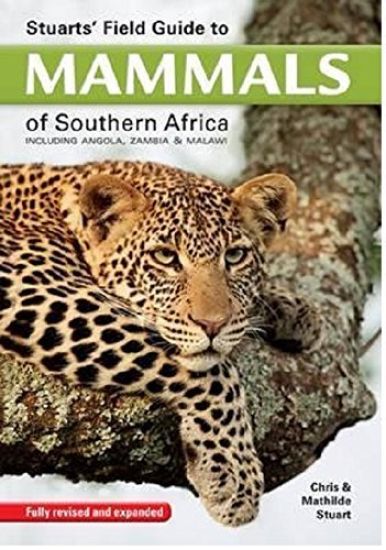
Stuarts' Field Guide to Mammals of Southern Africa

Stuarts' Field Guide to Mammals of Southern Africa

Chris Stuart; Mathilde Stuart

Struik Nature
2015
nidottu
Greater southern Africa has a wealth of mammal species, almost 400 - all of which are covered in this fully updated, comprehensive field guide. Now expanded to include species found in Angola, Zambia and Malawi, it has also been extensively revised to include: the most recent research and taxonomy, revised distribution maps and many new images, colour-coded grouping of families, spoor and size icons, skull photographs, grouped for easy comparison, detailed descriptions of each species, offering insight into key identification characters, typical behaviour, preferred habitat, food choice, reproduction and longevity.
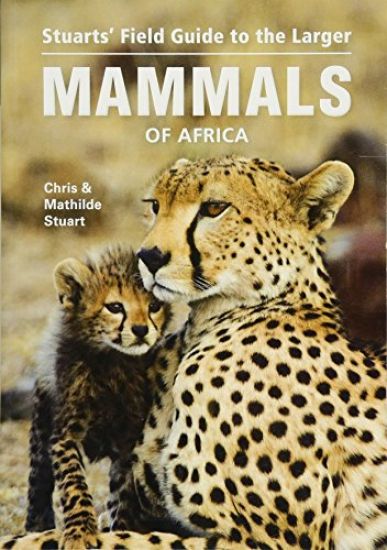
Stuarts’ Field Guide to Larger Mammals of Africa

Stuarts’ Field Guide to Larger Mammals of Africa

Chris Stuart; Mathilde Stuart

Struik Nature
2017
nidottu
Of the more than 5,500 mammals species worldwide, at least 1,200 occur in Africa. Stuarts’ Field Guide to the Larger Mammals of Africa concentrates on the more visible and easily distinguished larger species, as well as some of the more frequently seen smaller mammals. This new edition has been extensively revised, expanded and redesigned and includes: the most recent research and taxonomy, revised distribution maps and many new images, colour-coded grouping of orders, size icons, detailed descriptions of each species, offering insight into key identification characters, typical behaviour, preferred habitat, food choice, reproduction and longevity, whales and dolphins now featured too. Sales points: text extensively updated, now includes marine mammals of the region, reflects latest changes in taxonomy, including many new species, fresh new design, all distribution maps revised.
Stuarts' Field Guide to National Parks and Nature Reserves of South Africa
Stuart's Field Guide to National Parks and Nature Reserves of South Africa is an indispensable guide to the country's best and most accessible conservation areas. Written by two prominent conservationists, this new edition has been thoroughly revised and updated. The 43 featured reserves are arranged by province. -Information details the history, location, landscape, geology, vegetation (with maps) and wildlife (mammals, birds, reptiles, amphibians, fish and insects) of each reserve -Text panels list the highlights and provide key facts about each park's wildlife, climate, facilities and activities, as well as critical warnings for visitors. -More than 900 color photographs support the text. -Details park maps indicate places of interest, including where to view particular animals. -At the back of the book is a concise pictorial ID guide featuring the birds, mammals, amphibians, reptiles, flowers and trees most commonly seen in the reserves.This is a handy and informative guide to South Africa's famously diverse and richly populated parks and reserves.
Stuarts’ Field Guide to the Tracks and Signs of Southern, Central and East African Wildlife
Stuarts’ Field Guide to the Tracks & Signs of Southern, Central and East African Wildlife provides detailed coverage of tracks, droppings, bird pellets, nests and shelters, and feeding signs, not only for mammals, but also for birds, reptiles, insects and other invertebrates. First published in 1994, it has since been comprehensively revised and greatly expanded, making it the standard reference on the subject in the region. This new edition – featuring additional updates, a revised title and a new cover – retains the unique approach to identification that made the earlier editions so useful and popular: multiple full-colour photographs of all tracks and signs; detailed descriptions, track sketches and measurements; photographs of animal species to supplement the tracks and signs; advice on where to look for tracks and signs and how to interpret them. Navigation is by means of a set of keys showing the shape and size of the tracks and signs, allowing readers to navigate quickly to the animal or group of species responsible for the track in question. Keys on the inside covers help readers access information even faster. Sales points: Authoritative, highly detailed guide to a popular subject; new cover and title matches distinctive branding of authors’ other books; full-colour photographs throughout; expert authors with extensive field experience.
Stuarts' Field Guide to National Parks & Game Reserves  – Namibia, Botswana, Zimbabwe, Zambia & Malawi

Stuarts' Field Guide to National Parks & Game Reserves – Namibia, Botswana, Zimbabwe, Zambia & Malawi

Chris Stuart Chris; Mathilde Stuart Mathilde

Penguin Random House South Africa
2022
nidottu
The first guide ever to document and explore the diverse parks and reserves of Africa’s ‘middle belt’, it covers Namibia, Botswana, Zimbabwe, Zambia and Malawi. The region contains prized spots such as the world-famous landscapes of the Namib and Kalahari deserts, Okavango Delta, Victoria Falls and Lake Malawi, and some of Africa’s best-known conservation areas, including Etosha, Chobe, Mana Pools, Hwange, Kafue and Nyika. Written by two prominent conservationists, the book is organised by country, and includes: Detailed descriptions of the history, geology, climate, vegetation and wildlife of some 50 conservation areas. Annotated park maps, indicating places of interest and best sites to view key species. Text panels featuring each park’s highlights, facilities and activities, wildlife facts, and important alerts.A concise photographic gallery of mammals, birds, reptiles, amphibians and trees, for quick identification of commonly seen species. A must-have guide to the parks and reserves of a region renowned for spectacular landscapes, fauna and flora. Sales points: First ever guide for southern Africa’s ‘middle belt’ countries. Informative guide to inspire post-COVID-19 travel. Presents key features and attractions of each park. Information panels covering highlights, activities, facilities, wildlife and warnings. Generously illustrated with full-colour photographs and detailed maps. Much-travelled, highly qualified authors.
Stuarts’ Field Guide Mammals of Southern Africa (including Angola, Zambia and Malawi)

Stuarts’ Field Guide Mammals of Southern Africa (including Angola, Zambia and Malawi)

Chris Stuart; Mathilde Stuart

Penguin Random House South Africa
2025
nidottu
Southern Africa has a wealth of mammal fauna, and is home to about 530 species, including tiny shrews, intriguing pangolins and majestic whales. All the species that occur in the region are featured in this updated sixth edition of Stuarts' Field Guide to Mammals of Southern Africa. This comprehensive guide features: Fully updated text based on the most recent research and taxonomy. Detailed species accounts describing key identification characteristics, behaviour, habitat, diet, reproduction and longevity. Visual identification tools, including full-colour photographs, spoor and size icons, and skull photographs. Up-to-date distribution mapsshowing the geographical range of each species within the region. Sales points: A comprehensive guide to all land and marine mammals of the region. Coverage includes Angola, Zambia and Malawi. Detailed but accessible text. Richly illustrated with colour photographs. Includes distribution maps, size icons, tracks and skulls. Highly regarded, much-published authors.
User-Centered Agile Method

User-Centered Agile Method

Dominique Deuff; Mathilde Cosquer

ISTE Ltd and John Wiley Sons Inc
2013
sidottu
Agile development methods began to emerge around 20 years ago. However, it was not until the early 2000s that they began to be widely used in industry. This growth was often due to the advent of Internet services requiring faster cycles of development in order to heighten the rate at which an ever-greater number of functionalities were made available. In parallel, user-centered design (UCD) methods were also becoming more and more widely used: hence, user-centered design and agile methods were bound to cross paths, at least in the telecoms industry! During this period, in the field of telecommunications, the explosion in the number of connected terminals, Web applications, new use environments (particularly in a domestic setting), etc., meant it was crucial to gain a fuller understanding of users’ requirements and better evaluate the relevance and acceptance of services’ attempts to cater for these requirements. Thus the user-centered agile method, as proposed in this book, aims to mutually integrate two existing methods: user-centered design – as used by ergonomists – and the agile Scrum method – as used by developers. The user testing method is also covered. Analyzing work on this subject spanning the past 10 years, the authors also provide an assessment of the feedback on the user-centered agile method. The method described in this book has been based on all these sources. It is a framework relying on the logic introduced by Scrum, i.e. a framework based on project management. The method proposed is seen as an extension of Scrum which is “centered on humans” because of the integration of user-centered design and user-testing. Therefore the description of the user-centered agile method is based on the basics of the agile Scrum method and uses its terminology and elements. As well as descriptive elements of the user-centered agile method, practical examples of how to implement it are also provided. Contents 1. Introduction. 2. Intrioduction to the Methods Employed. 3. Sources for this Work. 4. Description of The User-Centered Agile Method. 5. Case Studies. About the Authors Dominique Deuff worked at the National Institute of Informatics in Japan for 2½ years before coming back to France in June 2006 and joining Orange Labs France Telecom as a developer in a Scrum team. In 2008, she graduated with a Master’s degree in ergonomics and has since then been applying her new skills to various projects at Orange Labs Lannion. Mathilde Cosquer joined Orange Labs as an ergonomist after completing her PhD on the question of transparency of technical devices from the user’s point of view. She has taken part in the design and evaluation of numerous innovating services, but over the past four years, she has been more particularly involved in projects of interpersonal communication services.
On Track

On Track

Chris Stuart; Mathilde Stuart

Struik Nature
2013
nidottu
Following the success of the earlier Scatalog - Quick ID guide to southern African animal droppings, here's another quick and quirky identification guide, this time to tracks of the region's most commonly found mammals, but also includes tracks of reptiles, rodents, birds and insects. A simple key on the inside front cover directs users to any of 11 categories, such as 'cloven hooves', 'paws' or 'tramline-like trails'. Nearly 100 animals or closely related groups of animals are depicted; for each, there's a silhouette of front and back feet and a colour photograph of the track, the average measurements for each track, a short description of the track, information about the circumstances and likely habitat. Concise and to-the-point, this pocket-sized reference will prove indispensible in the field, no matter the experience of the user.