
Kirjahaku
Etsi kirjoja tekijän nimen, kirjan nimen tai ISBN:n perusteella.
1000 tulosta hakusanalla Matthew Alan Gaumer
Matthew, Mark and Luke (Volume 3)
F Wayne Mac Leod
Createspace Independent Publishing Platform
2016
pokkari
Do you read the Bible and feel like you have a difficult time understanding what it says? Do the Bible's lessons seem too far removed from your everyday life? Few things have proven more effective in expanding our hearts and minds and drawing us closer to God than quiet reflection and the study of God's Word. He gave us this revelation of Himself in sixty-six unique books but often we turn to the more familiar passages and avoid the more difficult or complex ones. The Light To My Path commentaries will open up the whole Bible for you in a way that is understandable, practical and down-to-earth. More than just an academic study aid, the Light to My Path commentaries are devotional guides of God's revelation of Himself in the Bible. Use Light to My Path commentaries in your personal worship, study and devotional time, Questions to consider and points for prayer at the end of each chapter make each book relevant for your life today and are useful discussion starters for group studies. As you ponder the message of each book, you will find your heart and mind drawn toward God in worship.

Matthew: A Call for Unity and Responsibility in the Church
John D. Hannah
CHRISTIAN FOCUS PUBLICATIONS LTD
2024
pokkari
Matthew was a tax collector, a disgrace to his people. But Jesus, in his grace, called him to be a disciple and to write a book about him for his own people, the Jews. The central theme of Matthew is two–fold: Jesus is the fulfilment of the promises in the Hebrew Scriptures and Jesus is the Messiah. John D. Hannah’s valuable contribution to the Focus on the Bible series is a layman’s commentary to this crucial book. Moving through the book, he shows how Matthew records the claims of Jesus to be King, and the rejection of Jesus as King.
Mr. Matthew Arnold, like other good men of our times, disliked the idea of being made the subject of a regular biography; and the only official and authoritative sources of information as to the details of his life are the Letters published by his family, under the editorship of Mr G.W.E. Russell (2 vols., London, 1895). To these, therefore, it seems to be a duty to confine oneself, as far as such details are concerned, save as regards a very few additional facts which are public property. Matthew Arnold (24 December 1822 - 15 April 1888) was an English poet and cultural critic who worked as an inspector of schools. He was the son of Thomas Arnold, the famed headmaster of Rugby School, and brother to both Tom Arnold, literary professor, and William Delafield Arnold, novelist and colonial administrator. Matthew Arnold has been characterised as a sage writer, a type of writer who chastises and instructs the reader on contemporary social issues. The Reverend John Keble, who would become one of the leaders of the Oxford Movement, stood as godfather to Matthew. "Thomas Arnold admired Keble's 'hymns' in The Christian Year, only reversing himself with exasperation when this old friend became a Romeward-tending 'High Church' reactionary in the 1830s." In 1828, Arnold's father was appointed Headmaster of Rugby School and his young family took up residence, that year, in the Headmaster's house. In 1831, Arnold was tutored by his uncle, Rev. John Buckland in the small village of Laleham. In 1834, the Arnolds occupied a holiday home, Fox How, in the Lake District. William Wordsworth was a neighbour and close friend. In 1836, Arnold was sent to Winchester College, but in 1837 he returned to Rugby School where he was enrolled in the fifth form. He moved to the sixth form in 1838 and thus came under the direct tutelage of his father. He wrote verse for the manuscript Fox How Magazine co-produced with his brother Tom for the family's enjoyment from 1838 to 1843. During his years there, he won school prizes for English essay writing, and Latin and English poetry. His prize poem, "Alaric at Rome," was printed at Rugby. In 1841, he won an open scholarship to Balliol College, Oxford. During his residence at Oxford, his friendship ripened with Arthur Hugh Clough, another Rugby old boy who had been one of his father's favourites. Arnold attended John Henry Newman's sermons at St. Mary's but did not join the Oxford Movement. His father died suddenly of heart disease in 1842, and Fox How became his family's permanent residence. Arnold's poem Cromwell won the 1843 Newdigate prize. He graduated in the following year with a 2nd class honours degree in Literae Humaniores. In 1845, after a short interlude of teaching at Rugby, he was elected Fellow of Oriel College, Oxford. In 1847, he became Private Secretary to Lord Lansdowne, Lord President of the Council. In 1849, he published his first book of poetry, The Strayed Reveller. In 1850 Wordsworth died; Arnold published his "Memorial Verses" on the older poet in Fraser's Magazine. In 1852, Arnold published his second volume of poems, Empedocles on Etna, and Other Poems. In 1853, he published Poems: A New Edition, a selection from the two earlier volumes famously excluding Empedocles on Etna, but adding new poems, Sohrab and Rustum and The Scholar Gipsy. In 1854, Poems: Second Series appeared; also a selection, it included the new poem, Balder Dead. Arnold was elected Professor of Poetry at Oxford in 1857, and he was the first in this position to deliver his lectures in English rather than in Latin. 6] He was re-elected in 1862. On Translating Homer (1861) and the initial thoughts that Arnold would transform into Culture and Anarchy were among the fruits of the Oxford lectures. In 1859, he conducted the first of three trips to the continent at the behest of parliament to study European educational practices. He self-published The Popular Education of France (1861)

Matthew and the Animation
Ronda Lynn Michel
Createspace Independent Publishing Platform
2016
nidottu
A story about a boy who uses his creative talent to solve a worldwide problem.
From Under Eyelids: Poems by Matthew Chenoweth Wright
Matthew Chenoweth Wright
Createspace Independent Publishing Platform
2016
nidottu
The Floating Laughter of the Harlequin's Anti-Gravity Brain: Poems by Matthew Chenoweth Wright
Matthew Chenoweth Wright
Createspace Independent Publishing Platform
2016
nidottu

Matthew Jones: The Boy Who Changed Things
Kelly Lewis
Createspace Independent Publishing Platform
2016
nidottu

Matthew 15-28: Ministry Fulfilled
John N. Cicone
Createspace Independent Publishing Platform
2016
nidottu
Matthew Calbraith Perry A Typical American Naval Officer Illustrated
William Elliot Griffis
Createspace Independent Publishing Platform
2016
nidottu

Matthew: Gospel of the Kingdom
Lois M. Shirk
Createspace Independent Publishing Platform
2016
nidottu
The Matthew Hughes Commentary & Biblical Contemplations
Matthew Hughes
Createspace Independent Publishing Platform
2016
nidottu
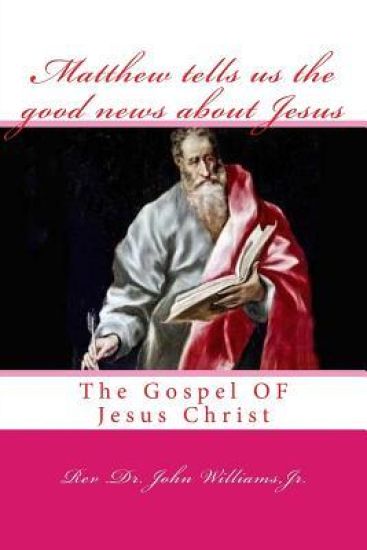
Matthew tells us the good news about Jesus: The Gospel OF Jesus Christ
John Williams Jr
Createspace Independent Publishing Platform
2016
nidottu
Matthew 14 Bible Study: Lessons from Walking on Water
Miriam Kinai
Createspace Independent Publishing Platform
2016
nidottu

On the Water: Poetry & Prose by Matthew Chenoweth Wright
Matthew Chenoweth Wright
Createspace Independent Publishing Platform
2016
nidottu
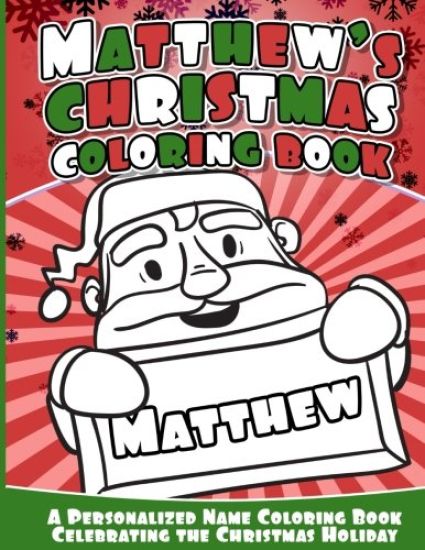
Matthew's Christmas Coloring Book: A Personalized Name Coloring Book Celebrating the Christmas Holiday
Matthew Books
Createspace Independent Publishing Platform
2016
nidottu
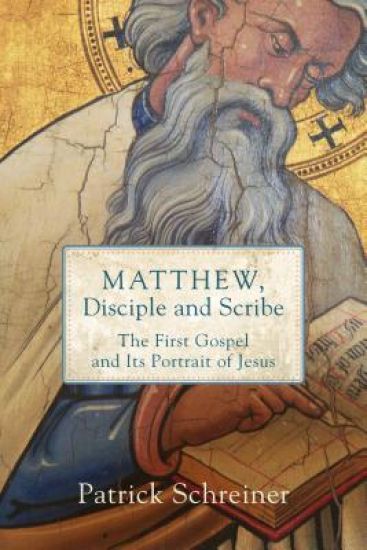
Matthew, Disciple and Scribe
Baker Academic
2019
sidottu