Kirjojen hintavertailu. Mukana 11 342 296 kirjaa ja 12 kauppaa.

Kirjahaku

Etsi kirjoja tekijän nimen, kirjan nimen tai ISBN:n perusteella.

1000 tulosta hakusanalla McCarty

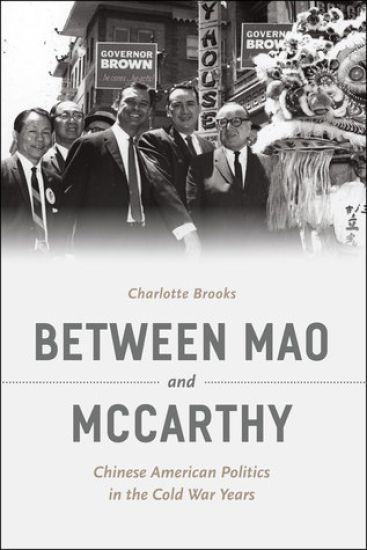
Between Mao and McCarthy

Between Mao and McCarthy

Charlotte Brooks

University of Chicago Press
2015
sidottu
During the Cold War, Chinese Americans struggled to gain political influence in the United States. Considered potentially sympathetic to communism, their communities attracted substantial public and government scrutiny, particularly in San Francisco and New York. Between Mao and McCarthy looks at the divergent ways that Chinese Americans in these two cities balanced domestic and international pressures during the tense Cold War era. On both coasts, Chinese Americans sought to gain political power and defend their civil rights, yet only the San Franciscans succeeded. Forging multiracial coalitions and encouraging voting and moderate activism, they avoided the deep divisions and factionalism that consumed their counterparts in New York. Drawing on extensive research in both Chinese- and English-language sources, Charlotte Brooks uncovers the complex, diverse, and surprisingly vibrant politics of an ethnic group trying to find its voice and flex its political muscle in Cold War America.
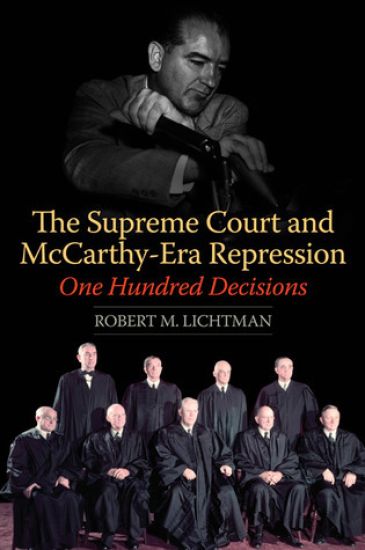
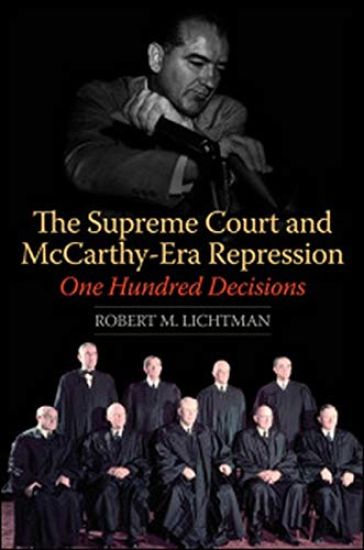
The Supreme Court and McCarthy-Era Repression

The Supreme Court and McCarthy-Era Repression

Lichtman Robert M.

University of Illinois Press
2012
sidottu
In this volume, attorney Robert M. Lichtman provides a comprehensive history of the U.S. Supreme Court's decisions in "Communist" cases during the McCarthy era. Lichtman shows the Court's vulnerability to public criticism and attacks by the elected branches during periods of political repression. The book describes every Communist-related decision of the era (none is omitted), placing them in the context of political events and revealing the range and intrusiveness of McCarthy-era repression. In Fred Vinson's term as chief justice (1946-53), the Court largely rubber-stamped government action against accused Communists and "subversives." After Earl Warren replaced Vinson as chief justice in 1953, however, the Court began to rule against the government in "Communist" cases, choosing the narrowest of grounds but nonetheless outraging public opinion and provoking fierce attacks from the press and Congress. Legislation to curb the Court flooded Congress and seemed certain to be enacted. The Court's situation was aggravated by its 1954 school-desegregation decision, Brown v. Board of Education, which led to an anti-Court alliance between southern Democrats and anti-Communists in both parties. Although Lyndon Johnson's remarkable talents as Senate majority leader saved the Court from highly punitive legislation, the attacks caused the Court to retreat, with Felix Frankfurter leading a five-justice majority that decided major constitutional issues for the government and effectively nullified earlier decisions. Only after August 1962, when Frankfurter retired and was replaced by Arthur Goldberg, did the Court again begin to vindicate individual rights in "Communist" cases--its McCarthy era was over. Demonstrating keen insight into the Supreme Court's inner workings and making extensive use of the justices' papers, Lichtman examines the dynamics of the Court's changes in direction and the relationships and rivalries among its justices, including such towering figures as Hugo Black, Felix Frankfurter, Earl Warren, William O. Douglas, and William J. Brennan, Jr. The Supreme Court and McCarthy-Era Repression: One Hundred Decisions tells the entire story of the Supreme Court during this unfortunate period of twentieth-century American history.
The Supreme Court and McCarthy-Era Repression

The Supreme Court and McCarthy-Era Repression

Robert M. Lichtman

University of Illinois Press
2015
nidottu
In this volume, attorney Robert M. Lichtman provides a comprehensive history of the U.S. Supreme Court's decisions in "Communist" cases during the McCarthy era. Lichtman shows the Court's vulnerability to public criticism and attacks by the elected branches during periods of political repression. The book describes every Communist-related decision of the era (none is omitted), placing them in the context of political events and revealing the range and intrusiveness of McCarthy-era repression. In Fred Vinson's term as chief justice (1946-53), the Court largely rubber-stamped government action against accused Communists and "subversives." After Earl Warren replaced Vinson as chief justice in 1953, however, the Court began to rule against the government in "Communist" cases, choosing the narrowest of grounds but nonetheless outraging public opinion and provoking fierce attacks from the press and Congress. Legislation to curb the Court flooded Congress and seemed certain to be enacted. The Court's situation was aggravated by its 1954 school-desegregation decision, Brown v. Board of Education, which led to an anti-Court alliance between southern Democrats and anti-Communists in both parties. Although Lyndon Johnson's remarkable talents as Senate majority leader saved the Court from highly punitive legislation, the attacks caused the Court to retreat, with Felix Frankfurter leading a five-justice majority that decided major constitutional issues for the government and effectively nullified earlier decisions. Only after August 1962, when Frankfurter retired and was replaced by Arthur Goldberg, did the Court again begin to vindicate individual rights in "Communist" cases--its McCarthy era was over. Demonstrating keen insight into the Supreme Court's inner workings and making extensive use of the justices' papers, Lichtman examines the dynamics of the Court's changes in direction and the relationships and rivalries among its justices, including such towering figures as Hugo Black, Felix Frankfurter, Earl Warren, William O. Douglas, and William J. Brennan, Jr. The Supreme Court and McCarthy-Era Repression: One Hundred Decisions tells the entire story of the Supreme Court during this unfortunate period of twentieth-century American history.
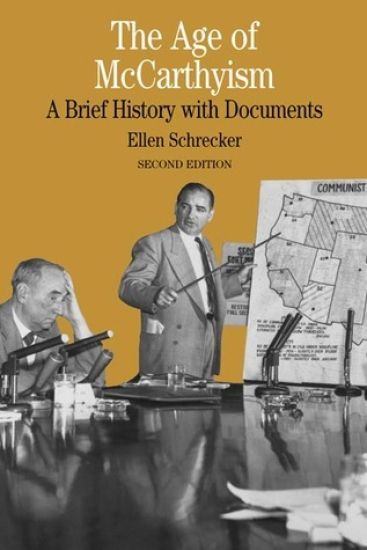
The Age of McCarthyism

The Age of McCarthyism

Schrecker Ellen

St Martin's Press
2001
nidottu
This documentary history fills a long-standing need for a short yet comprehensive treatment of McCarthyism. The book contains two sections. The first is a compelling essay of about one-hundred pages in which the author discusses the origins and escalation of the anti-communist campaign in the U.S. in the thirties and forties and how that campaign functioned and eventually sputtered to an end in the fifties. The second part of the book consists of twenty-two original documents; transcripts from congressional hearings, FBI reports, speeches, etc., which illustrate the issues and events the author discusses in her essay.
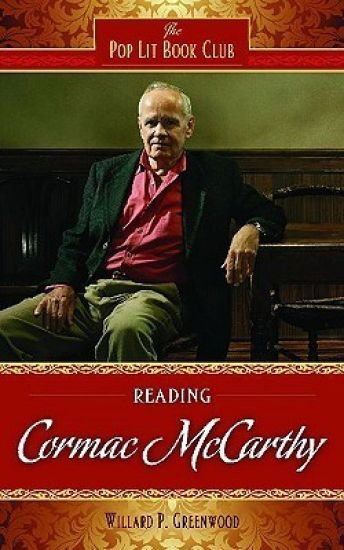
Reading Cormac McCarthy

Reading Cormac McCarthy

Willard P. Greenwood

Libraries Unlimited Inc
2009
sidottu
One of today's most important novelists, Cormac McCarthy is at the peak of a long and productive career. The film adaptation of his No Country for Old Men is a major motion picture, and his fiction is widely read in book clubs. This volume looks at his works, characters, themes, and contexts and relates his writings to current events and popular culture. Chapters include sidebars of interesting information, along with questions to stimulate book club discussions and student research.One of today's most important novelists, Cormac McCarthy is at the peak of a long and productive career. He won the Pulitzer Prize for The Road in 2007 and the National Book Award for All the Pretty Horses in 1992. This book is a guide to his works and their relevance.The volume begins with a look at his life and his use of the novel as a means of expressing his ideas. The book then looks at his works, themes, characters, and contexts. It then discusses his exploration of current events and the presence of his fiction in popular culture. Chapters include sidebars of interesting information and provide questions to stimulate book club discussion and student research.
Philosophical Approaches to Cormac McCarthy
This book is the first edited collection to explore the role of philosophy in the works of Cormac McCarthy, significantly expanding the scope of philosophical inquiry into McCarthy’s writings. There is a strong and growing interest amongst philosophers in the relevance of McCarthy’s writings to key debates in contemporary philosophy, for example, debates on trauma and violence, on the relationship between language and world, and the place of the subject within history, temporality, and borders. To this end, the contributors to this collection focus on how McCarthy’s writings speak to various philosophical themes, including violence, war, nature, history, materiality, and the environment. Emphasizing the form of McCarthy’s texts, the chapters attend to the myriad ways in which his language effects a philosophy of its own, beyond the thematic content of his narratives. Bringing together scholars in contemporary philosophy and McCarthy Studies, and informed by the release of the Cormac McCarthy Papers, the volume reflects on the theoretical relationship between philosophical thinking and literary form. This book will appeal to all scholars working in the rapidly-growing field of McCarthy Studies, Philosophy and Literature, and to philosophers working on a wide range of problems in ethics, aesthetics, epistemology, Philosophy of Nature, and Philosophy of Film across ancient, modern, and contemporary philosophy.
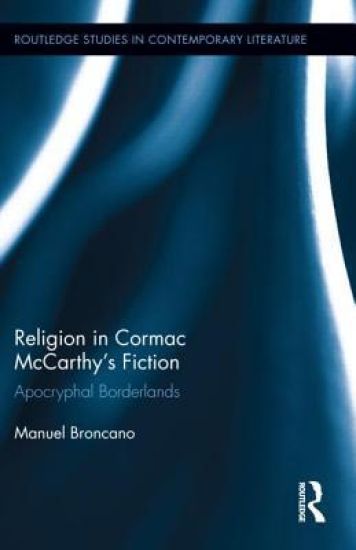
Religion in Cormac McCarthy’s Fiction
This book addresses the religious scope of Cormac McCarthy’s fiction, one of the most controversial issues in studies of his work. Current criticism is divided between those who find a theological dimension in his works, and those who reject such an approach on the grounds that the nihilist discourse characteristic of his narrative is incompatible with any religious message. McCarthy’s tendencies toward religious themes have become increasingly more acute, revealing that McCarthy has adopted the biblical language and rhetoric to compose an "apocryphal" narrative of the American Southwest while exploring the human innate tendency to evil in the line of Herman Melville and William Faulkner, both literary progenitors of the writer. Broncano argues that this apocryphal narrative is written against the background of the Bible, a peculiar Pentateuch in which Blood Meridian functions as the Book of Genesis, the Border Trilogy functions as the Gospels, and No Country for Old Men as the Book of Revelation, while The Road is the post-apocalyptic sequel. This book analyzes the novels included in what Broncano defines as the South-Western cycle (from Blood Meridian to The Road) in search of the religious foundations that support the narrative architecture of the texts.
Senator Joe McCarthy

Senator Joe McCarthy

Richard H. Rovere; Authur M. Schlesinger

University of California Press
1996
pokkari
The story of Senator Joseph McCarthy's rise to unprecedented power and the decline of his influence is a dramatic one. Richard Rovere documents the process by which a clever, power hungry individual came to mislead and manipulate members of Congress and the American public and to damage countless lives. A new foreword for this edition by Arthur M. Schlesinger Jr. places the book in historical context and relates it to current issues in American public life.
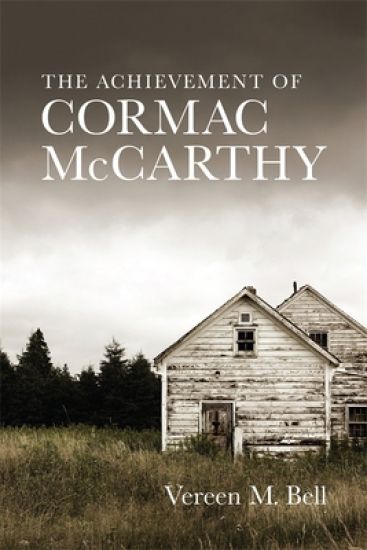
The Achievement of Cormac McCarthy

The Achievement of Cormac McCarthy

Vereen M. Bell

LOUISIANA STATE UNIVERSITY PRESS
2023
pokkari
Now back in print, Vereen M. Bell's The Achievement of Cormac McCarthy was the first critical book devoted to an author who would become one of the most celebrated American writers of the late twentieth and early twenty-first century. Published in 1988, before McCarthy won the Pulitzer Prize and the National Book Award and had his novels adapted into acclaimed films, Bell's study offered the first systematic review of the author's work.According to Bell, part of the difficulty of analyzing McCarthy's fiction is that the novelist by design works against all conventional ways of seeing and dealing with the world. Any formulaic readings, particularly those associated with the traditional schemes of southern literature, will be distorted. McCarthy's novels are provocatively mysterious yet specific and vivid as well. They are also freestanding and unclassifiableBell shows how McCarthy transforms the world through language, how he reconstitutes both urban and rural settings so that otherwise barely articulate and unheroic people live vividly in a context that is both modernist and antimodernist. In this respect, Bell argues, McCarthy's work is about the tension between visions of the world and the intractable, opposing materiality of it, between the mysteriousness of an individual's private engagement with experience and social normality's tendency to flatten it out. At the same time, Bell shows McCarthy's infatuation with the reality of evil, how the evil in human form in his novels is as inexplicably gratuitous and violent as the inhuman form of random and destructive natural events. Such violence, for McCarthy, is built into existence and cannot be evaded or rationalized away.With detailed readings of McCarthy's first five novels—The Orchard Keeper, Child of God, Outer Dark, Suttree, and Blood Meridian—Bell demonstrates the novelist's faith in the protean capacity of language to disclose the layered possibilities and richness of being. Widely cited by scholars, Bell's book established many of the foundational critical frameworks for approaching McCarthy's work. It is now available in an affordable paperback edition.
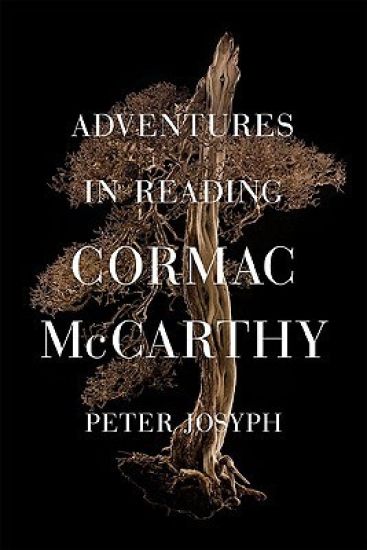
Adventures in Reading Cormac McCarthy

Adventures in Reading Cormac McCarthy

Peter Josyph

Scarecrow Press
2010
nidottu
Regarded by many as one of America's finest-living writers, Cormac McCarthy has produced some of the most compelling novels of the last 40 years. Through the increasing number of cinematic adaptations of his work, including the Oscar-winning No Country for Old Men, and the Pulitzer Prize for The Road, McCarthy is entering the mainstream of cultural consciousness, both in the United States and abroad. In Adventures in Reading Cormac McCarthy, Peter Josyph considers, at length, the author's two masterworks Blood Meridian and Suttree, as well as the novel and film of All the Pretty Horses, McCarthy's play The Stonemason, and his film The Gardener's Son. The book also includes extended conversations with critic Harold Bloom about Blood Meridian; novelist and poet Robert Morgan about The Gardener's Son; critic Rick Wallach about Blood Meridian; and Oscar-winning screenwriter Ted Tally about his film adaptation of All the Pretty Horses. Drawing on multiple resources of an unconventional nature, this book examines McCarthy's work from original and sometimes provocative perspectives. Proposing a new notion of criticism, Adventures in Reading Cormac McCarthy will become a useful tool for critics, students, and general readers about one of the great literary talents of the day.
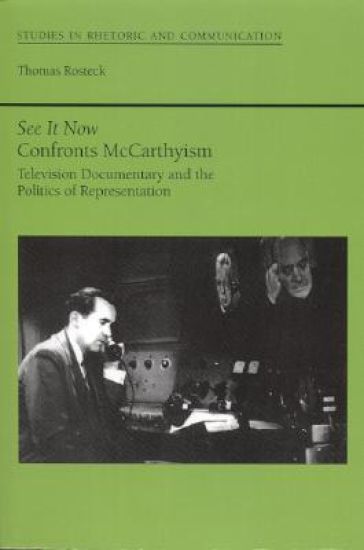
See It Now Confronts McCarthyism

See It Now Confronts McCarthyism

Thomas Rosteck

The University of Alabama Press
2005
nidottu
Rostock's history offers insight into the relationship between Cold War ideology, television documentary, the tactics of Senator Joseph R. McCarthy, and their overall impact on political culture. There are illuminating readings of the documentary texts in this case study of the rhetoric of television documentary.