Kirjojen hintavertailu. Mukana 12 300 377 kirjaa ja 12 kauppaa.

Kirjahaku

Etsi kirjoja tekijän nimen, kirjan nimen tai ISBN:n perusteella.

1000 tulosta hakusanalla Michael A. Cook

Civil War Pharmacy

Civil War Pharmacy

Michael A Flannery; Margaret Humphreys

Southern Illinois University Press
2017
nidottu
When the Civil War began, the U.S. pharmaceutical industry was concentrated almost exclusively in Philadelphia and was dominated by just a few major firms; when the war ended, Union laboratories were poised to expand nationwide. Civil War Pharmacy is the first book to delineate how the growing field of pharmacy gained respect and traction in, and even distinction from, the medical world because of the large-scale manufacture and dispersion of drug supplies and therapeutics during the Civil War. Flannery captures the full societal involvement in drug provision, on both the Union and Confederate sides, and places it within the context of what was then assumed about health and healing. He examines the roles of physicians, hospital stewards, and nurses—both male and female—and analyzes how the blockade of Southern ports meant fewer pharmaceutical supplies were available for Confederate soldiers, resulting in reduced Confederate troop strength. His exploration of battlefield and naval military pharmacy is unique and valuable. Flannery provides a thorough overview of the professional, economic, and military factors comprising pharmacy from 1861 to 1865 and includes the long-term consequences of the war for the pharmaceutical profession. This book is a complete study of a major aspect of health care during a pivotal moment in American history.
Safe Schools

Safe Schools

Michael A. Wanko

Rowman Littlefield Education
2001
nidottu
Forged from a the experiences of a principal whose school and community underwent several tragedies in one year, Safe Schools is a practical guidebook from a proactive leader who has been there. The book is designed to provide the administrator with a step-by-step crisis preparedness evaluation. After working through the checklists and forms in this resource, school leaders will know just how prepared their school is. School climate questionnaires, a three pronged safety plan, training for a crisis management team, and a bibliography of resources will guide administrators as they strive to empower their school and community.
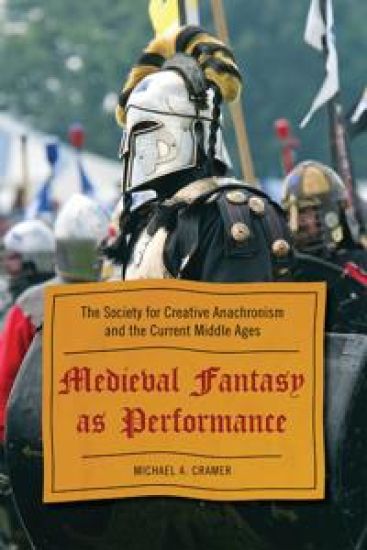
Medieval Fantasy as Performance

Medieval Fantasy as Performance

Michael A. Cramer

Scarecrow Press
2009
nidottu
In this book, Michael Cramer views the Society for Creative Anachronism (SCA), an organization that studies and recreates the middle ages, as a case study for a growing fascination with medieval fantasy in popular culture. He explores the act of medieval re-creation as performance by focusing on the SCA, describing the group's activities, investigating its place in popular culture, and looking at the SCA not so much as a historical society but as an on-going work of performance art; a postmodern counter-culture riff on what it means to be "medieval." Cramer examines the group's activities, from persona and character development to theatrical performance and personal interaction; from the complex official ceremonies to full contact armored combat with mock broadswords. He explores the SCA in detail to discover how its members adapt and employ ideas about the Middle Ages in performance, ritual reenactment, living history, and re-creation, analyzing the performance of identity through ritual, sport, drama, and personal interaction, and he focuses on the reconstruction of the medieval "king game," a game in which a mock king is chosen to reign over a mock court. The book also studies various ideas about medievalism, including the contrast between reenactment and re-creation, and places these activities in the context of contemporary American society. With three appendixes, a bibliography, and a selection of photos, Cramer demonstrates how and why medieval fantasy is increasingly used in popular culture and analyzes the dissatisfaction with contemporary culture that leads people into these realms of fantasy.
Historical Dictionary of United States Intelligence

Historical Dictionary of United States Intelligence

Michael A. Turner

Rowman Littlefield Publishers
2014
sidottu
While the United States has had some kind of intelligence capability throughout its history, its intelligence apparatus is young, dating only to the period immediately after World War II. Yet, in that short a time, it has undergone enormous changes—from the labor-intensive espionage and covert action establishment of the 1950s to a modern enterprise that relies heavily on electronic data, technology, satellites, airborne collection platforms, and unmanned aerial vehicles, to name a few. This second edition covers the history of United States intelligence, and includes several key features: ·Chronology ·Introductory essay ·Appendixes ·Bibliography ·Over 600 cross-referenced entries on key events, issues, people, operations, laws, regulations This book is an excellent access point for members of the intelligence community; students, scholars, and historians; legal experts; and general readers wanting to know more about the history of U.S. intelligence.
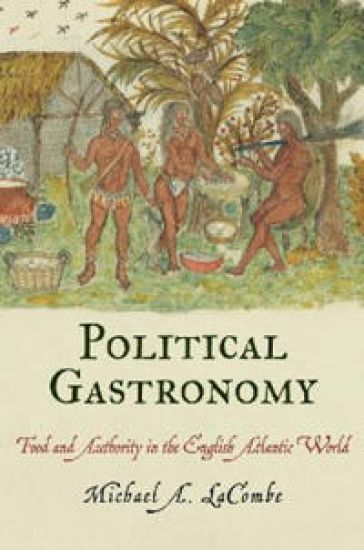
Political Gastronomy

Political Gastronomy

Michael A. LaCombe

University of Pennsylvania Press
2012
sidottu
"The table constitutes a kind of tie between the bargainer and the bargained-with, and makes the diners more willing to receive certain impressions, to submit to certain influences: from this is born political gastronomy. Meals have become a means of governing, and the fate of whole peoples is decided at a banquet."-Jean AnthÈlme Brillat-Savarin, The Physiology of Taste, or, Meditations on Transcendental Gastronomy The first Thanksgiving at Plymouth in 1621 was a powerfully symbolic event and not merely the pageant of abundance that we still reenact today. In these early encounters between Indians and English in North America, food was also symbolic of power: the venison brought to Plymouth by the Indians, for example, was resonant of both masculine skill with weapons and the status of the men who offered it. These meanings were clearly understood by Plymouth's leaders, however weak they appeared in comparison. Political Gastronomy examines the meaning of food in its many facets: planting, gathering, hunting, cooking, shared meals, and the daily labor that sustained ordinary households. Public occasions such as the first Thanksgiving could be used to reinforce claims to status and precedence, but even seemingly trivial gestures could dramatize the tense negotiations of status and authority: an offer of roast squirrel or a spoonful of beer, a guest's refusal to accept his place at the table, the presence and type of utensils, whether hands should be washed or napkins used. Historian Michael A. LaCombe places Anglo-Indian encounters at the center of his study, and his wide-ranging research shows that despite their many differences in language, culture, and beliefs, English settlers and American Indians were able to communicate reciprocally in the symbolic language of food.
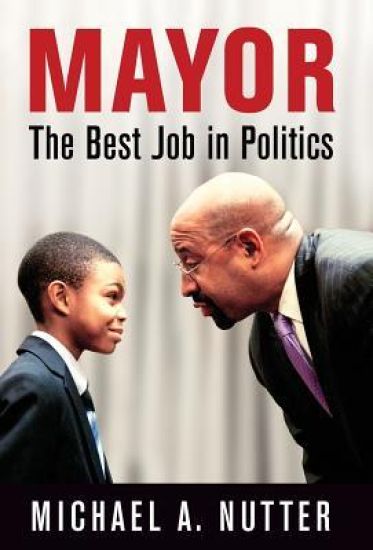
Mayor

Mayor

Michael A. Nutter

University of Pennsylvania Press
2018
sidottu
In 2007, after serving almost fifteen years on the Philadelphia City Council, Michael A. Nutter became the ninety-eighth mayor of his hometown of Philadelphia. From the time he was sworn in until he left office in 2016, there were triumphs and challenges, from the mundane to the unexpected, from snow removal, trash collection, and drinkable water, to the Phillies' World Series win, Hurricane Irene, Occupy Philadelphia, and the Papal visit. By the end of Nutter's tenure, homicides were at an almost fifty-year low, high-school graduation and college-degree attainment rates increased significantly, and Philadelphia's population had grown every year. Nutter also recruited businesses to open in Philadelphia, motivating them through tax reforms, improved services, and international trade missions. Mayor begins with Nutter's early days in politics and ultimate run for mayor, when he formed a coalition from a base of support that set the stage for a successful term. Transitioning from campaigning to governing, Nutter shares his vast store of examples to depict the skills that enable a city politician to lead effectively and illustrates how problem-solving pragmatism is essential for success. With a proven track record of making things work, Nutter asserts that mayoring promises more satisfaction and more potential achievements-for not only the mayor but also the governed-than our fractious political system would have us believe. Detailing the important tasks that mayoral administrations do, Nutter tells the compelling story of a dedicated staff working together to affect positively the lives of the people of Philadelphia every day. His anecdotes, advice, and insights will excite and interest anyone with a desire to understand municipal government.
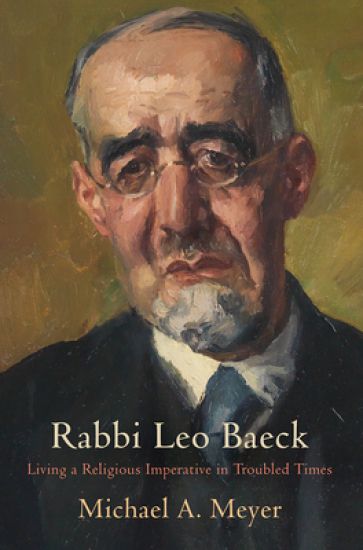
Rabbi Leo Baeck

Rabbi Leo Baeck

Michael A. Meyer

University of Pennsylvania Press
2020
sidottu
Rabbi, educator, intellectual, and community leader, Leo Baeck (1873-1956) was one of the most important Jewish figures of prewar Germany. The publication of his 1905 Das Wesen des Judentums (The Essence of Judaism) established him as a major voice for liberal Judaism. He served as a chaplain to the German army during the First World War and in the years following, resisting the call of political Zionism, he expressed his commitment to the belief in a vibrant place for Jews in a new Germany. This hope was dashed with the rise of Nazism, and from 1933 on, and continuing even after his deportation to Theresienstadt, he worked tirelessly in his capacity as a leader of the German Jewish community to offer his coreligionists whatever practical, intellectual, and spiritual support remained possible. While others after the war worked to rebuild German Jewish life from the ashes, a disillusioned Baeck pronounced the effort misguided and spent the rest of his life in England. Yet his name is perhaps best-known today from the Leo Baeck Institutes in New York, London, Berlin, and Jerusalem dedicated to the preservation of the cultural heritage of German-speaking Jewry. Michael A. Meyer has written a biography that gives equal consideration to Leo Baeck's place as a courageous community leader and as one of the most significant Jewish religious thinkers of the twentieth century, comparable to such better-known figures as Martin Buber, Franz Rosenzweig, and Abraham Joshua Heschel. According to Meyer, to understand Baeck fully, one must probe not only his thought and public activity but also his personality. Generally described as gentle and kind, he could also be combative when necessary, and a streak of puritanism and an outsized veneration for martyrdom ran through his psychological makeup. Drawing on a broad variety of sources, some coming to light only in recent years, but especially turning to Baeck's own writings, Meyer presents a complex and nuanced image of one of the most noteworthy personalities in the Jewish history of our age.
Imitations of Infinity

Imitations of Infinity

Michael A. Motia

University of Pennsylvania Press
2021
sidottu
We do not have many definitions of Christianity from late antiquity, but among the few extant is the brief statement of Gregory of Nyssa (335-395 CE) that it is "mimesis of the divine nature." The sentence is both a historical gem and theologically puzzling. Gregory was the first Christian to make the infinity of God central to his theological program, but how could he intend for humans to imitate the infinite? If the aim of the Christian life is "never to stop growing towards what is better and never to place any limit on perfection," how could mimesis function within this endless pursuit? In Imitations of Infinity, Michael A. Motia situates Gregory among Platonist philosophers, rhetorical teachers, and early Christian leaders to demonstrate how much of late ancient life was governed by notions of imitation. Questions both intimate and immense, of education, childcare, or cosmology, all found form in a relationship of archetype and image. It is no wonder that these debates demanded the attention of people at every level of the Roman Empire, including the Christians looking to form new social habits and norms. Whatever else the late ancient transformation of the empire affected, it changed the names, spaces, and characters that filled the imagination and common sense of its citizens, and it changed how they thought of their imitations. Like religion, imitation was a way to organize the world and a way to reach toward new possibilities, Motia argues, and two earlier conceptions of mimesis-one centering on ontological participation, the other on aesthetic representation-merged in late antiquity. As philosophers and religious leaders pondered how linking oneself to reality depended on practices of representation, their theoretical debates accompanied practical concerns about what kinds of objects would best guide practitioners toward the divine. Motia places Gregory within a broader landscape of figures who retheorized the role of mimesis in search of perfection. No longer was imitation a marker of inauthenticity or immaturity. Mimesis became a way of life.
An Introduction to Piers Plowman

An Introduction to Piers Plowman

Michael A. Calabrese

University Press of Florida
2016
sidottu
William Langland’s allegorical poem Piers Plowman is becoming ever-more popular in medieval English literature courses. But most current introductions focus primarily on the B text, leaving a gap in available resources for the poem’s study. As Piers Plowman continues to gain academic attention in all its three versions (the A, B, and C-texts), teachers and students need a new perspective and new approach to the poem as an evolving whole.This first comprehensive introduction to Langland’s masterful work covers all three iterations and outlines the various changes that occurred between each. Useful for individuals reading any version of Piers Plowman, this engaging guide offers a much-needed navigational summary, a chronology of historic events relevant to the poem, biographical notes about Langland, and keys to characters and proper pronunciation. Calabrese’s definitive and refreshingly lively volume allows readers to navigate this daunting poem and to contextualize it within the literary history of Western culture.
An Introduction to Piers Plowman

An Introduction to Piers Plowman

Michael A. Calabrese

University Press of Florida
2017
nidottu
William Langland’s allegorical poem Piers Plowman has found new critical and pedagogic life in the twenty-first century. Engaging with culture, religion, community, work, and the histories of government and popular revolt, the poem exists in three versions: the earliest, short A text (c. 1367-70), the much longer B text (c. 1377–79), and the later revision, the C text (c. 1382-87). Studies have frequently focused on the B text, leaving a gap in available resources for students of the poem. This is the first comprehensive introduction to Langland’s masterful work that covers all three iterations, outlining the various changes that occurred between each. It thoroughly explores the versions in parallel study and offers new perspectives and approaches to the poem as an evolving whole. Useful for individuals reading any version of Piers Plowman, this engaging guide offers a much-needed navigational summary, a chronology of historic events relevant to the poem, biographical information about Langland and his work in context with his contemporaries, and keys to characters and to proper pronunciation. Michael Calabrese’s definitive and refreshingly lively volume allows readers to navigate the three versions of this daunting poem and to contextualize it within the literary history of Western culture.A volume in the series New Perspectives on Medieval Literature: Authors and Traditions, edited by R. Barton Palmer and Tison Pugh
Alpha Phi Alpha

Alpha Phi Alpha

Michael A. Blake

The University Press of Kentucky
2012
sidottu
On December 4, 1906, on Cornell University's campus, seven black men founded one of the greatest and most enduring organizations in American history. Alpha Phi Alpha Fraternity Inc. has brought together and shaped such esteemed men as Martin Luther King Jr., Cornel West, Thurgood Marshall, Wes Moore, W. E. B. DuBois, Roland Martin, and Paul Robeson. "Born in the shadow of slavery and on the lap of disenfranchisement," Alpha Phi Alpha -- like other black Greek-letter organizations -- was founded to instill a spirit of high academic achievement and intellectualism, foster meaningful and lifelong ties, and racially uplift those brothers who would be initiated into its ranks.In Alpha Phi Alpha, Gregory S. Parks, Stefan M. Bradley, and other contributing authors analyze the fraternity and its members' fidelity to the founding precepts set forth in 1906. They discuss the identity established by the fraternity at its inception, the challenges of protecting the image and brand, and how the organization can identify and train future Alpha men to uphold the standards of an outstanding African American fraternity. Drawing on organizational identity theory and a diverse array of methodologies, the authors raise and answer questions that are relevant not only to Alpha Phi Alpha but to all black Greek-letter organizations.
Reckless Legislation

Reckless Legislation

Michael A. Bamberger

Rutgers University Press
1999
sidottu
Article 6 of the U.S. Constitution requires that every U.S. Senator and Representative, as well as all members of any state legislature, take an oath or affirmation to support the Constitution. Legislators, after all, must accept the basic principles embodied in the Constitution and Bill of Rights when interpreting questions of law. The only way to change these principles is through amendments to the Constitution. But in an increasing number of cases, contends Michael A, Bamberger, our legislators are knowingly abdicating their responsibility to uphold the Constitution. Instead of considering the constitutionality of legislation, they vote for what is politically expedient and popular, leaving it to the courts to determine the legality of their actions. Bamberger argues that legislators have a duty to consider constitutionality and not “pass the buck” to the judiciary regardless of political pressures or even well-meaning intentions to achieve desirable policy objectives.Reckless Legislation examines legislative consideration and avoidance of issues of constitutionality through a number of examples: the regulation of the Internet by Congress and two state legislatures; the reliance by legislatures of Minneapolis, Indianapolis, and Tennessee on “experts” to justify passage of unconstitutional laws; the repeated passage of unconstitutional laws in New York and Missouri relating, respectively, to religion and abortion to wear down the courts and the opposition; and the efforts by Congress to reverse Supreme Court decisions believed by it to be incorrect or harmful.Bamberger urges legislators to avoid the political motives that lead to “reckless legislation,” recommending that they “make full use of the full panoply of available support services . . . for a better and deeper knowledge of the issues raised.”
Visions of the Land

Visions of the Land

Michael A. Bryson

University of Virginia Press
2002
sidottu
The work of John Charle Fremont, Richard Byrd, Charlotte Perkins Gilman, John Wesley Powell, Susan Cooper, Rachel Carson, and Loren Eiseley represents a widely divergent body of writing. Yet despite their range of genres - including exploration narratives, technical reports, natural histories, scientific autobiographies, fictional utopias, nature writing, and popular scientific literature - these seven authors produced strikingly connected representations of nature and the practice of science in America from about 1840 to 1970. Michael A. Bryson provides a thoughtful examination of the authors, their work and the ways in which science and nature unite them. This title explores how our environmental attitudes have been influenced and shaped by various scientific perspectives from the time of western expansion and geographic exploration in the mid-19th century to the start of the contemporary environmental movement in the 20th century. Bryson offers a literary-critical analysis of how writers of different backgrounds, scientific training and geographic experiences represented nature through various kinds of natural science, from natural history to cartography to resource management to ecology and evolution, and in the process, explored the possibilities and limits of science itself.
The Origins of the Modern Jew

The Origins of the Modern Jew

Michael A. Meyer

Wayne State University Press
1972
nidottu
Until the 18th century Jews lived in Christian Europe, spiritually and often physically removed form the stream of European culture. During the Enlightenment intellectual Europe accepted a philosophy which, by the universality of its ideals, reached out to embrace the Jew within the greater community of man. The Jew began to feel European, and his traditional identity became a problem for the first time. the response of the Jewish intellectual leadership in Germany to this crisis is the subject of this book. Chief among those men who struggled with the problems of Jewish consciousness were Moses Mendelssohn, David Friedlander, Leopold Zunz, Eduard Gans, and Heinrich Heine. By 1824, liberal Judaism had not yet produced a vision of it future as a separate entity within European society, but it had been exposed to and grappled with all the significant problems that still confront the Jew in the West.
Response to Modernity

Response to Modernity

Michael A. Meyer

Wayne State University Press
1995
nidottu
The movement for religious reform in modern Judaism represents one of the most significant phenomena in Jewish history during the last two hundred years. It introduced new theological conceptions and innovations in liturgy and religious practice that affected millions of Jews, first in central and Western Europe and later in the United States.Today Reform Judaism is one of the three major branches of Jewish faith. Bringing to life the ideas, issues, and personalities that have helped to shape modern Jewry, Response to Modernity offers a comprehensive and balanced history of the Reform Movement, tracing its changing configuration and self-understanding from the beginnings of modernization in late 18th century Jewish thought and practice through Reform's American renewal in the 1970s.
Judaism Within Modernity

Judaism Within Modernity

Michael A. Meyer

Wayne State University Press
2001
sidottu
A collection of essays that explore the effects of modernization on Jewish self-understanding. Over the last three centurles, the Jewish experience has been profoundly affected by modernity, which Meyer defines as not only technological advance, cultural innovation, and reliance upon human reason but also as the adaptation of Jews to a modern framework within non-Jewish economies, societies, and cultures. Judaism within Modernity begins with an exploration of Jewish historiography and the problems of periodization in modern Jewish history. In these beginning essays we see the range of Meyer's thinking about what constitutes modernization and how to determine its beginning. He discusses the role of history in defining identity among Jews and suggests that finding an adequate paradigm of continuity is essential to the historian's task. The essays in the second section focus on the Jews of Germany. Here Meyer writes about the influence of German Jews on Jews in the United States, comparing the historical experience of the two communities. These essays also address the intersection of religion, scholarship, and history with politics in nineteenth- and twentiety-century Germany. A third section deals with the European Reform movement, which brought a liberal Judaism to the majority of German Jews. Here Meyer likewise presents a fresh perspective on the way the Reform movement was viewed by those outside of it, especially by non-Jews. The essays in the final section explore Judaism in the United States. In particular, they show how reform Judaism and Zionism were able to recondle their initial differences. Judaism within Modernity is an impressive collection of essays written by a renowned Jewish historian and will be a standard volume for students and scholars of the modern Jewish experience.