Observera att förlaget som ger ut denna produkt baserar innehållet i sina produkter på fria källor som Wikipedia. Boken är med stor sannolikhet endast ett utdrag ur dessa informationskällor, alltså inte en vanlig bok i den bemärkelsen.
Who was Muhammad? What do we know historically, and does that differ from how he is seen by his followers and venerated today? Memories of Muhammad presents Muhammad as a lens through which to view both the genesis of Islamic religion and the grand sweep of Islamic history--right up to the hot button issues of the day, such as the spread of Islam, holy wars, the status of women, the significance of Jerusalem, and current tensions with Jews, Hindus and Christians. It also provides a rare glimpse into how Muslims spiritually connect to God through their Prophet, in the mosque, in the home, and even in cyberspace.This definitive biography of the founder of Islam by a leading Muslim-American scholar, Omid Safi, will reveal invaluable new insights, finally providing a fully three-dimensional portrait of Muhammad and the one billion people who follow him today.
Christopher de Bellaigue, a former contributor to The Economist, brings to light the fascinating story of one of the great anti-colonial heroes of the twentieth century: Muhammad Mossadegh, the great Iranian leader whose untimely demise resulted in the Islamic Revolution of 1979, and a man who has been demonized, ridiculed, and misunderstood in the West while remaining an icon and an inspiration across the Middle East. Patriot of Persia, a new biography exploring his life and impact, opens a crucial new window into Mossadegh--whose role in the evolution of Iran's political climate cannot be overemphasized--providing a resource that will prove equally invaluable to academics, newshounds, and activists as they struggle to understand Mideast politics, Iran, Ahmadinejad, and the future of the region--and the world.
The Economist's Tehran correspondent Christopher de Bellaigue brings to light the never-before-told full story of one of the great anti-colonial heroes of the twentieth century: Muhammad Mossadegh, the great Iranian leader whose untimely demise resulted in the Islamic Revolution of 1979, and a man who has been demonized, ridiculed, and misunderstood in the West while remaining an icon and an inspiration across the Middle East. Patriot of Persia, the first biography exploring his life and impact, opens a crucial new window into Mossadegh--whose role in the evolution of Iran's political climate cannot be overemphasized--providing a resource that will prove equally invaluable to academics, newshounds, and activists as they struggle to understand Mideast politics, Iran, Ahmadinejad, and the future of the region--and the world.
Collected here are the best of David Miller's essays and memoirs. The volume contains his trilogy of award-winning Muhammad Ali pieces. There are also two pieces about Miller's unusual relationship with another boxer, "Sugar" Ray Leonard, and he continues to explore the Bruce Lee phenomenon.
Muhammad Ali was the greatest boxer the world has ever seen, and the most charismatic athlete of all time. Mesmeric both inside the ring and out, Ali has been a role model, a spiritual thinker and a symbol of courage for thousands of people.
Professor Guillaume's translation of the Sira of Ibn Ishaq is now reissued. The translator used Ibn Hisham's abridgement and also included many additions and variants found in the writings of early authors. The book thus presents in English practically all that is known of the life of the Prophet. In the introduction, the translator discusses the character of the Sira in the light of the opinion of early Arabian scholars, noting especially the difficulties of the poetry. As the earliest monument of Arabian prose literature, the Sira remains a work of the first importance.
Jesus and Muhammad are two of the best known and revered figures in history, each with a billion or more global followers. Now, in this intriguing volume, F.E. Peters offers a clear and compelling analysis of the parallel lives of Jesus and Muhammad, the first such in-depth comparison in print. Like a detective, Peters compiles "dossiers" of what we do and do not know about the lives and portraits of these towering figures, drawing on the views of modern historians and the evidence of the Gospels and the Quran. With erudition and wit, the author nimbly leads the reader through drama and dogma to reveal surprising similarities between the two leaders and their messages. Each had a public career as a semi-successful preacher. Both encountered opposition that threatened their lives and those of their followers. Each left a body of teaching purported to be their very words, with an urgent imperative that all must become believers in the face of the approaching apocalypse. Both are symbols of hope on the one hand and of God's terrible judgment on the other. They are bringers of peace--and the sword. There is, however, a fundamental difference. Muslims revere Muhammad ibn Abdullah of Mecca as a mortal prophet. Although known as a prophet in his day, the Galilean Jew Jesus was and is believed by his followers to have been the promised Messiah, indeed the son of God. The Quran records revelations received by Muhammad as the messenger of God, whereas the revelations of the Gospels focus on Jesus and the events of his life and death. A lasting contribution to interfaith understanding, Jesus and Muhammad offers lucid, intelligent answers to questions that underlie some of the world's most intractable conflicts.
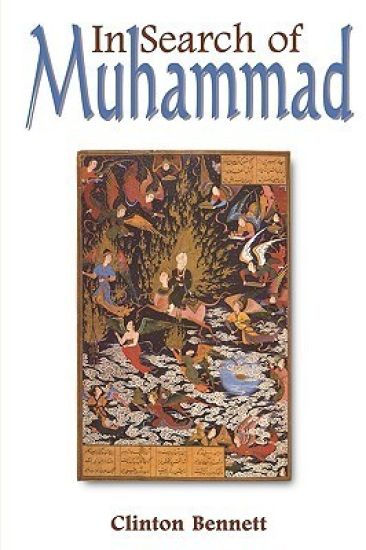
Who was Muhammad? What do Muslims believe about him? What have non-Muslims said about him? Why has he been such a controversial figure? Why have non-Muslims called him a charlatan, and oppurtunist? Why Muslims call him the 'perfect man'? Why have his sexuality and his military exploits attracted censure? Are the texts available for constructing his biography reliable or suspect? There are some of the questions and issues which Clinton Bennett explores in his book. His preference for a conservative evaluation of the historical record will not please everyone, nor will his sympathetic treatment of Salman Rushdie's novel The Satanic Verses. In his effort to gain an insider-like understanding of Muhammad, the author found himself discussing at length some contentious issues, such as whether or not Muhammad performed miracles. His encounters with Muslims suggested that whilst non-Muslims have tended to dismiss the miracle stories as pious fiction, Muslims accept their authenticity.The author, who develops what he calls and 'anthropological theology' to pursue his study, argues that our preconceptions about Muhammad, rather than our reserch methods, determine how we reply to the question. 'What do you thin of Muhammad?'. The book takes diversity of Muslim opinion seriously and explores what theologians, mystics, philosophers and politicians have said about Muhammad. In addition, the book, which combines textual and interpersonal research, concludes with an attempt to incorporate regard for Muhammad within the authors own Christian worldview. Clinton Bennett's overall approach ensures the book's usefulness as a guide to Islamic thought and history. Clinton Bennett, newly appointed Associate Professor of Religion and Baylor University, Texas, was Senior Lecturer in Religious Studies, and assistant chaplain, at Westminster College, Oxford. He has worked in Bangladesh, in Birmingham as a community development worker, and on the staff of the Council of Churches for Britain and Ireland. he has also written Victorian Images of Islam (1992) and In Search of the Sacred: Athropology and the Study of Religions (1996) and is the editor of Discernment: An Ecumenical Journal of Inter-Religious Encounter.He is a Fellow of the Royal Asiatic Society and of the Royal Anthropological Institute.
This collection of 15 essays illuminates the evolution of political Islam from the era of the Prophet Muhammad to the presidency of Mahmoud Ahmadinejad in Iran. Under the auspices of the Association for the Study of the Middle East and Africa, Joseph Morrison Skelly brings together a team of experts to create a compelling, scholarly investigation of the interrelationship of Islam and politics. Divided into several topical sections, including early origins of Islamic politics, the development of jihad in an age of terror, and contemporary politics, Political Islam from Muhammad to Ahmadinejad: Defenders, Detractors, and Definitions is an in-depth exploration of the various dimensions of political Islam—for the international community, the Islamic world itself, and anyone who seeks a deeper understanding of this phenomenon. Political Islam from Muhammad to Ahmadinejad takes an evenhanded approach in considering competing interpretations of political Islam, successfully broadening the scholarly investigation of the topic. The work assesses political Islam across a broad chronological time frame and includes regional perspectives within the contexts of areas in Africa and the Middle East. Skelly and his colleagues tackle controversial issues head-on and provide an intellectual framework for advancing political Islam into new stages of economic development, intellectual renewal, and accommodation with constitutional democracy and human rights. Each contributor lends a unique and specialized perspective to the discussion on this timely topic.
First Published in 2000. This is Volume V of six of the Oriental series looking at Arabic History and Culture. It was written in 1927, the main purpose of this text is to show that Arabia, before the coming of Islam, was not a country secluded from the cultural influences of Western Asia, nor was it entirely cut off from contact with the political and social life of its neighbours in the Near East.
First Published in 2000. This is Volume V of six of the Oriental series looking at Arabic History and Culture. It was written in 1927, the main purpose of this text is to show that Arabia, before the coming of Islam, was not a country secluded from the cultural influences of Western Asia, nor was it entirely cut off from contact with the political and social life of its neighbours in the Near East.
This book considers the Arabic biographies of Prophet Muhammad, the earliest of which dates from two centuries after his life. These biographies, prized by Muslims, have been approached in the Western study of Islam from a range of positions. Some scholars reject them entirely, seeing in them products of the Muslim community’s idealisation of its history, while others accept them at face value, reasoning that, if not exact versions of events, the events could not have differed too much from their descriptions. The author revisits the debate and reconsiders several key incidents in the life of the Prophet. By compiling an extensive corpus of materials and comparing them closely, this book analyses the transmission and the contents of the accounts. It shows that by understanding clearly the interaction in early Islam between written and oral modes of transmission, and by the judicious sieving of the accounts, as well as the lines of transmission, we can sometimes reach back to that generation of Muslims who though not themselves witness to the events were younger contemporaries of those who were. Establishing a solid basis for the informed study of Muhammad’s biography and adding to the ongoing debate, this book will appeal to scholars of early Islam, history and theology.
Muhammad b. ‘Umar al-Waqidi was a Muslim scholar, born in Medina in the 1st Century. Of his several writings the most significant is the Kitab al-Maghazi, one of the earliest standard histories of the life of the Prophet. Translated into English for the first time, Rizwi Faizer makes available this key text to a new, English-speaking audience. It includes an "Introduction" authored jointly by Rizwi Faizer and Andrew Rippin and a carefully prepared index. The book deals with the events of the Prophet’s life from the time of his emigration from Mecca to his death, and is generally considered to be biographical. Bringing together events in the Prophet’s life with appropriate passages of Qur’an in a considered sequence, the author presents an interpretation of Islam that existed in his times. It includes citations from the Qur’an, as well as poetry that appears to have been inspired by activities during his life. This English translation of a seminal text on the life of Muhammad is an invaluable addition to the existing literature, and will be of great significance to students and scholars in the field of Islamic studies, Islamic history, Medieval history and Arabic literature.
Muhammad b. ‘Umar al-Waqidi was a Muslim scholar, born in Medina in the 1st Century. Of his several writings the most significant is the Kitab al-Maghazi, one of the earliest standard histories of the life of the Prophet. Translated into English for the first time, Rizwi Faizer makes available this key text to a new, English-speaking audience. It includes an "Introduction" authored jointly by Rizwi Faizer and Andrew Rippin and a carefully prepared index. The book deals with the events of the Prophet’s life from the time of his emigration from Mecca to his death, and is generally considered to be biographical. Bringing together events in the Prophet’s life with appropriate passages of Qur’an in a considered sequence, the author presents an interpretation of Islam that existed in his times. It includes citations from the Qur’an, as well as poetry that appears to have been inspired by activities during his life. This English translation of a seminal text on the life of Muhammad is an invaluable addition to the existing literature, and will be of great significance to students and scholars in the field of Islamic studies, Islamic history, Medieval history and Arabic literature.
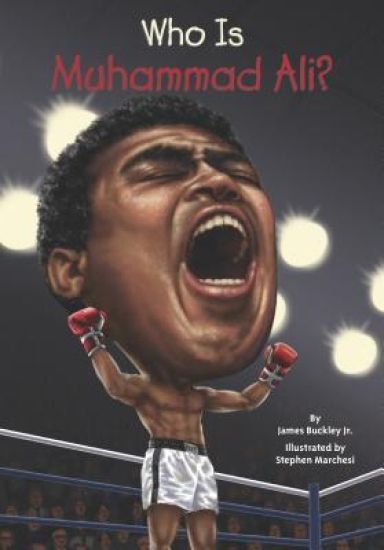
He would go on to become the first and only three-time (in succession) World Heavyweight Champion. Nicknamed "The Greatest," Ali was as well known for his unique boxing style, consisting of the Ali Shuffle and the rope-a-dope, as he was for the catchphrase "float like a butterfly, sting like a bee." He was an uncompromising athlete who brought beauty and grace to a very rough sport and became one of the world's most famous cultural icons. Read Who Is Muhammad Ali? And discover "The Greatest.".
In a comprehensive study of early Islamic history, Wilferd Madelung examines the conflict which developed after Muhammad’s death for the leadership of the Muslim community. He pursues the history of this conflict through the reign of the four ‘Rightly Guided’ caliphs to its climax in the first inter-Muslim war. The outcome of the war, which marked the demise of the reign of the Early Companions, resulted in the lasting schism between Sunnite and Shi’ite Islam. Contrary to recent scholarly trends, the author brings out Ali’s early claim to legitimate succession, which gained support from the Shi‘a, and offers a convincing reinterpretation of early Islamic history. This book will make a major contribution to the debate over succession. Wilferd Madelung’s book The Succession to Muhammad has been awarded the Best Book of the Year prize by the Islamic Republic of Iran for the year 1997.