Kirjahaku
Etsi kirjoja tekijän nimen, kirjan nimen tai ISBN:n perusteella.
1000 tulosta hakusanalla NICHOLAS ROERICH
Conservative Essays, Legal and Political. by S. S. Nicholas.
Samuel Smith Nicholas; S S (Samuel Smith) Nicholas
University of Michigan Library
2006
pokkari

The Journal of Nicholas Cresswell 1774-1777
Applewood Books
2003
sidottu



Brief Memoirs Of Nicholas Ferrar: Founder Of A Protestant Religious Establishment At Little Gidding, Huntingdonshire (1837)
Dr. Turner
KESSINGER PUBLISHING, LLC
2008
sidottu
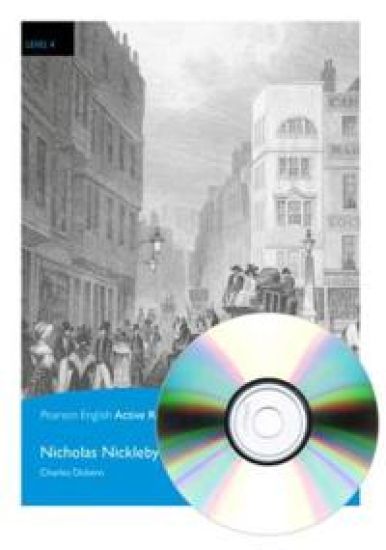
Level 4: Nicholas Nickleby Book & Multi-ROM with MP3 Pack
Charles Dickens
Pearson Education Limited
2014
muu
Pearson English Active Readers present stories carefully written and graded across five levels for teachers of English who want to activate their students’ language through reading, . From original stories, classic and contemporary fiction, to film adaptations and nonfiction titles, an integrated skills approach consolidates vocabulary and develops language skills while learners experience the joy of reading. Find out more at english.com/readers

The Search For Johnny Nicholas: The Secret of Nazi Prisoner No. 44451
David C. Smith; Hugh Wray McCann
Createspace Independent Publishing Platform
2011
nidottu

Argentine Mist: A Nicholas Chambers Mystery
Christopher J. Dacey
Createspace Independent Publishing Platform
2011
nidottu
It's October 1941. As a tropical storm hits the City of Providence, private investigator Nicholas Chambers finds himself caught up in the search for a missing woman, and gets entangled with the Providence underworld and a secretive group operating along the Rhode Island coastline. A midnight trip to a secluded house along Warwick Neck ignites the case, and plunges Chambers into a mystery that goes well beyond a simple missing persons case.
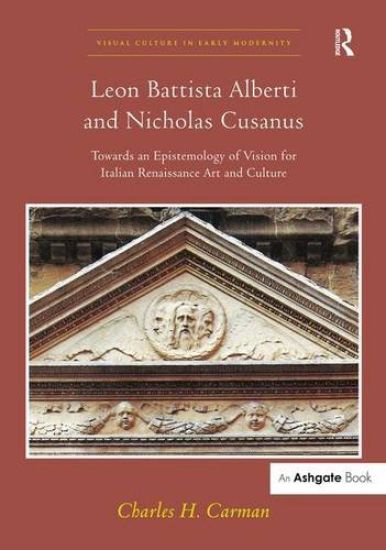
Providing a fresh evaluation of Alberti’s text On Painting (1435), along with comparisons to various works of Nicholas Cusanus - particularly his Vision of God (1450) - this study reveals a shared epistemology of vision. And, the author argues, it is one that reflects a more deeply Christian Neoplatonic ideal than is typically accorded Alberti. Whether regarding his purpose in teaching the use of a geometric single point perspective system, or more broadly in rendering forms naturalistically, the emphasis leans toward the ideal of Renaissance art as highly rational. There remains the impression that the principle aim of the painter is to create objective, even illusionistic images. A close reading of Alberti’s text, however, including some adjustments in translation, points rather towards an emphasis on discerning the spiritual in the material. Alberti’s use of the tropes Minerva and Narcissus, for example, indicates the opposing characteristics of wisdom and sense certainty that function dialectically to foster the traditional importance of seeing with the eye of the intellect rather than merely with physical eyes. In this sense these figures also set the context for his, and, as the author explains, Brunelleschi’s earlier invention of this perspective system that posits not so much an objective seeing as an opposition of finite and infinite seeing, which, moreover, approximates Cusanus’s famous notion of a coincidence of opposites. Together with Alberti’s and Cusanus’s ideals of vision, extensive analysis of art works discloses a ubiquitous commitment to stimulating an intellectual perception of divine, essential, and unseen realities that enliven the visible material world.
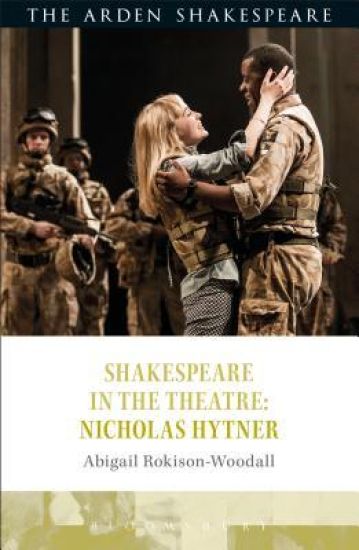
Shakespeare in the Theatre: Nicholas Hytner
Abigail Rokison-Woodall
The Arden Shakespeare
2017
sidottu
Part of the series Shakespeare in the Theatre, this book examines the work of renowned theatre director Nicholas Hytner (Artistic Director of the National Theatre from 2003-2015). Featuring case studies of Hytner’s Shakespeare productions and interviews with actors, designers, directors and other practitioners with whom Hytner has worked, it explores Hytner’s own productions of Shakespeare’s plays within their respective socio-cultural contexts and the context of Hytner’s other directing work, and examines his working practices and the impact of his Artistic directorship on the centrality of Shakespeare within the repertoire of the National Theatre.