Kirjojen hintavertailu. Mukana 12 016 292 kirjaa ja 12 kauppaa.

Kirjahaku

Etsi kirjoja tekijän nimen, kirjan nimen tai ISBN:n perusteella.

1000 tulosta hakusanalla Naemi Fast

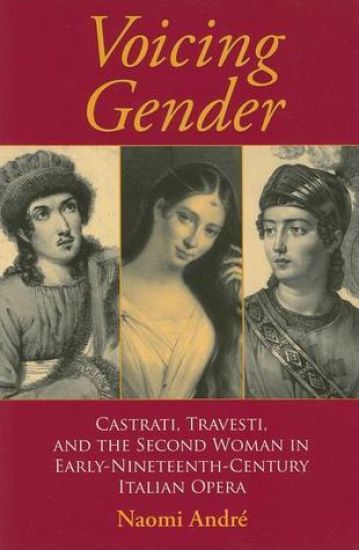
Voicing Gender

Voicing Gender

Naomi André

Indiana University Press
2006
pokkari
The early 19th century was a period of acute transition in operatic tradition and style, when time-honored practices gave way to the developing aesthetics of Romanticism, the rise of the tenor overtook the falling stars of the castrati, and the heroic, the masculine, and the feminine were profoundly reconfigured. These transformations resounded in operatic plot structures as well; the happy resolution of the 18th century twisted into a tragic 19th-century finale with the death of the helpless and innocent heroine—and frequently her tenor hero along with her. Female voices which formerly had sung en travesti, or basically in male drag, opposite their female character counterparts then took on roles of the second woman, a companion and foil to the death-bound heroine rather than her romantic partner. In Voicing Gender, Naomi André skillfully traces the development of female characters in these first decades of the century, weaving in and around these changes in voicings and plot lines, to define an emergent legacy in operatic roles.
The Sonic Self

The Sonic Self

Naomi Cumming

Indiana University Press
2001
sidottu
"Semioticians began by looking at literature but have gradually applied their techniques to other disciplines, including music. The late Naomi Cumming . . . based this consideration of the sources of musical expression on her experiences as a performer—with interesting, if rarely surprising, results." —Choice Using classical violin music as her principal laboratory, the author examines how a performance incorporates distinctive features not only of the work, but of the performer as well—and how the listener goes about interpreting not only the composer's work and the performer's rendering of the work, but also of the performer's and listener's identities. A richly interdisciplinary approach to a very common, yet persistently mysterious, part of our lives.
Icons of Power

Icons of Power

Naomi Janowitz

Pennsylvania State University Press
2002
sidottu
In the waning years of the Roman Empire, Jews, Christians, and pagans alike used rituals to bridge the gap between the human and the divine. Depending on one’s point of view, however, such rituals could be labeled negatively as "magic" or positively as "theurgy." This has led to numerous problems of interpretation, including marginalizing certain ritual practices as magic or occult while privileging others as genuine or orthodox. In Icons of Power, Naomi Janowitz sifts through the polemics to make sense of the daunting mosaic of religious belief and practice in Late Antiquity. From rabbis who ascended to heavenly places, to sorcerers seeking to harm enemies with spells, to alchemists working metals to purify the soul, Janowitz reveals how ritual practitioners held common assumptions about why their rituals worked and about how to perform those rituals. Indeed, such assumptions were so much a part of the inherited mentality of the age that they were, for the most part, never explained—and this is precisely what Janowitz accomplishes in Icons of Power. By shifting the discussion out of the rhetoric of "magic" or "mysticism" and describing the mechanisms of ritual with semiotic terms, she moves us beyond the value-laden terminology of ancient polemicists and modern scholars so that we can better see how these rituals worked and how they affected the social identities of their followers. Janowitz recovers a lost world of religious expression that has been clouded by misinterpretation for many centuries. In the process, Icons of Power makes an important contribution to our understanding of society in Late Antiquity.
Icons of Power

Icons of Power

Naomi Janowitz

Pennsylvania State University Press
2012
pokkari
In the waning years of the Roman Empire, Jews, Christians, and pagans alike used rituals to bridge the gap between the human and the divine. Depending on one’s point of view, however, such rituals could be labeled negatively as "magic" or positively as "theurgy." This has led to numerous problems of interpretation, including marginalizing certain ritual practices as magic or occult while privileging others as genuine or orthodox. In Icons of Power, Naomi Janowitz sifts through the polemics to make sense of the daunting mosaic of religious belief and practice in Late Antiquity. From rabbis who ascended to heavenly places, to sorcerers seeking to harm enemies with spells, to alchemists working metals to purify the soul, Janowitz reveals how ritual practitioners held common assumptions about why their rituals worked and about how to perform those rituals. Indeed, such assumptions were so much a part of the inherited mentality of the age that they were, for the most part, never explained—and this is precisely what Janowitz accomplishes in Icons of Power. By shifting the discussion out of the rhetoric of "magic" or "mysticism" and describing the mechanisms of ritual with semiotic terms, she moves us beyond the value-laden terminology of ancient polemicists and modern scholars so that we can better see how these rituals worked and how they affected the social identities of their followers. Janowitz recovers a lost world of religious expression that has been clouded by misinterpretation for many centuries. In the process, Icons of Power makes an important contribution to our understanding of society in Late Antiquity.
Sexual Salvation

Sexual Salvation

Naomi McCormick

Praeger Publishers Inc
1994
sidottu
What is the nature and purpose of women's sexuality? How does women's sexuality relate to femininity, masculinity, and violence against women? What effect does sex role socialization have on women's sexual relations? To what extent have sexual behavior, expectations for intimacy, and sex research been shaped by a male-dominant society? These questions and more are addressed in Sexual Salvation, an open-minded and comprehensive celebration of cultural and sexual diversity. Relying on her 21-years' experience as a feminist sex-researcher, clinical psychologist, and college professor, the author illuminates the wide-ranging experiences women have had with sexuality and intimacy. Linking new feminist scholarship with emerging social science and therapist work, she makes contributions to understanding women's sexuality clear, logical, and appealing for a broad group of readers--women and men alike.The Cold War might be over but the Women's Sex and Culture War continues in full force. Women argue with men and each other. Politically conservative individuals argue among themselves and most of all with feminists. But feminists are far from united: one group argues persuasively that women are men's sexual victims and require additional protection; the opposing feminist group argues just as articulately that women deserve sexual autonomy, not increased restrictions under the guise of protection. Sexual Salvation, written by Naomi McCormick, a distinguished feminist sex researcher, offers relief from divisive, extremist rhetoric. In her undogmatic, meticulously researched, and beautifully written book, McCormick acknowledges the contributions of all feminists to the affirmation of women's sexual rights and pleasures.Here for the first time is a book about and for all women, not just the white, middle-class, heterosexual, able-bodied women addressed by most popular authors (including many feminists). This is an inclusive and sensitive book that touches upon the sexuality of all women: women of color, women of all sexual orientations, women of all ages, women who live with disabilities and chronic illness, poor and working class women--as well as women from socially privileged groups. More valuable still, McCormick backs up her ideas with a solid grasp of multidisciplinary scholarship. Scholars and general readers alike will find Sexual Salvation remarkable for its seamless integration of sex research and feminist and psychotherapeutic literature; and--most compelling--for its honesty.
Early Spanish American Narrative

Early Spanish American Narrative

Naomi Lindstrom

University of Texas Press
2004
pokkari
The world discovered Latin American literature in the twentieth century, but the roots of this rich literary tradition reach back beyond Columbus's discovery of the New World. The great pre-Hispanic civilizations composed narrative accounts of the acts of gods and kings. Conquistadors and friars, as well as their Amerindian subjects, recorded the clash of cultures that followed the Spanish conquest. Three hundred years of colonization and the struggle for independence gave rise to a diverse body of literature-including the novel, which flourished in the second half of the nineteenth century. To give everyone interested in contemporary Spanish American fiction a broad understanding of its literary antecedents, this book offers an authoritative survey of four centuries of Spanish American narrative. Naomi Lindstrom begins with Amerindian narratives and moves forward chronologically through the conquest and colonial eras, the wars for independence, and the nineteenth century. She focuses on the trends and movements that characterized the development of prose narrative in Spanish America, with incisive discussions of representative works from each era. Her inclusion of women and Amerindian authors who have been downplayed in other survey works, as well as her overview of recent critical assessments of early Spanish American narratives, makes this book especially useful for college students and professors.
Go Down, Old Hannah

Go Down, Old Hannah

Naomi Mitchell Carrier

University of Texas Press
2010
pokkari
Living history is a style of instructive and entertaining performance that seeks to bring history to life with the use of costumes, tools, and reenactments appropriate to a specific time period. Done well, living history performances illuminate human experience in powerful, unforgettable ways.The fifteen living history plays in this collection were commissioned by museums and historic sites in Texas to show the interdependence of African American experiences and contributions to the living history of Texas. The plays cover subject matter ranging from slave celebrations, family breakups, and running away, to the Civil War, emancipation, and Reconstruction. Each play is research based and performed by Talking Back Living History Theatre as a festival production. These scripts are easily performed, and author Naomi Mitchell Carrier has included production notes in the overviews that precede each play. Lesson plans are also included, which add to the collection's appeal as a classroom tool.Carrier's talent for bringing historical figures to life is exceptional. The names of most primary characters in these plays are real. By giving them faces, feelings, intelligence, and dignity, Carrier aims to give them new life.
Twentieth-Century Spanish American Fiction

Twentieth-Century Spanish American Fiction

Naomi Lindstrom

University of Texas Press
1994
pokkari
Spanish American fiction became a world phenomenon in the twentieth century through multilanguage translations of such novels as Gabriel Garcia Marquez's One Hundred Years of Solitude, Manuel Puig's Kiss of the Spider Woman, Octavio Paz's Labyrinth of Solitude, and Isabel Allende's House of the Spirits. Yet these "blockbusters" are only a tiny fraction of the total, rich outpouring of Spanish-language literature from Latin America.In this book, Naomi Lindstrom offers English-language readers a comprehensive survey of the century's literary production in Latin America (excluding Brazil). Discussing movements and trends, she places the famous masterworks in historical perspective and highlights authors and works that deserve a wider readership. Her study begins with Rodó's famous essay Ariel and ends with Rigoberta Menchú's 1992 achievement of the Nobel Prize. Her selection of works is designed to draw attention, whenever possible, to works that are available in good English translations.A special feature of the book is its treatment of the "postboom" period. In this important concluding section, Lindstrom discusses documentary narratives, the new interrelations between popular culture and literary writing, and underrepresented groups such as youth cultures, slum dwellers, gays and lesbians, and ethnic enclaves. Written in accessible, nonspecialized language, Twentieth-Century Spanish American Fiction will be equally useful for general readers as a broad overview of this vibrant literature and for scholars as a reliable reference work.
The Social Conscience of Latin American Writing

The Social Conscience of Latin American Writing

Naomi Lindstrom

University of Texas Press
1998
pokkari
A CHOICE Outstanding Academic BookLiterature in Latin America has long been a vehicle for debates over the interpretation of social history, cultural identity, and artistic independence. Indeed, Latin American literature has gained international respect for its ability to present social criticism through works of imaginative creation.In this comprehensive, up-to-the-minute survey of research and opinion by leading Latin American cultural and literary critics, Naomi Lindstrom examines five concepts that are currently the focus of intense debate among Latin American writers and thinkers. Writing in simple, clear terms for both general and specialist readers of Latin American literature, she explores the concepts of autonomy and dependency, postmodernism, literary intellectuals and the mass media, testimonial literature, and gender issues, including gay and lesbian themes. Excerpts (in English) from relevant literary works illustrate each concept, while Lindstrom also traces its passage from the social sciences to literature.
The Scent of Water

The Scent of Water

Naomi Zacharias

Zondervan
2016
nidottu
Follow Naomi as she talks to women working in brothels in Mumbai; survivors of an Indonesian tsunami in which more than 160,000 lives were lost; a young girl waiting on an operation to save her life; and victims of domestic violence horrifically burned by fire. Be still with her when she realizes the pain she feels in the face of these extreme injustices reveals a common struggle that exists within all of humanity. And rise with her as she wrestles with confusion over her identity, comes face to face with redemption, and then begins to understand her own story . . . and to find her calling.The Scent of Water will open your eyes to the complexities of the world, showing you pain can also be beauty, and how each are found in the unlikeliest of places. Zacharias doesn't have all the answers. But she has hope and encouragement that will empower you to find and begin the adventure of your life.
Shades of Truth

Shades of Truth

Naomi Kinsman

ZonderKidz
2011
nidottu
It’s Going to Be a Bear of a YearSadie thought she’d have a perfect fresh start when she moved to Owl Creek, Michigan, but finding her place in her new school proves harder than she expected. In this divided town, Sadie’s father’s job mediating between bear hunters and researchers doesn’t help her social life. Sadie’s art instructor encourages her to explore her beliefs and express herself through her sketchbook, and things improve after Sadie befriends a kind girl from school and a researcher’s son—but she can’t stop worrying about the bears. As everything swirls around her, Sadie must learn what it means to have faith when you don’t have all the answers.
Flickering Hope

Flickering Hope

Naomi Kinsman

ZonderKidz
2011
nidottu
Can You Ever Trust the Enemy?Things finally seem to be falling into place for Sadie. Bear season is over, and her relationship with her art teacher is on the mend. Her home life is going better than ever, and even her enemy, Frankie, wants to be friends. But can Frankie be trusted? Ruth and Andrew think she’s spying for her father, helping him find a way to capture Sadie’s favorite bear. But Sadie suspects something else is going on with Frankie. She must decide who to trust and find out if—and how—her growing faith can get her through.
Waves of Light

Waves of Light

Naomi Kinsman

ZonderKidz
2012
nidottu
Where is God when you need him?After struggling to fit into a new town and school, Sadie faces questions about her faith, family, and friendships, questioning all she has come to believe.Sadie's life is spinning out of control. Her friend moved away, her mom remains ill, and her dad wants to leave town. At least the play Sadie is helping produce appears to be going well. After all, she gets to create the sets with her art teacher's help. But even that falls apart when a flash flood destroys her teacher's home and art.How can she trust or even believe in a God who would allow all this? God isn't fair. With everything crumbling and her faith on the edge, Sadie must find strength in the God she's questioning in order to hold on in the midst of her struggles.
Brilliant Hues

Brilliant Hues

Naomi Kinsman

ZonderKidz
2012
nidottu
Sketching A Whole New Life Won’t Be EasyLife comes full circle for Sadie as she heads back to Menlo Park, California. But Sadie finds she no longer fits in, especially when one of her dad’s cases thrusts her into the spotlight and puts her in danger. She turns to her faith, but the youth group just isn’t the same, and Sadie has a lot to think about when she hears what some kids believe. She returns to Owl Creek for a reprieve, but everything feels different. She just wants things to go back the way they used to be. Will her faith be strong enough to get her through?
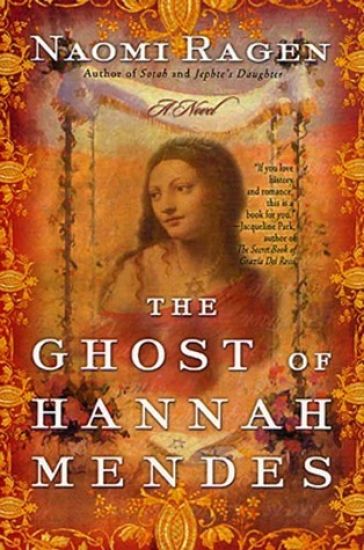
The Ghost of Hannah Mendes

The Ghost of Hannah Mendes

Naomi Ragen

St. Martin's Griffin
2001
nidottu
The ghost of a real-life historical figure helps elderly Catherine da Costa convince her granddaughters to travel across Europe with her and helps them find a link between past and present by leaving mysterious journal entries along their travel route. Reprint. 25,000 first printing.
The Covenant

The Covenant

Naomi Ragen

St. Martin's Griffin
2005
nidottu
Living in Jerusalem, Elise Margulies' worst fears come true when her husband and daughter disappear and his bullet-ridden car is found empty. Over the next days, the ties that bind two generations form a powerful alliance against contemporary evil.
The Saturday Wife

The Saturday Wife

Naomi Ragen

St Martin's Press
2008
pokkari
With more than half a million copies of her novels sold, Naomi Ragen has connected with the hearts of readers as well as reviewers who have met her work with unanimous praise. In "The Saturday Wife," Ragen utilizes her fluid writing style--rich with charm and detail--to break new ground as she harnesses satire to expose a world filled with contradiction.Beautiful, blonde, materialistc Delilah Levy steps into a life she could have never imagined when in a moment of panic she decides to marry a sincere Rabbinical student. But the reality of becoming a paragon of virtue for a demanding and hypocritical congregation leads sexy Delilah into a vortex of shocking choices which spiral out of control into a catastrophe which is as sadly believeable as it is wildly amusing.Told with immense warmth, fascinating insight, and wicked humor, "The Saturday Wife" depicts the pitched and often losing battle of all of us as we struggle to hold on to our faith and our values amid the often delicious temptations of the modern world.
The Shock Doctrine: The Rise of Disaster Capitalism
The bestselling author of No Logo shows how the global "free market" has exploited crises and shock for three decades, from Chile to Iraq In her groundbreaking reporting, Naomi Klein introduced the term "disaster capitalism." Whether covering Baghdad after the U.S. occupation, Sri Lanka in the wake of the tsunami, or New Orleans post-Katrina, she witnessed something remarkably similar. People still reeling from catastrophe were being hit again, this time with economic "shock treatment," losing their land and homes to rapid-fire corporate makeovers. The Shock Doctrine retells the story of the most dominant ideology of our time, Milton Friedman's free market economic revolution. In contrast to the popular myth of this movement's peaceful global victory, Klein shows how it has exploited moments of shock and extreme violence in order to implement its economic policies in so many parts of the world from Latin America and Eastern Europe to South Africa, Russia, and Iraq. At the core of disaster capitalism is the use of cataclysmic events to advance radical privatization combined with the privatization of the disaster response itself. Klein argues that by capitalizing on crises, created by nature or war, the disaster capitalism complex now exists as a booming new economy, and is the violent culmination of a radical economic project that has been incubating for fifty years.
No LOGO: No Space, No Choice, No Jobs
A Tenth Anniversary Edition of Naomi Klein's No Logo with a New Introduction by the Author NO LOGO was an international bestseller and "a movement bible" (The New York Times). Naomi Klein's second book, The Shock Doctrine, was hailed as a "master narrative of our time," and has over a million copies in print worldwide. In the last decade, No Logo has become an international phenomenon and a cultural manifesto for the critics of unfettered capitalism worldwide. As America faces a second economic depression, Klein's analysis of our corporate and branded world is as timely and powerful as ever. Equal parts cultural analysis, political manifesto, mall-rat memoir, and journalistic expos , No Logo is the first book to put the new resistance into pop-historical and clear economic perspective. Naomi Klein tells a story of rebellion and self-determination in the face of our new branded world.