Kirjojen hintavertailu. Mukana 11 244 527 kirjaa ja 12 kauppaa.

Kirjahaku

Etsi kirjoja tekijän nimen, kirjan nimen tai ISBN:n perusteella.

1000 tulosta hakusanalla Neil Root

Treasure Neverland

Treasure Neverland

Neil Rennie

Oxford University Press
2013
sidottu
Treasure Neverland is about factual and fictional pirates. Swashbuckling eighteenth-century pirates were the ideal pirates of all time and tales of their exploits are still popular today. Most people have heard of Blackbeard and Captain Kidd even though they lived about three hundred years ago, but most have also heard of other pirates, such as Long John Silver and Captain Hook, even though these pirates never lived at all, except in literature. The differences between these two types of pirates - real and imaginary - are not quite as stark as we might think as the real, historical pirates are themselves somewhat legendary, somewhat fictional, belonging on the page and the stage rather than on the high seas. Based on extensive research of fascninating primary material, including testimonials, narratives, legal statements, colonial and mercantile records, Neil Rennie describes the ascertainable facts of real eighteenth-century pirate lives and then investigates how such facts were subsequently transformed artistically, by writers like Defoe and Stevenson, into realistic and fantastic fictions of various kinds: historical novels, popular melodramas, boyish adventures, Hollywood films. Rennie's aim is to watch, in other words, the long dissolve from Captain Kidd to Johnny Depp. There are surprisingly few scholarly studies of the factual pirates - properly analysing the basic manuscript sources and separating those documents from popular legends - and there are even fewer literary-historical studies of the whole crew of fictional pirates, although those imaginary pirates form a distinct and coherent literary tradition. Treasure Neverland is a study of this Scots-American literary tradition and also of the interrelations between the factual and fictional pirates - pirates who are intimately related, as the nineteenth-century writings about fictional pirates began with the eighteenth-century writings about supposedly real pirates. 'What I want is the best book about the Buccaneers', wrote Stevenson when he began Treasure Island in 1881. What he received, rightly, was indeed the best book: the sensational and unreliable History of the Pyrates (1724).
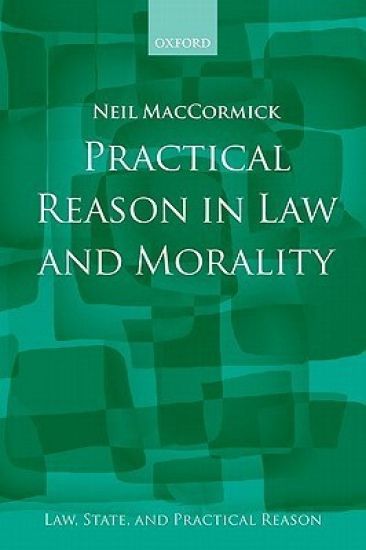
Practical Reason in Law and Morality

Practical Reason in Law and Morality

Neil MacCormick

Oxford University Press
2011
nidottu
The concept of practical reason is central to contemporary thought on ethics and the philosophy of law - acting well means acting for good reasons. Explaining this requires several stages. How do reasons relate to actions at all, as incentives and in explanations? What are values, how do they relate to human nature, and how do they enter practical reasoning? How do the concepts of 'right and wrong' fit in, and in what way do they involve questions of mutual trust among human beings? How does our moral freedom - our freedom to form our own moral commitments - relate to our responsibilities to each other? How is this final question transposed into law and legal commitments? This book explores these questions, vital to understanding the nature of law and morality. It presents a clear account of practical reason, valuable to students of moral philosophy and jurisprudence at undergraduate or postgraduate levels. For more advanced scholars it also offers a reinterpretation of Kant's views on moral autonomy and Smith's on self-command, marrying Smith's 'moral sentiments' to Kant's 'categorical imperative' in a novel way. The book concludes and underpins the author's Law, State, and Practical Reason series. Taken together the books offer an overarching theory of the nature of law and legal reason, the role of the State, and the nature of moral reason and judgement.
Copyright's Paradox

Copyright's Paradox

Neil Weinstock Netanel

Oxford University Press Inc
2010
nidottu
Providing a vital economic incentive for much of society's music, art, and literature, copyright is widely considered "the engine of free expression^"--but it is also used to stifle news reporting, political commentary, historical scholarship, and even artistic expression. In Copyright's Paradox, Neil Weinstock Netanel explores the tensions between copyright law and free speech, revealing the unacceptable burdens on expression that copyright can impose. Tracing the conflict across both traditional and digital media, Netanel examines the remix and copying culture at the heart of current controversies related to the Google Book Search litigation, YouTube and MySpace, hip-hop music, and digital sampling. The author juxtaposes the dramatic expansion of copyright holders' proprietary control against the individual's newly found ability to digitally cut, paste, edit, remix, and distribute sound recordings, movies, TV programs, graphics, and texts the world over. He tests whether, in light of these and other developments, copyright still serves as a vital engine of free expression and assesses how copyright does--and does not--burden free speech. Taking First Amendment values as his lodestar, Netanel offers a crucial, timely call to redefine the limits of copyright so it can most effectively promote robust debate and expressive diversity--and he presents a definitive blueprint for how this can be accomplished.
We Gather Together

We Gather Together

Neil J. Young

Oxford University Press Inc
2015
sidottu
In the 1970s, mainly in response to Roe v. Wade, evangelicals and conservative Catholics put aside their longstanding historical prejudices and theological differences and joined forces to form a potent political movement that swept across the country--or so conventional wisdom would have us think. In this provocative book, Neil J. Young argues that most of this widely accepted story of the creation of the Religious Right is not true. We Gather Together examines evangelicals, Catholics, and Mormons (who are usually ignored in the story) in the early days of the religious right and paints a much different picture. Tracing the interactions among these three groups from the 1950s to the present day, Young shows that the emergence of the Religious Right was not a brilliant political strategy of compromise and coalition-building hatched on the eve of a history-altering election. Rather, it was the latest iteration of a much-longer religious debate that had been going on for decades in reaction to the building of a mainline Protestant consensus. This "restructuring" of interfaith relations took place alongside American political developments of the time, and evangelicals, Catholics, and Mormons found common cause and pursued similar ends in debates about abortion, school prayer, the Equal Rights Amendment, and tax exemptions for religious schools. They did so together at times but more often separately, and it is the latter part that historians have all but ignored. While these social and political issues were the objects of their displeasure, they weren't its source; far from setting aside their divisions to create a unified movement, cracks in the alliance shaped the movement from the very beginning. This provocative book will reshape our understanding of the most important religious and political movement of the last 30 years.
Copyright

Copyright

Neil Weinstock Netanel

Oxford University Press Inc
2018
sidottu
Copyright law was once an esoteric backwater, the special province of professional authors, publishers, and entertainment companies, but it now impacts everyone who uses the Internet or consumes cultural expression on a computer, mobile phone, or personal tablet. Copyright has come to be immensely controversial as well. For instance, the proposed Stop Online Piracy Act (SOPA), copyright-industry backed legislation met its defeat at the hands of a popular outcry spearheaded by Google, Wikipedia, and other online aggregators of content and information. SOPA and other such initiatives would target the massive online piracy that threatens the economic viability of newspapers, movie studios, record labels, and book publishers. But the copyright industries' arguably heavy-handed response threatens to chill the free-wheeling wellspring of online creativity, expression, and ready access to information upon which we have all come to rely. To navigate the shoals of these opposing, equally dim prospects is a complex undertaking. No less daunting, even for the educated layperson, is to understand the legal framework, policy arguments, industry economics, legislative proposals, and judicial decisions that fuel the copyright debate. In Copyright: What Everyone Needs to Know®, law professor Neil Netanel guides readers through the murky dynamics of modern copyright law, answering questions about topics such as the new challenges posed by the digital environment, copyright and piracy in the global marketplace, and proposals for future reform. From the basis and purpose of copyright law to a glimpse at what the law could - or should - become in the digital age, Netanel offers the necessary tools for following the debates that have raged everywhere from internet forums to the halls of Congress.
Copyright

Copyright

Neil Weinstock Netanel

Oxford University Press Inc
2018
nidottu
Copyright law was once an esoteric backwater, the special province of professional authors, publishers, and media companies. This is no longer the case. In the age of social media and cloud storage, we have become a copying and sharing culture. Much of our everyday communication, work, and entertainment now directly involves copyright law. Copyright law and policy are ferociously contested. Record labels, movie studios, book publishers, newspapers, and many authors rage that those who share music, video, text, and images over the Internet are âstealingâ their property. By contrast, copyright industry critics celebrate digital technologyâs potential to make the universe of movies, music, books, and art accessible anytime and anywhere â and to empower individuals the world over to express themselves by sharing and remixing those works. These critics argue that excessive copyright enforcement threatens that promise and stifles creativity. In Copyright: What Everyone Needs to Know®, Neil Weinstock Netanel explains the concepts needed to understand the heated debates about copyright law and policy. He identifies the combatants, unpacks their arguments, and illuminates what is at stake in the debates over copyrightâs present and future.
Intellectual Privacy

Intellectual Privacy

Neil Richards

Oxford University Press Inc
2015
sidottu
Most people believe that the right to privacy is inherently at odds with the right to free speech. Courts all over the world have struggled with how to reconcile the problems of media gossip with our commitment to free and open public debate for over a century. The rise of the Internet has made this problem more urgent. We live in an age of corporate and government surveillance of our lives. And our free speech culture has created an anything-goes environment on the web, where offensive and hurtful speech about others is rife. How should we think about the problems of privacy and free speech? In Intellectual Privacy, Neil Richards offers a different solution, one that ensures that our ideas and values keep pace with our technologies. Because of the importance of free speech to free and open societies, he argues that when privacy and free speech truly conflict, free speech should almost always win. Only when disclosures of truly horrible information are made (such as sex tapes) should privacy be able to trump our commitment to free expression. But in sharp contrast to conventional wisdom, Richards argues that speech and privacy are only rarely in conflict. America's obsession with celebrity culture has blinded us to more important aspects of how privacy and speech fit together. Celebrity gossip might be a price we pay for a free press, but the privacy of ordinary people need not be. True invasions of privacy like peeping toms or electronic surveillance will rarely merit protection as free speech. And critically, Richards shows how most of the law we enact to protect online privacy pose no serious burden to public debate, and how protecting the privacy of our data is not censorship. More fundamentally, Richards shows how privacy and free speech are often essential to each other. He explains the importance of 'intellectual privacy,' protection from surveillance or interference when we are engaged in the processes of generating ideas - thinking, reading, and speaking with confidantes before our ideas are ready for public consumption. In our digital age, in which we increasingly communicate, read, and think with the help of technologies that track us, increased protection for intellectual privacy has become an imperative. What we must do, then, is to worry less about barring tabloid gossip, and worry much more about corporate and government surveillance into the minds, conversations, reading habits, and political beliefs of ordinary people. A timely and provocative book on a subject that affects us all, Intellectual Privacy will radically reshape the debate about privacy and free speech in our digital age.
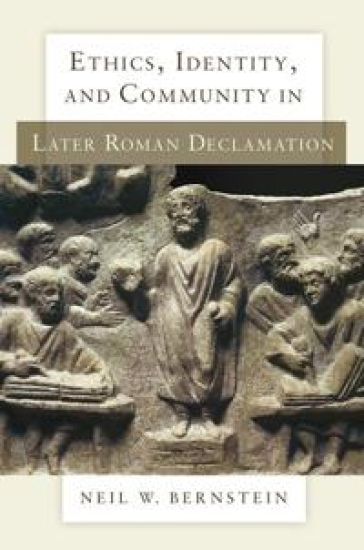
Ethics, Identity, and Community in Later Roman Declamation

Ethics, Identity, and Community in Later Roman Declamation

Neil W. Bernstein

Oxford University Press Inc
2013
sidottu
Rhetorical training was the central component of an elite Roman man's education. Controversiae (declamations), imaginary courtroom speeches in the character of a fictional or historical individual, were the most advanced exercises in the standard rhetorical curriculum. The Major Declamations is a collection of nineteen full-length Latin speeches attributed in antiquity to Quintilian but most likely composed by a group of authors in the second and third centuries CE. Though there has been a recent revival of interest in Greco-Roman declamation, the Major Declamations has generally been neglected. Ethics, Identity, and Community in Later Roman Declamation is the first book devoted exclusively to the Major Declamations and its reception in later European literature. It argues that the fictional scenarios of the Major Declamations enable the conceptual exploration of a variety of ethical and social issues. These include the construction of authority (Chapter 1), the verification of claims (Chapter 2), the conventions of reciprocity (Chapter 3), and the ethics of spectatorship (Chapter 4). Chapter 5 presents a study of the reception of the collection by the Renaissance humanist Juan Luis Vives and the eighteenth century scholar Lorenzo Patarol. A brief postscript surveys the use of declamatory exercises in the contemporary university and will inform current work in rhetorical studies.
XML Companion

XML Companion

Neil Bradley

Pearson Education (us)
2001
pokkari
Building on from the success of the second edition, this is an accessible, in-depth reference guide to XML. Apart from the core chapters on the XML standard itself, this book concentrates on related standards developed by the W3C and on the two most popular applications of this technology: document publishing and data exchange.
The North American Trajectory

The North American Trajectory

Neil Nevitte

AldineTransaction
1996
sidottu
North America is steering a new course, with the United States, Canada, and Mexico moving toward continental economic, integration. This book examines basic value changes that are' transforming economic, social, and political life in these three countries, demonstrating that they are gradually adopting an increasingly compatible cultural perspective. A narrow nationalism, dominant since the 19th century, has slowly been giving way to a more cosmopolitan sense of identity. As old economic boundaries become outmoded, a North American perspective makes greater sense. To what extent, then, do the three North American publics - I each with its own heterogeneities and tensions - share a common culture? That question can only be answered if we have some yardstick by which to measure their cultural similarity. These societies are far from identical. But data from the 1990- 1991 World Values survey, drawn from 43 societies around the world, show that on crucial topics, the core values of the American public are significantly closer to those of the Canadians and (to a somewhat lesser extent) to those of the Mexicans, than they are to those of most other peoples in the world. Furthermore, time series evidence indicates that the values of the three North American publics have been converging. This book draws on a unique body of directly comparable cross-national and cross-temporal survey evidence to show that what Americans, Canadians, and Mexicans want out of life is changing in analogous ways. These changes, coupled with sociostructural transformations, are reshaping peoples' feelings about national identity, about trusting each other, and about the balance between economic and non-economic goals. North American economic integration is being reinforced by the gradual emergence of increasingly similar cultural values.
The North American Trajectory

The North American Trajectory

Neil Nevitte

AldineTransaction
1996
nidottu
North America is steering a new course, with the United States, Canada, and Mexico moving toward continental economic, integration. This book examines basic value changes that are' transforming economic, social, and political life in these three countries, demonstrating that they are gradually adopting an increasingly compatible cultural perspective. A narrow nationalism, dominant since the 19th century, has slowly been giving way to a more cosmopolitan sense of identity. As old economic boundaries become outmoded, a North American perspective makes greater sense. To what extent, then, do the three North American publics - I each with its own heterogeneities and tensions - share a common culture? That question can only be answered if we have some yardstick by which to measure their cultural similarity. These societies are far from identical. But data from the 1990- 1991 World Values survey, drawn from 43 societies around the world, show that on crucial topics, the core values of the American public are significantly closer to those of the Canadians and (to a somewhat lesser extent) to those of the Mexicans, than they are to those of most other peoples in the world. Furthermore, time series evidence indicates that the values of the three North American publics have been converging. This book draws on a unique body of directly comparable cross-national and cross-temporal survey evidence to show that what Americans, Canadians, and Mexicans want out of life is changing in analogous ways. These changes, coupled with sociostructural transformations, are reshaping peoples' feelings about national identity, about trusting each other, and about the balance between economic and non-economic goals. North American economic integration is being reinforced by the gradual emergence of increasingly similar cultural values.
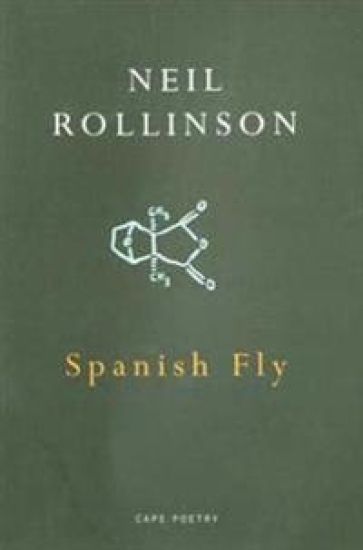
Spanish Fly

Spanish Fly

Neil Rollinson

Jonathan Cape Ltd
2001
nidottu
Continuing where he left off with A Spillage of Mercury, Neil Rollinson's eagerly awaited new collection delves again into the dark, moist, unexpected bag of human experience. Taking the themes of love, sex, and life's unpredictable mysteries and excitements, he scrapes away at the veneer of normality to reveal a world that is instantly stranger and more compelling than before.Rollinson revisits the erotic with his usual wit and bravado, in poems that are sometimes playful and sensitive, sometimes visceral and shocking. He explores scientific subjects through bedroom eyes, introducing the idea of entropy to the lovers' lexicon; he makes sport a backdrop for loneliness - his characters playing golf on the moon, taking the final penalty in the shoot-out, or wandering aimlessly and forever through the high grass of the village-cricket boundary. Diverse and provocative, vibrant and accessible, Spanish Fly is an unusually happy combination: a successful stimulant and a wholly satisfying performance.
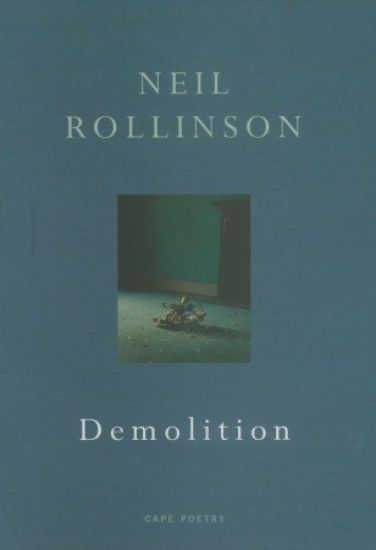
Demolition

Demolition

Neil Rollinson

Jonathan Cape Ltd
2007
nidottu
With the frank, subversive, and very funny poems in his first two books, Neil Rollinson established himself as a deft cartographer of the sensual world. While a rich and tactile eroticism still courses through Demolition, there is a new seriousness here, as mortality starts to throw its long shadow. These poems occupy a more rueful, reflective space - provisional, mercurial and fragile - a darker place where disintegration and loss are the only certainties, and memory is the only solid ground. Central to this is the death of the father - whether the poet's own, or the lost fathers of Borges or Vallejo - and the theme is broadened through a number of moving examinations of the erosion of time and youth. Against this gathering darkness, Rollinson sets a spirited defence, blending the lyric and vernacular voice in a muscular celebration of food, sex, sport and the natural world that is unusually refreshing, and sophisticated enough to allow both humour and profundity.The poems in Demolition never give up hope; they exhibit a tenacious optimism - or at least a steely pragmatism - that says: we have what we are given, there is no alternative, and we all must find what joy we can in life, and in its living.
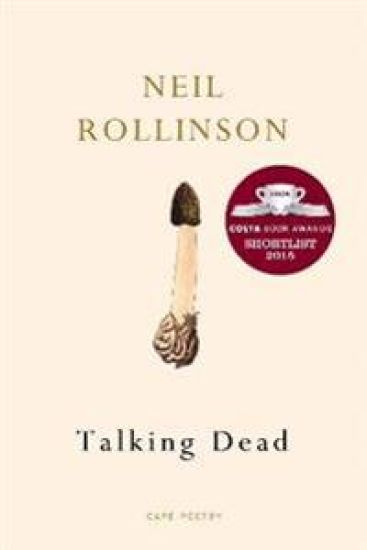
Talking Dead

Talking Dead

Neil Rollinson

Vintage Publishing
2015
nidottu
Shortlisted for the 2015 Costa Poetry PrizeLike Neil Rollinson’s earlier books, Talking Dead is a refreshment of the senses: lifting the lid on the human condition in a heartfelt celebration of the act of being, whether in moments of love or mortality, sex or feasting.In the central sequence of the book – a meditation on the space between life and death – the dead speak of their final earthly moments with a liberating sense of fascination, and a luminous awe. Elsewhere we enjoy al fresco sex, astronomy via many pints in the Cat and Fiddle, and the deliverance of an Indian monsoon after weeks of thirst and drought. In ‘Christmas in Andalucia’ two lovers Skype each other achingly across hundreds of miles – ‘I am full of loss and longing,’ the poet says, ‘the heart is hewn from elm and oak and mistletoe.’As provocative, sensual and subversive as ever, these poems seek and find the numinous in the everyday: some element of ritual or wonder that transforms experience. Although the spectre of darkness is never far away, it is the spirit of pleasure that endures, and we discover to our delight, as D. H. Lawrence did, that the Dionysian finally prevails over the Apollonian.
Edison

Edison

Neil Baldwin

University of Chicago Press
2001
nidottu
The genius of Thomas Edison is widely acknowledged, and Edison himself has become an almost mythical figure. But how much do we really know about the man who considered deriving rubber from a goldenrod plant as opposed to the genius who gave us electric light? In this text, Neil Baldwin gives a complex portrait of the inventor - both myth and man - and an account of the intellectual climate of the country he worked in and irrevocably changed.
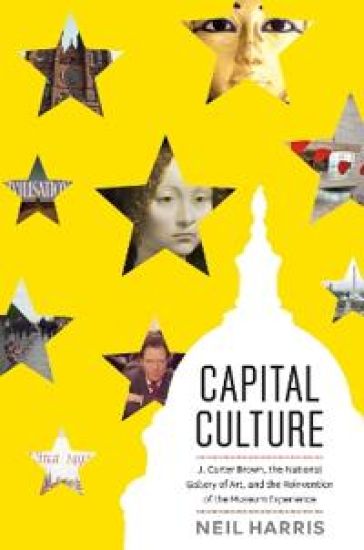
Capital Culture

Capital Culture

Neil Harris

University of Chicago Press
2013
sidottu
American art museums flourished in the late twentieth century, and the impresario leading much of this growth was J. Carter Brown, director of the National Gallery of Art in Washington, DC, from 1969 to 1992. Along with S. Dillon Ripley, who served as Smithsonian secretary for much of that time, Brown reinvented the museum experience in ways that had important consequences for the cultural life of Washington and its visitors as well as for American museums in general. In Capital Culture, distinguished historian Neil Harris provides a wide-ranging look at Brown's achievement and the growth of museum culture during this crucial period. Harris combines his in-depth knowledge of American history and culture with extensive archival research, interviewing dozens of key players to reveal how Brown's showmanship transformed the National Gallery. At the time of the Cold War, Washington itself was growing into a global destination, with Brown as its devoted booster. Harris describes Brown's major role in the birth of blockbuster exhibitions, such as the King Tut show of the late 1970s and the National Gallery's immensely successful Treasure Houses of Britain, which helped inspire similarly popular exhibitions around the country. He recounts Brown's role in the creation of the award-winning East Building by architect I. M. Pei and the subsequent renovation of the West Building. Harris also explores the politics of exhibition planning, describing Brown's courtship of corporate leaders, politicians, and international dignitaries. In this monumental book, Harris brings to life a dynamic era and exposes the creation of Brown's impressive but costly legacy, one that changed the face of American museums forever.
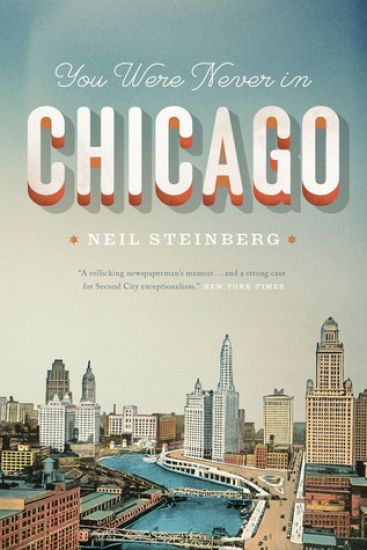
You Were Never in Chicago

You Were Never in Chicago

Neil Steinberg

University of Chicago Press
2013
nidottu
In 1952 the New Yorker published a three-part essay by A. J. Liebling in which he dubbed Chicago the "Second City." From garbage collection to the skyline, nothing escaped Liebling's withering gaze. Among the outraged responses from Chicago residents was one that Liebling described as the apotheosis of such criticism: a postcard that read, simply, "You were never in Chicago." Neil Steinberg has lived in and around Chicago for more than three decades-ever since he left his hometown of Berea, Ohio, to attend Northwestern - yet he remains fascinated by the dynamics captured in Liebling's anecdote. In You Were Never in Chicago, Steinberg weaves the story of his own coming-of-age as a young outsider who made his way into the inner circles and upper levels of Chicago journalism with a nuanced portrait of the city that would surprise even lifelong residents. Throughout, Steinberg never loses the curiosity and close observation of an outsider, while thoughtfully considering how this perspective has shaped the city, and what it really means to belong. Intimate and layered, You Were Never in Chicago will be a welcome addition to the bookshelves of all Chicagoans - be they born in the city or forever transplanted.
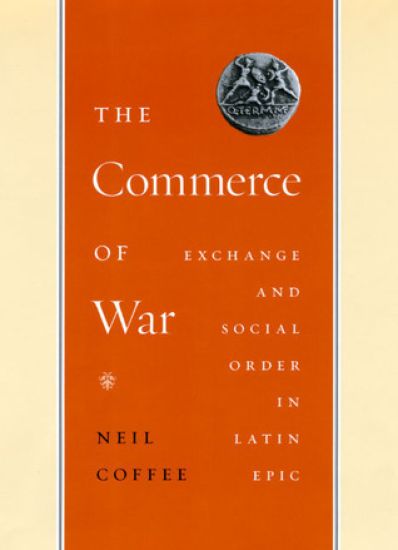
The Commerce of War

The Commerce of War

Neil Coffee

University of Chicago Press
2009
sidottu
Latin epics such as Virgil's "Aeneid", Lucan's "Civil War", and Statius' "Thebaid" addressed Roman aristocrats whose dealings in gifts, favors, and payments defined their conceptions of social order. In "The Commerce of War", Neil Coffee argues that these exchanges play a central yet overlooked role in epic depictions of Roman society. Tracing the collapse of an aristocratic worldview across all three poems, Coffee highlights the distinction they draw between reciprocal gift giving among elites and the more problematic behaviors of buying and selling. In the "Aeneid", customary gift and favor exchanges are undermined by characters who view human interaction as short-term and commodity-driven. "Civil War" takes the next logical step, illuminating how Romans cope once commercial greed has supplanted traditional values. Concluding with the "Thebaid", which focuses on the problems of excessive consumption rather than exchange, Coffee closes his powerful case that these poems constitute far-reaching critiques of Roman society during its transition from republic to empire.
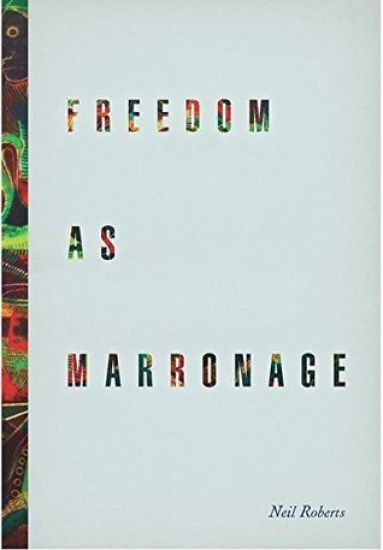
Freedom as Marronage

Freedom as Marronage

Neil Roberts

University of Chicago Press
2015
sidottu
What is the opposite of freedom? In Freedom as Marronage, Neil Roberts answers this question with definitive force: slavery. From there he unveils powerful new insights on the human condition as it has been understood between these poles. Crucial to his investigation is the concept of marronage - a form of slave escape that was an important aspect of Caribbean and Latin American slave systems. Examining this overlooked phenomenon - one of action from slavery and toward freedom - he deepens our understanding of freedom itself and the origin of our political ideals. Roberts examines the liminal and transitional space of slave escape in order to develop a theory of freedom as marronage, which contends that freedom is fundamentally located within this space-that it is a form of perpetual flight. He engages a stunning variety of writers, including Hannah Arendt, W. E. B. Du Bois, Angela Davis, Frederick Douglass, Samuel Taylor Coleridge, and the Rastafari, among others, to develop a compelling lens through which to interpret the quandaries of slavery, freedom, and politics that still confront us today. The result is a sophisticated, interdisciplinary work that unsettles the ways we think about freedom by always casting it in the light of its critical opposite.
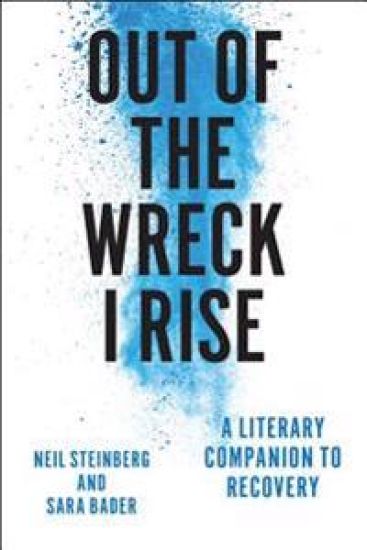
Out of the Wreck I Rise: A Literary Companion to Recovery

Out of the Wreck I Rise: A Literary Companion to Recovery

Neil Steinberg; Sara Bader

University of Chicago Press
2016
sidottu
"There's still time to change things."--Siri Hustvedt, The Blazing World Addiction is easy to fall into and hard to escape. It destroys the lives of individuals, and has a devastating cost to society. The National Institute of Health estimates seventeen million adults in the United States are alcoholics or have a serious problem with alcohol. At the same time, the country is seeing entire communities brought to their knees because of opioid additions. These scourges affect not only those who drink or use drugs but also their families and friends, who witness the horror of addiction. With Out of the Wreck I Rise, Neil Steinberg and Sara Bader have created a resource like no other--one that harnesses the power of literature, poetry, and creativity to illuminate what alcoholism and addiction are all about, while forging change, deepening understanding, and even saving lives. Structured to follow the arduous steps to sobriety, the book marshals the wisdom of centuries and explores essential topics, including the importance of time, navigating family and friends, relapse, and what Raymond Carver calls "gravy," the reward that is recovery. Each chapter begins with advice and commentary followed by a wealth of quotes to inspire and heal. The result is a mosaic of observations and encouragement that draws on writers and artists spanning thousands of years--from Seneca to David Foster Wallace, William Shakespeare to Patti Smith. The ruminations of notorious drinkers like John Cheever, Charles Bukowski, and Ernest Hemingway shed light on the difficult process of becoming sober and remind the reader that while the literary alcoholic is often romanticized, recovery is the true path of the hero. Along with traditional routes to recovery--Alcoholics Anonymous, out-patient therapy, and intensive rehabilitation programs--this literary companion offers valuable support and inspiration to anyone seeking to fight their addiction or to a struggling loved one. Featuring Charles Bukowski, John Cheever, Dante, Ricky Gervais, Ernest Hemingway, Billie Holiday, Anne Lamott, John Lennon, Haruki Murakami, Ana s Nin, Mary Oliver, Samuel Pepys, Rainer Maria Rilke, J. K. Rowling, Patti Smith, Kurt Vonnegut, and many more.