Cell Instructive Materials to Control and Guide Cell Function: Programmable Bioactive Interfaces looks at the key determinants of the dynamic interface between cell and materials and how this can be applied in developing new, bioactive biomaterials surfaces. The interface between cell and synthetic materials has attracted considerable scientific and technological interest, leading to the awareness that functional interfaces can actively guide and control specific adhesion and recognitions events.
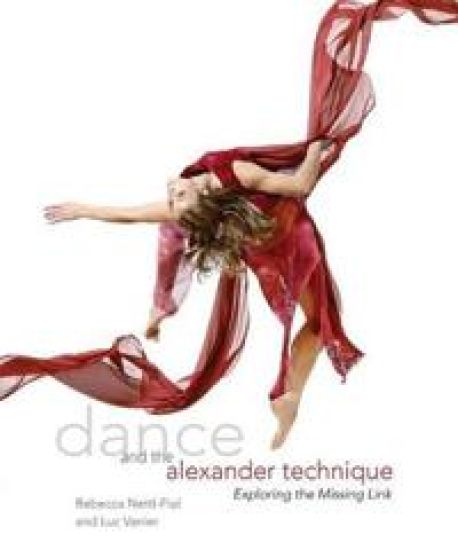
In Dance and the Alexander Technique, Rebecca Nettl-Fiol and Luc Vanier utilize their ten years of research on developmental movement and dance training to explore the relationship between a specific movement technique and the basic principles of support and coordination. The Alexander Technique, developed in the early twentieth century by F. M. Alexander, can be used to enhance dexterity in all types of activities, from everyday actions as mundane as tooth-brushing to highly demanding dance movements. Applying the tenets of this technique through the lens of a specific subset of principles called the Dart Procedures, the authors offer a unique approach for using the Alexander Technique in dance and other activities. The principles of this technique are used by people in all walks of life and have proven to be effective for enhancing performance and improving overall health and well-being. Amply illustrated and supplemented with a DVD that demonstrates the concepts and applications of the Alexander Technique, this book will be highly instrumental for dancers, teachers of dance, and anyone interested in giving everyday movements more efficiency, dexterity, and elegance.
Known affectionately as "The Red Book," Bruno Nettl's The Study of Ethnomusicology became a classic upon its original publication in 1983. Scholars and students alike have hailed it not just for its insights but for a disarming, witty style able to engage and entertain even casual readers while providing essential grounding in the field. In this third edition, Nettl revises the text throughout, adding new chapters and discussions that take into account recent developments across the field and reflecting on how his thinking has changed or even reversed itself during his sixty-year career. An updated bibliography rounds out the volume. A classroom perennial and a must-have for any scholar's bookshelf, the third edition of The Study of Ethnomusicology introduces Nettl's thought to a new generation.
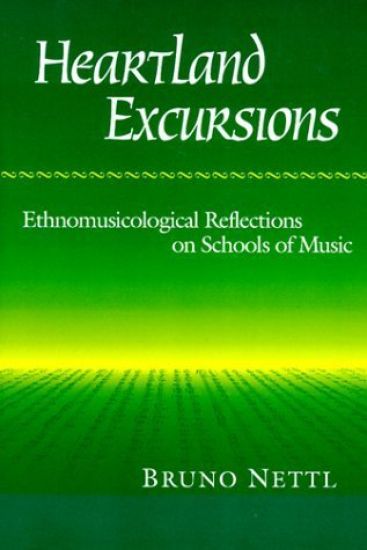
In Heartland Excursions, a legendary ethnomusicologist takes the reader along for a delightful, wide-ranging tour of his workplace. Bruno Nettl provides an insightful, sometimes tongue-in-cheek, always pithy ethnography of midwestern university schools of music from a different perspective in each of four chapters, alternating among three distinct voices: the longtime professor, the "native informant," and the outside observer, an "ethnomusicologist from Mars." If you've ever been to a concert or been connected to a university with a school of music, you ll discover yourself--or someone you know--in these pages. "In the music building you can't tell the quick from the dead without a program."--Chapter 1, "In the Service of the Masters" "The great ability of a violin student whom I observed was established when his dean was persuaded to accompany him."--Chapter 2, "Society of Musicians" "Some teachers of music history would accuse students who listen to Elvis Presley not only of taking time away from hearing Brahms, but also of polluting themselves."--Chapter 3, "A Place for All Musics?" At commencement, the graduates "were perhaps not aware that they had just participated in an event in which the principal values of the Western musical world . . . had been taken out of storage bins for annual exercise."--Chapter 4, "Forays into the Repertory"
In Dance and the Alexander Technique, Rebecca Nettl-Fiol and Luc Vanier utilize their ten years of research on developmental movement and dance training to explore the relationship between a specific movement technique and the basic principles of support and coordination. The Alexander Technique, developed in the early twentieth century by F. M. Alexander, can be used to enhance dexterity in all types of activities, from everyday actions as mundane as tooth-brushing to highly demanding dance movements. Applying the tenets of this technique through the lens of a specific subset of principles called the Dart Procedures, the authors offer a unique approach for using the Alexander Technique in dance and other activities. The principles of this technique are used by people in all walks of life and have proven to be effective for enhancing performance and improving overall health and well-being. Amply illustrated and supplemented with a DVD that demonstrates the concepts and applications of the Alexander Technique, this book will be highly instrumental for dancers, teachers of dance, and anyone interested in giving everyday movements more efficiency, dexterity, and elegance.
Known affectionately as "The Red Book," Bruno Nettl's The Study of Ethnomusicology became a classic upon its original publication in 1983. Scholars and students alike have hailed it not just for its insights but for a disarming, witty style able to engage and entertain even casual readers while providing essential grounding in the field. In this third edition, Nettl revises the text throughout, adding new chapters and discussions that take into account recent developments across the field and reflecting on how his thinking has changed or even reversed itself during his sixty-year career. An updated bibliography rounds out the volume. A classroom perennial and a must-have for any scholar's bookshelf, the third edition of The Study of Ethnomusicology introduces Nettl's thought to a new generation.
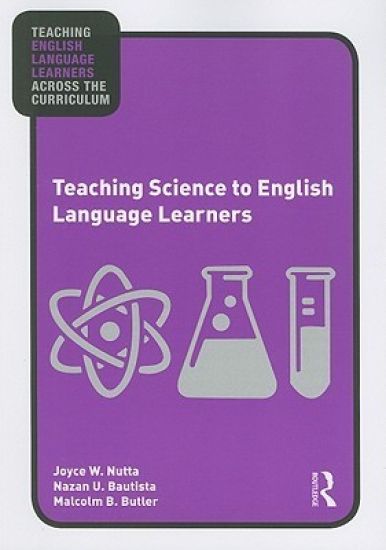
Books in the Teaching English Language Learners (ELLs) across the Curriculum Series are written specifically for pre- and in- service teachers who may not have been trained in ELL techniques, but still find themselves facing the realities and challenges of today's diverse classrooms and learners. Each book provides simple and straightforward advice on how to teach ELLs through a given subject area, and how to teach content to ELLs who are at different levels of English language proficiency than the rest of their class. Authored by both language and content area specialists, each volume arms readers with practical, teacher-friendly strategies, and subject-specific techniques. Teaching Science to English Language Learners offers science teachers and teacher educators a straightforward approach for engaging ELLs learning science, offering examples of easy ways to adapt existing lesson plans to be more inclusive. The practical, teacher-friendly strategies and techniques included here are proven effective with ELLs, and many are also effective with all students. The book provides context-specific strategies for the full range of the secondary sciences curriculum, including physical science, life science, earth and space science, science as inquiry, and history and nature of science and more. A fully annotated list of web and print resources completes the book, making this a one volume reference to help science teachers meet the challenges of including all learners in effective instruction.Special features: practical examples of science exercises make applying theory to practice simple when teaching science to ELLsan overview of the National Science Education Standards offers useful guidelines for effective instructional and assessment practices for ELLs in secondary gradesgraphs, tables, and illustrations provide additional access points to the text in clear, meaningful ways.
Books in the Teaching English Language Learners (ELLs) across the Curriculum Series are written specifically for pre- and in- service teachers who may not have been trained in ELL techniques, but still find themselves facing the realities and challenges of today's diverse classrooms and learners. Each book provides simple and straightforward advice on how to teach ELLs through a given subject area, and how to teach content to ELLs who are at different levels of English language proficiency than the rest of their class. Authored by both language and content area specialists, each volume arms readers with practical, teacher-friendly strategies, and subject-specific techniques. Teaching Science to English Language Learners offers science teachers and teacher educators a straightforward approach for engaging ELLs learning science, offering examples of easy ways to adapt existing lesson plans to be more inclusive. The practical, teacher-friendly strategies and techniques included here are proven effective with ELLs, and many are also effective with all students. The book provides context-specific strategies for the full range of the secondary sciences curriculum, including physical science, life science, earth and space science, science as inquiry, and history and nature of science and more. A fully annotated list of web and print resources completes the book, making this a one volume reference to help science teachers meet the challenges of including all learners in effective instruction.Special features: practical examples of science exercises make applying theory to practice simple when teaching science to ELLsan overview of the National Science Education Standards offers useful guidelines for effective instructional and assessment practices for ELLs in secondary gradesgraphs, tables, and illustrations provide additional access points to the text in clear, meaningful ways.
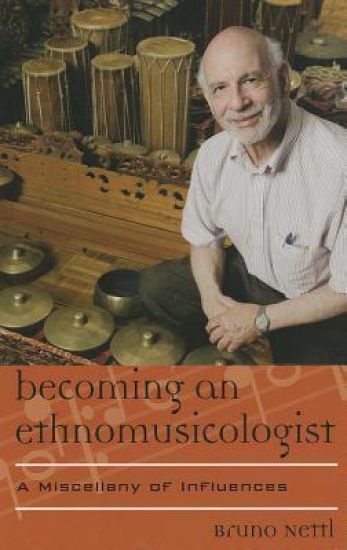
Becoming an Ethnomusicologist centers on the life and education of the author, Bruno Nettl, a well-known ethnomusicologist. Focusing on eleven individuals who influenced him significantly, it follows their roles through his career from his childhood in Czechoslovakia and his family's forced departure in 1939 to his education in the United States and career as a scholar. These essays contribute to an understanding of the life of Jewish and German minorities in Bohemia through the first half of the 20th century, of pre-World War II Prague, of the experience of intellectual and academic refugees in the United States during and after World War II, and of the early development of ethnomusicology as a field of study. This work opens with the author's exploration of the careers of his father, the well-known music historian Paul Nettl, and his mother, Gertrud Nettl, a pianist and piano teacher. From his boyhood in Prague, Nettl provides insights into his own evolution as a musicologist.He discusses the rise of the discipline of ethnomusicology, from the studies of Native American music by his mentor George Herzog to the work of linguist C. F. Voegelin and folklorist Stith Thompson.He also looks back on the contribution and input of his principal consultants in his fieldwork on Native American, Iranian, and Indian music. These essays contribute significantly to the history of musicology, containing the longest--to date--treatments of the contributions of the distinguished scholars Paul Nettl and George Herzog. This work will interest students and scholars of immigration history, Native American culture, and the history of ethnomusicology itself.
Folding a River, a collection of elegies, shows a pleasing range of free-verse forms that develop themes sustained throughout: loss, exile, myth, landscape. Kawita Kandpal's poems are explorations of East-West cultures, taking her into an emo-mythic place not to be found on any map. Kandpal's mood in Folding a River is melancholy, articulated with intelligence and grace, and her phrasing can rise to the level of proverb: "This time next year you will have evolved into an idea." In its personal evocations of geographical and linguistic exile from the subcontinent, centered on a lost father, her work recalls that of Li-Young Lee, yet with a feminine perspective often haunting in its own right: "tenderly / taking back the mistakes of men."
Francois Catroux is an innovator and explorer in interior design, who has always been a master of contemporary style. From his early days as a design prodigy, creating space-age boutiques for a house of couture and apartments that drew from Art Deco and modern design, to chic, mirror-studded interiors rich with glamour and elegant refinement in residences in Hong Kong, New York, and London, Catroux is at home in the vast world of design. His spaces may surprise with the introduction of irregular elements a chandelier of elk horn or pink florescent lighting in a hallway but Catroux s hallmark sensibility combines the majesty and grandeur of high ceilings, elegant moldings, and gossamer draperies with elements that suggest comfort and tasteful, restrained opulence. Go-to accoutrements include sumptuous sofas, rich carpeting, gentle lighting, rooms lined with books, and ship staterooms in warm wood panelling with brass lamps, all measured according to a modern eye. This book looks at Catroux s career chronologically, featuring his first projects in 1968 through his latest, completed only this year, and includes the interiors of houses and apartments around the globe, from Paris to New York, Hong Kong to Los Angeles. Luxuriously photographed, this volume is more than just a design monograph on one of the great, and so far relatively untold, careers in the history of design it is also a lively and intimate read about a life lived in great style.
Known and celebrated for many of the apartment buildings on Park Avenue, Fifth Avenue, and in Sutton Place 82 in NYC, including the storied 740 Park, sometimes called the richest and most powerful address in New York and whose famous residents included John D. Rockefeller Jr. Candela s work is at once timeless and profoundly of its time. Classical in styling and even modest on the exterior, it is on the insides, in the apartment interiors, the floorplans, the extraordinary and frequently luxurious arrangements of rooms and space, where his designs set a standard that serves as a benchmark and aspirational goal of taste and refinement. The authors explore these seminal spaces through the lens of exteriors and urbanism, planning and interior architecture, and the circumstances and stories of creation. Lavish and comprehensive black-and-white vintage photography as well as color imagery of the exteriors, original plans, and a collection of exceptional interior views give historical perspective (including a seductive Slim Aarons' Park Avenue streetscape) and contemporary sizzle (as seen in Derry Moore s depiction of K. K. Auchincloss s penthouse at 1040 Fifth). The story told is of a genius designer who gave form to the New York of his dreams.