Kirjojen hintavertailu. Mukana 12 016 292 kirjaa ja 12 kauppaa.

Kirjahaku

Etsi kirjoja tekijän nimen, kirjan nimen tai ISBN:n perusteella.

1000 tulosta hakusanalla Notes Magiques

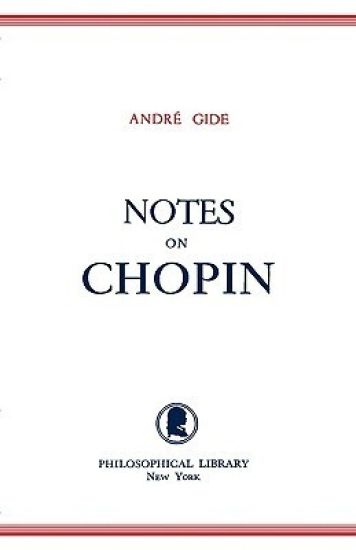
Notes on Chopin

Notes on Chopin

Andre Gide

Philosophical Library
1978
pokkari
An inspiring discourse on the power of music from one of the twentieth century's most important figures, Andr Gide Andr Gide, one of the great intellectuals of the twentieth century and a devoted pianist, invites readers to reevaluate Fr d ric Chopin as a composer "betrayed . . . deeply, intimately, totally violated" by a music community that had fundamentally misinterpreted his work. As a profound admirer of Chopin's "promenade of discoveries," Gide intersperses musical notation throughout the text to illuminate his arguments, but most moving is Gide's own poetic expression for the music he so loved.
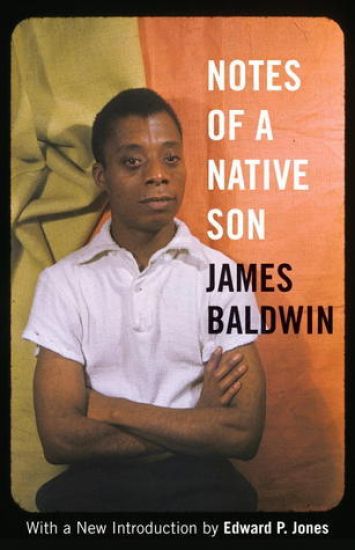
Notes of a Native Son

Notes of a Native Son

James Baldwin

Beacon Press
2012
sidottu
In an age of Black Lives Matter, James Baldwin's essays on life in Harlem, the protest novel, movies, and African Americans abroad are as powerful today as when they were first written. With documentaries like I Am Not Your Negro bringing renewed interest to Baldwin's life and work, Notes of a Native Son serves as a valuable introduction. Written during the 1940s and early 1950s, when Baldwin was only in his twenties, the essays collected in Notes of a Native Son capture a view of black life and black thought at the dawn of the civil rights movement and as the movement slowly gained strength through the words of one of the most captivating essayists and foremost intellectuals of that era. Writing as an artist, activist, and social critic, Baldwin probes the complex condition of being black in America. With a keen eye, he examines everything from the significance of the protest novel to the motives and circumstances of the many black expatriates of the time, from his home in -The Harlem Ghetto- to a sobering -Journey to Atlanta.- Notes of a Native Son inaugurated Baldwin as one of the leading interpreters of the dramatic social changes erupting in the United States in the twentieth century, and many of his observations have proven almost prophetic. His criticism on topics such as the paternalism of white progressives or on his own friend Richard Wright's work is pointed and unabashed. He was also one of the few writing on race at the time who addressed the issue with a powerful mixture of outrage at the gross physical and political violence against black citizens and measured understanding of their oppressors, which helped awaken a white audience to the injustices under their noses. Naturally, this combination of brazen criticism and unconventional empathy for white readers won Baldwin as much condemnation as praise. Notes is the book that established Baldwin's voice as a social critic, and it remains one of his most admired works. The essays collected here create a cohesive sketch of black America and reveal an intimate portrait of Baldwin's own search for identity as an artist, as a black man, and as an American.
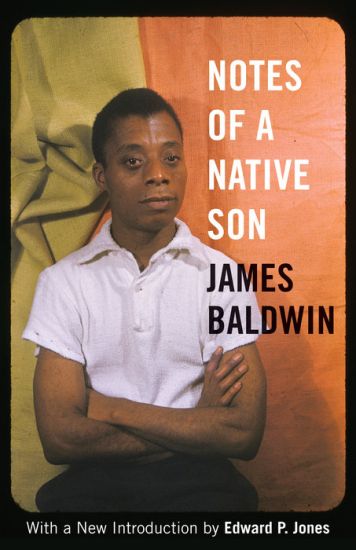
Notes of a Native Son

Notes of a Native Son

James Baldwin; Edward P. Jones

Beacon Press
2012
pokkari
#26 on The Guardian's list of 100 best nonfiction books of all time, the essays explore what it means to be Black in America In an age of Black Lives Matter, James Baldwin's essays on life in Harlem, the protest novel, movies, and African Americans abroad are as powerful today as when they were first written. With films like I Am Not Your Negro and the forthcoming If Beale Street Could Talk bringing renewed interest to Baldwin's life and work, Notes of a Native Son serves as a valuable introduction.Written during the 1940s and early 1950s, when Baldwin was only in his twenties, the essays collected in Notes of a Native Son capture a view of black life and black thought at the dawn of the civil rights movement and as the movement slowly gained strength through the words of one of the most captivating essayists and foremost intellectuals of that era. Writing as an artist, activist, and social critic, Baldwin probes the complex condition of being black in America. With a keen eye, he examines everything from the significance of the protest novel to the motives and circumstances of the many black expatriates of the time, from his home in "The Harlem Ghetto" to a sobering "Journey to Atlanta." Notes of a Native Son inaugurated Baldwin as one of the leading interpreters of the dramatic social changes erupting in the United States in the twentieth century, and many of his observations have proven almost prophetic. His criticism on topics such as the paternalism of white progressives or on his own friend Richard Wright's work is pointed and unabashed. He was also one of the few writing on race at the time who addressed the issue with a powerful mixture of outrage at the gross physical and political violence against black citizens and measured understanding of their oppressors, which helped awaken a white audience to the injustices under their noses. Naturally, this combination of brazen criticism and unconventional empathy for white readers won Baldwin as much condemnation as praise. Notes is the book that established Baldwin's voice as a social critic, and it remains one of his most admired works. The essays collected here create a cohesive sketch of black America and reveal an intimate portrait of Baldwin's own search for identity as an artist, as a black man, and as an American.
Notes of a Native Son

Notes of a Native Son

James Baldwin; Edward P. Jones

BEACON PRESS
2025
sidottu
A deluxe hardcover edition of one of James Baldwin's most admired works, exploring what it means to be Black in America and his own search for identity Part of the Beacon Classics series Originally published in 1955, James Baldwin's timeless and moving essays on life in Harlem, the protest novel, movies, and African Americans abroad inaugurated him as one of the leading interpreters of the dramatic social changes erupting in the United States in the 20th century. Through a mix of autobiographical and analytical essays, Baldwin delivers honest and raw revelations about what it means to be Black in America, specifically pre-Civil Rights Movement, and how, he himself, came to understand the nation. Writing as an artist, activist, and social critic, Baldwin examines everything from the significance of the protest novel to the motives and circumstances of the many Black expatriates of the time, from his home in "The Harlem Ghetto" to a sobering "Journey to Atlanta." He was one of the few writing on race at the time who addressed the issue with a powerful mixture of outrage at the gross physical and political violence against Black citizens and measured understanding of their oppressors, which helped awaken a white audience to the injustices under their noses. For fans of Baldwin's well-known works or those new to Baldwin altogether, this celebrated essay collection showcases his extraordinary writing, revolutionary analyses, and prophetic insight into American culture and politics.
Notes from the Divided Country

Notes from the Divided Country

Suji Kwock Kim

Louisiana State University Press
2003
nidottu
In her first collection, Suji Kwock Kim confronts a number of difficult subjects- colonialism, the Korean War, emigration, racism, and love. She considers what a homeland would be for a divided nation and a divided self: what it means to enter language, the body, the family, the community; to be a daughter, sister, lover, citizen, or exile.In settings from New York to San Francisco, from Scotland to Seoul, her poems question ""what threads hold / our lives together"" in cities and gardens, battlefields and small towns. Across the no-man's-land between every ""you"" and ""I,"" her speakers encounter, quarrel with, or honor others, traveling between the living and the dead, between horror over the disastrous events of the past and hope for the future. Drawing upon a wide range of voices, styles, and perspectives, Notes from the Divided Country bears witness to the vanishing world.
Notes on the State of Virginia

Notes on the State of Virginia

The University of North Carolina Press
1996
nidottu
This American classic is the only full-length book written and published by Thomas Jefferson during his lifetime. Written in 1781, Notes on the State of Virginia was begun by Jefferson as a commentary on the resources and institutions of his home state, but the work's lasting value lies in its delineation of Jefferson's major philosophical, political, scientific, and ethical beliefs. Along with his accounts of such factual matters as North American flora and fauna, Jefferson expounds his views on slavery, education, religious freedom, representative government, and the separation of church and state. The book is the best single statement of Jefferson's principles and the best reflection of his wide-ranging tastes and talents. This edition, meticulously edited by William Peden, was originally published by the University of North Carolina Press in 1955. |The first edition of this compendium of place names in North Carolina appeared to wide acclaim in 1968 and has remained an essential reference for anyone with a serious interest in the Tar Heel State, from historians to journalists, from creative writers to urban planners, from backpackers to armchair travelers. This revised and expanded edition adds approximately 1,200 new entries, bringing to nearly 21,000 the number of North Carolina cities, towns, crossroads, waterways, mountains, and other places identified here.
Notes from a Sealed Room

Notes from a Sealed Room

Southern Illinois University Press
2004
sidottu
In this compelling and often startling account, Robert Werman chronicles his experiences as an Israeli citizen living in Jerusalem during the Gulf War. On January 19, 1991, he began writing daily reports on his computer, sending them to friends and a few computer networks that dealt with Jewish culture and the politics of the Middle East. To Werman s surprise, he received numerous electronic responses to his entries, sometimes as many as one hundred a day. As a result, his "war diary" was born, a diary that he continued until February 22, 1991, when, near the end of the war, he was hospitalized for a heart condition.In the early entries, Werman notes each Iraqi Scud attack, describing in detail the sealed room in which he and his family sought shelter during the expected chemical attacks. "Sitting in the antigas room, members of the family try to put on a brave face, make jokes. . . . Only the dog, a rather stately collie, sits quietly and does not appear at all excited. We pity the dog, for he is the only one without a mask. But then we remember thatwithout a maskhe is our canary in the coal mine." Futilely, Werman seeks patterns to the attacks, attempting to predict when they might occur. He writes of the nation s response to war: joggers running with their gas masks in hand, schools temporarily disbanded while children meet in small groups to continue their education, city streets emptied by six o'clock each evening as people wait in their homes for the sound of the sirens that herald an assault. He discusses the varying opinions concerning retaliation against Iraq, the fluctuating morale of the country, the damage produced by Iraqi missiles, and the widespread speculation of Israeli citizens concerning their country s survival. Yet Werman s daily reports, digressions, and explanations not only include his observations and impressions; they also poignantly reveal his own personal story and political, religious, and philosophical views.Werman s journal gives a singular view of a country under siege, recounting in detail the pressures, conflicts, and dangers existing duringa war. It is a distinctive book, a fascinating personal and political account of a man, his family, their nation, and a war."
Notes on the Heart

Notes on the Heart

Southern Illinois University Press
1996
nidottu
This study investigates how effective elements - defined here as emotion, motivation, beliefs, attitudes and intuition - influence teachers an students in the writing classroom. The author follows students through a semester of writing projects, examining these affective elements.
Notes and Comments on Robert's Rules, Fourth Edition

Notes and Comments on Robert's Rules, Fourth Edition

James Slaughter; James Ragsdale; Jon Ericson

Southern Illinois University Press
2012
nidottu
While Robert's Rules of Order has long been the standard guide to parliamentary procedure, many readers find the manual too daunting and complex to utilize its full potential. In Notes and Comments on "Robert's Rules", fourth edition, authors Jim Slaughter, Gaut Ragsdale, and Jon Ericson skillfully guide users through the intricate pathways of the latest edition of Robert's Rules, transforming the often intimidating parliamentary guidebook into an easy-to-use tool. Notes and Comments explains in simple terms the individual motions found in Robert's Rules, presents extensive tips and suggestions regarding possible modifications to Robert's practices; allows readers to witness the vigorous debate about the rules within the notes section; and compares major parliamentary authorities. A reader-friendly question-and-answer format provides immediate solutions to the most common quandaries that arise during the meeting process, and a card featuring simplified charts of parliamentary motions is available for the user's quick reference.An essential volume for members of nonprofits, voluntary associations, unions, condo and homeowner associations, student organizations, and government bodies, Notes and Comments on "Robert's Rules" makes parliamentary procedure accessible to meeting participants as never before. Each section of this authoritative, straightforward guide is designed to empower participants with the confidence and knowledge necessary to navigate any meeting, large or small, with the utmost efficiency. 2013 Winner of the Phifer Award from the National Communication Association
Notes of a Provincial Wildfowler

Notes of a Provincial Wildfowler

Sergei Aksakov

Northwestern University Press
1998
sidottu
This text presents a detailed study of birding in 19th-century Russia. It is a guide to the bird species of Russia, combining a naturalist's sensibility with literary skills, looking at behaviour, life-cycles and lyrical discourses on habitats that comprise the Russian Steppe.
Notes of a Provincial Wildfowler

Notes of a Provincial Wildfowler

Sergei Aksakov

Northwestern University Press
2012
nidottu
Notes of a Provincial Wildfowler is filled with precise descriptions of bird behaviour, observations of their life cycles, and lyrical discourses on the habitats of the Russian steppe. Aksakov's nostalgic fondness for his homeland permeates his Notes, and his passion for the habits of his subjects provides a stark contrast with his enthusiasm for the shooting - and eating - of his quarry.
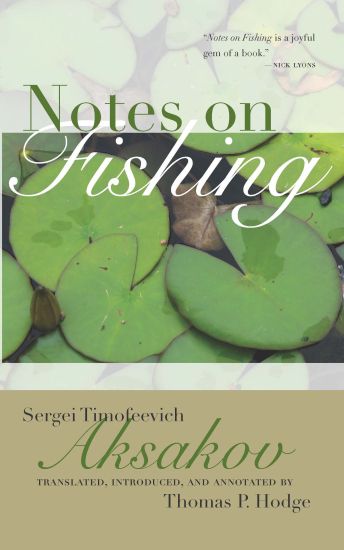
Notes on Fishing

Notes on Fishing

Sergei Aksakov

Northwestern University Press
2012
nidottu
Notes on Fishing was Sergei Aksakov's first book and Russia's first angling treatise. It presents a Russian gentleman's observations on the fishing tackle, angling techniques, and fish species he came to know during five decades of adventure-filled fishing in the vast Russian steppe and the environs of Moscow. But it is goes beyond a mere discourse on angling, offering philosophical, literary, linguistic, ethnographic, biological, and conservationist observations. Aksakov has imbued his notes with a deep fondness for the land and an expertly conveyed atmosphere of personal and national nostalgia.
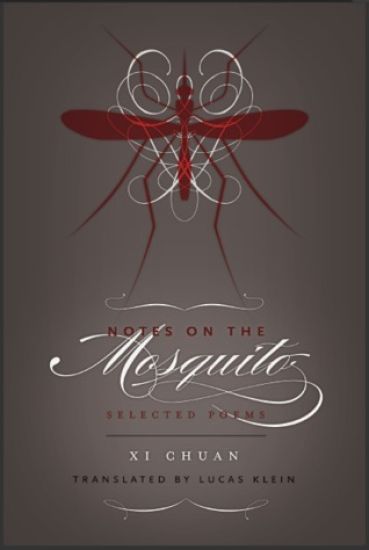
Notes on the Mosquito

Notes on the Mosquito

Xi Chuan; Lucas (TRN) Klein

New Directions Publishing Corporation
2012
pokkari
In the crevices of history, mosquitoes are everywhere, Xi Chuan writes. Notes on the Mosquito introduces English readers to one of the most revered poets of contemporary China. Gaining recognition as a post-Misty poet in the late 80s, Xi Chuan was famous for his condensed, numinous lyricism, and for radiating classical Chinese influences as much as Western modernist traditions. After the crushing failure of Tiananmen Square and the death of two of his closest friends, he stopped writing for three years. He re-emerged transformed: he began writing meditative, expansive prose poems that dismantled the aestheticism and musicality of his previous self. Divided into two sections that hinge around this formal break, Notes on the Mosquito offers the greatest hits of a deeply engaging poet, whose work intertwines the mountains and roads of Xinjiang with insects and mythical beasts, ghosts and sacred spirits with chess and a Sanskrit inscription.