Kirjojen hintavertailu. Mukana 12 091 791 kirjaa ja 12 kauppaa.

Kirjahaku

Etsi kirjoja tekijän nimen, kirjan nimen tai ISBN:n perusteella.

1000 tulosta hakusanalla Pamela Gradon

Pulling the Devil's Kingdom Down

Pulling the Devil's Kingdom Down

Pamela J. Walker

University of California Press
2001
sidottu
Those people in uniforms who ring bells and raise money for the poor during the holiday season belong to a religious movement that in 1865 combined early feminism, street preaching, holiness theology, and intentionally outrageous singing into what soon became the Salvation Army. In "Pulling the Devil's Kingdom Down", Pamela Walker emphasizes how thoroughly the Army entered into nineteenth-century urban life. She follows the movement from its Methodist roots and East London origins through its struggles with the established denominations of England, problems with the law and the media, and public manifestations that included street brawls with working-class toughs. The Salvation Army was a neighborhood religion, with a 'battle plan' especially suited to urban working-class geography and cultural life. The ability to use popular leisure activities as inspiration was a major factor in the Army's success, since pubs, music halls, sports, and betting were regarded as its principal rivals. Salvationist women claimed the 'right to preach' and enjoyed spiritual authority and public visibility more extensively than in virtually any other religious or secular organization. Opposition to the new movement was equally energetic and took many forms, but even as contemporary music hall performers ridiculed the 'Hallelujah Lasses,' the Salvation Army was spreading across Great Britain and the Continent, and on to North America. The Army offered a distinctive response to the dilemmas facing Victorian Christians, in particular the relationship between what Salvationists believed and the work they did. Walker fills in the social, cultural, and religious contexts that make that relationship come to life.
A Translucent Mirror

A Translucent Mirror

Pamela Kyle Crossley

University of California Press
2002
pokkari
In this landmark exploration of the origins of nationalism and cultural identity in China, Pamela Kyle Crossley traces the ways in which a large, early modern empire of Eurasia, the Qing (1636-1912), incorporated neighboring, but disparate, political traditions into a new style of emperorship. Drawing on a wide variety of primary sources, including Manchu, Korean, and Chinese archival materials, Crossley argues that distortions introduced in seventeenth- and eighteenth-century historical records have blinded scholars to the actual course of events in the early years of the dynasty. This groundbreaking study examines the relationship between the increasingly abstract ideology of the centralizing emperorship of the Qing and the establishment of concepts of identity in the seventeenth and eighteenth centuries, before the advent of nationalism in China. Concluding with a broad-ranging postscript on the implications of her research for studies of nationalism and nation-building throughout modern Chinese history, A Translucent Mirror combines a readable narrative with a sophisticated, revisionary look at China's history. Crossley's book will alter current understandings of the Qing emperorship, the evolution of concepts of ethnicity, and the legacy of Qing rule for modern Chinese nationalism.
Spirits of Protestantism

Spirits of Protestantism

Pamela E. Klassen

University of California Press
2011
sidottu
"Spirits of Protestantism" reveals how liberal Protestants went from being early-twentieth-century medical missionaries seeking to convert others through science and scripture, to becoming vocal critics of missionary arrogance who experimented with non-western healing modes such as Yoga and Reiki. Drawing on archival and ethnographic sources, Pamela E. Klassen shows how and why the very notion of healing within North America has been infused with a Protestant "supernatural liberalism." In the course of coming to their changing vision of healing, liberal Protestants became pioneers three times over: in the struggle against the cultural and medical pathologizing of homosexuality; in the critique of Christian missionary triumphalism; and, in the diffusion of an ever-more ubiquitous anthropology of "body, mind, and spirit." At a time when the political and anthropological significance of Christianity is being hotly debated, "Spirits of Protestantism" forcefully argues for a reconsideration of the historical legacies and cultural effects of liberal Protestantism, even for the anthropology of religion itself.
Opting Out?

Opting Out?

Pamela Stone

University of California Press
2007
pokkari
Noting a phenomenon that might seem to recall a previous era, "The New York Times Magazine" recently portrayed women who leave their careers in order to become full-time mothers as "opting out." But, are high-achieving professional women really choosing to abandon their careers in order to return home? This provocative study is the first to tackle this issue from the perspective of the women themselves.Based on a series of candid, in-depth interviews with women who returned home after working as doctors, lawyers, bankers, scientists, and other professions, Pamela Stone explores the role that their husbands, children, and coworkers play in their decision; how women's efforts to construct new lives and new identities unfold once they are home; and where their aspirations and plans for the future lie. What we learn - contrary to many media perceptions - is that these high-flying women are not opting out but are instead being pushed out of the workplace. Drawing on their experiences, Stone outlines concrete ideas for redesigning workplaces to make it easier for women - and men - to attain their goal of living rewarding lives that combine both families and careers.
Spirits of Protestantism

Spirits of Protestantism

Pamela E. Klassen

University of California Press
2011
pokkari
"Spirits of Protestantism" reveals how liberal Protestants went from being early-twentieth-century medical missionaries seeking to convert others through science and scripture, to becoming vocal critics of missionary arrogance who experimented with non-western healing modes such as Yoga and Reiki. Drawing on archival and ethnographic sources, Pamela E. Klassen shows how and why the very notion of healing within North America has been infused with a Protestant "supernatural liberalism." In the course of coming to their changing vision of healing, liberal Protestants became pioneers three times over: in the struggle against the cultural and medical pathologizing of homosexuality; in the critique of Christian missionary triumphalism; and, in the diffusion of an ever-more ubiquitous anthropology of "body, mind, and spirit." At a time when the political and anthropological significance of Christianity is being hotly debated, "Spirits of Protestantism" forcefully argues for a reconsideration of the historical legacies and cultural effects of liberal Protestantism, even for the anthropology of religion itself.
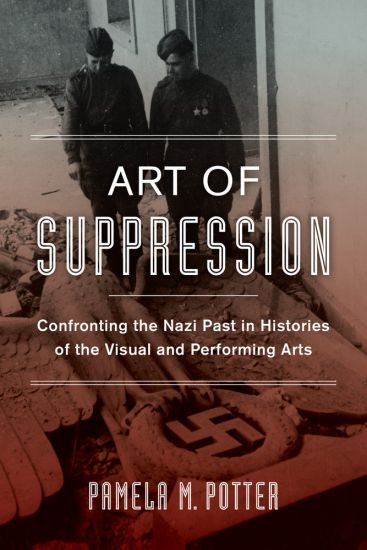
Art of Suppression

Art of Suppression

Pamela M. Potter

University of California Press
2016
sidottu
This provocative study asks why we have held on to vivid images of the Nazis' total control of the visual and performing arts, even though research has shown that many artists and their works thrived under Hitler. To answer this question, Pamela M. Potter investigates how historians since 1945 have written about music, art, architecture, theater, film, and dance in Nazi Germany and how their accounts have been colored by politics of the Cold War, the fall of communism, and the wish to preserve the idea that true art and politics cannot mix. Potter maintains that although the persecution of Jewish artists and other "enemies of the state" was a high priority for the Third Reich, removing them from German cultural life did not eradicate their artistic legacies. Art of Suppression examines the cultural histories of Nazi Germany to help us understand how the circumstances of exile, the Allied occupation, the Cold War, and the complex meanings of modernism have sustained a distorted and problematic characterization of cultural life during the Third Reich.
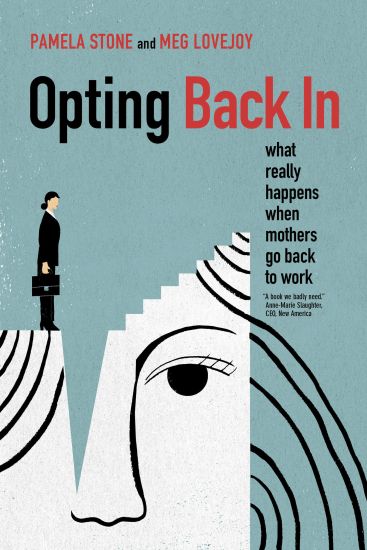
Opting Back In

Opting Back In

Pamela Stone; Meg Lovejoy

University of California Press
2019
sidottu
Taking a career break is a conflicted and risky decision for high-achieving professional women. Yet many do so, usually planning, even as they quit, to return to work eventually. But can they? And if so, how? In Opting Back In, Pamela Stone and Meg Lovejoy revisit women first interviewed a decade earlier in Stone’s book Opting Out? Why Women Really Quit Careers and Head Home to answer these questions. In frank and intimate accounts, women lay bare the dilemmas they face upon reentry. Most succeed but not by returning to their former high-paying, still family-inhospitable jobs. Instead, women strike out in new directions, finding personally gratifying but lower-paid jobs in the gig economy or predominantly female nonprofit sector. Opting Back In uncovers a paradox of privilege by which the very women best positioned to achieve leadership and close gender gaps use strategies to resume their careers that inadvertently reinforce gender inequality. The authors advocate gender equitable policies that will allow women—and all parents—to combine the intense demands of work and family life in the twenty-first century.
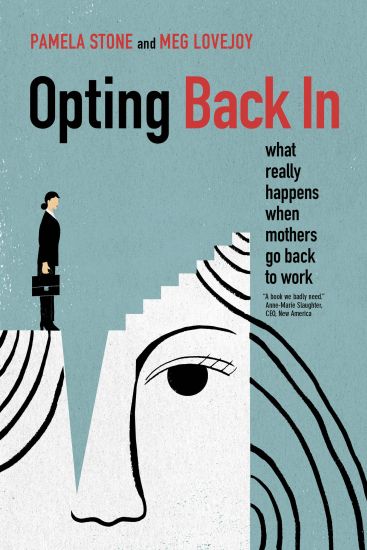
Opting Back In

Opting Back In

Pamela Stone; Meg Lovejoy

University of California Press
2021
pokkari
Taking a career break is a conflicted and risky decision for high-achieving professional women. Yet many do so, usually planning, even as they quit, to return to work eventually. But can they? And if so, how? In Opting Back In, Pamela Stone and Meg Lovejoy revisit women first interviewed a decade earlier in Stone’s book Opting Out? Why Women Really Quit Careers and Head Home to answer these questions. In frank and intimate accounts, women lay bare the dilemmas they face upon reentry. Most succeed but not by returning to their former high-paying, still family-inhospitable jobs. Instead, women strike out in new directions, finding personally gratifying but lower-paid jobs in the gig economy or predominantly female nonprofit sector. Opting Back In uncovers a paradox of privilege by which the very women best positioned to achieve leadership and close gender gaps use strategies to resume their careers that inadvertently reinforce gender inequality. The authors advocate gender equitable policies that will allow women—and all parents—to combine the intense demands of work and family life in the twenty-first century.
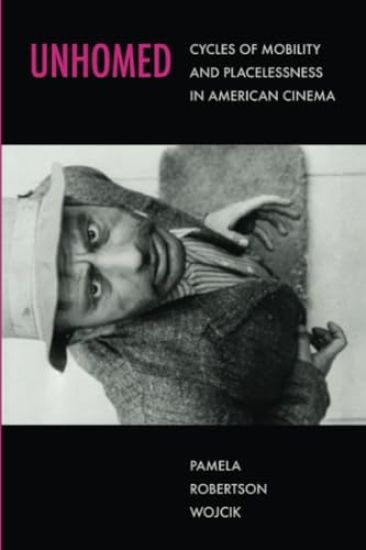
Unhomed

Unhomed

Pamela Robertson Wojcik

University of California Press
2024
sidottu
In this rich cultural history, Pamela Roberston Wojcik examines America's ambivalent and shifting attitude toward homelessness. She considers film cycles from five distinct historical moments that show characters who are unhomed and placeless, mobile rather than fixed—characters who fail, resist, or opt out of the mandate for a home of one's own. From the tramp films of the silent era to the 2021 Oscar-winning Nomadland, Wojcik reveals a tension in the American imaginary between viewing homelessness as deviant and threatening or emblematic of freedom and independence. Blending social history with insights drawn from a complex array of films, both canonical and fringe, Wojcik effectively "unhomes" dominant narratives that cast aspirations for success and social mobility as the focus of American cinema, reminding us that genres of precarity have been central to American cinema (and the American story) all along.
Unhomed

Unhomed

Pamela Robertson Wojcik

University of California Press
2024
pokkari
In this rich cultural history, Pamela Roberston Wojcik examines America's ambivalent and shifting attitude toward homelessness. She considers film cycles from five distinct historical moments that show characters who are unhomed and placeless, mobile rather than fixed—characters who fail, resist, or opt out of the mandate for a home of one's own. From the tramp films of the silent era to the 2021 Oscar-winning Nomadland, Wojcik reveals a tension in the American imaginary between viewing homelessness as deviant and threatening or emblematic of freedom and independence. Blending social history with insights drawn from a complex array of films, both canonical and fringe, Wojcik effectively "unhomes" dominant narratives that cast aspirations for success and social mobility as the focus of American cinema, reminding us that genres of precarity have been central to American cinema (and the American story) all along.
Debt's Grip

Debt's Grip

Pamela Foohey; Robert M. Lawless; Deborah Thorne

University of California Press
2025
sidottu
Debt’s Grip tells the story of financial struggle in the United States. Drawing on original data from the Consumer Bankruptcy Project, a landmark long-term study, the authors use the words of bankruptcy filers themselves to shed light on their battles to keep their homes and their cars, pay for healthcare and higher education, care for their children, find adequate employment, retire, negotiate with debt collectors, and confront discrimination in lending. Laying bare the consequences of risk privatization, this book makes a powerful case for why the United States must confront the structural inequities that cause so many—especially Black families, women, and the elderly—to struggle in today’s economy.
Debt's Grip

Debt's Grip

Pamela Foohey; Robert M. Lawless; Deborah Thorne

University of California Press
2025
pokkari
Debt’s Grip tells the story of financial struggle in the United States. Drawing on original data from the Consumer Bankruptcy Project, a landmark long-term study, the authors use the words of bankruptcy filers themselves to shed light on their battles to keep their homes and their cars, pay for healthcare and higher education, care for their children, find adequate employment, retire, negotiate with debt collectors, and confront discrimination in lending. Laying bare the consequences of risk privatization, this book makes a powerful case for why the United States must confront the structural inequities that cause so many—especially Black families, women, and the elderly—to struggle in today’s economy.
The Eloquent Tyrant

The Eloquent Tyrant

Pamela Klasova

University of California Press
2025
sidottu
In The Eloquent Tyrant, Pamela Klasova presents a cultural history of speech in the early Islamic empire, examining the relationship between the spoken word and power through the oratorical practice of the powerful governor of Iraq, al-?ajjaj b. Yusuf al-Thaqafi (d. 714). The governor is remembered both as one of the most eloquent rulers of his age and as one of the worst tyrants in Islamic history. Klasova contends that oratory was inextricably connected with imperial rule and that the governor—despite the deeply ingrained image of him as a bloodthirsty tyrant—relied, in addition to military force, on a robust machinery of cultural power. Drawing on a multiplicity of voices from al-?ajjaj’s milieu, including rebellious poets, non-elite orators, and women, Klasova portrays the Umayyad world in its full colors. She challenges a one-dimensional narrative of al-?ajjaj’s reputation in both medieval and modern sources and makes a compelling case for re-integrating Arabic literature into the study of Islamic history.
Witchcraft, Sorcery, Rumors and Gossip

Witchcraft, Sorcery, Rumors and Gossip

Pamela J. Stewart; Andrew Strathern

Cambridge University Press
2003
pokkari
Witchcraft, Sorcery, Rumors, and Gossip combines two classic topics in social anthropology in a new synthesis: the study of witchcraft and sorcery and the study of rumours and gossip. It shows how rumour and gossip are invariably important as catalysts for accusations of witchcraft and sorcery, and demonstrates the role of rumour and gossip in the genesis of social and political violence, as in the case of both peasant rebellions and witch-hunts. Examples supporting the argument are drawn from Africa, Europe, India, Papua New Guinea, Sri Lanka, and Indonesia. They include discussions of witchcraft trials in Essex, England in the seventeenth century, witch-hunts and vampire narratives in colonial and contemporary Africa, millenarian movements in New Guinea, the Indian Mutiny in nineteenth-century Uttar Pradesh, and rumours of construction sacrifice in Indonesia.
Disease, Desire, and the Body in Victorian Women's Popular Novels

Disease, Desire, and the Body in Victorian Women's Popular Novels

Pamela K. Gilbert

Cambridge University Press
2005
pokkari
Popular fiction in mid-Victorian Britain was regarded as both feminine and diseased. Critical articles of the time on fiction and on the body and disease offer convincing evidence that reading was metaphorically allied with eating, contagion and sex. Anxious critics traced the infection of the imperial, healthy body of masculine elite culture by 'diseased' popular fiction, especially novels by women. This book discusses works by three novelists - M. E. Braddon, Rhoda Broughton, and 'Ouida' - within this historical context. In each case, the comparison of an early, 'sensation' novel against a later work shows how generic categorization worked in the context of social concerns to contain anxiety and limit interpretive possibilities. Within the texts themselves, references to contemporary critical and medical literatures resist or exploit mid-Victorian concepts of health, nationality, class and the body.
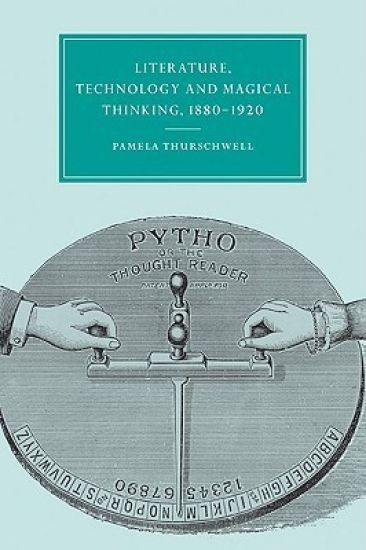
Literature, Technology and Magical Thinking, 1880–1920

Literature, Technology and Magical Thinking, 1880–1920

Pamela Thurschwell

Cambridge University Press
2005
pokkari
In this 2001 book Pamela Thurschwell examines the intersection of literary culture, the occult and new technology at the fin-de-siècle. Thurschwell argues that technologies began suffusing the public imagination from the mid-nineteenth century on: they seemed to support the claims of spiritualist mediums. Talking to the dead and talking on the phone both held out the promise of previously unimaginable contact between people: both seemed to involve 'magical thinking'. Thurschwell looks at the ways in which psychical research, the scientific study of the occult, is reflected in the writings of such authors as Henry James, George du Maurier and Oscar Wilde, and in the foundations of psychoanalysis. This study offers provocative interpretations of fin-de-siècle literary and scientific culture in relation to psychoanalysis, queer theory and cultural history.
Neighbors and Enemies

Neighbors and Enemies

Pamela E. Swett

Cambridge University Press
2007
pokkari
Neighbors and Enemies provides an interpretation of the collapse of Germany's first democracy, the Weimar Republic, which ended with the naming of Adolf Hitler as chancellor in January 1933. This study focuses on individual workers in Berlin and their strategies to confront the crises in their daily lives introduced by the transformation of society after 1918 and intensified during the Depression. Tensions between the sexes and generations, among neighbours, within families, and between citizens and their political parties led to the emergence of a radical - and at times violent - neighbourhood culture that signalled a loss of faith in political institutions. Swett offers an interpretation that marries a history of daily life in Depression-era Berlin with an analysis of the meanings of local politics in workers' communities, shifting our focus for understanding Weimar's collapse from the halls of governmental power to the streets of the urban core.
Kingship and Political Practice in Colonial India

Kingship and Political Practice in Colonial India

Pamela G. Price

Cambridge University Press
2007
pokkari
In this 1996 cultural history which considers the transformation of south Indian institutions under British colonial rule in the nineteenth century, Pamela Price focuses on the two former 'little kingdoms' of Ramnad and Sivaganga which came under colonial governance as revenue estates. She demonstrates how rivalries among the royal families and major zamindari temples, and the disintegration of indigenous institutions of rule, contributed to the development of nationalism and identity amongst the people of southern Tamil country. The author also shows how religious symbols and practices going back to the seventeenth century were reformulated and acquired a new significance in the colonial context. Arguing for a reappraisal of the relationship of Hinduism to politics, Price finds that these symbols and practices continue to inform popular expectation of political leadership today.
Trade and Empire in Western India

Trade and Empire in Western India

Pamela Nightingale

Cambridge University Press
2007
pokkari
This study examines the influence of commercial interests on the expansion of the British Empire in Western India in the age of Cornwallis and Wellesley. It questions some of the assumptions which have been accepted as explanations of British imperialism in that part of India. The chief of these is that the reform of the East India Company's administration in the 1780s brought the policy of the Bombay presidency under the firm control of the governor-general in Bengal and of the Court of Directors and the Board of Control in London.
The Poetic Imagination of Vyacheslav Ivanov

The Poetic Imagination of Vyacheslav Ivanov

Pamela Davidson

Cambridge University Press
2009
pokkari
Vyacheslav Ivanov, poet, philosopher and critic, played a key role in the formation of the early twentieth-century Russian literature as leader of the religious branch of the Symbolist movement and his influence spread to Europe after his emigration to Italy in 1924. Pamela Davidson explores Ivanov's poetic method, relating his art to his central beliefs (in particular his interpretation of the ancient Greek religion of Dionysus and of the teachings of Vladimir Solovyov) and considering the ways in which he attempted to embody these ideas in his own life. She focuses on Ivanov's interpretation of Dante and in so doing, opens up fresh perspectives on the wider question of Russia's relation to the Western cultural tradition and Catholicism. Detailed analyses of Ivanov's pre-revolutionary poetry and of his translations from Dante form the basis of the second part of the study and extensive use is made of unpublished archival materials from the Soviet Union and Italy.