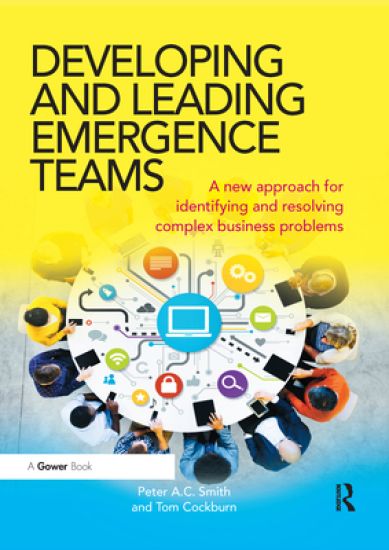
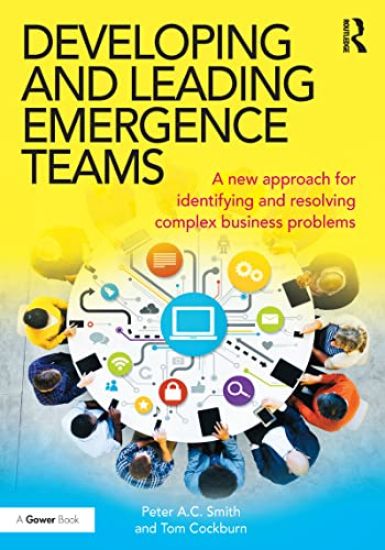
Developing and Leading Emergence Teams describes a future business landscape that seems to be complicated, complex and chaotic, in almost equal measures. The variety and diversity of the environments within which large organizations will be seeking to operate, require a similar variety of systems, process and structures if they are to respond successfully to emerging opportunities. The established models of teamworking (matrix, cross-functional or transdisciplinary) can all adapt to this new environment but will only do so if the culture, leadership and management style of the business enables this. The authors describe a model of emergence teams; high-trust teams that exhibit exceptional affinity for knowledge sharing, sense making, and consensus building. They then explore the specifics of leading such a team, how the team leader should: design the team; interact and facilitate the team’s development; understand the personal nature of each of the team members and the overall emotional regime that will affect trust, commitment and motivation. Peter Smith and Tom Cockburn draw on research and detailed case examples to provide techniques your organization can adopt in order to build and support the various teams capable of addressing complexity.
Complete Malory articles by leading Malory scholar on issues relating to the text and sources of the Morte Darthur. During the last thirty years, the study of Malory's text and sources has given rise to hotly contested issues and spectacular discoveries, as well as fundamental questions about the nature of his Morte Darthurand how we should read it. The debate has given rise to hotly contested issues and spectacular discoveries, even requiring forensic examination of the unique manuscript of Malory's great book; it has also thrown fresh light on Malory's art, politics, revisions, tastes, reading, knowledge of Europe, and sense of history. Professor Peter Field is a leading authority on these questions, and the essays collected here, revised and updated for this edition, are of great importance for an understanding of Malory. A new study considers the relative authoirty of the Winchester and Caxton texts. P.J.C. FIELD is Professor of English Emeritus at the University of Wales, Bangor.
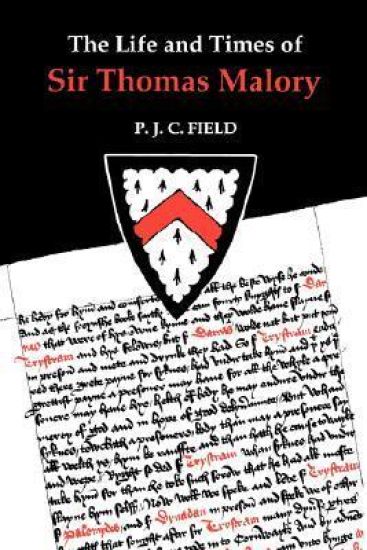
The most comprehensive consideration of the competing arguments for Malory's identitu yet undertaken.`A tour de force of historical scholarship and detective work - so good it sets the mind racing.'LITERARY REVIEW Malory's stories of King Arthur and the Round Table have been widely read for centuries, but their author's own life has been as variously reported as that of any Arthurian knight. The first serious attempts to identify him were made in the 1890s, but the man who then seemed most likely to have written the book was later found to have been accused of attempted murder, rape, extortion, and sacrilegious robbery and to have spent ten years or more in prison.Could this be reconciled with the authorship of the most famous chivalric romance in English? Other candidates for authorship were proposed but there was little consensus. This book gives the most comprehensive consideration of the competing arguments yet undertaken. It is a fascinating piece of detective work followed by a full account of the life of the man identified as theMalory. Close consideration of individual documents, many of whichwere entirely unknown in 1966, when the last book on Malory's life appeared, makes possible a fuller and more convincing story than has ever been told before. Professor P.J.C. FIELD teaches in the Department of English at theUniversity of Wales, Bangor.
Developing and Leading Emergence Teams describes a future business landscape that seems to be complicated, complex and chaotic, in almost equal measures. The variety and diversity of the environments within which large organizations will be seeking to operate, require a similar variety of systems, process and structures if they are to respond successfully to emerging opportunities. The established models of teamworking (matrix, cross-functional or transdisciplinary) can all adapt to this new environment but will only do so if the culture, leadership and management style of the business enables this. The authors describe a model of emergence teams; high-trust teams that exhibit exceptional affinity for knowledge sharing, sense making, and consensus building. They then explore the specifics of leading such a team, how the team leader should: design the team; interact and facilitate the team’s development; understand the personal nature of each of the team members and the overall emotional regime that will affect trust, commitment and motivation. Peter Smith and Tom Cockburn draw on research and detailed case examples to provide techniques your organization can adopt in order to build and support the various teams capable of addressing complexity.
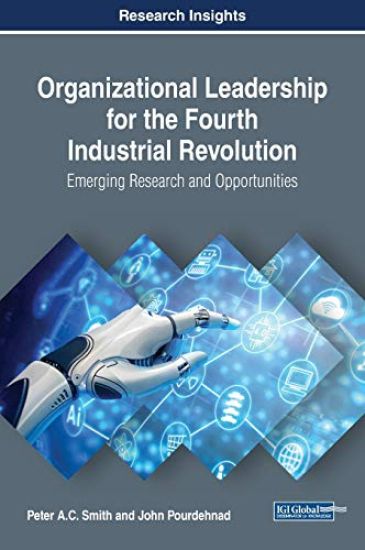
Digital technology has transformed business and management methodology in the modern era. As technologies continue to evolve and change, designing a platform for business architecture requires flexibility and practicality. Organizational Leadership for the Fourth Industrial Revolution: Emerging Research and Opportunities provides the latest research on the approaches to dealing successfully with newly emerging digital technologies and the dynamic complexity leaders are facing now and in the future. While highlighting topics, such as business architecture, interactive planning, and strategic capital, this book explores the implications of technologies on business and leadership as well as the development of leadership methods and applications. This book is an important resource for professionals, practitioners, upper-level students, and managers seeking current research on leadership and business advancement in the digital era.
Principles of Nuclear Chemistry is an introductory text in nuclear chemistry and radiochemistry, aimed at undergraduates with little or no knowledge of physics. It covers the key aspects of modern nuclear chemistry and includes worked solutions to end of chapter questions.The text begins with basic theories in contemporary physics and uses these to introduce some fundamental mathematical techniques. It relates nuclear phenomena to key divisions of chemistry such as atomic structure, spectroscopy, equilibria and kinetics. It also gives an introduction to f-block chemistry and the nuclear power industry.This book is essential reading for those taking a first course in nuclear chemistry and is a useful companion to other volumes in physical and analytical chemistry. It will also be of use to those new to working in nuclear chemistry or radiochemistry.
Principles of Nuclear Chemistry is an introductory text in nuclear chemistry and radiochemistry, aimed at undergraduates with little or no knowledge of physics. It covers the key aspects of modern nuclear chemistry and includes worked solutions to end of chapter questions.The text begins with basic theories in contemporary physics and uses these to introduce some fundamental mathematical techniques. It relates nuclear phenomena to key divisions of chemistry such as atomic structure, spectroscopy, equilibria and kinetics. It also gives an introduction to f-block chemistry and the nuclear power industry.This book is essential reading for those taking a first course in nuclear chemistry and is a useful companion to other volumes in physical and analytical chemistry. It will also be of use to those new to working in nuclear chemistry or radiochemistry.
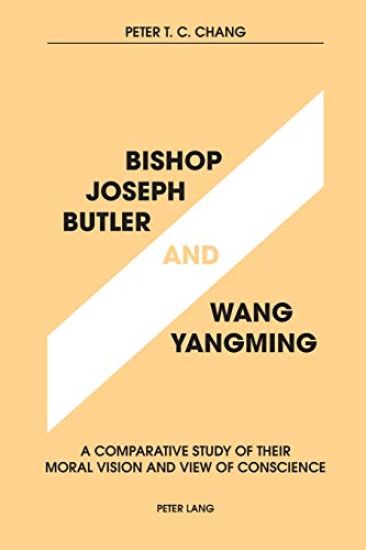
This book is a comparative study of the Anglican Bishop Joseph Butler’s and Neo-Confucianist Wang Yangming’s ethical enterprise. It first analyses, within their respective historical context, the two thinkers’ overarching worldviews and their seminal conception of conscience / liang-chih as a person's supreme moral guide. The English bishop and the Chinese philosopher-military general are then brought into dialogue by way of a comparing and contrasting of their distinct religious-philosophical traditions. In addition, Butler and Wang will be placed in a hypothetical encounter to explore how they, and by proxy Christianity and Confucianism, would critically appraise each other’s spiritual and sociopolitical endeavor. The end purpose of this study is to enhance our perception of the intriguing similarities and complex differences that exist between these two Axial Age civilizations. The author argues that dissonances notwithstanding, Butler and Wang share core values, consonances that could and should set the tone for an amiable Christian-Confucian co-existence.
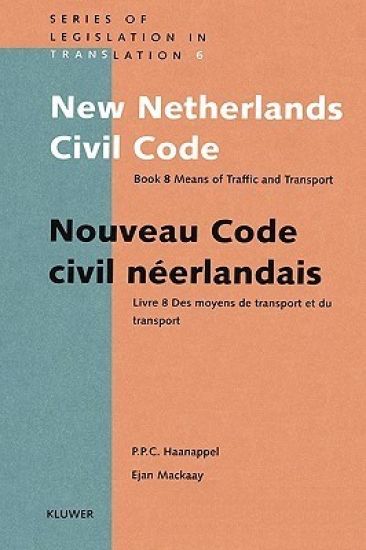
This trilingual volume (Dutch, English and French) contains the provisions of the Netherlands Civil Code dealing with transport law (Book 8 of the Code). Included are those parts which were in force during the summer of 1995: general provisions, maritime law, inland waterway law, road transport law, the law pertaining to the carriage of dangerous substances, and final provisions. Future editions of this volume will be supplemented with other modes of transportation, as they are added to the Code. The translations from the original Dutch into English and French have been prepared under the auspices of the Netherlands Ministry of Justice.
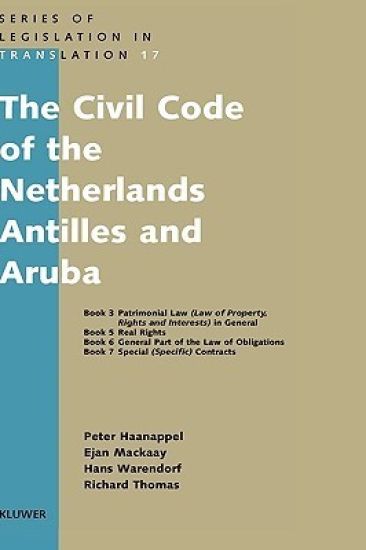
This work consists of an English translation, alongside the Dutch text, of the new law of property, rights and interests and the law of obligations (Book 3), the law of real rights (Book 5), the general part of the law of obligations (Book 6) and the law of special contracts (Book 7) of the Netherlands Antilles Civil Code, which entered into force in the Netherlands Antilles on 1 January 2001 and in Aruba on 1 January 2002. It also contains the transitional law enacted on introduction of this new legislation. It is published in Kluwer Law International's "Series of Legislation in Translation". For the non-Dutch speaking residents of the Netherlands Antilles and Aruba, practitioners advising on Netherlands Antilles law and persons or companies interested in the regulation of civil law this work should be useful.
This work consists of an English translation, alongside the Dutch text, of the new law of property, rights and interests and the law of obligations (Book 3), the law of real rights (Book 5), the general part of the law of obligations (Book 6) and the law of special contracts (Book 7) of the Netherlands Antilles Civil Code, which entered into force in the Netherlands Antilles on 1 January 2001 and in Aruba on 1 January 2002. It also contains the transitional law enacted on introduction of this new legislation. It is published in Kluwer Law International's "Series of Legislation in Translation". For the non-Dutch speaking residents of the Netherlands Antilles and Aruba, practitioners advising on Netherlands Antilles law and persons or companies interested in the regulation of civil law this work should be useful.
This is a policy oriented and comparatively oriented textbook on air and space law for students and practitioners. It covers the history and development of air and space law; their interrelationships; their relationships with the law of the seas and the law of Antarctica; institutions working in the field of air and space law; sovereignty in national airspace; freedom of exploration and use of outer space; public international air law; penal air law; private international air law, especially liability law; and public and private space law. Much attention is devoted to the law of air commerce: bilateral air services agreements; inter-airline co-operation; the effects of competition, antitrust and European Union law; deregulation, privatisation and commercialisation of air transport; ownership and control of airlines, and airline alliances; multilateralisation of air transport; and congestion and environmental controls. The last chapter of the book briefly deals with the legal aspects of commercial outer space applications. Increasingly, air transport, both in fact and in law, is becoming an ordinary industry like any other and is being treated as such. Rapidly, commercial outer space activities are being privatised and commercialised.
Analytical chemistry is a cornerstone of modern chemistry and many of the traditional techniques remain in use, albeit now mostly in automated form. The cognitive and practical skills developed in analytical work has ensured its inclusion in all chemistry programs worldwide. While laboratory work by its nature incorporates the cognitive and psychomotor learning domains, it does not always fully include the affective domain. This can be often attributed to repetition of laboratory activities — 'we've done this before' — and so it is useful to have access to a range of more diverse activities to engage and challenge students.This book is a laboratory manual which focuses on chemical analysis, providing teachers with a rich source of novel experiments. It features approximately 60 practical activities which have been extensively beta-tested, and do not require access to specialist equipment. There are worked examples for students and well-developed appendices for instructors and technicians. While not aligned with any specific curriculum, the activities are drawn from content across the nations including AP Chemistry, A-level Chemistry, BTEC National Diploma, Irish Leaving Certificate, Scottish Advanced Higher, International Baccalaureate, Abitur, and Matura. It is suitable for high school, community college, and early undergraduate students, and will be especially useful for those preparing for competitions such as the International Chemistry Olympiad and World Skills as it contains more unusual applications of well-known techniques.
Analytical chemistry is a cornerstone of modern chemistry and many of the traditional techniques remain in use, albeit now mostly in automated form. The cognitive and practical skills developed in analytical work has ensured its inclusion in all chemistry programs worldwide. While laboratory work by its nature incorporates the cognitive and psychomotor learning domains, it does not always fully include the affective domain. This can be often attributed to repetition of laboratory activities — 'we've done this before' — and so it is useful to have access to a range of more diverse activities to engage and challenge students.This book is a laboratory manual which focuses on chemical analysis, providing teachers with a rich source of novel experiments. It features approximately 60 practical activities which have been extensively beta-tested, and do not require access to specialist equipment. There are worked examples for students and well-developed appendices for instructors and technicians. While not aligned with any specific curriculum, the activities are drawn from content across the nations including AP Chemistry, A-level Chemistry, BTEC National Diploma, Irish Leaving Certificate, Scottish Advanced Higher, International Baccalaureate, Abitur, and Matura. It is suitable for high school, community college, and early undergraduate students, and will be especially useful for those preparing for competitions such as the International Chemistry Olympiad and World Skills as it contains more unusual applications of well-known techniques.