Kirjojen hintavertailu. Mukana 11 717 486 kirjaa ja 12 kauppaa.

Kirjahaku

Etsi kirjoja tekijän nimen, kirjan nimen tai ISBN:n perusteella.

1000 tulosta hakusanalla Philo

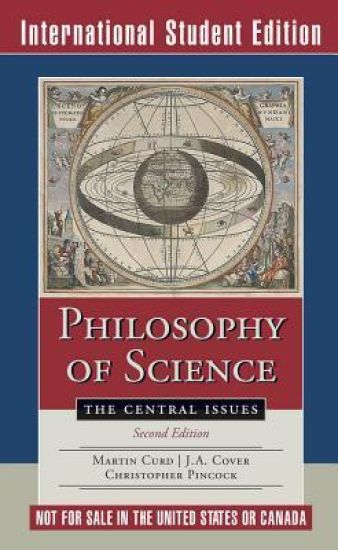
Philosophy of Science

Philosophy of Science

J. A. Cover; Martin Curd; Christopher Pincock

WW Norton Co
2012
nidottu
Both an anthology and an introductory textbook, Philosophy of Science: The Central Issues offers instructors and students a comprehensive anthology of fifty-two primary texts by leading philosophers in the field and provides extensive editorial commentary that places the readings in a wide philosophical context.
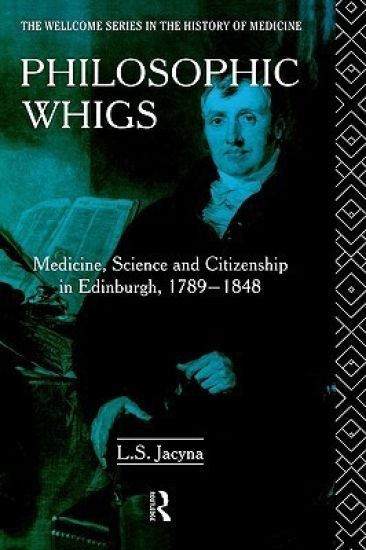
Philosophic Whigs

Philosophic Whigs

Stephen Jacyna

Routledge
1994
sidottu
Philosophic Whigs explores the links between scientific activity and politics in the early nineteenth century. Through a study of the Edinburgh medical school, L.S. Jacyna analyses the developments in medical education in the context of the social and political relationships within the local Whig community. Philosophic Whigs is a fascinating study of the links between science and the society that produces it.
Philosophy of Meaning, Knowledge and Value in the Twentieth Century
Volume 10 of the Routledge History of Philosophy presents a historical survey of the central topics in twentieth century Anglo-American philosophy. It chronicles what has been termed the 'linguistic turn' in analytic philosophy and traces the influence the study of language has had on the main problems of philosophy. Each chapter contains an extensive bibliography of the major writings in the field.All the essays present their large and complex topics in a clear and well organised way. At the end, the reader finds a helpful Chronology of the major political, scientific and philosophical events in the Twentieth Century and an extensive Glossary of technical terms.
Philosophy of Nonsense

Philosophy of Nonsense

Jean-Jacques Lecercle

Routledge
1994
nidottu
'Jean-Jacques Lecercle's remarkable Philosophy of Nonsense offers a sustained and important account of an area that is usually hastily dismissed. Using the resources of contemporary philosophy - notably Deleuze and Lyotard - he manages to bring out the importance of nonsense' - Andrew Benjamin, University of Warwick Why are we, and in particular why are philosophers and linguists, so fascinated with nonsense? Why do Lewis Carroll and Edward Lear appear in so many otherwise dull and dry academic books? This amusing, yet rigorous new book by Jean-Jacques Lecercle shows how the genre of nonsense was constructed and why it has proved so enduring and enlightening for linguistics and philosophy.
Philosophical Darwinism

Philosophical Darwinism

Peter Munz

Routledge
1993
sidottu
Philosophers have not taken the evolution of human beings seriously enough. If they did, argues Peter Munz, many long standing philosophical problems would be resolved. One of philosophical concequences of biology is that all the knowledge produced in evolution is a priori , i.e., established hypothetically by chance mutation and selective retention, not by observation and intelligent induction. For organisms as embodied theories, selection is natural and for theories as disembodied organisms, it is artificial. Following Popper, the growth of knowledge is seen to be continuous from the amoeba to Einstein'. Philosophical Darwinism throws a whole new light on many contemporary debates. It has damaging implications for cognitive science and artificial intelligence, and questions attempts from within biology to reduce mental events to neural processes. More importantly, it provides a rational postmodern alternative to what the author argues are the unreasonable postmodern fashions of Kuhn, Lyotard and Rorty.
Philosophy and Theology in the Middle Ages
In the ancient world being a philosopher was a practical alternative to being a christian. Philosophical systems offered intellectual, practical and moral codes for living. By the Middle Ages however philosophy was largely, though inconsistently, incorporated into Christian belef. From the end of the Roman Empire to the Reformation and Renaissance of the sixteenth century Christian theologians had a virtual monopoly on higher education. The complex interaction between theology and philosophy, which was the result of the efforts of Christian leaders and thinkers to assimilate the most sophisticated ideas of science and secular learning into their own system of thought, is the subject of this book. Augustine, as the most widely read author in the Middle Ages, is the starting point. Dr Evans then discusses the classical sources in general which the medieval scholar would have had access to when he wanted to study philosophy and its theological implications. Part I ends with an analysis of the problems of logic, language and rhetoric. In Part II the sequence of topics - God, cosmos, man follow the outline of the summa, or systematic encyclopedia of theology, which developed from the twelfth century as a text book framework. Does God exist? What is he like? What are human beings? Is there a purpose to their lives? These are the great questions of philosophy and religion and the issues to which the medieval theologian addressed himself. From `divine simplicity' to ethics and politics, this book is a lively introduction to the debates and ideas of the Middle Ages.
Philosophical Essays

Philosophical Essays

Bertrand Russell

Routledge
1994
nidottu
This collection of essays dates from the first decade of this century, and marks an important period in the evolution of Bertrand Russell's thought. Now available in paperback for the first time, they display all of Russell's clarity, incisiveness and brilliance of exposition, particularly on matters of ethics and the nature of truth. Russell intended the collection `to appeal to those who take an interest in philosophical questions without having had a professional training in philosophy' - those people will find these writings just as illuminating today.
Philosophy of Mathematics

Philosophy of Mathematics

Brown James Robert

TAYLOR FRANCIS LTD
1999
sidottu
Philosophy of Mathematics is an excellent introductory text. This student friendly book discusses the great philosophers and the importance of mathematics to their thought. It includes the following topics:* the mathematical image* platonism* picture-proofs* applied mathematics* Hilbert and Godel* knots and nations* definitions* picture-proofs and Wittgenstein* computation, proof and conjecture.The book is ideal for courses on philosophy of mathematics and logic.
Philosophy of Education: Major Themes in the Analytic Tradition
In the last forty years philosophy of education has become established as a distinct area of philosophical study concerned within educational thought and practice. Twentieth century analytic philosophy prompted the emergence of a philosophy of education as a separate subject.The work collected here represents the major ideas and arguments which have come to characterise philosophy of education. This comprehensive set includes work from the perspectives of Marxism, phenomenology, feminist theory, critical theory and others. The individual volumes cover:* philosophy and education* education and human being* society and education* problems of educational content and practice.The featured articles map the most important writings within the analytic and intersecting traditions, and the set presents an influential and essential body of work for researchers in the philosophy of education, the field of educational studies and educationally-oriented policy studies.
Philosophy, Psychoanalysis and Emancipation
Edited by Douglas Kellner and Clayton Pierce, Philosophy, Psychoanalysis and Emancipation is the fifth volume of Herbert Marcuse's collected papers. Containing some of Marcuse’s most important work, this book presents for the first time his unique syntheses of philosophy, psychoanalysis, and critical social theory, directed toward human emancipation and social transformation.Within philosophy, Marcuse engaged with disparate and often conflicting philosophical perspectives - ranging from Heidegger and phenomenology, to Hegel, Marx, and Freud - to create unique philosophical insights, often overlooked in favor of his theoretical and political interventions with the New Left, the subject of previous volumes. This collection assembles significant, and in some cases unknown texts from the Herbert Marcuse archives in Frankfurt, including: critiques of positivism and idealism, Dewey’s pragmatism, and the tradition of German philosophy philosophical essays from the 1930s and 1940s that attempt to reconstruct philosophy on a materialist base Marcuse’s unique attempts to bring together Freud and philosophy philosophical reflections on death, human aggression, war, and peace Marcuse’s later critical philosophical perspectives on science, technology, society, religion, and ecology.A comprehensive introduction by Douglas Kellner, Tyson Lewis and Clayton Pierce places Marcuse’s work in the context of his engagement with the main currents of twentieth century politics and philosophy. An Afterword by Andrew Feenberg provides a personal memory of Marcuse as scholar, teacher and activist, and summarizes the lasting relevance of his radical thought.
Philosophy of Literature

Philosophy of Literature

Christopher New

Routledge
1999
sidottu
Literature, like the visual arts, poses its own philosophical problems. While literary theorists have discussed the nature of literature intensively, analytic philosophers have usually dealt with literary problems either within the general framework of aesthetics or else in a way that is accessible only to a philosophical audience. The present book is unique in that it introduces the philosophy of literature from an analytic perspective accessible to both students of literature and students of philosophy. Specifically, the book addresses: the definition of literature, the distinction between oral and written literature and the identity of literary works the nature of fiction and our emotional involvement with fictional characters the concept of imagination and its role in the apprehension of literary works theories of metaphor and postmodernist theory on the significance of the authors' intentions to the interpretationof their work an examination of the relevance of thruth and morality to literary appreciation Lucid and well organised and free from jargon, hilosophy of Literature: An Introduction offers fresh approaches to traditional problems and raises new issues in the philosophy of literature.
Philosophy of Literature

Philosophy of Literature

Christopher New

Routledge
1999
nidottu
Literature, like the visual arts, poses its own philosophical problems. While literary theorists have discussed the nature of literature intensively, analytic philosophers have usually dealt with literary problems either within the general framework of aesthetics or else in a way that is accessible only to a philosophical audience. The present book is unique in that it introduces the philosophy of literature from an analytic perspective accessible to both students of literature and students of philosophy. Specifically, the book addresses: the definition of literature, the distinction between oral and written literature and the identity of literary works the nature of fiction and our emotional involvement with fictional characters the concept of imagination and its role in the apprehension of literary works theories of metaphor and postmodernist theory on the significance of the authors' intentions to the interpretationof their work an examination of the relevance of thruth and morality to literary appreciation Lucid and well organised and free from jargon, hilosophy of Literature: An Introduction offers fresh approaches to traditional problems and raises new issues in the philosophy of literature.
Philosophy of Science

Philosophy of Science

Rosenberg Alex

TAYLOR FRANCIS LTD
2000
nidottu
This user-friendly text covers key issues in the philosophy of science in an accessible and philosophically serious way. It will prove valuable to students studying philosophy of science as well as science students.Prize-winning author Alex Rosenberg explores the philosophical problems that science raises by its very nature and method. He skilfully demonstrates that scientific explanation, laws, causation, theory, models, evidence, reductionism, probability, teleology, realism and instrumentalism actually pose the same questions that Plato, Aristotle, Descartes, Hume, Kant and their successors have grappled with for centuries.
Philosophy of Art

Philosophy of Art

Noël Carroll

Routledge
1999
sidottu
Philosophy of Art is a textbook for undergraduate students interested in the topic of philosophical aesthetics.It introduces the techniques of analytic philosophy as well as key topics such as the representational theory of art, formalism, neo-formalism, aesthetic theories of art, neo-Wittgensteinism, the Institutional Theory of Art. as well as historical approaches to the nature of art.Throughout, abstract philosophical theories are illustrated by examples of both traditional and contemporary art including frequent reference to the avant-garde in this way enriching the readers understanding of art theory as well as the appreciation of art.Unique features of the textbook are:* chapter summaries* summaries of major theories of art and suggested analyses of the important categories used when talking and thinking of art* annotated suggested readings at the ends of chapters.Also available in this series:Epistemology Pb: 0-415-13043-3: £12.99Ethics Pb: 0-415-15625-4: £11.99Metaphysics Pb: 0-415-14034-X: £12.99Philosophy of Mind Pb: 0-415-13060-3: £11.99Philosophy of Religion Pb: 0-415-13214-2: £12.99
Philosophy of Art

Philosophy of Art

Noël Carroll

Routledge
1999
nidottu
Philosophy of Art is a textbook for undergraduate students interested in the topic of philosophical aesthetics.It introduces the techniques of analytic philosophy as well as key topics such as the representational theory of art, formalism, neo-formalism, aesthetic theories of art, neo-Wittgensteinism, the Institutional Theory of Art. as well as historical approaches to the nature of art.Throughout, abstract philosophical theories are illustrated by examples of both traditional and contemporary art including frequent reference to the avant-garde in this way enriching the readers understanding of art theory as well as the appreciation of art.Unique features of the textbook are:* chapter summaries* summaries of major theories of art and suggested analyses of the important categories used when talking and thinking of art* annotated suggested readings at the ends of chapters.Also available in this series:Epistemology Pb: 0-415-13043-3: £12.99Ethics Pb: 0-415-15625-4: £11.99Metaphysics Pb: 0-415-14034-X: £12.99Philosophy of Mind Pb: 0-415-13060-3: £11.99Philosophy of Religion Pb: 0-415-13214-2: £12.99
Philosophy of Mathematics and Economics

Philosophy of Mathematics and Economics

Thomas A. Boylan; Paschal F. O'Gorman

Routledge
2018
sidottu
With the failure of economics to predict the recent economic crisis, the image of economics as a rigorous mathematical science has been subjected to increasing interrogation. One explanation for this failure is that the subject took a wrong turn in its historical trajectory, becoming too mathematical. Using the philosophy of mathematics, this unique book re-examines this trajectory.Philosophy of Mathematics and Economics re-analyses the divergent rationales for mathematical economics by some of its principal architects. Yet, it is not limited to simply enhancing our understanding of how economics became an applied mathematical science. The authors also critically evaluate developments in the philosophy of mathematics to expose the inadequacy of aspects of mainstream mathematical economics, as well as exploiting the same philosophy to suggest alternative ways of rigorously formulating economic theory for our digital age. This book represents an innovative attempt to more fully understand the complexity of the interaction between developments in the philosophy of mathematics and the process of formalisation in economics.Assuming no expert knowledge in the philosophy of mathematics, this work is relevant to historians of economic thought and professional philosophers of economics. In addition, it will be of great interest to those who wish to deepen their appreciation of the economic contours of contemporary society. It is also hoped that mathematical economists will find this work informative and engaging.
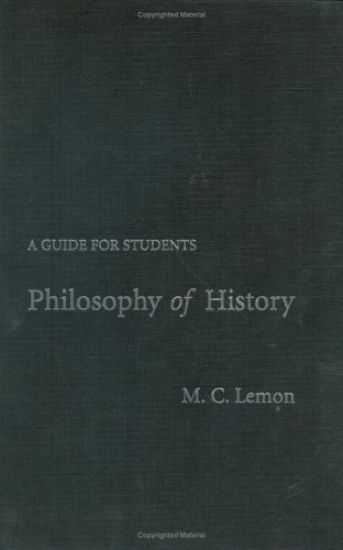
Philosophy of History

Philosophy of History

M.C. Lemon

Routledge
2003
sidottu
Philosophy of History is an essential introduction to a vast body of writing about history, from classical Greece and Rome to the modern world. M.C. Lemon maps out key debates and central concepts of philosophy of history, placing principal thinkers in the context of their times and schools of thought. Lemon explains the crucial differences between speculative philosophy as an enquiry into the content of history, and analytic philosophy of history as relating to the methods of history. The first two parts of the book trace each of these traditions, whereas the third part revisits both in the light of recent contributions to the discipline. This guide provides a comprehensive survey of historical thought since ancient times. Its clear terminology and lucid argument will make it an invaluable source for students and teachers alike.