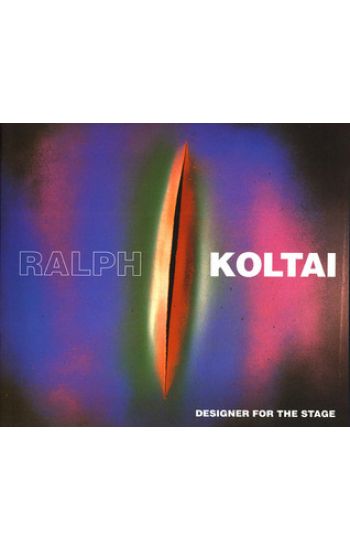
A stunning full-colour record of half a century of inspired theatre work marking the 80th birthday of one of the UK's most distinguished stage designers. The book contains models and production shots of over 30 of Ralph Koltai's shows, interlaced with essays by and interviews with Koltai, his collaborators and fellow designers. Ralph Koltai CBE was possibly the most wide-ranging and consistently prolific British stage designer of the late twentieth century. His first designs were for the English Opera Group, Covent Garden and Ballet Rambert in the 1950s. These were followed by regular commissions from the RSC (where he was Associate Designer) and National Theatre in the 60s and 70s, work in the West End in the 80s and on the world's stages from the 90s and into the twenty-first century.
Architect Ralph Johnson’s work spans a magnificent range of award-winning projects in terms of both location and program types. Ralph Johnson: Architecture in a Rapidly Changing World is a comprehensive two-volume monograph showcasing Johnson’s work—both built and unbuilt—from throughout his career, beginning at architecture school and culminating with his role as Principal and Global Design Director at Perkins&Will. Volume 1 – Creative Journey opens with an introductory essay by Ned Cramer, and features Johnson’s highly detailed sketches and drawings from a selection of his projects from 1971 through 2012. Volume 2 – Recent Work presents 15 of Johnson’s projects with Perkins&Will from 2012 to 2024. An interview between Cramer and Johnson explores the architect’s design philosophy, and an essay by Thomas Fisher delves deeper into Johnson’s work. These recent projects are illustrated with photography, site plans, and drawings, and accompanied by insightful narratives. Varying in typology and location, the projects include Shanghai Nature Museum, U.S. Coast Guard Headquarters, Northtown Library and Housing, and CTA Damen Green Line Station, among others. The significance of these projects is underpinned by Johnson’s deep-held respect for humanistic values, and his emphasis on process, rather than preconceived product, which allows him to respond to diverse cultures and urban conditions. This distinguished monograph is a comprehensive account of Johnson’s enduring career and his impressive folio of work. It sits comfortably in the heady realm of Images’ highly regarded 21st Century Masters series, which celebrates international juggernauts in the fields of architecture and design
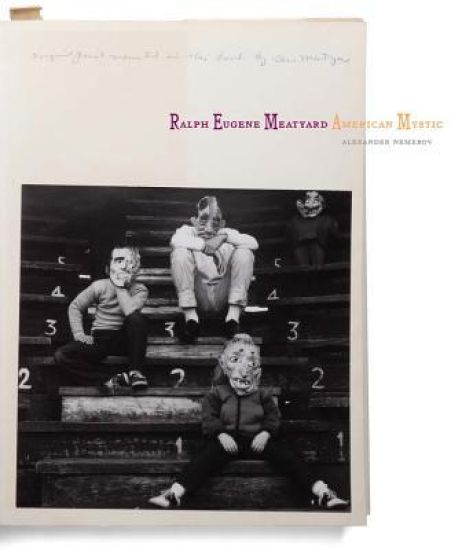
Meatyard as self-taught visionary: a portrait of the photographer by acclaimed art historian Alexander Nemerov The legendary, mysterious photographer Ralph Eugene Meatyard (1925–72) lived in Lexington, Kentucky, working in a close-knit community of artists and writers while making his living as an optician. Ralph Eugene Meatyard: American Mystic, by esteemed art historian Alexander Nemerov, is a groundbreaking study of Meatyard’s work, creative thinking and sources of inspiration. Given rare access to the personal library in which Meatyard had tellingly annotated works of fiction, poetry and other pages of personal significance, Nemerov examines the artist’s process of creating characters and staging dreamlike scenes. American Mystic also considers the artists and writers whose work influenced Meatyard, such as William Blake, Ludwig Wittgenstein and Thomas Merton. Meatyard’s celebrated series The Family Album of Lucybelle Crater and many of his other photographs cast family members and friends in central roles, often masked and enacting symbolic dramas. Of these mystical works, Nemerov writes, “For Meatyard, a photograph is a careful or casual arrangement meant to produce a feeling it cannot name.”
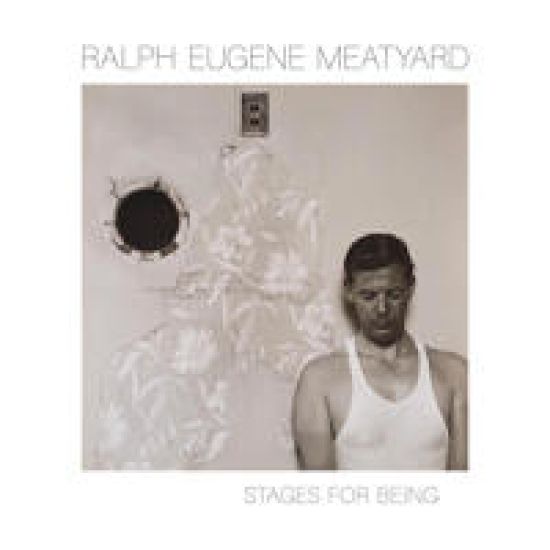
How Meatyard made a stage set of his native Kentucky to portray his circle of friends and compose his eerie tableaux Stages for Being examines the photography that Ralph Eugene Meatyard created in and around Lexington, Kentucky, where he found abandoned houses in the countryside to use as sets, and directed friends and family members in scenes that suggest both ritual and theater. Establishing mood with natural lighting, he used masks, dolls and found objects as unsettling props and mined architectural detail for abstract compositional elements. Meatyard culled inspiration from a wide variety of sources. An autodidact in areas as diverse as jazz, painting, literature, history and Zen Buddhism, his voracious reading sparked endless ideas for his carefully constructed photographs. His process was also informed by consistent dialogue with a robust group of Kentucky peers, including the writer, environmental activist and farmer Wendell Berry; photographers Van Deren Coke and Robert C. May; the Trappist monk Thomas Merton; the painter Frederic Thursz; and the writer, poet and philosopher Guy Davenport, all of whom worked in the region but were engaged with contemporary ideas and practice in their fields. Ralph Eugene Meatyard (1925–72) attended Williams College as part of the Navy's V12 program in World War II. Following the war, he married, became a licensed optician and moved to Lexington, Kentucky. When the first of his three children was born, Meatyard bought a camera to make pictures of the baby. Photography quickly became a consuming interest. He joined the Lexington Camera Club, where he met Van Deren Coke, under whose encouragement he soon developed into a powerfully original photographer. Meatyard's work is housed at the Museum of Modern Art, George Eastman House in Rochester, New York, the Smithsonian Institution and many other important collections.
There are times in our lives when forces collide to produce life-changing events. Authors from around the world have come together to share their inspirational stories. These breakthrough experiences will give insight and wisdom that will inspire you to greatness
Ralph Gibson's diptych portrayal of Israel, a land at once deeply modern and incredibly ancient The American photographer Ralph Gibson traveled throughout Israel and the surrounding region to create a portrait of a land where the past is vividly part of the present. He contrasts these in two-page spreads in which color and black-and-white images face one another: ancient language in a visual dialogue with contemporary human experience. As architect Moshe Safdie writes in his accompanying text: “This is the promise and paradox of Israel, a new country in an ancient land, modernity next to regression, with abundant and creative energy and cultural output. The high-tech world of invention next to Torah studies. It is still a young country, not even yet past its Centennial. With an optimistic eye, one sees the promise yet to be.” For this project, Gibson visited many of the well-known sites of the Holy Land, including the ancient city of Petra in Jordan as well as Masada and the Sea of Galilee flowing into the River Jordan. Sacred Land is a sumptuous study in the aesthetics of time. Ralph Gibson was born in Los Angeles in 1939. In 1956 he enlisted in the navy, where he began studying photography. Since he published his first photobook The Somnambulist in 1970, his work has been the subject of over 40 monographs. His work is widely exhibited and held in public collections around the world, such as the Stedelijk Museum, Amsterdam, and the Museum of Modern Art, New York. He lives and works in New York.
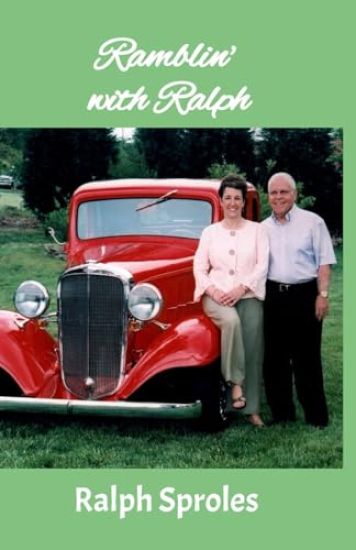
This book is a collection of memories and events in the life of a minister. His ministry spanned over seventy years and continues to do so. The book unfolds the personal and professional life of a dedicated preacher, husband, father, grandfather, great-grandfather and friend. The book is informative, entertaining, inspirational and with moments of humor. Once you start reading you will continue turning the pages to see what happens next.
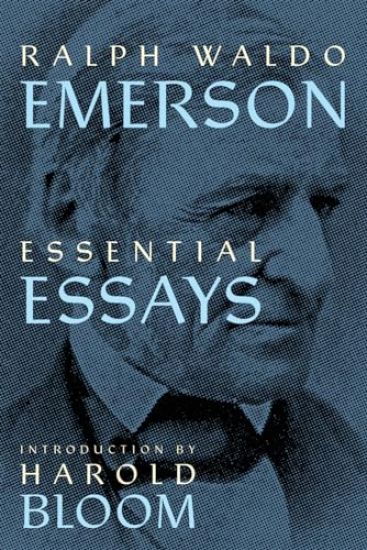
Ralph Waldo Emerson transformed America by writing in an utterly unique, personal, and insistently optimistic voice about matters that concern us to this day: our lives alone and with others, the true sources of identity, and the specifically American promise of freedom and equality for all. A principal voice of the transcendentalist movement, Emerson embodies an independent American intellectual tradition rooted in deep moral convictions and the pragmatic ability to adapt to changing circumstances. This volume contains Emerson's most consequential essays, selected by NYU University Professor Ulrich Baer, including "Self-Reliance," "Politics," "Experience," and "Friendship," as well as writings about political issues. The introduction by Harold Bloom explains Emerson's unrivaled status as America's foremost philosopher. This beautifully curated Warbler Press edition includes an illuminating biographical timeline of Emerson's life and work.
This collection of literature attempts to compile many of the classic works that have stood the test of time and offer them at a reduced, affordable price, in an attractive volume so that everyone can enjoy them.
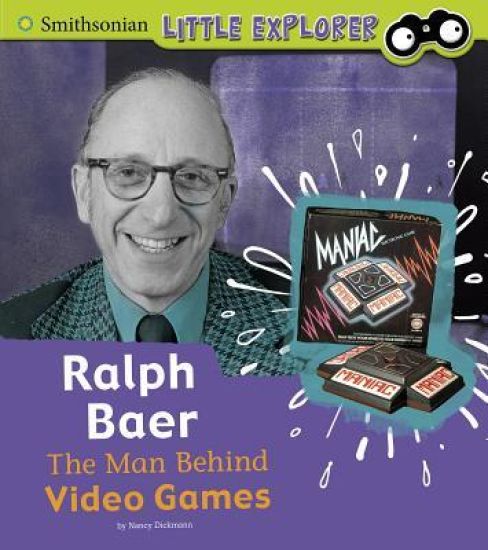
We have Ralph Baer to thank for the video games people play around the world today. What were the steps Baer took that led him to his famous invention?
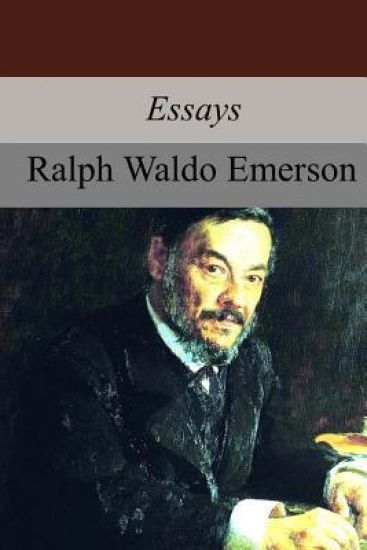
Ralph Waldo Emerson (1803 -1882) was an American essayist, lecturer, and poet who led the transcendentalist movement of the mid-19th century. He was seen as a champion of individualism and a prescient critic of the countervailing pressures of society, and he disseminated his thoughts through dozens of published essays and more than 1,500 public lectures across the United States. Emerson gradually moved away from the religious and social beliefs of his contemporaries, formulating and expressing the philosophy of transcendentalism in his 1836 essay "Nature". Following this work, he gave a speech entitled "The American Scholar" in 1837, which Oliver Wendell Holmes Sr. considered to be America's "intellectual Declaration of Independence". INDEX Nature The Conduct of Life I. HISTORY. II. SELF-RELIANCE. III. COMPENSATION. IV. SPIRITUAL LAWS. V. LOVE. VI. FRIENDSHIP. VII. PRUDENCE. VIII. HEROISM. IX. THE OVER-SOUL. X. CIRCLES. XI. INTELLECT. XII. ART. I. THE POET. II. EXPERIENCE. III. CHARACTER. IV. MANNERS. V. GIFTS. VI. NATURE. VII. POLITICS. VIII. NONIMALIST AND REALIST. NEW ENGLAND REFORMERS.
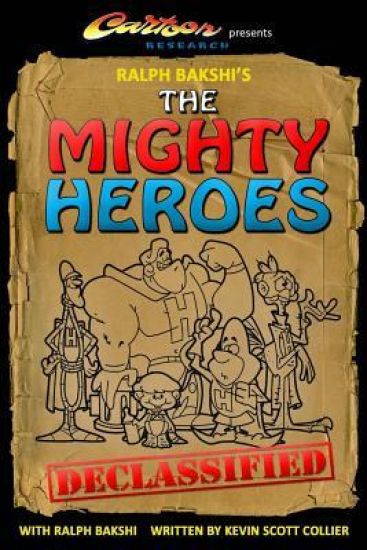
Cartoon Research presents "Ralph Bakshi's The Mighty Heroes Declassified." The origin, history and adventures of Bakshi's ground-breaking, super-hero cartoon series. This launched his historic career as producer, director and designer of award-winning animation films. Bakshi, in his own words, walks readers through how The Mighty Heroes came to be, production of the series, and its lasting effect with fans. Includes photos, artwork, cartoon series guide, and comic book appearances. A must-have for any Ralph Bakshi fan.
Edward L. Stratemeyer (October 4, 1862 - May 10, 1930) was an American publisher and writer of children's fiction. He was one of the most prolific writers in the world, producing in excess of 1,300 books himself, selling in excess of 500 million copies. He also created many well-known fictional book series for juveniles, including The Rover Boys, The Bobbsey Twins, Tom Swift, The Hardy Boys, and Nancy Drew series, many of which sold millions of copies and are still in publication today. On Stratemeyer's legacy, Fortune wrote: "As oil had its Rockefeller, literature had its Stratemeyer.Stratemeyer was born the youngest of six children in Elizabeth, New Jersey, to Henry Julius Stratemeyer, a tobacconist, and Anna Siegel. They were both from Hanover, Germany, immigrating to the United States in 1837. Although they were German, he and his siblings were educated in English and spoke English to each other. Growing up, Edward read the likes of Horatio Alger and William T. Adams, writers who penned beloved rags-to-riches tales of the hardworking young American. These stories greatly influenced him. 5] As a teenager, Stratemeyer operated his own printing press in the basement of his father's tobacco shop, distributing flyers and pamphlets among his friends and family. These included stories called The Newsboy's Adventure and The Tale of a Lumberman. After he graduated from high school, he went to work in his father's store. It wasn't until the age of 26 in 1888 that Stratemeyer sold his first story, Victor Horton's Idea, to the popular children's magazine Golden Days for $76-over six times the average weekly paycheck at the time.
Edward L. Stratemeyer (October 4, 1862 - May 10, 1930) was an American publisher and writer of children's fiction. He was one of the most prolific writers in the world, producing in excess of 1,300 books himself, selling in excess of 500 million copies. He also created many well-known fictional book series for juveniles, including The Rover Boys, The Bobbsey Twins, Tom Swift, The Hardy Boys, and Nancy Drew series, many of which sold millions of copies and are still in publication today. On Stratemeyer's legacy, Fortune wrote: "As oil had its Rockefeller, literature had its Stratemeyer.Stratemeyer was born the youngest of six children in Elizabeth, New Jersey, to Henry Julius Stratemeyer, a tobacconist, and Anna Siegel. They were both from Hanover, Germany, immigrating to the United States in 1837. Although they were German, he and his siblings were educated in English and spoke English to each other. Growing up, Edward read the likes of Horatio Alger and William T. Adams, writers who penned beloved rags-to-riches tales of the hardworking young American. These stories greatly influenced him. As a teenager, Stratemeyer operated his own printing press in the basement of his father's tobacco shop,
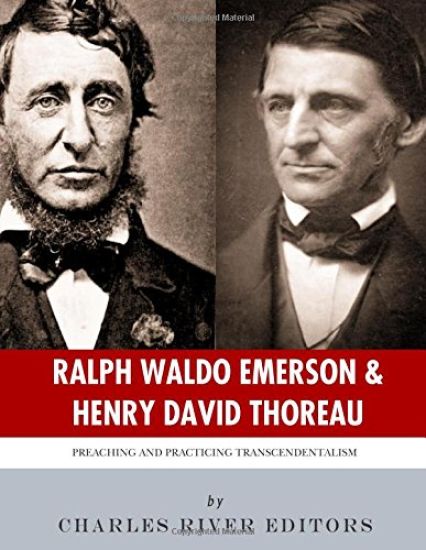
*Includes inspirational quotes from both Emerson and Thoreau *Includes Emerson's article about Thoreau's life in the August 1862 edition of Atlantic Monthly *Includes a Bibliography of their works and secondary works about them. *Includes pictures of Emerson, Thoreau and important people and places in their lives. "Standing on the bare ground, - my head bathed by the blithe air, and uplifted into infinite space, - all mean egotism vanishes. I become a transparent eye-ball; I am nothing; I see all; the currents of the Universal Being circulate through me; I am part or particle of God." - Ralph Waldo Emerson "A living dog is better than a dead lion. Shall a man go and hang himself because he belongs to the race of pygmies, and not be the biggest pygmy that he can? Let every one mind his own business, and endeavor to be what he was made. Why should we be in such desperate haste to succeed and in such desperate enterprises? If a man does not keep pace with his companions, perhaps it is because he hears a different drummer. Let him step to the music which he hears, however measured or far away." - Henry David Thoreau In the mid-19th century, Romantic literature was still in full bloom across the West, but some American authors began producing literature that, while still Romantic, was unique enough to be considered a different genre. This new genre, Transcendentalism, focused on the spirituality of the self and nature, not rejecting religion outright but concentrating on pragmatism and the importance of individuals as the spiritual center of the cosmos. In addition to drawing upon the Age of Enlightenment, Transcendentalist authors also utilized the philosophy of Plato, who taught that self-fulfillment through attaining knowledge should be an individual's ultimate goal. The leader of Transcendentalism, and the man who ushered the movement's practices and literature, was Ralph Waldo Emerson (1802-1883), one of America's most famous writers and speakers. Emerson initiated Transcendentalism with the publishing of his essay Nature in 1836, which espoused the virtues of nature and the interconnectedness of all life in nature. With his focus on the environment and natural history, Emerson became the first major American writer whose work was not influenced in any way by European literature. Emerson established group meetings, gave a series of lectures, and helped produce a Transcendentalist publication in the 1840s, which included his famous essay Self-Reliance. As Emerson's movement and stature grew, he befriended other authors, including Henry David Thoreau, who became his greatest prot g . As a prot g of Ralph Waldo Emerson, Thoreau took the values of the movement to heart and was particularly interested in the interconnection between man and nature, writing in Walden, "Most of the luxuries and many of the so-called comforts of life are not only not indispensable, but positive hindrances to the elevation of mankind." That famous work was Thoreau's account of his experience living for two years in a small cabin in a forest along the shore of Walden Pond in Concord, Massachusetts. In 1846, Thoreau was arrested for failing to pay taxes, which was based on his opposition to slavery and other ways the government spent taxpayers' money. After being freed, he gave a lecture about the roles of governments and individuals in society, which eventually became the famous essay "Civil Disobedience." Thoreau's message of civil disobedience has resonated more than any of his other Transcendentalist values, and it had a profound influence on the philosophy and nonviolent protests of activists like Mahatma Gandhi and Martin Luther King, Jr. Ralph Waldo Emerson & Henry David Thoreau looks at the lives and works of both men, examining their ideology and the Transcendentalist movement.