Kirjojen hintavertailu. Mukana 12 083 983 kirjaa ja 12 kauppaa.

Kirjahaku

Etsi kirjoja tekijän nimen, kirjan nimen tai ISBN:n perusteella.

1000 tulosta hakusanalla Richard J. Walter

Flow Manufacturing -- What Went Right, What Went Wrong
This book tells 101 stories of company efforts to implement the many aspects of flow manufacturing -- including such topics as just-in-time production, total quality control, reorganization of factories into product-focused or customer-focused cells, plants-in-a-plant, material flows by the simplicity of visual kanban, supplier partnerships, quick setup of equipment, cross-training and job rotation of the work force, and many more. The 101 mini-case studies – dubbed "caselets" -- include 26 non-U.S. companies from 12 countries and cover a wide swath of industrial sectors, and include many well-known corporations such as Apple, Campbell Soup, Honeywell, and Boeing.From the 1980s to the present, the author has been taking the message of process improvement and customer-focused excellence far and wide. Most of these travels, usually in connection with delivering a seminar, include brief factory tours in which he compiled detailed notes and then organized them as brief reports — his unvarnished analysis or take on what they do well and what needs improvement. In the main the reports were then sent back to the hosts of the plant tour. These factory tours and these follow-up reports form the basis of the large majority of this book’s caselets.Many of the caselets bring to life process-improvement methodologies in detail. With lots of caselets to draw from, the readers will find vivid examples of similar companies and processes within their respective industries. For example, the caselets often include applications of advanced concepts in cost management, employee training, performance management, supply chains, and logistics as well as applications of plant layout, quick setup, material handling, quality assurance, scheduling, ergonomics, and flow analysis.
Hydrophilic Polymer Coatings for Medical Devices
This new text provides a practical guide to hydrophilic polymer coatings technology for applications in a wide range of medical materials and devices. It concisely provides both the scientific basics of this class of polymers and the up-to-date information needed for product development and evaluation, processing, manufacturing, and regulatory compliance. More than fifty schematics illustrate materials, processes, and equipment. The entire presentation is oriented to the practical needs of personnel involved in product development and evaluation, process engineering, and manufacturing management.
Politics and Culture in the Developing World

Politics and Culture in the Developing World

Richard J. Payne; Jamal R. Nassar

Routledge
2017
sidottu
From decolonization and democratization to religion and gender, Politics and Culture in the Developing World is a comprehensive survey of the global context of development. With in-depth and current examples from Asia, Africa, Latin America, and the Middle East., this text examines the central political themes in the developing world. Throughout, Politics and Culture in the Developing World demonstrates how globalization both accelerates change and increases interdependence between developing and developed countries.
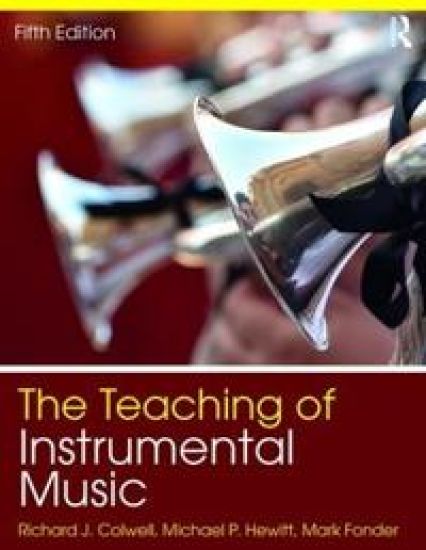
The Teaching of Instrumental Music

The Teaching of Instrumental Music

Richard J. Colwell; Michael P. Hewitt

Routledge
2017
sidottu
The Teaching of Instrumental Music, Fifth Edition introduces music education majors to basic instrumental pedagogy for the instruments and ensembles commonly found in the elementary and secondary curricula. It focuses on the core competencies required for teacher certification in instrumental music, with the pervasive philosophy to assist teachers as they develop an instrumental music program based on understanding and respecting all types of music.Parts I and II focus on essential issues for a successful instrumental program, presenting first the history and foundations, followed by effective strategies in administrative tasks and classroom teaching. Parts III, IV, and V are devoted to the skills and techniques of woodwind, brass and percussion, and string instruments. In all, The Teaching of Instrumental Music is the complete reference for the beginning instrumental teacher, commonly retained in a student’s professional library for its unique and comprehensive coverage.NEW TO THIS EDITION:Revision and updating of curriculum developments, such as coordinating State Department of Education student learning objectives with the recent Every Student Succeeds Act (ESSA)New discussion of the NAfME National Standards as they relate to the teaching of instrumental musicRevamping of rehearsing instrumental ensembles chapters, including new or expanded sections on programming, choosing quality music, and applying successful rehearsal techniquesUpdates on references, plus new discussion questions, and websites and internet linksA chapter devoted to classroom guitarUpdates on the use of technology for teaching and learning musicMore on healthy performance practice, marching band, and jazz bandOnline materials located in the eResources section on the Routledge website.
The Teaching of Instrumental Music

The Teaching of Instrumental Music

Richard J. Colwell; Michael P. Hewitt

Routledge
2017
nidottu
The Teaching of Instrumental Music, Fifth Edition introduces music education majors to basic instrumental pedagogy for the instruments and ensembles commonly found in the elementary and secondary curricula. It focuses on the core competencies required for teacher certification in instrumental music, with the pervasive philosophy to assist teachers as they develop an instrumental music program based on understanding and respecting all types of music.Parts I and II focus on essential issues for a successful instrumental program, presenting first the history and foundations, followed by effective strategies in administrative tasks and classroom teaching. Parts III, IV, and V are devoted to the skills and techniques of woodwind, brass and percussion, and string instruments. In all, The Teaching of Instrumental Music is the complete reference for the beginning instrumental teacher, commonly retained in a student’s professional library for its unique and comprehensive coverage.NEW TO THIS EDITION:Revision and updating of curriculum developments, such as coordinating State Department of Education student learning objectives with the recent Every Student Succeeds Act (ESSA)New discussion of the NAfME National Standards as they relate to the teaching of instrumental musicRevamping of rehearsing instrumental ensembles chapters, including new or expanded sections on programming, choosing quality music, and applying successful rehearsal techniquesUpdates on references, plus new discussion questions, and websites and internet linksA chapter devoted to classroom guitarUpdates on the use of technology for teaching and learning musicMore on healthy performance practice, marching band, and jazz bandOnline materials located in the eResources section on the Routledge website.
Principles of Classroom Learning and Perception
Originally published in 1974, this introductory text has been designed specifically for teachers in training, and it presents the basic psychological principles governing learning, perception, motivation and the retention of knowledge at the time. The text is carefully tailored for would-be teachers in its clear and informal style, and in its selective aspects of psychology which the teacher can use to advantage in his efforts to assist the child. The book has an eclectic approach to psychological theory, drawing upon the insights of behaviourism, perceptualism and the Gestalt school, as well as the developmental theories of Jean Piaget. The author discusses in some detail theories concerning the nature of intelligence, and the relationship between creativity and intelligence; and he investigates the dynamics of social adjustment, introducing the part that may be played by meditation in helping to solve some of the problems of emotional stress within the learning situation. In his consideration of the management of learning, the author lays much emphasis upon the importance of individual cognitive styles, individualizing instruction and independent learning. In one chapter Dr Mueller is concerned with factors in the measurement of personality and of performance in the classroom, and he reflects upon the specific problem of objectivity in such assessment. Finally, some consideration is given to the problems and characteristics of the socially disadvantaged child and to the role of the teacher in helping to solve some of the learning problems of these children.
Principles of Classroom Learning and Perception
Originally published in 1974, this introductory text has been designed specifically for teachers in training, and it presents the basic psychological principles governing learning, perception, motivation and the retention of knowledge at the time. The text is carefully tailored for would-be teachers in its clear and informal style, and in its selective aspects of psychology which the teacher can use to advantage in his efforts to assist the child. The book has an eclectic approach to psychological theory, drawing upon the insights of behaviourism, perceptualism and the Gestalt school, as well as the developmental theories of Jean Piaget. The author discusses in some detail theories concerning the nature of intelligence, and the relationship between creativity and intelligence; and he investigates the dynamics of social adjustment, introducing the part that may be played by meditation in helping to solve some of the problems of emotional stress within the learning situation. In his consideration of the management of learning, the author lays much emphasis upon the importance of individual cognitive styles, individualizing instruction and independent learning. In one chapter Dr Mueller is concerned with factors in the measurement of personality and of performance in the classroom, and he reflects upon the specific problem of objectivity in such assessment. Finally, some consideration is given to the problems and characteristics of the socially disadvantaged child and to the role of the teacher in helping to solve some of the learning problems of these children.
International Judicial Institutions

International Judicial Institutions

Richard J. Goldstone; Adam Smith

Routledge
2015
sidottu
This fully-updated and much expanded second edition provides a much needed, short and accessible introduction to the current debates in international humanitarian law. Written by a former UN Chief Prosecutor and a leading international law expert, this book analyses the legal and political underpinnings of international judicial institutions, it provides the reader with an understanding of both the historical development of institutions directed towards international justice, as well as an overview of the differences and similarities between such organizations.New to this edition: New updates on recently found records of the United Nations War Crimes Commission. Updates on the recent judicial decisions of the International Criminal Tribunal for the former Yugoslavia and International Criminal Tribunal for Rwanda Updates on the Special Tribunal For Lebanon A re-evaluation of the future of the International Criminal CourtInternational Judicial Institutions: Second Edition will be of great interest to students of International Politics, Criminology and Law.
International Judicial Institutions

International Judicial Institutions

Richard J. Goldstone; Adam Smith

Routledge
2015
nidottu
This fully-updated and much expanded second edition provides a much needed, short and accessible introduction to the current debates in international humanitarian law. Written by a former UN Chief Prosecutor and a leading international law expert, this book analyses the legal and political underpinnings of international judicial institutions, it provides the reader with an understanding of both the historical development of institutions directed towards international justice, as well as an overview of the differences and similarities between such organizations.New to this edition: New updates on recently found records of the United Nations War Crimes Commission. Updates on the recent judicial decisions of the International Criminal Tribunal for the former Yugoslavia and International Criminal Tribunal for Rwanda Updates on the Special Tribunal For Lebanon A re-evaluation of the future of the International Criminal CourtInternational Judicial Institutions: Second Edition will be of great interest to students of International Politics, Criminology and Law.
The German Underworld (Routledge Revivals)
This book, which was first published in 1988, deals with the neglected history of the lowest layers of German society, of marginal, outcast and deviant groups such as arsonists, witches, bandits, infanticides, poachers, murderers, prostitutes, vagrants and thieves, from the end of the thirteenth century to the middle of the twentieth. This book is ideal for students of history, particularly the German history.
The German Underworld (Routledge Revivals)
This book, which was first published in 1988, deals with the neglected history of the lowest layers of German society, of marginal, outcast and deviant groups such as arsonists, witches, bandits, infanticides, poachers, murderers, prostitutes, vagrants and thieves, from the end of the thirteenth century to the middle of the twentieth. This book is ideal for students of history, particularly the German history.
Society and Politics in Wilhelmine Germany (Routledge Revivals)
In the search for the causes of the First World War and the origins of Hitler’s ‘Third Reich’, the attention of historians has turned increasingly towards the development of German society under Kaiser Wilhelm II. These ten essays, first published in 1978, introduced interpretations of Wilhelmine Germany to an English-speaking audience and contributed towards the discussion of these interpretations that were taking place amongst German historians. This book is ideal for student of history, particularly German history.
Society and Politics in Wilhelmine Germany (Routledge Revivals)
In the search for the causes of the First World War and the origins of Hitler’s ‘Third Reich’, the attention of historians has turned increasingly towards the development of German society under Kaiser Wilhelm II. These ten essays, first published in 1978, introduced interpretations of Wilhelmine Germany to an English-speaking audience and contributed towards the discussion of these interpretations that were taking place amongst German historians. This book is ideal for student of history, particularly German history.
The German Peasantry (Routledge Revivals)

The German Peasantry (Routledge Revivals)

Richard J. Evans; W. R. Lee

Routledge
2015
sidottu
This book, first published in 1986, surveys the history of rural society in Germany from the eighteenth century to the present day. The contributions include studies of Junker estates and small farming communities, serfs and landless labourers, maidservants and worker-peasants. They demonstrate the variety and complexity of the social division that structures the rural economy. Throughout the book there is an emphasis on the conflicts that divided rural society, and the ways and means in which these were expressed, whether in serf strikes in eighteenth-century Brandenburg, village gossip in early twentieth-century Hesse, or factional struggles over planning permission in present-day Swabia. The rural world emerges not as traditional, passive and undifferentiated , but as actively participating in its own making; not only responding to the changes going on around it, but exploiting them for its own purposes and influencing them in its own way. This book is ideal for students of history, particularly German history.
The German Peasantry (Routledge Revivals)

The German Peasantry (Routledge Revivals)

Richard J. Evans; W. R. Lee

Routledge
2016
nidottu
This book, first published in 1986, surveys the history of rural society in Germany from the eighteenth century to the present day. The contributions include studies of Junker estates and small farming communities, serfs and landless labourers, maidservants and worker-peasants. They demonstrate the variety and complexity of the social division that structures the rural economy. Throughout the book there is an emphasis on the conflicts that divided rural society, and the ways and means in which these were expressed, whether in serf strikes in eighteenth-century Brandenburg, village gossip in early twentieth-century Hesse, or factional struggles over planning permission in present-day Swabia. The rural world emerges not as traditional, passive and undifferentiated , but as actively participating in its own making; not only responding to the changes going on around it, but exploiting them for its own purposes and influencing them in its own way. This book is ideal for students of history, particularly German history.
Rethinking German History (Routledge Revivals)
In Rethinking German History, first published in 1987, Richard J. Evans argues for a social-historical approach to the German past that pays equal attention to objective social structures and subjective values and experiences. If German history has been seen as an exception to the ‘normal’ development of Western society, this is not least because historians have until recently largely failed to look beyond the world of high politics, institutions, organizations and ideologies to broader historical problems of German society and German mentalities. By applying and adapting approaches learned from French and British social history as they have been developed over the last quarter of a century, it is possible to achieve a rethinking of German history which does away with many of the textbook myths that have encrusted the historiogrpahy of Germany for so long. This book will be valuable for students of German history and politics, and brings together essays widely used in teaching. Its broad coverage of social history will also be useful to all those interested in contemporary historiography or the comparative study of European history.
Rereading German History (Routledge Revivals)
In Rereading German History, first published in 1997, Richard J. Evans draws together his seminal review essays on the political, economic, cultural and social history of Germany through war and reunification. This book provides a study of how and why historians – mainly German, American, British and French – have provided a series of differing and often conflicting readings of the German past. It also presents a reconsideration of German history in the light of the recent decline of the German Democratic Republic, collapse of the Berlin Wall and the reunification of Germany. Rereading German History re-examines major controversies in modern German history, such as the debate over Germany’s ‘special path’ to modernity in the nineteenth and twentieth centuries, and the discussions in the 1980s on the uniqueness or otherwise of Auschwitz. Evans also analyses the arguments over the nature of German national identity. The book offers trenchant and important analytical insights into the history of Germany in the last two centuries, and is ideal reading material for students of modern history and German studies.
Rereading German History (Routledge Revivals)
In Rereading German History, first published in 1997, Richard J. Evans draws together his seminal review essays on the political, economic, cultural and social history of Germany through war and reunification. This book provides a study of how and why historians – mainly German, American, British and French – have provided a series of differing and often conflicting readings of the German past. It also presents a reconsideration of German history in the light of the recent decline of the German Democratic Republic, collapse of the Berlin Wall and the reunification of Germany. Rereading German History re-examines major controversies in modern German history, such as the debate over Germany’s ‘special path’ to modernity in the nineteenth and twentieth centuries, and the discussions in the 1980s on the uniqueness or otherwise of Auschwitz. Evans also analyses the arguments over the nature of German national identity. The book offers trenchant and important analytical insights into the history of Germany in the last two centuries, and is ideal reading material for students of modern history and German studies.
Rethinking German History (Routledge Revivals)
In Rethinking German History, first published in 1987, Richard J. Evans argues for a social-historical approach to the German past that pays equal attention to objective social structures and subjective values and experiences. If German history has been seen as an exception to the ‘normal’ development of Western society, this is not least because historians have until recently largely failed to look beyond the world of high politics, institutions, organizations and ideologies to broader historical problems of German society and German mentalities. By applying and adapting approaches learned from French and British social history as they have been developed over the last quarter of a century, it is possible to achieve a rethinking of German history which does away with many of the textbook myths that have encrusted the historiogrpahy of Germany for so long. This book will be valuable for students of German history and politics, and brings together essays widely used in teaching. Its broad coverage of social history will also be useful to all those interested in contemporary historiography or the comparative study of European history.