Kirjojen hintavertailu. Mukana 12 083 983 kirjaa ja 12 kauppaa.

Kirjahaku

Etsi kirjoja tekijän nimen, kirjan nimen tai ISBN:n perusteella.

1000 tulosta hakusanalla Robert A. Cook

The Transcendentalists and Their World

The Transcendentalists and Their World

Robert A. Gross

Farrar, Straus and Giroux
2021
sidottu
One of The Wall Street Journal's 10 best books of 2021One of Air Mail's 10 best books of 2021Winner of the Peter J. Gomes Memorial Book PrizeIn the year of the nation's bicentennial, Robert A. Gross published The Minutemen and Their World, a paradigm-shaping study of Concord, Massachusetts, during the American Revolution. It won the prestigious Bancroft Prize and became a perennial bestseller. Forty years later, in this highly anticipated work, Gross returns to Concord and explores the meaning of an equally crucial moment in the American story: the rise of Transcendentalism. The Transcendentalists and Their World offers a fresh view of the thinkers whose outsize impact on philosophy and literature would spread from tiny Concord to all corners of the earth. Ralph Waldo Emerson, Henry David Thoreau, Nathaniel Hawthorne, and the Alcotts called this New England town home, and Thoreau drew on its life extensively in his classic Walden. But Concord from the 1820s through the 1840s was no pastoral place fit for poets and philosophers. The Transcendentalists and their neighbors lived through a transformative epoch of American life. A place of two thousand-plus souls in the antebellum era, Concord was a community in ferment, whose small, ordered society founded by Puritans and defended by Minutemen was dramatically unsettled through the expansive forces of capitalism and democracy and tightly integrated into the wider world. These changes challenged a world of inherited institutions and involuntary associations with a new premium on autonomy and choice. They exposed people to cosmopolitan currents of thought and endowed them with unparalleled opportunities. They fostered uncertainties, raised new hopes, stirred dreams of perfection, and created an audience for new ideas of individual freedom and democratic equality deeply resonant today. The Transcendentalists and Their World is both an intimate journey into the life of a community and a searching cultural study of major American writers as they plumbed the depths of the universe for spiritual truths and surveyed the rapidly changing contours of their own neighborhoods. It shows us familiar figures in American literature alongside their neighbors at every level of the social order, and it reveals how this common life in Concord entered powerfully into their works. No American community of the nineteenth century has been recovered so richly and with so acute an awareness of its place in the larger American story.
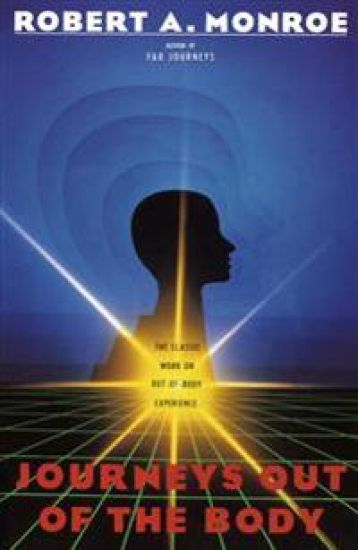
Journeys Out of the Body: The Classic Work on Out-of-Body Experience
The definitive work on the extraordinary phenomenon of out-of-body experiences, by the founder of the internationally known Monroe Institute. Robert Monroe, a Virginia businessman, began to have experiences that drastically altered his life. Unpredictably, and without his willing it, Monroe found himself leaving his physical body to travel via a "second body" to locales far removed from the physical and spiritual realities of his life. He was inhabiting a place unbound by time or death. Praise for Journeys Out of the Body "Monroe's account of his travels, Journeys Out of the Body, jam-packed with parasitic goblins and dead humans, astral sex, scary trips into mind-boggling other dimensions, and practical tips on how to get out of your body, all told with wry humor, quickly became a cult sensation with its publication in 1971, and has been through many printings. Whatever their 'real' explanation, Monroe's trips made for splendid reading." --Michael Hutchinson, author of Megabrain "Robert Monroe's experiences are probably the most intriguing of any person's of our time, with the possible exception of Carlos Castaneda's." --Joseph Chilton Pierce, author of Magical Child "This book is by a person who's clearly a sensible man and who's trying to tell it like it is. No ego trips. Just a solid citizen who's been 'out' a thousand times now and wants to pass his experiences to others." --The Last Whole Earth Catalog
Far Journeys

Far Journeys

Robert A. Monroe

Harmony
1992
nidottu
The sequel to Monroe's Journey Out Of The Body is an amazing parapsychological odyssey that reflects a decade of research into the psychic realm beyond the known dimensions of physical reality.
The Ultimate Journey

The Ultimate Journey

Robert A. Monroe

BANTAM DOUBLEDAY DELL PUBLISHING GROUP INC
1996
pokkari
In 1958, a successful businessman named Robert Mornroe began to have experiences that drastically altered his life. Unpredictably, and without his willing it, Monroe found himself leaving his physical body to travel via a second body to locales far removed from the physical and spiritual realities of his life. He was inhabiting a place unbounded by life or death. Monroe recorded these experiences in two bestselling, landmark books, Journeys Out of the Body and Far Journeys. Ultimate Journey, his final and career-defining work, takes us further than we thought possible--and reveals to us what it all means. Ultimate Journey charts that area which lies over the edge, beyond the limits of the physical world. It presents us with a map of the interstate--the route that opens to us when we leave our physical lives, with their entry and exit ramps, their singposts and their hazards. It also tells us how Monroe found the route and travelled it, and uncovered the reason and the purpose of this pioneering expedition. It is a journey that reveals basic truths about the meaning and purpose of life--and of what lies beyond.
Nanomaterials for Solid State Hydrogen Storage

Nanomaterials for Solid State Hydrogen Storage

Robert A. Varin; Tomasz Czujko; Zbigniew S. Wronski

Springer-Verlag New York Inc.
2008
sidottu
Over the past decade, important advances have been made in the development of nanostructured materials for solid state hydrogen storage used to supply hydrogen to fuel cells in a clean, inexpensive, safe and efficient manner. Nanomaterials for Solid State Hydrogen Storage focuses on hydrogen storage materials having high volumetric and gravimetric hydrogen capacities, and thus having the highest potential of being applied in the automotive sector. Written by leading experts in the field, Nanomaterials for Solid State Hydrogen Storage provides a thorough history of hydrides and nanomaterials, followed by a discussion of existing fabrication methods. The authors’ own research results in the behavior of various hydrogen storage materials are also presented. Covering fundamentals, extensive research results and recent advances in nanomaterials for solid state hydrogen storage, this book serves as a comprehensive reference.
Business Analysis Using Regression

Business Analysis Using Regression

Robert A. Stine; Dean P. Foster; Richard P. Waterman

Springer-Verlag New York Inc.
1998
nidottu
Preface Statistics is seldom the most eagerly anticipated course of a business student. It typically has the reputation ofbeing aboring, complicated, and confusing mix of mathematical formulas and computers. Our goal in writing this casebook and the companion volume (Basic Business Statistics) was to change that impression by showing how statistics gives insights and answers interesting business questions. Rather than dwell on underlying formulas, we show how to use statistics to answer questions. Each case study begins with a business question and concludes with an answer. Formulas appear only as needed to address the questions, and we focus on the insights into the problem provided by the mathematics. The mathematics serves a purpose. The material is organized into 12 "classes" of related case studies that develop a single, key idea of statistics. The analysis of data using statistics is seldom very straightforward, and each analysis has many nuances. Part ofthe appeal ofstatistics is this richness, this blending of substantive theories and mathematics. For a newcomer, however, this blend is too rich and they are easily overwhelmed and unable to sort out the important ideas from nuances. Although later cases in these notes suggest this complexity, we do not begin that way. Each class has one main idea, something big like standard error. We begin a class by discussing an application chosen to motivate this key concept, and introduce the necessary terminology.
Nathaniel Hawthorne

Nathaniel Hawthorne

Robert A. Lee

Barnes Noble Books-Imports, Div of Rowman Littlefield Pubs., Inc
1989
sidottu
A major reassessment of Hawthorne. The great novels are re-evaluated, as are the stories, and attention is paid to Hawthorne's use of the American past, of Nature, and to his understanding of the newly emerging American history and culture and his place within the context of European literature.
Herman Melville

Herman Melville

Robert A. Lee

Barnes Noble Books-Imports, Div of Rowman Littlefield Pubs., Inc
1984
nidottu
"He has a very high and noble nature, and [is] better worth immortality than most of us"óso Hawthorne wrote of Herman Melville in his journal for 1856. This collection of essays undertakes to re-examine the "nobility" of Melville's powerful and engaging imagination. Not only are his primary motifs of "the journey" and the quest for Truth given attention, but also his subtleties as a great maker of fiction are analysed. Hence the collection as a whole stresses Melville's way with language and irony and his serious, inventive playfulness as a writer.
Edgar Allan Poe

Edgar Allan Poe

Robert A. Lee

Barnes Noble Books-Imports, Div of Rowman Littlefield Pubs., Inc
1989
sidottu
Contents: Introduction, A. Robert Lee; Reflections On, and In, "The Fall of the House of Usher," Mark Kinkead-Weekes; Doodling America: Poe's "MS. Found in a Bottle," Harold Beaver; Poe's Stories of Premature Burial: "That Ere Kind of Style," Arnold Goldman; Poe's Comic Vision and Southwestern Humour, James Justus; Was the Chevalier Left-Handed? Poe's Dupin Stories, Robert Giddings; A Serious Case? Poe's The Narrative of Arthur Gordon Pym, A. Robert Lee; "A Strange Sound, As of a Harp-string Broken": The Poetry of Edgar Allan Poe, David Murray; Law, Lawlessness and Philosophy in Edgar Allan Poe, Eric Mottram; "I am a Virginian": Edgar Allan Poe and the South, Richard Gray; Poe in France: A Myth Revisited, John Weightman
The Biology of Cancer

The Biology of Cancer

Robert A. Weinberg

WW NORTON CO
2023
muu
Incorporating the most important advances in the rapidly-evolving field of cancer biology, this book remains the defining course text on its subject. Students, instructors, researchers, and clinicians the world over admire its authoritative content, clear explanations, extensive full-color art program, and pedagogical features that promote a deep conceptual understanding of the science through the lens of fascinating tales of scientific discovery.
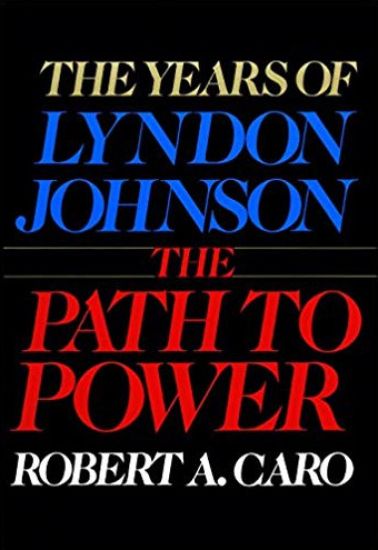
The Path to Power: The Years of Lyndon Johnson I

The Path to Power: The Years of Lyndon Johnson I

Robert A. Caro

Knopf Publishing Group
1982
sidottu
The Years of Lyndon Johnson is the political biography of our time. No president--no era of American politics--has been so intensively and sharply examined at a time when so many prime witnesses to hitherto untold or misinterpreted facets of a life, a career, and a period of history could still be persuaded to speak. The Path to Power, Book One, reveals in extraordinary detail the genesis of the almost superhuman drive, energy, and urge to power that set LBJ apart. Chronicling the startling early emergence of Johnson's political genius, it follows him from his Texas boyhood through the years of the Depression in the Texas hill Country to the triumph of his congressional debut in New Deal Washington, to his heartbreaking defeat in his first race for the Senate, and his attainment, nonetheless, of the national power for which he hungered. We see in him, from earliest childhood, a fierce, unquenchable necessity to be first, to win, to dominate--coupled with a limitless capacity for hard, unceasing labor in the service of his own ambition. Caro shows us the big, gangling, awkward young Lyndon--raised in one of the country's most desperately poor and isolated areas, his education mediocre at best, his pride stung by his father's slide into failure and financial ruin--lunging for success, moving inexorably toward that ultimate "impossible" goal that he sets for himself years before any friend or enemy suspects what it may be. We watch him, while still at college, instinctively (and ruthlessly) creating the beginnings of the political machine that was to serve him for three decades. We see him employing his extraordinary ability to mesmerize and manipulate powerful older men, to mesmerize (and sometimes almost enslave) useful subordinates. We see him carrying out, before his thirtieth year, his first great political inspiration: tapping-and becoming the political conduit for-the money and influence of the new oil men and contractors who were to grow with him to immense power. We follow, close up, the radical fluctuations of his relationships with the formidable "Mr. Sam" Raybum (who loved him like a son and whom he betrayed) and with FDR himself. And we follow the dramas of his emotional life-the intensities and complications of his relationships with his family, his contemporaries, his girls; his wooing and winning of the shy Lady Bird; his secret love affair, over many years, with the mistress of one of his most ardent and generous supporters . . . Johnson driving his people to the point of exhausted tears, equally merciless with himself . . . Johnson bullying, cajoling, lying, yet inspiring an amazing loyalty . . . Johnson maneuvering to dethrone the unassailable old Jack Garner (then Vice President of the United States) as the New Deal's "connection" in Texas, and seize the power himself . . . Johnson raging . . . Johnson hugging . . . Johnson bringing light and, indeed, life to the worn Hill Country farmers and their old-at-thirty wives via the district's first electric lines. We see him at once unscrupulous, admirable, treacherous, devoted. And we see the country that bred him: the harshness and "nauseating loneliness" of the rural life; the tragic panorama of the Depression; the sudden glow of hope at the dawn of the Age of Roosevelt. And always, in the foreground, on the move, LBJ. Here is Lyndon Johnson--his Texas, his Washington, his America--in a book that brings us as close as we have ever been to a true perception of political genius and the American political process.
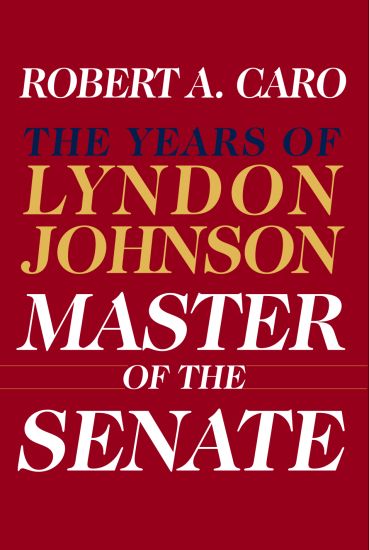
Master of the Senate: The Years of Lyndon Johnson III

Master of the Senate: The Years of Lyndon Johnson III

Robert A. Caro

Knopf Publishing Group
2002
sidottu
Master of the Senate, Book Three of The Years of Lyndon Johnson, carries Johnson's story through one of its most remarkable periods: his twelve years, from 1949 to 1960, in the United States Senate. A Los Angeles Times Best Nonfiction Book of the Last 30 Years At the heart of the book is its unprecedented revelation of how legislative power works in America, how the Senate works, and how Johnson, in his ascent to the presidency, mastered the Senate as no political leader before him had ever done. It was during these years that all Johnson's experience--from his Texas Hill Country boyhood to his passionate representation in Congress of his hardscrabble constituents to his tireless construction of a political machine--came to fruition. Caro introduces the story with a dramatic account of the Senate itself: how Daniel Webster, Henry Clay, and John C. Calhoun had made it the center of governmental energy, the forum in which the great issues of the country were thrashed out. And how, by the time Johnson arrived, it had dwindled into a body that merely responded to executive initiatives, all but impervious to the forces of change. Caro anatomizes the genius for political strategy and tactics by which, in an institution that had made the seniority system all-powerful for a century and more, Johnson became Majority Leader after only a single term-the youngest and greatest Senate Leader in our history; how he manipulated the Senate's hallowed rules and customs and the weaknesses and strengths of his colleagues to change the "unchangeable" Senate from a loose confederation of sovereign senators to a whirring legislative machine under his own iron-fisted control. Caro demonstrates how Johnson's political genius enabled him to reconcile the unreconcilable: to retain the support of the southerners who controlled the Senate while earning the trust--or at least the cooperation--of the liberals, led by Paul Douglas and Hubert Humphrey, without whom he could not achieve his goal of winning the presidency. He shows the dark side of Johnson's ambition: how he proved his loyalty to the great oil barons who had financed his rise to power by ruthlessly destroying the career of the New Dealer who was in charge of regulating them, Federal Power Commission Chairman Leland Olds. And we watch him achieve the impossible: convincing southerners that although he was firmly in their camp as the anointed successor to their leader, Richard Russell, it was essential that they allow him to make some progress toward civil rights. In a breathtaking tour de force, Caro details Johnson's amazing triumph in maneuvering to passage the first civil rights legislation since 1875. Master of the Senate, told with an abundance of rich detail that could only have come from Caro's peerless research, is both a galvanizing portrait of the man himself--the titan of Capital Hill, volcanic, mesmerizing--and a definitive and revelatory study of the workings and personal and legislative power.
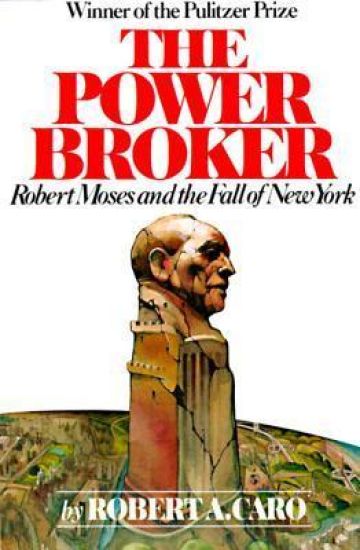
The Power Broker

The Power Broker

Robert A. Caro

Random House USA Inc
2004
nidottu
Everywhere acknowledged as a modern American classic, winner of the Pulitzer Prize, and chosen by the Modern Library as one of the hundred greatest books of the twentieth century, The Power Broker is a huge and galvanizing biography revealing not only the saga of one man's incredible accumulation of power, but the story of the shaping (and mis-shaping) of New York in the twentieth century. Robert Caro's monumental book makes public what few outsiders knew: that Robert Moses was the single most powerful man of his time in the City and in the State of New York. And in telling the Moses story, Caro both opens up to an unprecedented degree the way in which politics really happens--the way things really get done in America's City Halls and Statehouses--and brings to light a bonanza of vital information about such national figures as Alfred E. Smith and Franklin D. Roosevelt (and the genesis of their blood feud), about Fiorello La Guardia, John V. Lindsay and Nelson Rockefeller. But The Power Broker is first and foremost a brilliant multidimensional portrait of a man--an extraordinary man who, denied power within the normal framework of the democratic process, stepped outside that framework to grasp power sufficient to shape a great city and to hold sway over the very texture of millions of lives. We see how Moses began: the handsome, intellectual young heir to the world of Our Crowd, an idealist. How, rebuffed by the entrenched political establishment, he fought for the power to accomplish his ideals. How he first created a miraculous flowering of parks and parkways, playlands and beaches--and then ultimately brought down on the city the smog-choked aridity of our urban landscape, the endless miles of (never sufficient) highway, the hopeless sprawl of Long Island, the massive failures of public housing, and countless other barriers to humane living. How, inevitably, the accumulation of power became an end in itself. Moses built an empire and lived like an emperor. He was held in fear--his dossiers could disgorge the dark secret of anyone who opposed him. He was, he claimed, above politics, above deals; and through decade after decade, the newspapers and the public believed. Meanwhile, he was developing his public authorities into a fourth branch of government known as "Triborough"--a government whose records were closed to the public, whose policies and plans were decided not by voters or elected officials but solely by Moses--an immense economic force directing pressure on labor unions, on banks, on all the city's political and economic institutions, and on the press, and on the Church. He doled out millions of dollars' worth of legal fees, insurance commissions, lucrative contracts on the basis of who could best pay him back in the only coin he coveted: power. He dominated the politics and politicians of his time--without ever having been elected to any office. He was, in essence, above our democratic system. Robert Moses held power in the state for 44 years, through the governorships of Smith, Roosevelt, Lehman, Dewey, Harriman and Rockefeller, and in the city for 34 years, through the mayoralties of La Guardia, O'Dwyer, Impellitteri, Wagner and Lindsay, He personally conceived and carried through public works costing 27 billion dollars--he was undoubtedly America's greatest builder. This is how he built and dominated New York--before, finally, he was stripped of his reputation (by the press) and his power (by Nelson Rockefeller). But his work, and his will, had been done.
Management of Blistering Diseases

Management of Blistering Diseases

Robert A. Briggaman Fenella Wojnarowska

CHAPMAN AND HALL
1998
nidottu
The blistering diseases, although relatively uncommon, are of major clinical and scientific importance. Patients with these diseases can present great difficulties in diagnosis and management. The bullous diseases are life-threatening and many patients perish either from their disease or from complications of therapy. They may present to dermatologists, general physicians, paeditricians, oral surgeons, dentists, otolaryngologists and ophthalmologists. All of these specialities may be involved in their management. This book places emphasis both on the practical management and on the major advances of the past decade.
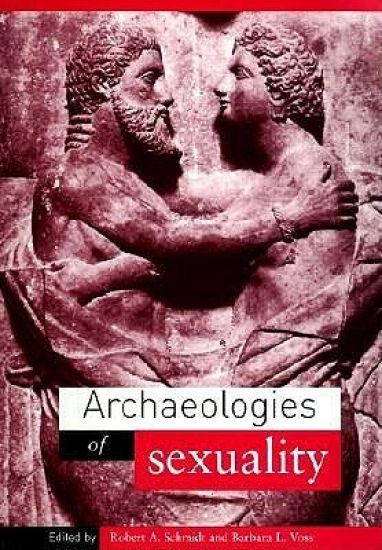
Archaeologies of Sexuality

Archaeologies of Sexuality

Robert A. Schmidt; Barbara L. Voss

Routledge
2000
sidottu
Status, age and gender have long been accepted aspects of archaeological enquiry, yet it is only recently that archaeologists have started seriously to consider the role of sex and sexuality in their studies.Archaeologies of Sexuality is a timely and pioneering work. It presents a strong, diverse body of scholarship which draws on locations as varied as medieval England, the ancient Maya kingdoms, New Kingdom Egypt, prehistoric Europe, and convict-era Australia, demonstrating the challenges and rewards of integrating the study of sex and sexuality within archaeology.This volume, with contributions by many leading archaeologists, will serve both as an essential introduction and a valuable reference tool for students and academics.
Archaeologies of Sexuality

Archaeologies of Sexuality

Robert A. Schmidt; Barbara L. Voss

Routledge
2000
nidottu
Status, age and gender have long been accepted aspects of archaeological enquiry, yet it is only recently that archaeologists have started seriously to consider the role of sex and sexuality in their studies.Archaeologies of Sexuality is a timely and pioneering work. It presents a strong, diverse body of scholarship which draws on locations as varied as medieval England, the ancient Maya kingdoms, New Kingdom Egypt, prehistoric Europe, and convict-era Australia, demonstrating the challenges and rewards of integrating the study of sex and sexuality within archaeology.This volume, with contributions by many leading archaeologists, will serve both as an essential introduction and a valuable reference tool for students and academics.
Theory in Anthropology

Theory in Anthropology

Robert A. Manners; David Kaplan

Routledge
2004
sidottu
This is VII in a series of ten volumes on the Theory in Anthropology. Originally published in 1968, this is a sourcebook that was created by the authors’ need for making accessible in a single volume a sample of those important pieces which are presently scattered in numerous publications, some of which are difficult for the student to obtain. Our second reason had to do with certain convictions they hold about the aims and methods of anthropology.
Constructivist Psychotherapy

Constructivist Psychotherapy

Robert A. Neimeyer

Routledge
2009
nidottu
Constructivist psychotherapy focuses on the meaning that clients attribute to their world, and the way that this shapes their life and contributes to their difficulties. In this book, Robert A. Neimeyer, a leading figure in the field, provides a clear and accessible explanation of the key features of this approach.Constructivist Psychotherapy: Distinctive Features concentrates on the 30 key commitments that distinguish constructivism from other cognitive behavioural perspectives. Divided into two sections – Theory and Practice – this straightforward book is illustrated throughout with case material and recent research findings. Neimeyer provides us with a fresh perspective on familiar material, together with a clear, concise introduction to material that the reader may be less familiar with, making this book a valuable text for professionals in training as well as a source of new ideas for practising therapists of constructivist psychotherapy.