Kirjojen hintavertailu. Mukana 11 342 296 kirjaa ja 12 kauppaa.

Kirjahaku

Etsi kirjoja tekijän nimen, kirjan nimen tai ISBN:n perusteella.

1000 tulosta hakusanalla Robert Cornforth

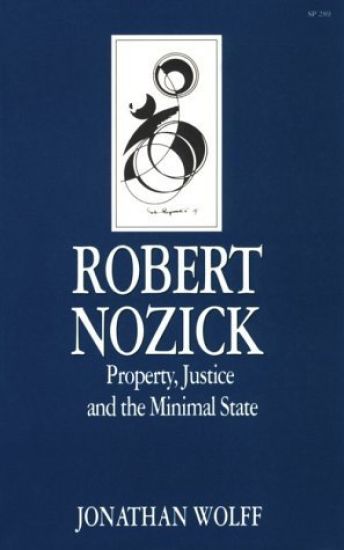
Robert Nozick

Robert Nozick

Jonathan Wolff

Blackwell Publishers
1991
pokkari
aeo This is the first full--length study of Nozicka s political philosophy as presented in his important and influential work Anarchy, State and Utopia. aeo The author compares Nozicka s views at each stage with those of his contemporary allies and opponents.
Robert Louis Stevenson

Robert Louis Stevenson

David Robb

Northcote House Publishers Ltd
2014
nidottu
This study offers concise critical discussions of Stevenson’s whole range of prose fiction, from New Arabian Nights to The Ebb-Tide. His most famous novels are covered as well as a selection of lesser-known works. It draws on other writings including letters, poetry and essays, but the main emphasis is on the strikingly varied sequence of novels and short stories. Stevenson’s admittedly fascinating life is touched on only so as to provide a context for his writing. The book is arranged by the dates when the works were written rather than by when they were published, thus providing a profile of his development as a writer. The emphasis is on the diversity and energy of Stevenson’s creativity, without seeking to stress distinctions frequently applied to it in the past, such as that between his ‘stories for boys’ and books apparently written for adults. All contribute to his richness.
Robert Browning

Robert Browning

John Woolford

Northcote House Publishers Ltd
2007
nidottu
Browning has been identified as the greatest nineteenth century poet of human psychology, but the category most popular in his own time defined him as a poet of 'the grotesque'. In this book, John Woolford undertakes to specify the precise meaning and scope of this term, in the process placing him in a major aesthetic tradition running from the Romantic Sublime through to modern concepts and theorisations of the grotesque, such as the Bakhtinian. This study subsumes the other major critical discourse fertilised by his work, the 'dramatic monologue', but adds to that other notable features of it, such as its lucid language, and what has impeded his full appreciation hitherto, its difficulty. The study seeks, not to excuse but to explain and celebrate the intellectual white heat at which he worked, and to position all aspects of his output within a unified theory of its significance. Browning was arguably the cleverest of the English poets, but he was more than that: contemporary comparisons of him with Chaucer and Shakespeare are not misplaced.
Robert Browning

Robert Browning

John Woolford

Northcote House Publishers Ltd
2006
sidottu
Browning has been identified as the greatest nineteenth century poet of human psychology, but the category most popular in his own time defined him as a poet of 'the grotesque'. In this book, John Woolford undertakes to specify the precise meaning and scope of this term, in the process placing him in a major aesthetic tradition running from the Romantic Sublime through to modern concepts and theorisations of the grotesque, such as the Bakhtinian. This study subsumes the other major critical discourse fertilised by his work, the 'dramatic monologue', but adds to that other notable features of it, such as its lucid language, and what has impeded his full appreciation hitherto, its difficulty. The study seeks, not to excuse but to explain and celebrate the intellectual white heat at which he worked, and to position all aspects of his output within a unified theory of its significance. Browning was arguably the cleverest of the English poets, but he was more than that: contemporary comparisons of him with Chaucer and Shakespeare are not misplaced.
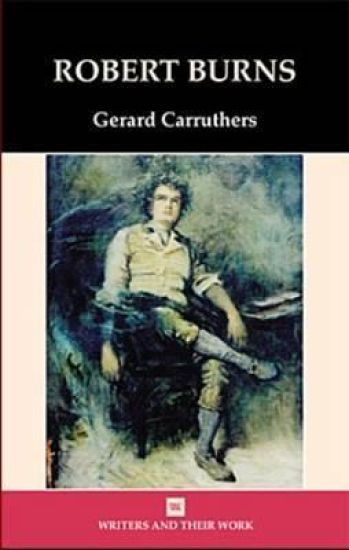
Robert Burns

Robert Burns

Gerard Carruthers

Northcote House Publishers Ltd
2010
nidottu
This book treats Burns’ work from the first publication of his poetry in 178 to his song writing and collecting which predominated in the 1790s. It encompasses discussion of Burns’ social and religious satires, his political comment and his utterances on love and gender. In line with modern Burns scholarship, this study reads Burns’ against both his Scottish and British literary backgrounds and emphasises, particularly, Burns’ construction of his poetic persona. As a key element of this latter aspect, the treatment considers Burns against his poetic space for himself as a Scot makes him a crucial Enlightenment and proto-Romantic figure. The book debunks the myth of Burns as ‘this heaven-taught ploughman’, emphasising his very contemporary understanding of the power of literature, and of the emotions as a vital part of human intellect.
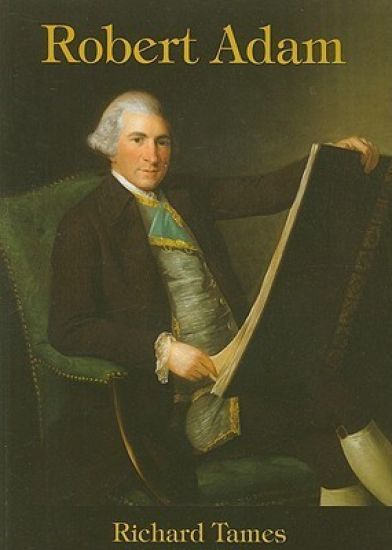
Robert Adam

Robert Adam

Richard Tames

Shire Publications
2004
nidottu
The name of Robert Adam is today equated, as it was by his contemporaries, with taste, style and elegance. Since his death, the term 'Adamesque' has been used to describe not only ceilings, doorways and fireplaces but objects as various as the City Hall in Charleston and a chamber-pot. A university drop-out, Adam still made his own scholarly contribution to the understanding of classical architecture and was a talented painter as well. As visionary in the decoration of interiors as he was ingenious in the design of exteriors, Adam was more often responsible for the renovation, alteration or completion of existing buildings than for the creation of entirely new ones. Best known perhaps for his work on great private palaces such as Syon and Kenwood, Osterley and Kedleston, Saltram and Culzean, Adam was also responsible for churches and tombs, monuments and market-halls and for such public commissions as the Admiralty Screen in Whitehall and Britain's first purpose-built public archive, The Register House in Edinburgh.
Robert Bruce

Robert Bruce

G W S Barrow

Edinburgh University Press
2013
nidottu
The story of how Robert Bruce outwitted Edward I, the shrewd and ruthless King of England, defeated his son Edward II, and in doing so regained Scotland's independence. Professor Barrow describes the dazzling and tragic career of William Wallace, the English military occupation of Scotland that was its consequence, and the emergence of Robert Bruce as the centre of Scottish resistance. The author pieces together from the surviving evidence a vivid and almost day-by-day account of Bruce's daring tactics, his crowning at Scone in March 1306, his defeat by the English three months later, and his life as a fugitive.
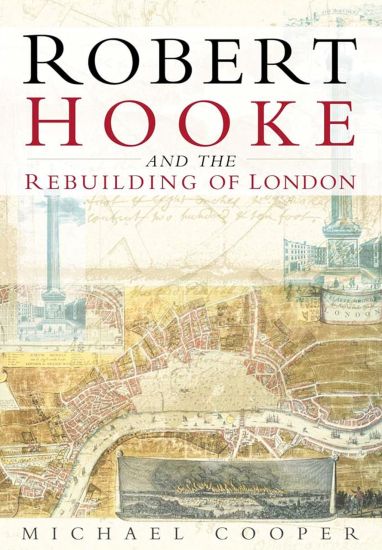
Robert Hooke and the Rebuilding of London

Robert Hooke and the Rebuilding of London

Michael Cooper

The History Press Ltd
1998
nidottu
Robert Hooke was one of the most gifted men of his age, but it was his great misfortune to work in the sphere of two remarkable men - Isaac Newton and Christopher Wren. While they gained the recognition of a monument in Westminster Abbey, Hooke died unloved, alone and in poverty. This title recognizes the great contribution that he made.
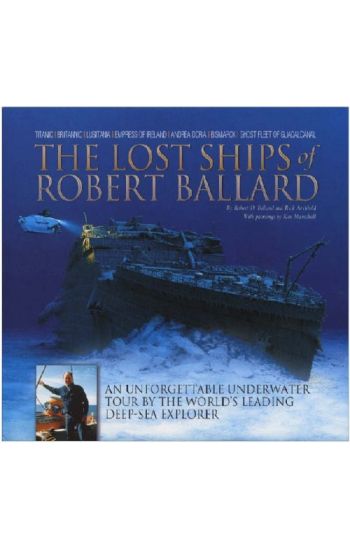
The Lost Ships of Robert Ballard

The Lost Ships of Robert Ballard

Robert D. Ballard; Rick Archbold

Sutton Publishing Ltd
2006
sidottu
In the first decades of the twentieth century, luxurious liners and warships ruled the waves. Many of these fabled ships - Titanic, Britannic, Bismarck and others - shared a common bond: their wrecks have been located or visited by the world-renowned deep-sea explorer, Robert D. Ballard. Together, the legendary ships lost during the Second World War and the glory days of the luxury liner comprise an extraordinary underwater museum, around which world-renowned deep-sea explorer, Robert Ballard gives us a guided tour. The book is illustrated throughout with specially commissioned paintings by Ken Marschall, the world's foremost painter of the Titanic, her contemporaries and other famous maritime wrecks. In crisp detail, Marschall depicts the great ships, both in their prime and on the ocean floor in eerie repose. Complementing Marschall's paintings is a vast collection of modern day underwater photography, archival images, illustrations and memorabilia that recall the ships' former glory. In May 2004, Ballard returned to the site of his most famous underwater discovery, the Titanic, to map the ship and analyse the causes and rate of its decay. This latest expedition, documented in a new epilogue, also underscores Ballard's ongoing commitment to the preservation of this unique underwater legacy.
Robert the Bruce's Irish Wars

Robert the Bruce's Irish Wars

Sean Duffy

The History Press Ltd
2001
nidottu
Much is known about Robert the Bruce's military campaigns for Scottish Independence in Scotland and England, but what about his expeditions to Ireland? In the early summer of 1315 a fleet-load of Scots veterans of Bannockburn put ashore on the coast of what is now County Antrim. The Anglo-Scottish conflict had transferred itself to Irish soil. The expedition was led by Edward Bruce, Robert the Bruce's brother, and recently ratified as heir-presumptive to the Scottish throne. By any standards, it was a major undertaking, planned well in advance, to which a significant proportion of Scotland's hard-pressed resources were devoted. It amounted to a full-scale invasion. What the Bruce brothers hoped to achieve from their Irish venture is hotly debated. This collection of essays by some of the leading authorities on the subject attempts to answer these questions and tells the story of the invasion itself and the battles that followed.
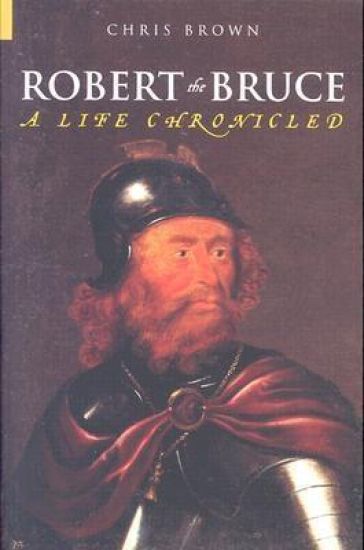
Robert the Bruce

Robert the Bruce

Chris Brown

The History Press Ltd
2004
nidottu
Much is known about Robert the Bruce's military campaigns for Scottish Independence in Scotland and England but what about his expeditions to Ireland? In the early summer of 1315 a fleet-load of Scots veterans of Bannockburn put ashore on the coast of what is now County Antrim. The Anglo-Scottish conflict had transferred itself to Irish soil.The expedition was led by Edward Bruce, Robert the Bruce's brother, and recently ratified as heir-presumptive to the Scottish throne. By any standards, it was a major undertaking, planned well in advance, to which a significant proportion of Scotland's hard-pressed resources were devoted. It amounted to a full scale invasion. What the Bruce brothers hoped to achieve from their Irish venture is hotly debated. Did the Bruces envisage turning the invasion into a permanent conquest?Was the aim to exploit Irish dissidence to push Edward II into acknowledging Robert's claim to Scotland? Or had Robert been hoping for the former but been content with the latter? This lavishly illustrated study attempts to answer these questions and tells the story of the invasion itself and the battles that followed.
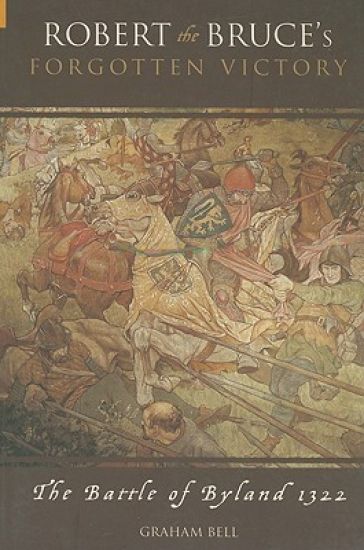
Robert the Bruce's Forgotten Victory

Robert the Bruce's Forgotten Victory

Graham Bell

The History Press Ltd
2005
nidottu
Waged on 14 October 1322, the battle of Byland (an area north-east of Thirsk) was fought between the two monarchs, Edward II and Robert the Bruce, and their forces. The Scots' motive for the engagement was to force the English into accepting the independence that Bannockburn hadn't actually achieved, the aim being to capture the King and force his hand. The plan nearly worked, and Edward II had to make a humiliating escape, losing his baggage train (again), putting his queen, Isabella, dangerously close to capture, and allowing the the Scots to pursue him to the gates of York. This new history of one of Robert the Bruce's most significant victories shows how close the Scots came to capturing the King.
Robert the Bruce: pocket GIANTS

Robert the Bruce: pocket GIANTS

Fiona Watson

The History Press Ltd
2014
nidottu
From disastrous beginnings after he took the throne of Scotland, having murdered a powerful rival, Robert I became a military leader of consummate genius. Throwing away the rulebook of medieval warfare, which favoured the mounted knight, he remodelled the Scottish army as a disciplined, audacious band of brothers capable of surprising castles, raiding and extracting blackmail as far south as Yorkshire and even defeating a mighty English army in pitched battle. Ruthless, charismatic, indomitable and lucky, the ‘Bruce’ is a towering example of an underdog capable of turning disadvantage into advantage and winning the day through talent and sheer determination. The English turned the lessons they learnt from him to good effect in their Hundred Years war against France.
Robert Burns - Nature Poems

Robert Burns - Nature Poems

Robert Burns

Octopus Publishing Group
2025
sidottu
This enchanting collection of more than 80 poems captures the essence of the natural world, as seen through the eyes of Scotland's beloved bard. Each chapter explores a different aspect of nature - from wild, mossy mountains and glens to murmuring streams, the sorrowful song of the woodlark, and the ever-changing seasons. Burns's profound appreciation for the landscape of Scotland and its creatures shines through every verse, and this collection is a heartfelt love letter to his homeland. Whether you're a long-time admirer of Burns or discovering his work for the first time, Nature Poems will transport you to the heart of Scotland's natural splendour.Illustrated by local artist, The Ink Bothy, and compiled by Scottish resident and poet Robert Tuesley Anderson, this is a collection to treasure.
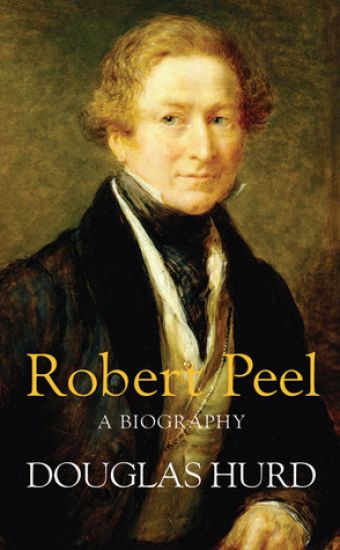
Robert Peel

Robert Peel

Douglas Hurd

Weidenfeld Nicolson
2008
nidottu
Life of one of the greatest British Prime Ministers - by an author who knows the scene from his years as a senior Minister in Margaret Thatcher's Cabinet.Robert Peel, as much as any man in the nineteenth century, transformed Great Britain into a modern nation. He invented our police force, which became a model for the world. He steered through the Bill which allowed Catholics to sit in Parliament. He reorganised the criminal justice system. Above all he tackled poverty by repealing the Corn Laws. Thanks to Peel the most powerful trading nation chose free trade and opened the door for our globalised world of today.Peel was not all politics. He built two great houses, filled them with famous pictures and was devoted to a beautiful wife. Many followers never forgave him for splitting his Party. But when in 1850 he was carried home after a fall from his horse crowds gathered outside, mainly of working people, to read the medical bulletins. When he died a few days later, factories closed, flags flew at half mast and thousands contributed small sums to memorials in his honour. He was the man who provided cheap bread and sacrificed his career for the welfare of ordinary people.
Robert the Monk's History of the First Crusade
This is the first English translation of Robert the Monk's Historia Iherosolimitana, a Latin prose chronicle describing the First Crusade. In addition to providing new and unique information on the Crusade (Robert claims to have been an eyewitness of the Council of Clermont in 1095), its particular interest lies in the great popularity it enjoyed in the Middle Ages. The text has close links with the vernacular literary tradition and is written in a racy style which would not disgrace a modern tabloid journalist. Its reflection of contemporary legends and anecdotes gives us insights into perceptions of the Crusade at that time and opens up interesting perspectives onto the relationship of history and fiction in the twelfth century. The introduction discusses what we know about Robert, his importance as a historical source and his place in the literary tradition of the First Crusade.
Robert Greene

Robert Greene

Ashgate Publishing Limited
2011
sidottu
While Robert Greene was the most prolific and perhaps the most notorious professional writer in Elizabethan England, he continues to be best known for his 1592 quip comparing Shakespeare to "an upstart crow." In his short twelve-year career, Greene wrote dozens of popular pamphlets in a variety of genres and numerous professional plays. At his premature death in 1592, he was a bonafide London celebrity, simultaneously maligned as Grub-Street profligate and celebrated as literary prodigy. The present volume constitutes the first collection of Greene's reception both in the early modern period and in our present era, offering in its poems, prose passages, essays, and chapters that which is most singular among what has been written about Greene and his work. It also includes a complete list of Greene's contemporary reception until 1640. Kirk Melnikoff's wide-ranging and revisionist introduction organizes this reception generically while at the same time situating it in the context of recent critical methodologies.
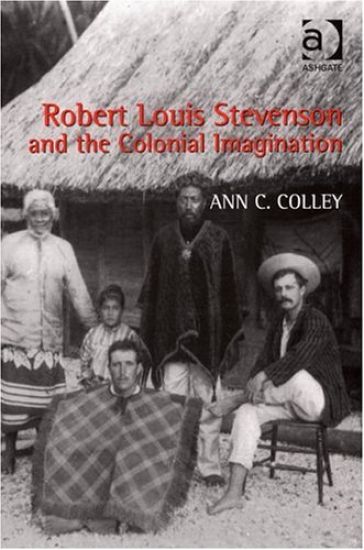
Robert Louis Stevenson and the Colonial Imagination

Robert Louis Stevenson and the Colonial Imagination

Ann C. Colley

Ashgate Publishing Limited
2004
sidottu
In her distinguished and hauntingly rendered book, Ann C. Colley provides a fresh insight into Stevenson's multi-voiced South Seas fiction, as well as into the particulars and complications of living within a newly established site of Empire. Bringing to light information from the archives of the London Missionary Society and from other sources, such as the Royal Geographical Society (London), the Writers' Museum (Edinburgh), the Beinecke Library (Yale University), and the Huntington Library (San Marino, California), Colley examines the intricate nature of Robert Louis Stevenson's relation to imperialism. In particular, she investigates Stevenson's complex relationship to the missionary culture that surrounded him during the last six years of his life (1888-1894), revealing hitherto unscouted routes by which to understand Stevenson's experiences while he was cruising among the South Sea islands, and later while he was a resident colonial in Samoa. Beginning with a history of the missionaries in the Pacific that reveals Stevenson's criticism of, yet ultimate support for, their work, and demonstrates how these attitudes helped shape his South Sea fiction, Robert Louis Stevenson and the Colonial Imagination constitutes a major work of reconstruction from archival sources. Subsequent chapters focus on Stevenson's struggles with personal and cultural identity in the South Seas, and his interest in photography, panoramas, and magic lantern shows, revealing Stevenson's sensitivity to the ways light plays upon darkness to create meaning. In addition, Stevenson's serious commitment to political issues and his thoughts about power and nationhood are explored. Finally, Stevenson's recollections of his childhood are engaged not only to suggest an unacknowledged source (the juvenile missionary magazines) for A Child's Garden of Verses, but also to illuminate the generous reach of his imagination that exceeds the formulae of the missionary culture and the boundaries of the colonial construct.