
Kirjahaku
Etsi kirjoja tekijän nimen, kirjan nimen tai ISBN:n perusteella.
1000 tulosta hakusanalla Rusty Barrett
Rust + Moth Summer 2017 is here Tilt your head - this volume is filled with risk and novelty and fire, perfect for rage-reading against the dying of the light. Adventurous readers are encouraged to bring their own gasoline. With new poetry from Kristen Case, Al Ortolani, Susan Cossette, Shenan Hahn, Jamie La Londe-Pinkston, Kevin Del Principe, Molly Gutman, Erin Marie Hall, Bonnie Shiffler-Olsen, Suzanne Langlois, Heather Hughes, Robert Fillman, Jessica Dionne, Daniel Lassell, Amanda Galvan Huynh, Margot Armbruster, Colin Bailes, Topaz Winters, Caitlin Thomson, and S.A. Leavesley.
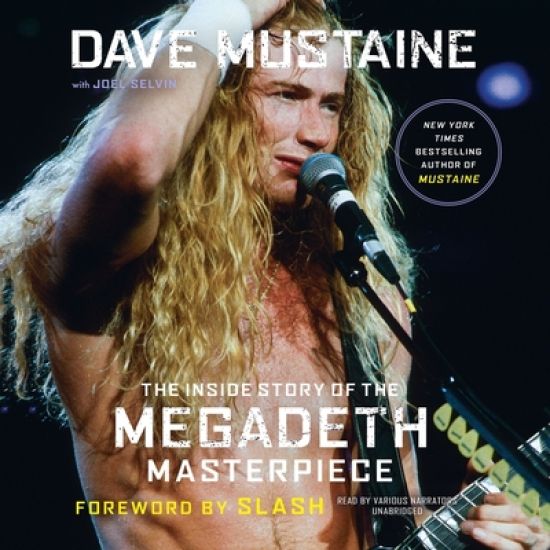
Rust in Peace: The Inside Story of the Megadeth Masterpiece
Hachette Books
2020
cd
A new book by the lead vocalist and guitarist of Megadeth, the original lead guitarist of Metallica, and the author of the NYT bestseller Mustaine.Rust in Peace details the making of Megadeth's iconic record, which was released in 1990, at an incredible time of flux and creativity in the rock world. Relayed by the lead vocalist and guitarist of Megadeth himself, Dave Mustaine, the book covers the process of hiring the band and supporting cast, of trying to handle the ensuing success, and ultimately the pressure of fame and fortune - which caused the band to finally break up. In short, it's a true story of groundbreaking anti-pop that was moving toward the mainstream (or the mainstream that was moving toward the band), at a time of great cultural change, power, ego, drugs, and other vices that went hand-in-hand with rock 'n' roll circa the late '80s-early '90s.Little did Mustaine know that the birth pangs of the record were nothing compared to the oncoming pain and torment that would surround it. Alcohol, drugs, sex, money, power, property, prestige, the lies the band was told by the industry - and the lies they told each other - were just beginning, and much like rust in real life, these factors would ultimately eat away at the band's bond until only the music survived.Rust in Peace is a story of perseverance, of scraping off the rust that builds over time on everything: ourselves, our relationships, pop culture, art, and music.
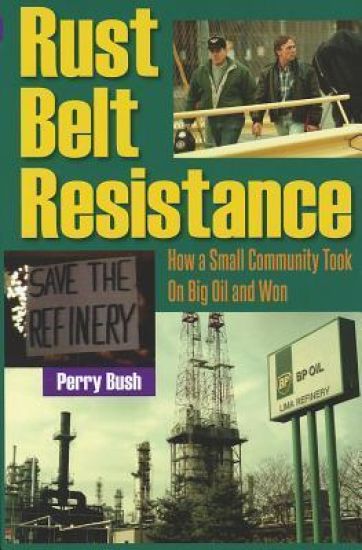
Since the 1970s, urban communities across the country have had to face the wrenching process of economic restructuring. As the media announce the latest plant closings and politicians slam each other for outsourcing jobs, events are too often framed with a kind of economic determinism that denies agency to individual communities. To what degree can industrial cities in such an era still imagine themselves as authors of their own economic fates? In Rust Belt Resistance, author Perry Bush explores this question by focusing on the small midwestern city of Lima, Ohio. When British Petroleum (BP) announced late in 1996 that it would close and demolish its refinery there—which at the time employed 500 people with a $31.5 million payroll—economic desperation loomed. Lima's story, however, deviated from the usual sad narrative of other Midwest plant closures and began to assume a drama of its own.Led by an unlikely cast of characters—an uncommonly stubborn set of civic leaders, a conservative local newspaper publisher, and the city's determined and progressive mayor—Lima refused to take its place quietly on the industrial scrap heap. Instead of collapsing in despair, the refinery's workers continued to function as a model of industrial efficiency and hard work, partly in a determined effort to build profitability and preserve their jobs and also because hard work was the essence and tradition of this blue-collar town.In a story replete with a number of dramatic twists and turns, Bush describes how this collection of individuals led a resistant multinational corporation to a financial deal it could not refuse, located an acceptable buyer for the refinery, and saved not only a sizable share of the city's financial foundation but also the community's identity and self-respect. Rust Belt Resistance is a valuable instructional lesson for business and community leaders, scholars, and anyone interested in the continuing viability of American industrial cities.
Since the 1970s, urban communities across the country have had to face the wrenching process of economic restructuring. As the media announce the latest plant closings and politicians slam each other for outsourcing jobs, events are too often framed with a kind of economic determinism that denies agency to individual communities. To what degree can industrial cities in such an era still imagine themselves as authors of their own economic fates? In Rust Belt Resistance, author Perry Bush explores this question by focusing on the small midwestern city of Lima, Ohio. When British Petroleum (BP) announced late in 1996 that it would close and demolish its refinery there—which at the time employed 500 people with a $31.5 million payroll—economic desperation loomed. Lima's story, however, deviated from the usual sad narrative of other Midwest plant closures and began to assume a drama of its own.Led by an unlikely cast of characters—an uncommonly stubborn set of civic leaders, a conservative local newspaper publisher, and the city's determined and progressive mayor—Lima refused to take its place quietly on the industrial scrap heap. Instead of collapsing in despair, the refinery's workers continued to function as a model of industrial efficiency and hard work, partly in a determined effort to build profitability and preserve their jobs and also because hard work was the essence and tradition of this blue-collar town.In a story replete with a number of dramatic twists and turns, Bush describes how this collection of individuals led a resistant multinational corporation to a financial deal it could not refuse, located an acceptable buyer for the refinery, and saved not only a sizable share of the city's financial foundation but also the community's identity and self-respect. Rust Belt Resistance is a valuable instructional lesson for business and community leaders, scholars, and anyone interested in the continuing viability of American industrial cities.
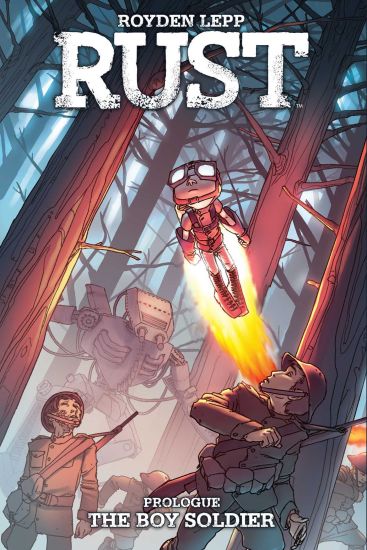
The story of the Boy Soldier begins! Made to look like a boy but built for battle, Jet Jones is a robot caught in the middle of an ongoing war. While trying to save as many people as he can, Jet discovers there is more to who he is and what he was made for than he could have ever imagined. His experiences in the war set him off on a journey to learn what it means to both hero and human. It is the first adventure of many for the rocket boy. Written and illustrated by Royden Lepp, Rust: The Boy Soldier collects the previously released prologues from the first three volumes of the critically acclaimed series Rust along with the yet to be released prologue from the upcoming fourth and final installment. Together for the first time and in an all new reading order, Rust: The Boy Soldier is the complete story of Jet Jones’s time in war and the beginning of this high octane, all ages adventure.
Rust is a new systems programming language that gives you the low-level power of C with the elegance and ease of languages like Ruby and Python. Rust is thread safe, enabling "fearless concurrency". Rust in Action introduces the Rust programming language by exploring numerous systems programming concepts and techniques. You'll be learning Rust by delving into how computers work under the hood. You'll find yourself playing with persistent storage, memory, networking and even tinkering with CPU instructions. The book takes you through using Rust to extend other applications and teaches you tricks to write blindingly fast code. You'll also discover parallel and concurrent programming. · Concurrent and parallel programming Sharing resources with locks or atomic operations Avoiding programming with global state Message passing inside your applications Memory management and garbage collection Readers need intermediate programming skills and familiarity with general computer science concepts, the command line, and networking.
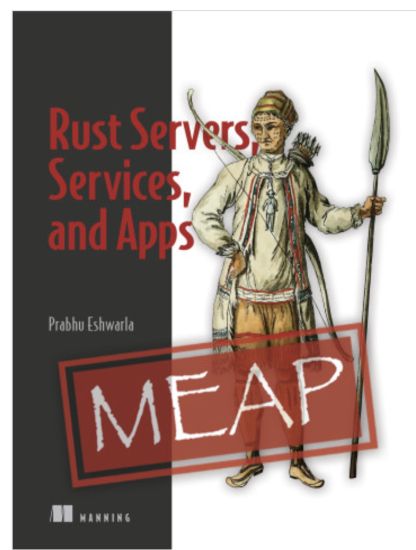
Rust Servers, Services, and Apps is a hands-on guide to developing modern distributed web applications with Rust. You'll learn how to build efficient services, write custom web servers, and even build full stack applications end-to-end in Rust. You'll start with the foundations, using Rust to build an HTTP server, and RESTful API that you'll secure, debug, and evolve with fearless refactoring. You'll then put Rust through its paces to develop a digital storefront service, and a single-page client-side application. This fastpaced book is packed with code samples you can adapt to your own projects, and detailed annotations to help you understand how Rust works under the hood. About the technologyThe blazingly fast, safe, and efficient Rust language has been voted “most loved” for five consecutive years on the StackOverflow survey. It's easy to see why. Rust combines all the features of a modern language with the low-latency power of C. Its efficiency will slash your runtime footprint—and your cloud hosting bills—and its flexibility lets you write network programs and high-level applications with equal ease.
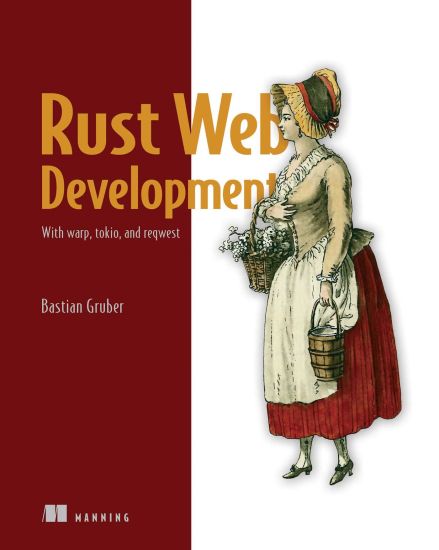
Create bulletproof, high-performance web apps and servers with Rust. In Rust Web Development you will learn: Handling the borrow checker in an asynchronous environmentCreating web APIs and using JSON in RustGraceful error handlingTesting, tracing, logging, and debuggingDeploying Rust applicationsEfficient database access Rust Web Development is a hands-on guide to building server-based web applications with Rust. If you've built web servers using Java, C#, or PHP, you'll instantly fall in love with the performance and development experience Rust delivers. This book shows you how to work efficiently using pure Rust, along with important Rust libraries such as tokio for async runtimes, warp for web servers and APIs, and reqwest to run external HTTP requests. about the technology Web development languages and libraries can be resource hungry, with poor safety for maintaining vital web services. Rust services perform better and guarantee better safety. Plus, Rust's awesome compiler gives you an amazing developer experience. You'll get the speed of low-level programming languages like C along with the ease-of-use you'd expect from high-level languages Python or Ruby, with a super strong compiler that automatically prevents common mistakes such as null pointers. about the book In Rust Web Development, you'll learn to build server-side web applications using the Rust language and its key libraries. If you know the basics of Rust, you'll quickly pick up some pro tips for setting up your projects and organizing your code. This book gets you hands-on fast, with numerous small and large examples. You'll get up to speed with how Rust streamlines backend development, implements authentication flows, and even makes it easier for your APIs to interact. As you go, you'll build a complete Q&A web service and iterate on your code chapter-by-chapter, just like a real development project. RETAIL SELLING POINTS • Handling the borrow checker in an asynchronous environment • Creating web APIs and using JSON in Rust • Graceful error handling • Testing, tracing, logging, and debugging • Deploying Rust applications • Efficient database access AUDIENCE For experienced web developers familiar with Java, Node, or Go, and the absolute basics of Rust
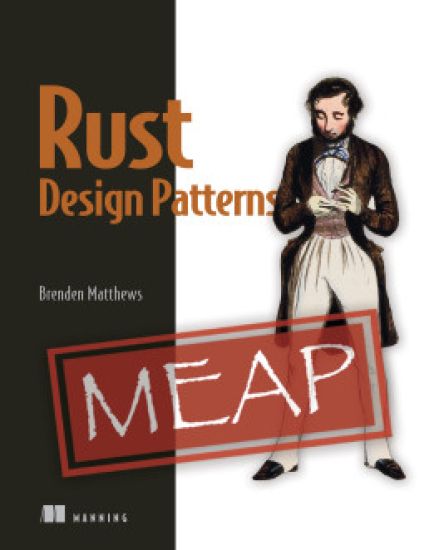
Build stable, maintainable Rust applications by applying these important code and architectural design patterns.In Rust Advanced Techniques you'll learn how to apply important design patterns including: Fluent interfaces for creating delightful APIsThe Builder pattern to encapsulate data and perform initializationImmutable data structures that help you avoid hard-to-debug data race conditionsFunctional programming patternsAnti-patterns and what not to do in Rust Rust Advanced Techniques introduces reusable best practices that will help you solve common programming problems and ensure your code is easy for others to understand. Learn when to use each design pattern, as well as when to break it. This practical guide catalogs, documents, and describes both how classic design patterns work with Rust, and the new Rust-specific patterns that will help you master the language.
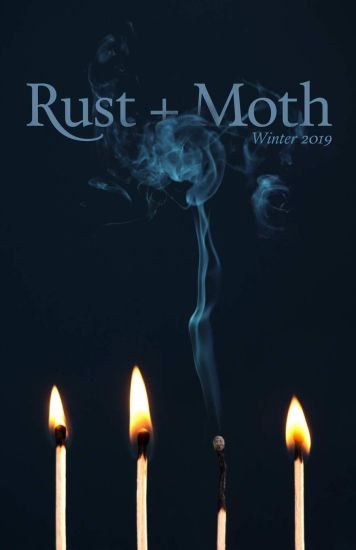
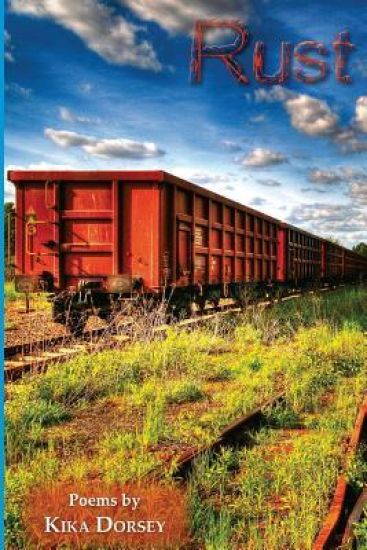
Rust + Moth's Winter 2019 issue is now available in print These pages break without bending. On the eve of a dark and critical year, may this fistful of wildflowers flow free through your blood. With new poetry from Jeri Theriault, Maggie Blake Bailey, Michael Garrigan, Chelsea Hansen, Adam Levon Brown, Al Ortolani, Layla Lenhardt, James Adams, January Pearson, Marisa P. Clark, Rebecca Hawkes, Sheila Wellehan, Brooke Matejka, Cynthia Lu, Kathryn de Lancellotti, Christina Maria Kosch, Jeni De La O, Susan Trofimow, Ron Stottlemyer, Stuart Royle, Joshua Gage, Marc Frazier, Seth Jani, Veronica Kornberg, Leonard Orr, Laurel Radzieski, Clara Trippe, Amee Nassrene Broumand, David Ruekberg, and David Hanlon.
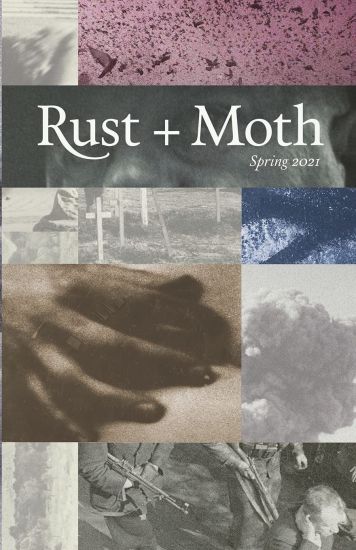
Rust and Moth
Lulu.com
2021
pokkari
Rust and Moth's Spring 2021 issue is now available in print This issue plants its feet firmly in the past. Here, the moon rises in the west, and bright memories wage war upon a dark and blighted year.
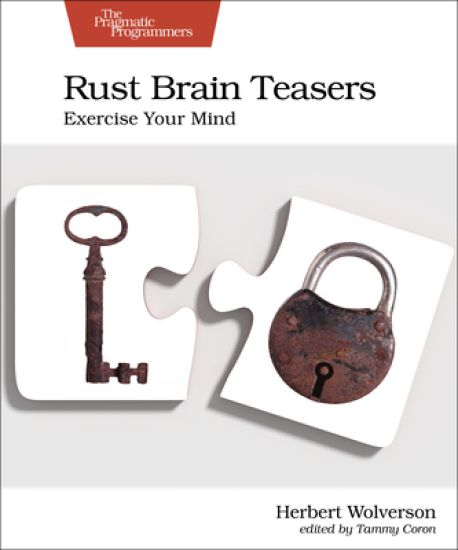
The Rust programming language is consistent and does its best to avoid surprising the programmer. Like all languages, though, Rust still has its quirks. But these quirks present a teaching opportunity. In this book, you'll work through a series of brain teasers that will challenge your understanding of Rust. By understanding the gaps in your knowledge, you can become better at what you do and avoid mistakes. Many of the teasers in this book come from the author's own experience creating software. Others derive from commonly asked questions in the Rust community. Regardless of their origin, these brain teasers are fun, and let's face it: who doesn't love a good puzzle, right? What better way to exercise your brain and increase your Rust programming knowledge than with a collection of dynamic brain teasers? As you read through each of these puzzles and try to work out the answers, you'll not only learn about Rust's unique quirks and peculiarities, you'll also have loads of fun along the way. Dive right in and get started with example code and sample problems that cover numbers and text, shadowing and memory, and everything in between. Try to figure out why a particular program won't compile, why it produces unexpected output, or why it panics and terminates with an error message. Once you've run the code and read the answer, it's time to get to the heart of the matter with a detailed explanation. Learn why a program produced the result it did, and discover how similar issues might affect the code you write in your own programs, even in production. Sourced from engaging discussions within the Rust community, real-world problems, and even reader feedback, these challenges will certainly surprise, enlighten, and entertain you. Are you ready to experience Rust like never before? Then sharpen your brain and get ready for a challenge! What You Need: This book assumes you have some knowledge of the Rust programming language. To work through the brain teasers in this book, you'll need a working Rust environment on any platform. You can install Rust by visiting https: //rustup.rs/. You'll also need a text editor or Rust-friendly IDE.

Rocket boy Jet Jones faces robot forces closing in on the Taylor farm from all sides in an epic final battle to save the lives of those he loves. As an unprecedented robot force closes in on the Taylor farm, Jet Jones must embrace his true identity if he’s to defend the family he loves. His years of running have led to this, an epic final battle where Jet will face his past and future head on for the safety of the Taylor family and the right to choose his own path. Royden Lepp’s Rust: Soul in the Machine is the breathtaking final installment of Jet’s adventure and the greatest challenge the rocket boy will ever face.
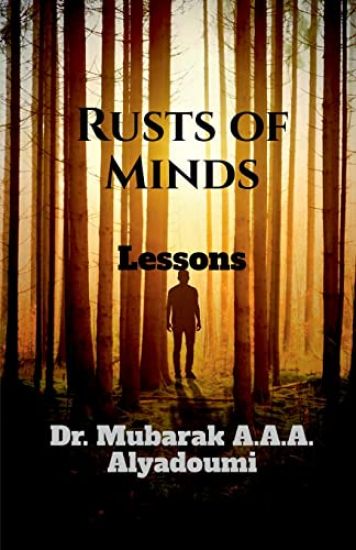
A literary book is a mirror reflecting certain ideologies, norms, customs, traditions, history and civilization in a word-scape stylistic way of creative writing. To read/watch a society, to diagnose its plagues and to advance its cure or urgent antidotes are all melted in being a good friend with realistic literature.Therefore, my modest fictional play with its simple language containing about fifty short stories if being separated has been come to being for the sake of re-thinking. Every single story has its subtle scenario, sense and theme. In other words, (readers) make sure that you are going to pass through a safe journey mode but surprises, tricky statements, common social expressions, and idiomatic uses occupy good space throughout the book. Moreover, change of modes (tragicomedy) maintains ahead over the entire fictional play, i.e. the reader may go through ironies of various species and referential symbolic incidents that may join the first episode in the first lesson (chapter) with others throughout the book in a connotative manner. Thence, one may laugh painfully. They are not only going to laugh at the abstract situation of the scene but also to shed tears at the concrete reality of the society.

Rust + Moth's Autumn 2019 issue is now available in print These poems explore the dark side of trees, tragic sweets, and the destructive beauty of nature.With new poetry from Courtney LeBlanc, Kathryne David Gargano, Lee Potts, Mary Buchinger, Andrea Livingston, Scott Moncrieff, Priyanka Yap, Shannon Austin, David Andrews, Victoria Nordlund, Benjamin Cutler, Megan McDermott, C.C. Russell, Sheree La Puma, Taleen Mardirossian, Stefan Lovasik, Kassandra Montag, Jennifer Mahoney, Joshua Lavender, WJ Lofton, Tomo Lazovich, Jonel Abellanosa, Barbara Daniels, Michele Karas, Samantha DeFlitch, Ash Bowen, Cara Waterfall, Sarah Lyons-Lin, Suzanne Langlois, and Marissa Glover.
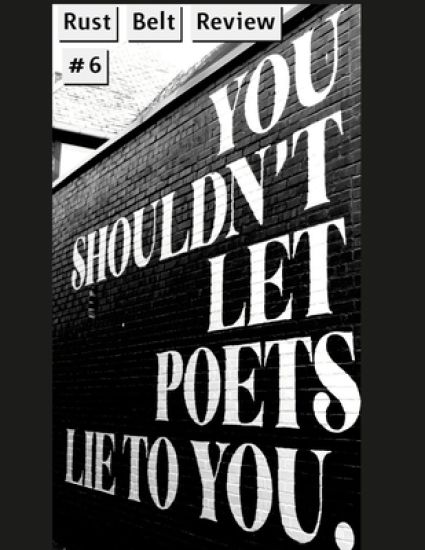
Rust Belt Review #6
Lulu.com
2021
pokkari
The 6th issue of the periodical Rust Belt Review, Winter, 2021 by Rust Belt Press.